

Note: This article contains affiliate links. If you click on these links and make a purchase, I may earn a small commission at no extra cost to you. This helps support my research and content. Read my full affiliate disclosure here.
A pull behind lawn aerator can be the difference between a patchy, compacted lawn and a dense, healthy turf. If you have medium to large lawns, a tow-behind unit speeds up core aeration while delivering consistent tine penetration across wide swaths. Choosing the right model matters because tine type, aerator width, and capacity affect how deep and how often you can aerate. This guide shortlists the top choices for homeowners and small-acreage property managers. We evaluated each option on durability, aeration performance, and how well it pairs with common tow vehicles. Read on to see how the finalists perform against practical yard needs and maintenance demands.
Top Picks at a Glance
| Best Overall The best all-around choice for most situations | Brinly SAT2-40BH-P 40" Tow-Behind Spike Aerator |  |
| Best Quality Built to a higher standard if you want something more solid | Brinly 48" Tow-Behind Plug Aerator with Universal Hitch |  |
| Best Value The sweet spot between price and what you get | Suchtale 40-Inch Tow-Behind Spike Aerator with Galvanized Steel Tines | 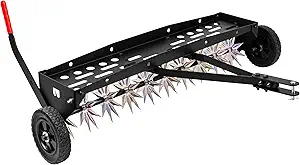 |
| Best Budget The cheapest option that still gets the job done reliably | Generic 31-Inch Tow-Behind Lawn Aerator with 8 Steel Star Tines |  |
| Highest Rated A top-rated pick with lots of positive feedback | Yard Commander 42-Inch Tow-Behind Spike Aerator with 12 Steel Spike Wheels |  |
| Most Popular A crowd favorite that many people choose with confidence | Agri-Fab 48 in Tow-Behind Plug Aerator with 32 Galvanized Knives |  |
| Best Seller A high-volume bestseller chosen again and again | Agri-Fab 40 in Tow-Behind Plug Aerator with 24 Galvanized Coring Knives |  |
Brinly SAT2-40BH-P 40" Tow-Behind Spike Aerator

| Material Type | Galvanized Steel |
|---|---|
| Item Type Name | Spike Aerator |
| Power Source | manual |
| Manufacturer Warranty Description | 2 years |
The Brinly SAT2-40BH-P is a 40-inch tow-behind spike aerator built for homeowners who want a rugged, no-frills way to aerate medium to large lawns. It uses 11 independently rotating 8-inch diameter stars with galvanized 3-D tines that penetrate up to 2 inches to let water, seed, and fertilizer reach the root zone. The unit attaches to tractors, zero-turn mowers, ATVs, and riding mowers via a universal hitch and includes a 150 lb capacity weight tray so you can add mass for harder soil. A single-lever transport mode raises the tines and engages turf-tread wheels for crossing driveways. The all-steel construction, solid axle, and nylon spacers aim to resist bending and rust in regular use. Practical limits are that it is manually powered by your towing vehicle so it is not suitable for very small push mowers, and effective penetration on very compacted clay may require heavier ballast or multiple passes. For routine seasonal aeration on a typical lawn the Brinly delivers durable, consistent coverage and easy transport between work areas.
Best for: Homeowners with a rider, tractor, ZTR, or ATV who need a durable tow‑behind aerator for seasonal lawn maintenance and want reliable, wide coverage without complex setup.
Less Ideal for: People who only own a push mower or who need a handheld or electric aerator for small urban yards should look at smaller, non-tow options instead.
- 11 independently rotating stars give consistent coverage through turns
- Patented 3-D galvanized steel tines resist bending and rust
- Weight tray accepts up to 150 lb to increase penetration in hard soil
- Single-lever transport mode with turf-tread wheels for easy crossing of driveways
- Requires a tow vehicle with a compatible hitch so not usable as a walk-behind
- May need added weight or multiple passes to penetrate very compacted clay
Verdict: A heavy‑duty, wide tow‑behind spike aerator that delivers dependable, deep aeration for homeowners who tow equipment with a tractor or riding mower.
Brinly 48" Tow-Behind Plug Aerator with Universal Hitch
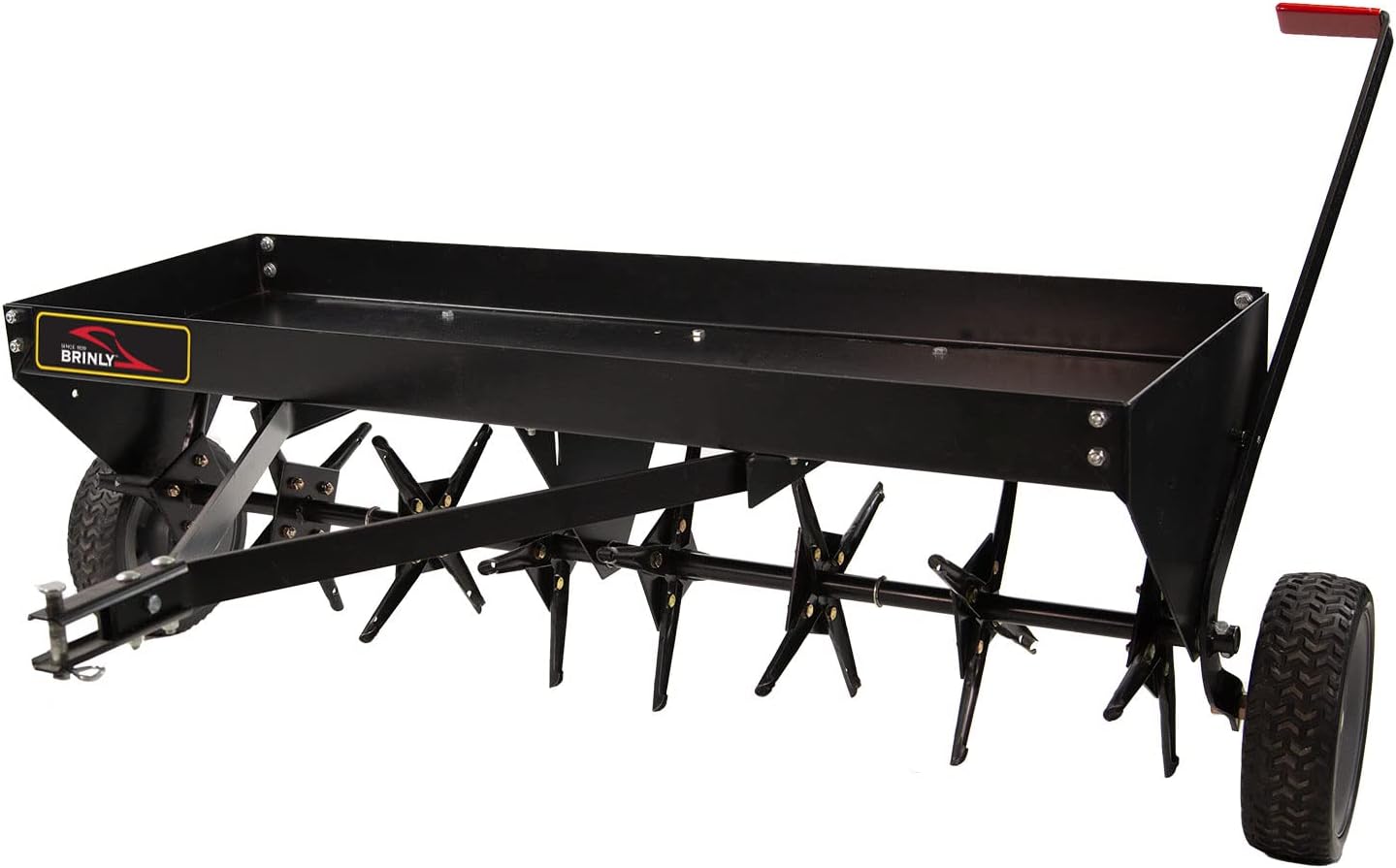
| Plug count | 32 |
|---|---|
| Plug depth | 3 inches |
| Tine material | 16-gauge heat-treated steel |
| Weight tray capacity | Up to 200 lb |
| Hitch type | Universal |
The Brinly 48" tow‑behind plug aerator is built for tackling compacted turf on medium to large lawns by removing cores rather than simply poking holes. It mounts to a lawn tractor or ZTR with a universal hitch and uses 32 heat-treated, 16‑gauge steel plug spoons arranged in three independently rotating sections to pull roughly 3" plugs and reduce compaction. A fully enclosed weight tray accepts up to 200 lb of ballast for deeper penetration when needed, and a single transport lever plus large treaded wheels make crossing driveways and walkways straightforward. The rotating tine sections help maintain consistent penetration on uneven ground and reduce turf scuffing during turns. Practical limitations are its size and weight, which assume you have a tractor or tow vehicle and storage space, and it is designed for plug aeration only so it will not replace powered core aerators for very large commercial properties. For homeowners focused on strong, measurable improvement in lawn health, this unit delivers durable construction and effective core removal.
Best for: Buyers who want a durable tow‑behind core aerator to improve lawn health on medium to large residential lawns and who already own or plan to use a lawn tractor or similar tow vehicle.
Less Ideal for: People with very small yards, those who only have a walk‑behind mower, or users needing a compact electric or handheld aerator for tight spaces.
- 32 heat-treated 16‑gauge steel plug spoons pull up 3" cores for effective decompaction
- Universal hitch and two-piece drawbar fit most lawn tractors and many ZTRs
- Fully enclosed weight tray accepts up to 200 lb for deeper aeration
- Independent rotating tine sections reduce turf damage on turns and uneven ground
- Designed to be towed by a tractor or ATV so not suitable for walk-behind use
- Large footprint requires storage space and may be cumbersome on very small yards
Verdict: If you own a lawn tractor and want a rugged tow‑behind aerator that pulls true soil cores for measurable turf improvement, this Brinly 48" unit is a strong performance choice.
Suchtale 40-Inch Tow-Behind Spike Aerator with Galvanized Steel Tines

| Tine wheel diameter | 8 inches |
|---|---|
| Maximum penetration depth | Up to 2 inches |
| Tine design | 10 steel tines per wheel with uneven tips |
| Weight tray capacity | Up to 110 pounds |
The Suchtale 40-inch tow-behind spike aerator is a straightforward, heavy-duty tool for loosening compacted lawn soil by puncturing it with multiple rotating star-shaped tine wheels. It hooks to ATVs or riding mowers via a pin-style hitch and can be weighted on the tray to increase penetration when working dense turf. The unit’s all-steel construction, reinforced side plates, solid axle, thicker 6 mm adjustment handle, and nylon spacers are aimed at durability and reduced bending during use. The rotating tine wheels help maintain contact through turns so you miss fewer strips while covering a typical backyard or small acreage. Practical benefits include easier water and nutrient penetration after aeration and a simple assembly with pictorial instructions. Limitations are that spike aerators do not remove soil cores, so they are less effective than core aerators for heavy thatch or very compacted clay, and effective penetration depends on added weight and soil moisture at the time of use.
Best for: Buyers who want a robust, no-frills tow-behind aerator to maintain lawns and small acreage using an ATV or riding mower and who prioritize durability and straightforward setup.
Less Ideal for: If you need professional-grade core aeration for severe compaction or heavy thatch removal, or you lack a tow vehicle, this spike aerator is not the best choice.
- All-steel frame, reinforced side plates, and solid axle for increased durability
- Rotating star-shaped tine wheels that continue to turn through turns to reduce missed areas
- Pin-style hitch fits ATVs and riding mowers for quick hookup
- Weight tray accepts up to 110 pounds to boost soil penetration when needed
- Spike-style tines penetrate but do not remove soil cores, so less effective on heavy thatch
- Performance depends on adding weight and working when soil moisture is appropriate
Verdict: A sturdy, easy-to-hook tow-behind spike aerator that delivers reliable surface penetration for routine lawn maintenance when used with an ATV or riding mower.
Generic 31-Inch Tow-Behind Lawn Aerator with 8 Steel Star Tines

| Power Source | manual |
|---|---|
| Working Depth | up to 2.5 inches |
| Tine Count | 8 star tines |
| Tray Capacity | supports up to 132 lb |
This tow‑behind lawn aerator is a basic, no-frills unit designed to open compacted soil using eight rotating steel star tines. You hook it to a compatible lawn tractor or ATV with the universal hitch, adjust the working depth and add weight to the tray when firmer penetration is needed. The tray supports up to 132 lb so you can increase tine depth by adding concrete blocks or sandbags. The rotating tine disks keep turning through turns to reduce missed strips, and the steel frame with reinforced side plates and powder coat finish gives decent durability for seasonal use. Assembly is straightforward and the simple manual design keeps maintenance minimal. Limitations are its manual operation and modest tine count, which means it is slower than larger commercial units and may struggle in very heavy clay without significant additional weight or multiple passes. It is best for homeowners who want an affordable pull‑behind option to improve water and nutrient movement into the root zone without renting equipment.
Best for: Homeowners seeking an inexpensive, tow‑behind aerator to maintain small to medium lawns who prioritize straightforward setup and seasonal DIY lawn care.
Less Ideal for: Large properties, professional landscapers, or users who need a fast, heavy‑duty aerator for persistent clay soil should consider larger or powered alternatives.
- Eight rotating steel star tines designed to penetrate compacted soil and create aeration channels.
- Adjustable working depth up to 2.5 inches for different soil conditions.
- Tray accepts up to 132 lb of added weight to increase penetration when needed.
- Reinforced steel frame and powder-coated finish for basic durability and rust resistance.
- Universal hitch fits many lawn tractors, utility tractors and ATVs for easy towing.
- Only eight tines means slower coverage and may require multiple passes on large or very compacted lawns.
- Manual operation depends on tractor/ATV towing and added tray weight for effective depth control.
Verdict: A straightforward, budget‑minded tow‑behind aerator that gives homeowners an affordable way to improve root‑zone air and water access with simple tractor towing.
Yard Commander 42-Inch Tow-Behind Spike Aerator with 12 Steel Spike Wheels

| Working width | 42 inches |
|---|---|
| Spike wheels | 12 hardened steel |
| Aeration depth | 2 inches |
| Weight tray capacity | 70 lb |
| Power source | Manual |
This Yard Commander 42-inch tow-behind spike aerator is built for straightforward, no-frills lawn aeration on medium to large properties. You hitch it to a lawn tractor, riding mower, or ATV with the universal pin-style connector and tow it across the lawn; the 12 hardened steel spike wheels puncture the soil up to about 2 inches while the powder-coated steel frame resists corrosion. The integrated weight tray accepts up to 70 pounds of added ballast when you need deeper penetration in compacted or sandy soils. Assembly is required but the design is simple and parts appear serviceable, and replacement parts are available from the manufacturer. Because it is a manual, tow-behind unit there is no engine or hydraulics to maintain, which simplifies upkeep and improves long-term reliability. The main limitations are that spike aeration does not remove soil cores like core aerators do, and the unit requires a towing vehicle with a compatible hitch and enough traction to press the spikes in effectively.
Best for: Buyers who want a durable, low-maintenance tow-behind aerator for medium to large lawns and prioritize reliable mechanical construction and simple operation over advanced features.
Less Ideal for: Gardeners with very small yards, those who need core aeration for heavy clay soils, or users without access to a compatible lawn tractor or ATV.
- Wide 42-inch working width covers large areas more quickly
- Twelve hardened steel spike wheels provide up to 2 inches of penetration
- Universal pin-style hitch fits most lawn tractors and ATVs for easy hookup
- Integrated 70 lb weight tray increases penetration on compacted or sandy soils
- Powder-coated steel frame offers corrosion resistance for outdoor use
- Spike-style aeration does not remove soil cores, which can limit effectiveness compared with core aerators
- Requires a towing vehicle with sufficient traction to achieve full spike penetration
Verdict: A rugged, easy-to-maintain tow-behind spike aerator that reliably covers large lawns and improves penetration with added weight.
Agri-Fab 48 in Tow-Behind Plug Aerator with 32 Galvanized Knives

| Knives | 32 galvanized self-sharpening |
|---|---|
| Plug depth | Up to 3 inches |
| Hitch | Universal hitch |
| Weight tray capacity | Holds up to 140 lbs |
| Tires | Flat-free transport tires |
The Agri-Fab 48 in Tow-Behind Plug Aerator is built for performance-minded homeowners who want deep, mechanical aeration without hiring a service. It mounts to a lawn tractor via a universal hitch and pulls 3-inch plugs with 32 galvanized, self-sharpening coring knives; a cantilever transport handle lets you raise and lower the drum from the tractor seat. The unit includes flat-free tires for low-maintenance towing and a weight tray to add ballast for better penetration. In practice this machine covers wide swaths quickly and produces consistent cores that improve air, water, and nutrient movement into compacted soils. Expect straightforward assembly and durable steel construction, but note it requires a tractor or tow vehicle to operate and is large to store. Also the aerator is primarily for turf that needs core aeration rather than lighter spike-style maintenance, so it may be overkill for very small yards.
Best for: Gardeners who prioritize effective, professional-level aeration on medium to large lawns and already own or plan to use a lawn tractor to tow the unit.
Less Ideal for: Urban gardeners with small yards, renters, or anyone without a tractor should consider smaller walk-behind or rental options instead.
- Pulls up to 3-inch plugs for deep core aeration across larger areas
- 32 galvanized self-sharpening knives for consistent penetration and reduced maintenance
- Universal hitch and tractor-seat transport handle for easy hookup and on-the-go control
- Flat-free tires reduce transport maintenance and roll smoothly over turf
- Weight tray allows added ballast for improved soil penetration
- Requires a lawn tractor or compatible tow vehicle to use
- Large footprint makes storage and maneuvering in tight spaces more difficult
Verdict: If you have a lawn tractor and want deep, consistent core aeration across medium to large lawns, this robust tow-behind aerator delivers professional-level results.
Agri-Fab 40 in Tow-Behind Plug Aerator with 24 Galvanized Coring Knives

| Working width | 40 in |
|---|---|
| Coring knives | 24 galvanized sharpened knives |
| Tires | 10 in x 3 in pneumatic |
The Agri-Fab 40 in tow-behind plug aerator is a straightforward machine for homeowners who want to reduce soil compaction across medium to large lawns. It removes small soil plugs with 24 galvanized, sharpened coring knives to improve water, air, and nutrient penetration, and the 40-inch working width covers more ground per pass so you spend less time aerating. Large 10 x 3 inch pneumatic tires make towing smoother over uneven turf, and a single-lever transport handle raises and lowers the unit for use and storage. The universal hitch fits most lawn and garden tractors, so setup is simple for common mower models. Because the coring knives are galvanized, they resist rust and hold up to repeated seasonal use, but this is a tow-behind tool that requires a compatible tractor and some storage space. For buyers who prefer low-maintenance, proven designs, this aerator delivers consistent results without fancy electronics or complex assembly.
Best for: Homeowners with a lawn tractor who want a reliable, low-tech way to aerate medium to large lawns and prioritize straightforward, durable equipment.
Less Ideal for: People with very small yards, renters without tractor access, or those looking for a lightweight manual or electric aerator option.
- Wide 40-inch working width covers large lawns quickly
- 24 galvanized coring knives for effective, corrosion-resistant plug removal
- Pneumatic 10 x 3 inch tires provide smoother towing over uneven terrain
- Single-lever transport handle for easy raising, lowering, and compact storage
- Universal hitch compatible with most lawn and garden tractors
- Requires a tow vehicle such as a lawn tractor so not usable as a standalone tool
- Relatively heavy and needs adequate off-season storage space
Verdict: A dependable tow-behind aerator that quickly covers large lawns with durable galvanized coring knives and simple, tractor-friendly operation.
Choosing the Right Pull Behind Lawn Aerator: Key Factors to Consider
Tine Type and Penetration
Tine design determines how effectively the aerator removes soil plugs and relieves compaction. Hollow coring tines pull out plugs and leave open channels for air and water, while spike tines simply create holes without removing soil. Hollow tines are generally better for compacted clay soils; spike tines can work for routine, light aeration but may compact surrounding soil if overused.
Tine length and diameter affect penetration depth and how much thatch or roots you remove. Longer, thicker tines reach deeper but need more tow power and a sturdier frame. Consider whether the tines are replaceable and how easy they are to service; replaceable tines extend the useful life of the aerator and reduce long-term cost.
Working Width and Coverage Rate
Wider aerators cover more ground per pass, reducing the time needed on larger lawns. However, wider units require more torque from the tow vehicle to maintain consistent tine depth across the full width. Narrower units allow tighter maneuvering around trees, garden beds, and irregular lawn shapes and can be better for small yards.
Think about the geometry of your property. If you have long, open runs, a wider aerator will cut the job time. If you have many obstacles or narrow passages, a compact unit will reduce the amount of repositioning and turning.
Tow Vehicle Compatibility and Hitch Flexibility
Match the aerator to the tow vehicle you plan to use, whether that is a lawn tractor, ATV, UTV, or compact garden loader. Hitch height, pin size, and tongue configuration affect how level the aerator rides and how evenly tines penetrate the ground. Some units include adjustable tongue angles or universal hitch adapters to improve fit.
Also consider the tow vehicle's drawbar rating and horsepower. Heavy coring tines and full-width units place greater loads on the tractor. Check whether the aerator allows for transport mode or a lift-assist so you can move between beds or driveways without dragging the tines.
Frame Construction and Corrosion Resistance
Aerators operate in wet, abrasive soil so strong, well-welded frames resist bending and fatigue. Look for heavy-gauge steel or reinforced tubing in load-bearing areas. Powder-coated finishes or corrosion-resistant plating extend service life, especially in climates with frequent moisture or winter storage in damp outbuildings.
Pay attention to axle and wheel quality as well. Bearings and hubs designed for garden-duty minimize maintenance and keep the unit tracking straight. Simpler designs with fewer moving parts are often easier to service in the off-season.
Depth Adjustment and Ease of Use
Being able to set and change tine depth quickly lets you adapt to soil conditions and seasonal needs. Mechanical depth stops or easy-access adjustment pins let you fine-tune penetration without tools. Some aerators offer hydraulic or manual lift mechanisms to raise tines for transport; these reduce turf damage when moving between work areas.
User-friendly controls and straightforward maintenance points, like easily reachable grease fittings and simple tine removal, make seasonal upkeep less of a chore and discourage deferred maintenance that shortens tool life.
Maintenance, Parts, and Consumables
Routine maintenance includes checking fasteners, greasing bearings, and replacing worn tines. Choose units with widely available replacement tines and common fastener sizes so you can repair the aerator yourself. Some manufacturers use proprietary parts that are harder to source.
Think about storage needs and whether seasonal disassembly is required to save space. Units that allow you to remove or fold components for compact storage are easier to keep clean and dry through winter months, which helps prevent rust and prolongs useful life.
When a Pull Behind Aerator Makes Sense
Pull behind aerators shine on medium to large lawns where hand tools would be too slow and where periodic deep aeration improves turf health. They are particularly useful for turf with compaction from heavy foot traffic, kids play areas, or repeated mowing over the same lines. If you tow with a lawn tractor or ATV, a pull behind unit turns a one-day chore into a manageable job.
Use a pull behind aerator when you need consistent tine depth across wide passes and want the option to cover acres rather than a few hundred square feet. For small, ornamented lawns or confining yard layouts, a smaller or manual aerator may still be the better choice.
- Best for lawns with moderate to heavy compaction
- Saves time on larger properties compared with hand-push tools
- Requires compatible tow vehicle with sufficient drawbar capacity
Preparing Your Lawn Before Aeration
Mow to a slightly lower height than normal and remove any debris that could block tines. Watering a day or two before aeration softens the soil enough for easier tine penetration but avoid very muddy conditions that can clog tines and smear soil. Mark irrigation heads, buried cables, and sprinkler lines to avoid accidental damage.
If your lawn has thick thatch, dethatch or rake first so tines can reach soil rather than only thatch fibers. Consider a test pass in an inconspicuous area to check tine depth and tow speed and adjust settings before doing the entire lawn.
- Mow low and clear debris
- Lightly irrigate 24-48 hours prior if soil is dry
- Mark underground utilities and test settings in a corner
Seasonal Timing and Frequency
Timing depends on grass type and climate. Cool-season grasses benefit from aeration in early spring or early fall when roots are actively growing. Warm-season lawns tend to respond best when aerated in late spring to early summer during peak growth. Avoid aerating when grass is dormant unless you plan to overseed immediately afterwards.
Most lawns need aeration once a year or every other year depending on traffic and soil type. High-use lawns, clay soils, or lawns with a history of compaction may need more frequent aeration. Pair aeration with overseeding and fertilization to make the most of the open soil channels.
- Cool-season lawns: early spring or early fall
- Warm-season lawns: late spring to early summer
- High-traffic or clay soils may need more frequent aeration
Safety and Transport Tips
Securely pin the aerator to the tow vehicle and test the hitch connection before working. Engage any transport locks or lift features when moving across driveways or roads to prevent tine damage and to protect pavement. Use caution on slopes and avoid steep grades where controls or traction may be compromised.
Wear eye protection when clearing debris and keep bystanders well away while operating. After use, clean soil off moving parts and store the aerator in a dry, ventilated area to limit corrosion.
- Use hitch pins and safety chains where applicable
- Lift tines for pavement crossings
- Clean and dry parts before winter storage
How We Chose the Best Pull Behind Lawn Aerator
We focused on features that directly affect aeration performance and real-world usability. Primary evaluation criteria included tine system and penetration ability, working width and coverage rate, tow compatibility and hitch flexibility, and build durability under repeated garden use. We prioritized units that let gardeners adjust tine depth and that use replaceable tines to extend service life. We excluded lightweight seeder-style units and units intended only for hand-pushing, since they do not deliver the area throughput homeowners expect from a pull behind aerator. We also filtered out models with nonstandard hitches or unclear compatibility with common lawn tractors and ATVs. In practice we looked for heavy-gauge frames and corrosion-resistant components that stand up to moist soil and seasonal storage. Noise and vibration levels matter for user comfort, so units with better vibration damping and simpler maintenance scored higher. Finally, ease of emptying or cleaning any collection system and replacement part availability influenced selection. These filters ensured the roundup focuses on dependable pull-behind aerators suitable for routine seasonal lawn care.
FAQ
How deep should the tines penetrate my lawn?
Depth depends on soil type and lawn needs. For most yards, 2 to 3 inches of core depth relieves compaction without excessive root disruption. Heavily compacted clay may need 3 to 4 inches, while light maintenance aeration can be shallower.
Can I tow a pull behind aerator with an ATV?
Often yes, if the aerator is rated for ATV use and the hitch geometry matches. Verify the tow vehicle's drawbar rating and ensure it can provide steady pull at the needed speed. Use a compatible hitch adapter and test in a small area first.
Should I aerate before overseeding?
Yes. Aerating before overseeding creates channels for seed-to-soil contact and helps new seedlings establish. After aeration, spread seed evenly and keep the area moist until seedlings are established.
How often should I replace tines?
Replacement frequency depends on soil abrasiveness and usage. Inspect tines each season for wear or bending; expect to replace them more often on sandy or gravelly soils. Replace tines when penetration is reduced or they show significant wear.
Will aeration damage my sprinkler system?
It can if sprinkler heads or shallow lines are not marked. Before aerating, locate and mark irrigation hardware and avoid those zones or reduce tine depth. Many systems have deeper main lines that are safe, but caution is warranted around lateral lines and heads.
Final Verdict
A pull behind lawn aerator is a practical investment for gardeners with medium to large lawns, especially where compaction reduces drainage and root growth. Prioritize tine type and penetration ability, matching working width to your yard layout and confirming tow compatibility with your tractor or ATV. Expect tradeoffs between coverage speed and maneuverability; wider units save time on open lawns but require more tow power and careful handling near obstacles. Focus on durable frame construction, replaceable tines, and straightforward depth adjustment to get the most life from the aerator. With the right fit for your vehicle and soil conditions, a pull behind aerator will make annual or biennial aeration faster and more effective, promoting healthier, more resilient turf.
