

Note: This article contains affiliate links. If you click on these links and make a purchase, I may earn a small commission at no extra cost to you. This helps support my research and content. Read my full affiliate disclosure here.
If you manage a medium or large home lawn, a pull behind lawn sweeper can cut the time you spend raking or running a leaf blower. The right sweeper collects leaves, grass clippings, and pine needles with fewer passes and empties easily so you can finish yard work faster. This guide highlights seven top picks suitable for common residential lawns and different towing sources. Each pick was shortlisted for how it handles debris, hopper capacity, and durability in the yard. Below you will find the evaluation criteria we used and practical notes to help you match a sweeper to your mowing and cleanup routine.
Top Picks at a Glance
| Best Overall The best all-around choice for most situations | Ohio Steel 5026V2 50-inch Lawn Sweeper |  |
| Best Quality Built to a higher standard if you want something more solid | Ohio Steel 42" Pull-Behind Lawn Sweeper 22 cu. ft. Hopper (Model 4222V2) |  |
| Best Value The sweet spot between price and what you get | EliteEdge 42" Large-Capacity Pull-Behind Lawn Sweeper |  |
| Best Budget The cheapest option that still gets the job done reliably | Shulemin 44-Inch Pull-Behind Lawn Sweeper with 25 cu ft Hopper |  |
| Highest Rated A top-rated pick with lots of positive feedback | Jojoka 42-Inch Tow-Behind Lawn Sweeper with 12 cu. ft. Collector | |
| Most Popular A crowd favorite that many people choose with confidence | Agri-Fab 52" Tow-Behind Lawn Sweeper, 26 cu ft Hopper |  |
| Best Seller A high-volume bestseller chosen again and again | YINTATECH 48" Tow-Behind Lawn Sweeper with 26 cu. ft. Collector |  |
Ohio Steel 5026V2 50-inch Lawn Sweeper

| Sweeping width | 50 in. |
|---|---|
| Hopper capacity | 26 cu. ft. |
| Brush type | 11 in. spiraled polypropylene |
| Chute width | 9 in. |
The Ohio Steel 5026V2 is a tow-behind lawn sweeper built for medium to large lawns where you want fast, hands-off cleanup. It uses a 50-inch sweeping path and 11-inch spiraled polypropylene brushes to lift and move leaves, pine cones, and grass clippings into a 26 cu. ft. collector bag. The reversible hitch and offsettable drawbar let you match tractor hitch height and sweep while mowing, and a numbered height adjustment makes it easy to set brush height by sight. Emptying is simple: fold to a dumping position and pull the release rope from the mower seat to tip the hopper into a compost or disposal area. The wide 9-inch chute reduces clogging when material is damp. Assembly is straightforward and storage is easier with folding bag and drawbar. It is a practical, workhorse-style attachment, though it is intended for tow-behind use with a riding mower or small tractor and not for fine debris pickup or use as a vacuum replacement.
Best for: Homeowners with a riding mower or small tractor who need a reliable, time-saving tool to collect leaves and lawn debris across medium to large yards and prefer simple operation and dump-empty convenience.
Less Ideal for: People who only have a push mower or who need a unit that captures very fine particles or acts as a vacuum blower; those with very small yards will find it oversized.
- Large 26 cu. ft. hopper cuts trips to empty and speeds cleanup
- 50-inch sweeping path covers wide swaths for quicker passes
- Patented spiral brushes sweep more efficiently and reduce gear stress
- Reversible hitch and offset drawbar allow level operation with different tractor heights
- Wide 9-inch chute resists clogging when sweeping damp material
- Designed for tow-behind riding mowers or tractors so not usable with handheld equipment
- May miss very fine debris or require multiple passes for embedded leaves
Verdict: Choose this tow-behind sweeper if you want a durable, wide-path machine that dumps easily and speeds cleanup on medium to large lawns.
Ohio Steel 42" Pull-Behind Lawn Sweeper 22 cu. ft. Hopper (Model 4222V2)
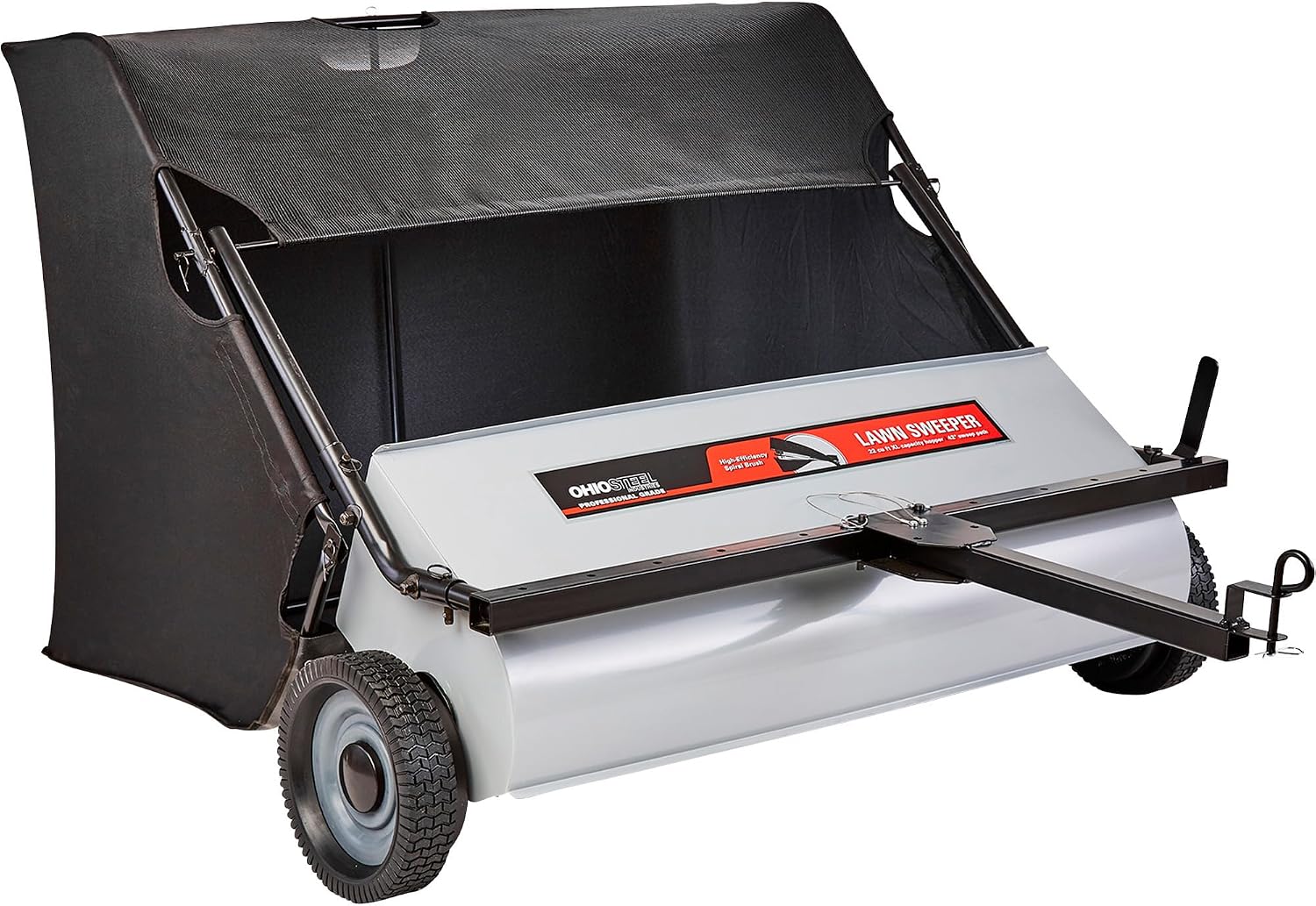
| Sweeping width | 42 in. |
|---|---|
| Hopper capacity | 22 cu. ft. |
| Bristle material | Polypropylene (PP) |
| Bristle type | Spiraled |
| Wheels | 11 in. semi-pneumatic |
The Ohio Steel 4222V2 is built for fast, performance-focused yard cleanup. It attaches to a tractor and sweeps leaves, grass clippings, pine cones and other debris into a large 22 cu ft hopper via a 42-inch spiraled brush path that minimizes gear stress and improves pickup efficiency. Adjustable, numbered height settings let you tune brush engagement from the tractor seat, and the reversible hitch keeps the sweeper level across different hitch heights. The hopper empties quickly with a pull-rope release and the wide 9-inch chute reduces clogging when material is damp. Durable details such as semi-pneumatic 11-inch wheels, sealed brush bearings, and an alloy steel frame aim to extend service life, while the foldable drawbar and bag help with storage. Expect straightforward assembly with one tool. This is a robust, workhorse unit for regular, large-lawn maintenance, though its weight and size make it most practical for owners with tractors and ample storage space.
Best for: A performance-minded homeowner or small acreage owner who uses a lawn tractor and wants a durable, high-capacity sweeper to speed routine debris cleanup across medium to large lawns.
Less Ideal for: Those who only use a push mower, have small urban yards, or need a compact, highly maneuverable sweeper for tight landscaping beds.
- Large 22 cu ft hopper reduces trips to the dump area for faster work
- Patented 11 in. spiraled polypropylene brushes improve pickup and reduce gear strain
- Adjustable numbered height settings allow on-the-fly brush tuning from the tractor seat
- Durable construction with sealed brush bearings and semi-pneumatic wheels for longer service life
- Heavy and sizable unit that requires tractor tow and significant storage space
- Not suited for very tight or highly landscaped yards where maneuverability is limited
Verdict: Choose this Ohio Steel sweeper when you need a high-capacity, tractor-pulled unit that speeds cleanup with robust construction and efficient spiraled brushes.
EliteEdge 42" Large-Capacity Pull-Behind Lawn Sweeper

| Power Source | manual |
|---|---|
| Operation Mode | Manual |
| Cutting width | 42 inches |
The EliteEdge 42" pull-behind lawn sweeper is a towable manual sweeper designed to attach to a lawn tractor for faster debris pickup across lawns, driveways, and other yard surfaces. It uses spinning brushes whose height can be adjusted by hand to match different terrains and surfaces, and a widened metal-to-brush interface that increases sweeping force so you pick up more material in a single pass. The collection bag is large and folds for compact storage, reducing the number of stops to empty during a session and making off-season storage easier. Assembly and operation are straightforward: hitch it, set brush height, and drive at a steady speed to sweep leaves, grass clippings, and light debris into the bag. Expect good coverage with fewer passes, but remember it is a manual, tow-driven unit so performance depends on tractor speed and surface evenness. It is best for routine yard cleanup of loose debris rather than heavy wet material or fine dust.
Best for: Homeowners who want to speed up regular lawn cleanup by towing a single, high-capacity sweeper behind a lawn tractor and who value fewer emptying stops and easy storage.
Less Ideal for: Owners who need a powered or standalone unit for wet, compacted, or very fine debris or who lack a compatible towing tractor.
- Large-capacity collection bag reduces frequency of emptying during extended cleanup
- Adjustable brush height adapts quickly to different terrain and surface conditions
- Widened metal-to-brush interface increases sweeping force for higher pickup efficiency
- Foldable design allows compact storage when not in use
- Manual, tow-driven operation means pickup efficiency depends on tractor speed and ground evenness
- Not suited for heavy wet debris or very fine dust that brushes cannot lift
Verdict: If you already tow a lawn tractor and want to cut the time spent collecting leaves and grass clippings, this large-capacity, foldable sweeper delivers efficient, low-effort pickup.
Shulemin 44-Inch Pull-Behind Lawn Sweeper with 25 cu ft Hopper

| Power Source | pull |
|---|---|
| Operation Mode | Manual |
| Maximum Adjustable Cutting Height | 10.16 centimeters |
| Number of Positions | 4 |
| Material Type | Metal |
This pull-behind lawn sweeper is designed to attach to a riding mower or tractor and sweep leaves, grass clippings, and dry debris into a large collection hopper as you drive. The 44-inch rotary brush covers a wide path so you reduce passes, and the hand-controlled lever lets you raise or lower the brush quickly to cope with grass, gravel, or pavement without tools. The oversized 25 cu ft non-woven hopper holds a lot of debris and dumps with a pull rope, cutting down on emptying trips. Steel frame construction and rubber-tread wheels aim to handle uneven yards and light slopes, while folding storage helps save garage space. Because it is mechanically driven by the tow wheels, there are no batteries or motors to maintain. Expect basic assembly and a utilitarian finish rather than premium fit and finish, and performance will depend on brush adjustment and towing speed for dense or wet debris.
Best for: Homeowners with a riding mower who want a simple, effective way to clear leaves and clippings without extra power units and who prioritize value over premium refinements.
Less Ideal for: People who need a powered or high‑performance unit for consistently wet, compacted debris or those without a tow vehicle should consider other options.
- Wide 44-inch sweeping path reduces number of passes for medium to large lawns
- Large 25 cu ft hopper holds more debris so you empty less often
- Hand-adjustable brush height for on-the-fly changes between surfaces
- Sturdy metal frame and rubber-tread wheels suited to uneven terrain
- Folds for compact storage and uses simple dump rope to empty hopper
- No powered brush drive so effectiveness depends on towing speed and surface contact
- Not intended for wet or heavy, compacted debris which can clog the hopper
Verdict: If you have a riding mower and want a no‑frills, high-capacity sweeper that reduces passes and emptying, this 44-inch tow‑behind model delivers strong value.
Jojoka 42-Inch Tow-Behind Lawn Sweeper with 12 cu. ft. Collector
| Power Source | manual |
|---|---|
| Cutting width | 42 inches |
| Wheel Size | 10.5 inches |
| Material Type | Steel, Nylon |
The Jojoka 42-inch tow-behind lawn sweeper is a heavy-duty manual sweeper designed to clear leaves, grass clippings, pine needles, and similar dry debris from medium to large properties. It hooks to an ATV, UTV, or lawn tractor via a universal hitch and uses a high-speed rotating brush and widened contact design to pick up material, often in a single pass. Adjustable sweeping height lets you set brush contact for short turf or thicker growth to avoid scalping, and the reinforced steel frame with nylon brush construction is built for frequent use. A 12 cubic foot collection hopper and 10.5-inch wheels make it practical for towing over uneven ground, and the quick-fold design stores vertically to save space. Important limitations are that it is manually powered so performance depends on towing speed and terrain, and it is intended for dry debris rather than wet, heavy piles. Assembly and occasional brush replacement are expected for ongoing reliability on demanding jobs.
Best for: Buyers who prioritize a durable, workhorse tow-behind sweeper for regular cleanups on medium to large properties and who want equipment built to last rather than lightweight, occasional-use tools.
Less Ideal for: People with small yards who need a compact electric or handheld solution or users who need to clear wet, compacted debris frequently.
- Reinforced steel frame and wear-resistant nylon brush for frequent, heavy use
- Adjustable brush height adapts to different turf lengths without scalping
- Large 12 cu. ft. collector reduces trips to empty debris
- Universal hitch and 10.5-inch wheels provide stable towing over uneven ground
- Quick-fold design allows vertical storage to save space
- Manual operation limits pickup power on very heavy or wet debris
- Brushes will wear and require periodic replacement with heavy use
Verdict: Choose this sweeper if you need a sturdy, stay-in-service tow-behind that reliably clears dry lawn debris on medium to large properties.
Agri-Fab 52" Tow-Behind Lawn Sweeper, 26 cu ft Hopper

| Power Source | HAND_POWERED |
|---|---|
| Hopper Capacity | 26 cu. ft. |
| Sweeper Width | 52 inches |
| Material Type | Alloy Steel |
| Wheel Size | 11 inches |
The Agri-Fab 52" tow-behind sweeper is a tractor-mounted, hand-powered pickup that quickly collects grass clippings, leaves, and small twigs into a large 26 cubic foot hopper while you mow. It mounts to most lawn tractors and uses a brush-to-wheel gearing system and infinite brush height adjustment to set brush depth up to 1/2 inch so bristles reach into turf without scalping. Semi-pneumatic wheels and metal pinion gears make it more durable than lighter plastic alternatives and the dump-from-seat handle lets you empty the hopper without detaching the unit. Practical benefits include covering a wide 52-inch path to reduce passes on medium to large lawns and a robust alloy steel frame built for repeated seasonal use. Important limitations are its bulk and 86 pound weight, which mean you need a compatible tractor and storage space, and the manual operation requires driving at an appropriate speed for effective pickup rather than relying on powered suction. Assembly and occasional brush adjustments are part of normal maintenance.
Best for: Buyers who own a riding lawn tractor and want a proven, sturdy tow-behind sweeper to cut pickup time on medium to large lawns while prioritizing reliable construction over light weight.
Less Ideal for: People with only walk-behind mowers, very small yards, or those who need a compact, easy-to-store electric or push sweeper should look elsewhere.
- Large 26 cu ft hopper reduces trips to empty and handles significant leaf or clipping loads
- Wide 52-inch sweeping width covers ground quickly for fewer passes
- Infinite brush height adjustment and 1/2 in. penetration help pick up debris without damaging turf
- Semi-pneumatic wheels and metal pinion gears improve durability over cheaper components
- Heavy 86 pound unit requires a tractor with sufficient hitch capacity and makes manual handling difficult
- Bulky footprint needs substantial storage space when not in use
Verdict: If you have a lawn tractor and need a durable, high-capacity tow-behind sweeper to speed up debris pickup on medium to large lawns, this Agri-Fab 52" model is a practical, proven choice.
YINTATECH 48" Tow-Behind Lawn Sweeper with 26 cu. ft. Collector

| Working width | 48 inches |
|---|---|
| Hopper capacity | 26 cu. ft |
| Brush diameter | 10 inches |
| Connection | Universal hitch |
This YINTATECH 48" tow‑behind lawn sweeper is built to clear leaves, pine needles, small twigs, and grass clippings from medium to large lawns while you drive a riding mower or ATV. It mounts with a universal quick hitch and uses four nylon brushes that spin to sweep debris into a 26 cubic foot hopper; the brush height is hand‑adjustable so you can fine tune pickup for different turf and ground contours. The large hopper means fewer stops to empty, and rubber non‑slip wheels provide steady traction across uneven lawns. In practice it speeds up cleanup and keeps you seated while dumping the collected material. Expect reliable, straightforward performance rather than precision pickup of wet or matted leaves since the brushes work best on dry, loose debris. Assembly and mounting will take some time and basic tools, and like most mechanical sweepers it requires occasional brush and wheel maintenance. For risk‑averse buyers this model offers a durable steel build and familiar controls that are easy to operate.
Best for: Buyers who want a straightforward, low‑risk solution to speed leaf and debris cleanup on medium to large lawns while remaining seated on a riding mower or ATV.
Less Ideal for: People who need pickup of heavy, wet, or compacted debris or who prefer a maintenance‑free electric solution for small yards.
- Wide 48 inch sweeping path covers ground quickly for larger yards
- Large 26 cu ft hopper reduces how often you need to stop and empty
- Universal quick hitch fits most riding mowers, tractors, and ATVs
- Adjustable brush height lets you tune pickup for different turf
- Rubber non‑slip wheels improve traction and reduce turf damage
- Performs best on dry, loose debris and is less effective on wet or matted leaves
- Requires assembly and periodic maintenance of brushes and wheels
Verdict: A robust, easy‑to‑use tow‑behind sweeper that speeds up yard cleanup for homeowners with medium to large lawns.
Choosing the Right Pull Behind Lawn Sweeper: Key Factors to Consider
Hopper Capacity and Dumping Method
Capacity determines how often you must stop to empty collected leaves and clippings. Larger hoppers reduce trips when cleaning medium to large lawns, but they add weight and can affect towing stability on slopes. Consider whether you need a higher-volume hopper for rapid cleanup or a smaller unit that is lighter and easier to maneuver.
Equally important is the dumping method. Top-release or tip-and-dump designs let you empty without disconnecting; a controlled dump reduces dust and scattering. Examine how the hopper secures to the frame and whether the release mechanism can be operated from ground level without bending into awkward positions.
Sweeping Efficiency Across Debris Types
Brush design, tine layout, and ground-following height all influence how well a sweeper picks up leaves, grass clippings, pine needles, and small twigs. A sweeper that works well on freshly mowed grass might struggle with wet leaves or heavy seedheads. Evaluate how the brush contacts the surface and whether it offers adjustable height so you can optimize pickup for different seasons.
Some sweepers use flexible tines that shed debris less, while others rely on rigid brushes that displace material but can miss finer particles. Choosing a sweeper that balances coarse pickup with the ability to collect fine material will reduce follow-up raking or blowing.
Frame Construction and Component Durability
Durable frames and quality brush components matter because these tools see abrasive debris and outdoor storage. Steel frames resist bending and tolerate towing stresses better than lightweight stamped metals. Check for corrosion-resistant coatings and reinforced hitch points that handle uneven terrain without loosening.
Brushes and tines wear over time; long-lasting materials and replaceable brush segments extend useful life. Look for easy access to wear parts so you can swap brushes or replace tines with minimal tools when necessary.
Attachment Compatibility and Hitch Design
A reliable hitch interface simplifies connecting the sweeper to a lawn tractor, ATV, or other towing vehicle. Universal tow hitches add flexibility if you switch towing sources. Pay attention to tongue length and swivel or caster designs that affect turning radius and how close the sweeper tracks behind the towing unit.
A poorly matched hitch can cause tracking issues, scuff turf, or make tight turns difficult. Ensure the attachment hardware is robust and that the attachment height can be adjusted to keep brushes in proper contact with the ground.
Maneuverability on Slopes and Uneven Lawns
Most residential sites have variations in grade and texture. Tires, wheel diameter, and suspension or caster design determine how smoothly a sweeper travels over bumps, grooves, and shallow ruts. Larger pneumatic tires roll easier and reduce jolting, while small plastic wheels can get stuck or transmit more vibration to the brush assembly.
Consider how the sweeper handles turns and whether it follows the towing vehicle closely in narrow beds. Good maneuverability reduces missed spots and minimizes turf damage during cleanup operations.
Storage, Maintenance, and Seasonal Care
Where you store the sweeper and how much maintenance it requires should influence your choice. Units that disassemble for compact winter storage or have fold-down tongues are easier to stow in a shed. Regular maintenance items include brush inspections, replacing worn tines, and lubricating pivot points.
Rust prevention and protecting exposed metal during off-season storage preserves performance. Choose a sweeper with accessible service points so routine care is quick and does not require specialized tools or parts.
Matching Sweeper Size to Yard Workload
Think about the volume of debris your lawn produces. If your property has many mature trees or you mow frequently, a larger hopper will save time. For small yards with light trimming and occasional leaf fall, a compact sweeper limits weight and is easier to push into storage.
Also factor in how often you want to empty the hopper. A larger capacity reduces interruptions but increases towing load, which can affect fuel use and traction on steeper slopes.
- Large hoppers suit high-leaf areas and infrequent emptying
- Small units are lighter and easier to maneuver around landscaping
- Consider how full hoppers change balance and turning behavior
Seasonal Use and Brush Adjustment
Seasonal debris changes require different brush heights and settings. In fall, thicker brush contact helps pick up wet or matted leaves. Late spring cleanup may need a gentler setting to collect grass clippings without digging into the turf.
Look for height adjustments that are tool-free or easy to set so you can adapt on the fly as ground conditions shift.
- Lower brush for dense, dry leaves
- Raise brush to avoid scalping during wet conditions
- Adjustments should be straightforward and repeatable
Towing Vehicle Considerations
Confirm the sweeper matches the size and towing capacity of your mower or ATV. Smaller garden tractors handle lighter sweepers well, but larger sweepers may require a heavier towing source. Tongue length influences how closely the unit follows the tow vehicle and how tight your turning radius will be.
Also inspect the hitch hardware for compatibility with common ball sizes or pin mounts to avoid field modifications.
- Verify towing capacity before choosing a larger sweeper
- Shorter tongues improve responsiveness behind compact mowers
- Check hitch fit and ease of attachment
Maintenance Tasks That Keep Sweepers Working
Regular checks extend the life of brushes, bearings, and weld points. After heavy use, clear trapped debris from brush hubs and inspect for bent tines. Lubricate pivot points to prevent binding and check tire pressure if pneumatic wheels are used.
Address corrosion promptly by touching up exposed metal with a protective coating and storing the unit under cover during wet seasons to reduce premature wear.
- Inspect brushes monthly during heavy use periods
- Keep bearings and pivots lightly lubricated
- Store under cover and touch up paint where needed
Troubleshooting Common Pickup Issues
If the sweeper leaves streaks or misses patches, first check brush height and wear. Worn tines and low brush contact are common causes. Also verify the wheels are set to the correct height so the brush reaches the surface evenly across the width.
For clogging or material spilling from the hopper, ensure the dump mechanism is free of obstructions and that the hopper is not overloaded beyond rated capacity. Adjust walking speed and towing speed to match pickup expectations; going too fast reduces collection efficiency.
- Check brush wear and height before assuming mechanical failure
- Empty hoppers before they exceed recommended fill levels
- Reduce towing speed to improve pickup of fine materials
How We Chose the Best Pull Behind Lawn Sweeper
We focused on real-world yard performance to narrow the field to sweepers that work well on residential lawns. Editors prioritized machines that consistently pick up common debris types, empty without fuss, and tolerate typical lawn surfaces. We tested specifications and user-reported behavior for stability and maneuvering behind common tow sources. Key evaluation criteria included hopper capacity, sweeping efficiency across mixed debris, build quality of the brush and frame, ease of attachment and dumping, and overall maneuverability on slopes and uneven turf. We excluded specialty implements such as tractor-mounted collectors intended for large acreage and compact handheld or push sweepers for patios. Products that showed chronic clogging, fragile brush components, or poor hitch interfaces were removed from consideration. The final shortlist balances collecting performance with durability and user convenience so gardeners can pick a sweeper that fits their yard size and debris types.
FAQ
Can a Pull Behind Lawn Sweeper pick up wet leaves?
Wet leaves are heavier and tend to clump, which reduces pickup efficiency. Some sweepers handle damp material better with stronger brushes and slower towing speeds, but for best results let heavy leaf fall dry when possible or make a second pass at a lower brush setting.
How often should I empty the hopper during a big cleanup?
Frequency depends on hopper size and debris volume. For medium lawns expect to empty every 15 to 45 minutes. Empty before the hopper gets so full that it restricts brush rotation or spills during turns.
Will a sweeper damage my turf?
A properly adjusted sweeper should not damage healthy turf. Keep brush height set to contact debris without digging into the crown of grass. Avoid using very low settings on soft, wet ground to prevent scalping.
Do all sweepers attach to the same hitch type?
No, hitch designs vary. Many use universal tow brackets or pin-style mounts, but mount sizes and tongue lengths differ. Confirm compatibility with your mower or ATV and consider adapters if necessary.
How long do brushes usually last?
Brush lifespan depends on material, frequency of use, and surface conditions. With regular residential use, brushes often last several seasons before showing significant wear. Inspect brushes periodically and replace worn segments to maintain pickup performance.
Are pneumatic wheels better than plastic wheels?
Pneumatic wheels generally roll more smoothly over rough ground and reduce jolting, which helps maintain consistent brush contact. Plastic wheels are lighter and rust-free but can transmit more vibration and struggle on uneven terrain.
Final Verdict
Choose a Pull Behind Lawn Sweeper by balancing capacity, pickup performance, and the demands of your towing vehicle. Prioritize hopper size that matches how often you want to stop and empty, plus a brush system that suits the common debris in your yard. Consider frame durability and hitch compatibility to ensure reliable handling and long service life. Accept the tradeoffs between larger hoppers that save time and lighter sweepers that are easier to maneuver and store. Focus on adjustable brush settings, replaceable wear parts, and simple dumping mechanisms to get the best long-term value for routine lawn cleanup.
