

Note: This article contains affiliate links. If you click on these links and make a purchase, I may earn a small commission at no extra cost to you. This helps support my research and content. Read my full affiliate disclosure here.
If rabbits are nibbling seedlings, chewed foliage and bare patches are a frequent source of frustration. Choosing the right rabbit repellent for gardens matters because different formulas behave differently on vegetables, ornamentals, and planted borders. You want a solution that actually deters rabbits without harming desirable wildlife, damaging plants, or requiring an impractical application routine. This guide covers six shortlisted options that suit common garden situations and evaluates them against effectiveness, safety, longevity, and ease of use. Read on to find a repellent approach that fits your garden layout and maintenance style.
Top Picks at a Glance
| Best Overall The best all-around choice for most situations | Liquid Fence Deer & Rabbit Repellent Concentrate, 40 Ounce |  |
| Best Quality Built to a higher standard if you want something more solid | Plantskydd Ready-to-Use Animal Repellent Liquid, 1.3 Gal |  |
| Best Value The sweet spot between price and what you get | Bonide Repels-All Animal Repellent Granules, 3 lb |  |
| Best Budget The cheapest option that still gets the job done reliably | Bonide Go Away! Deer & Rabbit Repellent 32 oz Ready-to-Use Spray |  |
| Highest Rated A top-rated pick with lots of positive feedback | pzwmmsse Deer and Rabbit Repellent Balls, 12-Pack |  |
| Most Popular A crowd favorite that many people choose with confidence | Liquid Fence Deer & Rabbit Repellent Ready-to-Use Spray, 1 Gallon |  |
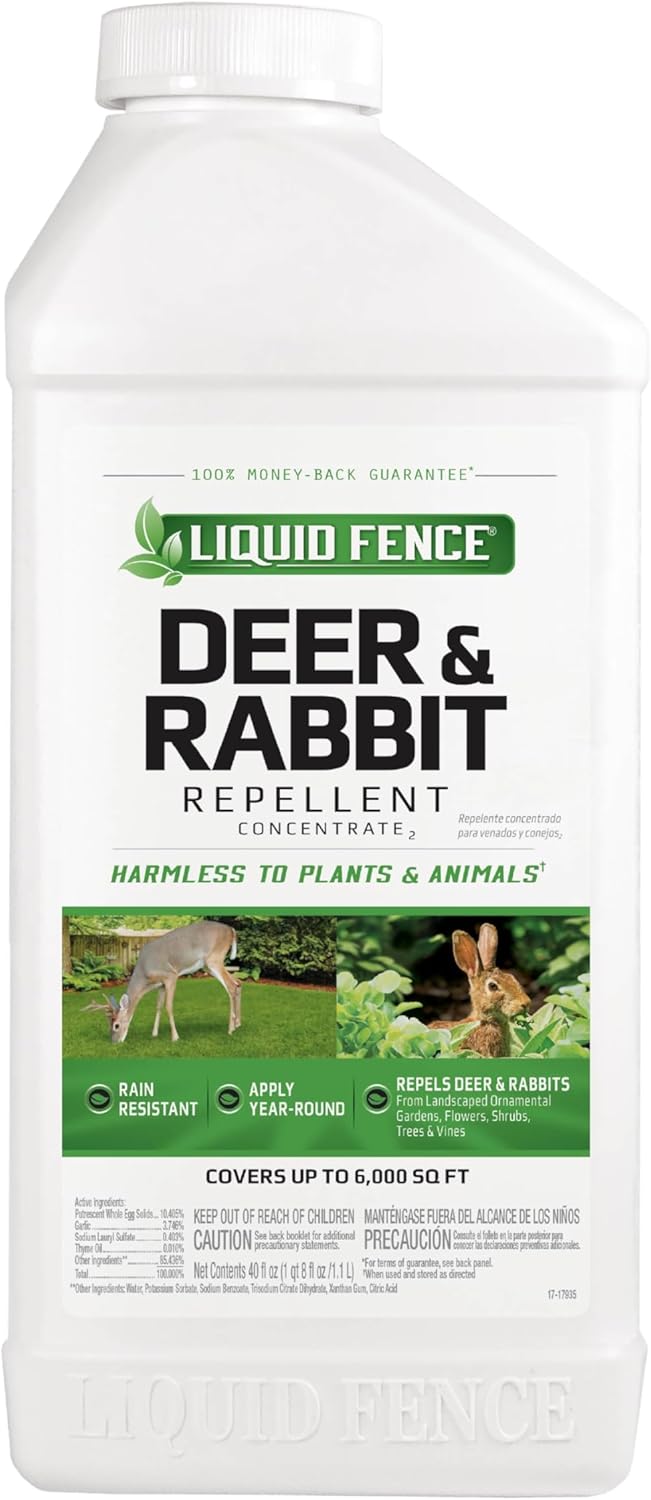
Liquid Fence Deer & Rabbit Repellent Concentrate, 40 Ounce
| Item Form | Concentrate |
|---|---|
| Unit Count | 40 Ounce |
| Indoor Outdoor Usage | Outdoor |
| Target Species | Deer |
| Scent Name | Unscented |
Liquid Fence Deer & Rabbit Repellent Concentrate is a scent-based concentrate you dilute and spray on ornamental gardens, flowers, shrubs, trees and vines to deter deer and rabbits before they feed. The formula relies on animals' natural aversion to the scent, so pests are repelled without having to eat treated foliage. It is intended for regular application: once weekly for three weeks and then about monthly, with reapplication after heavy rain. The product is marketed as long-lasting and rain-resistant when applied as directed and is formulated to be harmless to plants and animals if used and stored properly. Practical benefits include broad coverage from a single bottle and flexible year-round use on established plantings. Limits to expect are the need for repeated applications in high-pressure areas and diminished effectiveness where rain or new growth requires frequent retreatment; it also targets scent-averse species and may be less useful against pests that ignore odor cues.
Best for: Homeowners who want a practical, maintenance-minded solution to protect ornamental beds and shrubs from deer and rabbits and are willing to follow a simple reapplication schedule.
Less Ideal for: People seeking a one-time permanent fix or those trying to control pests that do not respond to scent-based repellents.
- Concentrated formula treats large areas when diluted, extending coverage from one bottle
- Works on scent so animals are deterred before they bite plants
- Rain-resistant formulation that can be used year-round on a variety of landscape plants
- Formulated to be harmless to plants and animals when used and stored as directed
- Requires an initial weekly reapplication period then monthly maintenance, which adds ongoing effort
- May need more frequent reapplication after heavy rainfall or on new growth
- Effectiveness is limited to animals that respond to scent and may not deter all pest types
Verdict: A concentrated, year-round scent repellent that practical gardeners can use to protect large ornamental areas from deer and rabbits with routine, straightforward maintenance.
Plantskydd Ready-to-Use Animal Repellent Liquid, 1.3 Gal

| Item Form | Liquid |
|---|---|
| Target Species | Deer, Rabbits, Elk, Moose, Hares, Voles, Squirrels, Chipmunks |
| Liquid Volume | 1.3 gallons |
| Active Ingredients | Dried blood (min 12%) |
Plantskydd Ready-to-Use Liquid is a large-volume, dried-blood–based repellent intended for garden and landscape protection against deer, rabbits, elk, voles, squirrels and similar herbivores. You apply it by spraying plant foliage (avoid blossoms and edible parts) and reapplying new growth every 2–4 weeks during the growing season or every 3–6 months in dormancy. One 1.3 gallon jug covers roughly 500–600 one-foot-tall plants and becomes rainfast within 24 hours, so it holds up through normal wet weather once dried. The formula is simple and pollinator friendly, composed mainly of dried blood, vegetable oil and water, and it can also be used to coat bulbs before planting or to protect tree trunks from rubbing. The product does not include a spray trigger, so you will need a compatible sprayer for wider application, and frequent reapplication is required in heavy browse pressure or on rapidly flushing plants. For gardeners focused on consistent, season-long performance, Plantskydd is straightforward to use and gives broad coverage when applied correctly.
Best for: Gardeners and landscape managers who need reliable, garden‑wide protection from deer and other browsing animals and prioritize consistent seasonal performance over occasional spot treatments.
Less Ideal for: People who want a no-maintenance, one-time solution or those who prefer purely fragrance- or barrier-based repellents should consider alternatives.
- Broad target list including deer, rabbits, elk, voles and other herbivores
- Covers ~500–600 one-foot-tall plants per 1.3 gallon jug when used as directed
- Rainfast in 24 hours for weather-resistant protection
- Pollinator-friendly formulation composed of dried blood, vegetable oil and water
- Does not include a spray trigger or applicator so an additional sprayer is required
- Requires regular reapplication during active growth which adds ongoing labor
Verdict: Buy this if you want a proven, large‑coverage, ready‑to‑use liquid repellent that holds up in rain and protects broad garden plantings from deer and similar herbivores.
Bonide Repels-All Animal Repellent Granules, 3 lb

| Net weight | 3 lb |
|---|---|
| Form | Granules |
| Claims | Biodegradable; People & pet safe when used as directed |
| Coverage duration | Up to 60 days (under normal conditions) |
Bonide Repels-All is a ready-to-use granular repellent formulated to keep deer, rabbits, squirrels, raccoons and many other pests away from planting areas. You spread the granules around beds, borders or other vulnerable spots and lightly water them in if no rain is expected; the manufacturer says the effect can last up to two months under normal conditions. The formula relies on scented and taste-irritant ingredients derived from fish meal, oils and minerals to trigger avoidance behavior rather than kill wildlife, and the product is described as biodegradable and safe for lawns and ornamentals when used as directed. For gardeners focused on protecting perennials, shrubs and newly planted areas it provides a low-effort barrier and can be re-applied more frequently after heavy rain or during rapid plant growth. Limitations are that effectiveness varies by species and local pressure of animals, and the granules require reapplication on a schedule for consistent protection and must not be applied directly to edible crops intended for human consumption.
Best for: Gardeners who want a low-effort, nonlethal way to protect ornamental plants from deer and small mammals and who prefer products that are described as safe for people and pets when used as directed.
Less Ideal for: Growers who need a guaranteed solution for heavy deer browsing or those wanting a repellent they can apply directly to fruits and vegetables should consider other targeted methods.
- Ready-to-use granular form is simple to apply around beds and borders
- Repels a broad list of animals including deer and rabbits using scent and taste deterrents
- Manufacturer states granules are biodegradable and safe for lawns and ornamental plants when used as directed
- Long-lasting effect up to 60 days under normal conditions with light watering after application
- Effectiveness varies with local animal pressure and weather and may require frequent reapplication after heavy rain
- Not labeled for direct use on edible crops intended for human consumption
Verdict: Choose these granules if you want a simple, nonlethal barrier that reduces deer and small-mammal damage to ornamental beds with infrequent reapplication.
Bonide Go Away! Deer & Rabbit Repellent 32 oz Ready-to-Use Spray

| Volume | 32 oz |
|---|---|
| Formulation | Ready-to-use spray |
| Active ingredient | Capsaicin (from cayenne pepper) |
Bonide Go Away! is a 32-ounce ready-to-use spray that repels deer, rabbits and similar garden pests by delivering capsaicin, the active compound in hot peppers, to foliage and structures. Use it by shaking the bottle and spraying until leaves and stems are wet, then reapply every 2 to 4 weeks or after heavy rain until animals stop grazing. The trigger-spray bottle makes spot treatments around flower beds, vegetable plots and young ornamentals quick and simple, and the formulation is labeled for direct use on edibles and ornamentals so it can protect vegetables and fruit. Expect it to work best as a preventive barrier rather than an instant cure for persistent animals; repeated applications are needed to build and maintain protection. It is a straightforward, low-effort option for gardeners who prefer a contact repellent over barriers or electronic devices, though users should follow label safety instructions and keep it away from children and pets during application.
Best for: Gardeners looking for an affordable, easy-to-apply chemical repellent to protect beds and small vegetable plots without installing fences or electronic devices.
Less Ideal for: People facing heavy deer pressure where physical barriers or exclusion fencing are required or those who need an immediate exclusion solution for large acreage.
- Ready-to-use spray with an easy trigger nozzle for quick spot or perimeter applications
- Uses capsaicin from cayenne pepper, a proven irritant that is safe for nonlethal deterrence
- Labeled for use on ornamentals and edible plants so it can protect vegetables and fruit
- Longer residual action when applied as directed, reducing how often you need to re-treat
- Needs frequent reapplication after heavy rain and to establish control
- Works as a deterrent but may not stop very determined wildlife or high deer pressure
Verdict: An inexpensive, ready-to-use hot pepper spray that provides a simple, nonlethal way to deter deer and rabbits around garden beds.
pzwmmsse Deer and Rabbit Repellent Balls, 12-Pack

| Coverage | About 140 sq ft per 12-pack |
|---|---|
| Duration | Up to 90 days per pack |
| Formulation | Plant-based, 25(b) FIFRA-exempt |
These repellent balls are a low-effort, scent-based option for keeping deer, rabbits, and similar browsers away from gardens, flower beds, fruit trees, and small orchards. You place or hang the lightweight balls near problem plants or along fence lines; each pack contains twelve balls that together are intended to protect about 140 sq ft and provide roughly 90 days of outdoor use. The formula is plant-based and labeled as a 25(b) FIFRA-exempt product so it relies on natural ingredients and a garden-appropriate scent rather than synthetic pesticides. That makes it an easy, low-toxicity choice for yards with kids or pets when used as directed. Because the deterrent works by odor, effectiveness depends on weather, local animal pressure, and proper placement, and very hungry deer or heavy browse may ignore it. These are best used as part of a layered approach alongside physical barriers for consistent protection in high-pressure areas.
Best for: Gardeners who prioritize a low-toxicity, low-maintenance way to reduce browsing on small planting areas and want a simple pest-management layer that is easy to deploy.
Less Ideal for: Those needing guaranteed exclusion in high-deer-pressure properties or who require a long-term, mechanical barrier for large areas should consider physical fencing or heavier-duty solutions.
- Plant-based, low-toxicity formula suitable for use around family outdoor spaces
- Simple no-tools placement that fits into routine yard maintenance
- 12-ball pack provides coverage for about 140 sq ft, useful for small gardens or targeted areas
- Odor-based deterrent can lose effectiveness in heavy rain or high animal pressure
Verdict: A convenient, low-toxicity scent deterrent that reliably supplements garden protection for small areas when you want a simple, low-maintenance option.
Liquid Fence Deer & Rabbit Repellent Ready-to-Use Spray, 1 Gallon

| Formulation | Ready-to-use liquid |
|---|---|
| Target pests | Deer and rabbits |
| Active ingredients | Putrescent whole egg solids, garlic, thyme oil |
| Application areas | Ornamental gardens, flowers, shrubs, trees, vines |
Liquid Fence Deer & Rabbit Ready-to-Use is a gallon spray formulated to keep deer and rabbits away by using a strong scent and taste deterrent rather than toxic ingredients. It is applied directly to vegetation—leaves, stems and buds—and is marketed as rain resistant so a single application during a dry period will provide protection for several weeks with monthly reapplication or more frequent sprays in heavy-feeding areas. The formula lists putrescent egg solids, garlic and thyme oil as active components and is intended to be harmless to plants and animals when used as directed. Practical benefits include easy spray application for landscape beds and established plantings and no need to rotate products seasonally. Limitations are the need to reapply after extended rain or heavy browsing pressure and the obvious scent that may be noticeable near treated areas, which some users may find unpleasant.
Best for: Gardeners who want a proven, scent-based deterrent to protect ornamental beds and established plantings and who value straightforward, ready-to-use solutions supported by many users.
Less Ideal for: People who need an invisible or scent-free solution or those seeking a one-time, permanent fix for heavy, constant browsing across large acreage.
- Ready-to-use gallon is simple to apply directly to plants without mixing
- Scent- and taste-based formula repels deer and rabbits before they feed
- Rain-resistant formula reduces frequency of reapplication in normal conditions
- Uses ingredients that are described as harmless to plants and animals when used as directed
- Has a strong odor from active ingredients that may be noticeable to people
- Requires regular reapplication (monthly or weekly under heavy pressure) to maintain protection
Verdict: A reliable, easy-to-apply scent-based spray that protects ornamental gardens from deer and rabbits with monthly maintenance.
Choosing the Right Rabbit Repellent for Gardens: Key Factors to Consider
Deterrent Mechanism and Local Rabbit Behavior
Know how the repellent works and how rabbits behave in your area. Some repellents use smell or taste aversion, others rely on physical barriers or sensory disruption. If rabbits in your neighborhood are habituated to certain smells, taste-based options may need rotation to remain effective.
Consider the time of year and food availability. In lean months rabbits are more likely to take risks and try new food, so stronger or repeated treatments may be necessary. Understanding local rabbit pressure helps set realistic expectations for how aggressive your repellent strategy must be.
Safety Around Edible Plants and Wildlife
Check whether the repellent is safe for vegetables, herbs, and fruiting plants if you plan to use it in garden beds. Some formulations are labeled for use on ornamentals only, while others are formulated to be safe for edible crops when used as directed.
Also evaluate the potential impact on pollinators, birds, and pets. Physical barriers and non-toxic taste or scent deterrents are generally safer for beneficial wildlife than broad-spectrum chemical controls. Choosing a repellent with low toxicity and clear usage instructions reduces the risk of plant injury and unintended harm.
Longevity and Reapplication Requirements
Different repellents provide varying lengths of protection. Granular products might require incorporation into the soil or periodic top-dressing, while sprays can wear off after rain or irrigation. Understand typical rainfast times and how quickly the active deterrent degrades in sunlight.
If you want low-maintenance protection, prioritize products with longer residual action or those formulated to bind to foliage. For seasonal or temporary needs, an option with shorter activity but fast knockdown may be acceptable.
Application Method and Garden Fit
Choose a delivery method that matches your garden layout and your willingness to apply treatments. Sprays work well for targeted foliage protection and container plants but require careful coverage. Granules are simple to broadcast across larger beds but may need watering in or reapplication after heavy rain.
Consider safety and convenience for the spaces you manage. Tight borders and ornamental beds may favor hand-sprayed products, while larger vegetable plots can be served efficiently with broadcast or granular approaches.
Residual Smell and Human Comfort
Many repellents rely on odors that rabbits dislike. While effective, these can be objectionable to gardeners or neighbors if strong. Assess whether a product's scent profile is compatible with living spaces, patios, or nearby pathways.
If you dislike persistent smells, look for low-odor formulas or options that dissipate quickly while still deterring wildlife. For close-quarters gardening, choose repellents known to have minimal lingering scent.
Cost of Ongoing Maintenance
An initial low-cost product can become expensive if it requires frequent reapplication or large coverage amounts. Estimate the product's coverage per application and typical reapplication interval to forecast seasonal cost and labor.
Factor in ancillary supplies such as sprayers, spreaders, or protective gear. For long-term rabbit pressure, a slightly higher initial investment in a longer-lasting solution can reduce time and expense over the season.
Nonchemical Options and Barrier Strategies
Physical exclusion and habitat modification are reliable first lines of defense. Hardware cloth, low fences, cloches, and plant collars prevent access to vulnerable seedlings and low-growing ornamentals without relying on repellents. Modify the garden to reduce cover near beds where rabbits hide and nest.
Nonchemical choices work especially well in small beds and around young plants where targeted protection is feasible. Barriers require an upfront effort to install but often reduce the need for repeated chemical or scent-based applications.
- Use buried edging or mesh to stop burrowing under fences
- Install short removable fences around seasonal beds and raised planters
- Protect seedlings with individual cloches or plant guards until established
Applying Repellents to Vegetable Beds Safely
When treating edible crops, always follow label guidance for preharvest intervals and application rates. Use formulations labeled safe for vegetables and avoid foliar contact with developing fruit when possible. Apply broadly at intervals recommended for the product to maintain deterrent action.
Target application to the foliage rabbits are feeding on, and avoid overapplication that could stress plants. In container gardens, use measured sprays or granules sparingly and keep products away from drainage paths where pets or wildlife frequent.
- Apply early in the morning or late afternoon when foliage is dry for better adhesion
- Reapply after heavy rain according to product instructions
- Spot-test on a few plants if you are concerned about sensitivity
Combining Methods for Better Results
A layered approach usually works best. Combine physical barriers around high-value plants with scent or taste deterrents across larger areas. Rotate deterrent types periodically to reduce the chance of habituation.
Set realistic expectations: repellents lower feeding pressure but rarely eliminate visits entirely. Using multiple compatible tactics reduces plant damage and spreads maintenance time more manageably through the season.
- Use barriers for seedlings and repellents for established beds
- Alternate scent-based sprays with granules if rabbits seem to ignore one type
- Monitor and adapt the plan based on local rabbit activity
Timing Treatments Through the Season
Match repellent strategy to the garden calendar. Apply deterrents proactively in spring when young transplants are most vulnerable and reapply during periods of new growth or in late fall when rabbits browse more heavily. Short-term intensive use around planting windows often protects the most vulnerable growth stages.
Regular monitoring will tell you when to reapply and whether to intensify measures after extreme weather events that can change rabbit foraging patterns.
- Increase protection during seedling emergence and new growth flushes
- Inspect beds weekly during high-pressure months
- Reduce treatment frequency in winter dormancy when plants are less vulnerable
Integrating Repellents with Organic and Wildlife-Friendly Practices
If you prefer organic or wildlife-friendly gardening, select repellents with low toxicity and clear nonlethal modes of action. Encourage natural predators by preserving hedgerows or installing perches for raptors to increase long-term rabbit control.
Be mindful that some deterrents can also repel beneficial species. Choose products and application methods that minimize harm to pollinators while still protecting plants.
- Favor physical controls first, then add compatible deterrents
- Use habitat management to reduce cover and attract predators
- Avoid broad-spectrum toxins that can harm non-target species
How We Chose the Best Rabbit Repellent for Gardens
We focused on practical, field-ready characteristics that gardeners can verify or measure. Primary evaluation criteria included deterrent effectiveness under light to moderate rabbit pressure, the duration of protection after application, and safety for common garden plants and helpful wildlife. We also measured ease of application and maintenance, covering spray patterns, granule broadcast methods, and reapplication intervals. Weather resistance and rainfastness were considered so options that wash away quickly were deprioritized. Finally, we looked at material compatibility with edible crops and how the repellent can be integrated into routine garden care. Products were excluded if they required professional installation, involved restricted pesticides, or relied on techniques unsuitable for home garden plots and patios. We prioritized options that are appropriate for small to medium vegetable beds, flower borders, and container plantings. The criteria above guided the shortlist and align with the scorecard metrics used on each product block.
FAQ
Are rabbit repellents safe to use on vegetables and herbs?
Many repellents are formulated for use on edible plants when applied as directed, but labels vary. Check the product instructions for specific guidance on edible crops, preharvest intervals, and any recommended washing or removal before harvest.
How often do I need to reapply a rabbit repellent?
Reapplication depends on the product type and weather. Spray formulations often need reapplying after heavy rain or every few weeks, while some granular or longer-lasting options may persist longer. Follow the product directions and monitor plant damage to time reapplications.
Will repellents keep rabbits away permanently?
Repellents reduce feeding pressure but rarely provide permanent exclusion on their own. Rabbits can habituate to a single deterrent over time, so combining repellents with barriers and habitat modification gives more durable protection.
Can repellents harm pollinators or pets?
Some repellents can affect non-target species if misused. Choose low-toxicity products and apply them in ways that avoid direct contact with flowers and pollinators. Keep pets away from treated areas until products have dried or settled according to instructions.
What is the best way to protect newly planted seedlings?
Physical barriers like cloches, collars, or short fencing are the most reliable for seedlings. Add targeted repellent treatments around the bed perimeter to discourage exploratory feeding. Combining methods protects vulnerable young plants while minimizing repeated applications.
Final Verdict
Choose a rabbit repellent strategy based on where you garden, how persistent local rabbits are, and how much ongoing maintenance you want to perform. For small beds and seedlings, physical barriers plus targeted repellents are efficient. For larger plots, choose longer-lasting, weather-resistant formulations and plan for regular reapplication. Prioritize plant safety and wildlife-friendly options when possible, and be prepared to combine methods for the most consistent protection.
