

Note: This article contains affiliate links. If you click on these links and make a purchase, I may earn a small commission at no extra cost to you. This helps support my research and content. Read my full affiliate disclosure here.
If you have a slopey yard or an uneven landscape, the right riding lawn mower changes mowing from a risky chore into a manageable task. A mower designed for hills and uneven terrain focuses on traction, safe braking, deck stability, and operator control so you can get an even cut without slips, scalping, or excessive bouncing. This guide covers five top-rated riding lawn mowers shortlisted for slope work and rough lawns. We evaluate each machine against practical gardener concerns like uphill braking, grade capability, deck performance on contours, and long-term maintenance. Use the same criteria to match a mower to your yard before you pick a final machine.
Top Picks at a Glance
| Best Overall The best all-around choice for most situations | Husqvarna TS 375XD Riding Lawn Mower, 54-inch Deck |  |
| Best Quality Built to a higher standard if you want something more solid | Husqvarna TS 140X 48" Riding Lawn Tractor with 24 HP Briggs V-Twin |  |
| Best Value The sweet spot between price and what you get | Husqvarna TS 120 42" 19HP Briggs Lawn Tractor |  |
| Best Budget The cheapest option that still gets the job done reliably | GIYI Electric Riding Lawn Mower with 42" Deck and Six 40V 6.0Ah Batteries |  |
| Best Seller A high-volume bestseller chosen again and again | EGO Power+ TR4204 42" Electric Riding Lawn Tractor |  |
Husqvarna TS 375XD Riding Lawn Mower, 54-inch Deck

| Power Source | Gas Powered |
|---|---|
| Cutting width | 54 |
| Operation Mode | Manual |
The Husqvarna TS 375XD is a purpose-built riding mower that targets homeowners with large, uneven properties who need a durable machine. It uses a 24 hp V-twin gas engine and a 54-inch three-blade fabricated mower deck to cover wide swaths quickly, while a push-button locking differential and dial-adjustable seat suspension help when navigating hills and rough terrain. Typical use is regular lawn maintenance across large lawns, fields, or acreage where traction and operator comfort matter. Notable features include the differential lock for better grip on slopes and adjustable suspension to reduce fatigue during long mowing sessions. Practical benefits are faster mowing with fewer passes and improved stability on bumps and uneven ground. Important limitations are its substantial weight and footprint, which make maneuvering in tight spaces and transporting the machine more difficult, and its gas power means routine fuel and engine maintenance are required.
Best for: Buyers with several acres or large, uneven lawns who prioritize durability, traction, and operator comfort while covering ground efficiently.
Less Ideal for: Homeowners with small yards, many tight beds or obstacles, or those seeking a compact or battery-powered mower for light maintenance.
- Powerful 24 hp V-twin engine for consistent cutting performance over large areas
- 54-inch three-blade fabricated deck covers wide swaths to reduce mowing time
- Push-button locking differential improves traction on slopes and uneven ground
- Dial-adjustable seat suspension increases operator comfort during long jobs
- Very heavy and large, making tight-turn maneuvering and transport more challenging
- Gas engine requires regular fuel and maintenance compared with electric alternatives
Verdict: Choose this mower if you need a robust, traction-focused machine that covers large, uneven properties quickly and keeps the operator comfortable during long sessions.
Husqvarna TS 140X 48" Riding Lawn Tractor with 24 HP Briggs V-Twin

| Cutting width | 48 inches |
|---|---|
| Power Source | Gas Powered |
| Operation Mode | Manual |
| Engine | 24 HP Briggs & Stratton V-Twin |
The Husqvarna TS 140X is built for performance-minded homeowners who need a capable, comfortable ride for larger lawns and challenging terrain. It pairs a 24 HP Briggs & Stratton V-twin engine with a 48-inch three-blade stamped mower deck, delivering strong cutting power and wide coverage so you finish jobs faster. The tractor uses a pedal-operated transmission to keep both hands on the wheel while you steer, and the reinforced steel deck plus claimed Air Induction technology aim to produce consistent, quality clippings. Practical features like an upgraded seat and ergonomic steering wheel increase comfort during longer sessions on slopes or uneven ground. Limitations to note are the manual operation mode and lack of specified advanced hillside safety systems, so cautious operation is still required on steep grades. Assembly, transport, and storage will also be heavier compared with zero-turn mowers or smaller tractors. For yards with rolling terrain where reliability and cutting performance matter, the TS 140X is a straightforward, performance-focused choice.
Best for: Buyers who prioritize cutting power and a comfortable, durable ride for larger residential lawns with rolling terrain and who favor straightforward, performance-focused tractors over specialty hillside machines.
Less Ideal for: Do not choose this if you need a compact mower for tight yards, a dedicated hillside model with advanced slope controls, or a high-maneuverability zero-turn for complex mowing patterns.
- Powerful 24 HP Briggs & Stratton V-twin engine for consistent performance
- Wide 48-inch cutting deck reduces mowing time on larger properties
- Pedal-operated transmission lets you keep hands on the wheel for better control
- Reinforced steel deck and Air Induction design for improved cut quality
- Upgraded seat and ergonomic steering increase comfort during long mowing sessions
- Manual operation and standard controls lack dedicated hillside safety features
- Heavier and bulkier than compact or zero-turn mowers, making transport and storage more demanding
Verdict: A robust, no-nonsense riding tractor that delivers strong engine power and a wide deck for faster, comfortable mowing of larger, uneven yards.
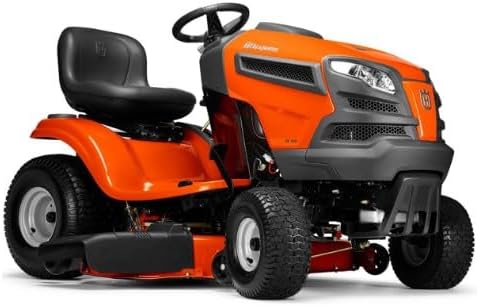
Husqvarna TS 120 42" 19HP Briggs Lawn Tractor
| Cutting width | 42 inches |
|---|---|
| Power Source | Gas Powered |
| Operation Mode | Manual |
The Husqvarna TS 120 is a homeowner-oriented lawn tractor that pairs a 19 HP Briggs engine with a 42-inch twin-blade stamped deck for efficient cutting of small to mid-size lawns. It uses a pedal-operated hydrostatic-style transmission so you can change speed without clutching, which keeps both hands free for steering on slopes and uneven ground. The seat and controls are ergonomically placed for comfortable, repeatable mowing sessions and the tractor supports side ejection out of the box with options for a collector or BioClip mulching cover if you want cleaner clippings or mulching capability. Practical benefits include strong engine torque for tackling thicker grass and a generous cutting width that reduces pass count. Important limitations are its basic manual operation and stamped deck rather than a heavier fabricated deck, which can limit durability under very rough, rocky terrain, and it is sized primarily for small to medium properties rather than large acreage. Overall this is a straightforward, no-frills tractor for homeowners who want dependable power and easy control for regular lawn maintenance.
Best for: A practical homeowner who wants a reliable, easy-to-drive tractor to speed up regular mowing on hilly or uneven residential lawns while prioritizing comfort and straightforward operation.
Less Ideal for: Not a good match for commercial users or owners of very large properties who need heavy-duty fabricated decks and higher-capacity collectors.
- Powerful 19 HP Briggs & Stratton engine for consistent cutting performance
- Pedal-operated hydrostatic transmission for easy speed control while keeping hands on the wheel
- 42-inch twin-blade deck cuts wide swaths to reduce mowing time
- Ergonomic seating and intuitive controls for comfortable use during longer jobs
- Stamped mower deck is lighter duty than fabricated decks and may wear faster under heavy or rocky use
- Designed for small to mid-size properties rather than very large acreage
Verdict: A user-friendly, powerful lawn tractor that cuts wide and makes regular mowing faster and easier for homeowners.
GIYI Electric Riding Lawn Mower with 42" Deck and Six 40V 6.0Ah Batteries

| Power Source | Battery Powered |
|---|---|
| Cutting width | 42 inches |
| Number of Positions | 9 |
| Operation Mode | Automatic |
This GIYI electric riding mower is a battery-powered tractor built to tackle up to about an acre per charge with a 42-inch stamped steel deck and six 40V 6.0Ah batteries. It is typically used for medium-size residential properties and hilly or uneven terrain where a cordless machine is preferred to avoid fumes and high maintenance. Notable features include a belt-free brushless motor for lower maintenance, nine cutting-height positions from roughly 1.5 to 4.5 inches, and a top mowing speed that helps cover ground quickly. Practical benefits are quieter operation, simpler upkeep compared with gas tractors, and enough runtime to mow typical suburban yards without frequent recharges. Important limitations are the heavy overall weight and reliance on the included battery pack for range so very large properties or long continuous run sessions may need planning for battery swaps or charging. Assembly, service access, and parts availability should also be considered for long-term ownership.
Best for: Homeowners wanting a lower-maintenance, cordless riding mower that can handle hills and an acre-scale yard while keeping operating costs and upkeep simpler than a gas tractor.
Less Ideal for: Large properties significantly over an acre, professional landscapers, or buyers who need very long continuous run times without planning for battery swaps.
- Six 40V 6.0Ah batteries provide 60–80 minutes runtime suitable for most residential yards
- 42-inch stamped steel deck with nine height positions for versatile cutting
- Brushless, belt-free motor design reduces routine maintenance
- Capable of handling slopes up to 15 degrees and reaches speeds up to about 6 mph
- Heavy weight makes transport and storage more demanding
- Range depends entirely on the supplied batteries which may limit continuous mowing on very large properties
Verdict: A practical electric riding mower for homeowners who want a low-maintenance, battery-powered tractor that handles hills and medium-size yards efficiently.
EGO Power+ TR4204 42" Electric Riding Lawn Tractor

| Power Source | Battery Powered |
|---|---|
| Cutting width | 42 inches |
| Battery Average Life | 60 minutes |
| Number of Positions | 12 |
| Manufacturer Warranty Description | 5-year tool warranty |
The EGO Power+ TR4204 is a cordless 42-inch riding lawn tractor built to replace a small gas tractor without fumes or high maintenance. It combines up to six 56V ARC Lithium batteries to produce peak power claimed to equal a 21-horsepower gas engine and is rated to cut up to about 1.5 acres on a single charge with the six included 6.0Ah packs. The tractor uses dual brushless cutting motors and a stamped steel deck with 12 height positions so you can dial in cutting height from about 1.5 to 4.5 inches. A digital display gives three blade settings, three drive speeds and cruise control for steady work on slopes and undulating ground, and extras like LED lights, USB charging and Bluetooth improve usability. Key practical benefits are quieter operation, reduced maintenance from belt-free cutting motors, and the ability to tow small loads with the rear hitch. Buyers should note runtime depends on battery count and terrain so steep or very hilly properties may need more charge capacity or recharges for larger jobs.
Best for: Homeowners who want a low-maintenance, quiet alternative to a small gas tractor for mowing up to about 1.5 acres and who prioritize predictable performance and features that simplify operation on uneven ground.
Less Ideal for: Owners of very large properties, extremely steep hills, or those who need maximum continuous runtime without recharging should consider higher-capacity commercial ride-ons or gas tractors.
- High peak power using up to six 56V ARC Lithium batteries for gas-equivalent performance
- Dual brushless, belt-free cutting motors reduce maintenance and improve reliability
- Customizable controls with digital display, multiple blade settings, drive speeds and cruise control
- 42-inch stamped steel deck with 12 height positions for flexible cut heights
- Includes LED lights, USB charging port and Bluetooth for convenient operation
- Runtime and acre capacity depend heavily on battery count and will drop on steep or rough terrain
- Heavy unit may be less maneuverable in very tight or densely wooded yards
Verdict: Choose the EGO TR4204 if you want a quiet, low-maintenance electric riding tractor that delivers gas-like power for small to mid-size hilly lawns with customizable controls for steady operation.
Choosing the Right Riding Lawn Mower for Hills and Uneven Terrain: Key Factors to Consider
Traction and Tire Design
Tires and traction systems are the first line of defense on slopes. Aggressive tread patterns and wider contact patches improve grip in wet or loose conditions and reduce wheel spin when starting uphill.
Consider tires made for turf that still have directional siping to shed mud and maintain bite. Some machines use differential locks or limited-slip arrangements to prevent a slipping wheel from causing a loss of forward motion. For uneven terrain, sidewall stiffness and tire pressure range matter because overly soft tires can deform and lose traction while excessively hard tires transfer more shock to the chassis and deck.
Brake Systems and Speed Control
Effective braking and low-speed control decrease the chance of runaway motion on steep sections. Look for reliable mechanical or hydrostatic braking that provides predictable resistance when coasting downhill.
Speed modulation, such as a smooth hydrostatic transmission or variable-speed control, helps you manage descent without continual clutching. Engine braking or a transmission that offers resistance when the throttle is released adds another layer of safety when navigating long inclines.
Deck Construction and Float
On rolling ground, the mower deck must track contours without scalping high spots or leaving low patches. Heavy, stiff decks resist flex and maintain blade-to-ground geometry, but some suspension or float features help the deck follow gentle undulations for a cleaner cut.
Pay attention to deck mounting points and how the deck is suspended from the chassis. A deck that tilts freely with limited travel can follow bumps without transferring too much motion into the chassis. Wider cutting decks also reduce the number of passes needed, which matters when maneuvering on slopes.
Power Delivery and Engine Torque
Slope work loads the engine more than flat mowing. High low-end torque is more important than peak horsepower because it keeps forward momentum when climbing and reduces the tendency to bog down in thick or damp grass.
Look for drivetrains that transfer torque smoothly and avoid abrupt surges that can unsettle traction. Engines with good cooling and airflow are also beneficial since climbing causes sustained high-load operation that raises component temperatures.
Operator Controls and Visibility
Clear sightlines, easy-to-reach controls, and a firm seating position improve precision on uneven ground. Being able to see the deck edge and upcoming terrain features lets you adjust speed or steering before a problem develops.
Controls that allow one-handed adjustments and a tight turning radius reduce the need for risky maneuvers on slopes. Anti-slip foot surfaces and a secure platform help the operator remain steady when braking or steering on a grade.
Chassis Strength and Maintenance Access
A reinforced frame resists twisting when the machine traverses uneven ground, reducing stress on bearings and linkages. Robust mounting points for the deck and transmission extend service life when the chassis is repeatedly flexed.
Equally important is access for routine maintenance under tougher working conditions. Grease points, easily reachable filters, and protected belt paths minimize downtime and keep the mower reliable after collisions with rocks or roots.
Assessing Your Yard's Slope and Obstacles
Before shopping, walk the property and note not only maximum slope angles but also how long those slopes run and where transitions occur. Short, steep inclines behave differently from long, gradual grades; sustained climbs place more continuous load on the engine and brakes.
Map out obstacles such as rocks, stumps, terraces, or irrigation features. Uneven surfaces with frequent bumps demand a mower with both good suspension of the deck and a forgiving tire setup so you do not scalp high spots or create low streaks.
- Measure the steepest slope section and approximate its length.
- Note wet or gullied areas that could reduce traction.
- Identify tight turns or narrow corridors that require maneuverability.
Drive Types and What They Mean on Slopes
Hydrostatic drives give smooth speed control and let you creep up or down grades without shifting. This smooth modulation is useful for avoiding sudden torque changes that can break traction. Manual transmissions can be robust but require more operator attention when climbing.
Consider whether the machine has a differential lock or traction-assist options. Those features are not necessary for every yard, but they make a big difference in sites with loose soil, wet grass, or uneven footing where one rear wheel might lose grip.
- Hydrostatic for fine speed control and ease of use.
- Differential locks for improved traction on one-wheel-slip events.
Deck Width and Maneuverability Tradeoffs
Wider decks cut more area per pass and reduce the number of times you must cross slopes, but they also reduce maneuverability in tight spaces and increase the risk of tipping if used improperly on narrow ledges. Narrower decks are better for intricate yards with frequent turns.
When choosing deck width consider the shape of the lawn and how often you will need to make passes across a grade. In many sloped properties, a slightly narrower deck gives safer handling without costing too much time.
- Wider deck: fewer passes, less repeated uphill-downhill travel.
- Narrower deck: improved control in tight or terraced areas.
Routine Mowing Techniques for Slopes
Adopt mowing patterns that minimize risky cross-slope travel. When feasible, mow up and down the slope rather than side-to-side to reduce lateral tipping moments. Keep a steady, moderate speed and avoid sudden turns on a slope.
Adjust cutting height slightly higher on uneven ground to avoid scalping and give the deck a margin over bumps. Regularly inspect and sharpen blades because dull blades increase drag and the chance of bogging when climbing.
- Prefer up-and-down passes on steep sections.
- Raise deck height on rough patches to prevent scalping.
Storing and Winter Care for Slope-Used Mowers
Machines used frequently on hills are exposed to more chassis flex and dirt ingress. Before storage, clean grass and debris from decks, cooling fins, and undercarriage to prevent corrosion and overheating in the next season. Loose debris can also mask damage from rocks or roots.
Perform a full service at least once per year: change fluids, check belts and blades, and lubricate pivot points. Address worn tires or cracked mounts promptly because slope work accelerates wear compared with flat-lawn use.
- Clean undercarriage thoroughly after heavy slope work.
- Schedule annual service focused on belts, tires, and brake components.
How We Chose the Best Riding Lawn Mower for Hills and Uneven Terrain
Our shortlist emphasizes machines that perform consistently on slopes and irregular ground while reducing safety risks and maintenance headaches. Key evaluation criteria included traction systems and tire design, because grip determines whether a mower holds line on wet or steep grass. We checked drivetrain types and hill-capable power delivery to judge acceleration and engine load on grades. Deck construction and suspension or deck float were assessed for cut evenness on undulating terrain and to limit scalping. Operator controls and ergonomics were evaluated for precise speed, steering feel, and ease of using hill-safe features like engine braking or cruise control. Durability and serviceability were considered for components exposed to impact from rocks, roots, and constant chassis flex. We excluded machines clearly designed only for flat, ornamental lawns or for narrow turf tasks where slope capability is limited. Lightweight garden tractors without slope-rated features were not considered. The resulting picks are machines that match the practical demands of sloped yards: traction, safe braking, deck stability, operator control, and rugged construction.
FAQ
How steep of a hill can a riding mower safely handle?
It often depends on the mower design and manufacturer guidance, but stability decreases as slope angle increases. Shorter, less steep slopes are safer to tackle; for long or very steep grades consider alternate mowing strategies or equipment designed for slopes.
Is all-wheel drive necessary for hilly lawns?
All-wheel drive helps in many slippery or loose conditions but is not always required. Good tire tread, a differential lock, and proper weight distribution can provide adequate traction for moderate slopes.
Should I mow across or up and down a slope?
Mowing up and down the slope usually reduces lateral tipping risk and is safer for steeper sections. Across-slope passes are faster on gentle, stable hills but increase the chance of rolling incidents on steeper terrain.
How should I adjust cutting height for uneven terrain?
Raise the cutting height slightly compared with flat-lawn settings to avoid scalping high spots and to give the deck more clearance over bumps. Frequent blade checks help maintain clean cuts at the chosen height.
Can I add ballast or weights to improve traction?
Adding weight over drive wheels can improve traction, especially on rear-drive machines, but it also increases braking distances and stresses the chassis. Use ballast carefully and follow safe loading guidance for the equipment.
What maintenance matters most after slope mowing?
Inspect tires and wheels for cuts or abnormal wear, check belts and blade condition, and clean the deck and cooling fins. Pay attention to mounting hardware and bearings because repeated flexing on slopes speeds mechanical wear.
Final Verdict
Prioritize traction, predictable braking, and a deck that follows contours when choosing a riding lawn mower for hills and uneven terrain. Expect tradeoffs between deck width and maneuverability, and pick a drivetrain that offers smooth low-speed control and sufficient torque for sustained climbs. Focus on machines with accessible maintenance points and robust chassis details if your yard has frequent bumps or rocky sections. With the right balance of grip, engine torque, and deck stability, you can mow slopes more safely and achieve a consistent cut across uneven ground.
