

Note: This article contains affiliate links. If you click on these links and make a purchase, I may earn a small commission at no extra cost to you. This helps support my research and content. Read my full affiliate disclosure here.
If you need long, clean rip cuts along hardwood boards or fallen timber, a Ripping Chainsaw does a job that standard chains ignore. The right ripping saw keeps the cut line straight, reduces binding, and produces a shallow, consistent kerf so you can mill or resaw boards with less waste and fewer follow-up passes. This guide presents six shortlisted Ripping Chainsaws we vetted for performance in real backyard milling and firewood prep. We evaluated chain geometry, bar rigidity, engine or motor torque at low speed, vibration control, and ease of tensioning and maintenance. Below are the picks that stood out for dependable straight-line cutting and practical handling in outdoor conditions. Read on to match a tool to your ripping workload and setup.
Top Picks at a Glance
| Best Overall The best all-around choice for most situations | 8TEN 28" Ripping Chainsaw Chain, .063 Gauge, 3/8" Pitch (92 Drive Links) — 3-Pack |  |
| Best Quality Built to a higher standard if you want something more solid | OREGON 72RD084G 84-Drive-Link 3/8" Ripping Saw Chain |  |
| Best Budget The cheapest option that still gets the job done reliably | 8TEN 18" Ripping Chainsaw Chain (.050 gauge, .325 pitch, 72 drive links) |  |
| Highest Rated A top-rated pick with lots of positive feedback | 8TEN 28" Ripping Chainsaw Chain, .063 Gauge, 3/8" Pitch (92 Drive Links) — 2 Pack |  |
| Most Popular A crowd favorite that many people choose with confidence | KAKEI 36-inch Ripping Chainsaw Chain, 3/8" Pitch .063" Gauge, 114 Drive Links (Semi-Chisel) |  |
| Best Seller A high-volume bestseller chosen again and again | 8TEN 36" Ripping Chainsaw Chain, .063 Gauge, 3/8" Pitch (115 Drive Links) — 3-Pack |  |
8TEN 28" Ripping Chainsaw Chain, .063 Gauge, 3/8" Pitch (92 Drive Links) — 3-Pack

| Chain Type | Ripping |
|---|---|
| Pitch | 0.38 inches |
| Drive Link Count | 92 |
| Gauge | .063 Inch |
| Unit Count | 3 Count |
This 8TEN set supplies three identical 28-inch ripping chains made for ripping and milling tasks where you cut parallel to the wood grain. Each chain is 3/8" pitch with a .063" gauge and 92 drive links, so they fit bars and saws requiring those measurements and are listed as compatible with many Stihl and Husqvarna models. Ripping chains produce a finer, smoother surface for making boards and planks, and the bundle gives you spare chains so you can swap quickly when one dulls. The listing states the chains are manufactured from 68CrNiMo33 steel with GCr15 rivets, which suggests durable construction for heavy-use cutting. Expect slower cutting compared with standard chains because ripping teeth remove wood more precisely, and sharpening or professional maintenance may be needed to keep the fine cutters performing. Also verify exact fitment for your saw model before buying since pitch, gauge, and drive link count must match your bar and sprocket.
Best for: Buyers who plan to mill or cut boards from larger timbers and want a ready supply of chains that produce smoother, rip cuts rather than fastest possible removal. Ideal for homeowners or small-time sawyers that value precise, board-quality cuts.
Less Ideal for: People who primarily need a fast, aggressive chain for general felling, limb work, or firewood production should choose a full- or semi-chisel chain instead.
- Designed specifically for ripping and milling for cleaner, smoother boards
- Three-chain pack provides immediate spares for extended work sessions
- Constructed from alloy steel with metal rivets for durability under heavy cutting
- Matches common OEM part numbers and lists compatibility with many Stihl and Husqvarna models
- Ripping chains cut slower than standard chains, so they are not the fastest option for general felling or firewood work
- Requires correct pitch, gauge, and drive link count so fitment must be verified before use
Verdict: If you need clean, board-quality rip cuts and on-hand spares, this 3-pack of 28" ripping chains is a practical, work-ready choice.
OREGON 72RD084G 84-Drive-Link 3/8" Ripping Saw Chain

| Pitch | 0.38 inches |
|---|---|
| Chain Type | Ripping Chain |
| Gauge | 0.05 |
| Drive Link Count | 84 |
This Oregon 72RD084G ripping chain is built for straight, low-resistance cuts on chain-type sawmills and ripping applications rather than handheld cutting. It uses standard chassis and cutter parts with a ripping-specific cutter grind to reduce tear-out when cutting along the grain. The 84 drive link count and 3/8" pitch paired with a 0.050" gauge make it compatible with mills and guide bars that accept that configuration, and LubriLink tie straps and a Vibe-ban chassis help keep oil on the chain and reduce vibration at the handles. In practice that translates to smoother, cleaner rip cuts and less chatter during long milling sessions. Important limitations are that it is not recommended for handheld use and you must match pitch, gauge, and drive link count to your saw or mill; the chain alone does not adapt to incompatible bars or sprockets. For anyone doing ripping on a chainsaw mill, this chain delivers the focused performance and durability expected from a purpose-made ripping chain.
Best for: Sawyers and homeowners who mill lumber or frequently perform rip cuts on a chainsaw mill and prioritize clean, low-vibration ripping performance.
Less Ideal for: Casual users who need a multi-purpose chain for handheld cutting or those with saws that do not accept 3/8" pitch and 0.050" gauge chains.
- Ripping-specific cutter grind for cleaner cuts along the grain
- LubriLink tie straps help retain oil on the chain during milling
- Vibe-ban chassis design reduces vibration by about 25% at the handles
- Uses standard chassis and cutter parts for easier maintenance
- Not recommended for handheld use, limiting versatility
- Requires exact pitch, gauge, and drive link match to your saw or mill
Verdict: Choose this Oregon ripping chain when you need a purpose-built chain that delivers cleaner, lower-vibration rip cuts on a chainsaw mill.
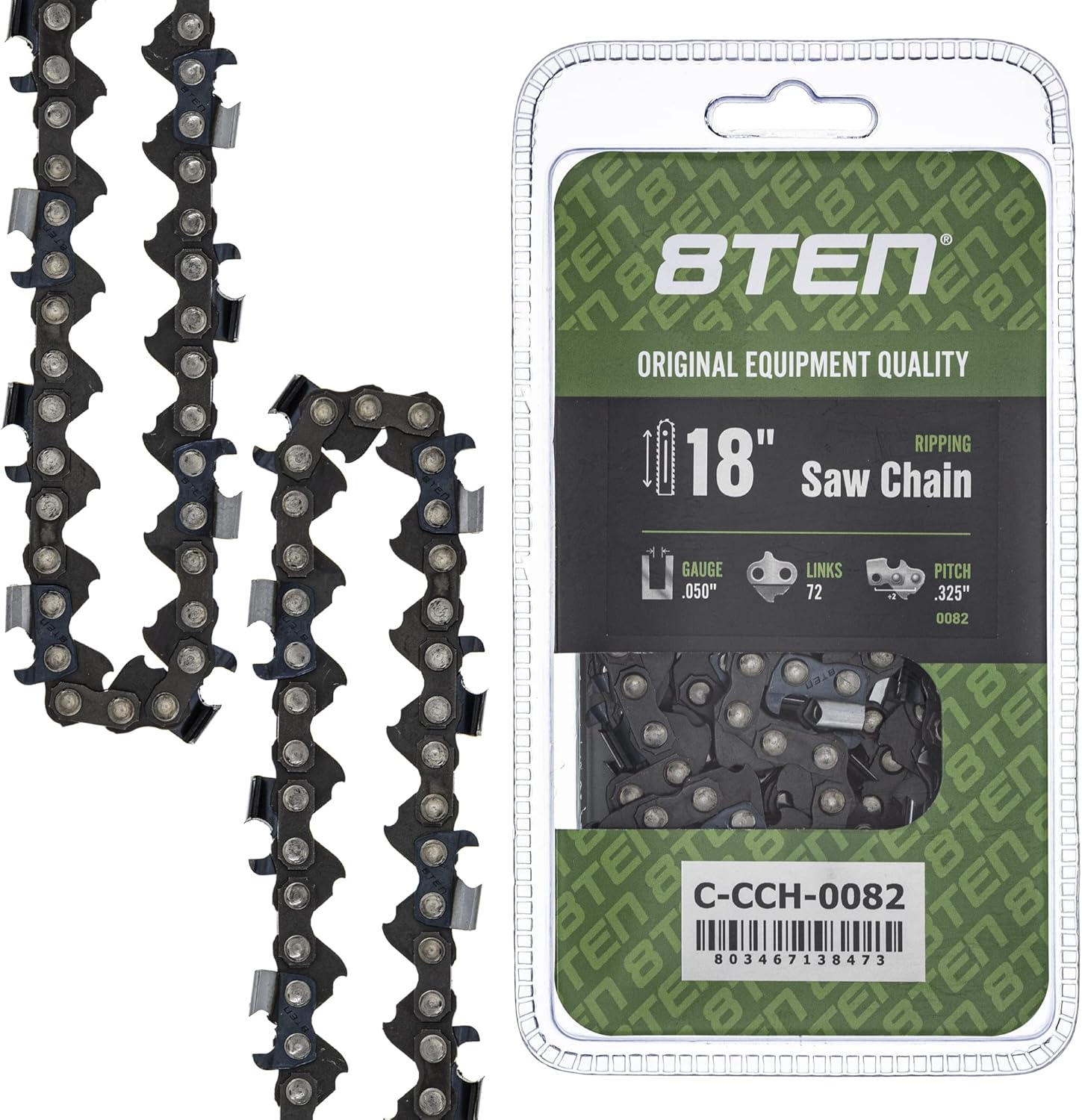
8TEN 18" Ripping Chainsaw Chain (.050 gauge, .325 pitch, 72 drive links)
| Chain Type | Full Chisel |
|---|---|
| Pitch | 0.325 inch |
| Drive Link Count | 72 |
| Gauge | .050 inch |
The 8TEN 18" ripping chainsaw chain is built for ripping and milling work where you need a finer, straight-grain cut for making boards or slabs. Intended to replace many OEM 18" chains, it comes as a full chisel ripping chain with 72 drive links, .325 pitch and .050 gauge, so it fits a broad range of consumer chainsaws when the bar and sprocket match. In use you can expect a cleaner, flatter cut along the grain compared with a standard cutting chain, which helps when converting large timbers into planks. The chain is made from heat-treated alloy steel with hardened rivets for durability and is sold as a single replacement chain so you can swap it into the bar quickly. Limitations to know: ripping chains cut more slowly than general-purpose chains and require careful alignment and sharpening to keep the fine cutting profile, and a full-chisel design is less forgiving on dirty or abrasive wood and has a higher kickback potential than semi-chisel options. For routine home milling or occasional ripping tasks this chain gives OEM-style fit and a cutting profile suited to producing smooth faces on lumber.
Best for: Buyers who want an affordable replacement chain tailored to ripping or milling jobs and who plan to do occasional plank-making or detailed parallel cuts from larger timbers.
Less Ideal for: People who primarily need an all-purpose or dirt-tolerant chain for felling, limbing, or cutting dirty, frozen, or abrasive wood should choose a semi-chisel or low-profile alternative.
- Specifically designed for ripping and milling longer timbers, producing cleaner parallel-to-grain cuts
- Wide compatibility with many 18" consumer chainsaw models and common OEM part numbers
- Full chisel tooth pattern for faster, precise ripping cuts on clean wood
- Constructed from alloy steel with hardened rivets for durability under milling loads
- Ripping chains cut slower than standard chains when performing general trimming or felling
- Full chisel teeth are more prone to kickback and perform poorly on dirty or frozen wood
Verdict: If you need a budget-friendly 18" chain specifically for ripping and milling, this 8TEN chain delivers OEM-style fitment and a cleaner parallel-to-grain cut.
8TEN 28" Ripping Chainsaw Chain, .063 Gauge, 3/8" Pitch (92 Drive Links) — 2 Pack

| Chain Type | Ripping |
|---|---|
| Drive Link Count | 92 |
| Pitch | 0.38 inches |
| Gauge | .063 Inch |
These 8TEN chains are purpose-built ripping chains intended for cutting parallel to the wood grain and for milling or resawing tasks. Sold as a two-pack, each chain is 28 inches long with 92 drive links, .063" gauge, and a 3/8" pitch, so they directly replace several OEM part numbers for Stihl, Husqvarna, and McCulloch saws. The chain steel grade listed is a hardened alloy (68CrNiMo33) with GCr15 rivets, which suggests good toughness and wear resistance for prolonged milling work. In practice this chain will produce finer, smoother boards than a standard cutting chain, making it a useful choice when turning logs into lumber or ripping long timbers. Expect slower cutting speed compared with standard chains because ripping teeth take smaller bites to preserve surface finish. Fitment must be confirmed against your bar and saw model before purchase since length, drive link count, gauge, and pitch are all critical for safe installation. The two-pack reduces downtime by giving you a ready spare when one requires sharpening or replacement.
Best for: Buyers who prioritize dependable, milling-quality cuts and want chains that match OEM specifications to minimize unexpected fit or durability issues.
Less Ideal for: Casual users who need an all-purpose chain for mixed yard work or people who frequently cut dirty, knotty, or frozen wood should consider a different chain profile.
- Purpose-made ripping profile produces smoother, straighter boards when milling or ripping lumber
- Two-pack supply reduces downtime and provides an immediate spare
- Matches common OEM specs (92 drive links, .063 gauge, 3/8" pitch) for direct replacement on listed models
- Hardened alloy chain steel and steel rivets aimed at improved durability during heavy ripping work
- Ripping chains cut more slowly than standard chains, so jobs take longer
- Not suitable for general-purpose or dirty wood cutting where chisel or semi-chisel profiles perform better
Verdict: Choose this two-pack ripping chain if you need OEM-compatible, durable chains that deliver smooth, mill-ready cuts and reduce downtime with a ready spare.
KAKEI 36-inch Ripping Chainsaw Chain, 3/8" Pitch .063" Gauge, 114 Drive Links (Semi-Chisel)

| Pitch | 0.38 inches |
|---|---|
| Chain Type | Semi-Chisel |
| Gauge | 0.06 |
| Compatible Devices | Husqvarna Chainsaws, STIHL Chainsaws |
| Drive Link Count | 114 |
This KAKEI 36-inch ripping chain is built specifically for ripping and slab cutting rather than crosscutting firewood. It fits chainsaws that accept a 3/8" pitch, .063" gauge, and 114 drive links and is made from German steel with hardened, quenched rivets for improved wear resistance and strength. The cutters are chrome-plated and sharpened with rotary machines for a sharp edge out of the box and the chain ships with protective oil to resist corrosion. In use it delivers smooth, straight ripping cuts when mounted on the correct bar and tensioned properly, making it a good choice for turning logs into boards or resawing slabs. Important limitations are that it is not intended for general-purpose crosscutting and does not meet low-kickback performance standards, so it requires an experienced operator and appropriate safety precautions. For buyers focused on consistent ripping performance, this chain offers durability and sharpness; those needing a multipurpose chain for mixed cutting tasks should choose a different chain type.
Best for: Buyers who need a dedicated ripping chain for milling logs into boards and value a durable, sharp cutting edge supported by many user reviews and brand reputation.
Less Ideal for: Casual users who want a single chain for both crosscutting and ripping or those prioritizing low-kickback safety features should consider other chain types.
- Purpose-built for ripping and slab cutting for straighter, cleaner rip cuts
- Made from German steel with hardened, quenched rivets for improved wear resistance
- Chrome-plated, rotary-ground cutters arrive sharp and resist corrosion
- Ships with protective oil to reduce surface corrosion before installation
- Not intended for crosscutting or general-purpose use
- Does not meet low-kickback standards and requires experienced handling
Verdict: Choose this chain when you want a purpose-built, durable ripping chain that delivers straight, clean slabs for milling lumber.
8TEN 36" Ripping Chainsaw Chain, .063 Gauge, 3/8" Pitch (115 Drive Links) — 3-Pack

| Chain Type | Full Chisel Skip Tooth |
|---|---|
| Pitch | 0.38 inches |
| Drive Link Count | 115 |
| Included Components | (3) Chainsaw Chains |
This 8TEN three-pack supplies replacement ripping chains built for long, straight ripping cuts on large logs and millwork tasks. Each chain is 36 inches with a 3/8" pitch, .063" gauge and 115 drive links, so it fits long-bar chainsaws listed by the maker and many major OEMs. The full-chisel skip-tooth profile and 68CrNiMo33 steel construction are aimed at aggressive cutting and fast material removal, while rivets use durable GCr15 steel. You would typically use these chains for ripping or bucking large-diameter timber where a ripping profile improves feed and reduces kickback. Practical benefits include having three matched chains on hand to avoid downtime and a specification set that matches many Husqvarna, Poulan and Stihl models. Important limitations are that ripping chains wear faster than standard chains when used on dirty wood or mixed debris and they require careful sharpening and correct tensioning to perform safely. Also these are specific to long 36" bars so they are not a universal replacement for smaller saws.
Best for: Buyers who prioritize dependable, OEM-compatible replacement rip chains and want to avoid saw downtime by keeping spare matched chains for heavy ripping or milling work.
Less Ideal for: Casual homeowners with small chainsaws or those who mostly cut dirty, knotty, or mixed debris where a standard crosscut chain would be more versatile.
- Three chains in one purchase reduces downtime and keeps a matched set available.
- Full-chisel skip-tooth cutters and hardened 68CrNiMo33 steel for efficient, aggressive ripping cuts.
- 115 drive links and standard 3/8" pitch match many commercial saw bar setups for direct fitment.
- Durable rivet material listed for reliable joint strength during demanding cuts.
- Ripping profile is more demanding to sharpen and maintain than standard crosscut chains.
- Designed for 36" bars only, so unsuitable for smaller consumer chainsaws.
- Aggressive cutters can dull quickly on dirty, knotty, or abrasive wood.
Verdict: If you need durable, OEM-compatible ripping chains for long-bar ripping or milling and want spares on hand, this three-pack delivers matched, heavy-duty replacements.
Choosing the Right Ripping Chainsaw: Key Factors to Consider
Chain Tooth Geometry
Ripping chains use shallower hook angles and flat top plate profiles to slice along the grain rather than chop across it. This geometry reduces the tendency of the chain to tear fibers and helps maintain a straight path. When evaluating chains, look for cutters with consistent filing faces and clear guidance on sharpening angles so the tooth profiles remain true after maintenance.
A chain that holds geometry under repeated sharpening will produce more predictable kerf width and tracking. For a homeowner or small-scale mill operator, the right tooth shape reduces the need for corrective planing after the cut and limits the amount of follow-up passes necessary to achieve a smooth ripping surface.
Guide Bar Stiffness
Bar length and cross-sectional stiffness affect how well a saw tracks in a straight line. Longer bars that flex under side pressure will wander and force you to correct the line continually. Choose a bar profile that resists lateral twist and has a stable nose design to keep the chain in a consistent plane.
Stiff bars also handle heat and load better during sustained ripping. If you plan to mill boards or resaw larger logs, prioritize bars and mountings that minimize flex and maintain alignment over extended cuts.
Power Delivery at Low Chain Speeds
Ripping often benefits from slower, steady chain speed paired with strong torque to pull the chain through dense fibers without bogging. Engines or motors with good low-end torque let you control the cut and keep the saw from stalling when the chain is engaged deeply in hardwood.
High top speed is less useful here than consistent torque under load. Assess how the saw behaves when you apply steady pressure and whether throttle modulation results in predictable chain feed rather than sudden surges or drop-offs.
Operator Control and Vibration
Long rip cuts demand sustained focus and steady hands. Excessive vibration will fatigue your grip and lead to wandering. Evaluate anti-vibration systems, handle ergonomics, and weight distribution because they impact how easily you can keep the saw on a straight line over minutes of continuous cutting.
Good control reduces the risk of binding and allows you to follow layout lines with less corrective effort. For repetitive ripping tasks, comfort and low vibration translate to cleaner cuts and fewer mistakes.
Sharpening and Maintenance Accessibility
Ripping chains dull differently than crosscut chains due to the shearing action along the grain. Easy access to chain tensioners, clear marking of filing angles, and the ability to replace or reprofile teeth quickly matters when you are maintaining a ripping setup.
Saws that let you tension the chain without tools, expose the nose sprocket for cleaning, and accept standard guide bars simplify upkeep. Consider how easily you can restore cutter geometry in the field so downtime between ripping sessions is minimized.
Compatibility with Milling Accessories
If you plan to use the chainsaw for backyard milling or resawing, compatibility with straight rails, mill guides, and extended bars is important. A saw that fits common aftermarket rails and can mount a longer, stiff bar offers greater flexibility when turning logs into boards.
Check for robust mounting studs, bar lengths the saw can reliably drive, and the ability to swap to purpose-built ripping chains and sprockets. This compatibility reduces the need to buy additional saws for different tasks and makes a single unit more versatile for home milling projects.
When You Should Use a Ripping Chainsaw
A ripping chainsaw is the tool for cutting along the grain when you want long, straight boards from a log or need to resaw a fallen tree into planks. Use it when you need predictable kerf width and minimal tear-out on hardwoods, or when converting lumber for furniture projects, decking, or beams.
Avoid using ripping chains for short crosscut jobs or where aggressive chip removal is the priority. The specialized chain geometry favors straight-line cutting and finishes that reduce hand planing afterward.
- Best for backyard milling, resawing, and straight-line bucking
- Not intended for fast crosscuts or limbing with irregular grain
- Effective on hardwoods where kerf control matters
Setting Up a Saw for Accurate Ripping
Proper setup helps the saw track true. Start with a stiff, straight bar of adequate length and install a chain designed for ripping. Verify the chain tension and check that the bar nose and sprocket align cleanly with the drive system.
Use a guide rail or straightedge when possible for the first few passes. Mark the cut line clearly on the wood and position yourself to apply steady, controlled feed pressure. Small adjustments to handle position and throttle modulation will correct drift more effectively than forcing the saw.
- Confirm bar straightness and mounting stud torque before ripping
- Use a straightedge or temporary fence for long initial cuts
- Check chain sharpness and filing angles prior to each session
Sharpening and Reprofiling Ripping Chains
Ripping chain sharpening follows a different angle than crosscut chains. Maintain the specified filing angles to preserve the shallower hook and top-plate geometry that make ripping chains track. Reprofiling can be done with a file guide or bench grinder depending on the chain type and your skill level.
Keep a log of sharpening intervals during heavy use so you can anticipate when the chain will need regrinding. Dull ripping cutters increase friction and make the saw wander, so timely maintenance preserves both cut quality and operator safety.
- Use a filing guide set to the chain's ripping angle
- Replace or reprofile severely rounded top-plates rather than over-filing
- Inspect tie straps and rivets when sharpening regularly
Safety Practices Specific to Ripping
Ripping increases the risk of binding if the wood moves or the bar flexes. Secure the workpiece with supports that prevent movement and use wedges as necessary to avoid pinching. Stand to the side of the cut line and keep a clear retreat path in case the log shifts.
Because ripping cuts can be long, plan breaks to inspect chain condition and mounting hardware. Cooler chain operation and regular checks reduce the chance of sudden failures or kickback events tied to worn components.
- Stabilize logs with sawbucks or clamps
- Monitor chain temperature and tension during long cuts
- Avoid freehand ripping without a guide on long runs
Common Mistakes That Hurt Ripping Results
Using a standard crosscut chain for ripping is a frequent error that yields wandering cuts and excessive tear-out. Crosscut profiles will not produce the same straight kerf and often require more corrective work after the cut.
Another mistake is relying on a flexible bar or inadequate low-speed torque. Both cause the chain to deflect under load and push you off-line. Finally, neglecting chain maintenance or improper sharpening angles compounds the problem by increasing friction and heat.
- Do not substitute crosscut chains for ripping tasks
- Avoid long, unsupported bars on soft or uneven mounts
- Keep sharpening consistent with the chain's original geometry
How We Chose the Best Ripping Chainsaw
We focused on attributes that matter when you use a chainsaw specifically for ripping straight-grain cuts. Key evaluation criteria included chain tooth geometry and pitch, because ripping chains use different angles and cutters than crosscut chains; bar stiffness and profile, since a flexible bar makes it difficult to hold a straight kerf; and power delivery at lower chain speeds, which helps the saw track steadily through dense hardwood. We also weighed vibration and operator control, because long, precise rip cuts require consistent handling and minimal wandering. Maintenance features such as tool-free tensioning, accessible sharpening angles, and chain durability were considered since ripping chains face heavy, sustained contact with the cut face. Finally, we examined compatibility with aftermarket guide bars and ripping-specific chain replacements so a saw can be adapted over time. Excluded from consideration were saws optimized only for short crosscut bursts, consumer models lacking sufficient bar length or torque for ripping, and units that do not accept ripping chain geometries. The final list balances straight-line cutting capability, repeatable tracking, and real-world serviceability for backyard milling and resaw tasks.
FAQ
Can I rip with a standard chainsaw chain?
You can perform a rip cut with a standard crosscut chain in a pinch, but it will likely wander, tear fibers, and require more cleanup. Ripping chains are shaped to slice along the grain and produce a straighter kerf with less follow-up work.
What bar length do I need for backyard milling?
Bar length depends on the diameter of the logs you intend to mill. Choose a bar that is long enough to span the log with some clearance. Keep in mind that longer bars require stiffer mounting and more torque to maintain a straight cut.
How often should I sharpen a ripping chain?
Sharpening frequency depends on timber hardness and cutting duration. In heavy ripping work you may need to touch up cutters after a few hours of use. Pay attention to increased feed resistance or a change in cut quality as signs that sharpening is needed.
Is an electric saw suitable for ripping hardwood?
Electric saws with sufficient low-end torque and compatible bars can handle ripping, especially in smaller-diameter logs. However, ensure the motor can sustain torque under load and that the saw accepts the ripping chain profile you plan to use.
Do ripping chains change the risk of kickback?
Ripping chains typically have a shallower cutting angle and are less aggressive, which can reduce sudden hook reactions. Kickback risk still exists, so follow standard safety practices including proper stance, chain brakes, and secure workholding.
Final Verdict
Choose a Ripping Chainsaw by prioritizing chain geometry, a stiff guide bar, and reliable low-speed torque. Those three elements determine how straight the cut will be and how much finishing work you must do afterward. Balance ease of maintenance and vibration control to keep long ripping sessions steady and safe. For backyard milling or repeated resaw work, favor saws that accept longer stiff bars and ripping-specific chains. That combination gives you predictable kerf control and fewer surprises when turning logs into usable lumber.
