

Note: This article contains affiliate links. If you click on these links and make a purchase, I may earn a small commission at no extra cost to you. This helps support my research and content. Read my full affiliate disclosure here.
If rodents have ever chewed wiring harnesses, insulation, or boot seals in your vehicle you know how disruptive and expensive the damage can be. Choosing the right rodent repellent for cars matters because treatments must work in a confined engine bay, be safe for vehicle materials, and fit your maintenance routine. This guide shortlists the most practical options for automotive use and explains how we judged them on real gardener-style practicality: effectiveness at deterring chewing, ease of installation and removal, longevity, and how they interact with under-hood materials. The picks below represent top-rated, garden- and garage-friendly choices for protecting cars, trucks, and stored vehicles from rodent damage.
Top Picks at a Glance
| Best Overall The best all-around choice for most situations | CXIENAOY Battery-Powered Ultrasonic Rodent Repellent (2-Pack) |  |
| Best Quality Built to a higher standard if you want something more solid | MouseBlocker ProX 12V Under-Hood Rodent Deterrent |  |
| Best Value The sweet spot between price and what you get | Mighty Mint Rodent Repellent Vehicle Spray, 1 Gallon |  |
| Best Budget The cheapest option that still gets the job done reliably | Reliant Pet Peppermint Oil Rodent Repellent Spray, 16 oz |  |
| Highest Rated A top-rated pick with lots of positive feedback | SAHETO Peppermint Oil Rodent Repellent Balls (36) with Drawstring Pouches |  |
| Most Popular A crowd favorite that many people choose with confidence | Mighty Mint Peppermint Oil Rodent Repellent Vehicle Spray, 16 oz |  |
| Best Seller A high-volume bestseller chosen again and again | Grandpa Gus's Mouse Repellent Pouches, Peppermint & Cinnamon, 10 Pack |  |
CXIENAOY Battery-Powered Ultrasonic Rodent Repellent (2-Pack)

| Number of Items | 2 |
|---|---|
| Scent Name | Unscented |
| Unit Count | 2 Count |
| Model Number | hor1902 |
This 2-pack of CXIENAOY rodent repellers combines ultrasonic pulses with a flashing strobe to discourage rodents from nesting in engines, garages, attics, and sheds. Installation is straightforward: insert batteries or connect via USB or a 12V DC lead, mount with the included zip ties, then tuck the compact unit under the hood or in corners. The device is designed to suspend output when the vehicle is running and resume after 90 seconds of parking to preserve battery life. Its advertised weather-resistant casing and battery operation make it convenient for semi-exposed spaces where power outlets are unavailable. Practical benefits include hands-off protection without traps or mess and flexible placement options for multiple problem areas. Important limitations are that ultrasonic effectiveness can vary with species and cluttered spaces and that the unit relies on proper placement and fresh batteries or a steady 12V/USB power source for continuous performance.
Best for: Someone who wants a low-maintenance, hands-off deterrent to protect a vehicle and nearby storage areas from occasional rodent activity and prefers flexible power options and easy installation.
Less Ideal for: People facing an active, heavy infestation or those who need an immediate removal method should consider traps or professional pest control instead.
- Dual deterrent approach using ultrasonic frequencies plus a flashing strobe to target rodent hearing and vision
- Three power options: 4×AA battery operation, USB power, or direct 12V connection for flexible installation
- Automatic standby when the engine runs and automatic reactivation after parking to save battery
- Compact, portable design with included mounting zip ties for easy placement under hoods or in tight spaces
- Ultrasonic devices are less effective in cluttered or insulated areas where sound cannot propagate well
- Performance depends on correct placement and maintaining batteries or a reliable power connection
- Effectiveness can vary by rodent species and may not fully eliminate persistent infestations
Verdict: Choose this two-pack when you want a simple, no‑mess, battery-or-USB rodent deterrent tailored to protect cars and nearby storage areas with both sound and strobe deterrence.
MouseBlocker ProX 12V Under-Hood Rodent Deterrent

| Compatible Devices | Vehicles with a 12V power source |
|---|---|
| Audible Noise | 105 db |
| Built-In Media | 11 |
The MouseBlocker ProX is a vehicle-focused rodent deterrent that mounts under the hood and hooks directly to a 12V battery for continuous protection when the vehicle is parked. It emits selectable ultrasonic frequencies, uses vibration sensing to shut off when the engine is started, and includes dual strobing white LEDs to simulate movement and add a visual deterrent. The all-aluminum housing and low 50mA draw mean it is built for long-term outdoor use without stressing the battery. Typical use is a simple two-wire installation to the battery and placing the unit in an area under the hood where rodents commonly nest. Benefits include adjustable output levels to match local rodent pressure and automatic startup after the vehicle is turned off, which keeps the device active only when needed. Limitations are that effectiveness can vary by species and placement and ultrasonic devices do not physically block rodents, so combined exclusion or trapping may be needed for heavy infestations.
Best for: Drivers who prioritize a maintenance-free, performance-oriented electronic solution to reduce under-hood rodent damage and want automatic, vehicle-specific protection.
Less Ideal for: People dealing with severe, established infestations that require physical exclusion or removal methods or those wanting a non-electronic preventative approach.
- Designed for direct 12V battery hookup for continuous under-hood protection
- Selectable ultrasonic output levels to adjust intensity
- Vibration sensing that turns the unit off when the vehicle is started
- All-aluminum case for durability and heat dissipation
- Very low power draw (about 50mA) so it will not significantly drain battery
- Ultrasonic deterrence can be inconsistent depending on rodent species and exact placement
- Does not physically prevent access so additional exclusion methods may be required
Verdict: For vehicle owners wanting a robust, low-draw under-hood electronic deterrent, the MouseBlocker ProX delivers automatic, adjustable ultrasonic protection built for outdoor use.
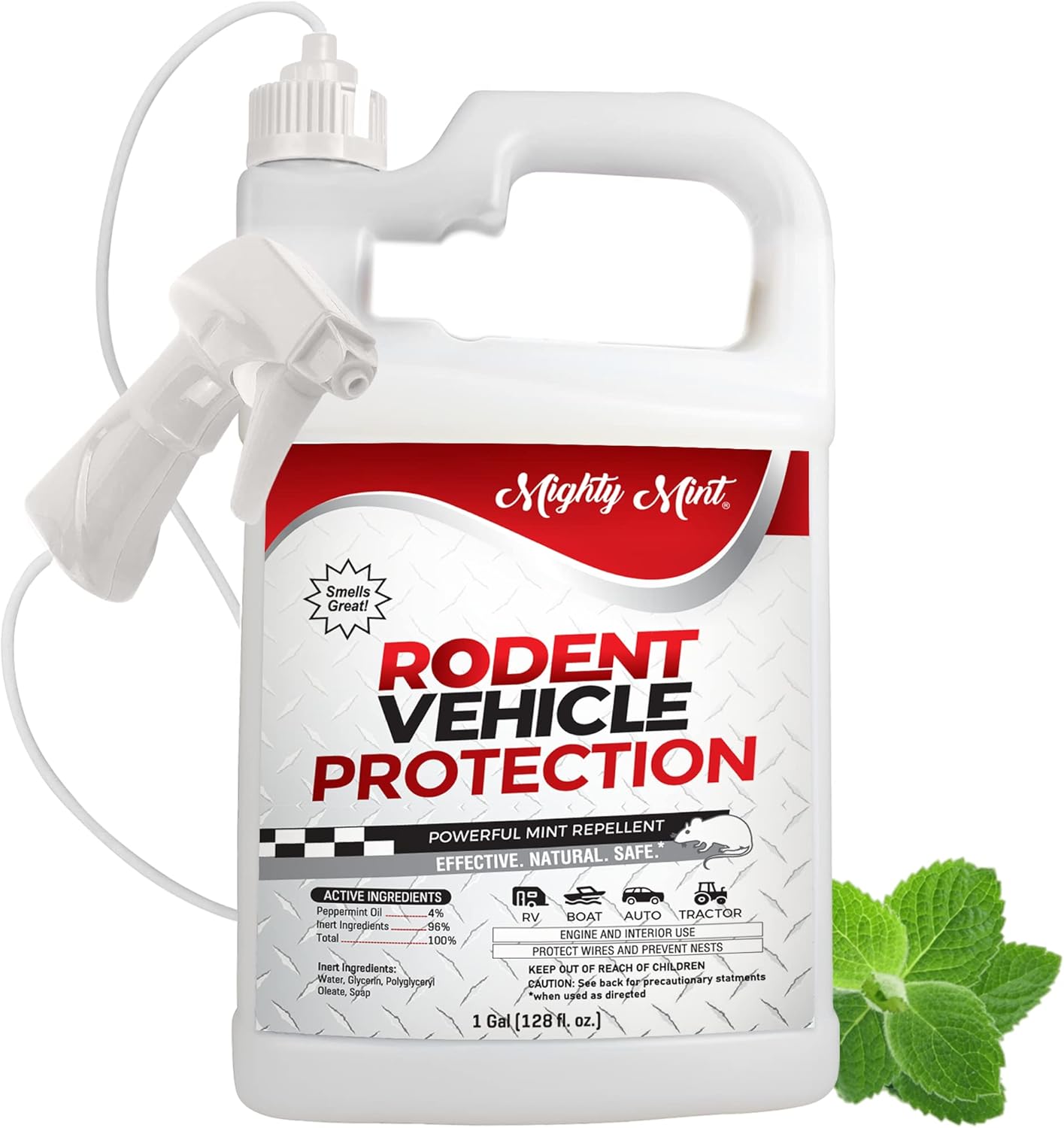
Mighty Mint Rodent Repellent Vehicle Spray, 1 Gallon
| Size | 128 oz |
|---|---|
| Use Areas | Vehicles and Engines |
| Pests | Mice, Rats, Small Rodents |
| Plant Based Ingredients | Yes |
Mighty Mint Vehicle Spray is a gallon-sized peppermint oil formula intended to keep mice and rats out of cars and engine bays. It is applied by spraying problem areas until surfaces are covered and repeating at least twice weekly for ongoing protection. The product uses plant-based ingredients and a peppermint scent that most users find pleasant compared with harsh chemical deterrents, and the large 128 oz size is suited to treating multiple vehicles or frequent reapplications. Directions note the ingredients should not damage most surfaces but recommend patch-testing first, which is practical for use around wiring and plastic components. Because effectiveness depends on routine reapplication and proper coverage, it works best as a preventive maintenance item rather than a one-time fix for an active infestation. The gallon format reduces refill frequency but requires a separate sprayer for convenient use around tight engine areas. For owners who prefer a natural-smelling repellent and want to maintain vehicles proactively, this delivers a usable, low-toxicity option; those needing immediate extermination or long-term proofing may need complementary measures.
Best for: Vehicle owners who want a natural-smelling, preventive rodent deterrent and who are willing to maintain a regular spray schedule and supply their own applicator.
Less Ideal for: People dealing with an active heavy infestation or who need permanent rodent exclusion solutions should consider professional or mechanical proofing methods instead.
- Large 1 gallon volume suitable for treating multiple vehicles or repeat applications
- Plant-based peppermint formula avoids strong chemical odors
- Clear directions for twice-weekly preventative application
- Suitable for indoor and outdoor vehicle use with a generally surface-safe formulation
- Requires frequent reapplication to maintain effectiveness
- Gallon container does not include a spray nozzle for immediate handheld use
Verdict: Buy this if you want a large, plant-based peppermint spray to prevent rodents from chewing in vehicles with routine reapplication.
Reliant Pet Peppermint Oil Rodent Repellent Spray, 16 oz

| Volume | 16 oz |
|---|---|
| Ingredients | Peppermint Oil, Sodium Lauryl Sulfate, Potassium Oleate, Glycerin, Water |
| Directions | Spray in or around vehicle; reapply every 2–3 weeks or after heavy rain |
| Intended use | Engine bays, wiring, wheel wells, RVs, boats, storage areas |
This 16 oz Reliant Pet peppermint oil spray is a straightforward, plant-based deterrent designed for use around vehicle engine bays, RVs, boats, and storage spaces. It works by applying a concentrated peppermint scent to wiring harnesses, wheel wells, firewall areas, and other entry points; rodents find the aroma offensive and tend to avoid treated areas. The bottle is ready to use with an adjustable nozzle that helps reach tight spots, and the label recommends reapplying every 2–3 weeks or after heavy rain. Ingredients are simple and recognizable, and the formula dries clean without leaving an oily residue on plastic or metal. The product is a humane alternative to poisons and traps, making it suitable for households concerned about pets or children. Limitations are that results depend on consistent reapplication and environmental exposure can reduce effectiveness, so it is not a permanent barrier against determined pests; heavy infestations will still require professional or mechanical intervention.
Best for: Drivers and owners who want a low-risk, easy-to-use deterrent to protect wiring and engine bays and who prefer humane, natural products on a budget.
Less Ideal for: People facing an active or large rodent infestation or those needing a permanent, maintenance-free proofing solution should consider professional pest control or mechanical exclusion methods.
- Plant-based peppermint oil formula avoids poisons and harsh chemicals
- Ready-to-use 16 oz spray with adjustable nozzle for targeted application
- Dries clean without staining metal, plastic, or upholstery
- Suitable for multiple vehicle types and storage areas including garages and RVs
- Requires regular reapplication, especially after rain or washing
- Not a standalone solution for existing severe infestations
Verdict: An affordable, ready-to-use peppermint oil spray that offers a pet-safe, easy-to-apply way to reduce rodent chewing and nesting in vehicle engine bays.
SAHETO Peppermint Oil Rodent Repellent Balls (36) with Drawstring Pouches

| Manufacturer | SAHETO |
|---|---|
| Package Contents | 36 scent balls with drawstring pouches |
| Date First Available | August 22, 2026 |
These peppermint oil repellent balls are a scent-based option for keeping mice away from enclosed spaces like cars, garages, and storage areas. The kit includes 36 solid scent balls plus breathable drawstring pouches so you can place or hang 4 to 10 balls per pouch in targeted spots such as under seats, in the trunk, or inside an engine bay air filter area (in well-ventilated, safe locations). The formulation is plant-based with peppermint essential oil, which users report as pleasant to people while unpleasant to rodents. Because there are no sprays or traps, deployment is clean and low-effort and the pouches make repositioning simple. Scent longevity varies with ventilation, temperature, and humidity, so high-ventilation areas like a frequently used car may require more frequent replacement. These are best used as a preventative or in combination with sealing entry points rather than as a guaranteed single-solution for serious infestations.
Best for: Buyers who prioritize a low-maintenance, non-toxic preventive method for keeping mice out of cars and enclosed storage spaces and who want an easy-to-deploy, scent-based product.
Less Ideal for: People dealing with an active, large-scale infestation or those who need an immediate extermination method should choose mechanical traps or professional pest control instead.
- Plant-based peppermint formula that is safe for family and pets when used as directed
- Includes 36 balls and drawstring pouches for flexible placement and easy repositioning
- No mess, no traps or sprays required which simplifies preventive use in vehicles and storage spaces
- Scent strength and effective duration vary with ventilation and weather so replacements may be frequent in cars
- Not a lethal or removal solution for established infestations
Verdict: A simple, low-effort peppermint scent system that provides preventive rodent protection for cars and enclosed spaces without traps or sprays.
Mighty Mint Peppermint Oil Rodent Repellent Vehicle Spray, 16 oz

| Formulation | Liquid spray |
|---|---|
| Ingredients | Water, Glycerin, Polyglycerol Oleate, Soap, Peppermint Oil |
| Intended use | Vehicle engines, interiors, storage areas |
| Bottle size | 16 oz |
Mighty Mint Vehicle Spray is a plant-based rodent deterrent intended for targeted use around cars, trucks, RVs and other stored vehicles. It ships in a 16 oz spray bottle ready for spot applications under hoods, in wheel wells, trunks and glove compartments. The active ingredient is concentrated peppermint oil in a water-based carrier, so it leaves little to no residue and gives a strong mint scent that rodents reportedly avoid. Practical benefits include easy directed application, suitability for enclosed engine bays where bait traps are impractical, and a formula labeled safe for use around people and pets when used as directed. Limitations are that it requires repeat applications every few days for sustained protection and it is a repellent rather than a lethal control, so it works best as part of prevention rather than solving an established infestation. Users should avoid spraying near eyes or mouths and follow the directions for regular reapplication in high-risk areas.
Best for: Buyers who want a non-toxic, easy-to-use preventive measure for protecting vehicles from chewing and nesting damage and who prioritize safety and social proof from other users.
Less Ideal for: People facing an active, large-scale infestation or those who need a one-time extermination solution should consider professional pest removal or complementary methods.
- Ready-to-use spray for quick, targeted application around engine bays and interiors
- Plant-based formula with concentrated peppermint oil instead of harsh pesticides
- Low-residue water-based carrier that does not stain surfaces when used as directed
- Marketed as safe for people and pets when applied according to label
- Requires frequent reapplication (every 2–3 days) for best results to maintain effectiveness
- Designed as a repellent not a removal method, so it will not eliminate an existing infestation
Verdict: A convenient plant-based spray that offers a pet-safe, easy-to-apply way to deter rodents from vehicles when used regularly.
Grandpa Gus's Mouse Repellent Pouches, Peppermint & Cinnamon, 10 Pack

| Ingredients | Peppermint Oil, Cinnamon Oil |
|---|---|
| Directions | Place in enclosed, low-airflow spaces; replace every 30 days or when scent diminishes |
| Intended Use | Indoor and enclosed areas including garages and vehicle compartments |
These small sachets use peppermint and cinnamon essential oils in a time-release pouch to make enclosed spaces unpleasant to mice and discourage nesting and chewing. They are designed to be placed along walls, in corners, inside cabinets, storage areas, garages, and vehicle engine bays after active infestations are addressed. The scent-forward formula is mess-free and labeled safe for use around kids and pets when directions are followed, and the manufacturer recommends replacing pouches every 30 days or when the scent fades. Practical benefits include easy, no-touch placement and a humane, non-toxic alternative to baits or traps for prevention. Limitations are that pouches rely on concentrated scent and low airflow to work, so they are less effective in open or well-ventilated areas and they will not eliminate an active, heavy infestation on their own. For vehicle protection you will need to position pouches where airflow is limited and check them frequently because under-hood conditions can reduce scent life.
Best for: A cautious buyer who prefers non-toxic, humane prevention methods and wants an easy, low-effort deterrent to reduce mouse activity in garages, storage spaces, and vehicles.
Less Ideal for: People seeking a fast knockdown of an active infestation or users who need protection in large open areas or high-airflow spaces should look for stronger mechanical or chemical controls.
- Uses natural peppermint and cinnamon oils rather than poison
- Time-release pouch format offers up to 30 days of scent-based protection
- Mess-free place-and-go design that is easy to position in corners and compartments
- Labeled for safe use around children and pets when used as directed
- Effectiveness depends on low airflow so not ideal in open or well-ventilated areas
- Not a standalone solution for active or heavy infestations
Verdict: A simple, non-toxic scent pouch that suits risk-averse buyers who want a humane, low-maintenance way to deter mice in enclosed spaces and vehicles.
Choosing the Right Rodent Repellent for Cars: Key Factors to Consider
Chew and Nesting Behavior
Understanding rodent behavior is essential because repellents work differently on animals that chew vs animals that simply nest. Some rodents are driven by gnawing instinct to wear down continuously growing incisors, while others seek enclosed spaces to build nests. A product that only masks scent may deter nesting but not stop persistent chewers.
Consider where rodents are active in the vehicle. Engine bays provide warmth and shelter, and wheel wells or air intake paths give easy access. Effective repellents for cars should target both chewing and nesting tendencies and be placed at likely gnaw points such as wiring harness routes and rubber boots.
Application Location and Accessibility
How and where you can place a repellent affects its practicality. Tight wiring looms, under-tray panels, and behind intake snorkels are common problem zones that require small, mountable solutions. Some products are hand-placed pouches or strips, others are mountable devices or sprays.
Think about how often you can access the area for reapplication or inspection. If the vehicle is stored long-term in a garage, you may prefer a low-maintenance, long-lasting option. For frequently used vehicles, quick-install choices that can be moved or removed without tools are more convenient.
Compatibility With Vehicle Materials
Many repellents come into direct contact with plastic, rubber, foam, and painted metal. Ingredients and adhesives can stain, harden, or degrade these surfaces over time. Avoid products with solvents or strong oils that could affect hoses, wiring insulation, or paint.
Check for non-staining formulations and adhesive systems designed for automotive use. Consider test-applying in an inconspicuous spot if you plan to attach strips or tapes near sensitive components.
Longevity and Environmental Exposure
Under-hood conditions include heat, moisture, and oil vapors that shorten the life of many repellents. A solution that performs well in a dry pantry may fail quickly in an engine compartment. Longevity determines how often you must reapply and whether a product is cost-effective for long-term protection.
Select options rated for heat and moisture resistance, and consider seasonal timing. In warm months rodents may be more active, while cold months increase the appeal of engine warmth. The expected service life should match your storage and usage patterns.
Safety and Non-Target Effects
Safety covers both human handling and impacts on pets or wildlife. Some repellents rely on strong-smelling oils or electronic pulses that could irritate people or household animals. Others contain toxicants that are inappropriate around pets or in shared garages.
Pick products labeled for safe consumer handling, and follow instructions to avoid ingestion by pets. Also consider whether a deterrent will push rodents to nearby structures, potentially creating a different problem rather than solving it.
Common Types of Vehicle-Appropriate Repellents
Repellents designed for cars come in several practical formats. Sachets or pouches contain dried repellents and can be tucked into airboxes or heat-shield gaps. Gel or paste repellents coat wiring bundles or chase away chewers through taste. Electronic ultrasonic devices claim to deter rodents without contact, while mesh barriers and purpose-built conduit provide a physical prevention layer.
Each type has tradeoffs. Sachets are low-cost and easy to position but can lose potency in heat. Gels provide direct taste deterrence yet require careful application to avoid material damage. Electronic devices may reduce activity in some garages but show variable results around engine noise and vibration.
- Sachets and pouches: easy placement, limited heat tolerance
- Gels and pastes: direct contact deterrence, risk to plastics
- Ultrasonic devices: hands-off approach, inconsistent efficacy
- Physical barriers: robust prevention, may need professional routing
Preparing Your Vehicle Before Installation
Before adding any repellent, clean the areas where rodents have accessed the vehicle. Remove nests, droppings, and food debris, and vacuum loose insulation. Use gloves and a mask when handling droppings to reduce disease exposure.
Inspect common entry points such as intake snorkels, under-bumper gaps, and firewall seams. Temporarily seal obvious holes with foam or mesh while you position repellents. Good preparation increases the odds that the chosen product will perform as intended.
- Remove nesting material and droppings first
- Clean surfaces to improve product contact
- Seal large entry points before deploying repellents
Placement Strategies for Maximum Protection
Target placement is more effective than random scattering. Position repellents along wiring routes, near fuse boxes, and around rubber boots where rodents often chew. If using sachets, tuck them into airbox housings, under carpets above the engine bay, or inside wheel wells out of direct spray paths.
Rotate or move items periodically to prevent animals from adapting. Combine tactics when possible: a physical barrier at the most vulnerable route plus a taste deterrent on the harness can reduce chewing attempts while discouraging nest building.
- Place repellents at likely gnaw points
- Keep devices away from high-heat components
- Combine physical and sensory deterrents for layered protection
Seasonal Considerations and Long-Term Maintenance
Rodent activity shifts with temperature and food availability, so adjust protection seasonally. In cold weather rodents seek engine warmth and may be more persistent; during nesting season they focus on sheltered cavities. Inspect repellents more often during peak seasons and after long-term storage.
Plan for maintenance intervals based on the product's rated longevity. Replace or recharge items before they lose potency to maintain continuous protection. Regular inspections also reveal early signs of chewing so you can address breaches before major damage occurs.
- Increase inspections in cold months and nesting seasons
- Replace items according to rated service life
- Check for fresh chew marks as an early warning
Combining Repellents With Preventive Repairs
Repellents reduce the chance of repeat damage but do not repair existing vulnerabilities. If wiring harness coverings are frayed, install conduit or split loom to protect exposed sections. Replace or secure loose panels that create sheltered spaces under the vehicle.
Treat prevention as a system: physical repairs reduce entry points and make repellents more effective. Addressing both the cause and the symptom is the most durable strategy for long-term vehicle protection.
- Use conduit over exposed wiring
- Secure loose under-trays and splash guards
- Fix rubber boots and grommets that provide access
How We Chose the Best Rodent Repellent for Cars
We evaluated candidates using criteria that matter for protecting vehicles from chewing and nesting. Effectiveness against chewing and nesting behavior was assessed based on reported deterrence methods and typical service life. Installation ease and accessibility looked at how simple it is to place, secure, or mount the product in engine bays and wheel wells. Material compatibility examined whether the product contacts wiring, hoses, or plastic trim without staining or degrading those surfaces. Coverage and longevity considered how long a single treatment lasts and whether it protects common intrusion points like air intakes, fuse boxes, and wiring looms. Maintenance and safety checked whether products require regular reapplication, pose inhalation risks for the user, or attract pets. We excluded products that rely on unproven or hazardous chemicals for consumer use, solutions intended only for interior household pests, and any items unsuited to outdoor engine-bay exposure. The result is a focused list of practical, vehicle-appropriate repellents that balance deterrent power with ease of use and material safety.
FAQ
Are ultrasonic devices effective at keeping rodents out of cars?
Ultrasonic devices can reduce activity in quiet garages, but results vary near engines where noise and vibration interfere. Use them as one layer of defense rather than a sole solution.
Will repellents damage wiring or rubber parts?
Some gels and oils can interact with plastics or rubber. Choose products labeled safe for automotive materials and avoid solvent-based formulations when applying near hoses or insulation.
How often should I reapply or replace vehicle repellents?
Frequency depends on product longevity and exposure to heat and moisture. Inspect items monthly during active seasons and replace according to the manufacturer's rated service life, or sooner if potency seems reduced.
Can I use household repellents under the hood?
Not always. Many household products are not rated for hot, oily engine bays and may fail or damage materials. Prefer solutions designed for outdoor or automotive conditions.
What should I do if I find fresh chew marks after using repellents?
Treat fresh damage promptly: repair or protect exposed wiring with conduit and re-evaluate repellent placement. Consider combining a different deterrent type with physical barriers to stop repeat chewing.
Final Verdict
Prioritize solutions that match the environment where your vehicle is stored and the kind of rodent activity you observe. For cars, balance deterrent strength with material safety and ease of placement so you do not trade one problem for another. Long-term protection usually combines targeted repellents with modest repairs or physical barriers. Focus on predictable installation points, inspect regularly, and choose options rated for heat and moisture to keep wiring and insulation safe.
