

Note: This article contains affiliate links. If you click on these links and make a purchase, I may earn a small commission at no extra cost to you. This helps support my research and content. Read my full affiliate disclosure here.
Cleaning leaves off a roof is a different task than raking a lawn. You need tools that reach across slopes, clear wet or compacted debris, and do so without damaging shingles, tiles, or gutters. The right roof garden rake for leaves reduces the need to climb, lowers the risk of slipping, and keeps the roof surface intact. This guide covers six shortlisted options suited to varied roof pitches and gutter setups. We assess reach, head shape and tines, construction and weight, and how gentle each tool is on roofing materials to help you pick the best match for your situation.
Top Picks at a Glance
| Best Overall The best all-around choice for most situations | EXTEND-A-REACH Collapsible Roof Rake with Telescoping Aluminum Pole (up to 36 ft reach) |  |
| Best Quality Built to a higher standard if you want something more solid | Roof Razor Roof Brush Multi-Tool — Dual Brush and Rake, 22 ft Extendable |  |
| Best Value The sweet spot between price and what you get | EXTEND-A-REACH Collapsible Roof Rake with Telescopic Pole (4–12 ft pole, 20 ft reach) |  |
| Best Budget The cheapest option that still gets the job done reliably | Soontrans 2-in-1 Telescopic Roof Rake and Leaf Brush, 5–21 ft |  |
| Highest Rated A top-rated pick with lots of positive feedback | ZFNWXFP 5–24 ft Telescoping Roof Rake with Collapsible Head |  |
| Most Popular A crowd favorite that many people choose with confidence | Snow Joe Telescoping Roof Rake with 25" Poly Blade (RJ204M) |  |
EXTEND-A-REACH Collapsible Roof Rake with Telescoping Aluminum Pole (up to 36 ft reach)

| Handle Material | Aluminum |
|---|---|
| Head Material | Metal |
| Handle Type | Telescopic |
| Number of Items | 2 |
This kit combines a wide, collapsible metal rake head with a heavy-duty telescoping aluminum pole so you can clear leaves and pine needles from roofs and gutters without a ladder. The rake head expands to cover large swaths and folds down for tight spots and storage, while the pole extends in stages to provide up to 36 feet of reach for second-story work. An upper-positioned latch and improved locking mechanism keep the head rigid under pressure so the frame does not twist or collapse when dragging wet debris. Because the pole uses a universal ACME thread, you can swap the rake for other cleaning attachments for tasks like dusting high eaves or washing windows. Expect practical benefits in safety, reach, and versatility, plus a lightweight feel from the aluminum handle. The main compromises are that a long telescoping pole can still flex somewhat at full extension under heavy loads and the metal rake head may require extra care to avoid scratching delicate roof surfaces, so use with caution on fragile shingles.
Best for: Homeowners who want a single, versatile tool to clear roof leaves and maintain gutters safely from the ground and who value ease of storage and multi-purpose attachments.
Less Ideal for: People who need a tool for heavy-duty professional roofing work or who have very fragile or specialty roof surfaces that require soft-bristled or nonmetal tools.
- Collapsible metal rake head covers wide areas and folds for tight spots and storage
- Telescoping aluminum pole extends to provide up to 36 ft of reach for second-story work
- Improved locking mechanism and upper-positioned latch reduce collapse and wobble during use
- Universal ACME thread lets you swap on other cleaning attachments for multi-purpose use
- Pole can flex under heavy loads when fully extended, reducing leverage for tough debris
- Metal rake head could scratch delicate roofing materials if used without care
Verdict: A safe, versatile roof rake kit for homeowners who want wide coverage and long reach from the ground while keeping storage and multi-use flexibility simple.
Roof Razor Roof Brush Multi-Tool — Dual Brush and Rake, 22 ft Extendable

| Bristle Material | Polypropylene (PP) |
|---|---|
| Handle Material | Aluminum |
| Extendable Reach | 22 ft |
| Brush Width | 18 inches |
The Roof Razor Roof Brush Multi-Tool combines a wide 18-inch brush head with a reverse rake edge so you can sweep leaves and brush away snow from the ground without switching tools. It uses four quick-connect aluminum pole sections to reach up to 22 feet and an adjustable head angle to follow roof valleys, gutter tops, solar panels, and other curved surfaces. In practice it is lightweight enough to handle for extended use and the polypropylene bristles are aggressive enough to clear pine needles and built-up debris while being gentle on shingles. The dual-function design speeds work because you can push loose material with the brush or pull heavier snow with the rake side. Expect straightforward setup and compact storage since the poles disassemble. Limitations are typical of long sectional poles: reach and leverage depend on operator strength and wind, and very heavy, packed snow may require multiple passes or professional removal for best results.
Best for: Buyers who want a single, performance-focused tool to clear leaves and light-to-moderate snow from roofs and roof gardens while avoiding ladder work. Ideal for homeowners who prioritize speed and versatility for seasonal roof care.
Less Ideal for: People who need to clear very heavy, packed snow frequently or who prefer motorized or professional snow-removal equipment.
- Dual-function head lets you brush leaves and rake snow without changing tools
- 22 ft extendable reach via four quick-connect aluminum pole sections for ladder-free cleaning
- Adjustable head angle for following roof valleys, solar panels, and other irregular surfaces
- Polypropylene bristles balance effective debris removal with shingle-safe brushing
- Lightweight aluminum construction that disassembles for compact storage
- Long sectional poles reduce leverage and can feel flexible at maximum extension
- Not intended to remove very heavy, compacted snow in a single pass
Verdict: If you want a single high-reach tool to quickly clear leaves and light snow from roof gardens and avoid ladder work, this dual brush-and-rake system delivers the performance you need.
EXTEND-A-REACH Collapsible Roof Rake with Telescopic Pole (4–12 ft pole, 20 ft reach)
| Handle Material | Aluminum |
|---|---|
| Head Material | Metal |
| Number of Items | 2 |
| Head Size | 5.3 inches |
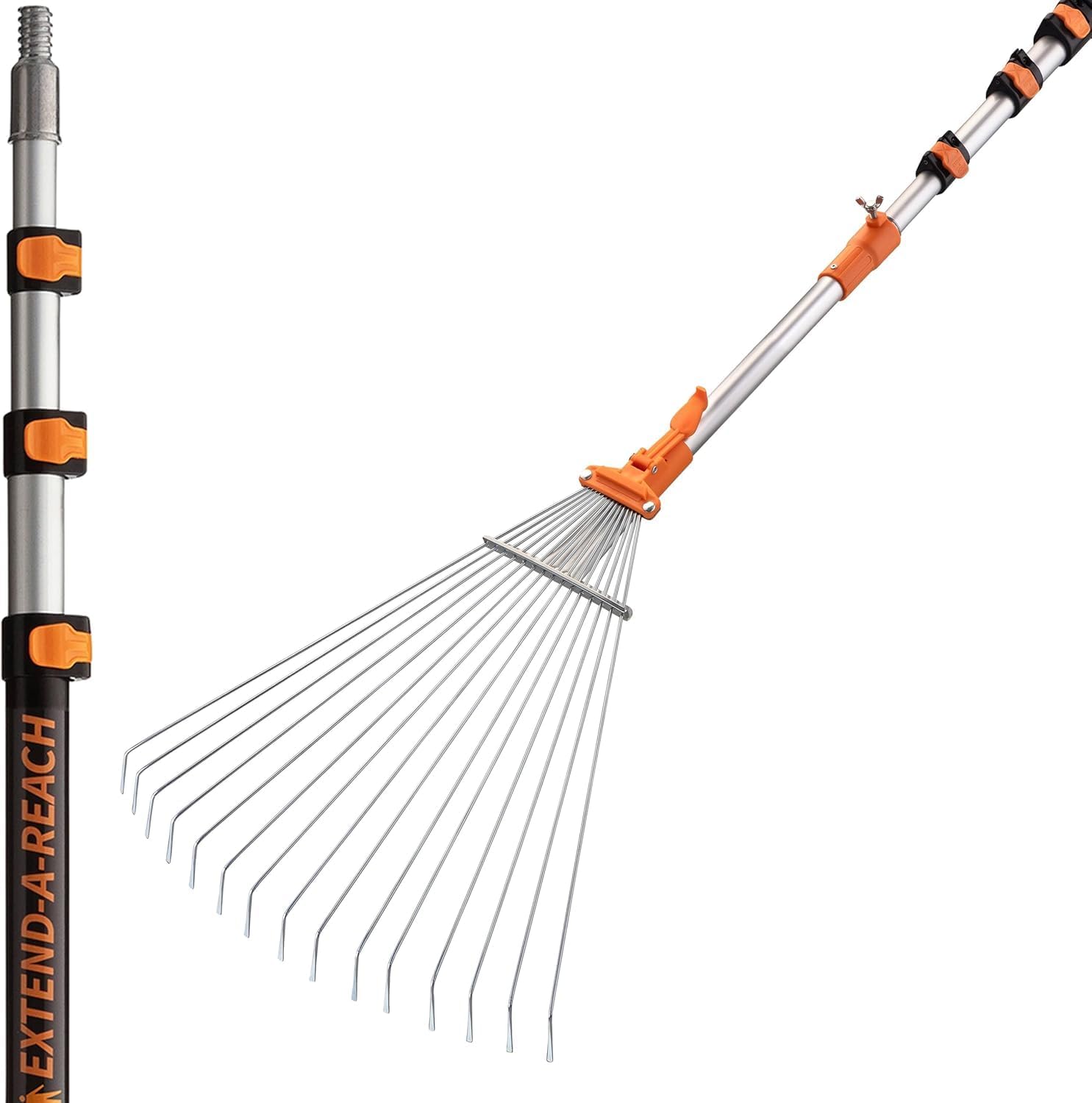
This kit pairs a collapsible metal leaf rake head with a heavy-duty telescopic aluminum pole to let you clear leaves, pine needles, and debris from roofs, gutters, and lawns without using a ladder. The rake head expands to cover wide swaths and also collapses to access tight spots, while the pole locks at intermediate lengths so you can work comfortably from the ground. Notable features include an upper-positioned latch on the rake that keeps the frame rigid during use and a universal ACME-thread tip so the pole accepts other cleaning attachments. In practice the tool is lightweight and maneuverable for seasonal roof clearing and wet-leaf removal, and the thicker aluminum shaft reduces flex when extended. Important limitations are that the metal head is best for loose debris rather than heavy ice or packed material and very long reaches can still be affected by some flex at full extension. The included kit is a sensible all-in-one option if you want a durable rake plus a reusable extension pole for multiple outdoor cleaning tasks.
Best for: Buyers who prioritize practical, multiuse tools that reduce ladder work and want a durable rake plus a reusable extension pole for seasonal roof and gutter cleanup.
Less Ideal for: People who need heavy-duty removal of compacted ice, thick packed debris, or professional crews who routinely work at extreme heights should choose specialized equipment instead.
- Collapsible metal rake head covers large areas and folds for tight spots and storage
- Upper-positioned locking latch keeps the rake frame rigid during use
- Stiff, extra-thick aluminum pole reduces wobble when extended
- Universal ACME thread lets the pole accept many other cleaning attachments
- Lightweight kit that lets you clear roofs and gutters from the ground without a ladder
- Metal head is intended for loose debris and may struggle with packed or icy material
- Some flex is possible when the pole is fully extended to its maximum reach
Verdict: A durable collapsible rake plus a stiff telescopic pole gives homeowners a safe, multiuse solution for clearing leaves and needles from roofs and gutters without a ladder.
Soontrans 2-in-1 Telescopic Roof Rake and Leaf Brush, 5–21 ft

| Handle Material | Aluminum |
|---|---|
| Head Material | Aluminum |
| Unit Count | 1 Count |
| Rake Type | Roof Rake |
The Soontrans 2-in-1 roof rake combines a 5–21 ft telescoping aluminum pole with a flexible brush head to clear leaves, twigs, and light debris from roofs, gutters, and solar panels while keeping you on the ground. It assembles from five split aluminum poles with quick fasteners in minutes and comes with non-slip gloves to improve grip during wet or cold work. The tool is noticeably light for overhead use, which reduces arm fatigue during longer cleaning sessions, and the brush is designed to be firm enough to move debris without scratching shingles or coated surfaces. Because the pole telescopes to 21 feet, it covers most single-story and many two-story rooflines from the ground, letting you avoid ladder climbs for routine maintenance. Limitations include the fixed brush head shape that may not reach tight gutter corners and the pole’s reach may still be short for very tall roofs or steep pitches. For clearing accumulated leaves and preventing clogged gutters it is a practical, easy-to-store option for regular seasonal upkeep.
Best for: Practical homeowners who want an affordable, ladder-free way to remove leaves and prevent clogged gutters on single-story or modest two-story roofs without specialist equipment.
Less Ideal for: People with very tall or steep-roof homes, professional contractors, or anyone who needs a multi-angle or powered solution for heavy wet snow or ice removal.
- Telescoping aluminum pole extends from 5 to 21 feet for ladder-free reach
- Lightweight 5.8 lb construction reduces arm fatigue during overhead use
- Aluminum brush head and pole are rust-resistant for all-weather storage
- Includes non-slip gloves for better grip and hand protection
- Brush head shape may not access tight gutter corners or narrow crevices
- 21 ft maximum reach may be insufficient for taller two-story homes or steep roofs
Verdict: A lightweight, rust-resistant telescopic roof rake that gives budget-minded homeowners ladder-free reach to clear leaves and protect gutters.
ZFNWXFP 5–24 ft Telescoping Roof Rake with Collapsible Head

| Rake Type | Roof Rake |
|---|---|
| Handle Material | Aluminum |
| Head Material | Aluminum |
| Reach (telescoping) | 5 to 24 ft |
This roof rake is designed to clear leaves, pine needles and light debris from high or sloped roofs without constant ladder work. The pole telescopes from 5 to 24 feet and the manufacturer states a working reach up to about 30 feet, so you can pull material down from valleys and eaves while standing safely on the ground. The aluminum pole and head keep weight manageable for extended use yet remain sturdy enough to drag loose, dry debris. The rake head folds for compact storage and the locking sections allow quick length adjustments for different roof heights or closer control near edges. In practice it works best on dry material and routine maintenance rather than heavy wet thatch or stuck debris. Expect better performance on larger, flat rake sweeps than on precise detail work. For homeowners who want a single, lightweight tool for seasonal roof and light yard cleanup this is a practical, easy-to-store choice, but it is not a substitute for professional roof work or tools meant for heavy, embedded buildup.
Best for: Homeowners who prioritize a dependable, easy-to-use tool for routine roof leaf and light debris removal and prefer to avoid climbing ladders for every cleanup.
Less Ideal for: People who need to remove heavy, wet, or compacted roof buildup or who require a tool for professional roof restoration work.
- Long telescoping reach reduces the need to use a ladder for roof-edge cleanup
- Aluminum pole and head keep the tool lightweight for extended use
- Collapsible rake head folds for compact storage and easier transport
- Secure locking sections allow quick length adjustments for different roof heights
- Versatile for roof debris and light yard cleanup tasks
- Not intended for heavy wet debris or compacted material
- Performance relies on dry, loose leaves and needles rather than stubborn buildup
Verdict: A lightweight, reliable telescoping roof rake that lets homeowners safely clear dry leaves and pine needles from roofs without climbing a ladder.
Snow Joe Telescoping Roof Rake with 25" Poly Blade (RJ204M)

| Handle Material | Aluminum |
|---|---|
| Head Material | Plastic |
| Head Size | 6 inches by 25 inches |
| Manufacturer Warranty Description | 2 Years |
The Snow Joe telescoping roof rake is a simple, purpose-built tool for clearing leaves, debris, and light snow from roofs, gutters, and other high surfaces while you stay safely on the ground. It uses a 6 by 25 inch poly blade attached to a twist-lock aluminum pole that extends to 21 feet, giving an overhead reach of about 27 feet for second-story roofs and tall eaves. In practice the wide blade covers more area per pass than a small broom, and the lightweight 4.8 pound construction keeps fatigue down during longer jobs. The plastic head is gentle on shingles and effective at sliding leaves and wet debris off rooflines, and the telescoping handle stores compactly when not in use. The main limitations are its manual nature and plastic head, which mean heavy, compacted snow or ice and very stubborn debris may require multiple passes or a sturdier tool. For routine seasonal leaf cleanup and light snow removal it performs well, but it is not a substitute for powered snow removal on deep drifts.
Best for: Homeowners who prioritize safe, ground-level roof maintenance and want a proven, easy-to-use tool for seasonal leaf and light snow removal backed by many users.
Less Ideal for: People who regularly need to remove deep, packed snow or commercial crews who require powered equipment and very heavy-duty heads.
- Telescoping aluminum pole extends for about 27 foot overhead reach to access second-story roofs
- Large 25-inch poly blade clears more area per pass for faster leaf and debris removal
- Lightweight 4.8 pound design reduces user fatigue during extended use
- Plastic blade is gentle on shingles and roof surfaces
- Poly blade and manual operation struggle with heavy, compacted snow or ice
- Twist-lock telescoping mechanism can loosen over time with heavy use
Verdict: A lightweight, widely used telescoping roof rake that safely speeds routine leaf and light-snow clearing from roofs while you work from the ground.
Choosing the Right Roof Garden Rake for Leaves: Key Factors to Consider
Reach and Extension Length
How far a rake reaches determines whether you can clear a roof from ground level or need to use a ladder. Longer telescoping poles let you work from a safer position, but excessive length increases flex and reduces control. Consider the balance between maximum reach and usable rigidity. A pole that extends in secure increments and locks firmly at each stage gives you usable reach without wobble.
Think about your roof height and slope when judging reach. If you frequently clean two- or three-story roofs, choose a longer pole with a thicker shaft to resist bending. For single-story homes, a shorter, lighter extension is easier to maneuver for detailed work around gutters and valleys.
Head Shape and Tine Spacing
The rake head shape affects how debris is gathered and how the tool interacts with shingles. Wide, fan-shaped heads move more material in a single pass but can be harder to control near edges and gutters. Narrower heads allow precise clearing around roof features. Tine spacing matters for leaf type: closely spaced flexible tines handle fine, dry leaves well, while wider spacing clears wet, matted debris and small branches more effectively.
Flexible synthetic tines are usually safer for roofing surfaces because they bend under pressure instead of scratching. Rigid metal tines can be effective at prying compacted debris but raise the risk of abrasion. Match tine design to the typical debris and roof material you have.
Roof-Friendliness and Surface Protection
Protecting shingles, tiles, and gutters is the primary concern when choosing a roof rake for leaves. Look for heads and tines with protective coatings, rounded tips, or soft edges that reduce scraping. A head designed to glide along the roof with minimal contact pressure helps keep the roofing material intact, especially on older or fragile shingles.
Also consider whether the tool allows you to clear debris without levering the rake against the roof surface. Designs that let you pull debris downward into a collection area or away from the ridge minimize direct force on the roof and lower the chance of dislodging shingles or breaking tiles.
Weight, Balance, and Handling
A rake that is too heavy or badly balanced becomes tiring and less precise, increasing the risk of mistakes on a ladder or when leaning over a guardrail. Lightweight materials like fiberglass or aluminum poles reduce fatigue, but they must still be stiff enough to handle extended reach. The head should be proportionate to the pole so the tool does not feel head-heavy.
Ergonomics matter for safety and control. Look for comfortable grips, manageable overall weight for overhead work, and a pole diameter that suits your hands. If you must use the tool for extended sessions, a lighter option with a secure handle will reduce strain.
Adjustment, Angle Control, and Locking
Roof surfaces are sloped and you will often need to change the angle of the head to work along valleys, gutters, and eaves. A head that pivots smoothly and locks at set angles makes it easier to maintain contact without sudden shifts. Telescoping poles should have reliable locking mechanisms that do not slip under load.
Angle control also affects how the rake contacts the roof. Fine increments let you tune the approach for different pitches and debris types. Poor locks or a floppy pivot will undermine control and increase the risk of the head catching on roofing features.
Gutter Compatibility and Debris Management
One of the most common tasks for a roof garden rake for leaves is clearing along eaves and out of gutters. Some head designs include a gutter-cleaning lip or a narrower profile to reach into channels. Others gather debris away from the edge so you can collect it safely from the ground or a ladder.
Think about where the debris will land and how you will manage it. Tools that allow you to pull leaves down without sending a shower of wet debris over a gutter or onto walkways improve safety and cleanup. Consider whether additional attachment options are useful for your roof and gutter configuration.
Working From the Ground Versus Ladder Use
When possible, clear leaves from the ground to reduce fall risk. A sturdy extension pole and a head designed to push material downward let you remove most loose debris without climbing. However, gutters, valleys, and tightly packed debris sometimes require closer access from a ladder.
Plan tasks so you do the broad clearing from the ground first, then step up a ladder only for targeted work. Use a spotter and stabilize the ladder on level ground. When using the ladder, keep the rake length manageable by collapsing the pole so the head is easier to control.
- Test rake reach from several standing positions before starting.
- Clear across the slope, not straight down, to avoid pushing debris under shingles.
- Use a ladder only for precision work near gutters or valleys.
Techniques for Safely Clearing Wet and Compacted Leaves
Wet leaves can be heavy and cling to shingles, making them harder to remove. Use sweeping strokes that pry rather than scrape. Start at the ridge and work toward the eaves so gravity aids removal. Multiple light passes are safer than trying to pull off a large, heavy sheet of debris.
If leaves are compacted with moss or dirt, soften them with a brief watering or by using a flexible head that bends to dislodge material. Avoid levering the head against the roof surface; instead lift and pull debris to reduce direct force on roofing materials.
- Work from top to bottom so debris falls down and away.
- Use shallow angles to peel wet leaves instead of digging in.
- Take frequent breaks to inspect shingles for loosened granules or damage.
Maintaining Your Roof Rake
Rinse synthetic heads after use to remove grit and prevent abrasion. Check tines for cracks or sharp edges and replace a damaged head before the next season. Wipe down poles and lubricate locking collars if they become stiff.
Store extension poles collapsed and out of direct sunlight when not in use to avoid UV degradation. Inspect fasteners and pivot pins periodically to ensure the head remains secure and angle adjustments hold under load.
- Clean off grit to protect roofing when you next use the rake.
- Replace worn or cracked tines promptly.
- Store indoors or under cover to prolong pole life.
Adapting Tools to Different Roof Materials
Shingle, tile, and metal roofs each react differently to contact. Asphalt shingles are prone to granule loss from scraping, while clay or concrete tiles can crack if hit sharply. Metal roofs may dent under a heavy impact. Choose a head with softer or coated tines for delicate surfaces and avoid stiff metal tines unless you need them for prying debris off very rugged roofs.
If you have mixed materials, err on the side of gentler contact and be prepared to finish tricky spots by hand from a secure position with appropriate fall protection.
- Use coated or synthetic tines on delicate shingles.
- Reserve stiffer heads for hard, durable roofing materials.
- When in doubt, reduce contact pressure and use multiple passes.
Accessory Options and Add-Ons
Some roof rakes accept add-ons such as gutter hooks, debris collection bags, or specialized heads for wet buildup. These accessories can make cleanup faster but also add weight or change balance. Choose attachments that lock securely and are easy to remove for storage.
Compatibility with common extension poles or universal connectors increases flexibility if you already own poles used for other tasks like window cleaning or painting.
- Check connector type before buying attachments.
- Prefer accessories with positive locking mechanisms.
- Avoid add-ons that make the head too heavy for safe overhead use.
How We Chose the Best Roof Garden Rake for Leaves
We focused on practical performance and roof safety when selecting these roof garden rakes for leaves. Key evaluation dimensions included reach and extension so you can work from the ground, head design and tine spacing to remove wet leaves and debris without catching on shingles, build materials and weight for comfortable handling during extended use, and adjustment or locking mechanisms to keep the head stable at angle. We also examined compatibility with gutter clearing and the ability to work on different roof pitches. We excluded tools that require standing on the roof, that have rigid metal tines likely to abrade roofing surfaces, or that lack any extension or angle adjustment. We prioritized rakes that demonstrably reduce roof contact force and limit abrasion while still moving dense leaf build-up. Durability, ease of use, and maintenance needs were secondary filters to ensure a selected tool will last through seasons of use.
FAQ
Can I use a roof garden rake for leaves on all roof types?
Often you can, but it depends on roof material and condition. Synthetic-tined heads are safer on asphalt shingles and most tiles. For fragile or loose roofing, avoid scraping and use gentler techniques or get closer access from a stable platform.
How long should a roof rake reach to clear a two-story house?
It depends on house height and slope, but a telescoping pole rated for two-story reach is typically needed. Make sure the pole remains stiff at full extension; if it flexes too much, work from a safer mid-length or use a ladder for the final passes.
Are metal tines better than synthetic tines for roof debris?
Metal tines can handle heavy, compacted debris but increase the risk of scratching or abrading roofing materials. Synthetic tines bend and are gentler on surfaces, making them a better default choice unless you have very tough, bonded debris that needs prying.
How often should I clear leaves from my roof?
Frequency depends on tree cover and season. In high leaf-shedding seasons, plan periodic checks and removal to prevent clogging of gutters and water pooling. Leaving heavy wet debris for extended periods can lead to moisture damage and accelerated roof wear.
Can gutter attachments help when raking leaves from the roof?
Gutter-compatible heads or hooks can help dislodge material caught at the lip and direct debris away from the channel. They are useful when gutters are shallow or prone to clogging, but ensure the attachment does not snag and that you maintain control when working near the edge.
Final Verdict
Choose a roof garden rake for leaves by balancing reach, roof-friendly head design, and manageable weight. Prioritize tools that let you clear debris from the ground when possible and that minimize direct force on shingles or tiles. Consider adjustment stability and gutter compatibility based on your roof pitch and common debris types. A properly matched rake reduces risk, speeds seasonal cleanup, and preserves roofing materials. Focus on the criteria above to pick a tool that fits your roof height, surface, and maintenance habits so you can keep roofs clear with confidence.
