

Note: This article contains affiliate links. If you click on these links and make a purchase, I may earn a small commission at no extra cost to you. This helps support my research and content. Read my full affiliate disclosure here.
Choosing the right shade flowers for pots matters because containers concentrate root and moisture conditions that differ from garden beds. In low-light patios, balconies, and shaded porches you need plants that tolerate limited sun while still producing steady blooms and healthy foliage. This guide shortlists seven top container-friendly shade flowers selected for dependable flowering, compact habits, and realistic maintenance needs. Below you will find practical notes on bloom timing, watering and pot size considerations, and the evaluation criteria used to pick contenders for shaded containers.
Top Picks at a Glance
| Best Overall The best all-around choice for most situations | BuggyBeds 1000 Double Primrose Seeds (Mixed) |  |
| Best Quality Built to a higher standard if you want something more solid | Generic Pink Fuchsia Live Plant in 5-inch Pot |  |
| Best Value The sweet spot between price and what you get | SVI Rainbow Coleus Heirloom Flower Seeds (1200 Count) |  |
| Best Budget The cheapest option that still gets the job done reliably | Generic Cineraria Seeds — Mixed Colors, 1100 Count |  |
| Highest Rated A top-rated pick with lots of positive feedback | Groundio Coleus Rainbow Mix Seeds (Coleus scutellarioides) |  |
| Most Popular A crowd favorite that many people choose with confidence | HOME GROWN Rainbow Mix Coleus Seeds (approx. 400 seeds) |  |
| Best Seller A high-volume bestseller chosen again and again | KVITER Rainbow Coleus Flower Seeds – 1,600 Count |  |
BuggyBeds 1000 Double Primrose Seeds (Mixed)

| Indoor Outdoor Usage | Indoor, Outdoor |
|---|---|
| Expected Blooming Period | Spring |
| Sunlight Exposure | Partial Shade |
| Expected Planting Period | Spring or Fall |
| USDA Hardiness Zone | 4-8 |
These BuggyBeds double primrose seeds deliver a large quantity of heirloom, non-GMO seed meant for early spring color in low-light spots. Suited to both containers and garden beds, the mix is described as hardy in USDA zones 4 to 8 and prefers partial shade and consistently moist, well-draining soil. Practical benefits include the high seed count for mass plantings or filling multiple pots, the double-petaled blooms that give a fuller, rose-like look, and the higher germination rate which increases the chance of successful stands from seed. Typical use is starting seeds in spring (or fall where appropriate), transplanting seedlings into north-facing pots or shaded borders, and keeping soil evenly moist for reliable flowering. Limitations are that these primroses need consistent moisture and shade rather than full sun, and germination from seed requires patience and basic seed-starting care compared with buying established plants. The mix is best when you want economical coverage and abundant spring display in shaded containers or small shaded garden areas.
Best for: Buyers who want economical coverage to create abundant spring color in shaded pots or shaded borders and are comfortable starting seeds and tending seedlings.
Less Ideal for: Gardeners who need instant, mature plants for immediate display or who prefer very low-maintenance, drought-tolerant varieties.
- High seed count (1000 seeds) for mass planting or multiple pots
- Non-GMO heirloom seeds with reported high germination rate
- Shade-tolerant variety well suited to partial shade and north-facing containers
- Double-petaled blooms give a fuller, decorative appearance in pots and borders
- Requires consistently moist soil which needs more frequent watering in containers
- Plants perform best in partial shade not full sun, limiting placement options
Verdict: A cost-effective choice for gardeners who want plentiful, double-flowered primroses to brighten shaded pots and borders starting in spring.
Generic Pink Fuchsia Live Plant in 5-inch Pot

| Sunlight Exposure | Partial Shade |
|---|---|
| Unit Count | 1 Count |
This live fuchsia arrives as a small, well-rooted starter in a 5-inch pot and is intended for container and shaded-site use. It produces colorful pendant flowers through the growing season and is especially well suited to hanging baskets, porches, and shaded patio containers. The plant is shipped dormant in colder months and will leaf out again in spring, which keeps it manageable for seasonal gardeners. Practical benefits include immediate display potential from the showy blooms and easy placement in areas with limited sun where many plants struggle. Expect routine container care: regular watering, well-draining potting mix, and occasional feeding to sustain continuous flowering. Limitations are its seasonal dormancy and modest size at delivery, so it is not an instant full hanging basket and requires a season of growth to fill out; it also prefers shade so it will not perform in sunny containers.
Best for: Gardeners who need an attractive, shade-tolerant flowering plant for pots, hanging baskets, or small patios and who plan to nurture it through the season to build a fuller specimen.
Less Ideal for: Those who want an immediate, full hanging basket display or need a sun-loving container plant for bright, hot exposures.
- Compact starter ready for potting or hanging baskets
- Produces vibrant, long-blooming pendant flowers suitable for shaded spots
- Arrives well rooted and tolerates partial to full shade
- Good choice for small-space container gardens and patios
- Arrives small and will need a season of growth to fill a larger container or hanging basket
- Goes dormant in fall and winter so it will lose foliage during colder months
Verdict: A compact, shade-loving flowering starter perfect for pots and hanging baskets when you want reliable colorful blooms in low-light outdoor spaces.
SVI Rainbow Coleus Heirloom Flower Seeds (1200 Count)

| Unit Count | 1200 Count |
|---|---|
| Sunlight Exposure | Partial Shade |
| USDA Hardiness Zone | 4-10 |
| Moisture Needs | Regular Watering |
| Material Features | GMO Free, Heirloom |
These SVI rainbow coleus seeds are an economical choice for filling pots and shady spots with colorful, low-maintenance foliage. The packet contains a high unit count suitable for seeding many containers or creating dense drifts in garden beds. Coleus thrives in partial shade, germinates quickly in about 7 to 14 days, and grows into bushy 12-inch plants that respond well to pinching for fuller mounds. The seeds are heirloom and GMO free, and each pack includes planting guidance to simplify starting indoors or direct sowing after frost. Practical benefits include strong shade tolerance, flexible use in pots or borders, and regular watering needs that are straightforward for routine care. Limitations are mostly about the plant type: coleus is grown for foliage not flowers, so it contributes color and texture rather than prominent blooms, and successful results depend on keeping soil evenly moist and protecting plants from harsh afternoon sun in hot climates.
Best for: Buyers who want an affordable way to populate multiple pots or shady borders with colorful, low-effort foliage plants and who prefer straightforward seed-starting guidance.
Less Ideal for: Gardeners seeking plants focused on large, long-lasting blooms or those who cannot provide regular watering or occasional shade protection during heat spikes.
- High seed count (1200) lets you fill many pots or create dense plantings
- Heirloom, GMO-free seeds with planting guidance included
- Performs well in partial shade and is described as shade resistant
- Fast germination (7–14 days) and compact 12-inch habit ideal for containers
- Primarily grown for foliage rather than showy flowers
- Needs consistent moisture and protection from hot afternoon sun
Verdict: A cost-effective seed pack for quickly filling shade pots and beds with colorful, low-maintenance coleus foliage.
Generic Cineraria Seeds — Mixed Colors, 1100 Count

| Indoor Outdoor Usage | Outdoor |
|---|---|
| Other Special Features of the Product | Attracts Pollinators |
| Expected Blooming Period | Year Round |
| Sunlight Exposure | Full Sun |
| Material Features | GMO Free |
These cineraria seeds are offered as a high-count pack intended to fill pots, window boxes, or shaded garden beds with vibrant spring and early-summer color. They are typically started indoors 8 to 10 weeks before the last frost, with seeds pressed onto moist seed-starting mix and left uncovered since light helps germination. Seedlings need bright, indirect light and should be transplanted after true leaves develop. Notable product points are the very large unit count, non-GMO labeling, and a flowering habit suited to cool, moist conditions and partial shade. For budget-minded gardeners this packet can supply many containers or repeated seasonal plantings for little cost per plant. Limitations to expect are that cinerarias prefer cool temperatures and consistent moisture, so they are not ideal for hot, dry summers, and success depends on careful seed-starting and protection from heat once transplanted.
Best for: Budget-focused gardeners who want to add bright, seasonal color to shaded pots and window boxes and are willing to start seeds indoors and tend seedlings.
Less Ideal for: Gardeners in consistently hot climates or those who prefer low-effort, heat-tolerant annuals that can be direct-sown outdoors without indoor starting.
- Very large seed count provides many plants or multiple sowings from one purchase
- Non-GMO labeling for gardeners who prioritize untreated seed stock
- Well suited to pots and shaded containers where cool, moist conditions are maintained
- Attracts pollinators when in bloom
- Performs poorly in hot, dry conditions and needs consistent moisture
- Requires indoor seed-starting and frost-timing, which adds time and effort
Verdict: If you want an economical way to fill shaded pots with vibrant seasonal color, this high-count packet of cineraria seeds delivers a lot of planting value for the price.
Groundio Coleus Rainbow Mix Seeds (Coleus scutellarioides)

| Indoor Outdoor Usage | Indoor, Outdoor |
|---|---|
| Expected Blooming Period | Spring to Summer |
| Sunlight Exposure | Full Sun |
| USDA Hardiness Zone | 4-10 |
| Moisture Needs | Moderate Watering |
These Groundio Coleus Rainbow Mix seeds are intended for gardeners who want bold, foliage-focused color in pots or shaded beds. The packet contains roughly 1 ounce (about 900 seeds), enough to fill containers, hanging baskets, or borders with medium-leaf coleus in shades of yellow, green, pink, red, and maroon. Coleus is grown for its leaves rather than blooms and does best in part sun to part shade, so these seeds are typically sown thinly on soil and kept evenly moist until germination. Notable product points are the heirloom non-GMO seed stock, a stated high germination rate, and suitability across USDA zones 4 to 10. For container plantings the variety is space-efficient and colors develop as foliage matures, making it reliable for consistent visual impact. Limitations to expect are that coleus is tender and treated as an annual in many climates, and the packet warns seeds and seedlings are not pet-safe to ingest. If you need a shade-loving plant that provides dependable seasonal color and easy care, these seeds are a practical choice.
Best for: A gardener who prioritizes dependable, repeatable results in shaded containers or small pots and wants vibrant foliage without complex care. Ideal for beginners and busy plant owners who value predictability over experimentation.
Less Ideal for: Not a good fit for someone seeking edible or pet-safe plantings or for gardeners needing long-lived perennial color in cold climates where coleus will not overwinter.
- Large seed count suitable for multiple pots or repeated sowings
- Non-GMO heirloom stock with advertised high germination rate
- Adapted to indoor or outdoor planting in part sun to shade
- Wide USDA zone range (4–10) for broad climate reliability
- Seeds are for ornamental use only and are harmful if ingested by pets
- Coleus is tender in cold weather and generally grown as an annual in many areas
Verdict: Choose these coleus seeds when you want an easy, reliable source of bold shade-tolerant foliage for pots and small containers.
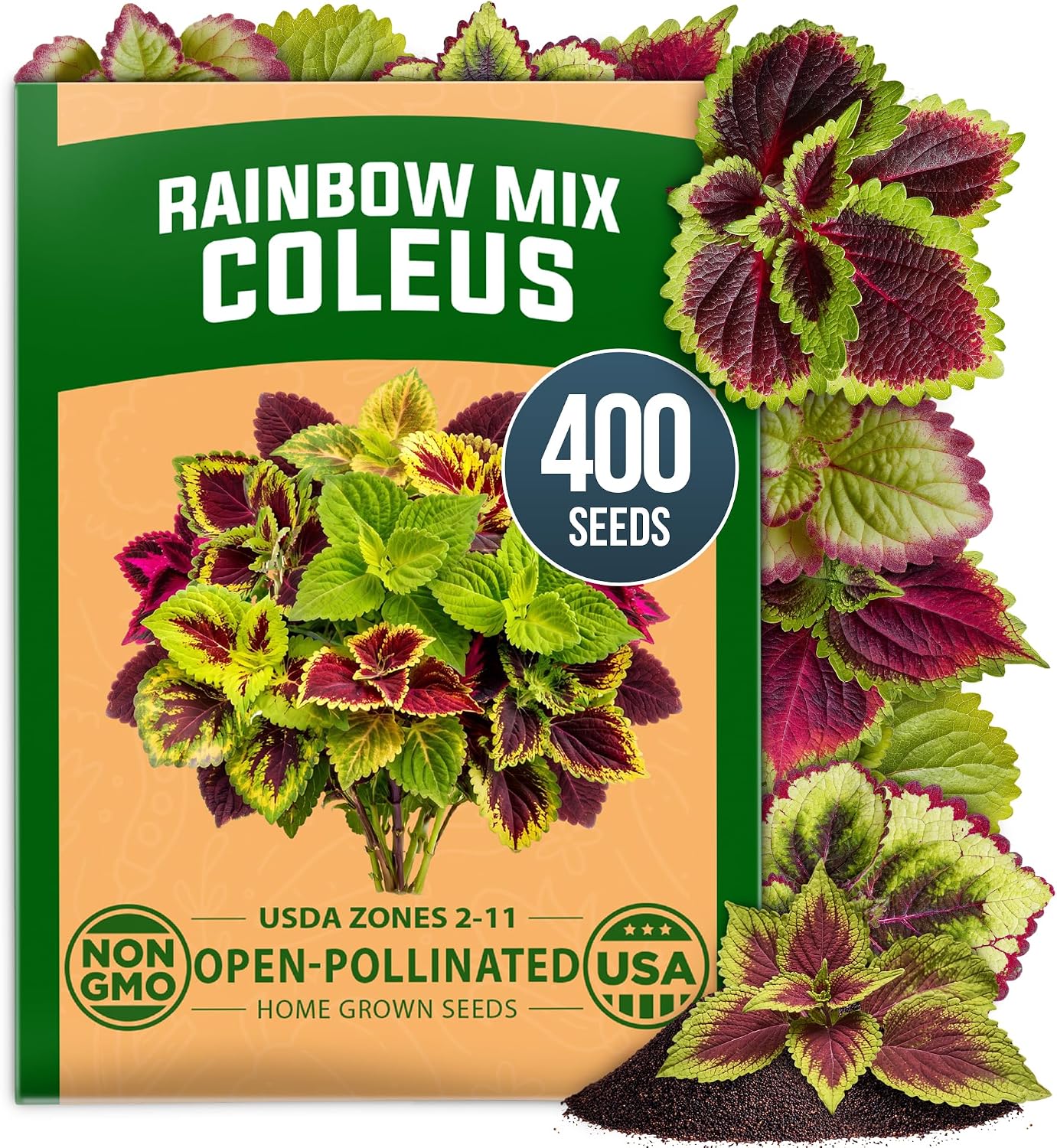
HOME GROWN Rainbow Mix Coleus Seeds (approx. 400 seeds)
| Sunlight Exposure | Part Shade to Shade |
|---|---|
| Expected Blooming Period | Spring through Frost |
| USDA Hardiness Zone | 2-11 |
| Material Features | GMO Free, Heirloom |
| Unit Count | 1 Count |
HOME GROWN Rainbow Mix provides a large packet of coleus seeds selected for striking variegated foliage rather than showy flowers, making it a go-to for shade containers and beds. Sow the tiny seeds on the soil surface (do not cover), keep the medium warm and evenly moist at about 70–75°F, and expect germination in roughly 10–14 days. Plants form compact, mounded foliage clumps that reach about a foot tall and bring season-long color from spring until frost. Because these are foliage-focused, pinch tips to encourage bushiness and remove flower spikes that can dull leaf color. The mix is versatile for patio pots, window boxes, and shaded borders and is labeled heirloom and non‑GMO. Important limitations are that coleus are tender annuals in most climates and need consistent moisture and protection from frost; their leaf colors can fade if exposed to hot, direct sun or drought. For growers who want easy-to-grow, shade-friendly color in containers, this packet covers many plants, but those seeking long-lived perennials or sun-loving bloom displays should consider other species.
Best for: Gardeners who want an easy, high‑value way to add dependable, colorful foliage to shaded patios and containers and who prioritize social proof and low risk when choosing seed varieties.
Less Ideal for: Growers seeking sun‑loving flowering annuals, long-lived perennials, or plants that tolerate drought and full sun exposure.
- Large seed count (~400) provides enough plants for multiple containers or beds
- Variegated foliage offers season-long color in part shade to full shade
- Surface-sow seeds and warm, moist conditions make starting straightforward for beginners
- Compact, mounded habit suits patio pots, window boxes, and mixed planters
- Heirloom and non-GMO labeling appeals to gardeners preferring open‑pollinated seed stock
- Tender annual in most zones and requires frost protection or indoor overwintering
- Needs consistently moist, rich soil and can suffer if left to dry or sit in soggy conditions
Verdict: A cost-effective packet of non‑GMO coleus seeds that reliably produces compact, high-impact foliage for shady pots and containers.
KVITER Rainbow Coleus Flower Seeds – 1,600 Count

| Unit Count | 1600 Count |
|---|---|
| USDA Hardiness Zone | 4-10 |
| Sunlight Exposure | Partial Shade |
| Material Features | GMO Free, Heirloom |
| Indoor Outdoor Usage | Indoor, Outdoor |
These KVITER Rainbow Coleus seeds are a bulk pack meant for gardeners who want bright, low-effort foliage for shady pots and containers. The mix contains 1,600 heirloom, non-GMO seeds and includes a step-by-step growing guide on every packet, which helps reduce uncertainty for less experienced growers. Coleus thrives in partial shade and is typically started indoors 6–8 weeks before the last frost or sown shallow outdoors in spring to summer; plants reach about a foot tall and make attractive fills for pots, window boxes, and shaded borders. Practical benefits include shade resistance, regular watering needs rather than finicky moisture regimes, and fast germination in about 7–14 days under full light. Because this is a seed product, results depend on sowing technique and local conditions, and you should expect variability in germination rates and color distribution inherent to mixed heirloom seed lots. The sheer quantity is well suited to replanting, sharing, or creating multiple containers, but it may be more than needed for a single small pot collection.
Best for: Gardners who want an easy, reliable source of colorful, shade-loving foliage for multiple pots or to fill a shaded patio quickly and who prefer clear instructions to minimize mistakes.
Less Ideal for: People seeking a small, single-pot seedling pack or those who want exact uniformity in leaf color and pattern should consider smaller or labeled varieties instead.
- Large 1,600-count seed pack suitable for multiple pots or beds
- Heirloom and non-GMO seeds with a detailed growing guide on each packet
- Shade-tolerant variety designed for partial sun locations
- Fast germination reported at 7–14 days when started under good light
- Bulk quantity may be excessive for small container gardeners
- Germination and color mix can vary since this is a mixed heirloom lot
Verdict: If you need plentiful, low-maintenance shade-friendly foliage seed for multiple pots or to quickly populate a shaded patio, this large heirloom coleus pack delivers with clear guidance for growers.
Choosing the Right Shade Flowers for Pots: Key Factors to Consider
Light Levels and Microclimate
Shade is not a single condition. It ranges from dappled morning sun to deep, north-facing shade with hours of indirect light. Assess the actual light at the pot's location across the day and season. A plant listed as tolerant of light shade may still underperform in deep shade where it receives less than two hours of bright indirect light.
Pots mounted on a wall or under an overhang can stay cooler and wetter than ground-level beds. Cooler temperatures and lack of direct sun slow growth and flowering for many species. Choosing varieties labeled specifically for low light helps avoid weak stems and sparse blooms.
Pot Size and Root Space
Container dimensions control how much soil and moisture are available between waterings. Shallow pots warm and dry quickly, stressing shade-adapted plants that prefer steady moisture. Deeper, wider containers buffer moisture swings and support a fuller root system, improving bloom consistency.
Also consider the mature root habit. Clumping and compact plants do best in standard pots, while species that develop larger root balls need bigger planters or regular repotting. Expect to replace or refresh potting mix every season or two to maintain fertility in tightly rooted containers.
Soil Mix and Drainage
Good container soil balances moisture retention and drainage. Heavy mixes that stay soggy invite root rot in shaded conditions where evaporation is slow. Use a free-draining potting mix amended with organic matter to hold nutrients without becoming waterlogged.
Ensure containers have adequate drainage holes and consider adding a shallow layer of coarse material or a mesh screen to keep media from washing out. In shaded patios, irrigation frequency often decreases, so correct soil structure reduces overwatering risks.
Watering Rhythm and Moisture Management
Shade pots often need less frequent but steady moisture compared with sun-exposed containers. Erratic watering-letting pots dry deeply then saturating-can stress shade plants and trigger leaf drop or poor flowering. Develop a consistent watering routine keyed to pot size, media, and the plant's needs.
Self-watering containers or moisture meters can help maintain even soil moisture. Also be mindful of seasonal changes: cooler weather reduces water needs, while warm, humid spells can require slightly more frequent checks to prevent anaerobic soil conditions.
Fertilizer and Bloom Support
Containers have limited nutrient reserves, so regular feeding during the growing and blooming season supports sustained flower production. Choose balanced or bloom-focused fertilizers and follow label rates to avoid salt buildup in the root zone.
Slow-release granules at potting time give a base level of nutrition, but periodic liquid feeds can boost flowering in long-blooming varieties. Flush the potting mix occasionally to prevent fertilizer accumulation, especially in containers with restricted drainage.
Maintenance and Seasonal Care
Routine deadheading, light pruning, and debris removal are more important in pots than in beds because limited space magnifies stress. Removing spent blooms encourages many shade flowers to rebloom and keeps the container tidy.
Plan for overwintering or seasonal replacement depending on your climate and the plant's hardiness. Some shade-flowering annuals are treated as seasonal color and replaced each year, while perennial options may need sheltered spots, mulching, or lifting in colder zones.
Best Potting Mix and Amendments for Shade Containers
A lightweight, well-draining potting mix is the cornerstone of success for shade flowers in pots. Aim for a blend that includes peat or coir for moisture retention, perlite or pumice for aeration, and a portion of compost for nutrients. Avoid garden soil, which compacts and holds too much water in confined containers.
Add a modest amount of slow-release fertilizer when filling the pot, then supplement with liquid feeding during the bloom season. For pots in particularly cool or damp spots, increase drainage by adding extra perlite and ensure holes are clear so excess water can escape.
- Include organic matter to supply nutrients without retaining excess water
- Use coarse material near drainage holes only if the mix still drains well
- Consider a top dressing of compost in mid-season to refresh nutrients
Arranging Shade Flowers for Visual Impact
Think in layers: taller foliage or flowering stems at the back, a well-branching midlayer for continuous blooms, and trailing or cascading plants to soften the pot's edge. Compact varieties are often the best core, with a restrained spiller to add movement.
Contrast foliage texture and leaf color to keep a shady container interesting even when flowers are sparse. Variegated leaves, glossy dark greens, or finely textured foliage can all brighten an otherwise dim location.
- Combine one structural centerpiece plant with two to three complementary fillers
- Use repeating colors or foliage echoes to unify mixed-plant containers
- Avoid overcrowding; allow airflow to reduce disease pressure
Watering Strategies for Shaded Pots
Check soil moisture with your finger rather than relying solely on a schedule. In shade, the top inch of media may dry slower, so probe a little deeper to assess true moisture. Water thoroughly when the soil begins to dry to the depth appropriate for the plant species.
If you travel or forget frequent checks, choose mixtures with more water-holding capacity or use self-watering containers. However, balance that with good drainage to prevent root oxygen deprivation in consistently damp conditions.
- Water in the morning to reduce disease risk from persistent leaf wetness
- Adjust frequency seasonally; cooler months usually require less
- Use a saucer or capillary mat carefully-standing water under pots can harm roots
Seasonal Care and Overwintering
Many shade container flowers are annuals treated as seasonal color, but some perennials can thrive in pots over multiple years with proper care. In colder zones, move containers to a protected area, add insulating wrap, or lift tender perennials for winter storage.
Clean up foliage and spent material in late fall to reduce overwintering pests and disease. Plan to refresh potting mix every one to two years to sustain fertility and healthy root growth.
- Know the plant's hardiness and plan container protection or replacement accordingly
- Reduce fertilization in late season to harden plants for winter
- Repot or divide crowded perennials in spring for renewed vigor
Designing for Small Balconies and Shallow Pots
When space is limited, prioritize compact, slow-growing shade flowers that respond well to confined root space. Choose shallow-rooted varieties and keep soil depth sufficient for the specific plant's root system.
Vertical elements, like a single upright spike or a small obelisk with trailing shade-friendly plants, can multiply visual interest without needing larger footprint pots.
- Select varieties labeled for containers or small spaces
- Limit the number of plants per pot to reduce competition
- Use lightweight pots to make rearranging easier
How We Chose the Best Shade Flowers for Pots
We focused on container performance in low-light environments rather than open-bed vigor. Selection began by filtering for plants with documented shade tolerance and a compact or clump-forming habit that stays visually balanced in pots. We excluded groundcover-only species and vigorous spreaders that require frequent root pruning or oversized containers. Editorial evaluation emphasized measurable traits gardeners can verify: bloom frequency and duration, tolerance to indirect light, compactness and habit appropriate for containers, and routine care demands such as watering frequency and pruning. Disease and pest resistance in shaded conditions was also weighed because damp, low-light microclimates can raise problems. We prioritized species and cultivars known to perform across a range of pot sizes and common container mixes. Plants were excluded if they require full sun, amphitheater-scale planting, or specialized greenhouse regimes. The final shortlist balances flowering reliability with realistic maintenance for patio and balcony gardeners.
FAQ
How much direct sun do shade flowers in pots actually need?
It depends on the species. Many plants labeled for shade will perform with two to four hours of morning or filtered light. Deep-shade locations with less than two hours of bright indirect light will limit flowering for most species.
Can I grow shade flowers in shallow window boxes?
Yes, if you choose shallow-rooted varieties and maintain consistent moisture. Use a high-quality lightweight mix and water more frequently because shallow soil dries faster. Avoid crowding plants in narrow boxes.
How often should I fertilize container shade flowers?
A light feed every two to four weeks during the active growing and blooming season is common, using a balanced liquid fertilizer or a bloom-focused formula. Slow-release granules at potting time can reduce feeding frequency.
Do shade flowers get more disease problems in pots?
They can, because shaded, sheltered spots retain moisture and slow drying. Good airflow, proper drainage, and removing dead foliage reduce disease risk. Avoid overwatering and allow the top portion of the soil to dry between thorough waterings as appropriate.
Should I deadhead shade-flowering plants in containers?
Often yes. Removing spent blooms encourages many species to produce additional flowers and keeps the container tidy. Some plants are self-cleaning and need less deadheading, but light pruning still improves appearance.
Can I mix shade flowers with foliage-only plants in the same pot?
Mixing flowering shade plants with ornamental foliage is a good strategy to maintain interest across the season. Match water and light needs so one plant does not outcompete the others, and pick complementary growth habits to avoid crowding.
Final Verdict
For shady patios and balcony pots, prioritize plants that balance dependable flowering with a compact, container-friendly habit and modest maintenance needs. Focus on potting mix, proper drainage, and a consistent watering rhythm to get the best results from shade flowers in containers. Weigh the tradeoff between more frequent bloomers that need regular feeding and low-maintenance foliage-forward plants that provide long-lasting interest. With the right species and routine care, shaded pots can deliver continuous color and texture through the growing season.
