

Note: This article contains affiliate links. If you click on these links and make a purchase, I may earn a small commission at no extra cost to you. This helps support my research and content. Read my full affiliate disclosure here.
If you need clean, efficient cuts in wood, a very sharp hand saw changes how quickly and accurately you work. The right sharpest hand saws slice through green or dry lumber with less tearing, require fewer corrective passes, and reduce fatigue when cutting repeatedly in the yard, raised-bed framing, or small workshop projects. This guide shortlists seven top options and explains the factors that make a saw feel razor sharp in everyday garden and outdoor use. We evaluated edge geometry, blade stiffness, handle ergonomics, and durability to find saws that deliver predictable, straight cuts and long-lasting edges. Below you will find our top picks plus practical guidance for choosing the best saw for your typical cutting tasks.
Top Picks at a Glance
| Best Overall The best all-around choice for most situations | SUIZAN Ryoba 9.5" Japanese Double-Edge Pull Saw |  |
| Best Quality Built to a higher standard if you want something more solid | Silky ZUBAT Ultimate Professional Curved Hand Saw 330mm (746-33) |  |
| Best Value The sweet spot between price and what you get | CRAFTSMAN 20" Fine Finish Hand Saw (CMHT20881) |  |
| Best Budget The cheapest option that still gets the job done reliably | Frocopo 6-inch Double-Edge Pull Hand Saw with Wooden Handle | 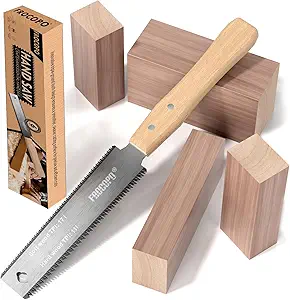 |
| Highest Rated A top-rated pick with lots of positive feedback | Silky ZUBAT Professional Curved Pruning Saw 270mm (270-27) |  |
| Most Popular A crowd favorite that many people choose with confidence | REXBETI 11-Inch Folding Pruning Saw with SK-5 Steel Blade |  |
| Best Seller A high-volume bestseller chosen again and again | REXBETI 14-Inch Folding Pruning Saw (SK-5 Steel) |  |
SUIZAN Ryoba 9.5" Japanese Double-Edge Pull Saw

| Blade Material | Japanese Steel |
|---|---|
| Blade Length | 9.5 inches |
| Number of Teeth | 15 |
| Power Source | Hand Powered |
| Included Components | Blade, Blade Guard |
The SUIZAN Ryoba 9.5" is a double-edge Japanese pull saw built for accurate, low-effort cutting. It has rip teeth on one edge and finer crosscut teeth on the other so you can switch between ripping and crosscutting without changing tools. The 0.02" thin Japanese steel blade produces a narrow kerf and smooth surfaces, making it useful for joinery, trim, tenons, and clean crosscuts in both hardwood and softwood. The handle is hand-wrapped in rattan-style material for a comfortable grip, and the blade is held by a single screw so replacements are straightforward. Because it cuts on the pull stroke the blade tracks well and requires less pushing force, which reduces fatigue during fine work. Limitations are that the thin blade is optimized for precise woodworking rather than heavy demolition and the replaceable blades are model-specific so you will need to buy SUIZAN replacement blades when the teeth dull. It is a compact, high-control saw best used for layout work, cabinetry, and finish carpentry where a clean edge matters.
Best for: A buyer who wants a single, versatile hand saw that delivers precise, low-effort cuts for joinery, trim, and woodworking tasks and values control and a clean finish.
Less Ideal for: People who need a heavy-duty demolition saw or who primarily cut large rough lumber quickly should choose a coarser, more robust saw instead.
- Double-edge (ryoba) design covers both rip and crosscut tasks without switching saws
- Very thin 0.02" blade and narrow kerf for smooth, accurate cuts and minimal waste
- High-quality Japanese steel provides a razor-sharp edge and good wear resistance
- Replaceable blade held by a single screw simplifies maintenance
- Traditional hand-wrapped wooden handle offers secure, comfortable grip for pull cutting
- Thin blade is not suited for heavy demolition or very rough cutting
- Replacement blades must be matched to the model and purchased separately
Verdict: Choose this ryoba saw if you want a single razor-sharp hand saw that delivers clean, professional rip and crosscuts with minimal effort.
Silky ZUBAT Ultimate Professional Curved Hand Saw 330mm (746-33)

| Blade Material | Electroless Nickel Plated Steel |
|---|---|
| Blade Shape | Curved |
| Number of Teeth | 65 |
| Power Source | Hand Powered |
| Included Components | Saw with scabbard |
The Silky ZUBAT Ultimate is a purpose-built curved hand saw for pruning, trimming, and light forestry work where fast, clean hand cuts matter. Its 330mm (13 inch) curved blade uses progressive Gokai-me teeth that start smoothly and bite aggressively as the stroke continues, letting you make controlled rip, cross, and slant cuts with fewer strokes. The electroless nickel plating improves corrosion resistance so the blade stays sharp longer in outdoor conditions. The non-slip rubber handle keeps control during long sessions and the supplied heavy-duty scabbard with a 3D roller lock and detachable belt holder makes it easy to carry on the job. Practical benefits include quick one-person branch work, reduced binding on green wood, and a compact profile that fits tight canopy spaces. Limitations are that the saw is strictly hand-powered so large-diameter cutting will be slow compared with power tools, and the aggressive tooth geometry favors faster cutting over the ultra-fine finish that a fine-tooth saw would produce.
Best for: A buyer who prioritizes high cutting performance for pruning, arboriculture, or frequent outdoor trimming and wants a durable, field-ready saw that cuts quickly and reliably.
Less Ideal for: People who need ultra-fine finish cuts on delicate woodworking or who primarily cut very large trunks where a chainsaw or mechanical option is more appropriate.
- Progressive GOKAI-ME teeth provide a smooth start and aggressive cutting speed mid-stroke
- Electroless nickel plated blade resists rust for longer edge life in outdoor use
- Curved blade shape improves cutting efficiency in pruning and overhead work
- Non-slip rubber handle offers secure grip during prolonged use
- Includes heavy-duty scabbard with 3D roller lock and detachable belt holder for safe transport
- Hand-powered design limits speed and effort on very large-diameter limbs
Verdict: Choose this saw for aggressive, professional-grade hand cutting in pruning and arborist work when speed and durability are the top priorities.
CRAFTSMAN 20" Fine Finish Hand Saw (CMHT20881)

| Blade Length | 20 inches |
|---|---|
| Number of Teeth | 6 |
| Blade Material | High Speed Steel |
| Power Source | Manual Power |
| Handle Material | Composite Materials |
The CRAFTSMAN 20" Fine Finish hand saw is a straightforward wood-cutting tool designed for clean, fast cuts in panel and dimensional lumber. Its 20-inch high-speed steel blade with induction-hardened teeth delivers lasting sharpness and the six teeth per inch profile is tuned for smooth crosscuts and general carpentry tasks. The bi-material ergonomic handle gives good control and includes simple 45- and 90-degree references for square and miter work, which helps when cutting without a box or guide. Because the blade is rectangular and built for fine finish work, it performs best on wood, plywood, and laminate rather than heavy demolition. The saw is lightweight and easy to use for extended periods, making it suitable for finish carpentry, trimming, and DIY projects where a neat edge matters. It lacks specialized features like replaceable blades or extra teeth density for ultra-fine joinery, but as a durable, no-frills hand saw it balances performance and comfort for everyday woodworking tasks.
Best for: A practical homeowner or carpenter who wants a reliable, easy-to-use saw for general woodworking and finish cuts around the house.
Less Ideal for: Woodworkers who need ultra-fine joinery blades, frequent ripping, or modular saw systems with replaceable blades should consider more specialized saws.
- Durable high-speed steel blade with induction-hardened teeth for longer edge life
- Six TPI fine-finish tooth pattern for clean crosscuts in wood and panel materials
- Ergonomic bi-material handle that improves grip and control during cuts
- Lightweight design suitable for extended use and general carpentry
- Tooth count and blade design prioritize finish cuts over aggressive ripping or heavy demolition
- No replaceable blade option for specialized or worn-edge replacements
Verdict: Choose this saw if you need a durable, comfortable 20" hand saw that delivers clean, fast finish cuts for everyday woodworking.
Frocopo 6-inch Double-Edge Pull Hand Saw with Wooden Handle

| Blade Material | SK5 Steel |
|---|---|
| Blade Length | 6 inches |
| Number of Teeth | 17 |
| Power Source | Hand Powered |
| Handle Material | Wood |
This Frocopo 6-inch hand saw is a small pull-style saw built for accurate finishing and quick trim work. The thin, flexible SK5 steel blade is double-edged—11 TPI on one side for faster cuts and 17 TPI on the other for finer finishes—so you can switch between speed and precision without changing tools. Its triple-ground, hardened teeth help produce cleaner cuts, and the lightweight wooden handle makes the saw comfortable for extended use when working on small projects, flush cuts, or detail carpentry. The compact blade length and flexibility make it especially useful for flush-cutting trim, model making, and cutting engineered wood in tight spots. Limitations are its short 6-inch blade and small size, which are not suited to ripping large boards or heavy demolition; larger saws will cut faster on big stock. For shoppers focused on straightforward, affordable finishing work, this saw offers sharp teeth, an ergonomic grip, and versatility between coarse and fine cutting in a single, pocketable tool.
Best for: Practical buyers who need an affordable, precise hand saw for trim, small woodworking projects, and flush cuts and who prioritize value and versatility in a compact tool.
Less Ideal for: Tradespeople who regularly cut large lumber or need a saw for heavy demolition should choose a larger handsaw or power tool instead.
- Double-edged SK5 steel blade provides both coarse and fine cutting options
- Triple-ground hardened teeth for cleaner, more accurate cuts
- Lightweight wooden handle designed for comfortable, fatigue-free use
- Compact 6-inch blade fits tight spaces and enables flush cuts
- Short blade length limits efficiency on large or long boards
- Not intended for heavy-duty ripping or pruning tasks
Verdict: A budget-friendly, compact pull saw that gives you both coarse and fine cutting in one lightweight tool for precise trim and small woodworking tasks.
Silky ZUBAT Professional Curved Pruning Saw 270mm (270-27)

| Blade Length | 270 millimeters |
|---|---|
| Blade Material | Electroless Nickel Plated Steel |
| Blade Shape | Curved |
| Number of Teeth | 6 (large teeth) |
The Silky ZÜBAT 270mm is a professional curved pruning saw built for fast, efficient cuts in branches and general pruning work. Its mono-constructed, curved blade and large, precision-ground non-set teeth cut quickly with less effort than a straight saw, while the electroless nickel plating improves rust resistance and wear life. The GOM rubber handle gives a secure, comfortable grip and reduces vibration during extended use, and the included locking scabbard with dual roller entry makes carrying and holstering the saw safe and convenient. In practice this saw excels on medium branches and limbs up to the stated cut capacity, delivering clean, smooth cuts that reduce tearing and speed up pruning sessions. It is a purpose-built tool rather than a multi-use saw, so very fine joinery or metal cutting are outside its intended use. The blade is not replaceable on this fixed model, so long-term users should expect to maintain and protect the blade between jobs to preserve the cutting edge.
Best for: Buyers who prioritize a dependable, long-lasting pruning tool that cuts quickly and cleanly during regular arborist or heavy garden pruning work.
Less Ideal for: Not the best choice for occasional users who want a multi-purpose saw for fine carpentry or for people who prefer saws with easily replaceable blades.
- Curved, precision-ground blade for faster, smoother cuts through wood
- Electroless nickel plating for improved rust and wear resistance
- Ergonomic GOM rubber handle that reduces vibration and improves grip
- Locking scabbard with dual rollers for safe carrying and quick stowage
- Fixed mono-constructed blade means the blade is not user-replaceable
Verdict: Choose the Silky ZÜBAT 270mm if you want a rugged, rust-resistant pruning saw that delivers consistently fast, clean cuts for demanding garden and arborist work.
REXBETI 11-Inch Folding Pruning Saw with SK-5 Steel Blade

| Blade Material | Alloy Steel (SK-5) |
|---|---|
| Blade Length | 11 inches |
| Number of Teeth | 7 TPI |
| Handle Material | Rubber coated polymer |
| Other Feature | Foldable |
The REXBETI 11-inch folding pruning saw is a portable hand saw built for yard work, camping, and basic bushcraft tasks. Its SK-5 steel blade with aggressive 7 TPI staggered teeth cuts green wood efficiently and is rated by the maker to handle branches roughly 6–7 inches in diameter. The blade folds into an ergonomic rubber-coated polymer handle for safe storage and easy carrying in a backpack or tool kit, and the reinforced blade design improves stability during heavier cuts. In practice this saw is handy for pruning limbs, cutting small firewood, and quick campsite tasks where a compact, manual tool is preferable to a chainsaw. Notable features include the triple-cut tooth pattern for smoother sawing and a lightweight foldable design that reduces bulk. Limitations to expect are the usual ones for a folding hand saw: it requires more physical effort and time than a powered saw, and long or repeated heavy-duty cutting will eventually dull the blade and may push it beyond what a foldable tool can handle comfortably.
Best for: Buyers who want a reliable, portable manual saw for routine pruning, campsite woodwork, and occasional firewood tasks and who value compactness and proven user feedback when choosing tools.
Less Ideal for: People who need to fell large trees, cut long runs of hardwood, or want the speed and convenience of a motorized saw should choose a powered saw instead.
- SK-5 steel blade with 7 TPI staggered teeth for efficient cutting of green wood
- Folding design and light weight make it easy to carry in backpacks and tool kits
- Ergonomic rubber-coated handle provides a secure grip in varied conditions
- Reinforced blade structure improves stability during tougher cuts
- Manual operation is slower and more physically demanding than powered saws
- Blade will dull with heavy use and will need sharpening or replacement over time
Verdict: A compact, well-reviewed folding pruning saw that delivers strong manual cutting performance for routine pruning and campsite wood tasks.
REXBETI 14-Inch Folding Pruning Saw (SK-5 Steel)

| Blade Material | SK-5 steel |
|---|---|
| Blade Length | 14 inches |
| Teeth | 5.5 TPI staggered |
| Handle Material | Rubber coated polymer |
| Special Feature | Foldable |
The REXBETI 14-inch folding pruning saw is a portable hand saw built for cutting medium to large branches in the yard or on outdoor trips. Its full blade extends to about 28 inches when open while folding in half for safer storage and easy transport. The SK-5 hardened steel blade with 5.5 TPI staggered teeth cuts on both push and pull strokes, which helps you power through green and dry wood up to the manufacturer’s suggested 7 to 10 inch branch diameter. The long rubber-coated handle gives extra reach and a secure grip in wet or cold conditions. Practical benefits include fast, efficient cutting without power tools and a compact folded size that fits a backpack or tool bag. Important limitations are that it is a manual tool so heavy or prolonged cutting becomes tiring, and the aggressive teeth are optimized for thicker branches rather than detailed pruning or fine carpentry. Users should keep the blade clean and occasionally sharpen or replace it to maintain peak performance.
Best for: Buyers who want a dependable, portable saw for occasional to moderate branch cutting while gardening, camping, or maintaining property and who prioritize reliable performance and safety when carrying tools outdoors.
Less Ideal for: People who need a tool for fine pruning, detailed pruning work, or frequent heavy-duty cutting that would be better handled by a powered saw or pruning tool set.
- Long 14-inch SK-5 steel blade delivers reach for larger branches and faster cutting.
- Folding design makes it easy and safe to carry for camping, hiking, or storage.
- Aggressive 5.5 TPI staggered teeth cut on both push and pull strokes for efficient sawing.
- Rubber-coated polymer handle provides a secure grip in wet or cold conditions.
- Manual operation can be tiring for extended use or frequent heavy cutting.
- Aggressive tooth profile is not suited for delicate or precision pruning work.
Verdict: A robust, easy-to-carry manual saw that gives reliable cutting power for larger branches when you need a safe portable tool for garden or outdoor use.
Choosing the Right Sharpest Hand Saw: Key Factors to Consider
Tooth Geometry and Grind
Tooth geometry is the primary determinant of how a saw cuts. The angle of each tooth, the rake, and whether the teeth are crosscut or rip style affects how aggressively a blade removes material. A finer tooth count with a precise bevel produces smoother cuts in thin boards and trim, while larger teeth with a steeper rake cut faster through green lumber but can leave rougher faces.
For gardeners building raised beds, boxes, or cutting thicker branches, choose a tooth pattern that balances speed and smoothness. The grind and consistency of the teeth affect how easily the saw tracks and whether it will require frequent re-sharpening.
Blade Stiffness and Backing
A very sharp edge is only useful if the blade stays straight during a cut. Thin blades can reduce hand effort and friction, but without sufficient stiffness or a stiffening back, they are prone to bowing and wander, which ruins accuracy. Blades with reinforced backs or thicker spine profiles maintain a true kerf and help the saw cut squarely through longer boards.
Consider the length of the saw and the types of cuts you do most often. Longer blades need more support to keep long rip cuts straight, while short blades can benefit from thinner profiles for tight work.
Handle Ergonomics and Grip
Control matters as much as edge sharpness. A comfortable handle that positions your wrist and forearm correctly reduces user fatigue and lets you apply consistent pressure, which keeps the teeth engaged cleanly with the wood. Materials that resist slippage, molded finger contours, and an orientation that matches typical cutting strokes all contribute to better control.
For repetitive outdoor tasks or when cutting knotted or irregular wood, a secure grip helps prevent slips that can dull teeth or cause imperfect cuts. Check how the handle attaches to the blade, since loose ferrules or poor fastening will degrade control over time.
Edge Retention and Ease of Sharpening
An initially keen edge is only part of the value proposition. Edge retention depends on tooth steel, heat treatment, and how coarse the teeth are. Harder steels hold a finer edge longer but may be harder to re-file without proper tools. Easier-to-sharpen teeth reduce long-term maintenance time, which matters if you use the saw frequently outdoors.
Also consider whether replacement blades or teeth files are readily available. In many garden contexts, the ability to touch up a saw quickly in the field can keep projects moving without returning to a workshop.
Corrosion Resistance and Outdoor Durability
Hand saws used around irrigation, wet wood, and outdoor projects face moisture and occasional exposure to fertilizers or soil. Blades with corrosion-resistant coatings, stainless steels, or well-finished surfaces resist pitting and maintain sharpness longer. Handles made from sealed woods or durable polymers avoid swelling and loosening in damp conditions.
Durability also covers construction quality: solid rivets, properly set teeth, and a well-attached handle reduce the chance of failure during heavy garden work.
Best Tooth Patterns for Garden Projects
Different garden jobs call for different tooth patterns. For trimming small lumber and making fine joinery in planter boxes, a finer tooth count with a crosscut bevel gives a cleaner face and less splintering. For cutting thicker, green timbers or branches, a coarser rip-style tooth removes material faster and resists clogging with sap.
If you do a mix of tasks, consider a versatile mid-range tooth count or keep two saws: one for fast stock removal and one for finishing cuts.
- Fine crosscut teeth for clean trim and cabinetry-style joins
- Coarse rip teeth for fast cuts in green or knotty wood
- Hybrid or universal toothings for general-purpose backyard work
Maintaining a Razor Edge in the Yard
Regular maintenance extends cutting performance. Clean sap and pitch off the blade after wet cuts, dry the saw thoroughly, and apply a thin, non-sticky protective oil to slow corrosion. Wiping down the teeth with a solvent after heavy resin exposure prevents buildup that quickly dulls edges.
For field touch-ups, carry a triangular file sized to your saw's tooth pitch and learn basic filing strokes. Proper support and a consistent angle are the keys to restoring a sharp profile without removing excess metal.
- Wipe and dry after each use in damp conditions
- Oil the blade lightly and store in a dry place
- Carry a matching file for on-the-job touch-ups
Choosing Length and Tooth Count
Blade length affects how many strokes you need and how straight long cuts will be. Longer blades reduce labor for rip cuts but require more control to stay true. Shorter blades are easier to manage around obstacles and in tight spaces.
Tooth count is measured in teeth per inch and correlates with cut smoothness and speed. Lower TPI yields faster cuts with coarser finishes; higher TPI makes smoother but slower cuts. Match length and TPI to the boards and branches you cut most often.
- Longer blades for long rip cuts and framing
- Short blades for tight spots and pruning
- Lower TPI for green lumber, higher TPI for finish work
Safe Use and Efficient Cutting Technique
A sharp saw is safer because it requires less force and is less likely to bind. Start cuts with a controlled scoring stroke to establish a kerf, then use full, even strokes that let the teeth do the work. Maintain a steady rhythm rather than pushing hard, which can flex the blade and ruin a straight cut.
Inspect the wood for nails or wire and brace longer workpieces to prevent pinching. Keep hands well away from the blade path and use clamps where practical to improve precision and safety.
- Begin cuts with a short scoring stroke to guide the blade
- Use steady, even strokes rather than forcing the saw
- Clamp workpieces to prevent binding and increase safety
When to Re-sharpen Vs Replace
Minor dulling often benefits from a quick file session that restores tooth geometry and removes small nicks. Regular touch-ups can keep a saw usable for many seasons. If teeth are badly battered, set is inconsistent, or rust has removed lot of metal, replacement may be more practical than extensive reconditioning.
Consider time and skill: re-sharpening takes practice and appropriate files. For occasional users, periodic replacement or professional sharpening may be the more economical choice.
- File small nicks and restore rake for routine maintenance
- Replace blades with heavily corroded or unevenly set teeth
- Seek professional sharpening when precision tooth profiles are required
How We Chose the Best Sharpest Hand Saw
We focused on measurable, gardener-relevant features that determine how sharp a hand saw performs in the yard and workshop. Key evaluation points included tooth geometry and grind profile, since tooth shape and set control cut aggressiveness and tearout. Blade stiffness and back support were assessed because a thin, flexible blade that is insufficiently supported will wander and reduce effective sharpness. Handle ergonomics and grip materials were included to measure how comfortably a user can maintain control during long cuts. Edge retention and ease of re-sharpening were weighed to judge long-term sharpness and ongoing maintenance. Material quality and corrosion resistance mattered for outdoor use where blades face damp conditions. We excluded saws designed solely for power-tool replacement blades or specialty industrial cutting where hand-saw ergonomics are irrelevant. We also filtered out designs with poor build documentation or unclear maintenance instructions. The resulting short list reflects tools that combine acute initial sharpness with real-world control, durable edges, and practical handles suitable for gardening, carpentry, and light framing.
FAQ
How can I tell if a hand saw is truly sharp before buying?
Look for clean, crisp tooth edges and a consistent tooth set. A well-ground edge will reflect light evenly and teeth should have uniform geometry. Also check the blade for flatness and a straight spine, since a sharp edge on a warped blade will not cut accurately.
Is a finer tooth count always better for smoother cuts?
A finer tooth count gives smoother finishes but cuts more slowly and can clog on green wood. Choose finer teeth for trim and finish work and coarser teeth for fast stock removal or cutting wet lumber.
What maintenance keeps a saw sharp when used outdoors?
Dry the blade after use, remove sap and resin, and apply a light protective oil. Regularly touch up teeth with a file matched to the saw pitch and store the saw in a dry place to prevent corrosion.
Can I re-sharpen a saw with badly damaged teeth?
Light damage and dulling are often fixed with a file, but badly chipped or unevenly set teeth may be impractical to restore at home. In those cases, consider replacing the blade or seeking professional reconditioning.
Does blade coating affect cutting performance?
Coatings primarily help resist corrosion and reduce friction. They do not make a blade sharper by themselves but can preserve the edge longer by preventing rust and reducing pitch buildup.
What blade length is best for garden carpentry versus pruning?
For carpentry and framing tasks choose longer blades to minimize strokes and maintain straight lines. For pruning and tight spaces, shorter blades give better control and maneuverability.
Final Verdict
Prioritize tooth geometry and blade stiffness when choosing the sharpest hand saw for garden and workshop tasks. Good handle ergonomics and corrosion resistance make a sharp saw practical to use over time, while edge retention and the ability to re-sharpen determine lifecycle costs. Balance the need for fast material removal against the finish quality you require. If you match tooth pattern, length, and blade support to your typical cuts, you will get the best combination of razor-sharp performance and long-term durability.
