

Note: This article contains affiliate links. If you click on these links and make a purchase, I may earn a small commission at no extra cost to you. This helps support my research and content. Read my full affiliate disclosure here.
Choosing exceptionally sharp pruning shears matters because a cleaner cut reduces plant stress and speeds healing. In real gardens, a dull blade crushes stems and invites disease, while a sharp shear makes pruning quicker and preserves branch health. This guide focuses on the sharpest pruning shears suitable for home gardens and small landscapes and explains the tradeoffs between edge retention, ease of sharpening, and user ergonomics. Below you will find our shortlisted top picks for the sharpest pruning shears across common garden needs. We evaluated each option for cut quality, blade durability, user handling, and maintenance requirements to help you pick the right tool for everyday pruning tasks.
Top Picks at a Glance
| Best Overall The best all-around choice for most situations | Kimura 8" Pro Bypass Pruning Shears — Japanese SK5 Steel, 1" Cut Capacity |  |
| Best Quality Built to a higher standard if you want something more solid | FELCO F2 Pruning Shears — Swiss-Made Bypass Hand Pruner (F2) |  |
| Best Value The sweet spot between price and what you get | Kynup Pruning Shears with SK5 High Carbon Steel Blade |  |
| Best Budget The cheapest option that still gets the job done reliably | VOTREK VT-C800 8.5" Bypass Pruning Shears with SK5 Teflon-Coated Blade |  |
| Highest Rated A top-rated pick with lots of positive feedback | Wablade Japanese Bypass Pruning Shears, 7.9" |  |
| Most Popular A crowd favorite that many people choose with confidence | Fiskars Bypass Pruning Shears with Nonstick Coating |  |
| Best Seller A high-volume bestseller chosen again and again | Craft911 2-Pack Stainless Steel Pruning Shears and Snips |  |
Kimura 8" Pro Bypass Pruning Shears — Japanese SK5 Steel, 1" Cut Capacity

| Cutting width | 25 millimeters |
|---|---|
| Blade Material | Japanese SK5 Steel |
| Handle Material | Aluminum |
| Blade Edge | Bypass Pruners |
| Hand Orientation | Ambidextrous |
These Kimura 8" Pro bypass pruning shears are built for everyday garden work from roses and ornamentals to light woody branches up to about 1 inch thick. The forged SK5 Japanese steel blades are heat treated for hardness and finished with PTFE to reduce sap buildup, so cuts stay sharp longer and blades glide through stems. The aluminum handles keep the tool lightweight while the PVC coating improves grip and comfort during repetitive use. A simple safety lock and ambidextrous design make them easy to carry and use by either hand. In practice they shine for pruning, deadheading, and trimming hedges where precision cuts matter, and the riveted construction and anti-rust components give confidence these will hold up season after season. They are not intended for heavy-duty logging or branches much thicker than 1 inch, and users who need anvil-style cutting or very large capacity should look elsewhere. For a balanced, all-purpose pruner these offer a strong mix of sharpness, comfort, and durability.
Best for: Gardeners who want a reliable, comfortable pair of pruners for everyday trimming, shaping, and light woody work and who value sharpness and ease of use.
Less Ideal for: Landscapers or homeowners who regularly cut large-diameter branches or need an anvil-style cutter for very hard wood should choose a heavier-capacity tool instead.
- High-hardness SK5 Japanese steel blades for lasting sharpness
- PTFE coating reduces sap build-up for smoother cuts
- Lightweight aluminum handles with PVC coating improve comfort and grip
- Ambidextrous design and simple safety lock for easy, safe use
- Cut capacity limited to about 1 inch so not suitable for large branches
- Not an anvil-style pruner, so less effective on very hard, dried wood
Verdict: A well-balanced, durable bypass pruner offering sharp SK5 blades and comfortable handling for most everyday garden pruning tasks.
FELCO F2 Pruning Shears — Swiss-Made Bypass Hand Pruner (F2)

| Blade Length | 2 inches |
|---|---|
| Cutting width | 1 inches |
| Hand Orientation | Right |
| Blade Material | Metal,Steel |
| Handle Material | Metal,Rubber,Steel |
The FELCO F2 is a heavy-duty, precision pruning shear designed for regular use by serious gardeners and professionals. It delivers clean cuts up to about 1 inch thanks to a hardened steel cutting blade and anvil/bypass-style geometry that reduces crushing and promotes plant health. Forged aluminum handles keep the tool lightweight while providing strong, long-lasting support and a rubberized grip that helps reduce hand fatigue during extended sessions. Every part is replaceable which makes the F2 a tool you can service for years rather than replace. Practical benefits include very reliable cutting performance, comfortable ergonomics for right-handed users, and the ability to maintain sharpness and replace worn parts. The main limitations are that it is offered in a large size and right-hand orientation only, so it will not suit left-handed users or gardeners who need a smaller pruner for fine detail work.
Best for: Gardeners and landscapers who prioritize durable, professional cutting performance and want a serviceable tool they can rely on for frequent pruning.
Less Ideal for: Casual gardeners who need a budget or ambidextrous pruner or anyone who requires a small-size tool for fine trimming and delicate work.
- Hardened carbon steel blade produces clean, precise cuts up to 1 inch
- Forged aluminum handles offer strength with a lightweight feel
- Rubberized ergonomic grip reduces hand and wrist strain during long sessions
- All parts are replaceable so the tool can be maintained for decades
- Right-hand orientation and large size limit suitability for left-handed or small-handed users
- No blade coating or locking thumb catch on this model
Verdict: Buy the FELCO F2 if you want a professional, serviceable pruning shear that delivers precise, long-lasting cutting performance.
Kynup Pruning Shears with SK5 High Carbon Steel Blade

| Blade Material | High Carbon Steel |
|---|---|
| Blade Type | Bypass |
| Cutting width | 1 inches |
| Hand Orientation | Ambidextrous |
These Kynup pruning shears are built for precision rose pruning and everyday garden tasks. The bypass SK5 high carbon steel blade and serrated edge deliver clean, tear-free cuts on stems and branches up to about 1 inch diameter, which helps roses heal faster. The ambidextrous, non-slip rubber grip and built-in spring reduce hand strain, making longer sessions or gardeners with weaker hands easier. A thumb-accessible safety lock protects the blades and fingers during storage. Practical extras include a polished finish and a non-stick coating on the blade to resist sap and rust, so the tool stays smooth with routine cleaning. Limitations are typical for compact hand pruners: they are not suitable for large-diameter limbs beyond the stated cutting width and will require regular sharpening for heavy frequent use. For focused rose work and general shrub trimming the shears balance control, comfort, and blade performance in a small, easy-to-handle package.
Best for: Gardeners who want a reliable, comfortable pruner for regular rose and shrub maintenance and who prioritize clean cuts and low hand fatigue during routine pruning.
Less Ideal for: People needing a heavy-duty tool for large tree limbs or professional landscapers who frequently cut branches thicker than 1 inch should choose a larger lopper or saw.
- SK5 high carbon steel bypass blade produces clean, precise cuts up to 1 inch in diameter
- Ergonomic non-slip rubber handle and spring reduce hand strain for longer use
- Ambidextrous design and easy one-hand safety lock suitable for left- and right-handed users
- Non-stick coating and polished finish help resist sap buildup and corrosion
- Compact size limits use to small branches and stems rather than thick limbs
- Will need periodic sharpening with heavy or professional use
Verdict: A compact, ergonomic bypass pruner that delivers clean 1-inch cuts with minimal hand strain, ideal for precise rose and shrub maintenance.
VOTREK VT-C800 8.5" Bypass Pruning Shears with SK5 Teflon-Coated Blade

| Blade Material | High Carbon Steel (SK5) |
|---|---|
| Cutting width | 20 millimeters |
| Hand Orientation | Ambidextrous |
| Handle Material | Aluminum, Rubber |
The VOTREK VT-C800 is a straightforward hand pruner aimed at routine garden pruning, rose trimming, bonsai work, and light tree maintenance. It uses an SK5 high-carbon steel blade with a Teflon coating to resist sap buildup and keep cuts clean, while a sealed spring reduces debris jams and improves blade return in damp conditions. The ambidextrous thumb lock can be operated one-handed and works with gloves, which helps with safe carrying between jobs. Ergonomic aluminum and rubber handles and a non-slip grip reduce wrist strain for longer sessions and make the tool easier for users with weaker hands. The cutter is rated to slice branches up to about 20 mm (0.8 in), so it is best for live growth and small stems rather than large-diameter pruning. Buyers should expect to sharpen the blade occasionally to maintain peak performance and to avoid using it on dry, very hard wood where bypass pruners are less efficient. For routine backyard pruning where reliable, jam-resistant action and comfortable handling matter, this model delivers consistent, low-fuss performance.
Best for: A practical gardener who prioritizes reliable, low-maintenance tools and wants comfortable, safe shears for everyday pruning tasks around the yard.
Less Ideal for: People who need to cut thick, dry, or woody branches frequently should choose a larger anvil or powered pruner instead.
- Sharp SK5 high-carbon steel blade with Teflon coating reduces sap adhesion and keeps cuts cleaner
- Sealed jam-proof spring design resists debris and improves blade return in wet or dirty conditions
- Ambidextrous one-handed thumb lock that works with gloves for safer handling and storage
- Ergonomic aluminum and rubber handles with non-slip grip minimize wrist fatigue during extended use
- Cut capacity is limited to about 20 mm (0.8 in), so not suitable for larger branches
- Requires periodic sharpening to maintain optimal cutting performance
Verdict: If you want dependable, jam-resistant garden shears with a sharp, low-stick blade and comfortable grip for routine pruning, this is a solid, low-fuss choice.
Wablade Japanese Bypass Pruning Shears, 7.9"

| Blade Material | Alloy Steel |
|---|---|
| Blade Type | Bypass |
| Blade Edge | Asymmetrical |
| Cutting width | 0.59 inches |
| Hand Orientation | Right |
These Wablade pruning shears are a precision-oriented bypass tool made in Japan for routine garden pruning, bonsai work, and seasonal plant maintenance. The forged alloy-steel blade and asymmetrical edge are adjusted for close, controlled cutting and the bypass design passes the blade by a counter blade to reduce crushing on live stems. With a 0.59 inch cutting capacity and a blade support to limit flex, the tool handles thin branches, flowers, and detailed trimming reliably. The cushioned spring and ergonomic handle give steady grip and reduce hand shock during repeated snips, and the simple blade lock keeps the shears closed for safe storage. Because the construction is all-alloy steel, expect durable cutting performance but plan to wipe and lightly oil the blade to prevent corrosion over time. These are right-hand oriented and sized for one-handed use, so gardeners who need ambidextrous or heavy-duty loppers for thicker wood will need a different tool.
Best for: Gardeners who prioritize dependable, sharp cutting for routine pruning, bonsai care, and detailed trimming will appreciate this tool's made-in-Japan fit and finish and consistent performance.
Less Ideal for: Not a good choice for left-handed users or those who frequently need to cut branches thicker than roughly 15 mm; choose larger bypass secateurs or loppers for heavy pruning.
- Forged alloy-steel blade for consistent, sharp cuts
- Bypass blade design with asymmetrical edge for clean pruning of live wood
- Blade support reduces flex for more precise cuts
- Cushion spring and ergonomic handle improve comfort during repeated use
- Right-hand orientation only may not suit left-handed users
- Cutting capacity limited to about 0.59 inch so not for thicker branches
Verdict: Buy this if you want a reliably sharp, well-made Japanese bypass shear for precision pruning and consistent clean cuts.
Fiskars Bypass Pruning Shears with Nonstick Coating
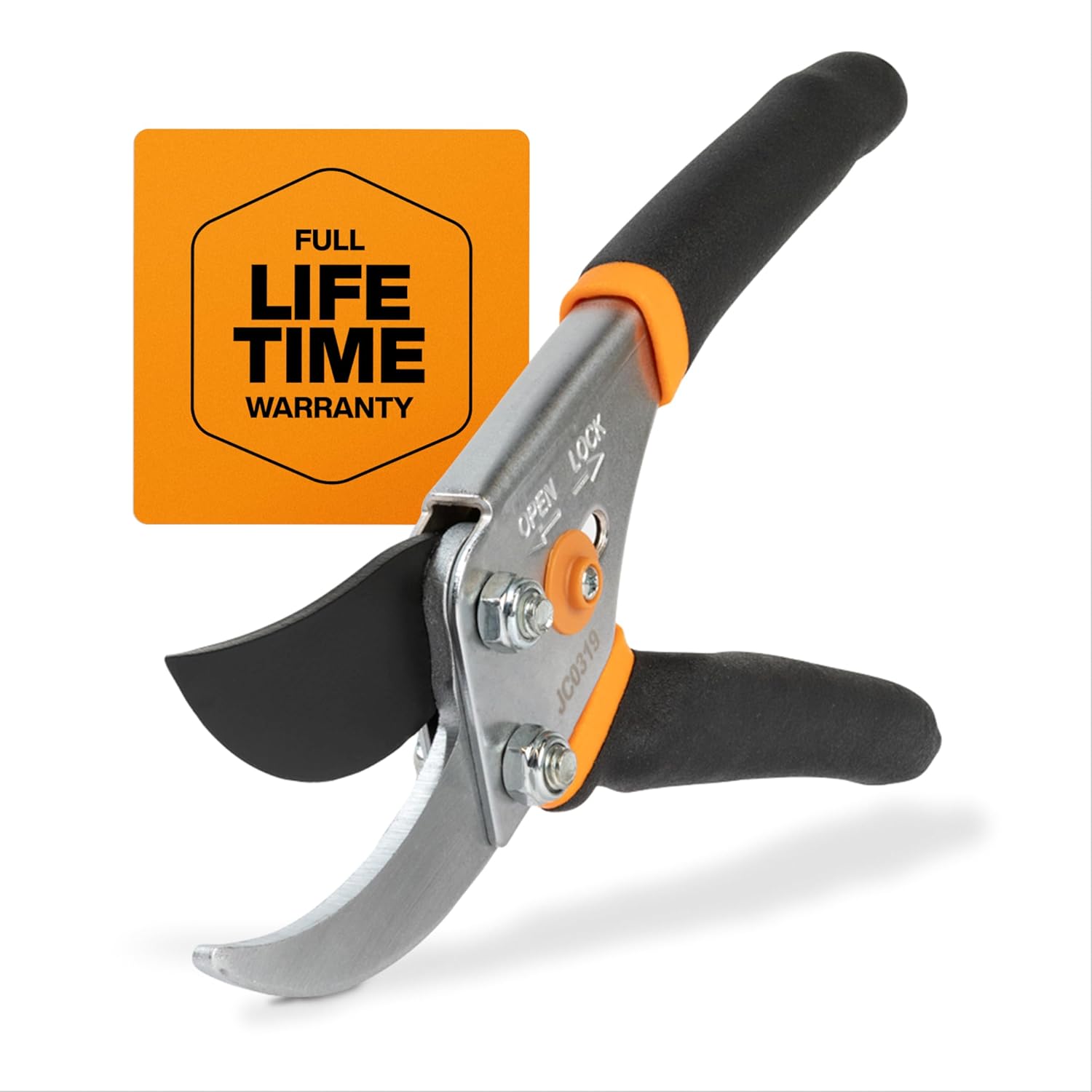
| Cutting width | 0.63 inches |
|---|---|
| Blade Edge | Serrated |
| Blade Material | Alloy Steel |
| Hand Orientation | Ambidextrous |
These Fiskars bypass pruning shears are a straightforward, reliable tool for everyday garden pruning. They use a bypass cutting action with precision-ground alloy steel blades and a low-friction coating so stems and green growth are sheared cleanly without crushing, which is helpful for flowers, shrubs, and small woody shoots up to about 5/8 inch. The pruners include a sap groove and nonstick finish to reduce sticking and rust, and an ergonomic non-slip handle that makes repeated trimming more comfortable. Because they are all-steel construction they feel solid and hold an edge through routine use, and the safety lock keeps the blades closed for storage. The main limitations are the modest cutting capacity, which is not suited for thick branches, and the simpler design lacks compound leverage for heavy cutting, so they work best for regular maintenance rather than heavy-duty pruning. For gardeners who want a durable, easy-to-maintain daily pruner, these are a dependable choice.
Best for: Home gardeners who want a dependable, low-maintenance pruner for routine trimming, deadheading, and shaping of flowers and small shrubs and who value proven, widely used tools.
Less Ideal for: People who need a pruner for larger woody branches or frequent heavy-duty cutting should choose a lopper or powered/pruning tool instead.
- Bypass blades and precision-ground steel deliver clean cuts on live stems
- Low-friction blade coating and sap groove reduce sticking and resist rust
- Ergonomic non-slip handle improves control and reduces hand fatigue
- All-steel construction offers durable, long-lasting performance
- Cut capacity limited to about 5/8 inch so not suitable for thicker branches
- No compound leverage mechanism, making heavy or woody cuts harder
Verdict: A tough, no-nonsense pruner that provides clean cuts and low-maintenance blades for everyday garden grooming.
Craft911 2-Pack Stainless Steel Pruning Shears and Snips

| Blade Material | Stainless Steel |
|---|---|
| Blade Edge | Serrated, Straight |
| Blade Type | Bypass |
| Hand Orientation | Ambidextrous |
This Craft911 two-pack pairs a full-size bypass pruning shear with a smaller pruning snip so you can handle both thicker stems and delicate rose work with one set. The blades are stainless steel, with the snip carrying a titanium coating for extra edge life, and both tools lock closed for safe storage. They are ambidextrous and have non-slip, comfortable handles that reduce hand fatigue during longer sessions, which is useful when deadheading or shaping roses. The bypass blade and serrated options give clean cuts that help protect plant tissue and reduce tearing. Because the materials are rust resistant and the tools are easy to clean, they require minimal maintenance between uses. On the downside the handles are listed as plastic or metal without a specific ergonomic mechanism for heavy-duty leverage, so they are best for routine rose pruning and lighter branches rather than very thick woody canes. For gardeners who prefer straightforward, low-maintenance tools this combo covers most rose-care tasks effectively.
Best for: Gardeners who want dependable, low-maintenance tools for routine rose pruning, deadheading, and shaping and who prefer safe, easy-to-use gear.
Less Ideal for: Those who regularly cut very large or old woody rose canes and need heavy-duty loppers or pruners with superior leverage and anvil-style cutting.
- Includes both full-size bypass shears and a precision snip for versatile rose care
- Stainless steel blades with a titanium-coated snip edge for lasting sharpness
- Ambidextrous design and non-slip handles that reduce hand fatigue
- Built-in safety locks keep blades closed for safe storage and transport
- Handles are basic plastic or metal without advanced leverage for very thick canes
- Not intended for heavy woody pruning of large rose canes
Verdict: A safe, low-maintenance pruning combo that handles most rose grooming tasks well with sharp stainless blades and easy-to-use locks.
Choosing the Right Sharpest Pruning Shears: Key Factors to Consider
Cut Quality and Cut Type
How a shear cuts matters for plant health. A bypass cut that slices cleanly is usually best for live stems because it severs tissue with minimal crushing, encouraging faster callus formation and reducing disease risk. Anvil-style cuts can crush softer green growth and are better suited to deadwood only. Evaluate whether the shear produces a smooth, single-stroke cut across a range of twig diameters rather than tearing or smearing the bark.
Cut type also affects how much force you need to apply. Cleaner cuts translate to less user fatigue and more predictable pruning results. When you inspect a tool, look for a keen, well-honed edge and a blade geometry that supports slicing rather than crushing. That combination is what gardeners mean by a truly sharp shear.
Blade Steel, Hardness, and Edge Retention
The blade material and its heat treatment determine how long an edge stays sharp under normal garden use. Harder steels typically hold an edge longer but can be more brittle; softer steels may chip less but will need more frequent sharpening. Consider blades where the manufacturer specifies hardness or steel type, and favor steels known for a balance of toughness and edge retention.
Edge retention affects maintenance cadence. If you do extensive pruning, a blade that stays sharp through many cuts reduces interruptions and the need for frequent sharpening. In damp or salty environments, also consider how the steel responds to corrosion because a rusted edge will degrade cutting performance quickly.
Ease of Sharpening and Maintenance
Even the sharpest shear will eventually need attention, so how easy it is to resharpen and service matters a lot. Look for straight accessible blades and basic geometry that match common sharpening tools like small whetstones or diamond files. Some designs allow blade removal for easier access and safer sharpening; others require in-place honing.
Maintenance also covers pivot tuning, lubrication, and spring replacement. A shear that is simple to disassemble and reassemble will remain accurate longer. Clear maintenance needs save time and help gardeners keep blades at peak performance between seasons.
Ergonomics and Repetitive Use Comfort
Pruning is repetitive work, and handle shape, grip material, and spring design influence how long you can work without hand strain. Ergonomically shaped handles that follow the natural hand curve reduce pressure points and improve control. Non-slip grips help when working with wet hands or sap.
Also consider hand size and whether the shear suits one-handed operation for detailed cuts. A tool that transmits less shock through the handles and that opens and closes smoothly will feel sharper in practice because you can apply consistent slicing pressure.
Corrosion Resistance and Finish
Garden tools are exposed to moisture, sap, and occasional soil contact, so surface finish and rust protection affect long-term sharpness. Stainless or coated blades resist staining and pitting that dull edges, while bare carbon steels need more frequent cleaning and oiling to prevent corrosion.
A durable finish also simplifies cleaning after use and reduces the chance that grit and residue will bond to the blade surface. When choosing based on sharpness, remember that a well-protected edge stays useful longer in wet climates or when tools are stored outdoors.
Why Sharpness Matters for Plant Health
A truly sharp pruning shear makes a cleaner wound that closes more quickly, reducing the window for pathogens to enter. Clean cuts preserve cambial tissue and allow faster callus formation compared with ragged or crushed cuts that delay healing.
Beyond plant health, sharp blades make pruning faster and less tiring. When a blade slices as intended, you use less force and maintain better control, which is especially important on delicate shrubs and young fruiting wood.
- Sharp cuts reduce disease risk and speed recovery
- Cleaner wounds preserve branch structure and future growth
- Less hand fatigue when blades slice efficiently
Sharpening Tools and Techniques Gardeners Use
Common sharpening tools for pruning shears include small flat stones, diamond files, and ceramic rods. The simplest approach is a few controlled strokes along the bevel at the existing angle until the burr is removed and the edge feels smooth. For many gardeners, a coarse stone to reprofile a damaged edge and a fine stone to hone it is enough.
If a blade is removable, you can lay it flat on the stone. For fixed blades, work carefully with the tool under tension and use the same angle consistently. A leather strop or fine ceramic rod can polish the edge and take out the last micro-burrs for a keener cut.
- Match the tool to the blade geometry
- Keep consistent angles and light pressure
- Sharpen regularly rather than waiting for very dull blades
Maintaining Shears Between Sharpenings
Simple maintenance extends the time between sharpenings. Wipe sap and dirt off after each use, lubricate the pivot and blades with a light oil, and tighten or adjust the pivot if you notice blade misalignment or slippage. Replace springs or washers that lose tension to maintain smooth operation.
Store shears dry and, if you have carbon steel blades, apply a thin coat of oil to prevent rust. Periodic light honing is easier and faster than full regrinds and keeps cutting performance consistent.
- Clean sap and debris after each use
- Lubricate pivot and blade faces periodically
- Store in a dry place and oil uncoated steel
Choosing Shears by Pruning Task
Match the shear to the type of pruning you do most. For precise shaping and green growth, a sharp bypass shear with keen slicing action is ideal. For occasional heavier cuts on small branches, choose a shear with robust blades and good edge retention. If you prune a mix of live and dead wood, consider carrying two types or choosing a model that balances cutting geometry for both tasks.
Think about the maximum cutting capacity you need and whether you will frequently work on thicker stems that may require a different cutting class of tool. Choosing the right tool for the task minimizes edge damage and preserves sharpness longer.
- Use bypass shears for live growth and shaping
- Reserve heavier cutters for thick or dead branches
- Consider multiple tools for mixed pruning needs
Storage and Seasonal Care
Seasonal care helps maintain a sharp edge across the year. Before winter storage, give shears a full cleaning and sharpening, lubricate moving parts, and inspect for worn springs or rivets. During the season, a quick wipe and light oil after each use prevents buildup and surface corrosion.
If you store tools outdoors or in a damp shed, use protective cases or wrap blades with oiled cloths to limit rust. Regular attention keeps the blade profile consistent and prevents the need for aggressive regrinding.
- Perform a full tune-up before long storage
- Use protective coverings in damp storage
- Check springs and fasteners each season
How We Chose the Best Sharpest Pruning Shears
We shortlisted pruning shears based on criteria that matter in everyday garden pruning and that directly affect cutting performance and long-term reliability. Primary evaluation factors included cut quality, measured by how cleanly the blade severs live wood without crushing; blade steel and edge retention, which determines how long the tool stays sharp between sharpenings; sharpening accessibility, meaning how easy it is for a gardener to re-establish a keen edge in the yard; and ergonomics and grip, because a comfortable handle reduces fatigue and improves control on repetitive cuts. We also considered corrosion resistance and finish, which affect blade longevity in wet garden conditions, and overall construction quality, including rivets and spring performance. Products were excluded if they lacked replaceable or serviceable blades, used unclear steel specifications, or showed consistently poor handling in gardener reports. We prioritized shear designs that balance initial sharpness with realistic home maintenance, favoring tools that are straightforward to sharpen and tune. The scoring emphasized cut quality and edge retention most heavily, with ergonomics and corrosion resistance as secondary filters.
FAQ
How often should I sharpen my pruning shears?
Often depends on use, but many gardeners hone blades after several hours of pruning or whenever cuts start to tear rather than slice. Light honing between full sharpenings keeps edges functional with minimal effort.
Can I sharpen garden shears with common household tools?
Usually yes. Small whetstones, diamond files, and ceramic rods work well for most shear blades. Match the sharpening tool to the blade geometry and use controlled strokes to maintain the correct bevel.
Is stainless steel or carbon steel better for sharpness?
It depends. Harder carbon steels often achieve a sharper edge and hold it longer but need more care to prevent rust. Stainless steels resist corrosion better but may require more frequent honing. Choose based on your climate and maintenance willingness.
Does blade coating affect sharpness?
Coatings mainly help with corrosion resistance and reduce sap sticking. They do not inherently make a blade sharper, but by protecting the edge from corrosion and abrasion they can help the blade stay sharp longer.
Can I resharpen a nicked or chipped shear blade at home?
Usually yes for small nicks; a coarse stone or file can remove damage and then a finer stone hones the edge. Very severe chips or structural damage may require professional regrinding or blade replacement.
Final Verdict
When selecting the sharpest pruning shears, prioritize the combination of cut quality and blade steel that fits how you garden. Edge retention and ease of sharpening determine how often you will interrupt pruning to tune the tool, while ergonomics and corrosion resistance affect long-term comfort and reliability. Expect tradeoffs between brittle, long-lasting edges and softer, easier-to-repair blades. Choose the option that matches your pruning volume and maintenance habits so you get consistently clean cuts with minimal downtime.
