

Note: This article contains affiliate links. If you click on these links and make a purchase, I may earn a small commission at no extra cost to you. This helps support my research and content. Read my full affiliate disclosure here.
Choosing shrubs that perform in containers across the seasons matters because pots place extra demands on root space, moisture cycles, and exposure. The right shrub gives structure in winter, flowers or foliage interest in growing months, and tolerates the unique stresses of patio, balcony, or courtyard planting. This guide focuses on top-performing shrubs for pots all year round and explains how each short-listed option fits common container situations. We shortlisted seven reliable container shrubs and evaluated them for winter hardiness, container size compatibility, moisture and feeding needs, and ease of seasonal upkeep. Read on to match a shrub to your space and maintenance rhythm.
Top Picks at a Glance
| Best Quality Built to a higher standard if you want something more solid | Proven Winners Sprinter Boxwood 2 Gallon Shrub |  |
| Best Value The sweet spot between price and what you get | Dwarf Alberta Spruce (1 Gallon) — Conical Evergreen Shrub |  |
| Best Budget The cheapest option that still gets the job done reliably | CitronellaKing Fire Power Heavenly Bamboo (2 live starter plants) |  |
| Highest Rated A top-rated pick with lots of positive feedback | Blooming & Beautiful Yuletide Camellia, Live Evergreen Flowering Shrub, 3 Gallon |  |
| Most Popular A crowd favorite that many people choose with confidence | PERFECT PLANTS Frostproof Gardenia Live Plant, 1 Gallon |  |
| Best Seller A high-volume bestseller chosen again and again | Southern Living Obsession Nandina Shrub (2 Gal) |  |
Proven Winners Sprinter Boxwood 2 Gallon Shrub

| Indoor Outdoor Usage | Outdoor |
|---|---|
| Sunlight Exposure | Full Sun |
| USDA Hardiness Zone | 5, 6, 7, 8, 9 |
| Moisture Needs | Regular Watering |
The Proven Winners Sprinter Boxwood is a compact, faster-growing Buxus cultivar with glossy evergreen foliage that works well in pots or as a low hedge. It is typically planted in full sun to part shade and benefits from regular watering and mulching; planting instructions call for a hole three times the pot width and planting slightly above soil level to promote good drainage. Notable features include its upright habit that fills in quickly, low maintenance organic material profile, and winter hardiness across zones 5–9. In containers it provides year-round structure and responds well to pruning for formal shapes or tight edging. Limitations to keep in mind are its need for regular watering in pots and preference for sandy, well-drained soil, so it is not a no-water or heavy-soil tolerant specimen, and large mature spread (up to 24–48 inches) means frequent trimming or larger pots if you want to keep it compact.
Best for: Buyers who want a reliable, performance-oriented evergreen for year-round container structure and quick visual impact and who are willing to maintain watering and occasional pruning to keep size in check.
Less Ideal for: People who need a truly low-water or tiny patio shrub or who prefer plants that tolerate heavy, poorly drained soils without intervention.
- Fast-growing upright habit fills in quicker than typical boxwoods for faster container impact
- Evergreen glossy foliage provides year-round structure for pots
- Hardy across USDA zones 5–9, so dependable through winter in many climates
- Low-maintenance variety that tolerates full sun to part shade
- Requires regular watering in containers and prefers well-drained sandy soil
- Can reach 24–48 inches wide so needs pruning or a larger pot to avoid becoming root-bound
Verdict: A fast-filling, hardy evergreen that gives reliable year-round structure in pots for gardeners focused on quick performance and formal container displays.
Dwarf Alberta Spruce (1 Gallon) — Conical Evergreen Shrub

| Sunlight Exposure | Full sun to partial shade |
|---|---|
| USDA Hardiness Zone | 2, 3, 4, 5, 6, 7, 8 |
| Moisture Needs | Moderate Watering |
| Indoor Outdoor Usage | Outdoor |
The Dwarf Alberta Spruce is a slow-growing, conical evergreen commonly used as a container specimen or small landscape accent. In practice it is planted in pots or garden beds where its dense, soft needles form a tidy, formal shape without frequent pruning. It prefers full sun to partial shade and tolerates a wide range of USDA zones, giving reliable year-round interest. Notable features are its dwarf habit that keeps mature height manageable and its suitability for containers or topiary work. Care is straightforward: water moderately, plant slightly above pot soil level with mulch, and fertilize in early spring. Expect 4 to 8 feet of height at maturity over several years, so plan pot size and placement accordingly. Limitations are its slow growth if you need immediate screening and the need to monitor watering in containers because moderate moisture needs can mean more frequent watering than permanent in-ground plantings. For gardeners wanting a low-maintenance evergreen focal point in a pot, it performs well; those needing rapid privacy hedging should look elsewhere.
Best for: Practical gardeners who want a low-maintenance evergreen focal point for pots or small landscapes and value year-round structure over fast growth.
Less Ideal for: People who need fast privacy hedging or instant tall screening or those unwilling to water containers regularly during dry periods.
- Compact conical form that works well as a container specimen or topiary
- Evergreen year-round interest suitable for seasonal décor
- Wide USDA zone tolerance (zones 2–8) for many climates
- Low maintenance once established with simple watering and spring fertilizing
- Slow to reach mature size, so it does not provide quick screening
- Container plantings require frequent monitoring of soil moisture
Verdict: A compact, low-maintenance evergreen that delivers year-round container interest and formal shape for gardeners who prioritize reliable structure over rapid growth.
CitronellaKing Fire Power Heavenly Bamboo (2 live starter plants)

| Indoor Outdoor Usage | Outdoor |
|---|---|
| Sunlight Exposure | Full Sun to Partial Shade |
| USDA Hardiness Zone | 6-11 |
| Moisture Needs | Regular Watering, Drought Tolerant once established |
| Expected Blooming Period | Mid to Late Summer |
These two Fire Power Heavenly Bamboo starters are small, ready-to-plant Nandina domestica ideal for adding year-round color to pots and small planting areas. Supplied in 2.5-inch nursery cubes, the plants establish quickly and are practical for container gardening, patio beds, or edging where a tidy, non-spreading shrub is wanted. Key features include a dwarf, compact habit, evergreen foliage that shifts from bright green to vivid reds and oranges in cooler months, and tolerance for both full sun and partial shade. The plants are described as drought tolerant once established and low-maintenance, which makes them suitable for gardeners who prefer minimal upkeep. Because they arrive rooted and packaged with care instructions, transplanting into a larger pot or bed is straightforward. Limitations to note are the small initial pot size, which means you should plan to transplant to avoid root-bound growth, and that they will take a season or two to reach the quoted mature height of around 2 to 3 feet.
Best for: Buyers looking for inexpensive, low-maintenance shrubs to give year-round color in pots or small patio landscapes and who are willing to transplant and nurse small starters into permanent containers.
Less Ideal for: Gardners who want immediate large hedging or instant privacy or who prefer fully grown plants ready to skip transplanting and establishment.
- Compact, non-spreading habit suited to containers and small patios
- Seasonal foliage color shifts from green to bright red and orange for year-round interest
- Tolerates full sun to partial shade so placement is flexible
- Drought tolerant once established which lowers ongoing water needs
- Arrives in small 2.5-inch nursery cubes and needs transplanting for long-term container growth
- Will take time to reach mature size, so not an instant large-screen planting
Verdict: A budget-friendly way to add compact, year-round colorful foliage to pots and small patios with minimal ongoing care once established.
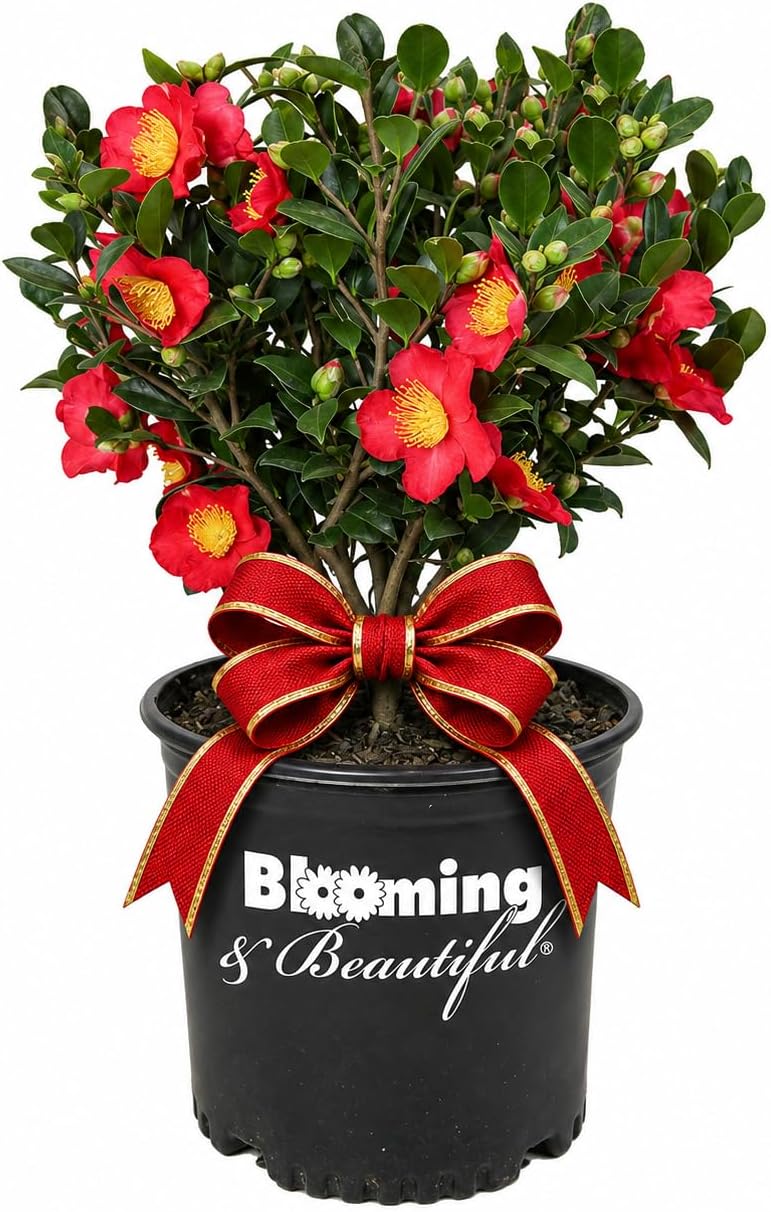
Blooming & Beautiful Yuletide Camellia, Live Evergreen Flowering Shrub, 3 Gallon
| Expected Blooming Period | Fall to Winter |
|---|---|
| Sunlight Exposure | Full Sun |
| USDA Hardiness Zone | 7 |
| Moisture Needs | Moderate Watering |
| Expected Planting Period | Spring |
This 3-gallon Yuletide camellia arrives nursery-grown with established roots and glossy evergreen foliage, making it a low-risk choice for gardeners who want reliable seasonal color. It produces small orange-red blooms with gold stamens in fall through winter, and its year-round foliage helps a container or small garden look attractive beyond the bloom period. Typical use is as a specimen shrub, foundation planting, or planted in a large pot on a protected patio where it will receive morning sun and afternoon shade. The plant is best in acidic, moist, well-drained soil and is described for USDA zones 7 to 10. Practical benefits include strong root establishment at purchase, extended bloom time, and compact upright habit that fits a large pot or tight landscape space. Limitations are climate and site needs: it is not cold-hardy below zone 7 and prefers specific light and soil acidity, so it will need placement or winter protection in cooler areas and monitoring of soil moisture and pH for best performance.
Best for: Gardeners who prioritize a dependable, professionally grown shrub that establishes quickly and provides seasonal blooms and year-round foliage in a container or protected patio setting.
Less Ideal for: Gardeners in cold climates below zone 7 or those who cannot provide acidic soil conditions and consistent moisture should consider hardier or lower-maintenance alternatives.
- Nursery-grown with established root system for quicker establishment
- Produces late-season orange-red blooms when many plants are dormant
- Evergreen foliage provides year-round structure and interest
- Compact upright habit suitable for large pots or small garden sites
- Recommended for USDA zones 7–10 so not suitable for colder climates
- Prefers acidic, moist, well-drained soil which may require soil amendments
Verdict: Choose this Yuletide camellia when you want a reliably established evergreen shrub that delivers late-season color and fits well in a large pot or protected outdoor spot.
PERFECT PLANTS Frostproof Gardenia Live Plant, 1 Gallon

| Indoor Outdoor Usage | Outdoor |
|---|---|
| Other Special Features of the Product | Deer Resistant, Fragrant |
| Expected Blooming Period | Summer |
| Sunlight Exposure | Full Sun, Partial Shade |
| Expected Planting Period | Spring |
This 1-gallon Frostproof gardenia is a compact, fragrant shrub intended for outdoor landscape use. It arrives as a live plant with a recommended mature height around 5 feet and is typically planted in mulch beds, as a low hedge, or as an accent near entries where its scent can be enjoyed. Notable features include deer resistance, a history of reliable spring and summer blooms, and included easy-to-use plant food for a simpler start. The plant prefers full sun to partial shade, so it will tolerate some shaded locations but performs best where it receives several hours of direct light. Practical benefits for a cautious buyer are straightforward care, minimal pruning to maintain shape, and an aromatic presence that enhances small gardens or patios. Limitations are that it is sold as a 1-gallon specimen so it will need time to reach mature size, and the product text notes shipping exclusions to a few states which affects availability for some buyers.
Best for: Buyers who want an easy-care, scented shrub for a small garden or patio and prefer reliable, low-maintenance plants that establish steadily rather than instant large specimens.
Less Ideal for: Gardeners seeking an immediate tall screening hedge or a plant for deep, full shade should consider alternative species better suited to dense shade or instant privacy needs.
- Fragrant white blooms that enhance outdoor seating areas during spring and summer
- Deer resistant variety reduces need for protective measures in deer-prone yards
- Includes plant food to simplify initial establishment
- Tolerates partial shade, allowing placement in spots without full sun all day
- Sold as a small 1-gallon plant so it requires time to reach mature size
- Per product notes it does not ship to certain states which limits access for some buyers
Verdict: Choose this gardenia if you want a low-maintenance, fragrant shrub that tolerates some shade and adds seasonal white blooms to small outdoor spaces.
Southern Living Obsession Nandina Shrub (2 Gal)

| Sunlight Exposure | Full Sun to Part Shade |
|---|---|
| USDA Hardiness Zone | 6, 7, 8, 9, 10 |
| Moisture Needs | Moderate Watering |
| Expected Planting Period | Year Round |
The Southern Living Obsession Nandina is a 2-gallon evergreen shrub prized for intense red foliage that holds color through much of the year. It is marketed for outdoor beds and containers, and performs in full sun to part shade across USDA zones 6 to 10. Typical use is as an accent in mixed borders, a colorful container specimen on a patio, or a low hedge where a 3- to 4-foot mature height is acceptable. Practical benefits include low maintenance, deer resistance, and moderate water needs once established; the plant is described as organic and suited to loam soils with well-drained conditions. Limitations to consider are that it does not produce notable blossoms and requires routine watering while establishing; it will also reach about 48 inches, so plan placement or pruning accordingly. For container use, choose a generous pot and monitor soil moisture to keep foliage vibrant in hot, sunny sites.
Best for: Gardeners who want a low-maintenance, colorful evergreen for patio containers or small landscape accents and value year-round foliage interest.
Less Ideal for: People seeking a showy flowering shrub or those who need a very small dwarf variety for tight spaces should consider other options.
- Bright red evergreen foliage provides season-long color
- Suitable for containers or landscape beds thanks to compact mature size
- Tolerates full sun to part shade across USDA zones 6–10
- Low maintenance and described as deer resistant
- Does not produce significant blossoms for floral interest
- Requires consistent watering until established
Verdict: Choose this nandina when you want an easy-care, brightly colored evergreen that performs well in pots and small garden settings.
Choosing the Right Shrubs for Pots All Year Round: Key Factors to Consider
Hardiness and Microclimate
Containers expose roots to colder and hotter swings than garden soil because they heat and cool faster. A shrub rated hardy in the ground may still suffer in a shallow pot placed against a cold wall or an exposed balcony.
Consider both your local winter minimums and the microclimate where the pot will sit. South-facing patios and sheltered courtyards reduce winter risk, while north-facing locations, exposed rooftops, or windy balconies increase stress. Choose shrubs whose root tolerance and shoot hardiness match that combination to avoid winter dieback or root freeze.
Container Size and Root Restriction
Pot size governs root volume, which directly limits long-term growth and nutrient reserves. Compact or naturally slow-growing shrubs cope better with frequent root confinement, while vigorous species need larger tubs or regular root pruning.
Think about the mature height and spread you want, then upsize the pot to allow two to three years of growth before repotting or root pruning. Also factor in pot depth: many shrubs need deeper containers for stable anchoring, especially in windy sites.
Watering Requirements and Drainage
Drainage and moisture retention are critical in containers. Shrubs in shallow or porous pots dry rapidly in sun, while heavy, water-retentive mixes can lead to root rot in cool seasons.
Match the shrub to your watering routine and the potting medium. If you want low-maintenance options, choose shrubs with some drought tolerance or succulent-like root traits. For thirsty shrubs, plan a regimen of consistent watering, well-draining compost, and possibly self-watering inserts for hot seasons.
Seasonal Interest and Maintenance Rhythm
A container shrub should contribute across seasons, whether through winter silhouette, evergreen foliage, showy flowers, or autumn color. Decide what outcome matters most so maintenance aligns: flowering shrubs often need deadheading and fertilizing, while evergreen hedging-style shrubs require occasional shaping.
Be realistic about how much time you will spend on pruning, feeding, and seasonal repotting. Choose shrubs whose seasonal behaviors match that rhythm to maximize enjoyment and minimize surprise work.
Exposure and Light Requirements
Light levels on patios and balconies vary drastically. Some shrubs flower only in full sun, while others hold foliage in low light. A shrub planted in a deep shade pocket may produce leggy growth or fail to flower, while a sun-loving specimen will scorch in reflected heat.
Survey the exact light conditions for the container through the day, then select shrubs with matching preferences. Remember that light also affects watering needs and growth rate, so exposure decisions interact with container size and soils.
Pest, Disease Resistance, and Longevity
Potted plants can concentrate pests and pathogens because multiple containers sit close together and air circulation may be limited. Choose shrubs known for sensible resistance to common container pests and diseases so care stays straightforward.
Also consider longevity: some shrubs respond well to periodic root pruning and repotting and can last many years in the same pot, while others decline rapidly if root-bound. Favor durable types if you prefer long-term container plantings over annual replacement.
Right Potting Mix and Drainage Tips
A purpose-built container mix balances moisture retention with drainage. Start with a loamy, porous mix amended with sharp sand or fine grit for improved drainage and stability. Incorporate a small amount of organic matter to supply nutrients without creating a waterlogged medium.
Ensure pots have adequate drainage holes and use a layer of coarse material only if it improves free flow to the holes. Avoid excessive use of heavy garden soil that compacts and reduces oxygen to roots. Topdress with fresh compost annually and refresh two-thirds of the rootball when repotting every few years.
- Use pots with multiple drain holes spaced around the base
- Choose mixes labeled for containers or combine loam, grit, and compost
- Topdress with slow-release fertilizer or compost in spring
Sizing a Container for Stability and Growth
Heavier pots increase stability in wind but also make moving difficult. For tall or top-heavy shrubs, use a wider, deeper pot to lower the center of gravity. A pot at least a third the mature height of the shrub helps reduce tipping risk.
Consider mobility: a planted shrub may need moving seasonally for protection or light. Wheeled pot stands or lightweight composite containers make seasonal relocation easier without sacrificing root volume.
- Match pot depth to shrub root habit; many shrubs need 30-45 cm depth at minimum
- Wider pots allow broader root systems and longer intervals between repotting
- Anchor tall pots or choose low, heavy bases in windy sites
Winter Protection Strategies for Potted Shrubs
Potted roots freeze more readily than ground roots. Move vulnerable shrubs into sheltered microclimates such as against walls or inside an unheated porch when extreme cold is expected. Insulate rootballs with bubble wrap, horticultural fleece, or by surrounding pots with straw-filled crates.
Reduce watering in winter for many shrubs but do not let the rootball dry completely. Avoid fertilizing late in the season to prevent tender new growth that will be frost-prone. For evergreen shrubs, gentle anti-desiccant sprays or shelter from drying winter winds can reduce leaf scorch.
- Elevate pots slightly to prevent standing water and ice
- Use frost cloths for top growth when severe freezes are forecast
- Group containers together to create a more stable microclimate
Feeding and Seasonal Care Schedule
Containers have limited nutrient reserves, so plan a feeding schedule tied to the shrub's growth cycle. Apply a balanced, slow-release fertilizer in spring and supplement with liquid feed during active flowering if needed. Reduce or stop feeding as growth slows going into autumn.
Prune after flowering if the shrub flowers on old wood, or prune in late winter for shrubs that bloom on new growth. Regular deadheading and removal of spent stems keeps energy focused on healthy structure and next season's interest.
- Fertilize in early spring and mid-season for heavy feeders
- Time pruning to the shrub's flowering habit to avoid cutting off next season's buds
- Monitor for root-bound symptoms and repot when growth slows
Designing with Container Shrubs
Use container shrubs as anchors in mixed patio plantings or as standalone focal points. Pair evergreen structural shrubs with seasonal perennials or bulbs for layered interest throughout the year. Contrast textures and foliage colors to add visual depth when flowers are not present.
Scale is crucial. Use multiples of the same shrub in groups for a formal look or combine single specimen pots to create variety. Remember that container shrubs can be rotated seasonally to refresh sightlines and adapt to changing light.
- Combine evergreen shrubs with trailing annuals for seasonal color
- Use repeating containers to create rhythm along walkways
- Consider leaf color, texture, and habit when pairing plants
How We Chose the Best Shrubs for Pots All Year Round
We prioritized attributes that directly affect how shrubs behave in containers rather than in-ground performance. Key evaluation criteria included winter hardiness in pots, root ball and container size compatibility, water needs and drought tolerance under restricted soil, seasonal interest across leaf, flower, or form, and ease of pruning and routine maintenance. We also assessed resistance to common container pests and diseases, plus adaptability to sun and shade exposures typical of patios and balconies. We excluded shrubs that reliably need large in-ground root runs, species that demand specialist pruning or grafting, and any plant types known to become invasive from container escape. Selections focused on shrubs that demonstrate predictable, low-surprise performance in a variety of pot sizes and microclimates. The result is a list that favors dependable seasonal presence, manageable care, and clear container sizing guidance.
FAQ
How often should I repot a shrub in a container?
Usually every two to four years depending on growth rate and pot size. Signs a shrub needs repotting include slow growth, roots circling the pot base, or soil that dries out very quickly. When repotting, increase pot size only one step to avoid excess soil that stays waterlogged.
Can evergreen shrubs survive winter in pots?
Many evergreen shrubs can overwinter successfully in containers, but they are more vulnerable to root freeze and wind desiccation. Providing shelter, insulating pots, and reducing wind exposure improves chances of survival. Some evergreens may still need extra winter protection in colder zones.
What kind of soil mix works best for potted shrubs?
A free-draining, loamy mix with some organic matter and grit is ideal. The mix should retain enough moisture for regular watering but drain freely to avoid root rot. Refreshing the top layer of compost and replacing part of the rootball every few years keeps nutrient levels healthy.
How do I water shrubs in containers during hot spells?
Water deeply and less frequently to encourage root exploration, but check moisture more often during heatwaves. Mulching the top of the pot with compost or bark chips reduces surface evaporation. Consider self-watering systems or water-retaining granules for long hot periods.
Are there size limits for shrubs in small balcony pots?
Small balconies limit root volume and wind protection, so choose compact, slow-growing shrubs or dwarf varieties. Regular pruning and root pruning at repotting help maintain size. Using heavier, wider pots increases stability and allows slightly larger specimens than tall, narrow containers.
Will container shrubs need different pruning than in-ground shrubs?
Yes. Pruning in containers often focuses on keeping size in check and maintaining structure rather than encouraging extensive new growth. Root pruning at repotting is also more important for containers. Follow timing guidelines based on whether a shrub blooms on new or old wood.
Final Verdict
Choose container shrubs by matching hardiness, mature size, and seasonal interest to the pot and site. Prioritize shrubs that tolerate root restriction and fit your maintenance rhythm, whether you want low-care evergreen structure or seasonal flowering highlights. Balance stable container sizing, appropriate potting mix, and a simple winter protection plan to keep shrubs thriving year-round in pots.
