

Note: This article contains affiliate links. If you click on these links and make a purchase, I may earn a small commission at no extra cost to you. This helps support my research and content. Read my full affiliate disclosure here.
If you run a small landscaping crew, grounds-maintenance service, or manage commercial properties, a small commercial wood chipper is central to efficient debris handling. The right unit makes quick work of branches and brush while standing up to repeated daily use. In this guide we shortlisted the top options for compact commercial chippers and evaluated them on practical yard-tested criteria like feed capacity, engine durability, and routine maintenance needs. You'll get clear information to match a chipper to crew size, typical material load, and service schedules. Read on for what mattered in our selection and how to choose the right small commercial chipper for your operation.
Top Picks at a Glance
| Best Overall The best all-around choice for most situations | MechMaxx 6" Gas-Powered Wood Chipper with Briggs & Stratton 408cc Engine |  |
| Best Quality Built to a higher standard if you want something more solid | EARTHQUAKE K32 2-in-1 Chipper Shredder with 212cc Viper Engine |  |
| Best Value The sweet spot between price and what you get | Landworks Rotor Wood Chipper Shredder Mulcher, 3" Max Capacity, 7 HP |  |
| Highest Rated A top-rated pick with lots of positive feedback | BETTERI Gas Wood Chipper 7HP (212cc) with Collection Bag |  |
| Most Popular A crowd favorite that many people choose with confidence | Landworks 3-in-1 Gas Wood Chipper Shredder, 7 HP, 3" Capacity |  |
MechMaxx 6" Gas-Powered Wood Chipper with Briggs & Stratton 408cc Engine
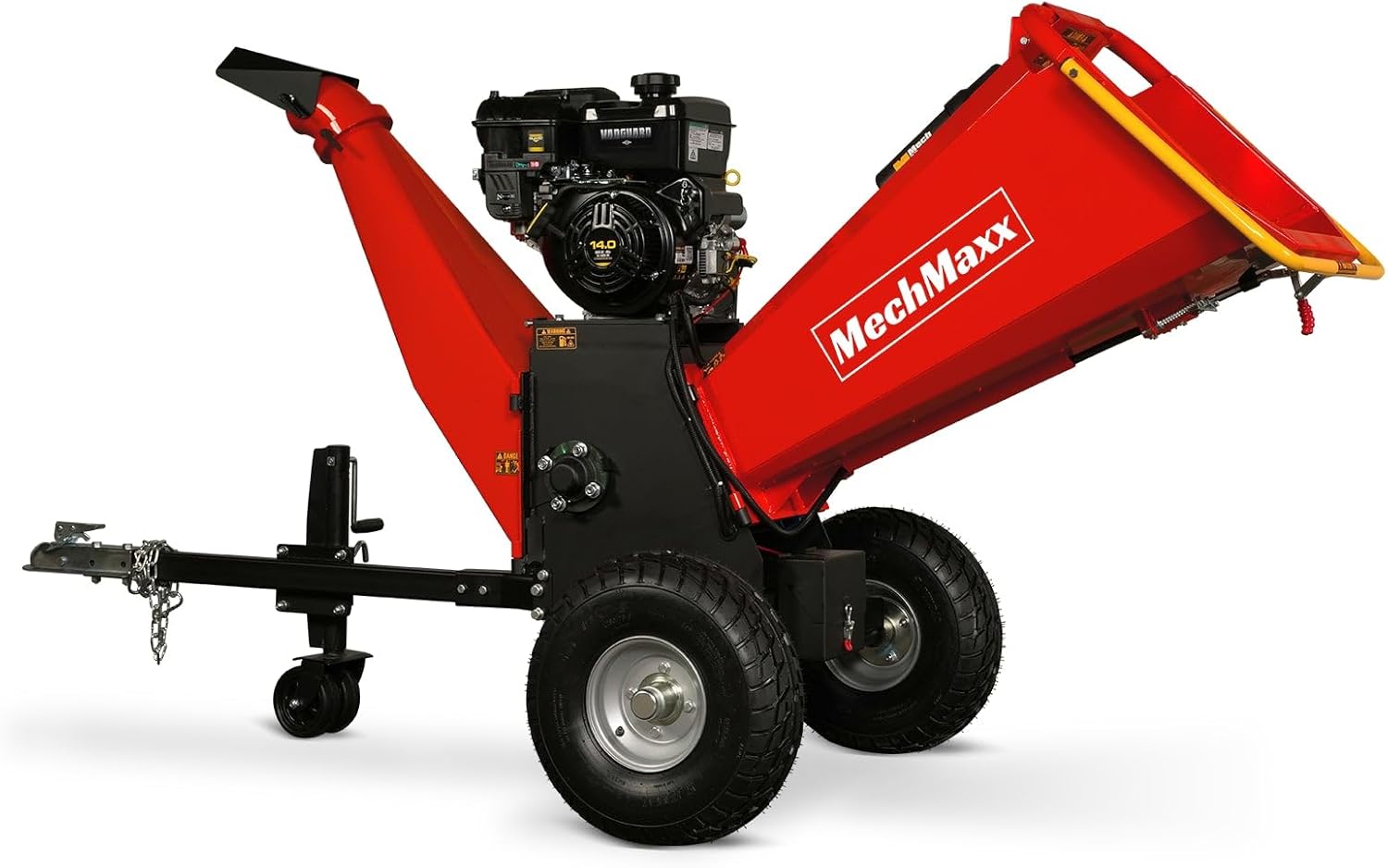
| Engine | BRIGGS & STRATTON Vanguard 408cc, 14 HP |
|---|---|
| Start | Electric start (12V 20Ah battery) |
| Max. Chipping Dia. | 6 in |
| Blades | 2 blades + 1 anvil, A8 (5Cr8MoVSi) alloy |
| Discharge | 360 degree rotating chute |
This MechMaxx 6-inch wood chipper is a towable, gas-powered unit built around a Briggs & Stratton Vanguard 408cc, 14 HP engine with electric start. It is designed to chip branches up to about 6 inches using a drum with two A8 alloy double-edge blades and a single anvil, and it discharges through a 360 degree rotating chute for flexible placement of chipped material. The machine uses a Kevlar V-belt drive and a 20:1 reduction ratio intended to deliver steady torque and reduce belt wear, while an emergency stop button and press bar give convenient operator safety. Typical use is treating moderate volumes of green and soft wood on a property, then spreading or composting the chips. Important limitations are that very hard or dry hardwoods will not shred as finely as softer branches and the unit is heavy and sized for towable use rather than handheld or highly mobile garden work. Service items like spare belts and blades are available but will be needed over time for sustained, heavy use.
Best for: Buyers who need a robust, towable 6-inch chipper for managing moderate volumes of green branches and yard waste on small farms, large gardens, or properties and who value reliable engine power and durable drive components.
Less Ideal for: People who only need occasional, very light chipping around tight urban yards or who plan to process large quantities of very hard, dry hardwood should consider smaller electric models or larger industrial chippers respectively.
- Powerful Briggs & Stratton 408cc 14 HP engine with electric start for reliable startup and sustained power
- Drum with double-edge A8 alloy blades plus anvil produces consistent chipping up to 6-inch branches
- Kevlar V-belts and 20:1 reduction ratio improve durability and torque for heavier loads
- 360 degree rotating discharge chute and tow bar make placement and transport straightforward
- Safety features include an upper emergency stop button and lower press bar for quick shutdown
- Performance drops on very dry or dense hardwoods, producing larger-than-advertised pieces
- Unit is heavy and built for towable use so it is not ideal for tight or highly mobile garden jobs
Verdict: A solid, towable 6-inch chipper that pairs a reliable Briggs & Stratton engine with durable drive components for homeowners and small-farm users who need consistent, day-to-day chipping of green branches.
EARTHQUAKE K32 2-in-1 Chipper Shredder with 212cc Viper Engine

| Power Source | Gas Powered |
|---|---|
| Engine | 212cc 4-Cycle Viper |
| Cut Type | Cross Cut |
| Other Special Features of the Product | Portable |
The Earthquake K32 is a compact, towable chipper-shredder built around a 212cc 4-cycle Viper engine that handles branches up to 3 inches in diameter while shredding leaves and small twigs through its rotor with tri- and j-hammers. Typical use is straightforward: feed larger limbs into the limb chute and smaller yard waste into the hopper, then collect processed mulch in the included dock-and-lock debris bag. Notable practical features are large airless 11-inch wheels that eliminate flats and a low hopper height that reduces lifting strain. The dock-and-lock bag with bottom-out zipper and carrying handles makes unloading and moving finished mulch easier. Because it is gas powered and uses a robust steel hopper and grinding chamber, it is well suited to repetitive small-farm or heavy yard clean-up tasks. Limitations to expect are the unit weight and footprint that require some storage space and the need for routine engine maintenance and fuel handling typical of gas equipment.
Best for: A buyer who wants a dependable, easy-to-operate chipper for routine small-farm or large-yard cleanup and prefers proven mechanical simplicity over experimental or electric alternatives.
Less Ideal for: Users who need a lightweight, electric, or cordless option for indoor storage or who want a completely maintenance-free unit.
- Powerful 212cc 4-cycle Viper engine handles branches up to 3 inches
- Airless 11-inch wheels that will not go flat for reliable transport over rough ground
- Dock-and-lock debris bag with bottom-out zipper and handles for easy removal and transport of mulch
- 2-in-1 design shreds leaves and twigs as well as chipping limbs, reducing yard waste volume
- Gas engine requires regular maintenance and on-site fueling
- Relatively heavy and needs dedicated storage space when not in use
Verdict: A rugged, reliable gas-powered chipper-shredder that converts small-farm brush and leaves into usable mulch while minimizing downtime with airless wheels and an easy-to-use debris bag.
Landworks Rotor Wood Chipper Shredder Mulcher, 3" Max Capacity, 7 HP

| Power Source | Gas Powered |
|---|---|
| Horsepower | 7 hp |
| Item Highlight | Processes branches up to 3" at 3600 RPM |
| Model Number | GUO067-FBM |
The Landworks rotor wood chipper is a gas-powered, performance-focused machine designed to turn small branches and yard waste into chips and mulch. It uses a 7 HP horizontal 4-stroke OHV engine running up to 3600 RPM paired with a rotor reduction system to handle limbs up to 3 inches in diameter. Typical use is feeding twigs and small branches into the large hopper while the vertical discharge chute directs shredded material where you need it, with an adjustable guide for directional control. Notable features include high-speed steel blades, a compact reinforced frame for easier storage, 10 inch rear wheels for mobility, and service-friendly check windows for blade access. Practical benefits are fast throughput for medium-sized cleanup jobs and usable mulch output for beds or compost. Important limitations are that it is not intended for fresh greens, palm or pine cones and requires gas and routine maintenance including oil supply and blade care; the unit also produces normal gas-engine noise and emissions. Follow safety guidance and recommended fuel to avoid damage.
Best for: Buyers who prioritize performance and need a compact, gas-powered chipper to clear medium-sized branches and produce usable mulch for yard or compost work.
Less Ideal for: If you need a quiet electric option, plan to process very large logs, or only chip soft green waste and vines, consider other machines better matched to those tasks.
- Powerful 7 HP gas engine for steady throughput on medium-volume jobs
- Rotary reduction system (15:1) and HSS blades that process up to 3" branches
- Large extended hopper simplifies feeding larger volumes of yard waste
- Adjustable vertical discharge chute helps direct chips where you want them
- Mobility aided by durable 10" rear wheels for moving around the yard
- Not suitable for fresh green material, palm or pine cones and similar debris
- Requires gasoline, oil and regular maintenance and produces typical engine noise and emissions
Verdict: Choose this chipper if you want a compact, high-throughput gas unit that reliably processes up to 3" branches for fast yard cleanup.
BETTERI Gas Wood Chipper 7HP (212cc) with Collection Bag

| Engine | 212cc OHV 4-stroke, 7HP |
|---|---|
| Fuel tank | 0.95 gal / 3.6 L |
| Oil capacity | 0.16 gal / 0.6 L |
| Max chip diameter | 3 inch |
This BETTERI gas wood chipper is built around a 212cc, 7HP OHV four-stroke engine that produces about 3800 RPM for steady chipping of limbs up to 3 inches in diameter. Typical use is on small commercial jobs or heavy residential cleanup where you need to reduce brush into chips: feed limbs into the drum cutter, direct chips to ground via the adjustable chute, or collect them in the supplied bag for transport or composting. Notable features include a steel drum cutter with double-sided reversible blades and two discharge outlets that let you choose between precise ground placement and bagged collection. Large 10-inch ATV-style tires and an all-steel frame make it stable and relatively easy to move across rough sites, and a low-oil cutoff plus an emergency stop add basic protection for the engine and operator. Important limitations are its 3-inch maximum capacity, which prevents use on larger logs, and the need for routine maintenance and fuel handling typical of gas machines. It is a straightforward, heavy-duty option for users who want reliable mechanical performance rather than lighter electric convenience.
Best for: Small landscaping crews, property managers, and serious DIYers who need a durable, gas-powered chipper for regular brush and limb reduction on small commercial or large residential jobs.
Less Ideal for: People who only need light, occasional chipping around a small yard or who prefer quieter, low-maintenance electric equipment should consider a smaller electric unit instead.
- Robust 212cc 7HP OHV engine delivers consistent chipping power at 3800 RPM
- Steel drum cutter with double-sided reversible blades plus two extra blades for extended service life
- Dual discharge system allows either precise ground placement or bagged collection
- All-steel construction and 10-inch ATV tires provide stable operation and easier mobility
- Built-in low-oil protection and an easily reachable emergency stop enhance equipment safety
- 3-inch maximum branch capacity limits work on larger trees or heavy logs
- Requires gas, oil, and regular maintenance typical of small commercial engines
Verdict: A workhorse gas chipper built for dependable, regular brush reduction on small commercial and heavy residential jobs.
Landworks 3-in-1 Gas Wood Chipper Shredder, 7 HP, 3" Capacity

| Power source | Gasoline-Powered |
|---|---|
| Engine power | 7 HP horizontal 4-stroke OHV |
| Branch capacity | Up to 3 inch |
| Reduction ratio | 15:1 (top hopper) |
| Special features | Jam Proof |
The Landworks 3-in-1 wood chipper is a gasoline-powered machine intended for small farms and larger yards that need a single tool to chip branches, shred brush and vacuum leaves into mulch. In practice you feed small limbs into the side hopper (up to 3 inches) or use the top hopper for thinner material where the 15:1 reduction ratio produces fine chips. The unit’s 7 HP horizontal OHV engine with recoil start gives the power to handle typical pruning and storm cleanup while the slanted housing and jam-proof design reduce stoppages. A detachable collection bag and a vacuum inlet for leaf mulching keep cleanup tidy, and the tow-bar friendly frame makes it easier to move around a property. Expect some assembly and routine maintenance like sharpening or blade inspection and occasional refueling during longer jobs. Noise, exhaust and the machine’s bulk are typical for a gas unit, so plan for safe storage and use away from buildings and livestock.
Best for: Small‑farm owners or homesteaders who need a single, gas-powered machine to process branches, brush and leaves into usable mulch and who prioritize reliable, proven performance.
Less Ideal for: Urban gardeners, weekend users with light debris, or those who need a quiet, low-maintenance electric option should consider smaller electric chippers instead.
- Three operating modes (chipper, shredder, leaf vacuum) cover most farm yard waste tasks
- 7 HP OHV gas engine provides enough torque for up to 3 inch branches
- Slanted housing and jam-proof design reduce clogging during continuous use
- Detachable discharge bag and vacuum inlet simplify collection and mulching
- Tow-bar compatible frame and wheels make it easier to reposition on a small farm
- Gas engine produces noise and exhaust so it requires outdoor use and ventilation
- Requires regular maintenance, fuel and occasional blade servicing
- Relatively heavy and bulky compared with electric or compact models
Verdict: A robust 3-in-1 gas chipper that reliably turns farm pruning and leaf waste into mulch, making it a practical choice for small farms that need power and versatility.
Choosing the Right Small Commercial Wood Chipper: Key Factors to Consider
Feed Capacity and Throat Size
Feed capacity and throat size determine what diameter branches and how much material you can put through the chipper without constant stopping. For small commercial use you want a throat dimension that accepts the typical mix of urban pruning and storm cleanup waste you handle. Too small a throat forces repeated cuts and slows crews; a larger throat speeds work but increases machine weight and transport needs.
Consider the largest diameter you expect to process regularly and choose a chipper with a matching or slightly larger throat. Also note how the feed mechanism handles irregular loads. A chipper with a power feed or self-fed roller will manage more continuous input than a purely manual-feed design, which affects throughput on commercial jobs.
Powertrain and Engine Durability
A commercial engine sees long run hours and starts under load. Durability depends on cooling, quality of materials, and ease of routine service like oil changes and filter replacement. For small commercial applications choose engines and transmissions rated for continuous duty cycles rather than occasional homeowner use.
Look for features that reduce overheating risk in sustained operations, such as adequate airflow around the engine and accessible cooling fins. Check whether the design allows straightforward access to routine service points so your crew can perform daily checks and preventative maintenance without dismantling covers.
Chipping Throughput and Cutting System
Throughput is how quickly a chipper converts raw material into chips and is determined by cutter design, drum or disk speed, and feed system efficiency. In a commercial setting higher throughput reduces crew time on each job and increases billable capacity.
Examine whether the chipper uses a drum with replaceable knives, a disk, or a chipper blade arrangement. Replaceable knives that can be resharpened extend service life, while some systems require full blade replacement. Also consider how chips are expelled and whether clogging is a common issue for the cutter type you choose.
Ease of Maintenance and Parts Accessibility
Regular maintenance keeps a commercial chipper working reliably under heavy use. Ease of maintenance includes how quickly filters and oils can be changed, how accessible the cutting mechanism is for sharpening or replacement, and the availability of service panels.
A design that allows the operator to clear jams, inspect blades, and perform routine tasks without specialized tools reduces downtime. Factor in how common wear parts are to source locally and whether instructions and replacement parts are readily documented for your region.
Operator Safety and Controls
Safety features are essential when crews feed large volumes of material. Look for robust feed controls, emergency-stop systems, and clear operator vantage points to avoid pinch or crush zones. Guards and interlocks should prevent accidental access to moving parts while allowing quick shutdowns if material binds.
Ergonomics matter too. Hopper height, feed lip design, and accessible controls reduce operator fatigue and lower the risk of unsafe feeding practices. For commercial teams, features that allow one operator to control feeding while another monitors discharge improve both throughput and safety.
Transportability and Footprint
Small commercial chippers balance chipping power with a manageable footprint and trailering needs. The weight and dimensions affect how you move the machine between sites and whether it fits on smaller trailers or in tight urban alleys.
Assess how often you will relocate the chipper and the types of vehicles you will use for transport. Compact, towable units reduce logistical friction but may trade off throat size or engine capacity. Also consider storage space at your yard and whether folding hoppers or compact stands ease stowage.
Matching Chip Capacity to Job Type
Different commercial jobs generate different mixes of material. Routine trimming of hedges produces smaller, consistent branches, while storm cleanup brings large and irregular wood. Match chipper capacity to the most common job type to avoid chronic underperformance or unnecessary overcapacity.
If you frequently handle storm debris, prioritize throat diameter and feed power. For regular maintenance contracts where material is mostly small branches, a faster throughput on smaller material and quick blade-change features may be more valuable than absolute maximum diameter capability.
- Estimate typical branch diameters and daily volume
- Prioritize feed system for continuous inputs on high-volume routes
- Consider how much occasional large-diameter material you can accept without slowing crews
Maintenance Routines That Keep Crews Moving
Create a short daily checklist that includes oil level, air filter condition, blade sharpness, and fastener tightness. Small commercial operators benefit from scheduled quick checks at the start and end of each day to catch wear before it causes a breakdown.
Train crew members on common quick fixes, such as clearing jams and performing knife rotations. Stocking a small inventory of wear parts and a simple service kit can prevent long waits for parts on busy weeks.
- Daily walk-around checks
- Weekly blade inspection and sharpening schedule
- Keep spare knives, belts, and basic filters on hand
Safe Feeding Practices for Commercial Crews
Safety training is as important as machine choice. Teach crews to feed from the shoulders rather than reaching over hoppers and to use push tools when needed. Emphasize using personal protective equipment and keeping a safe distance from the discharge area.
Use the chipper's built-in safety features properly. Never bypass guards or interlocks in the field, and make sure emergency stops are functioning before each shift.
- Feed from the side and avoid wrapping clothing near feed points
- Verify emergency stop and interlocks daily
- Rotate operators for long shifts to reduce fatigue-related errors
Site Logistics and Placement
Where you place the chipper on a job site affects efficiency and safety. Position the unit to allow clear material flow from collection points to the hopper and from the discharge to the chip pile or container. Avoid slopes that could cause instability during feeding.
Consider access for service vehicles and room for operators to work without crowding. On urban sites, noise and dust control may also affect where you can position the machine.
- Keep clear approach paths to the hopper
- Plan discharge routing to avoid rehandling chips
- Account for noise-sensitive neighbors and plan quieter operation windows if needed
Noise, Emissions, and Local Regulations
Commercial operations must consider local noise ordinances and emissions regulations. Engine choice and muffler design influence noise levels, while engine emissions can be governed by local rules for commercial equipment.
When operating in noise-sensitive areas, schedule chipping during allowed hours and use noise-dampening placement strategies. Check local regulations before selecting equipment to ensure compliance and avoid operational interruptions.
- Review local noise and emissions rules before purchase
- Consider quieter engine options for residential or urban work
- Use strategic placement and operation timing to minimize complaints
How We Chose the Best Small Commercial Wood Chipper
We focused on tools built for repeated daily use but sized to fit small crews and commercial sites. Selection began with machines specified for commercial duty rather than occasional homeowner use, then narrowed to models that offer compact footprints and serviceability for tight job schedules. We prioritized objective, measurable attributes that affect real-world productivity: feed capacity and throat size, powertrain durability and cooling, chute and hopper design for safe efficient feeding, serviceability for routine maintenance, and available safety and control features. We excluded units intended only for homeowner or occasional use, as well as specialized industrial chippers outside the small commercial class. Final candidates were chosen for clear specification alignment with these criteria and for practical features that reduce downtime and increase operator safety.
FAQ
What branch diameter can a small commercial wood chipper typically handle?
It often depends on the model, but small commercial chippers are usually sized to accept mid-range branch diameters common to pruning and storm cleanup. Check throat size and feed capacity to match your most frequent material. Occasional larger pieces may require pre-cutting or a different machine.
How often should I sharpen or replace the cutting knives?
Frequency depends on material abrasiveness and daily hours of use. For commercial duty, inspect knives weekly and plan for sharpening or rotation on a regular cycle. Keeping spare knives or a sharpening plan reduces downtime.
Can one operator safely feed a small commercial chipper?
Many small commercial units are designed for single-operator use with proper safety features, but safe one-person operation depends on feed design, operator training, and job conditions. Complex or heavy feeds are safer with two-person teams.
What maintenance tasks should be done daily?
Daily checks usually include engine oil level, air filter condition, visual inspection of blades and fasteners, and verifying safety interlocks and emergency stops. Clearing small jams and ensuring proper lubrication help prevent mid-job failures.
Are towable small commercial chippers easy to transport between jobs?
Towable units are designed for mobility, but transport ease depends on weight, trailer capacity, and tie-down points. Confirm trailer and vehicle ratings and secure the chipper properly for road travel.
How do I manage dust and chip discharge on tight urban sites?
Position discharge away from work areas and use collection containers when possible. Work at lower feed rates to reduce airborne chips and consider temporary screens or tarps to contain material. Also be mindful of local dust ordinances.
Final Verdict
For small commercial operations the best chipper balances throat size, feed power, and ease of service. Prioritize feed capacity and a cutter system you can maintain quickly, because higher throughput and minimal downtime translate directly to productivity. Consider transport needs, safety features, and noise or emissions rules that affect where and when you can operate. Focus on the tradeoffs between maximum diameter capability and routine serviceability to pick a machine that fits your crew size and daily workload.
