

Note: This article contains affiliate links. If you click on these links and make a purchase, I may earn a small commission at no extra cost to you. This helps support my research and content. Read my full affiliate disclosure here.
When you care for indoor plants in tight shelves, compact windowsills, or clustered pots, the wrong watering can leads to spills, soggy soil, and stressed plants. A small house plant watering can should put water exactly where roots need it without splashing leaves or flooding trays. This guide covers seven shortlisted options built for indoor use and explains how each choice meets common houseplant needs. We evaluated reach, flow control, balance, and materials so you can pick a can that fits your watering routine and the layout of your space. Read on for practical tips and the criteria we used to narrow the list.
Top Picks at a Glance
| Best Overall The best all-around choice for most situations | Fiskars 40 oz Indoor Watering Can with Long Reach Spout |  |
| Best Quality Built to a higher standard if you want something more solid | HB Design Co. Metal Indoor Watering Can with Long Spout and Real Wood Handle, 35 oz |  |
| Best Value The sweet spot between price and what you get | Doseno 12 oz Stainless Steel Small Watering Can with Long Spout |  |
| Best Budget The cheapest option that still gets the job done reliably | BEADNOVA 250ml Squeeze Plant Watering Bottle |  |
| Highest Rated A top-rated pick with lots of positive feedback | Fiskars Glass Watering Carafe, 17 oz |  |
| Most Popular A crowd favorite that many people choose with confidence | WhaleLife 1.4L Small Indoor Watering Can with Long Spout |  |
| Best Seller A high-volume bestseller chosen again and again | Qilebi 1.8L Small Watering Can with Long Spout and Detachable Shower Head |  |
Fiskars 40 oz Indoor Watering Can with Long Reach Spout

| Capacity | 40 oz (1.2 L) |
|---|---|
| Indoor Outdoor Usage | Indoor |
| Material Type | Plastic |
| Recycled Content | 30% post-consumer recycled plastic |
The Fiskars 40 oz indoor watering can is built for precise, mess-free care of small pots and grouped houseplants. Its long, narrow spout reaches through dense foliage to deposit water at the soil line so leaves stay dry and rot risk is reduced. The translucent spout includes clear volume markings for measuring water or diluted fertilizer, and the anti-drip tip keeps shelves and floors clean during and after pouring. The contoured, lightweight body (made with 30% post-consumer recycled plastic) feels comfortable to hold and is easy to carry when watering several plants in one session. The easy-fill top and click-in spout make refilling and assembly straightforward. Limitations are its modest 40 oz capacity, which means more frequent refills for larger collections, and the plastic body may not appeal to buyers who prefer metal or ceramic options for display value.
Best for: Ideal for plant owners who want precise, low-mess watering for small to medium indoor collections and who value ease of use and measured dosing.
Less Ideal for: Not a good choice for gardeners who need a high-capacity can for many large pots or who prefer heavier metal or decorative watering cans for display.
- Long, slender spout delivers water directly to the root zone for targeted watering
- Translucent nozzle with volume markings for accurate dosing of water and fertilizers
- Anti-drip tip reduces spills and keeps surfaces clean
- Ergonomic contoured body is lightweight and comfortable to hold
- Constructed with 30% post-consumer recycled plastic for durability and sustainability
- 40 oz capacity requires refills for larger plant collections
- Plastic construction may show scratches over time and lacks the weight or finish of metal cans
Verdict: Buy this if you want a lightweight, precise indoor watering can that reaches into dense foliage and prevents drips for neat, controlled plant care.
HB Design Co. Metal Indoor Watering Can with Long Spout and Real Wood Handle, 35 oz

| Material Type | Metal |
|---|---|
| Capacity | 35 fl oz |
| Indoor Outdoor Usage | Indoor |
| Item Highlight | Long Spout, Stainless Steel, Real Wood Handle |
This 35 oz metal watering can is built for precise indoor watering and everyday use. The long narrow spout gives controlled, targeted flow that makes it easy to water succulents, hanging pots, and plants with tight root zones without splashing. Its stainless steel body is powder coated to resist rust and chipping, and the raised spout tip helps prevent drips when you set it down. The wide top opening is convenient to fill from a sink or jug and the smooth wooden handle is comfortable to grip during repeat pours. At its size it holds enough water to do several small plants in one session while still being compact to store on a shelf. Limitations are its indoor-focused design and relatively small capacity compared with outdoor cans, so you will refill for larger collections, and the metal finish can dent if dropped.
Best for: Buyers who prioritize precise, reliable indoor watering and want a durable, attractive tool for regular houseplant care.
Less Ideal for: People who need a large-capacity outdoor watering can for gardens or who prefer lightweight plastic for heavy repeated use.
- Long narrow spout delivers precise, gentle flow for small pots and seedlings
- Stainless steel construction with powder coating resists rust and chipping
- Real wooden ergonomic handle improves grip and comfort during pouring
- Wide filling opening makes refilling from a sink or jug easy
- 35 oz capacity requires multiple refills for larger plant collections
- Metal body can dent if dropped or handled roughly
Verdict: A compact, well-made metal watering can that gives precise, comfortable indoor watering for serious houseplant caretakers.
Doseno 12 oz Stainless Steel Small Watering Can with Long Spout
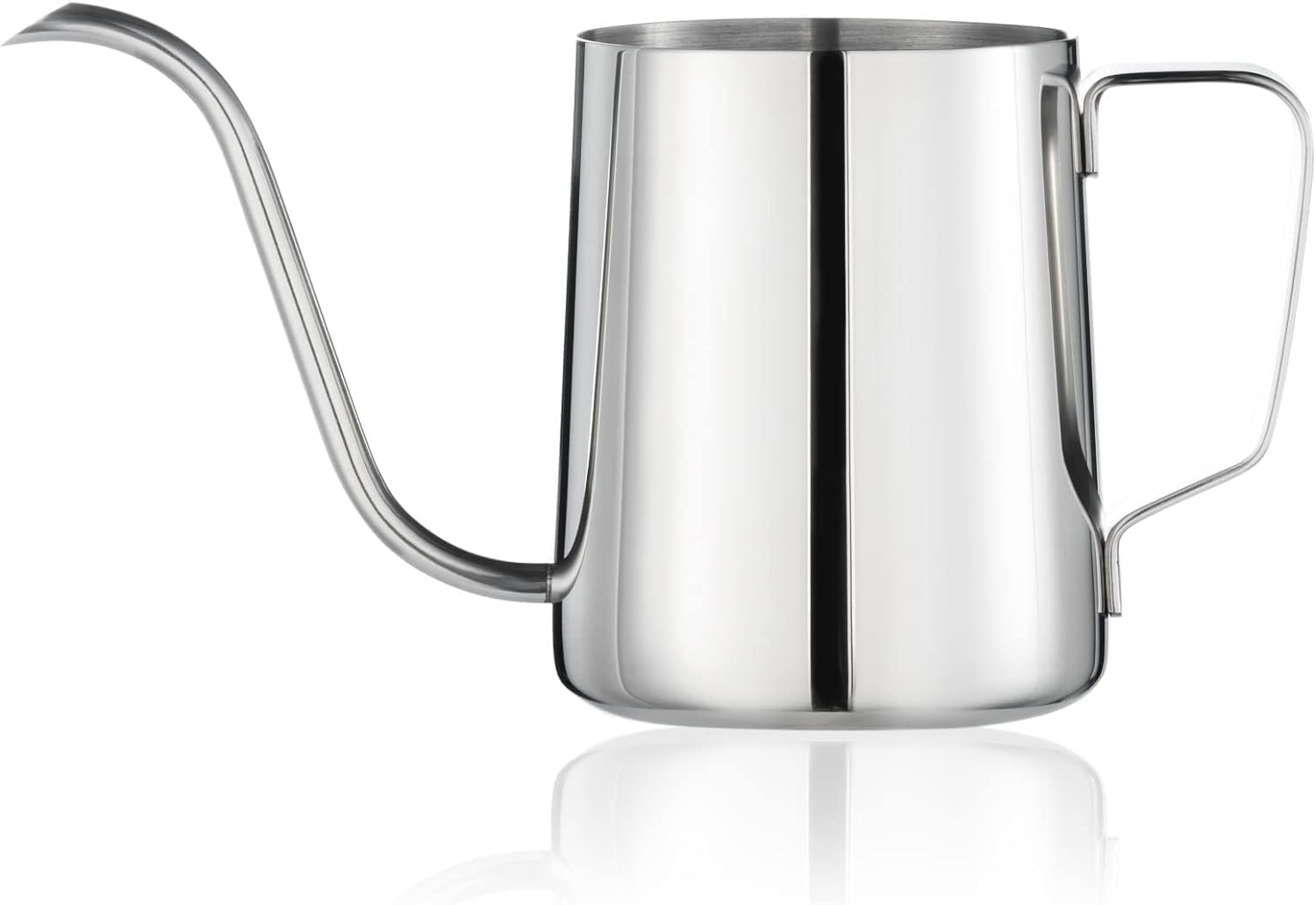
| Capacity | 12 fluid ounces |
|---|---|
| Material Type | Stainless Steel |
| Indoor Outdoor Usage | Indoor |
The Doseno small watering can is built for indoor plant care where control and durability matter. Its 12‑ounce stainless steel body resists rust in humid conditions and keeps the can looking neat over time. The long, narrow spout reaches under leaves and into tight pots so you can place water at the root zone without splashing foliage. The ergonomically shaped handle and lightweight design make one‑handed, steady pours easy for frequent quick watering sessions and for use with small pots, terrariums, or refill tasks like vases and humidifiers. Because capacity is limited, it is best for collections of small to medium houseplants rather than large outdoor beds. The stainless construction provides a more refined look than plastic but will dent if dropped and does not hide water spots. For someone who waters plants regularly and values precision, this can simplifies dosing and reduces overwatering; gardeners needing larger volumes or a soft spray option should look elsewhere.
Best for: Best for houseplant owners who prioritize precise, controlled watering and a durable, low-maintenance tool for small pots and frequent use.
Less Ideal for: Not a good fit for gardeners who need to water many plants at once or prefer a wider rose head for a gentle spray to mist foliage.
- Rust-resistant 304 stainless steel construction for long-lasting indoor use
- Long narrow spout enables precise root-zone watering in tight pots
- Ergonomic handle and lightweight design allow comfortable one-handed pouring
- Compact 12 fl oz capacity suitable for quick refills and small plant collections
- Small 12 oz capacity requires frequent refills for larger collections or bigger pots
- Stainless finish can show water spots and may dent if dropped
Verdict: A durable, rust‑resistant small watering can that delivers precise, controlled pours for indoor plant collections.
BEADNOVA 250ml Squeeze Plant Watering Bottle

| Capacity | 250 ml |
|---|---|
| Material Type | Plastic |
| Bottle Type | Squeeze Bottle |
| Reusability | Reusable |
This small squeeze watering bottle is built for precise, low-volume plant care. Made from flexible polyethylene, the 250 ml bottle is hand-squeezed to deliver water directly to the potting mix through a narrow bent spout, which helps avoid wetting leaves and overwatering. A visible scale on the body makes it easy to measure how much liquid you are giving and the cap seals to prevent leaks when stored. The spout can be trimmed to increase flow if you need a faster pour or to use slightly larger pots. It is lightweight and reusable, so it is handy for succulents, African violets, orchids, and other small pots in a tight indoor setup. Limitations include the small capacity, which means more frequent refills for multiple plants, and the plastic construction, which is less durable than metal and can become misshapen if overstressed by aggressive squeezing.
Best for: Shoppers who want an inexpensive, precise tool for watering a few small indoor plants and who prefer low-cost, reusable solutions over decorative or heavy-duty gear.
Less Ideal for: People who need to water large collections or larger pots without frequent refilling or who prefer long-lasting metal watering cans for heavy use.
- Narrow bent spout for accurate, base-level watering without wetting foliage
- Transparent body with measurement scale to track dispense volume
- Lightweight flexible plastic that is easy to squeeze and refill
- Leak-resistant cap for tidy storage and transport
- 250 ml capacity requires frequent refills when caring for many plants
- Plastic build is less robust than metal alternatives and can deform with heavy use
Verdict: A low-cost, precise squeeze bottle that makes controlled watering of small houseplants quick and mess-free.
Fiskars Glass Watering Carafe, 17 oz
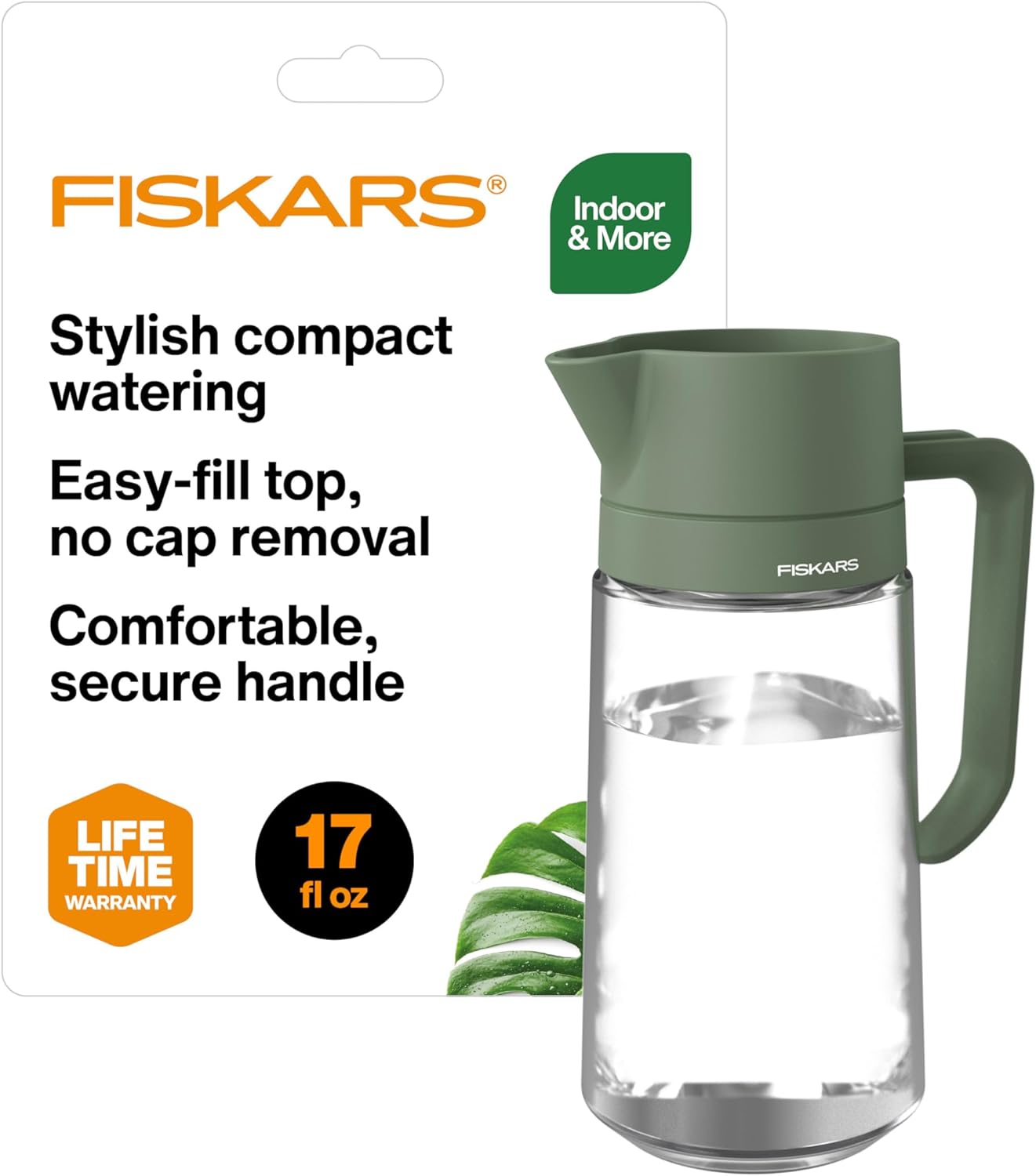
| Material Type | Glass |
|---|---|
| Capacity | 0.5 liters |
| Indoor Outdoor Usage | Indoor |
| Item Type Name | Fiskars Glass Watering Carafe |
The Fiskars Glass Watering Carafe is a simple, reliable indoor watering tool sized for small collections of succulents, herbs, and houseplants. Its 17 oz capacity and clear glass body let you see water levels at a glance so you do not over- or under-water between uses. The long, narrow spout gives a steady, controlled stream that targets the soil surface to avoid splashing leaves or nearby surfaces, while the wide open top makes refilling under a faucet quick and hassle free. The ergonomically shaped handle provides a secure grip for careful pours around crowded pots. Because it is glass, the carafe looks attractive left on a shelf and does not retain odors, but it is breakable and heavier than plastic alternatives so it requires cautious handling. For those who prioritize dependable, precise indoor watering and want a product that also functions as decor, this carafe is a practical choice.
Best for: A plant owner who values predictable, precise indoor watering and prefers a tidy, attractive tool that sits out with their plants.
Less Ideal for: Those who need a heavy-duty, unbreakable can for outdoor use or who prefer a high-capacity container for frequent watering of many pots.
- Clear glass body allows instant visibility of remaining water
- Narrow spout delivers precise, drip-minimizing pours to the plant base
- Wide open top makes refilling under a faucet fast and glug-free
- Comfortable handle supports controlled pouring around tight plant arrangements
- Glass construction is fragile and can break if dropped
- Smaller 17 oz capacity requires more frequent refills for larger collections
Verdict: Buy this if you want a precise, attractive indoor watering carafe that reliably makes small-plant watering easy and mess-free.
WhaleLife 1.4L Small Indoor Watering Can with Long Spout

| Capacity | 1.4 liters |
|---|---|
| Material Type | Plastic |
| Indoor Outdoor Usage | Indoor |
This small WhaleLife watering can is built for careful indoor plant care. It holds 1.4 liters and has a long, narrow spout that lets you target soil at the root zone so you avoid wetting leaves or nearby surfaces. Typical use is for pots, bonsai, succulents, and other small houseplants where precision matters. The wide top opening makes filling simple and cleaning easy, while the ergonomic handle helps steady pours when the can is full. Made from thickened PS plastic, it is lightweight and shatter-resistant so it is easy to lift and safe for everyday use. Because it is small, you will need to refill for multiple large pots, and the plastic body is not insulated against temperature extremes, so avoid prolonged outdoor exposure. For buyers who prefer a neat, low-maintenance tool that doubles as a modern decorative accent, this delivers reliable, accurate watering without fuss.
Best for: Plant owners who prioritize neat, accurate watering for small to medium indoor pots and who prefer a lightweight, low-maintenance tool with a modern look.
Less Ideal for: People who need a high-capacity or heavy-duty outdoor watering solution for many large containers or garden beds.
- Long narrow spout enables precise, mess-free watering at the root zone
- 1.4 L capacity reduces frequent refills for typical indoor setups
- Wide top opening makes filling and cleaning easy
- Lightweight, shatter-resistant plastic is easy to handle and durable
- Ergonomic handle provides steady, comfortable pouring control
- Small overall capacity requires multiple refills for several larger pots
- Plastic body is not intended for prolonged outdoor exposure or high-heat environments
Verdict: Choose this watering can if you want a lightweight, precise indoor tool that makes tidy, targeted watering of houseplants fast and reliable.
Qilebi 1.8L Small Watering Can with Long Spout and Detachable Shower Head

| Capacity | 1.8 liters |
|---|---|
| Material Type | Plastic |
| Item Highlight | Long Spout, Detachable Shower Head |
| Unit Count | 1 Count |
This Qilebi 1.8L watering can is built for everyday indoor plant care where precision and ease matter. It has a long spout that delivers water directly to the soil, reducing splashes and making it simple to reach the center of deep pots or tight corners. The detachable shower head switches between a focused stream and a gentle spray, which is useful for seedlings, delicate leaves, or heavier root watering. The semi-open fill inlet and ergonomic handle make refilling and carrying straightforward for light to moderate watering sessions. Molded from thick-walled plastic, the can is lightweight yet durable enough to resist small knocks and regular use. Because it holds about 1.8 liters it cuts down on trips to the tap while remaining easy to lift when full. Limitations to consider are the plastic construction, which is not as premium-feeling as metal options, and the modest capacity that makes it unsuitable if you need to water many large outdoor containers in one go.
Best for: Practical indoor plant owners who want a precise, easy-to-use can for daily watering of pots, seedlings, and hanging baskets and who prefer a low-maintenance, durable tool.
Less Ideal for: People who routinely water large outdoor planters or many containers in one session should choose a larger-capacity or metal garden can instead.
- Long spout delivers water accurately to soil with minimal splashing
- Detachable shower head offers both focused stream and gentle spray settings
- Compact 1.8L capacity balances fewer refills with easy handling
- Thick-walled plastic construction resists everyday knocks and aging
- Plastic body lacks the premium feel and longevity of metal alternatives
- Capacity is small for gardeners who water many large outdoor pots at once
Verdict: A precise, lightweight indoor watering can that makes daily plant care easier with its long spout and adjustable shower head.
Choosing the Right Small House Plant Watering Can: Key Factors to Consider
Spout Reach and Shape
A spout that reaches into tight pots or between clustered plants reduces the chance of wetting foliage and spreading disease. Narrow, elongated spouts allow you to direct a fine stream into the soil surface or beneath a plant skirt without disturbing the root ball. Different shapes matter: straight skinny spouts give accuracy for deep, narrow pots while gently curved gooseneck spouts provide control over flow angle and access to low-sitting containers.
Consider how often you need to water narrow pots or plants on high shelves. If you frequently water trailing plants in hanging planters near a window, a longer, slender spout will prevent spills and make the task faster and cleaner.
Flow Control and Pouring Rate
Flow control determines whether water comes out as a steady trickle or a fast stream. Fine-tuned flow is essential for seedlings, succulents, and plants with compact soil that can easily compact or erode. Some small cans use a narrow spout and small fill hole to naturally limit flow, while others add a removable rose or aerated head to soften the stream.
Think about how you water: do you prefer slow, measured pours for individual pots, or occasional quicker fills for several plants? Adjustable or naturally restrained flow prevents overwatering and reduces the need for saucer changes and cleanups.
Capacity and Weight Tradeoffs
Small cans balance the need to hold enough water for multiple pots against the physical effort of lifting a filled container. Larger capacity means fewer refills but increases wrist strain and the chance of spills if balance is poor. For most indoor rotations, a modest capacity that lets you water two to six small pots per fill is ideal.
Also consider whether you live in a multi-story dwelling where carrying water up stairs is required. A slightly smaller can with better ergonomics can be easier to use than a heavier large-capacity model that is awkward to lift when full.
Ergonomics and Handle Design
Handle placement and shape influence how comfortable and controlled each pour feels. Top handles allow two-handed filling and casual carry, while side handles or dual-handle designs can improve control during precise pours. A well-placed thumb rest or contoured grip reduces hand fatigue during frequent watering sessions.
Ergonomics also affect accuracy. If a can tips forward too easily when partially full, you will overshoot delicate pots. Test for a low center of gravity and balanced pour trajectory when choosing a small indoor can.
Material, Finish, and Indoor Suitability
Materials range from lightweight plastic to painted metal and stainless steel. Plastic is light and often resistant to corrosion but can show scratches and stain from minerals in water. Metal cans feel premium and resist wear but can dent, chip, or rust if not properly finished. Finishes that resist mineral deposits and wipe clean are preferable for indoor use around furniture and light fabrics.
Also consider whether the finish can drip or flake onto plant foliage. A can used near delicate leaves should have a smooth, non-shedding surface and be easy to rinse to avoid algae or mineral buildup in the spout.
Rose Heads, Filters, and Additional Features
Some small cans include removable rose heads that create a gentle shower, while others have filters to reduce clogging when using rainwater or softened water. These accessories influence usability: a rose gives a soft spray for seedlings and delicate foliage, while a bare narrow spout is better for precise soil targeting.
Decide whether you need extras like a detachable rose, a wide fill opening for easy refilling from a faucet, or a lid to reduce splashing when carrying water across a room. Extra parts add utility but can complicate cleaning.
Best Uses Around the Home
Small house plant watering cans are designed for indoor tasks where precision matters more than capacity. Use compact cans for seed trays, potted herbs on kitchen counters, clustered shelf displays, and terrariums where a controlled stream protects soil structure and prevents algae growth on glass.
Many people keep one can for routine watering and another small mister or rose for seedlings and ferns. Matching can size and spout style to the plant collection in each room reduces the need to transfer plants for watering.
- Use slender spouts for deep narrow pots
- Reserve rose heads for seedlings and delicate foliage
- Pick a lightweight can for frequent quick waters
Watering Techniques for Tight Pots
Aim the spout at the soil surface near the stem base rather than at leaves. Water gently until you see drainage from the pot's bottom or until the topsoil feels evenly moist. For very compact potting mixes, pour in short bursts to allow water to soak in rather than running off the surface.
When working with clustered pots, move the can slowly between containers and pause over each to control volume. A can with a predictable flow helps you meter water by feel rather than timing pours.
- Pause between short pours to let water absorb
- Target the soil, not the foliage
- Check drain holes for steady run-off
Care and Maintenance
Rinse the spout and rose head regularly to prevent mineral buildup that can alter flow. Empty and dry the can after use if you store it indoors to avoid mold or rust on certain finishes. For plastic cans, avoid prolonged sunlight exposure to prevent brittleness.
If the spout clogs, soak removable parts in vinegar and water to break down mineral deposits. Wipe painted or metal finishes with a damp cloth and mild detergent; avoid abrasive cleaners that can scratch surfaces and promote corrosion.
- Empty and dry after use indoors
- Soak clogged parts in vinegar solution
- Wipe finishes with mild detergent
Storage and Placement Tips
Store your watering can close to the plants you use most to reduce spills when carrying water across rooms. A small tray or mat beneath your indoor can storage spot protects furniture from drips. If you have limited storage, nest cans inside one another or hang a slim design vertically on an indoor hook if the manufacturer suggests hanging is safe.
For apartment gardeners, keep a small funnel or wide-mouth pitcher at the fill point to speed refills at the kitchen sink. Avoid storing cans near heaters or vents which can dry residues and accelerate finish wear.
- Keep near plants for quick access
- Use a tray to protect surfaces
- Avoid heat sources that damage finishes
How We Chose the Best Small House Plant Watering Can
We shortlisted products that suit indoor plant care and small-space routines, applying concrete editorial filters focused on real gardener needs. Key evaluation criteria included spout reach and precision, because getting water to the soil without wetting leaves matters for plant health; flow control, since a gentle, adjustable stream prevents overwatering and soil disruption; balance and ergonomics, to make single-handed pouring comfortable for repeated use around the home; materials and finish, assessing durability and whether surfaces resist mineral build-up or staining; and capacity relative to weight, checking that cans hold enough water for several pots without becoming unwieldy. We excluded large outdoor or decorative kettles and any designs that are clearly meant for outdoor showers or hanging use. We also filtered out products with fragile construction or poor customer-supported repairability. The final picks prioritize predictable pouring behavior, compact form factors that fit shelves and windowsills, and finishes that are safe for indoor surfaces and plants.
FAQ
What size watering can is best for small houseplants?
For most indoor collections, a can holding about 0.5 to 1.5 liters balances capacity and weight. That range lets you water several small pots between refills without making the can heavy to lift.
Should I use a rose head for houseplants?
A rose head softens the stream and is useful for seedlings, ferns, and plants with delicate foliage. For precise soil targeting, a narrow spout without a rose is usually better.
How do I prevent mineral buildup in the spout?
Rinse the spout after use and occasionally soak removable parts in a vinegar-and-water solution. For stubborn deposits, a thin brush or pipe cleaner can help dislodge scale.
Is metal or plastic better for indoor watering cans?
Plastic is lightweight and resists corrosion while metal often looks more durable and attractive. Choose based on how often you will lift a full can and whether the finish will tolerate indoor surfaces.
Can I use my indoor watering can for liquid fertilizer?
You can, but rinse the can thoroughly after applying liquid fertilizer to avoid residue buildup and prevent cross-contamination when you next water plain water-sensitive plants.
Final Verdict
Choose a small house plant watering can that matches how you water and where you keep plants. Prioritize spout shape and flow control when you need accuracy for tight pots, and favor ergonomic handles and manageable capacity when you water frequently. Consider the material and finish based on indoor durability and ease of cleaning. Focus on the tradeoffs between reach, control, and weight to find a can that makes watering predictable and comfortable. With those priorities in mind you can pick a small indoor can that reduces spills and helps plants thrive.
