

Note: This article contains affiliate links. If you click on these links and make a purchase, I may earn a small commission at no extra cost to you. This helps support my research and content. Read my full affiliate disclosure here.
Choosing the right soil for a 5 gallon bucket garden changes how well your plants establish roots, retain moisture, and access nutrients in a small container. Bucket gardening concentrates roots and water in a compact volume, so mix structure and fertility matter more than in an in-ground bed. This guide covers six well-suited soils and blends that perform reliably for tomatoes, peppers, herbs, and compact greens grown in five-gallon buckets. We shortlisted options based on drainage, moisture retention, nutrient content, and ease of handling so you can pick a mix that fits your watering habits and plant choices. Below you will find practical guidance on what to look for and how to manage soil in container setups before the product reviews.
Top Picks at a Glance
| Best Overall The best all-around choice for most situations | FoxFarm Happy Frog Potting Soil, 2 cu ft (Container Garden) with 2 Plant Tags |  |
| Best Quality Built to a higher standard if you want something more solid | FoxFarm Ocean Forest Potting Soil, 12 qt — 4-Pack |  |
| Best Value The sweet spot between price and what you get | Espoma Organic Potting Soil Mix, 16 qt |  |
| Highest Rated A top-rated pick with lots of positive feedback | GARICK Potting Soil, 40 lb |  |
| Most Popular A crowd favorite that many people choose with confidence | Miracle-Gro Organic Outdoor Potting Mix, 16 qt. |  |
| Best Seller A high-volume bestseller chosen again and again | Miracle-Gro Potting Mix, 16 qt. (2-Pack) |  |
FoxFarm Happy Frog Potting Soil, 2 cu ft (Container Garden) with 2 Plant Tags

| Brand Name | FoxFarm |
|---|---|
| Item Highlight | Ready-to-Use Amended Container Blend with Soil Microbes, Earthworm Castings, Bat Guano, and Aged Forest Products |
| Volume | 2 cubic feet |
| Style Name | Container Garden |
| Unit Count | 600 Ounce |
FoxFarm Happy Frog Potting Soil is a premixed container blend designed to give potted plants a nutrient-rich, living medium without additional amendments. It is typically used to fill containers, planters, or 5-gallon buckets where roots cannot access native soil; the mix contains earthworm castings, bat guano, aged forest products and a custom soil-microbe blend to help improve root growth and nutrient uptake. Practical benefits include strong initial fertility out of the bag, improved root development from mycorrhizal microbes, and convenience because it is pH-adjusted and ready to use immediately. The included plant tags make tracking varieties and planting dates easier for small-scale container gardens. Important limitations are that this is a potting mix intended for containers rather than in-ground beds and that heavier feeders or long-season crops may still need additional fertilizer over time to maintain peak yields.
Best for: Gardeners who want a convenient, high-quality potting mix for container-grown vegetables, herbs, or ornamentals and value a ready-made, biologically active soil that encourages strong root growth.
Less Ideal for: Growers planning to amend or replace in-ground garden beds or those who prefer to custom-blend their own media for specific crops.
- Formulated for containers with beneficial microbes and mycorrhizae to boost root efficiency
- Contains organic amendments such as earthworm castings and bat guano for immediate nutrient availability
- pH adjusted and ready to use straight from the bag for convenient planting
- Includes two plant tags for labeling varieties and planting dates
- Not formulated as an in-ground soil replacement so it is optimized for containers rather than beds
- May require supplemental fertilization for heavy-feeding or long-season crops
Verdict: A ready-to-use, biologically active potting mix that delivers strong early growth for 5-gallon bucket and other container gardens.
FoxFarm Ocean Forest Potting Soil, 12 qt — 4-Pack

| Brand Name | FoxFarm |
|---|---|
| Item Highlight | Ready-to-use, aerated soil with fish emulsion, crab meal and earthworm castings |
| Number of Packs | 4 |
| Volume | 12 quarts |
FoxFarm Ocean Forest is a premixed potting soil made for containers and houseplants that arrives ready to use straight from the bag. The mix combines aged forest products, sandy loam and sphagnum peat moss for a light, well-aerated texture that promotes drainage and root development in 5-gallon buckets and other containers. It is fortified with fish emulsion, crab meal and earthworm castings so young plants and transplants get a starter dose of organic nutrients without immediate additional feeding. In practical use it reduces compaction, helps prevent overwatering problems, and simplifies setup since you do not need to blend multiple components. Expect consistent performance for seedlings, vegetables and ornamentals in buckets, although heavy feeders will require supplemental fertilizer later in the season as nutrients are consumed. Also the product comes in multiple 12 qt bags rather than one bulk bag, so you may need to combine bags for larger plantings and manage extra packaging during potting sessions.
Best for: Gardeners who want a high-performance, ready-made container mix to get strong early growth in 5-gallon bucket gardens and prefer organic amendments over DIY blends.
Less Ideal for: Growers who need a low-cost bulk soil source for large vegetable plots or those who prefer to custom-blend exact nutrient levels and textures for specialty crops.
- Light, aerated texture that improves drainage and root growth in containers
- Ready-to-use blend that eliminates the need to mix soil components
- Contains organic amendments (fish emulsion, crab meal, earthworm castings) for early nutrient support
- Consistent formulation appropriate for seedlings, transplants and container vegetables
- Nutrient levels will diminish over time so additional feeding is needed for long-season or heavy-feeding crops
- Sold in multiple 12 qt bags which can be less convenient than a single bulk bag for filling many 5-gallon buckets
Verdict: Choose this soil when you want a high-performing, ready-made container mix that promotes quick root development and jump-starts growth in 5-gallon bucket gardens.
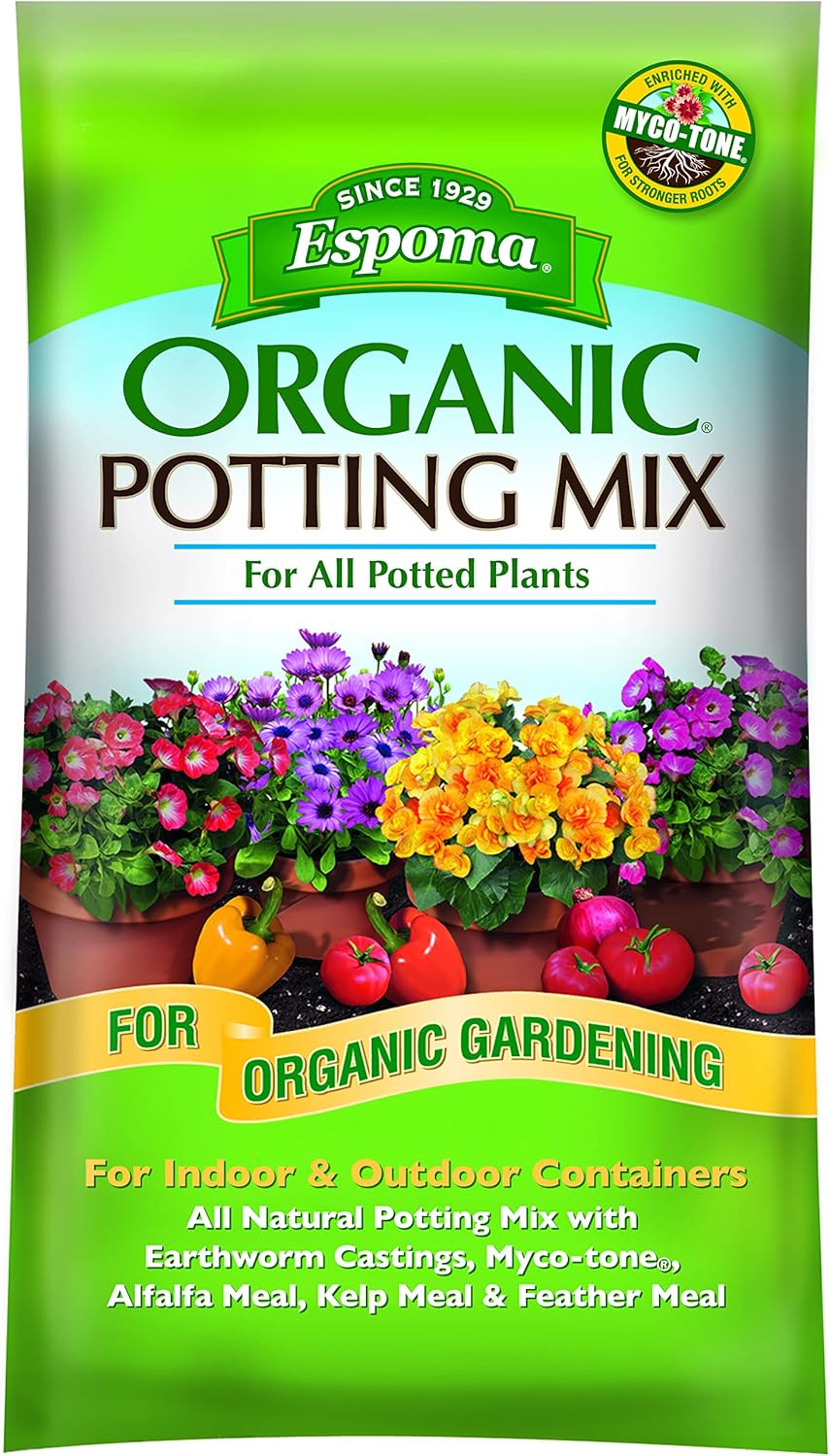
Espoma Organic Potting Soil Mix, 16 qt
| Brand | Espoma |
|---|---|
| Volume | 16 quarts |
| Style Name | Peat Moss,Potting Soil Mix,Planting Soil |
Espoma Organic Potting Soil Mix is a ready-to-use container mix formulated for vegetables, herbs and flowering plants in pots and raised containers. You use it the same way you would any bagged potting soil: fill a 5 gallon bucket or other container, nestle seedlings or transplants in and water. The mix combines sphagnum peat moss and humus with perlite for drainage plus earthworm castings, alfalfa, kelp and feather meals for slow-release nutrition, and includes a mycorrhizae blend to help roots establish. For practical gardeners this means good water retention without becoming waterlogged, built-in organic fertility for several weeks of growth, and improved root colonization in new plantings. The 16 quart bag is convenient for filling a single 5 gallon bucket or topping up containers, but you will need multiple bags for larger projects. Because it is peat-based, users seeking peat-free blends should look elsewhere, and serious growers who prefer custom soil recipes may find the premix less flexible.
Best for: Gardeners who want a convenient, organic premix to quickly fill one or a few 5 gallon containers and prefer an out-of-the-bag solution that supports seedlings and transplants.
Less Ideal for: People building many 5 gallon buckets or large-scale container gardens who need bulk volume or growers who want a peat-free or fully custom soil recipe.
- Organic ingredients and added meals and castings provide slow-release nutrition
- Perlite and humus improve drainage and water retention suitable for container growing
- Contains endo and ecto mycorrhizae to support root establishment
- Ready-to-use premix saves time compared with blending your own soil
- 16 quart bag fills about one 5 gallon bucket so larger gardens require multiple bags
- Contains peat moss which some growers avoid for environmental or sourcing reasons
Verdict: A convenient, organic potting mix that gives a single 5 gallon bucket a balanced, ready-to-use growing medium with added nutrition and mycorrhizae.
GARICK Potting Soil, 40 lb

| Unit Count | 1120 Ounce |
|---|---|
| Item Type Name | SOIL |
| Style Name | Potting |
GARICK Potting Soil is a straightforward, no-frills bagged mix intended for general container and potted-plant use. It is sold in a 40 pound bag and described as a general-purpose growing medium that supports a range of plants and helps optimize flowering and overall vigor. Typical use is filling pots, planters, and 5-gallon bucket gardens where gardeners need a ready-to-use mix without custom blending. The product emphasizes quality ingredients and ease of use, so you can quickly pot transplants or refresh containers. It does not list specific amendments or drainage additives, so expect it to perform as an all-around potting medium rather than a specialty mix for succulents or heavy-feeding vegetables. The practical benefits are convenience, a large bag size that reduces frequent repurchasing, and suitability for routine container gardening tasks. Limitations are the lack of detailed nutrient analysis and no explicit claims about added fertilizers or moisture-control components, so heavy feeders may need supplemental fertilizer and users in specific climates should monitor watering needs.
Best for: Gardeners who want a reliable, ready-to-use potting mix for routine container work and 5-gallon bucket gardens without fuss over custom blends.
Less Ideal for: Growers seeking a precise, nutrient-rich mix for heavy-feeding vegetables or specialty plants that require specific drainage or amendment profiles.
- Large 40 lb bag reduces how often you need to buy soil for multiple containers
- Formulated as a general-purpose potting medium suitable for many plant types
- Ready-to-use mix convenient for filling 5-gallon bucket gardens and standard pots
- Presented by a recognizable brand with consistent product packaging
- No detailed nutrient or ingredient breakdown provided
- No specific mention of added fertilizer, moisture control, or drainage amendments
- Not tailored for specialty plants that require precise soil recipes
Verdict: A dependable, ready-to-use potting soil in a large bag that keeps container and 5-gallon bucket gardens stocked with minimal fuss.
Miracle-Gro Organic Outdoor Potting Mix, 16 qt.

| Volume | 1 cubic feet |
|---|---|
| Item Highlight | Plant Soil For Outdoor Container Plants, Contains Quick-Release Natural Fertilizer, OMRI Listed |
| Manufacturer | Scotts Miracle Gro |
Miracle-Gro Organic Outdoor Potting Mix is designed for outdoor containers and delivers a ready-to-use planting medium that feeds plants for up to two months. In practice it is best for filling pots, planters, and 5-gallon buckets where you need a balanced, moisture-retentive mix that also gives an initial nutrient boost. The bag notes responsibly sourced peat and upcycled green waste in the blend and the OMRI listing makes it suitable for organic gardening. Users will appreciate that one 16 qt. bag fills roughly a 12-inch pot, and that the included quick-release natural fertilizer simplifies planting without immediate need for added feeds. Limitations to consider are that peat-based mixes can compact over time in containers, so the manufacturer recommends repotting every six months to refresh the medium and avoid reduced drainage. Also, a single 16 qt. bag is a modest volume for multiple 5-gallon buckets, so plan quantities accordingly for a full bucket garden.
Best for: Gardeners who want an organic-ready, easy-to-use potting mix for outdoor containers and who prioritize products with third-party organic listing and proven user acceptance.
Less Ideal for: Growers who need large volumes for many 5-gallon buckets or who prefer peat-free mixes should consider bulk alternatives or specialized soilless blends.
- OMRI listed for use in organic container gardening
- Includes quick-release natural fertilizer that feeds up to two months
- Formulated to hold moisture and support outdoor container conditions
- Made with responsibly sourced peat and upcycled green waste
- 16 qt. bag is small for outfitting several 5-gallon buckets
- Peat-based mix can compact in containers and benefits from bi-annual replacement
Verdict: A convenient OMRI-listed potting mix that simplifies planting in outdoor containers by combining moisture-holding ingredients with a short-term natural fertilizer.
Miracle-Gro Potting Mix, 16 qt. (2-Pack)

| Item Highlight | Feeds up to 6 Months |
|---|---|
| Number of Packs | 2 |
| Volume | 16 quarts |
| Ingredients | Sphagnum Peat Moss, Peat, Perlite, Compost, Fertilizer |
Miracle-Gro Potting Mix is a commercial potting soil blended for container gardening and sold here as two 16-quart bags. It is designed for outdoor pots, planters and 5-gallon bucket gardens where good drainage and built-in nutrition matter. The mix lists sphagnum peat moss, perlite, compost and fertilizer, so it holds moisture while allowing excess water to escape and provides feed for up to six months. In practice you would fill a bucket partway, set the plant or seedling at the recommended depth, backfill and water through until runoff. The built-in fertilizer reduces the need for immediate feeding and helps seedlings and vegetables establish quickly. Limitations to expect are typical of peat-based mixes: it will compact over time and needs yearly refreshing or topdressing, and it is formulated for containers rather than amending in-ground beds. For anyone who prefers a predictable, easy-to-use potting medium for tomatoes, herbs or mixed vegetables in a 5-gallon bucket, this mix removes much of the guesswork.
Best for: Gardeners who want a low-effort, reliable potting medium for vegetables, herbs and flowers grown in 5-gallon buckets and other outdoor containers.
Less Ideal for: People looking to amend existing garden beds or seeking an organic certified mix should consider products formulated specifically for in-ground use or organic labeling.
- Formulated for containers so drainage and aeration suit bucket gardens
- Includes fertilizer that feeds plants up to six months reducing early feeding
- Blend contains perlite and compost to balance moisture retention and drainage
- Peat-based mix can compact over a growing season and may need annual replacement or amendment
Verdict: A dependable, ready-to-use container potting mix that makes setting up productive 5-gallon bucket gardens quick and low fuss.
Choosing the Right Soil for 5 Gallon Bucket Garden: Key Factors to Consider
Drainage and Aeration
Good drainage prevents waterlogged roots and reduces the risk of root rot in a five-gallon bucket where excess water has limited places to go. Look for mixes with coarse components such as perlite, coarse sand, or pine bark fines that create air pockets. Those pore spaces let roots breathe, support beneficial microbes, and allow excess water to flow away from the root zone.
Aeration also affects lateral root development. A heavy, fine-textured mix will compact over time in a bucket and squeeze out oxygen, so gardeners often choose lighter components or amend existing soil with coarse material to preserve structure.
Moisture Retention Balance
Small containers dry out faster than beds, yet overwatering can be equally harmful. The ideal bucket soil holds enough moisture between waterings without becoming soggy. Ingredients like coco coir, peat moss, or aged compost improve water-holding capacity, while coarse aggregates moderate it so the mix does not stay saturated.
Consider your microclimate and watering routine. In hot, windy spots you may prefer mixes with higher water retention; in cool, shaded areas a faster-draining blend is usually better. Mulch at the surface helps reduce evaporation regardless of mix choice.
Nutrient Content and Feeding Profile
Soils for container gardening should supply accessible nutrients or accept slow-release amendments because nutrient leaching happens faster in buckets. A good base mix contains a moderate amount of stable organic matter and a starter level of nutrients to support seedlings and young plants.
Plan for top-dressing or liquid feeding through the season. Choosing a mix that takes granular amendments well or that contains long-lasting organic components reduces the frequency of corrective feeding and keeps plants growing steadily.
Texture, Weight, and Handling
Five-gallon buckets need to be portable, especially if you move plants for sun, shelter, or winter storage. Heavy garden soils or dense loams make buckets awkward to lift and reposition. Lightweight blends with peat alternatives and light mineral amendments are easier to handle.
Texture also affects potting: fine dusty mixes are hard to work with and can compact, while very coarse mixes may not hold seedlings upright. Aim for a balanced texture that supports roots and allows easy planting and transplanting.
pH and Amendability
Many vegetables prefer a slightly acidic to neutral pH range. Choose a base mix with stable pH or one that is easy to adjust with lime or sulfur if needed. Some container mixes are acidic out of the bag and require neutralizing for certain crops.
Also consider how well the mix accepts additional amendments like bone meal, rock phosphate, lime, or micronutrient blends. A neutral, open mix is usually the easiest to fine-tune for specific vegetable or herb needs.
Preparing Buckets and Drainage
Before filling a five-gallon bucket, ensure the container has drainage holes large enough to prevent standing water. Elevate buckets slightly on pot feet or small blocks so water can escape freely and air can circulate under the pot, which helps the soil drain faster and keeps bottom roots healthier.
- Punch multiple drainage holes across the bottom rather than a single central hole
- Avoid using large stones as bottom layers; they create a perched water table unless the soil is very coarse
- Line the bucket edges with a strip of landscape fabric if your soil mix contains coarse components to keep them contained
How to Blend a DIY Bucket Mix
You can build an effective bucket soil by combining a lightweight base, a moisture-retentive component, and an aeration material. A practical ratio for many vegetables is roughly one part compost, one part coco coir or peat substitute, and one part perlite or coarse sand. Adjust proportions toward more retention for heat-prone locations or more drainage for heavy-feeding, moisture-sensitive crops.
- Use well-rotted compost rather than fresh manure to avoid burning roots
- Sift out very fine dust from compost or soils to reduce compaction
- Add a slow-release granular fertilizer or weekly liquid feed regimen suited to container-grown vegetables
Managing Watering and Mulch in Buckets
Because buckets dry quickly, set a consistent watering routine based on the plant stage and weather. Seedlings need gentle, frequent moisture while larger fruiting plants use more water but less often. Light, frequent surface waterings are less effective than thorough soak-and-drain sessions that wet the root zone evenly.
A thin layer of organic mulch, such as straw or shredded leaves, reduces evaporation and stabilizes soil temperature, which benefits root health and reduces watering frequency.
- Water until you see water exiting drainage holes to fully moisten the root zone
- Use self-watering inserts or water reservoirs if you travel frequently or face heat spikes
- Check soil moisture by finger test or a moisture meter for consistent results
Seasonal Feeding and Rejuvenation
Container soil loses nutrients each season through harvest and watering. At the end of a production cycle, remove large roots and add fresh compost and a balanced slow-release fertilizer to refresh the mix. For multi-season use, top-dress with compost and lightly fork the surface to incorporate organic matter without disturbing the root ball excessively. If mixing new material into old soil, screen out compacted clumps and incorporate light mineral amendments to restore structure and drainage.
- Replace the top 2 to 4 inches of soil annually for heavy-feeding crops
- Consider repotting into a fresh mix every 2 to 3 seasons to avoid compaction and salt buildup
- Flush containers with plain water occasionally to reduce salt accumulation from fertilizers
Choosing Plants for Bucket Systems
Not every plant suits a five-gallon bucket. Compact varieties, dwarf or determinate vegetables, and most culinary herbs perform best. Large indeterminate tomatoes or deep-rooted perennials will be constrained and require more frequent watering and feeding in a five-gallon volume. Match plant root habits to container size and choose mixes that support the expected growth habit. For example, heavier feeding plants may need a mix with higher nutrient-holding capacity and more frequent amendments.
- Prefer bush or patio varieties for tomatoes and peppers in buckets
- Use trellises or stakes that attach to the bucket for vining crops to reduce stress on the root ball
- Rotate crop types in buckets across seasons to minimize pest and disease buildup
How We Chose the Best Soil for 5 Gallon Bucket Garden
We focused on attributes that directly affect plant health in confined five-gallon containers. Primary evaluation criteria included drainage and aeration, because compacted or poorly draining mixes quickly cause root stress in buckets; water retention properties, since small volumes dry out faster and gardeners have varied watering frequencies; nutrient content and slow-release feeding profile, to limit the need for constant fertilizing while supporting steady growth; and texture and weight, because heavy soils make moving buckets difficult and dense textures reduce oxygen to roots. We also assessed pH stability and amendment compatibility so mixes can be tuned for vegetables and herbs, and examined organic matter quality for disease suppression and microbial activity. Exclusions included any blends designed exclusively for large raised beds, pond soils, or straight topsoil that lacks container amendments. Final selections favored mixes suited to container drainage, root aeration, and predictable moisture behavior in 5-gallon systems.
FAQ
How often should I water a five-gallon bucket garden?
Frequency depends on weather, plant size, and mix. In hot weather expect daily or every-other-day watering for fruiting plants; in cooler conditions twice weekly may suffice. Check moisture by feeling the top 1 to 2 inches and water deeply when that layer feels dry.
Can I use garden soil in a 5-gallon bucket?
Garden soil often compacts in containers and limits drainage. If you use it, mix in coarse material and organic matter to improve aeration and water movement. Pure garden loam by itself is usually a poor choice for bucket gardening.
What is the best way to add nutrients to bucket soil?
Use a combination of a balanced slow-release granular fertilizer at planting and supplemental liquid feeds during active growth. Top-dressing with finished compost mid-season also replenishes organic matter and micronutrients.
How do I prevent my bucket soil from becoming too heavy?
Choose lightweight components like coco coir and perlite instead of dense loam. Avoid overusing heavy compost or wet clay-rich soils. When moving filled buckets, use two people or a dolly to reduce strain.
Can I reuse soil from last season in my buckets?
Yes, with care. Remove old roots, screen out compacted bits, and refresh the mix with compost and aeration amendments. If disease or pests were an issue, replace the soil to reduce carryover risks.
Final Verdict
For five-gallon bucket gardens, prioritize a soil that balances drainage, aeration, and moisture retention while remaining light enough to handle. Match mix choices to your climate and watering habits and plan for seasonal feeding to maintain fertility in the confined root volume. Tradeoffs are inevitable: mixes that hold more water reduce watering frequency but risk lower oxygenation, while very fast-draining blends demand more frequent irrigation. Focus on drainage and nutrient-holding capacity first, then adjust texture and amendments for weight and pH as needed. With the right base mix and a consistent care routine, you can get reliable harvests from five-gallon buckets across many vegetable and herb varieties.
