

Note: This article contains affiliate links. If you click on these links and make a purchase, I may earn a small commission at no extra cost to you. This helps support my research and content. Read my full affiliate disclosure here.
Choosing the right soil for Bamboo Palm matters because this plant needs a mix that stays evenly moist without staying waterlogged. Get the wrong medium and you risk root rot, poor growth, or nutrient lockup. This guide examines the top shortlisted soils for Bamboo Palm so you can pick a mix that suits container, patio, or indoor greenhouse conditions. We evaluated texture, drainage, and water-holding properties alongside nutrient profile and pH suitability to surface options that help this tropical, understory palm thrive. Read on to understand what matters and how each type of mix behaves in a real gardening setting.
Top Picks at a Glance
| Best Overall The best all-around choice for most situations | Rosy Soil Organic Houseplant Potting Mix, Peat-Free, 4 Quart |  |
| Best Quality Built to a higher standard if you want something more solid | Lechuza PON Mineral Plant Substrate Potting Mix, 12 L |  |
| Best Value The sweet spot between price and what you get | Burpee Premium Organic Potting Mix with Coco Coir (9 Quart) |  |
| Best Budget The cheapest option that still gets the job done reliably | TOYPOPOR Potting Soil for Indoor Plants, 1 qt |  |
| Highest Rated A top-rated pick with lots of positive feedback | E.B. Stone Organics Citrus & Palm Mix Potting Soil, 1.5 cu ft |  |
| Most Popular A crowd favorite that many people choose with confidence | Miracle-Gro Indoor Potting Mix for All Plants, 6 qt., 2-Pack |  |
| Best Seller A high-volume bestseller chosen again and again | Back to the Roots Organic Indoor Potting Mix, 6 Quart |  |
Rosy Soil Organic Houseplant Potting Mix, Peat-Free, 4 Quart

| Unit Count | 128 Ounce |
|---|---|
| Style Name | Houseplant |
| Ingredients | Biochar, Bark Fines, Compost, Worm Castings, Mycorrhizae |
| Volume | 4 quarts |
Rosy Soil Houseplant Potting Mix is an organic, peat-free potting medium designed to boost root health and keep containers well drained. It combines biochar, worm castings, mycorrhizal fungi and compost in a chunky texture that resists compaction, so pots stay aerated and water moves through instead of pooling. You would use this as a straight potting mix for tropical houseplants or blend it into existing soil when repotting; the manufacturer says 4 quarts fills two to three medium pots. The inclusion of mycorrhizae and beneficial microbes supports stronger root establishment and better nutrient uptake, which is useful if you are prioritizing vigorous growth. Practical benefits include reduced need for frequent repotting because biochar holds structure, and improved foliage health from the added micronutrients in worm castings. Limitations are the small bag size for larger shrubs or multiple jasmines and the need to monitor water for plants that prefer very dry conditions, since organic components still retain some moisture. Always wear gloves when handling and follow safety guidance to avoid inhaling dust.
Best for: A grower focused on maximizing root performance and steady vegetative growth who wants a ready-to-use, organic peat-free mix for container-grown tropicals and flowering houseplants.
Less Ideal for: Not the best choice for someone planting large outdoor jasmine beds or managing many plants on a tight budget who needs bulk soil; also avoid if you need an ultra-sandy, cactus-specific mix.
- Peat-free organic formula with biochar and worm castings for lasting structure and micronutrients
- Contains mycorrhizal fungi and beneficial microbes to improve root colonization and nutrient uptake
- Chunky, well-draining texture reduces compaction and helps prevent root rot
- Resealable bag and stable biochar mean mix stays usable longer between repots
- Small 4 quart volume may be insufficient for multiple plants or large pots
- Not formulated specifically for very dry-loving plants so some adjustment to watering may be needed
Verdict: Choose this mix if you want an organic, peat-free potting soil that promotes stronger roots and reliable drainage for container-grown jasmine and other tropical houseplants.
Lechuza PON Mineral Plant Substrate Potting Mix, 12 L

| Unit Count | 403.3 Ounce |
|---|---|
| Item Type Name | Plant substrate |
| Volume | 12 liters |
| Manufacturer | Lechuza |
Lechuza PON is a mineral-based, soil-free substrate made from pumice, lava and zeolite that replaces conventional potting soil in containers and self-watering planters. It is typically used to pot indoor and patio plants—including orchids, citrus and other container trees—by filling the planter around the root ball without fully washing the roots. The substrate maintains an air/water balance (about 55% air, 45% water) so roots get oxygen while capillary action draws water up from the reservoir. Notable features include contaminant-free mineral granules that resist compaction, built-in zeolite to buffer pH and a coated fertilizer that feeds plants for up to six months. In practice that means stable root aeration over years, reduced risk of root rot compared with dense soils, and less frequent repotting. Important limitations are that PON is not an organic potting soil so it does not store moisture the way peat-based mixes do and it is labeled not for use with food crops, so it is best for ornamental potted trees rather than edible production; users should also follow safety guidance when handling the product.
Best for: Buyers who prioritize root oxygenation and steady water delivery for container-grown ornamental trees and want a low-maintenance, long-lasting substrate solution.
Less Ideal for: Gardeners looking to grow food crops or who prefer organic, moisture-retentive potting mixes for heavy-water-demand plants should consider alternatives.
- Mineral, non-compacting granules preserve long-term aeration and root health
- Continuous capillary action helps deliver water evenly from the reservoir
- Includes zeolite to stabilize pH and act as a nutrient buffer
- Coated slow-release fertilizer supplies nutrients for up to six months
- Does not retain water like organic mixes so watering frequency may increase in hot, dry conditions
Verdict: For potted ornamental trees that need excellent root aeration and reliable capillary watering, Lechuza PON delivers a durable, low-compaction mineral substrate built to last.
Burpee Premium Organic Potting Mix with Coco Coir (9 Quart)

| Item Form | Powder |
|---|---|
| Specific Uses For Product | Plant Growth, Root Development, Seed Development, Soil Conditioning |
| Coverage | 9 Qt Container |
| Liquid Volume | 9 quarts |
Burpee Premium Organic Potting Mix is a ready-to-use container soil designed for indoor and outdoor pots, seed starting, and raised bed containers. The mix combines coco coir for improved aeration and moisture retention with a nutrient blend that feeds plants for up to three months, making it useful for establishing seedlings or repotting established vegetables, herbs, and ornamentals. It is OMRI listed, which suits organic growers, and the bag is sold in a convenient 9-quart size that fits most small to medium containers. Practical benefits include reduced watering frequency thanks to the coir component and a balanced medium that promotes root development and germination. Limitations are the small bag size for larger projects and that it supplies nutrients for only a limited period, so longer-term containers will need supplemental fertilizer. The mix is powdery and light, so it is easy to handle but may compress over time in deep pots and benefit from occasional loosening.
Best for: Gardeners who want a compact, ready-made organic potting mix that reduces maintenance and supports reliable seed starting and container growth.
Less Ideal for: Those establishing large beds or filling many large containers at once should choose bulk soil or larger bags instead.
- OMRI listed organic blend suitable for organic container gardening
- Coco coir improves moisture retention while maintaining good aeration
- Includes slow-release nutrients that feed plants for up to three months
- Light, easy-to-handle texture ideal for seed starting and repotting
- 9-quart bag is small for larger containers or multiple pots
- Nutrient supply is temporary so additional fertilizer is required for long-season crops
Verdict: A compact OMRI-listed potting mix with coco coir that simplifies seed starting and short-term container growing by improving moisture balance and early root development.
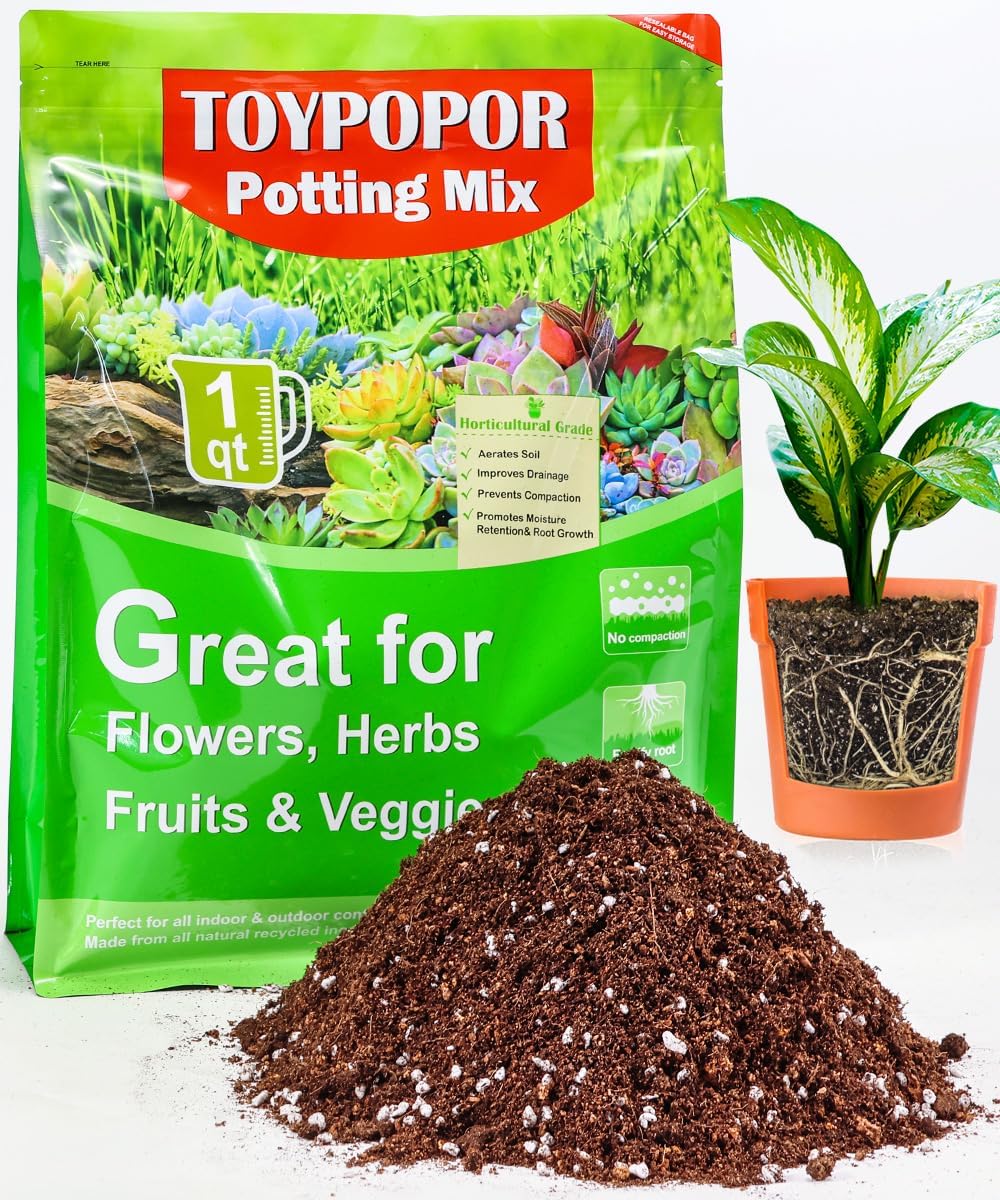
TOYPOPOR Potting Soil for Indoor Plants, 1 qt
| Brand Name | TOYPOPOR |
|---|---|
| Volume | 1 quarts |
| Style Name | nutrient-rich, moisture-retaining |
This 1 quart TOYPOPOR potting soil is a lightweight, soilless blend meant to give houseplants quick root access to air and moisture. The mix pairs sphagnum peat and coco coir for moisture retention with perlite for drainage and rice charcoal for aeration. Typical use is repotting small houseplants or refreshing the top layer of container soil for species that prefer a loose medium. For growers of Aglaonema it helps keep roots from sitting in water while holding enough moisture between waterings, which suits the plant's moderate watering needs. The pre-mixed composition saves time compared with creating your own blend and the small 1 qt size is convenient for trialing without committing to a large bag. Limitations are the small volume for multiple or larger pots and that no nutrient analysis or long-term feeding plan is provided, so you will still need to fertilize for sustained growth.
Best for: Buyers who want an affordable, ready-to-use small batch potting mix for repotting or topping up individual houseplants and who prioritize convenience over bulk quantity.
Less Ideal for: People managing many plants, large specimens, or those who prefer a fertilized mix or custom-blended media for specific soil chemistry needs.
- Balanced mix of peat, coco coir, perlite, and rice charcoal for both moisture retention and drainage
- Lightweight, airy texture that encourages fast root growth and prevents compaction
- Small 1 quart size is easy to handle and good for repotting individual houseplants
- Ready-made blend removes the need to measure and mix components yourself
- Only 1 quart volume is too small for multiple pots or full repots of larger Aglaonema plants
- No listed nutrient content so additional fertilization will be needed for ongoing feeding
Verdict: A convenient, small-batch potting mix that provides airy drainage and moisture retention ideal for testing or repotting single Aglaonema plants.
E.B. Stone Organics Citrus & Palm Mix Potting Soil, 1.5 cu ft

| Brand Name | E.B. Stone Organics |
|---|---|
| Unit Count | 1536 Ounce |
| Volume | 1.5 cubic feet |
| Style Name | Potting Soil |
E.B. Stone Organics Citrus & Palm Mix is a ready-to-use organic soil blend designed for container and in-ground planting of citrus, palms, avocados and tropical foliage. The mix pairs aged fir bark and pumice to keep the root zone well aerated and fast-draining so plants that dislike soggy feet avoid root rot, while added mycorrhizae improve nutrient and water uptake. It is intended to be used straight from the bag for potting or worked into beds when planting, which simplifies planting and repotting tasks. For gardeners seeking reliability, this blend delivers consistent structure and moisture retention without heavy amendments, and the organic base supports longer-term soil biology. Limitations are the single bag volume of 1.5 cubic feet, which means larger projects will require multiple bags and mixing on site, and it does not list N-P-K numbers or slow-release fertilizer content so supplemental feeding may be needed for heavy-feeding specimens.
Best for: Gardeners who prioritize reliable, low-maintenance potting media for citrus and tropical plants and want a ready-made organic blend that supports healthy roots.
Less Ideal for: People who need large volumes for landscaping projects or who prefer a potting mix with specified fertilizer content and tailored nutrient ratios.
- Formulated specifically for citrus, palms and tropicals to match their root needs.
- Aged fir bark and pumice provide good drainage and aeration to reduce risk of root rot.
- Contains beneficial mycorrhizae to enhance root nutrient and water uptake.
- Ready-to-use bag simplifies repotting or planting without on-site blending.
- Single bag is only 1.5 cubic feet so multiple bags are required for larger trees or beds.
- No detailed fertilizer analysis provided so additional feeding may be necessary for heavy feeders.
Verdict: Choose this mix when you want a consistent, ready-to-use organic soil that promotes healthy, well-aerated roots for citrus and tropical plants.
Miracle-Gro Indoor Potting Mix for All Plants, 6 qt., 2-Pack

| Number of Packs | 2 |
|---|---|
| Unit Count | 400.58 Ounce |
| Item Highlight | Feeds for up to 6 Months |
| Ingredients | Sphagnum Peat Moss, Coir, Perlite, Fertilizer, Wetting Agent |
This Miracle-Gro indoor potting mix is formulated as an all-purpose soil for indoor container plants and is sold in a two-pack of 6‑quart bags. It combines sphagnum peat moss, coconut coir, and perlite to create a lightweight, well-draining mix that holds moisture yet releases it to roots, which helps tropical houseplants like a Dragon Tree avoid waterlogged roots. The bagged mix includes a slow-release fertilizer meant to feed plants for up to six months so you do not need to amend immediately after potting. Notably the formula excludes bark and compost, which can reduce habitats for fungus gnats — useful when repotting indoor specimens. Use is straightforward: fill a pot with drainage, set the plant, backfill with mix, and water. Limitations are that the fertilizer schedule is fixed to the included feed and heavy feeders may need additional fertilizing after several months, and serious growers who want a custom cactus or orchid-style mix will find the texture too fine. For routine repotting of Dragon Trees and similar tropical houseplants this mix is convenient and consistent.
Best for: Buyers who want a reliable, low-effort potting mix for repotting tropical houseplants like Dragon Trees and prefer a product with built-in feeding and pest-reduction features.
Less Ideal for: Specialist growers who need custom texture blends for succulents, orchids, or aggressive feeders should choose purpose-formulated mixes or amend this product accordingly.
- Balanced blend of peat moss, coir, and perlite for good moisture retention and drainage
- Includes slow-release fertilizer that feeds up to six months for low-maintenance care
- Bark- and compost-free formula reduces places for fungus gnats to breed
- Ready-to-use bag makes repotting quick with no mixing required
- Fertilizer is fixed for about six months so additional feeding may be necessary for heavy feeders
- Texture may be too fine for plants that prefer very fast-draining or chunky mixes
Verdict: A convenient, low-maintenance indoor potting mix that keeps Dragon Trees healthy with good drainage and up to six months of built-in feeding.
Back to the Roots Organic Indoor Potting Mix, 6 Quart

| Unit Count | 192 Fluid Ounces |
|---|---|
| Item Type Name | Indoor Potting Mix 6qt |
| Item Highlight | Peat-free, 100% organic, made in the USA |
| Ingredients | Coconut Coir, Yucca, Mycorrhizae, Perlite, Horticultural Sand |
This Back to the Roots indoor potting mix is a ready-to-use, 6-quart blend designed for common houseplants such as pothos, monstera and ferns. It combines coconut coir, yucca extract, mycorrhizae, perlite and horticultural sand to improve moisture retention, drainage and root development without peat. In practice it feels light and friable, so it is easy to pot seedlings or repot mature plants and it reduces compaction that can suffocate roots. The added mycorrhizae helps young roots establish and take up nutrients more efficiently while yucca extract helps the mix hold water between waterings, which is convenient for forgetful or busy plant owners. Because it is peat-free and made in the USA, it is a more sustainable choice versus traditional peat-based mixes. Limitations are the small 6-quart size, which means frequent repurchasing for larger collections, and the bag does not include fertilizer so you will need to feed plants separately as they grow.
Best for: Buyers who prioritize low-risk, easy-care houseplant solutions and want an organic, ready-to-use potting mix that reduces watering hassles and supports healthy root growth.
Less Ideal for: Not ideal for gardeners who need large-volume soil for many pots or for those expecting a mix that includes built-in fertilizer for long-term feeding.
- Peat-free organic formula that reduces environmental impact
- Yucca extract improves moisture retention between waterings
- Contains mycorrhizae to support root development and nutrient uptake
- Light, well-draining texture suitable for repotting seedlings and houseplants
- Small 6-quart volume may require frequent repurchasing for larger plant collections
- Does not include fertilizer so additional feeding is necessary
Verdict: A compact, peat-free potting mix that simplifies indoor plant care by holding moisture and boosting root establishment.
Choosing the Right Soil for Bamboo Palm: Key Factors to Consider
Drainage and Aeration
Bamboo Palm roots need oxygen as much as moisture. A mix with clear drainage channels and coarse particles prevents the soil from compacting and suffocating roots. In practical terms, that means including components like coarse perlite, pine bark fines, or coarse sand to keep pore space available even when the soil is wet.
Poor aeration leads to slow growth and makes the plant vulnerable to root rot. When choosing a soil, check that it feels open and crumbly rather than dense. For container-grown palms, aim for a balance that lets excess water escape while holding enough moisture between waterings.
Water-Holding Capacity
Bamboo Palms prefer consistently moist conditions but do not tolerate standing water. Soil that dries out too quickly forces frequent watering and stresses the plant. Components like peat moss or coco coir increase water retention, holding moisture in the root zone while still releasing it to roots when needed.
Think about your environment: warmer rooms and bright windows speed evaporation, requiring a mix with slightly higher water-holding ability. For shaded interiors, moderately retaining mixes work well and reduce the risk of overwatering.
pH and Nutrient Balance
Bamboo Palm does best in slightly acidic to neutral substrate where common fertilizers remain available. Soil pH affects nutrient uptake, so mixes formulated with neutral materials or lightly acidic organic matter help prevent deficiencies. A base nutrient profile that includes slow-release forms or well-aged compost provides steady feeding without overwhelming sensitive roots.
Avoid soils with very high lime content if you want to keep pH lower. Also consider how any added fertilizer will interact with the mix to avoid salt buildup over multiple feedings.
Organic Matter Quality and Stability
Organic components feed the soil biology and improve moisture regulation, but their quality matters. Coarse, well-aged bark and stable compost break down slowly, maintaining structure over seasons. Fast-decomposing fine peat or fresh compost can compact and reduce aeration as it decomposes, changing drainage characteristics over time.
Choose mixes with a mix of stable organics for long-term structure and some finer materials to help with moisture. Regular repotting and top-dressing will refresh the medium as the organic fraction gradually changes.
Salt Levels and Fertilizer Compatibility
Houseplant palms are sensitive to soluble salts. Soils that contain high residual salts or are incompatible with common fertilizer regimens can cause tip browning and slow growth. Check labels for low-salt or pre-rinsed ingredients if you use tap water with higher mineral content.
Also factor in how you fertilize. A soil that holds salts near the root zone will require periodic leaching or using lower-salt fertilizers. Compatibility with slow-release and liquid feeding methods helps maintain steady nutrition without salt shock.
Particle Size and Workability
Particle-size distribution affects how the soil packs and how easily you can repot or top-dress a Bamboo Palm. A mix with a range of particle sizes, from fine organic matter to coarse aggregate, offers both moisture retention and structural stability. Very fine mixes can compact and become waterlogged in containers, while overly coarse mixes may drain too quickly and need more frequent watering.
Consider how often you repot and how much effort you want to spend on maintenance. Workable mixes ease planting, root inspection, and eventual repotting without crumbling or sticking to the root ball.
Best Soil Types for Container Bamboo Palms
Container-grown Bamboo Palms do best in blends that combine porous inorganic materials with stable organic matter. Look for mixes labeled for houseplants or tropical plants that list peat or coco coir, coarse bark, and perlite or pumice. These components give a balance of drainage and moisture retention suited to pots.
For heavier pots or large root balls, increase the proportion of coarse bark and perlite to maintain aeration. In shallow containers, prioritize water-holding elements to keep the shallow root zone from drying out between waterings.
- Use perlite or pumice for consistent drainage
- Add coarse bark to prevent compaction
- Include peat or coir for moisture retention
Adjusting Mixes for Indoor Conditions
Indoor environments vary in humidity and temperature, and the right soil mix depends on those conditions. In dry, heated rooms, mix in more water-retentive components so the pot does not dry too quickly. In humid rooms or cool spaces, increase aeration to prevent soggy conditions.
If you change a plant's location seasonally, consider a slightly more forgiving mix that maintains stable moisture across light and temperature fluctuations.
- Higher indoor humidity means leaner mixes
- Low humidity requires more coir or peat
- Temperature swings call for stable organic matter
Repotting and Refreshing Soil
Repot Bamboo Palms every 2 to 3 years or when roots circle the pot. Fresh soil restores structure and nutrients lost as organic matter decomposes. When repotting, remove a third of the old medium from around the root ball and replace it with fresh mix to maintain continuity while improving conditions.
Top-dress with a thin layer of fresh mix annually to replenish the surface without disturbing roots. Monitor drainage after repotting and adjust the mix if you notice slower water movement or faster drying.
- Repot before the plant becomes rootbound
- Replace part of the old soil rather than all at once if the plant is stressed
- Top-dress yearly to refresh nutrients
Watering Practices Linked to Soil Choice
How you water must match the soil's properties. In a high water-holding mix, water thoroughly but less frequently and allow the top inch to dry slightly. In a fast-draining blend, you may need shorter, more frequent waterings to keep the root zone evenly moist.
Always water until excess drains from the pot and avoid leaving the plant standing in drained water. Consistent moisture management reduces leaf browning and encourages steady growth.
- Water deeply and let excess drain
- Adjust frequency to the mix and environment
- Avoid standing water in saucers
DIY Soil Tweaks and Additives
You can tailor a standard potting soil for Bamboo Palm by adding measured amounts of perlite, coarse bark, and composted organic matter. A common home blend starts with equal parts high-quality potting soil and coarse bark, with 10 to 20 percent perlite or pumice added for drainage.
Slow-release fertilizer can be added sparingly at repotting, while liquid feeding helps adjust nutrition through the season. When using amendments, mix thoroughly to avoid pockets of fine material that can retain too much water.
- Add 10 to 20 percent perlite for drainage
- Use coarse, composted bark rather than fresh wood chips
- Mix amendments well to avoid layering
How We Chose the Best Soil for Bamboo Palm
We focused on attributes that directly affect Bamboo Palm health in containers and indoor environments. Key evaluation criteria included drainage characteristics to avoid waterlogging, water-holding capacity to prevent rapid drying, and particle texture for root aeration. Nutrient balance and pH compatibility were assessed because Bamboo Palm prefers slightly acidic to neutral media with steady, accessible nutrients. We also looked at organic content and decomposition rate to gauge how mixes change with time, plus salt levels and fertilizer compatibility to protect sensitive roots. Products were included only if their ingredient lists and performance claims matched these gardener-focused criteria. We excluded mixes that were solely hydroponic media, drainage-only substrates without organic matter, and any soil labeled for heavy clay or drought-tolerant plants that would not hold enough moisture. The final selections emphasize real-world container performance, ease of watering, and sustained root health for indoor and sheltered outdoor Bamboo Palm culture.
FAQ
How often should I repot a Bamboo Palm into fresh soil?
Repot every 2 to 3 years or when roots start to circle the pot. If the soil compacts or drainage slows noticeably, repot sooner to restore aeration and nutrient balance.
Is coco coir or peat better for Bamboo Palm soil?
Both hold moisture, but coco coir is more sustainable and maintains structure longer. Peat can retain more water initially but may compact over time, so pair either with coarse bark and perlite for aeration.
Can I use garden soil for a potted Bamboo Palm?
Garden soil is usually too dense and can compact in containers, causing poor drainage and root stress. Use a purpose-made potting mix amended for palms instead of raw garden dirt.
How do I tell if my soil is holding too much water?
Signs include yellowing or drooping fronds, a sour or musty smell from the pot, and slow drainage after watering. Check the root ball for dark, soft roots, which indicate excess moisture and possible rot.
Should I add fertilizer to fresh soil when repotting?
A small amount of slow-release fertilizer can be mixed into new soil at repotting, but avoid overfeeding. Liquid feeding on a light schedule after repotting helps meet nutrient needs without shocking the plant.
Final Verdict
Prioritize a mix that balances drainage with water retention and uses stable organic matter to maintain structure over time. Match the blend to your indoor conditions and watering habits so the root zone stays evenly moist but not waterlogged. In the end, choose a soil that supports good aeration, steady nutrient availability, and low salt levels to keep a Bamboo Palm healthy and responsive to routine care.
