

Note: This article contains affiliate links. If you click on these links and make a purchase, I may earn a small commission at no extra cost to you. This helps support my research and content. Read my full affiliate disclosure here.
Picking the right soil for a fiddle leaf tree matters more than you might expect. These trees need a mix that drains quickly enough to prevent waterlogged roots yet holds enough moisture to avoid frequent drought stress. The right medium also supports steady nutrient delivery, good aeration, and predictable watering intervals. This guide covers seven shortlisted soils chosen for indoor fiddle leaf tree care. We evaluate each option on drainage, moisture retention, and root health factors gardeners care about, so you can match a soil to your pot, watering habits, and home environment. Read on to understand the traits that matter before the product list.
Top Picks at a Glance
| Best Overall The best all-around choice for most situations | Rosy Soil Organic Houseplant Potting Mix, Peat-Free, 4 Quart |  |
| Best Quality Built to a higher standard if you want something more solid | Fiddle Leaf Fig Plant Food Organic Potting Soil Mix (7.5 L) |  |
| Best Value The sweet spot between price and what you get | Leaves & Soul Professional Fiddle Leaf Fig Soil Mix, 2.2 qt |  |
| Best Budget The cheapest option that still gets the job done reliably | Novaterra Fiddle Leaf Fig Potting Soil Mix, 2.4 Quart |  |
| Highest Rated A top-rated pick with lots of positive feedback | Top Tier Genetics Optimal Fiddle Leaf Fig Potting Mix (8 qts) |  |
| Most Popular A crowd favorite that many people choose with confidence | Perfect Plants Fiddle Leaf Fig Soil, 8 qt (Coconut Coir Blend) |  |
| Best Seller A high-volume bestseller chosen again and again | Back to the Roots Organic Indoor Potting Mix, 12 Quart |  |
Rosy Soil Organic Houseplant Potting Mix, Peat-Free, 4 Quart

| Unit Count | 128 Ounce |
|---|---|
| Style Name | Houseplant |
| Ingredients | Biochar, Bark Fines, Compost, Worm Castings, Mycorrhizae |
| Volume | 4 quarts |
Rosy Soil Houseplant Potting Mix is an organic, peat-free potting medium designed to boost root health and keep containers well drained. It combines biochar, worm castings, mycorrhizal fungi and compost in a chunky texture that resists compaction, so pots stay aerated and water moves through instead of pooling. You would use this as a straight potting mix for tropical houseplants or blend it into existing soil when repotting; the manufacturer says 4 quarts fills two to three medium pots. The inclusion of mycorrhizae and beneficial microbes supports stronger root establishment and better nutrient uptake, which is useful if you are prioritizing vigorous growth. Practical benefits include reduced need for frequent repotting because biochar holds structure, and improved foliage health from the added micronutrients in worm castings. Limitations are the small bag size for larger shrubs or multiple jasmines and the need to monitor water for plants that prefer very dry conditions, since organic components still retain some moisture. Always wear gloves when handling and follow safety guidance to avoid inhaling dust.
Best for: A grower focused on maximizing root performance and steady vegetative growth who wants a ready-to-use, organic peat-free mix for container-grown tropicals and flowering houseplants.
Less Ideal for: Not the best choice for someone planting large outdoor jasmine beds or managing many plants on a tight budget who needs bulk soil; also avoid if you need an ultra-sandy, cactus-specific mix.
- Peat-free organic formula with biochar and worm castings for lasting structure and micronutrients
- Contains mycorrhizal fungi and beneficial microbes to improve root colonization and nutrient uptake
- Chunky, well-draining texture reduces compaction and helps prevent root rot
- Resealable bag and stable biochar mean mix stays usable longer between repots
- Small 4 quart volume may be insufficient for multiple plants or large pots
- Not formulated specifically for very dry-loving plants so some adjustment to watering may be needed
Verdict: Choose this mix if you want an organic, peat-free potting soil that promotes stronger roots and reliable drainage for container-grown jasmine and other tropical houseplants.
Fiddle Leaf Fig Plant Food Organic Potting Soil Mix (7.5 L)
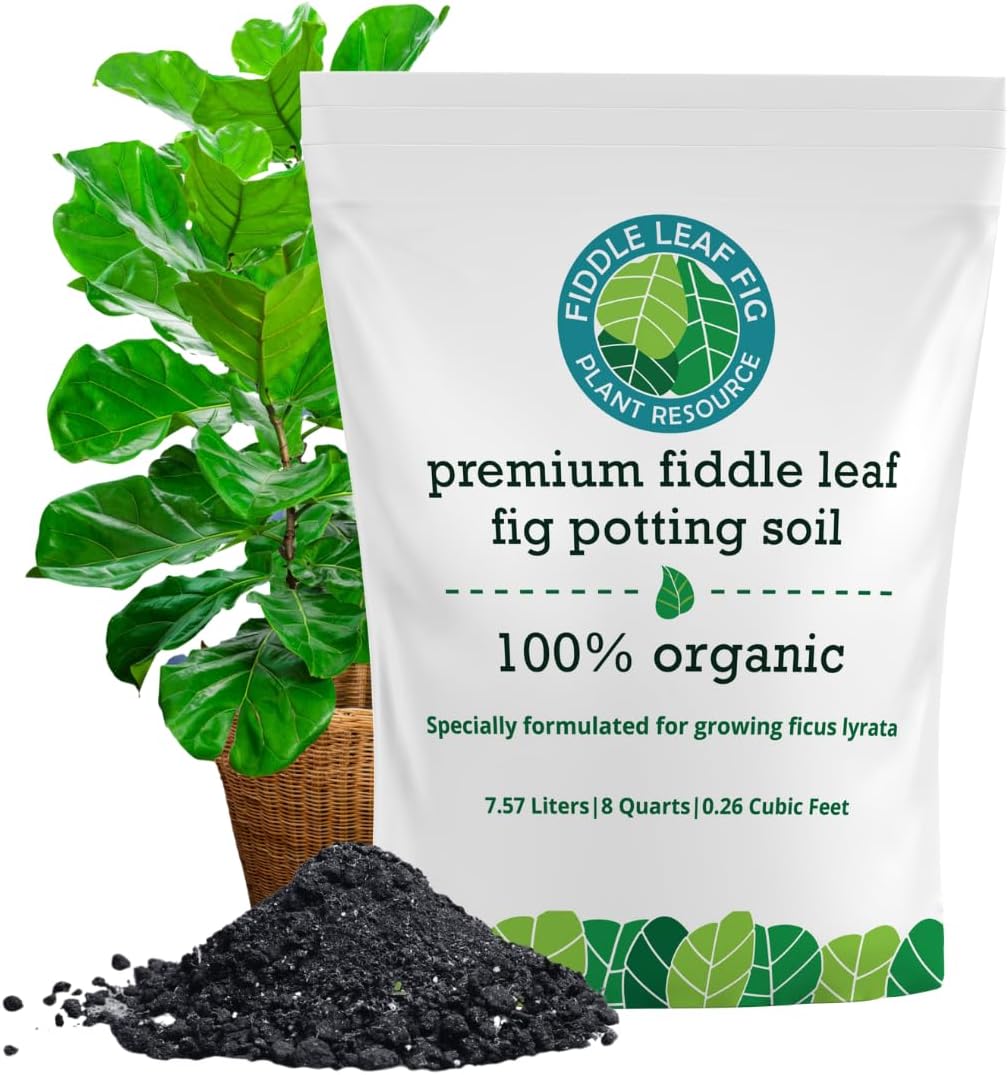
| Volume | 7.57 liters |
|---|---|
| Formulation | 18% compost, 28% coco coir, 17% bark nuggets, 9% biochar, 23% pumice |
| Usage Instructions | Use in well-draining pots |
| Ideal For | Fiddle Leaf Figs and Ficus Varieties |
This is a purpose-built potting mix for fiddle leaf figs and similar indoor tropical trees. The blend combines aged bark, compost, coco coir, biochar and pumice to create a chunky, well-aerated medium that helps prevent waterlogging while still retaining enough moisture for roots. In practice it is used at repotting time or when you want to refresh a tired rootball: layer into a clean pot, position the plant, then fill and lightly firm the mix around the roots. Notable features include added minerals (calcium and magnesium), a high-organic-content formula that supports leaf color and root growth, and a resealable bag for storage. Practical benefits are fewer brown spots and dropped leaves from better drainage, faster recovery after repotting, and less frequent overwatering issues. Limitations are that it is sold in a single 7.5 L bag so larger plants need multiple bags, and the chunky texture can make delicate repotting a little messier than standard fine potting soil.
Best for: Buyers who want a ready-made, organic potting mix targeted to fiddle leaf figs and who prioritize healthy drainage and visible foliage improvement.
Less Ideal for: People potting many large specimens or filling big containers who need bulk volume or a finer-textured general-purpose houseplant soil.
- Formulated specifically for fiddle leaf figs and similar ficus varieties
- Chunky, fast-draining mix reduces risk of root rot and overwatering
- Contains compost and minerals to support leaf color and root health
- Includes biochar and pumice for improved aeration and long-term soil structure
- Single 7.5 L bag may be insufficient for large trees or multiple repots
- Chunky components can be harder to work into fine root systems or small pots
Verdict: Pick this mix when you want an organic, chunky potting soil that improves drainage and helps fiddle leaf figs recover and grow healthier foliage.
Leaves & Soul Professional Fiddle Leaf Fig Soil Mix, 2.2 qt

| Brand | Leaves and Soul |
|---|---|
| Volume | 2.2 quarts |
| Unit Count | 35.2 Ounce |
| Made in | USA |
This 2.2 quart Leaves & Soul soil mix is designed specifically to create a balanced root environment for fiddle leaf figs and similar indoor tropical houseplants. The blend of peat, coarse sand, sawdust, and pine bark gives the mix structure for airflow and drainage while retaining enough moisture to prevent the root zone from drying out immediately after watering. It comes ready to use in a resealable bag, so repotting small to medium fiddle leaf figs is straightforward: loosen the root ball, place the plant in a pot with drainage, and backfill gently without compacting. Practical benefits include improved aeration that helps root expansion and a texture that reduces prolonged waterlogging when paired with a pot that drains. Limitations are the small pack size for larger specimens and that peat-based mixes can compact over time, so occasional refreshing or adding chunky amendments may be needed for bigger trees or longer-term containers.
Best for: Buyers who want a convenient, plant-specific potting mix to simplify repotting and maintain a balanced root environment for indoor fiddle leaf figs and other tropical houseplants.
Less Ideal for: Gardeners repotting large, mature fiddle leaf figs or filling many pots at once should seek larger-volume mixes or bulk commercial soil options.
- Formulated blend (peat, coarse sand, sawdust, pine bark) that balances moisture retention and drainage
- Ready-to-use and packaged in a resealable bag for convenient storage between projects
- Improves aeration and supports root expansion compared with plain garden soil
- Made in the USA and intended for indoor fiddle leaf figs and similar houseplants
- 2.2 quart size is small for mature fiddle leaf figs or multiple repots
- Peat-containing mixes can compact over time and may need added coarse amendments for long-term use
Verdict: A convenient, ready-to-use potting mix that gives fiddle leaf figs better drainage and aeration than generic potting soil, ideal for small to medium repots.
Novaterra Fiddle Leaf Fig Potting Soil Mix, 2.4 Quart

| Unit Count | 76.8 Fluid Ounces |
|---|---|
| Volume | 2.4 quarts |
| Ingredients | Coco coir, dolomite, peat moss, perlite |
| Included Components | bag |
This ready-to-use Novaterra mix is designed specifically for Ficus lyrata and makes potting or repotting quick and simple. The blend of coco coir and peat moss holds moisture without turning soggy while the added perlite keeps the mix airy to reduce the risk of root rot. Dolomite lime buffers pH and supplies calcium and magnesium, which helps plants take up nutrients more reliably. The product comes in a resealable stand-up pouch that helps preserve freshness between uses, which is convenient for owners with one or a few plants. As a small 2.4 quart package it is ideal for refreshing soil in nursery pots or topping off containers, but gardeners with larger trees will need multiple bags or a larger bulk mix. Users should handle the dry mix carefully to avoid inhaling dust and follow the safety note about pets and children. For budget-focused plant owners this saves time over mixing components yourself and provides consistent results for fiddle leaf figs in indoor pots.
Best for: Ideal for cost-conscious indoor plant owners who want a purpose-built, no-mix soil to maintain fiddle leaf figs in nursery pots or small to medium containers.
Less Ideal for: Not a good fit for growers who need large volumes for full-size trees or for those seeking a peat-free bulk mix for many plants.
- Formulated for fiddle leaf figs with coco coir and perlite for balanced moisture and aeration
- Includes dolomite lime to buffer pH and supply calcium and magnesium
- Resealable, airtight pouch preserves mix between uses
- Ready-to-use so no measuring or blending required
- Small 2.4 quart volume means multiple bags are needed for large plants or full repots
- Contains peat moss and should be handled to avoid inhaling dust
Verdict: A compact, ready-made fiddle leaf fig mix that saves time and gives reliable drainage and moisture balance for small to medium indoor pots.
Top Tier Genetics Optimal Fiddle Leaf Fig Potting Mix (8 qts)

| Brand | Top Tier Genetics |
|---|---|
| Style Name | OPTIMAL Fiddle Leaf Fig Potting Mix |
| Volume | 4 quarts |
| Item Weight | 2 pounds |
This potting mix is designed specifically for fiddle leaf fig (Ficus lyrata) care and is sold ready to use for potting or repotting indoor specimens. The formula blends organic materials to create a fast-draining yet moisture-retentive texture that helps prevent waterlogged roots while keeping enough available moisture for steady growth. Nutrients and minerals are included to support leaf development and encourage healthy root expansion during transplanting. In practice it suits routine repotting of established trees and gives beginners a simple option without needing to blend amendments. The small 4 quart volume and lightweight packaging make it convenient for handling and for testing on single plants, though multiple bags are needed for larger trees or full repots. Because the mix is tailored to fiddle leaf figs, it reduces the need to supplement with perlite or extra fertilizer immediately, but heavy feeders or very large specimens may need additional amendments over time.
Best for: Buyers who want a dependable, plant-specific potting mix for indoor fiddle leaf figs and prefer a ready-made organic option that minimizes mix-and-match preparation.
Less Ideal for: People repotting large trees that need a high volume of soil or growers who require custom mixes for heavy feeding plants.
- Formulated specifically for fiddle leaf fig plants to promote root development
- Ready-to-use organic blend that balances drainage and moisture retention
- Includes nutrients and minerals to support leaf growth
- Fast-draining texture helps reduce risk of root rot
- Small 4 quart volume means multiple bags are required for large repots
Verdict: A convenient, fiddle-leaf-fig–focused organic potting mix that delivers reliable drainage and nutrient support for healthy indoor Ficus growth.
Perfect Plants Fiddle Leaf Fig Soil, 8 qt (Coconut Coir Blend)

| Volume | 8 quarts |
|---|---|
| Unit Count | 256 Fluid Ounces |
| Item Highlight | Drains excess water, feeds foliage 6 months |
This 8-quart Perfect Plants potting mix is built specifically to give potted fiddle leaf figs a healthier root environment by combining coconut coir, pine bark, perlite and sand with a slow-release fig food. Use it when repotting or topping up container-grown ficus to reduce compaction, improve aeration and keep roots moist without waterlogging. The coconut coir holds a useful moisture cycle while pine bark and perlite keep the mix light and well drained, which helps prevent root rot in larger indoor containers. The included plant food feeds foliage for about six months, so newly potted trees get a nutrient boost without immediate fertilizing. The bag is resealable for easier storage and smaller jobs. Limitations are its bag size and volume for larger trees—an 8-quart bag is best for small to medium pots or for blending into existing soil rather than filling very large containers by itself.
Best for: Gardeners who want a ready-to-use, ficus-focused potting mix to improve drainage and root health when repotting or refreshing small to medium potted fiddle leaf figs.
Less Ideal for: Owners of very large trees or those needing bulk soil for multiple large containers should choose larger volumes or mix several bags together.
- Formulated blend (coconut coir, pine bark, perlite, sand) that improves drainage and reduces compaction
- Contains slow-release fig food to feed foliage for up to six months
- Lightweight, airy texture that promotes root aeration in container-grown figs
- Resealable heavy-duty bag for convenient storage and partial use
- Only 8 quarts per bag, which is small for repotting large fiddle leaf figs
- Not a complete substitute for regular fertilizing after the included six-month feed
Verdict: A convenient, ficus-focused potting mix that improves aeration and drainage while giving new repots a six-month nutrient boost.
Back to the Roots Organic Indoor Potting Mix, 12 Quart

| Volume | 12 quarts |
|---|---|
| Item Highlight | Indoor potting mix for pothos, monstera, ferns |
| Organic | 100% organic |
| Peat-free | Peat-free |
| Origin | Made in the USA |
This indoor potting mix is designed for everyday houseplants and seed starting, offering an organic, peat-free alternative that emphasizes moisture retention and root health. The formula includes yucca extract to help the soil hold water longer and added mycorrhizae to encourage stronger root development and better nutrient uptake. It also uses dolomitic limestone to balance pH and is made without bark or compost to reduce gnats and other indoor pests. Typical use is repotting monsteras, pothos, ferns and similar tropical foliage or refreshing topsoil in indoor containers. Practical benefits include easier watering management for busy or cautious plant owners and a reduced likelihood of pest problems compared with mixes containing coarse bark. Limitations are that the mix is an all-purpose indoor blend rather than a chunky, fast-draining aroid-specific mix, so growers who need very airy media for large root-bound monsteras may want to amend it with perlite, orchid bark, or pumice for extra drainage and airflow.
Best for: Homeowners who prefer a low-risk, easy-care potting mix for common tropical houseplants and want an organic, low-gnat option that reduces hands-on maintenance.
Less Ideal for: Advanced collectors growing very large or high-airflow aroids who need a chunky, fast-draining substrate straight out of the bag.
- Organic and peat-free composition suitable for eco-conscious indoor gardeners
- Yucca extract improves moisture retention for less frequent watering
- Includes mycorrhizae to support root growth and nutrient uptake
- Balanced pH with dolomitic limestone to help nutrient availability
- Not formulated as a very airy aroid mix so may require amendments for large monsteras
Verdict: A reliable, organic indoor potting mix that makes repotting monsteras and other common houseplants low effort and low risk.
Choosing the Right Soil for Fiddle Leaf Tree: Key Factors to Consider
Drainage Versus Water Holding Balance
Fiddle leaf trees need a medium that sheds excess water quickly while still keeping enough moisture near the roots between waterings. Too much drainage and the root zone dries out rapidly, stressing the tree and causing leaf brown edges. Too little drainage and roots sit in saturated soil, which invites rot and fungal problems.
When assessing mixes, look for a combination of coarse mineral components such as perlite, pumice, or bark plus an organic fraction that holds moisture. Particle size and the proportion of large pores control how fast water passes through the pot and how aerated the root zone remains.
Aeration and Pore Structure
Good aeration prevents compaction and keeps oxygen available to roots. Fiddle leaf trees have relatively large root systems for indoor containers and need macropores-air spaces created by chunky components-to maintain healthy respiration.
A mix with varied particle sizes resists settlement and compaction over time. Avoid mixes that become dense when wet. Chunky bark, expanded aggregates, and coarse perlite or pumice create stability and preserve pore structure as the potting medium ages.
Nutrient Availability and Retention
Indoor fiddle leaf trees rely on the potting medium for immediate nutrient buffering between fertilizer applications. Organic components supply a reservoir of nutrients and help moderate pH, while mineral elements provide long-term structure.
A good soil should retain nutrients without tying them up or releasing them too rapidly. Look for media with a modest organic fraction that will decompose slowly and with a neutral to slightly acidic pH range suited to foliar nutrient uptake.
Sterility and Cleanliness
Soils that are free from pests, weed seeds, and plant pathogens reduce early problems after repotting. Sterile or pasteurized components lower the risk of introducing fungus gnats, root rot organisms, and other pests into an indoor environment.
That does not mean totally inert material is ideal. It means the starting mix should be clean and stable so problems arise from care issues rather than contaminants in the medium.
Physical Compatibility with Pot and Rootball
Pot material and size influence how a soil performs. Clay pots wick moisture from the surface and may require a mix with slightly higher water-holding capacity, while plastic or glazed pots retain moisture longer and pair better with faster-draining blends.
Rootball size matters too. When moving a fiddle leaf tree into a larger container, the soil should allow roots to expand without creating overly dense zones near the pot wall. Choose a medium whose particle size and compaction characteristics match the pot and the plant's root architecture.
Longevity and Maintenance
Some mixes break down faster than others, losing structure after multiple waterings. A soil that holds up over a couple of seasons reduces the need for frequent repotting and minimizes shock to the tree.
Consider whether you prefer periodic top-dressing and fertilizing or full repotting. Durable mineral components extend the useful life of a potting medium and maintain predictable watering intervals as the tree grows.
How Soil Texture Affects Watering Rhythm
Soil texture determines how long water stays available to roots and how often you need to water. Fine textures hold water close to the root tips but can turn waterlogged quickly. Coarser textures speed through water but create wider windows between necessary waterings.
Match the texture to your routine. If you prefer once-weekly watering, choose a mix with a higher organic fraction and moderate drainage. If you water less frequently or forget sometimes, a chunkier, more moisture-retentive structure with larger particles will reduce the risk of both under- and overwatering.
- Fine texture: higher moisture but higher compaction risk
- Coarse texture: better aeration, less compaction, faster drainage
- Mixed particle sizes: stabilizes moisture and pore space
Choosing Amendments: Perlite, Pumice, Bark, and Charcoal
Each amendment changes the physical behavior of the mix. Perlite is lightweight and improves drainage; pumice is denser and holds structure longer. Bark provides chunky organic matter that creates macropores and slowly releases nutrients as it decomposes. Horticultural charcoal can improve aeration and adsorb impurities in poorly draining situations.
- Perlite: quick drainage aid, may float to the surface
- Pumice: long-lasting porosity, heavier than perlite
- Chunky bark: excellent for macropores and root anchoring
- Charcoal: helps with odor and some moisture balance
Repotting Tips for Fiddle Leaf Trees
When repotting, loosen the outer roots and inspect for rotted or circling roots. Replace old, compacted soil entirely when possible rather than layering new soil on top of degraded media. Fresh mixes restore pore structure and predictable drainage.
Allow newly potted trees a period of adjusted care: hold off heavy fertilization for a few weeks and water thoroughly then allow the surface to dry slightly before the next irrigation. This helps roots reestablish in the new medium without forcing excessive growth before root contact is secure.
- Remove compacted soil and replace with the chosen mix
- Check pot drainage holes and clear any blockages
- Water well after repotting, then follow the new watering rhythm
Managing Common Problems Linked to Soil
Yellowing leaves, brown margins, and sudden leaf drop are often symptoms of root-level moisture problems. Narrow down whether the issue is overwatering, poor drainage, or a nutrient deficiency by checking soil moisture at root depth and inspecting roots if necessary.
For persistent soggy soil, improve drainage by adding more mineral component or repot into a container with larger drainage holes. For soils that dry out too quickly, increase the organic fraction or use a top-dressing that helps retain surface moisture without reducing aeration.
- Brown leaf edges: often inconsistent moisture or low humidity
- Yellow leaves with soft stems: possible overwatering or root rot
- Crisp leaf tips: likely underwatering or excessively fast-draining mix
Indoor Humidity and Its Interaction with Soil Choice
Ambient humidity affects how quickly pots lose water from the surface and root zone. In low-humidity homes, soils dry faster and may benefit from more organic matter or mulching at the surface to reduce evaporation. In high-humidity spaces, choose a faster-draining mix to offset slower surface drying.
Also consider seasonal changes. Heating in winter typically lowers indoor humidity and increases evaporation, so soil that performs well in summer may need slight adjustment as conditions change.
- Low humidity: favor slightly higher water-holding fraction
- High humidity: favor faster drainage to prevent lingering wetness
- Seasonal care: adjust watering frequency, not the soil, unless persistent problems occur
How We Chose the Best Soil for Fiddle Leaf Tree
We focused on attributes that directly affect indoor fiddle leaf tree health. Evaluation prioritized drainage rate, moisture retention, aeration and pore structure, nutrient availability and longevity, and sterility/cleanliness to reduce pests and disease. We also considered physical compatibility with common container types and the typical watering rhythms of houseplant caretakers. Products were included only if their ingredient profiles matched proven mixes for tropical broadleaf houseplants: a balance of mineral components such as bark, perlite or pumice, and an organic fraction for water holding. We excluded generic garden soils, straight potting mixes designed for seedlings, and any media intended solely for outdoor beds because they either retain too much water or lack sufficient aeration for large container roots. Our selection filters removed visibly fibrous-only mixes that compact easily and peat-only formulas that become hydrophobic with drying. We favored mixes that perform reliably across a range of pot sizes and indoor humidity levels and that provide predictable watering intervals for typical household conditions.
FAQ
How often should I water a fiddle leaf tree in a well-draining mix?
It depends on pot size, pot material, and indoor conditions, but typically every 7 to 14 days for medium pots. Check moisture an inch or two below the surface before watering; water when that zone feels slightly dry rather than bone dry or wet.
Can I amend my current potting soil rather than repotting?
You can top-dress with amendments like pumice or coarse bark to improve aeration, but if the existing soil is compacted or waterlogged, full replacement is usually better. Layering over degraded soil often traps moisture and continues compaction problems.
Is peat moss a good ingredient for fiddle leaf tree soil?
Peat holds moisture well and can help with water retention, but it compacts over time and may become hydrophobic. If used, it is best balanced with plenty of chunky mineral components to maintain aeration and prevent long-term compaction.
Should I use slow-release fertilizer mixed into the soil?
A modest, slow-release fertilizer can reduce the need for frequent feeding, but avoid heavy initial doses when repotting. Many gardeners prefer to apply controlled fertilizer after the tree has settled into fresh soil and new root growth is evident.
How do I tell if my soil has poor drainage?
Signs include consistently wet surface, water pooling on top after watering, yellowing leaves with soft stems, and an unpleasant smell from the pot. You can also test by timing how quickly water exits the drainage holes and by checking moisture levels a couple inches down.
Final Verdict
Choose a soil that balances drainage and moisture retention based on your pot type, watering habits, and indoor humidity. Prioritize mixes with durable mineral components for aeration and a modest organic fraction for steady nutrient supply. Accept the tradeoff that faster-draining mixes reduce rot risk but may require more frequent watering, while heavier mixes hold moisture but increase rot risk if drainage is inadequate. With the criteria laid out here you can select a soil that fits your routine and keeps your fiddle leaf tree healthy.
