

Note: This article contains affiliate links. If you click on these links and make a purchase, I may earn a small commission at no extra cost to you. This helps support my research and content. Read my full affiliate disclosure here.
Growing fruit trees in containers changes the rules compared with in-ground orchards. Container soil needs to drain well, hold enough moisture between waterings, and supply steady nutrients without compacting or becoming waterlogged. The wrong mix can stress roots, reduce flowering, and shorten the time between repotting. This guide covers seven top soils and mixes suited to fruit trees grown in pots, patios, or small balconies. We shortlisted options that address drainage, nutrient stability, and long-term structure. Read on to see the practical criteria we used and the key tradeoffs to weigh when choosing soil for your container fruit trees.
Top Picks at a Glance
| Best Overall The best all-around choice for most situations | GARDENWISE Organic Lemon Tree Soil Potting Mix (10 quarts) |  |
| Best Quality Built to a higher standard if you want something more solid | FoxFarm Ocean Forest Potting Soil, 12 Quart |  |
| Best Value The sweet spot between price and what you get | Duspro Pre-Mixed 4‑in‑1 Citrus Tree Potting Soil Mix, 10 Quarts |  |
| Best Budget The cheapest option that still gets the job done reliably | Doter Citrus Tree Potting Soil Mix (1 qt) |  |
| Highest Rated A top-rated pick with lots of positive feedback | E.B. Stone Organics Citrus & Palm Mix Potting Soil, 1.5 cu ft |  |
| Most Popular A crowd favorite that many people choose with confidence | Miracle-Gro Cactus, Palm & Citrus Potting Mix, 8 qt. |  |
| Best Seller A high-volume bestseller chosen again and again | Back to the Roots Premium Organic Potting Mix, 6 Quart |  |
GARDENWISE Organic Lemon Tree Soil Potting Mix (10 quarts)

| Included Components | Perlite, coarse sand, coconut coir, vermiculite, garden compost, acidic compost, peat moss, dolomite, organic fertilizer |
|---|---|
| Volume | 10 quarts |
| pH | 5.5 to 6.5 |
| Fertilizer Duration | Up to 6 months |
This potting mix is designed specifically for potted lemon and other citrus trees, combining perlite, coarse sand, coconut coir, vermiculite, compost and organic fertilizer to create a light, well-draining root medium. Typical use is repotting or top-dressing container-grown Meyer lemons and standard potted citrus to improve aeration, prevent waterlogging, and supply nutrients for up to six months. Notable features include the 5.5–6.5 pH tailored to acid-loving citrus, added mycorrhizal fungi and micronutrients like iron, magnesium and manganese, and extra perlite and sand for faster drainage. In practice this mix helps reduce root rot risk, encourages stronger root systems, and supports fruit production without frequent feeding. The main limitations are bag volume for larger trees since a 10 quart bag will only refill small pots or amend soil sparingly, and the inclusion of peat and coco coir means it will compress over time and may need refreshing after a season or two.
Best for: Gardeners who prioritize strong growth and reliable fruiting in container lemons and want a plug-and-play, nutrient-rich mix that reduces the need for frequent fertilizing.
Less Ideal for: People repotting large citrus trees or filling many big containers who need bulk soil by the cubic foot should look for larger volume commercial mixes.
- Formulated pH of 5.5–6.5 ideal for citrus nutrient uptake and flowering
- Built-in organic fertilizer that feeds plants for up to six months
- High drainage and aeration from perlite and coarse sand reduces overwatering issues
- Contains mycorrhizal fungi and micronutrients to support root health and fruiting
- Small 10 quart volume requires multiple bags for medium to large containers
- Contains peat and coir which can compact and may need periodic replacement
Verdict: Choose this mix if you want a citrus-specific, ready-to-use potting soil that boosts root health and feeds potted lemon trees for months with minimal extra care.
FoxFarm Ocean Forest Potting Soil, 12 Quart

| Item Form | Granules |
|---|---|
| Specific Uses For Product | Dry Fertilizer |
| Coverage | 4.8 sq ft |
| Mixing Ratio | 1:1 |
FoxFarm Ocean Forest is a pre-mixed potting soil that combines aged forest products, sandy loam and sphagnum peat moss with organic amendments like fish meal, crab meal and earthworm castings. It is sold ready to use straight from the bag for planting in containers, seed starting or top dressing; the manufacturer recommends no additional nitrogen fertilizer for the first 30 days. The mix has a light, aerated texture that promotes drainage while still retaining moisture, and the built-in micronutrients make it practical for growers who want strong early growth without immediate feeding. Practical benefits include easy pot filling, good root zone aeration for roses in containers, and built-in organic fertility to support blooms. Limitations to consider are that the bag is best for containers or small beds only and heavier feeders may need supplemental feeding after the initial month; users should also follow handling precautions to avoid skin or eye irritation.
Best for: Gardeners who want a high-quality, nutrient-rich potting medium to get container roses or plant starts off to a strong, flowering start and prefer a ready-made organic blend.
Less Ideal for: Large in-ground rose beds or landscapers needing bulk soil amendments should look for bulk garden soil or custom rose mixes instead.
- Ready-to-use out of the bag so you can pot immediately
- Organic amendments (fish meal, crab meal, earthworm castings) supply early nutrients
- Light, aerated texture that supports drainage and root development
- pH adjusted for optimal nutrient uptake per product description
- Pack size (12 qt) covers a small area and may require multiple bags for several roses
- No long-term feeding provided after the first 30 days so additional fertilizer is needed for sustained heavy bloom
Verdict: Choose this soil if you want a ready-made, organically amended potting mix that jump-starts container roses and seedlings with good drainage and early fertility.
Duspro Pre-Mixed 4‑in‑1 Citrus Tree Potting Soil Mix, 10 Quarts

| Style Name | 10 Quarts |
|---|---|
| Item Highlight | Indoor Fruit Tree Mix for Potted Lemon Tree, Oranges & Other Citrus Trees, Drainage, Root Aeration & Balanced Moisture |
| Unit Count | 1 Ounce |
| Item Weight | 1.24 kg |
This Duspro 4‑in‑1 citrus potting mix is a pre-mixed blend of coco coir, coco fiber, perlite and vermiculite formulated for repotting lemons, limes, oranges and similar potted fruit trees. It is used straight from the bag: pour into a drainage pot, position the tree and backfill around the rootball, or blend with other substrates if you need a different texture. The double-screened ingredients give a consistent, pourable texture that reduces dust and makes filling pots easier. Perlite improves drainage and root airflow while the coco components and vermiculite help hold balanced moisture so roots avoid staying waterlogged. Practical benefits include saving time versus buying and mixing components yourself and predictable performance for standard container citrus. Limitations are typical for lightweight mixes: it contains no slow‑release fertilizer so you will need to supplement nutrients, and a 10‑quart bag suits only a few repots of 6–8 inch containers, so buy accordingly for larger projects.
Best for: Buyers who want a no‑fuss, ready-made soil mix to repot or refresh potted citrus trees and prefer predictable moisture and drainage without measuring ingredients.
Less Ideal for: Growers who need a fertilized or heavy feeding mix out of the bag or those repotting many large trees who require bulk quantities.
- Formulated specifically for potted citrus with components that balance drainage and moisture
- Pre-mixed 4‑in‑1 blend saves time and simplifies repotting
- Double-screened texture for cleaner pouring and consistent fill
- Perlite improves aeration around roots to reduce risk of root rot
- No nutrients or fertilizer included so regular feeding is required
- 10 quart size is modest for multiple or larger trees
Verdict: A convenient pre-mixed potting medium that delivers balanced drainage and moisture control for potted citrus, saving you the time and guesswork of blending components yourself.
Doter Citrus Tree Potting Soil Mix (1 qt)
| Brand Name | Doter |
|---|---|
| Item Type Name | Garden soil |
| Volume | 1 quarts |
| Item Weight | 224 g |
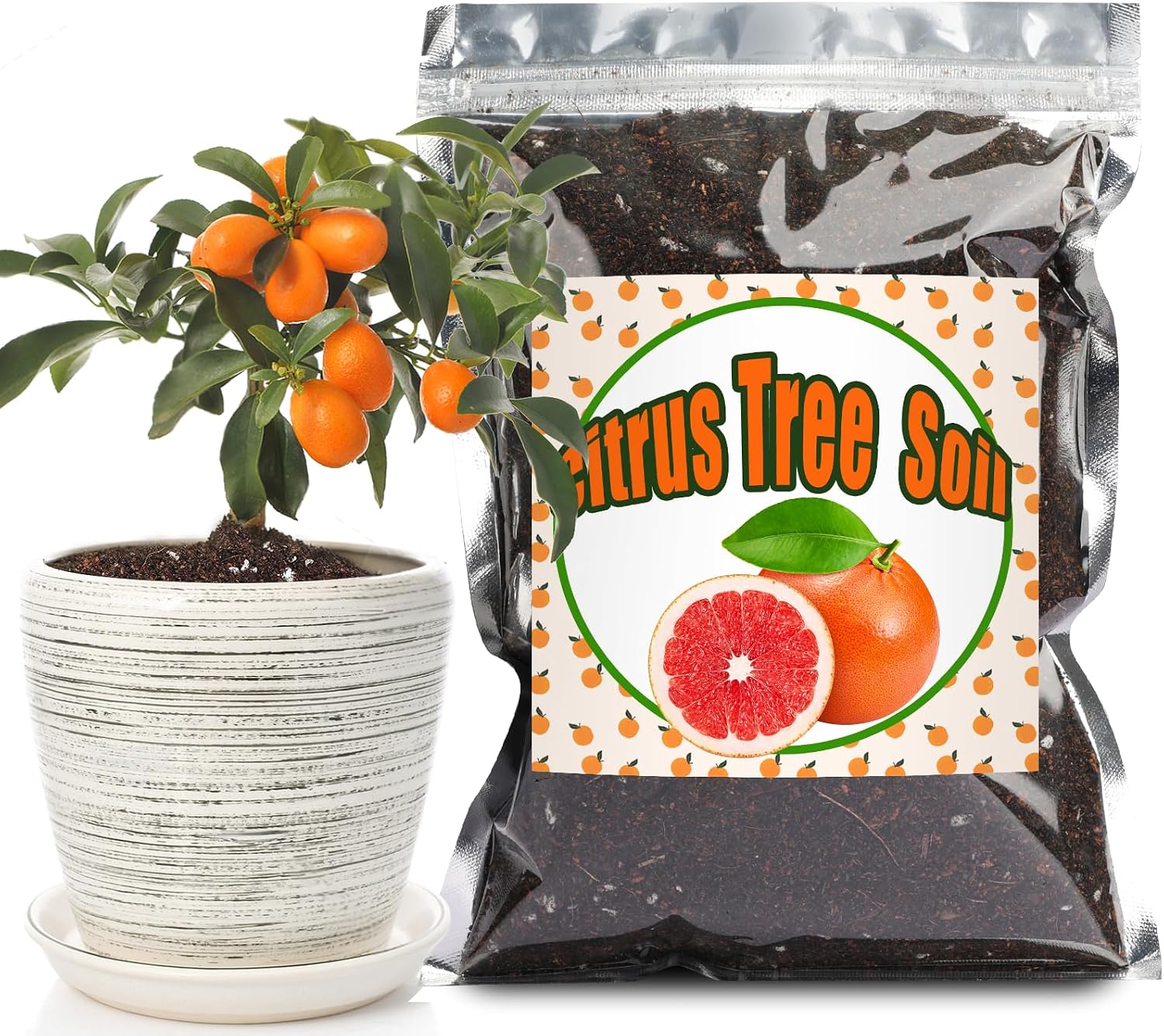
This Doter citrus potting mix is a small, 1-quart, ready-to-use soil blend designed for container-grown lemon, lime, orange and other citrus trees. It mixes organic and mineral components to deliver a balanced nutrient profile and claims an ideal pH between 6.0 and 7.1, which helps citrus roots access nutrients. The formulation emphasizes drainage and aeration so pots do not stay waterlogged, and the bagged format makes it convenient for repotting seedlings or refreshing the top layer in containers. For budget-conscious gardeners the single-quart size is useful for small projects, trial runs, or blending into larger mixes, but you will likely need multiple bags for a single mature container tree. The product works best as a component or short-term potting medium rather than a sole long-term planting substrate for large trees. Expect good seedling establishment and faster drainage compared with generic garden soil, but plan to supplement with larger volumes or slow-release fertilizer for sustained feeding on mature citrus.
Best for: Gardeners looking for an inexpensive, small-batch citrus-specific soil to repot seedlings, top-dress containers, or trial a citrus blend before committing to larger quantities.
Less Ideal for: Growers with mature potted citrus or those who need large volumes for in-ground planting should choose bulk soils or custom mixes instead.
- Formulated pH between 6.0 and 7.1, suitable for citrus nutrient uptake
- Designed for improved drainage and aeration to reduce root rot risk
- Nutrient-rich blend of organic and mineral components to support growth
- Ready-to-use bag convenient for repotting seedlings and small containers
- Small 1-quart volume means multiple bags are required for larger pots or trees
- Not marketed as a long-term complete potting substrate for mature trees
Verdict: A convenient, budget-friendly small bag of citrus-specific potting mix ideal for repotting seedlings and topping up container citrus plants.
E.B. Stone Organics Citrus & Palm Mix Potting Soil, 1.5 cu ft

| Brand Name | E.B. Stone Organics |
|---|---|
| Unit Count | 1536 Ounce |
| Volume | 1.5 cubic feet |
| Style Name | Potting Soil |
E.B. Stone Organics Citrus & Palm Mix is a ready-to-use organic soil blend designed for container and in-ground planting of citrus, palms, avocados and tropical foliage. The mix pairs aged fir bark and pumice to keep the root zone well aerated and fast-draining so plants that dislike soggy feet avoid root rot, while added mycorrhizae improve nutrient and water uptake. It is intended to be used straight from the bag for potting or worked into beds when planting, which simplifies planting and repotting tasks. For gardeners seeking reliability, this blend delivers consistent structure and moisture retention without heavy amendments, and the organic base supports longer-term soil biology. Limitations are the single bag volume of 1.5 cubic feet, which means larger projects will require multiple bags and mixing on site, and it does not list N-P-K numbers or slow-release fertilizer content so supplemental feeding may be needed for heavy-feeding specimens.
Best for: Gardeners who prioritize reliable, low-maintenance potting media for citrus and tropical plants and want a ready-made organic blend that supports healthy roots.
Less Ideal for: People who need large volumes for landscaping projects or who prefer a potting mix with specified fertilizer content and tailored nutrient ratios.
- Formulated specifically for citrus, palms and tropicals to match their root needs.
- Aged fir bark and pumice provide good drainage and aeration to reduce risk of root rot.
- Contains beneficial mycorrhizae to enhance root nutrient and water uptake.
- Ready-to-use bag simplifies repotting or planting without on-site blending.
- Single bag is only 1.5 cubic feet so multiple bags are required for larger trees or beds.
- No detailed fertilizer analysis provided so additional feeding may be necessary for heavy feeders.
Verdict: Choose this mix when you want a consistent, ready-to-use organic soil that promotes healthy, well-aerated roots for citrus and tropical plants.
Miracle-Gro Cactus, Palm & Citrus Potting Mix, 8 qt.
| Brand Name | Miracle-Gro |
|---|---|
| Volume | 8 quarts |
| Unit Count | 1 Count |
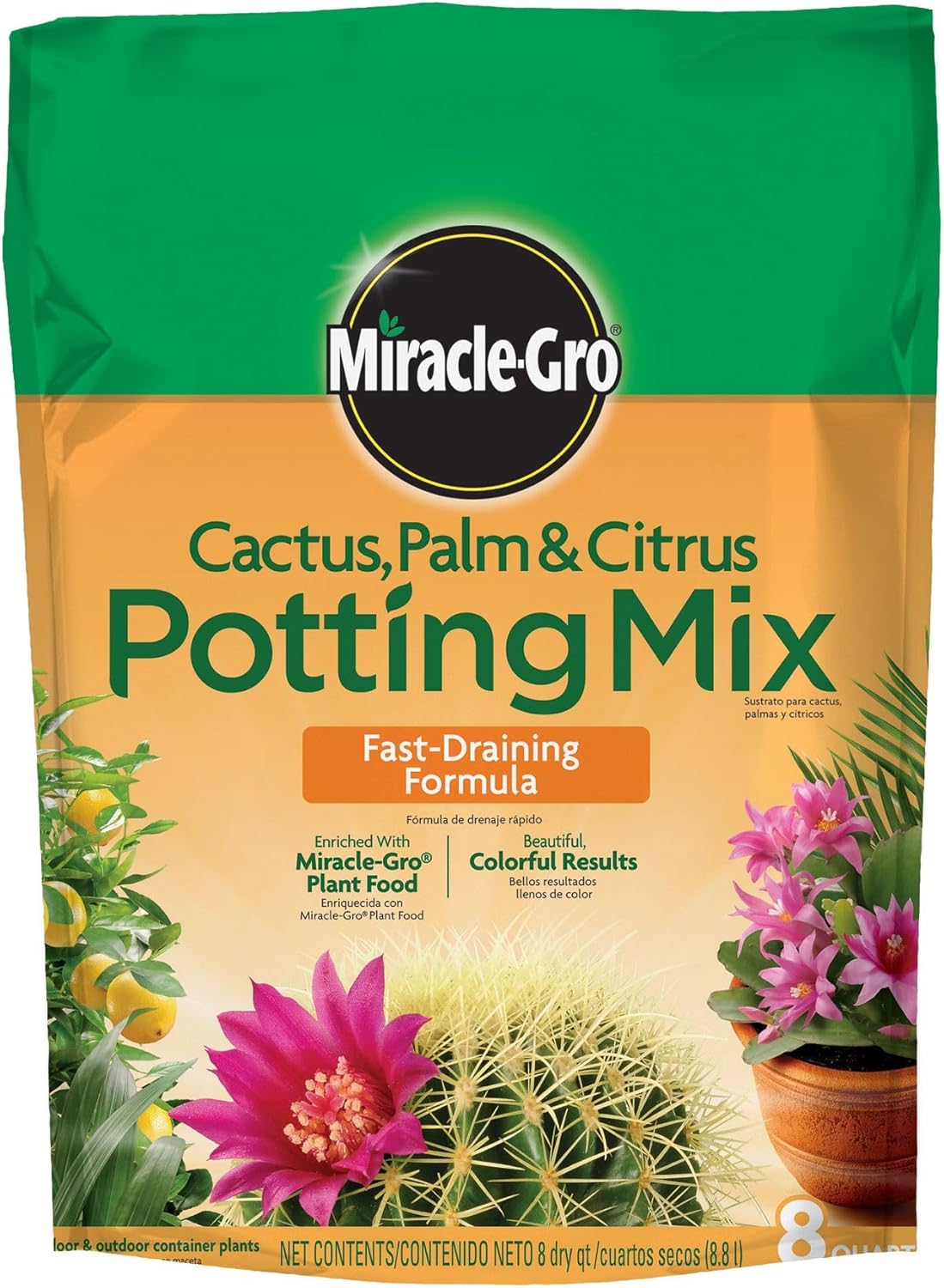
This 8-quart Miracle-Gro potting mix is designed for container-grown cacti, palms, and citrus and combines peat moss, sand, perlite, and forest products for faster drainage and reduced compaction. It arrives ready to use and is enriched with Miracle-Gro plant food so newly potted citrus get an initial nutrient boost without immediate fertilizing. Typical use is straightforward: choose a pot with drainage, fill about one third, set the root ball and top up, then water and allow to drain. The formula helps soil dry between waterings, which is important for citrus root health in containers, and one bag is enough for two 8-inch pots. Limitations are the small volume for larger trees and the presence of peat moss if you prefer peat-free mixes; heavier or older citrus will need larger volumes and eventual repotting. For growers wanting a quick, reliable container medium that balances moisture retention with drainage, this mix performs as expected.
Best for: Growers who repot or maintain container citrus and want a ready-to-use mix that balances drainage and initial feeding for healthier root development.
Less Ideal for: Gardeners potting mature or large citrus specimens that need large volumes of soil or those seeking a peat-free or custom mineral-heavy citrus bonsai substrate.
- Fast-draining blend reduces risk of waterlogged roots for container citrus
- Pre-enriched with plant food to give newly potted plants an initial nutrient boost
- Contains perlite and sand to resist compaction and maintain aeration
- Formulated for indoor or outdoor containers so it works across sites
- 8-quart bag is small for larger or multiple citrus containers
- Contains peat moss which some buyers avoid for sustainability reasons
Verdict: A convenient, fast-draining, plant-food–enriched container mix that makes repotting small to medium citrus trees quick and reliable.
Back to the Roots Premium Organic Potting Mix, 6 Quart

| Unit Count | 192 Fluid Ounces |
|---|---|
| Volume | 6 quarts |
| Item Highlight | Peat-free potting soil for outdoor plants, indoor plants, vegetables, herbs and flowers |
| Made in | USA |
Back to the Roots Premium Organic Potting Mix is a small-batch, all-purpose soil designed for indoor and outdoor container plants, including flowers, herbs, and vegetables. The 6 quart bag contains a peat-free blend made from upcycled plant matter and wood fines, with added organic plant food, yucca extract to help retain and regulate moisture, and dolomitic limestone to stabilize pH. In practice this mix is easy to use straight from the bag for potting annuals and bedding plants or for refreshing topsoil in containers. Its light, well-draining texture helps roots establish without becoming waterlogged while still holding enough moisture for frequent flowering plants. Because it is organic and made in the USA, it suits growers who want a lower-carbon-footprint option. Limitations are the small bag size for larger projects and that very heavy feeders or long-term container plantings may need periodic fertilization or larger volumes of soil to maintain vigor.
Best for: Buyers who want a safe, organic, ready-to-use potting mix for potted flowers and small container gardens and prefer products with predictable performance and lower environmental impact.
Less Ideal for: Gardeners planning large-scale repotting, heavy-feeding perennials, or long-term container plantings that require bulk soil or extended nutrient release.
- Peat-free organic formula made from upcycled plant matter and wood fines
- Includes yucca extract for improved moisture retention and control
- Dolomitic limestone added to help balance soil pH for flowering plants
- Light, well-draining texture suitable for container-grown flowers and annuals
- Small 6 quart bag is not economical for large pots or multiple containers
- Does not include slow-release fertilizer strong enough for long-term heavy feeders
Verdict: A reliable, peat-free organic potting mix that delivers predictable moisture control and pH balance for potted flowers and small container gardens.
Choosing the Right Soil for Fruit Trees in Containers: Key Factors to Consider
Drainage and Air Porosity
Good drainage prevents roots from sitting in water, which can cause rot and reduce oxygen uptake. In containers, excess water drains to the pot bottom quickly, so the mix must also maintain pockets of air to let roots breathe. A mix with coarse particles such as grit, pine bark, or expanded clay provides those air spaces and helps roots establish healthy, fibrous growth.
When a soil compacts it loses porosity and becomes a waterlogged block. For fruit trees that will be in containers for multiple seasons, choose a mix that resists compression and keeps channels for both air and water.
Water Retention Balance
Container soils must strike a balance between holding enough moisture for steady uptake and draining excess to avoid saturation. Too-fast-draining mixes leave young roots thirsty and increase how often you must water. Too-retentive mixes increase root disease risk. Components like coir or composted bark can moderate water retention, while perlite or pumice can speed drainage, letting you tune the mix to your local climate and watering routine.
Consider the pot size and exposure when judging retention needs. Smaller pots and hot, sunny locations benefit from mixes that hold more moisture. Larger containers and cool, shaded spots can handle faster-draining blends.
Nutrient Stability and Feeding
Fruit trees in containers rely on the limited soil volume for all their nutrients, so the mix should either supply an initial nutrient reserve or accept regular fertilizing without quickly losing structure. Organic components like compost or well-decomposed bark provide slow-release nutrients but can also change over time as microbes break them down. Sterile or inert bases accept frequent fertilization predictably but may require more frequent additions of organic material to sustain soil life.
Look for mixes that work well with your preferred feeding schedule, whether that is monthly balanced liquid feedings, slow-release granules, or seasonal topdressings.
pH and Mineral Availability
Soil pH shapes what nutrients are available to fruit trees. Most fruiting trees prefer a slightly acidic to neutral range, where essential elements like iron, phosphorus, and potassium are accessible. Some packaged soils include liming materials or amendments that alter pH; others are neutral and let you adjust pH with your own inputs.
If you grow acid-loving fruit varieties, choose a mix formulated for lower pH or one that accepts amendments like sulfur. For most common fruit trees, look for mixes that maintain stable, predictable pH over multiple seasons.
Structure and Longevity in Containers
Structure refers to how the mix holds particle relationships over time. A structurally stable mix keeps air channels and resists compaction as organic material decomposes. This affects how often you will need to repot your trees and how root health develops in the long term. Materials with moderate fiber content and coarse aggregates generally perform best for long-lived container trees.
Frequent repotting can be disruptive to fruiting trees, so choosing a mix that keeps its structure reduces labor and stress for the plant.
Pest, Disease, and Salt Management
Soils in containers concentrate salts from fertilizers and water, and organic-rich mixes can sometimes harbor pests or pathogens if not well-aged. A good container soil should either be sterile-processed to minimize initial pathogen load or composed of well-stabilized organic matter that will not spike pest activity. Consider how you irrigate and feed, and choose a mix that allows flushes or leaching without losing structure.
If you expect hard water or heavy fertilization, pick a mix that tolerates salt buildup or that you can easily leach periodically to protect root health.
Matching Soil Texture to Your Climate
Local climate changes how a container mix performs. In hot, dry climates you will want a soil that holds more moisture between waterings while still providing drainage. That usually means more organic fibers or water-retentive components combined with coarse drainage particles to prevent saturation.
In cool, rainy, or humid areas, lean toward coarser mixes that shed excess water quickly. That reduces risk of root rot and fungal issues. You can also adjust mixes seasonally, adding more water-holding material in summer and swapping to a faster-draining blend for winter.
- Hot, arid: increase water-retentive fibers and mulch surface to reduce evaporation
- Cool or wet: increase coarse aggregates like pumice, perlite, or grit
- Temperate: aim for an even balance of organic fibers and coarse texture
Pot Size, Root Volume, and Soil Choice
Smaller pots dry out faster and amplify the effects of a poor mix. If you plant a sapling in a small container, choose a soil that holds moisture well enough to avoid daily watering but still drains. For larger containers, prioritize structure and longevity because repotting large fruit trees is labor intensive.
Always match the soil to the expected root volume and growth rate. Vigorous trees may need mixes with more aeration to support higher root respiration.
- Small pots: more water retention helps reduce watering frequency
- Large pots: focus on structural longevity and nutrient management
- Deep pots: consider layered drainage strategies to keep the root crown healthy
Customizing Mixes with Amendments
Many gardeners blend a commercial container soil with amendments to fine-tune drainage, retention, and fertility. Common additions include pumice or perlite for aeration, coir or compost for water retention, and cooked compost or well-aged organic matter for nutrients and biology. Balance is key; too much of one amendment can skew the behavior of the whole mix.
When adding amendments, make small test mixes and monitor how they behave over a season. That approach prevents large-scale repotting if a recipe turns out to be too heavy or too free-draining for your trees.
- Add pumice or coarse sand to improve drainage without losing structure
- Use coir or composted bark to increase moisture-holding capacity
- Topdress with compost annually rather than mixing excessive fresh compost into the pot
Watering Strategy and Soil Interaction
How you water interacts with soil choice. Deep, infrequent soakings encourage roots to explore the full pot and reduce surface salt buildup. Frequent shallow waterings keep moisture near the rim and can cause uneven root development. Choose a soil that supports the watering rhythm you can maintain consistently.
Consider using moisture meters or the finger test in the first season to learn how quickly your chosen soil dries. That knowledge helps you avoid over- or under-watering and protects flowering and fruit set.
- Deep soak then allow partial drying for most fruit trees
- Use consistent watering for newly potted trees while roots establish
- Adjust frequency by pot size, exposure, and soil composition
Seasonal Care and Repotting Timing
Repotting is disruptive and often reduces spring flowering if done at the wrong time. Plan repotting or root pruning for late winter or early spring when trees are still dormant. Evaluate soil structure annually: if the mix has compacted, lost porosity, or shows poor drainage, plan to refresh the root zone.
Refresh surface soil with fresh amendments or a light topdressing of compost in midseason to boost nutrients without a full repot. That can extend the productive life of a container soil.
- Inspect drainage and root crowding each dormant season
- Repot only when necessary to avoid interrupting fruit cycles
- Topdress annually to maintain fertility without disturbing roots
How We Chose the Best Soil for Fruit Trees in Containers
We prioritized attributes that directly affect root health and fruit production for trees kept in containers. Primary evaluation criteria included drainage and air porosity, which determine oxygen availability at the root zone; water retention behavior, because containers require mixes that hold moisture without staying soggy; and nutrient stability, meaning steady-release characteristics or compatibility with regular feeding. Structure and long-term stability were assessed to predict how often a mix will compact or require repotting. We also considered organic content and amendment compatibility for gardeners who want to customize fertility and soil biology. Exclusions: mixes designed solely for annuals, pure seed-starting mixes, or heavy field soils were excluded because they do not meet the water and nutrient balance fruit trees need in pots. We focused on potting and container-specific mixes and blends formulated to maintain structure over multiple seasons. Performance-related dimensions noted above were used to score each product for real-world container use.
FAQ
How deep should the soil be for a fruit tree in a container?
Depth depends on tree size, but most fruit trees need a pot deep enough to accommodate the root ball plus at least 6 to 12 inches of additional rooting space. Deeper pots encourage deeper root systems, improving drought resilience and stability.
Can I use garden soil in containers for fruit trees?
Garden soil is usually too dense for containers and tends to compact, reducing aeration and drainage. It can be used as a small component when well-amended, but a purpose-made container mix or a blended potting medium is a safer choice for long-term container health.
How often should I refresh or replace container soil for fruit trees?
Expect to refresh the top few inches annually with compost or slow-release fertilizer. Full repotting or root-zone replacement is commonly needed every 2 to 4 years depending on mix longevity, pot size, and tree vigor. Monitor structure and drainage to time repots.
What is the best way to improve drainage in an existing container?
Improve drainage by incorporating coarse amendments like pumice, grit, or perlite into the upper root zone and ensuring the pot has adequate drainage holes. If the soil is compacted, remove some old mix and replace it with a lighter, aerated blend rather than relying on bottom layers alone.
Should I choose a sterile soil or one with organic matter for fruit trees?
Both have pros and cons. Sterile, inert mixes give predictable structure and reduce initial pathogen risk, but need regular feeding and addition of biology. Organic-rich mixes supply nutrients and microbial life but must be well-stabilized to avoid compaction and pest issues. Choose based on how much feeding and amendment you plan to do.
Final Verdict
Choose container soil by prioritizing drainage, water retention balance, and structural longevity for the size of pot and your climate. Match the mix texture to watering habits and pot dimensions, and plan a feeding and repot schedule that keeps roots healthy without frequent disturbance. When in doubt, favor a balanced potting mix you can tweak with small amounts of pumice, coir, or compost to meet seasonal needs. That approach minimizes repotting and supports reliable flowering and fruiting.
