

Note: This article contains affiliate links. If you click on these links and make a purchase, I may earn a small commission at no extra cost to you. This helps support my research and content. Read my full affiliate disclosure here.
If you grow in raised garden boxes or planter boxes, the right soil mix changes how plants establish roots, hold water, and access nutrients. Soil for garden boxes often faces different challenges than in-ground beds: shallower profiles, faster temperature swings, and higher irrigation frequency. Choosing the right mix helps seedlings establish quickly, reduces watering chores, and supports steady yields. This guide shortlists seven top soil options that suit garden boxes and explains the practical differences you should weigh. We evaluate texture, drainage, nutrient content, and organic matter so you can pick a mix that matches the crops and growing rhythm in your boxes.
Top Picks at a Glance
| Best Overall The best all-around choice for most situations | Miracle-Gro Potting Mix, Feeds Up to 6 Months, 2 cu ft |  |
| Best Quality Built to a higher standard if you want something more solid | FoxFarm Ocean Forest Potting Soil, 12 qt (with 2 Plant Tags) |  |
| Best Value The sweet spot between price and what you get | Garden Magic Michigan Peat Organic Potting Top Soil Blend, 40 lb |  |
| Best Budget The cheapest option that still gets the job done reliably | Miracle-Gro Organic Outdoor Potting Mix, 16 qt. |  |
| Highest Rated A top-rated pick with lots of positive feedback | FoxFarm Happy Frog Potting Soil, Container Garden, 2 cu ft (with 2 Plant Tags) |  |
| Most Popular A crowd favorite that many people choose with confidence | Miracle-Gro Potting Mix, 16 qt. (2-Pack) |  |
| Best Seller A high-volume bestseller chosen again and again | Back to the Roots Organic Expanding Coco Coir Potting Soil Brick (10 lb) |  |
Miracle-Gro Potting Mix, Feeds Up to 6 Months, 2 cu ft
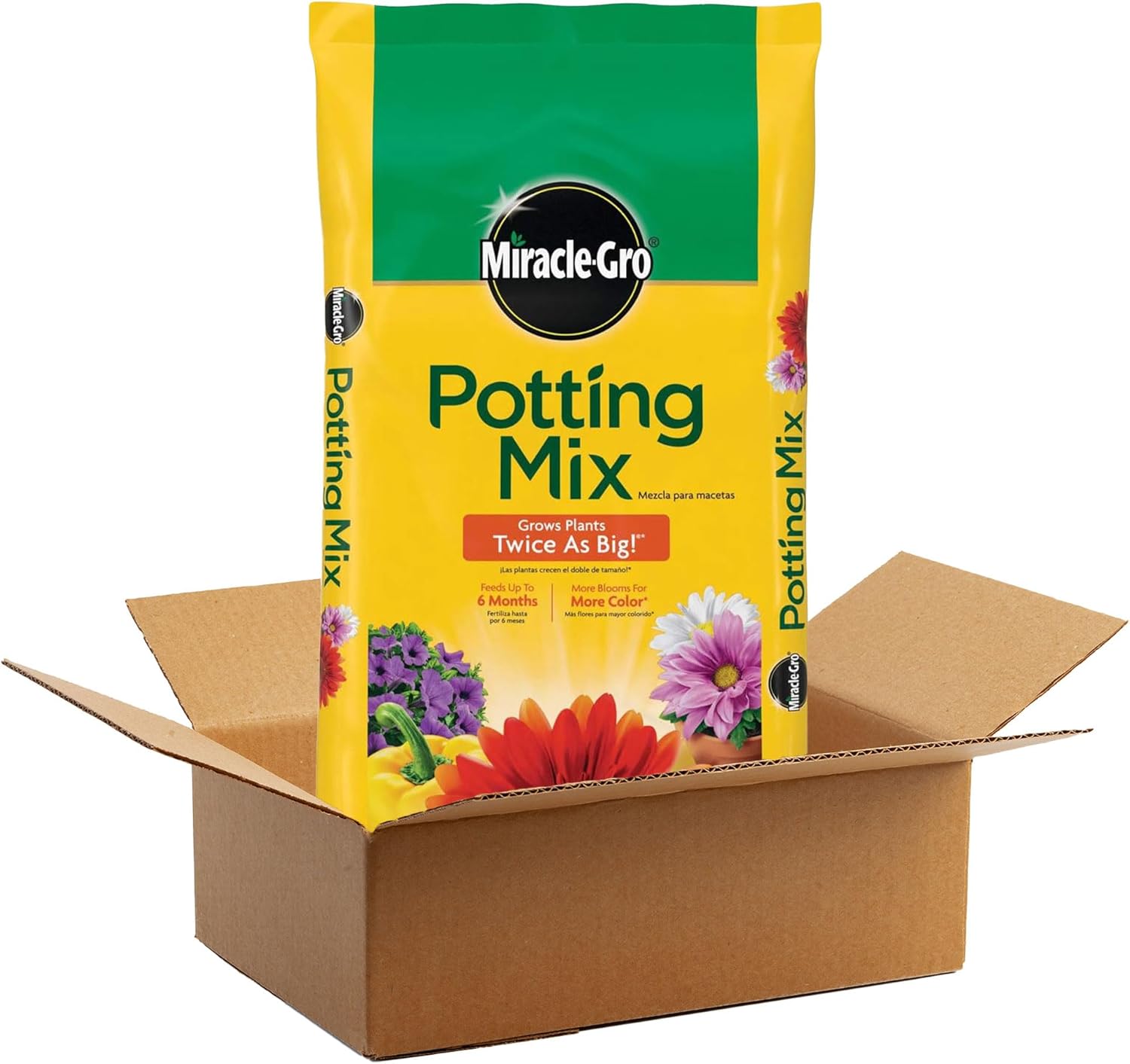
| Brand Name | Miracle-Gro |
|---|---|
| Item Highlight | For Flowers, Vegetables, Shrubs, Annuals & Perennials |
| Unit Count | 2400 Ounce |
| Volume | 2 cubic feet |
This Miracle-Gro Potting Mix is a ready-to-use container soil designed to feed flowers, vegetables, shrubs and houseplants for up to six months. In practice you fill your garden box or planter about one-third with the mix, set the plant and top up, then water to settle the media. The main benefits are built-in, long-lasting nutrition that reduces how often you need to fertilize and a texture formulated for containers so roots can establish without compacting quickly. A 2 cubic foot bag is sized to refill a couple of medium planters or refresh shallow garden boxes, making it convenient for seasonal replanting. Limitations are that it is a pre-mixed potting media rather than an amendment kit, so gardeners who want to precisely control soil biology or heavy-duty water retention may still choose to blend in additional compost or other amendments. Also you should follow basic safety guidance to avoid inhaling dust and keep it away from waterways.
Best for: Gardeners who want a reliable, low-effort potting mix for raised beds, window boxes, and container gardens and prefer an all-in-one product that reduces fertilizing chores.
Less Ideal for: Growers seeking to custom-formulate soil for heavy-feeding crops, advanced organic growers, or those needing large-volume bulk amendments for in-ground beds.
- Continuous feeding built into the mix for up to six months reduces the need for frequent fertilizing
- Formulated specifically for containers so it resists compaction and supports root development
- Pre-mixed and ready to use, making planting and seasonal refreshes quick and simple
- Suitable for a wide range of plants including flowers, vegetables, annuals and perennials
- Not a customizable soil blend for gardeners who want to control organic matter or microbial amendments
- May require additional water-retentive amendments in very sandy or fast-draining boxes
Verdict: A convenient, ready-to-use potting mix that keeps container plants fed for months and simplifies planting and seasonal refreshes.
FoxFarm Ocean Forest Potting Soil, 12 qt (with 2 Plant Tags)

| Brand Name | FoxFarm |
|---|---|
| Unit Count | 144 Ounce |
| Item Highlight | Light, Aerated Texture with Fish Meal, Crab Meal, Earthworm Castings |
| Volume | 12 quarts |
FoxFarm Ocean Forest is a pre-mixed potting soil built from aged forest products, sandy loam and sphagnum peat moss, amended with organic inputs like fish meal, crab meal and earthworm castings. It is designed to be used straight from the bag for container-grown plants and seedlings, providing a light, well-aerated texture that helps drainage and root development. Typical use is filling pots or raised beds for starts, houseplants and container vegetables or berries; the included plant tags make labeling varieties and planting dates easier. The nutrient-rich formula supplies an initial fertility boost so you can delay heavy nitrogen feeding while young plants establish. On the downside the 12 quart bag is relatively small for larger blackberry plantings in-ground or for filling many large containers and you may need to supplement specific soil pH or long-term fertility requirements for mature brambles. For container blackberries this mix gives an easy, reliable start but plan on larger volumes or soil amendments for permanent beds.
Best for: Gardeners who want a reliable, plug-and-play potting mix to start container blackberries or seedlings and value a nutrient-rich, well-aerated medium that reduces early feeding needs.
Less Ideal for: Growers preparing large in-ground blackberry beds or those needing specific soil pH control should choose bulk soil or amend based on a lab test rather than rely on this bag alone.
- Ready-to-use blend with organic amendments for immediate planting
- Light, aerated texture that promotes drainage and root growth
- Contains fish meal, crab meal and earthworm castings for early nutrient support
- Includes plant tags for easy labeling of varieties and planting dates
- 12 quart bag size is limited for larger plantings or multiple containers
Verdict: Use this nutrient-rich, aerated potting mix to give container or young blackberry plants a strong, low-effort start.
Garden Magic Michigan Peat Organic Potting Top Soil Blend, 40 lb

| Volume | 40 liters |
|---|---|
| Unit Count | 1 Count |
| Included Components | Michigan Peat – 5540 – 40lb |
| Item Highlight | Dark Reed Sedge Peat and Sand – Moisture Retaining Mix |
This 40 lb Garden Magic topsoil blend is a straightforward, multipurpose soil for patching lawns, filling raised beds, and routine potting tasks. It combines dark reed sedge peat with sand to hold moisture while allowing excess water to drain, so seedlings and established plants avoid both drought stress and waterlogging. Because it is sold ready-to-use, you can apply it straight from the bag to fill holes, refresh container mixes, or amend heavy clay and light soils to improve structure. Practical gardeners will appreciate its useful volume in a manageable bag and its suitability for indoor and outdoor projects. Limitations are that it is a general-purpose mix rather than a specialty fertilizer or heavily amended planting mix, so heavy-feeding crops or long-term container plantings may still need extra compost or nutrients. For larger landscaping jobs you will need multiple bags or bulk quantities since the product comes in 40 lb units.
Best for: Buyers who want a dependable, easy-to-use topsoil for routine garden maintenance, patching lawns, and general bed or container refreshes without special soil preparation.
Less Ideal for: Gardeners seeking a high-nutrient, specialty potting mix for heavy-feeding vegetables or long-term container specimens should consider amended or fertilized blends instead.
- Ready-to-use out of the bag for indoor and outdoor planting
- Blend of reed sedge peat and sand balances moisture retention and drainage
- Useful for improving heavy clay or light soils as a top dressing
- Versatile for lawns, raised beds, containers, and general garden repair
- Not formulated as a nutrient-rich or fertilized potting mix for long-term container culture
- Sold in 40 lb bags, so larger projects require multiple bags or bulk sourcing
Verdict: A practical, ready-to-use topsoil blend that reliably improves drainage and moisture retention for everyday garden patching and bed refreshes.
Miracle-Gro Organic Outdoor Potting Mix, 16 qt.

| Volume | 16 qt. |
|---|---|
| Item Highlight | Plant Soil For Outdoor Container Plants, Contains Quick-Release Natural Fertilizer, OMRI Listed |
| Manufacturer | Scotts Miracle Gro |
This 16 qt. Miracle-Gro Organic Outdoor Potting Mix is designed specifically for outdoor container plants and is useful for planting strawberries in pots. The mix contains responsibly sourced peat and upcycled green waste and includes a quick-release natural fertilizer that feeds for up to two months, which helps young strawberry plants establish and start producing. It is OMRI listed so it fits an organic container-gardening approach. Typical use is to partially fill a 12-inch pot, set the plant with a loosened root ball, add more mix, and water thoroughly; a single bag is sized to fill about one 12-inch container. Practical benefits include moisture retention suitable for exposed pots and a built-in starter nutrient charge so you may not need immediate additional feeding. Important limitations are that nutrients last about two months so plan a feeding schedule for fruiting plants and that peat-based mixes can compact over time, so repotting or refreshing the soil biannually is recommended for continued vigor.
Best for: Gardeners who want an organic-ready potting mix for outdoor container strawberries and prefer a product that gives an initial nutrient boost while simplifying first-season care.
Less Ideal for: Growers who need a long-term, self-sustaining soil blend for mature strawberry beds or those who avoid peat entirely should consider alternatives.
- OMRI listed and made with responsibly sourced peat suitable for organic container gardening
- Includes quick-release natural fertilizer that feeds plants for up to two months
- Formulated to retain moisture for outdoor containers exposed to sun and wind
- Contains upcycled green waste and is locally crafted to reduce transport distance
- Fertilizer effect is limited to about two months so additional feeding is needed for ongoing fruiting
- Peat-based mix can compact over time and requires bi-annual repotting to refresh structure
Verdict: A convenient OMRI-listed container potting mix that gives outdoor strawberry starters an organic nutrient boost and good moisture retention for the first months.
FoxFarm Happy Frog Potting Soil, Container Garden, 2 cu ft (with 2 Plant Tags)

| Brand | FoxFarm |
|---|---|
| Style Name | Container Garden |
| Unit Count | 600 Ounce |
| Volume | 2 cubic feet |
FoxFarm Happy Frog Potting Soil is a premixed container blend made to nourish potted plants without additional amendments. It comes ready to use and is formulated with beneficial microbes and mycorrhizal fungi alongside organic inputs such as earthworm castings, bat guano, and aged forest humus to support root development and nutrient uptake. For growing hot peppers in containers this mix offers a nutrient-rich, well-amended medium that encourages strong vegetative growth and flowering when paired with proper watering and feeding. The included plant tags make keeping track of varieties and planting dates convenient. Practical limits to note are that this is a potting soil designed for containers rather than field beds, so peppers in ground or very large planters may still need different soil or additional bulk amendments. Also, while the mix is nutrient-dense at planting, active growers should plan a feeding schedule because high-demand fruiting crops benefit from supplemental fertilizer over the season.
Best for: Growers who want a dependable, ready-made potting medium for container-grown hot peppers and prefer a product that supports root health out of the bag.
Less Ideal for: Gardeners planting directly in raised beds or open ground who need large volumes of soil or want to custom-blend base soil at scale.
- Pre-amended with earthworm castings, bat guano, and aged forest products for immediate nutrient availability
- Contains beneficial microbes and mycorrhizal fungi to improve root health and nutrient uptake
- Ready to use straight from the bag for quick potting and repotting
- Includes plant tags to track varieties and planting dates
- Formulated specifically for containers so may not be ideal for in-ground garden beds
- Nutrient levels diminish over time for heavy-feeding crops and require supplemental fertilization
Verdict: A reliable, microbe-rich potting mix that simplifies container pepper growing by delivering immediate nutrients and strong root support.
Miracle-Gro Potting Mix, 16 qt. (2-Pack)

| Feeds Plants | Up to 6 months |
|---|---|
| Volume | 16 quarts |
| Number of Packs | 2 |
| Intended Use | Outdoor containers |
| Ingredients | Sphagnum Peat Moss, Peat, Perlite, Compost, Fertilizer |
Miracle-Gro Potting Mix is a general-purpose container soil designed for outdoor pots, planters, and hanging baskets. It combines peat-based media, perlite, compost, and built-in fertilizer so you can pot vegetables, herbs, annuals, perennials, and shrubs without blending amendments. Typical use is straightforward: fill a pot about one third, set the plant at nursery depth, top off, and water until excess drains. Notable features are fast drainage to prevent root rot, an all-purpose nutrient charge that feeds plants for up to six months, and a texture that helps roots establish quickly. In practice this means less upfront prep and fewer immediate feedings compared with plain soil, and it is handy for seasonal repotting and new container plantings. Important limitations are that it is formulated for containers only (not in-ground beds) and the nutrient boost will diminish after the stated feeding period so you will need to supplement or repot for long-term specimens. Also peat-based mixes can compress over time and require refreshing each season.
Best for: Gardeners who want a low-effort, dependable potting soil for seasonal container planting and quick repots, especially those optimizing time and results across many pots.
Less Ideal for: Those wanting a soil to amend in raised beds or long-term in-ground planting should choose a garden soil formulated for in-ground use instead.
- Ready-to-use mix with built-in fertilizer that feeds up to six months
- Formulated for fast drainage to reduce risk of overwatering and root rot in containers
- Versatile for a wide range of outdoor container plants including vegetables, herbs, and flowers
- Not intended for in-ground garden beds
- Fertilizer effect is temporary and requires refeeding or repotting after about six months
Verdict: A convenient, fast-draining potting mix that simplifies container planting while providing up to six months of built-in nutrition.
Back to the Roots Organic Expanding Coco Coir Potting Soil Brick (10 lb)

| Item Highlight | 10 lb compressed coco coir brick; peat-free; OMRI Listed |
|---|---|
| Item Type Name | Coconut Coir |
| Volume | 2 cubic feet |
| Ingredients | Coconut Coir |
| Style Name | Expanding Potting Soil |
This compressed coco coir brick provides a lightweight, peat-free potting medium that expands when you add water to create loose, airy substrate for containers and seed flats. It is typically used by hydrating the 10 lb block to about 2 cubic feet of coir and then using it alone for potted plants, mixing it into garden soil to improve drainage and aeration, or blending with compost for starting seeds. Notable features include OMRI listing for organic use, a balanced pH suited to a wide range of plants, and compact storage before expansion which saves space. Practical benefits are improved root aeration and water retention compared with heavy garden loam, easier handling than bulky bags, and versatility across vegetables, herbs, and ornamentals. Important limitations are that coco coir is a soilless substrate and does not supply significant nutrients on its own so you will need to add fertilizer or compost for long-term potted herbs like rosemary, and the product requires time and a water source to expand before use.
Best for: Buyers who prioritize low-risk, easy-to-handle, organic potting media and want a versatile base for container herbs and seed starting without dealing with heavy bags.
Less Ideal for: Gardeners who want a ready-to-plant, nutrient-rich potting mix out of the box or those who prefer soil with built-in slow-release fertilizer.
- Peat-free OMRI listed organic coco coir suitable for organic growing
- Expands from a compact brick to about 2 cubic feet for easy storage and transport
- pH balanced and airy texture that improves drainage and root aeration
- Versatile use: can be used alone, for seed starting, or mixed into existing soil
- Provides little inherent fertility so supplemental feeding or compost is needed for nutrient-hungry plants
Verdict: A compact, peat-free coco coir brick that expands into an airy, pH-balanced base ideal for low-risk organic container gardening and seed starting when paired with fertilizer or compost.
Choosing the Right Soil for Garden Boxes: Key Factors to Consider
Soil Texture and Porosity
Texture determines how easily roots move through the mix and how air and water flow. In garden boxes you need a balance between fine particles that hold moisture and larger components that create pore space. Too fine a mix compacts and suffocates roots under repeated watering, while too coarse a mix drains so fast that seedlings dry out. Consider mixes that include a blend of compost, aged fines, and a porous component such as coarse sand or small bark to retain structure.
Porosity also affects nutrient exchange. Well-aggregated mixes support beneficial microbes and allow roots to access nutrients efficiently. When you evaluate a soil for boxes, imagine how it will behave after repeated wetting and drying cycles and how easily you can fork through it at planting time.
Drainage and Moisture Retention
Garden boxes heat up and dry out faster than the ground, so the soil must retain enough moisture without becoming waterlogged. Good drainage prevents root rot after heavy rains or when irrigation systems run longer than intended. At the same time, adequate moisture-holding capacity reduces the need for daily watering during hot spells.
Look for mixes that include water-retentive components like compost or coco coir alongside drainage enhancers such as pumice, perlite, or coarse sand. Consider your local climate and whether you will hand-water or use drip irrigation. A mix that tilts toward retention in arid areas can save time, while a freer-draining mix is safer where rainfall is frequent.
Nutrient Content and Organic Matter
Soil for garden boxes must supply or hold onto nutrients for the plants in a limited volume of media. Organic matter is the key to nutrient buffering and slow-release fertility. A moderate proportion of well-rotted compost provides a reservoir of nitrogen, phosphorus, and trace elements and improves structure and water-holding capacity.
Avoid mixes with very low organic content that rely entirely on synthetic feeding, unless you plan a strict fertilization schedule. Also be cautious of freshly finished manures or uncomposted materials, which can burn roots or introduce pathogens. The best box soils combine stable organic matter with a plan for seasonal top-dressing or sidedressing to maintain fertility.
pH and Nutrient Availability
Plants in boxes are more sensitive to pH swings because the contained volume offers less buffering than native soil. pH affects the availability of many nutrients, especially iron, manganese, and phosphorus. A neutral to slightly acidic range is usually optimal for a wide variety of vegetables and ornamentals.
Check or choose mixes that report stable pH or are easy to amend. For long-term box use, incorporate lime or sulfur adjustments cautiously and retest periodically. Maintaining consistent pH reduces the need for corrective fertilizing and helps crops access nutrients reliably.
Weight and Waterlogged Load
Garden boxes and raised frames have structural limits. A heavy soil that becomes saturated can strain supports and make boxes difficult to move or service. Lighter mixes that retain water without becoming overly dense reduce the risk of damage and ease handling during planting and winter storage.
Consider how often you will move or lift filled boxes, and whether your box material tolerates heavy loads. In larger or taller boxes, weight becomes more important because saturated soil can push boards outward. Opting for lighter aggregates or coarse organic components can keep wet-weight manageable.
Ease of Use and Maintenance
Garden box soil should be workable for planting, easy to top up, and forgiving when amended midseason. A mix that compacts into clods or crusts on the surface makes transplanting and seed sowing harder. Conversely, a crumbly, stable mix simplifies routine tasks like adding seedlings, weaving irrigation lines, and topping with mulch.
Think about the frequency of season-long maintenance you are willing to do. Some mixes require more frequent feeding or aeration, while others remain productive with minimal intervention. Choose a soil that matches the gardener's time and physical constraints, from hands-on hobbyists to those who prefer low-maintenance containers.
Matching Soil to Box Depth and Crops
Different crops need different root volumes. Shallow boxes planted to salad greens and herbs can thrive in a lighter, higher-porosity mix, while deeper-rooting vegetables such as tomatoes or brassicas perform better in a richer, deeper medium with extra organic matter. Measure your box depth and estimate the effective root zone before choosing a mix.
If you plan succession planting, prioritize mixes that maintain structure after repeated cropping. For heavy feeders, plan to supplement with sidedressing or top-dressed compost during the growing season rather than depending solely on the original mix.
- Shallow boxes: prioritize porosity and moderate fertility
- Deep boxes: add more compost and nutrient reserves
- Long-season crops: consider additional top-dressing midseason
Amending and Refreshing Box Soil
Box soil is not permanent. Each season you will remove spent roots and replace some volume to refresh nutrients and structure. A common approach is to replace the top third of the soil annually or to top-dress with 2 to 4 inches of compost between seasons.
When amending in place, fork the surface gently to avoid disturbing roots of overwintering plants and blend amendments evenly. Avoid adding raw materials that will tie up nitrogen without prior composting.
- Annual top-dressing with compost stabilizes fertility
- Replenish organic matter rather than relying solely on fertilizers
- Use screened compost to prevent clogs in drip lines
Watering Strategies for Box Soils
How you water interacts with soil choice. Drip irrigation or soaker hoses deliver water efficiently into the root zone and pair well with mixes that retain moisture. Manual overhead watering may require a slightly more retentive mix to avoid frequent dry spells between waterings.
Mulching the soil surface reduces evaporation and moderates temperature swings in boxes. Use an organic mulch layer of straw, shredded leaves, or compost to keep moisture consistent and reduce stress on plants.
- Drip systems reduce surface evaporation
- Mulch conserves moisture and moderates soil temperature
- Adjust irrigation frequency based on crop and mix
Dealing with Pests and Soil Health in Boxes
Raised boxes often avoid some ground pests but can still suffer from soil-borne issues and root diseases. Healthy soil structure and well-composted organic matter support beneficial microbes that suppress pathogens. Rotate crop families and avoid replanting susceptible crops in the same boxes without restorative amendments.
If you encounter persistent soil pests, consider replacing affected soil, solarizing the box media in summer, or using clean compost and sterile surface mixes for sensitive transplants.
- Rotate crops to reduce pest and disease buildup
- Incorporate well-aged compost to support beneficial biology
- Consider partial soil replacement for chronic problems
Sourcing and Inspecting Bulk or Bagged Mixes
Whether you buy bagged mixes or order bulk soil, inspect the texture and smell before filling boxes. Avoid mixes with a strong ammonia smell or visible unmixed raw materials. Screened, mature compost and consistent particle size make mixing and planting easier.
If buying in bulk, request a sample to check drainage and composition. For bagged products, read labels for percentage of organic matter and any listed amendments. Choose mixes that explicitly state suitability for raised beds or garden boxes when available.
- Check for maturity and lack of offensive odors
- Prefer screened materials for ease of use
- Ask about organic matter percentage when sourcing bulk
How We Chose the Best Soil for Garden Boxes
We prioritized features that matter in shallow, contained beds where soil volume and balance determine plant health. Key evaluation criteria included texture and porosity to ensure both drainage and root penetration, nutrient profile and organic matter to support steady growth through the season, moisture retention to reduce watering frequency without causing saturation, and pH stability because boxes warm and cool faster than ground beds. We also looked at consistency and absence of contaminants so gardeners receive predictable results, and at ease of use for common box tasks such as topping up, transplanting, and amending midseason. We excluded mixes designed solely for containers with very small volumes, specialty mixes for specific crops that require extreme pH adjustments, and products formulated only for turf or landscaping. The selections focus on blends appropriate for vegetables, herbs, and ornamentals in garden boxes, with attention to real-world handling, reworking, and season-long performance. Each pick met multiple criteria above and represents a practical option for typical box sizes and urban or backyard setups.
FAQ
How deep should soil be in a garden box for vegetables?
Depth depends on the crop. Leafy greens and herbs can do well in 6 to 8 inches of good mix, while most vegetables need 10 to 12 inches. Deep-rooting crops like tomatoes or root vegetables prefer 12 inches or more to allow unrestricted root growth.
Can I reuse soil from last season in my garden boxes?
Often you can reuse it with amendments. Remove spent roots, fork the soil to loosen compaction, and add compost and balanced fertilizer or sidedressings. Replace the top portion annually to replenish organic matter and nutrients for best results.
Is potting soil suitable for garden boxes?
Potting soil blends vary. Some are light and designed for small containers and may dry too quickly in large boxes. Look for mixes formulated for raised beds or that list compost and mineral aggregates to ensure structure and nutrient content for box use.
How often should I fertilize soil in garden boxes?
It depends on the initial mix. Rich, compost-heavy mixes may need less frequent feeding, often a midseason sidedress. Lighter mixes usually require regular, low-dose feedings every few weeks. Monitor plant vigor and leaf color to adjust frequency.
Should I test the pH of my box soil?
Yes. Testing pH helps ensure nutrients are available and informs whether lime or sulfur is needed. Test every one to two years or if plants show signs of nutrient deficiency despite regular feeding.
What is the best way to improve drainage in an existing box?
Work coarse, porous materials into the soil such as horticultural grit, pumice, or perlite, and reduce the proportion of fine clay-like material. Raising the bed height and improving surface slope for runoff also helps prevent prolonged saturation.
Final Verdict
For garden boxes, prioritize a balanced mix that marries drainage with moisture retention and contains stable organic matter to supply nutrients. Match the soil depth and fertility to the crops you intend to grow and plan for annual refreshment or top-dressing to maintain structure. Accept tradeoffs between weight, water-holding capacity, and ease of handling. A well-chosen box soil reduces watering work, lowers disease risk, and provides a reliable environment for strong root development, making seasonal management simpler and more productive.
