

Note: This article contains affiliate links. If you click on these links and make a purchase, I may earn a small commission at no extra cost to you. This helps support my research and content. Read my full affiliate disclosure here.
If you are planting hibiscus in ground, the soil you choose determines how well roots establish, how often you water, and how abundantly the plants bloom. Hibiscus plants prefer a mix that holds moisture without staying waterlogged, drains excess freely, and supplies steady nutrients through the growing season. This guide shortlists five top soils for hibiscus in ground and explains the practical tradeoffs between drainage, organic matter, and pH. Use the evaluation notes to match a soil blend to your yard conditions and planting goals. Below are our top picks, followed by the factors that matter when selecting soil and other advice for getting new ground-planted hibiscus off to a strong start.
Top Picks at a Glance
| Best Quality Built to a higher standard if you want something more solid | FoxFarm Original Planting Mix, 1 cu ft |  |
| Best Value The sweet spot between price and what you get | Espoma Organic All-Purpose Garden Soil, 1 cu ft |  |
| Highest Rated A top-rated pick with lots of positive feedback | Coast of Maine Cobscook Blend In-Ground Garden Soil, 1 cu ft |  |
| Most Popular A crowd favorite that many people choose with confidence | Espoma Organic Vegetable & Flower Garden Soil Mix, 1 cu ft |  |
| Best Seller A high-volume bestseller chosen again and again | Back to the Roots Organic Expanding Coco Coir Potting Soil Brick (10 lb) |  |
FoxFarm Original Planting Mix, 1 cu ft

| Brand Name | FoxFarm |
|---|---|
| Item Type Name | Potting Soil |
| Style Name | Planting Mix |
| Volume | 1 cubic feet |
FoxFarm Original Planting Mix is a pre-blended soil amendment designed to improve planting performance for trees, shrubs, vegetables and flowers. The mix combines aged forest products, sphagnum peat moss, sandy loam and earthworm castings along with dolomite lime and fertilizer so it can be used straight from the bag without extra inputs. Typical use is to loosen native soil and mix at roughly a 1:1 ratio when planting trees or to fill raised beds for smaller plantings. Notable features are its moisture-retentive peat and organic matter for root contact and a light fertilizer charge to support early growth. Practically, that means easier root establishment, improved soil tilth, and less need for immediate fertilization after planting. Limitations are its modest volume per bag, which means multiple bags are needed for larger tree holes, and the peat content may concern buyers seeking peat-free or fully organic options.
Best for: Buyers who prioritize strong establishment and measurable performance when planting trees or shrubs and want a convenient, work-ready soil mix to improve root contact and early growth.
Less Ideal for: Those planting large shade or specimen trees that require bulk soil for deep root zones or gardeners seeking peat-free or strictly certified organic mixes.
- Ready-to-use formula with built-in fertilizer for immediate planting
- Contains aged organic matter and earthworm castings to improve soil structure
- Peat moss and sandy loam help retain moisture around roots
- Directions include clear 1:1 mixing guidance for in-ground planting
- One cubic foot bag provides limited coverage for tree planting projects
Verdict: Choose this mix when you want a performance-focused, ready-to-use soil amendment that speeds root establishment for trees and shrubs.
Espoma Organic All-Purpose Garden Soil, 1 cu ft

| Brand | Espoma |
|---|---|
| Unit Count | 1536 Ounce |
| Volume | 1 cubic feet |
| Style Name | Peat Moss,Garden |
Espoma Organic All-Purpose Garden Soil is a 1 cubic foot bag of pre-mixed planting media intended to be worked into native garden soil at planting or transplanting time. The formula combines peat moss, aged organic materials, earthworm castings and organic meals plus a proprietary mycorrhizae blend to boost early root establishment and soil life. It is typically used by mixing a shovel or two into the hole or row to lighten heavy soils, increase organic matter, and provide slow-release nutrients without synthetic fertilizers. Practical benefits include improved moisture retention from the peat component, immediate organic nutrient inputs from alfalfa, kelp and feather meals, and biological support from mycorrhizae for young roots. Limitations are the small one-cubic-foot bag which means multiple bags are needed for larger beds and the peat-based formulation may not be the best match for gardeners avoiding peat for sustainability reasons.
Best for: Gardeners who want a ready-made organic amendment to improve native garden soil when planting and who value biological soil inputs to support young plants.
Less Ideal for: Large-scale growers or gardeners installing extensive beds who need bulk quantities or those who prefer peat-free, fully compost-based mixes.
- Organic blend with earthworm castings and multiple plant meals for nutrient support
- Includes mycorrhizae to help early root development and plant establishment
- Designed to mix into native soil for improved structure and moisture retention
- Sold in a small 1 cubic foot bag which requires many bags for large gardens
- Contains peat moss which some gardeners avoid for sustainability reasons
Verdict: A convenient organic soil amendment that improves native garden soil and supports early root growth with biological inputs.
Coast of Maine Cobscook Blend In-Ground Garden Soil, 1 cu ft

| Unit Count | 1 Count |
|---|---|
| Included Components | SOIL |
| Item Type Name | Plant Food |
| Brand Name | Coast of Maine |
Coast of Maine Cobscook Blend is an OMRI-listed, organic in-ground soil mix designed to revitalize existing garden beds. It combines compost, sphagnum peat moss, and aged bark plus ocean-derived amendments so it helps improve drainage, moisture retention, and aeration when worked into sandy or compacted soils. Typical use is mixing several inches into the topsoil when planting new beds or top-dressing established areas to rebuild fertility and microbial life. Notable features are its organic ingredients and focus on supporting beneficial soil organisms rather than supplying quick-release synthetic nutrients. Practical benefits include better root development, improved texture in heavy soils, and a safer formula for families and pets. Limitations are the small bag size for large projects and the absence of guaranteed NPK numbers for feeding heavy feeders, so you may need additional amendments or repeat applications for nutrient-hungry crops. It is best used as a soil conditioner and long-term soil-building component rather than an all-in-one fertilizer for a single season’s maximum yield.
Best for: Gardeners who prioritize consistent, long-term soil health and prefer organic, sustainable amendments for in-ground beds. Good for people reconditioning compacted, sandy, or depleted garden beds who value reliability over one-off quick fixes.
Less Ideal for: Those needing a single-season high-nitrogen boost for heavy-feeding annuals or anyone wanting a large-volume, ready-to-use soil supply without frequent bag handling.
- OMRI-listed organic formulation suitable for in-ground vegetable and flower beds
- Blend of compost, peat moss, and aged bark improves structure, drainage, and moisture retention
- Includes ocean-sourced amendments that support soil microbes and biodiversity
- Safe for families and pets due to organic ingredients
- Sold in 1 cu ft bags which makes covering large beds labor intensive
- No detailed NPK or guaranteed nutrient analysis provided
Verdict: Choose this blend if you want a trusted organic soil conditioner that rebuilds garden beds and supports long-term plant health.
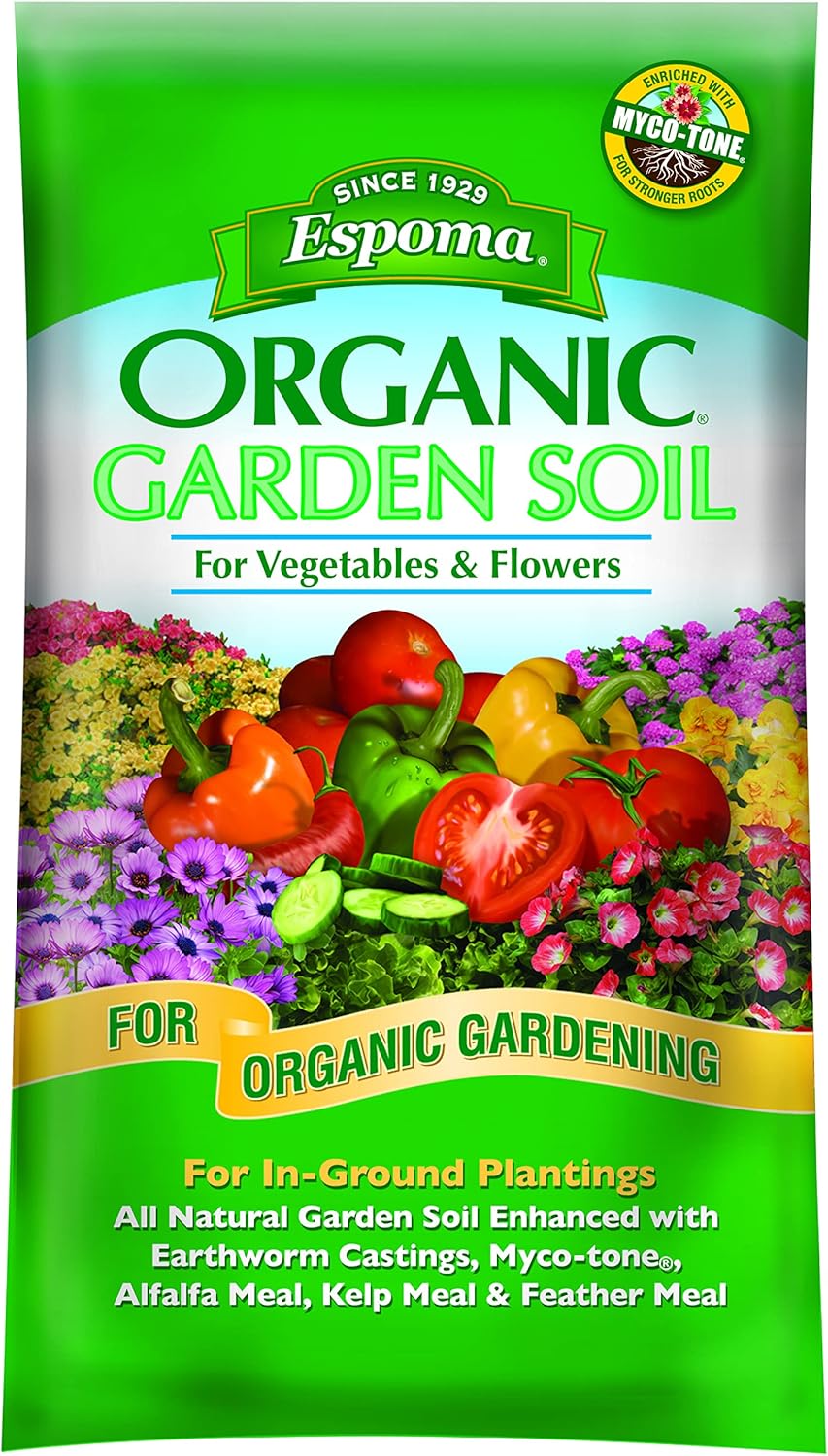
Espoma Organic Vegetable & Flower Garden Soil Mix, 1 cu ft
| Volume | 1 cubic feet |
|---|---|
| Style Name | Peat Moss |
| Unit Count | 1536 Ounce |
Espoma Organic Vegetable & Flower Garden Soil is a 1 cubic foot, peat-based planting mix designed to be blended into native garden soil at planting or transplanting. It contains Canadian sphagnum peat moss, earthworm castings, alfalfa meal, kelp meal, feather meal, limestone for pH adjustment, and a mycorrhizal blend to help root establishment. In practice you work a few inches of this mix into planting holes or rows to loosen dense soil, add organic matter, and give young squash transplants a nutrient-rich root zone. The organic amendments supply slow-release nutrients and biological activity that support early growth, while the mycorrhizae improve water and nutrient uptake. Limitations to note are the peat-heavy base, which dries faster than compost-rich mixes and may require more frequent watering, and the small 1 cu ft bag size that means multiple bags are needed for larger beds. For gardeners who prefer organic inputs and want an easy-to-use planting mix to boost transplant success, this product is straightforward and effective.
Best for: Gardeners who prioritize organic inputs and want a convenient planting mix to boost transplant success for vegetables like squash in established beds.
Less Ideal for: Large-scale landscapers or gardeners needing bulk soil amendments for entire raised beds who prefer compost-rich mixes or peat-free alternatives.
- Formulated with organic amendments like earthworm castings, alfalfa meal, kelp meal, and feather meal for slow-release nutrients
- Contains a mycorrhizal blend to support root establishment and improved nutrient uptake
- pH adjusted with limestone to better suit common garden plants
- Ready-to-use planting mix that blends easily with native soil when transplanting
- Peat-heavy base can dry out faster than compost-rich mixes, increasing watering frequency
- Small 1 cubic foot bag requires many bags for larger squash beds
Verdict: A compact, organic planting mix that makes transplanting squash easier by giving young roots nutrient-rich, biologically active soil.
Back to the Roots Organic Expanding Coco Coir Potting Soil Brick (10 lb)

| Item Highlight | 10 lb compressed coco coir brick; peat-free; OMRI Listed |
|---|---|
| Item Type Name | Coconut Coir |
| Volume | 2 cubic feet |
| Ingredients | Coconut Coir |
| Style Name | Expanding Potting Soil |
This compressed coco coir brick provides a lightweight, peat-free potting medium that expands when you add water to create loose, airy substrate for containers and seed flats. It is typically used by hydrating the 10 lb block to about 2 cubic feet of coir and then using it alone for potted plants, mixing it into garden soil to improve drainage and aeration, or blending with compost for starting seeds. Notable features include OMRI listing for organic use, a balanced pH suited to a wide range of plants, and compact storage before expansion which saves space. Practical benefits are improved root aeration and water retention compared with heavy garden loam, easier handling than bulky bags, and versatility across vegetables, herbs, and ornamentals. Important limitations are that coco coir is a soilless substrate and does not supply significant nutrients on its own so you will need to add fertilizer or compost for long-term potted herbs like rosemary, and the product requires time and a water source to expand before use.
Best for: Buyers who prioritize low-risk, easy-to-handle, organic potting media and want a versatile base for container herbs and seed starting without dealing with heavy bags.
Less Ideal for: Gardeners who want a ready-to-plant, nutrient-rich potting mix out of the box or those who prefer soil with built-in slow-release fertilizer.
- Peat-free OMRI listed organic coco coir suitable for organic growing
- Expands from a compact brick to about 2 cubic feet for easy storage and transport
- pH balanced and airy texture that improves drainage and root aeration
- Versatile use: can be used alone, for seed starting, or mixed into existing soil
- Provides little inherent fertility so supplemental feeding or compost is needed for nutrient-hungry plants
Verdict: A compact, peat-free coco coir brick that expands into an airy, pH-balanced base ideal for low-risk organic container gardening and seed starting when paired with fertilizer or compost.
Choosing the Right Soil for Hibiscus in Ground: Key Factors to Consider
Drainage and Aeration
Drainage controls whether hibiscus roots get oxygen or stay waterlogged. In-ground hibiscus suffer if the planting zone holds water after rain because roots can suffocate and rot. Look for soils with coarse components, such as horticultural sand, perlite, or medium-grade compost, to create pore space that lets water move through while still holding some moisture.
Aeration affects how deep roots search for nutrients and water. Soils that compact will restrict root growth and reduce winter hardiness. When assessing soil, probe the bed after a heavy rain; if water sits on the surface or the soil remains saturated for days, you will need to correct drainage before planting.
Moisture Retention
Hibiscus need consistent moisture during the growing season to support continuous blooming but do not tolerate chronic sogginess. Good in-ground soil holds enough water between irrigations without becoming a swamp. Organic matter such as well-aged compost and coconut coir helps store plant-available water while breaking down gradually to feed roots.
Striking the right balance is especially important in sandy or very free-draining sites, where mulching and adding moisture-retentive components will reduce watering frequency. In heavy soils, choose amendments that improve pore distribution instead of simply adding more fine particles that worsen puddling.
Nutrient Profile and Organic Matter
Hibiscus are moderate to heavy feeders with high demands for nitrogen, phosphorus, and potassium during leaf and flower production. A soil with a steady supply of slow-release organic matter gives a more consistent nutrient flow than quick-release fertilizers alone. Look for mixes containing composted bark, aged compost, or well-composted manure rather than raw wastes that can tie up nitrogen.
Organic matter also supports beneficial soil organisms that improve nutrient cycling and root health. Over time you will still need to top-dress or provide supplemental fertilizer during peak bloom, but a richer base soil reduces the frequency and amount of inputs required.
pH Balance and Amendability
Hibiscus prefer a slightly acidic to neutral pH, generally in the range of about 6.0 to 7.0. Soil pH affects nutrient availability; iron and manganese become less available in alkaline soils, which can cause leaf yellowing even when nutrients are present.
Soil choice should consider existing bed pH. If your native soil is alkaline, select mixes that include acidic organic matter or be prepared to amend with sulfur or acidifying fertilizers over time. Conversely, highly acidic beds can be buffered with lime. Choose soils that are straightforward to adjust so you can fine-tune pH without repeated heavy interventions.
Soil Structure and Resistance to Compaction
Structure describes the arrangement of particles and pores in the soil. Well-structured soil resists compaction, drains well, and allows roots to explore freely. For long-term in-ground hibiscus beds, look for soils with a mix of particle sizes and stable organic matter that does not collapse into a dense mass when wet.
Avoid mixes composed mostly of fine silt or powdery topsoil if your garden sees foot traffic or regular irrigation. Adding coarse compost, grit, or aged bark can preserve structure. Maintaining a 2 to 3 inch mulch layer also reduces surface compaction from heavy rains.
Assessing Your Existing Garden Bed Before Planting
Start by digging a test hole where you plan to plant and examine the soil profile. Note color, drainage, and how sticky or loose the soil feels when moist. A quick percolation test-filling a hole with water and timing how long it takes to drain-helps you decide whether you need to incorporate coarse amendments or create a raised planting berm.
- Dig 12 to 18 inches to inspect subsoil texture and presence of clay or hard pan.
- Conduct a percolation test: water should largely drain within an hour or two in a well-drained planting site.
- If clay or a hard layer is present, plan to loosen the subsoil and incorporate gritty amendments before planting.
Amendment Recipes for Common Yard Conditions
Different yard soils need different corrections. For heavy clay, focus on adding coarse organic matter and grit to open pores. For sandy beds, add stable organic matter and water-holding components. For average loam, modest additions of compost and mulch are often sufficient to support hibiscus through the first few seasons.
- Heavy clay: mix in 30 to 50 percent coarse compost or aged bark and 10 to 20 percent grit or coarse sand to improve drainage.
- Sandy soil: add 20 to 40 percent compost and a small percentage of coconut coir to improve water retention.
- Loamy soil: incorporate 10 to 20 percent compost and plan seasonal top-dressings of compost or slow-release organic fertilizer.
Planting Technique to Maximize Root Establishment
When planting, loosen the backfill soil and create a planting hole twice the root ball width but no deeper than the root collar. Mixing your chosen soil with some native soil at a ratio that avoids creating a sharp interface helps roots move between new and existing soil. Firm the backfill gently to remove large air pockets, then mulch to conserve moisture and moderate soil temperature.
- Avoid planting too deep; the root crown should sit slightly above final grade if soil will settle.
- Blend new soil and native soil at roughly 50:50 near the root zone unless your native soil is especially poor.
- Mulch 2 to 3 inches after planting but keep mulch pulled away from the stem to prevent rot.
Seasonal Care to Maintain Soil Health
Hibiscus respond to regular feeding and consistent moisture. Maintain a monthly or bi-monthly check on soil moisture and top up mulch and compost to replace nutrients lost to decomposition. In late winter or early spring, top-dress with compost and test pH to confirm it remains in the preferred range.
- Monitor soil moisture with a probe rather than relying only on surface dryness.
- Apply compost or well-balanced organic amendments annually to maintain a steady nutrient supply.
- Check pH every couple of years and adjust slowly; rapid swings can stress plants.
How We Chose the Best Soil for Hibiscus in Ground
To assemble this list we focused on the attributes that most affect hibiscus performance in ground plantings. We prioritized soil mixes and amendments that balance drainage with moisture retention, because hibiscus roots need oxygen but will wilt under drought stress. Nutrient availability and slow-release organic matter were next, since hibiscus are heavy feeders through spring and summer. pH buffering and the ability to adjust acidity were included because hibiscus prefer slightly acidic to neutral soil and many garden soils vary. We also considered texture and structure, looking for mixes that resist compaction over time and allow vigorous root penetration. Longevity and maintenance needs were evaluated, favoring soils that reduce the frequency of major rework. Products or mixes that are primarily decorative topsoil or that remain poorly drained in heavy clay were excluded. The final shortlist reflects blends and amendments that score well across drainage, nutrient profile, pH adjustability, structure, and ease of incorporation into existing garden beds.
FAQ
How deep should I plant hibiscus in ground relative to the soil surface?
Plant the root ball so the crown sits just at or slightly above the final soil level to accommodate settling. Avoid burying the trunk deeper than it was in its container because that can cause crown rot and poor oxygen exchange.
Can I improve clay soil enough to successfully grow hibiscus in ground?
Yes, with effort. Heavy clay needs coarse organic matter, grit, and ongoing additions of compost to improve structure and drainage. In some cases building a raised planting mound or planting on a berm provides better long-term results than only surface amendments.
How often should I fertilize hibiscus planted in ground?
Hibiscus typically benefit from light to moderate feeding during the growing season. Use slow-release organic fertilizers or monthly liquid feeds during active growth, and supplement with compost top-dressings in spring. Frequency depends on your soil fertility and plant vigor.
What pH range is best for hibiscus in ground and how do I test it?
Aim for slightly acidic to neutral soil, roughly pH 6.0 to 7.0. Use a soil test kit or send a sample to a local extension lab for the most reliable results. Adjust pH gradually with sulfur to acidify or lime to raise pH if needed.
Is mulching necessary for hibiscus planted in ground?
Mulch is very helpful because it conserves moisture, suppresses weeds, and protects soil structure. Keep a 2 to 3 inch layer of organic mulch but avoid piling it against the stem to reduce the risk of rot.
Final Verdict
Choose soil that balances free drainage with enough moisture retention and steady organic nutrients to sustain long flowering periods. Match amendments to your existing bed-break up clay with coarse organic matter and grit, or add compost and water-holding components to sandy sites. Prioritize good structure and pH that you can adjust over time. Focusing on drainage, nutrient profile, and soil structure will produce the best long-term results for hibiscus planted in ground, and regular top-dressing and mulch keep root health and bloom production strong.
