

Note: This article contains affiliate links. If you click on these links and make a purchase, I may earn a small commission at no extra cost to you. This helps support my research and content. Read my full affiliate disclosure here.
Hoya compacta thrives when its roots get both moisture and air. Using the wrong soil leads to soggy roots, slow growth, and increased risk of rot. This guide focuses on soils formulated for Hoya Compacta and similar compact wax plants so you can pick mixes that encourage healthy roots and steady flowering. We shortlisted six top soil options that suit that use case and evaluated them for drainage, aeration, nutrient retention, and pH stability. Below you will find practical notes on how the mixes behave in a real home, what potting approaches work best, and the tradeoffs to consider before you repot.
Top Picks at a Glance
| Best Overall The best all-around choice for most situations | rePotme Hoya Classic Potting Soil Mix (2 Quart) |  |
| Best Quality Built to a higher standard if you want something more solid | Gardenera Premium Potting Mix for Hoya Plants, 1 Quart |  |
| Best Value The sweet spot between price and what you get | HydraGarden Forbidden Cereal Aroid Potting Mix, 6.5 QT |  |
| Best Budget The cheapest option that still gets the job done reliably | Doter Hoya Potting Soil Mix, 1 qt |  |
| Highest Rated A top-rated pick with lots of positive feedback | rePotme Hoya Classic Potting Soil Mix (8 Quarts) | |
| Most Popular A crowd favorite that many people choose with confidence | Soil Sunrise Hoya Potting Mix (8 Quarts) |  |
rePotme Hoya Classic Potting Soil Mix (2 Quart)

| Brand Name | rePotme |
|---|---|
| Unit Count | 64 Ounce |
| Item Type Name | Potting Soil |
| Volume | 2 quarts |
This rePotme Classic potting soil is a 2-quart, hand-blended mix made for indoor plants and oriented toward growers who want consistent, ready-to-use media for Hoyas and other houseplants. It is produced in small batches and comes in a reusable resealable pouch that helps preserve freshness between uses. The formulation emphasizes drainage and optimal water content, which suits Hoya species that prefer airy, well-draining mixes rather than heavy, moisture-retentive soils. Typical use is repotting or topping up containers for pothos, monstera, Hoya, and similar houseplants. Practical benefits include a consistent blend that reduces the need to improvise with perlite or bark, convenience of the small bag for single pots, and safety guidance to avoid inhaling dust during handling. Limitations are its small 2-quart volume, which means multiple bags are needed for larger collections, and the listing does not specify exact ingredient ratios so advanced growers who custom-blend for specific Hoya species may prefer to amend or use a larger professional mix.
Best for: Buyers who prioritize a reliable, ready-made houseplant mix and want a consistent, easy-to-use medium for repotting individual Hoyas or a small collection without mixing ingredients themselves.
Less Ideal for: Growers with large collections or those who need precise, customizable ingredient ratios for specialist Hoya species should consider bulk mixes or custom blends instead.
- Hand-blended in small batches for consistent quality
- Designed for good drainage and optimal water content suitable for Hoya
- Comes in a resealable pouch to preserve freshness between uses
- Convenient 2-quart size ideal for single-pot repotting or trialing a new mix
- Small 2-quart volume requires buying multiple bags for larger collections
- No detailed ingredient ratios listed for growers who prefer exact mixes
Verdict: A dependable small-batch potting mix that gives Hoyas good drainage and consistent results without the fuss of mixing your own media.
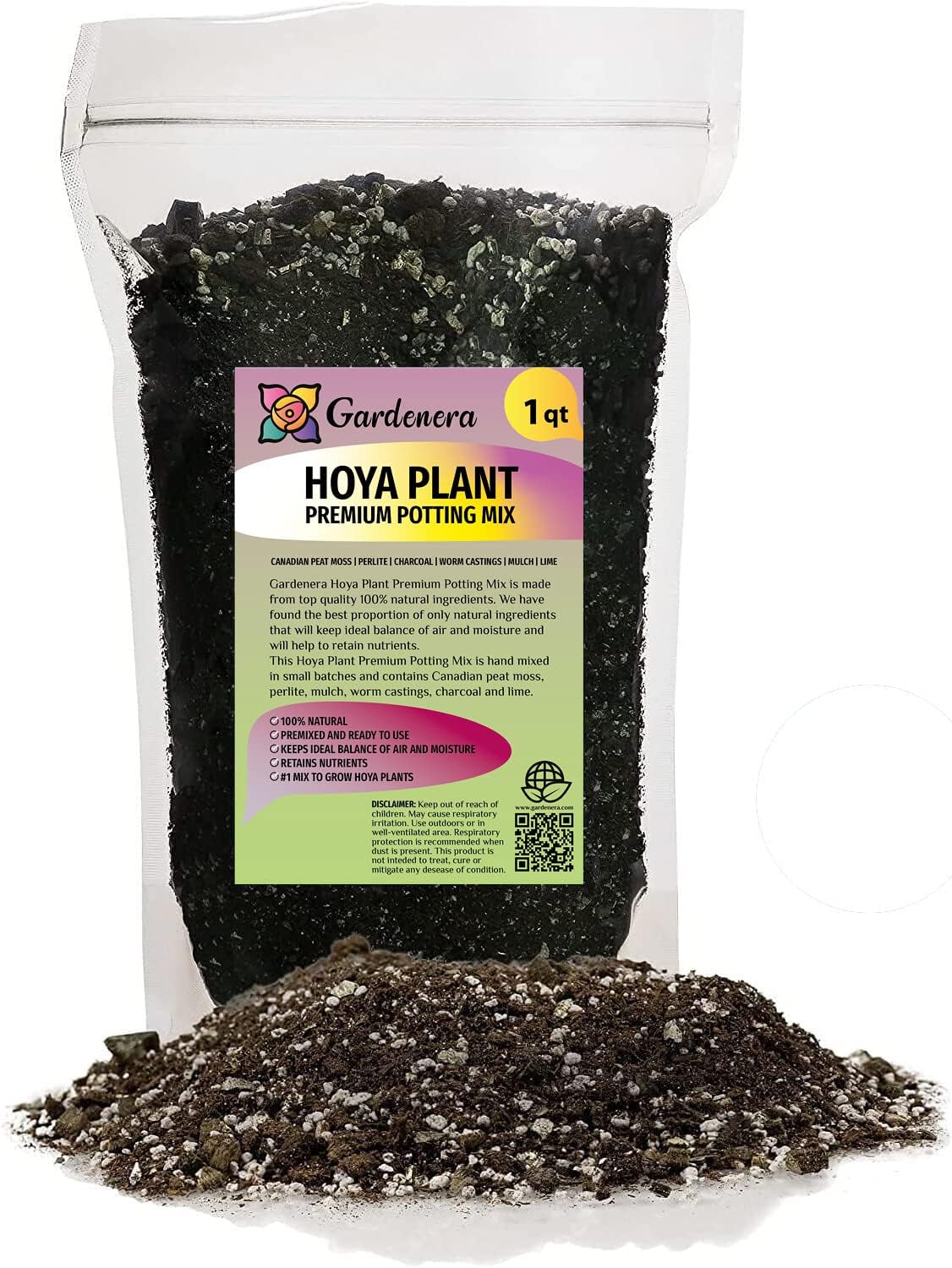
Gardenera Premium Potting Mix for Hoya Plants, 1 Quart
| Brand Name | Gardenera |
|---|---|
| Unit Count | 1 Count |
| Item Type Name | HOYA PLANT |
| Volume | 1 quarts |
Gardenera Premium Potting Mix is a small-batch, ready-to-use substrate designed specifically for Hoya plants, including compacta varieties. The mix marries Canadian peat moss with perlite and mulch to create a light, airy medium that holds moisture without turning waterlogged, while the added warm castings and charcoal supply organic nutrients and microbial support. Lime is included to moderate pH for species that prefer slightly neutral conditions. In practice this mix is convenient for repotting or finishing cuttings: it drains faster than plain potting soil yet retains enough moisture to prevent frequent drying in indoor environments. The compact 1 quart size suits hobbyists testing a potting change or working with small pots. Limits to consider are the small volume for multiple plants and no measured NPK values or exact particle ratios, so growers who need precise fertilization schedules or large-scale potting will want a larger or more quantified option. For growers focused on healthy roots and straightforward repotting of small Hoyas, this is an effective, plant-specific choice.
Best for: Buyers who prioritize plant performance and root health for individual or small Hoya plants and want a ready-made mix tailored to Hoya needs.
Less Ideal for: Not a good fit for growers repotting many plants, filling large pots, or those who require precise, measured soil formulations for controlled fertilization plans.
- Formulated for Hoyas with peat moss and perlite to balance aeration and moisture retention
- Includes organic inputs like warm castings and charcoal to boost fertility and microbial activity
- Pre-mixed and ready to use, convenient for repotting small plants or cuttings
- Lime added to help moderate pH appropriate for many Hoya species
- Sold in a small 1 quart size which is insufficient for repotting multiple plants or larger containers
- No detailed nutrient analysis or exact component ratios provided
Verdict: A compact, Hoya-focused potting mix that delivers good aeration and organic nutrition for healthier roots in small pots.
HydraGarden Forbidden Cereal Aroid Potting Mix, 6.5 QT

| Unit Count | 6.5 Ounce |
|---|---|
| Brand Name | HydraGarden |
| Style Name | Houseplants & Aroids |
| Ingredients | Orchid Bark, Charcoal, Perlite, Coco Chunks, Coco Coir, LECA Clay Pebbles, Worm Castings, Sphagnum Moss |
HydraGarden Forbidden Cereal is a high-drainage, soilless potting mix built from chunky components like orchid bark, coco coir, coco chips, perlite, biochar, worm castings and LECA clay pebbles with a small bag of New Zealand sphagnum moss layered on top. It is used as a repotting and growing medium for aroids and many common houseplants where preventing waterlogging and improving root oxygenation are priorities. The mix’s large particle profile lets water move quickly through containers, reduces the chance of root rot, and keeps roots from becoming compacted while still offering organic matter and nutrients from castings and charcoal. The separated sphagnum allows you to add a moisture-retaining topper when needed without compromising overall drainage. Practical limits are that its chunky texture holds less water than peat-rich mixes so watering frequency will increase for moisture-loving species, and the soilless formula may require more frequent feeding compared with a loam-based soil. For growers who prioritize fast drainage, root health, and a lightweight, peat-free blend, this mix delivers predictable, performance-focused results.
Best for: Serious growers who prioritize root health and fast drainage for aroids and tropical houseplants and who monitor watering and feeding closely to maximize plant performance.
Less Ideal for: Casual owners who want a low-maintenance, moisture-retentive potting medium or growers of very moisture-loving species that require consistently damp substrate.
- Very high drainage and aeration from chunky ingredients reduces risk of root rot
- Peat-free, soilless organic components including worm castings and biochar for nutrient support
- Layered sphagnum moss gives flexible moisture retention as a topper or propagation aid
- Includes LECA clay pebbles for improved structure and long-term stability
- Holds less moisture than peat-based mixes so plants may need more frequent watering
- Soilless formula typically requires more regular fertilizing for sustained nutrient supply
Verdict: Choose this mix if you need a chunky, peat-free medium that maximizes drainage and root aeration for high-performance aroid growing.
Doter Hoya Potting Soil Mix, 1 qt

| Brand Name | Doter |
|---|---|
| Unit Count | 32 Ounce |
| Item Type Name | Garden soil |
| Volume | 1 quarts |
This one-quart Doter potting mix is blended specifically for Hoya plants and is intended for potting or repotting individual houseplants. The formula combines chunky perlite, pine bark and peat-like components to improve drainage and airflow so roots avoid waterlogging, while added nutrients and pH balancing aim to support foliage and flowering. In practical use the lightweight texture makes filling small pots and top-ups easy, and the mix will suit hanging baskets and compact containers where Hoyas prefer a fast-draining medium. Because this is a single-quart retail package it is best for small-scale use, trial repots, or grafting mixes rather than filling many larger pots. Buyers should expect a modest quantity and plan to blend with additional perlite or bark for very coarse preferences. The product is simple to use straight from the bag and is a convenient option for hobbyists who want a Hoya-oriented mix without mixing components themselves.
Best for: Hoya owners and indoor plant hobbyists who want a purpose-made, ready mix for single pots or occasional repotting and prefer a simple, low-effort solution.
Less Ideal for: People who need large volumes for many plants or who want exact component ratios to create highly customized, extra-coarse mixes.
- Formulated specifically for Hoya with pH-balanced and nutrient-enriched blend
- Good drainage and aeration from chunky perlite and bark components
- Ready-to-use small bag convenient for single pots, top-ups, and repotting
- Lightweight texture that is easy to handle when filling small containers
- Only a one-quart volume so not practical for repotting multiple or larger plants
- No detailed ingredient ratios provided, limiting precise mix customization
Verdict: A convenient, Hoya-focused potting mix in a small bag that delivers good drainage and ready-to-use convenience for single pots and beginner repots.
rePotme Hoya Classic Potting Soil Mix (8 Quarts)
| Brand Name | rePotme |
|---|---|
| Item Type Name | Potting Soil |
| Volume | 8 quarts |
| Style Name | Classic |
rePotme Classic is a hand-blended potting soil intended for indoor plants and comes in an 8 quart resealable pouch. It is formulated to provide good drainage and balanced moisture retention, which makes it a practical choice for epiphytic or semi-epiphytic plants such as Hoya compacta. You would typically use it for repotting houseplants or refreshing the top layer of existing pots; the resealable bag helps keep unused mix fresh between uses. Notable features are its small-batch production and a blend aimed at botanists and hobbyists alike, which suggests consistent ingredient selection and freshness. In practice the mix should reduce overwatering risk compared with plain garden soil and support healthy root aeration. Limitations are that the listing does not provide a full ingredient breakdown or explicit particle size information, so growers who require a very chunky, bark-heavy or precisely calibrated Hoya mix may want to amend this soil with extra orchid bark, perlite, or charcoal for maximum aeration and rapid drainage.
Best for: Buyers who prioritize a reliable, ready-to-use indoor potting mix that performs consistently and reduces the guesswork when repotting Hoya compacta and other common houseplants.
Less Ideal for: Growers who need a fully specified, bark-dominant orchid-style medium straight out of the bag or those who prefer to custom-blend every component from base ingredients.
- Hand-blended in small batches for perceived freshness and consistency
- Resealable pouch preserves unused soil between repotting sessions
- Balanced drainage and moisture retention suitable for many houseplants
- Marketed and used by conservatories, indicating professional-grade sourcing
- No detailed ingredient list or particle size information provided
- May require amendment with bark or perlite for growers who prefer very chunky Hoya mixes
Verdict: A dependable, small-batch indoor potting mix that gives Hoya compacta growers a convenient, consistent base to use or amend for better aeration.
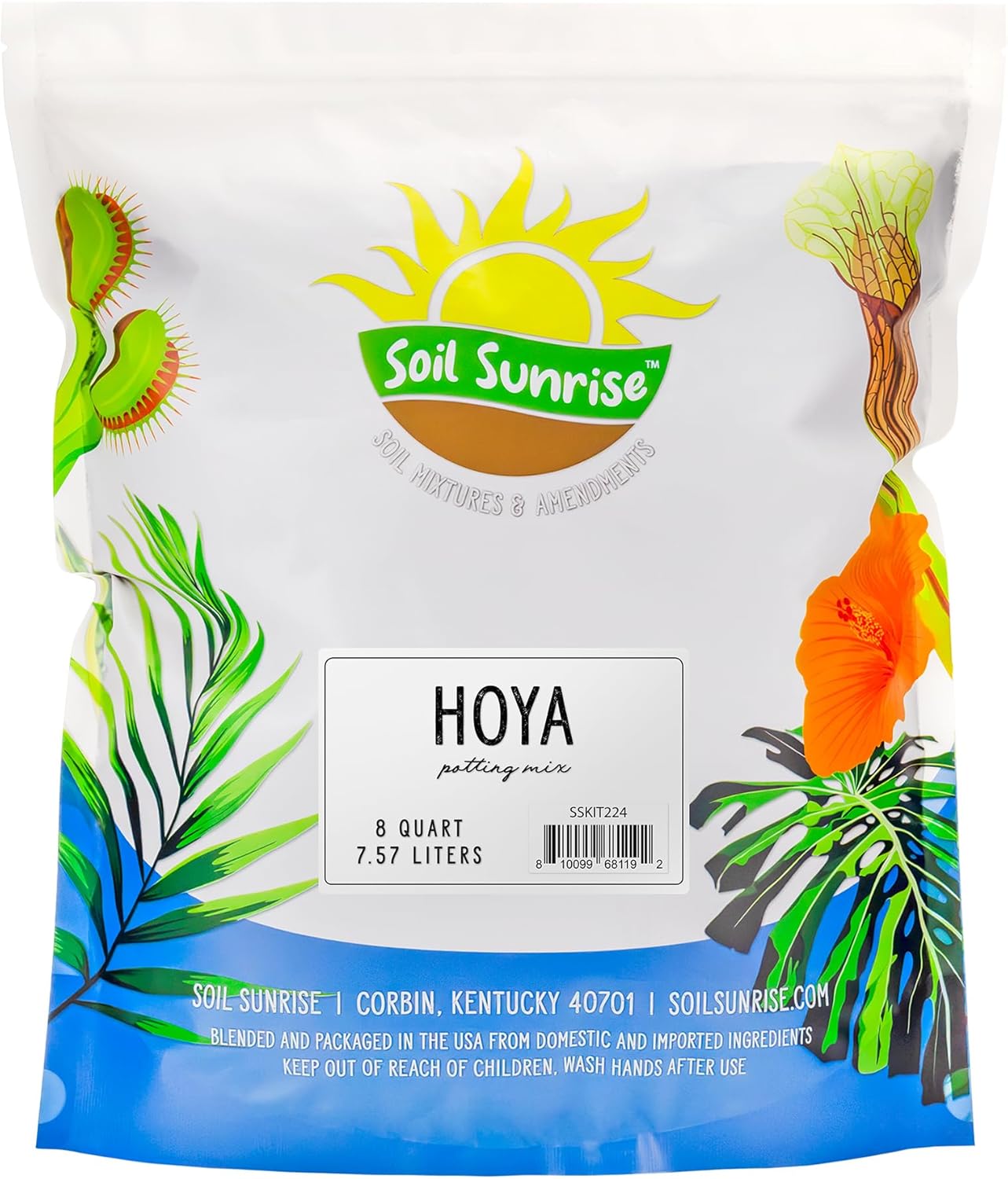
Soil Sunrise Hoya Potting Mix (8 Quarts)
| Volume | 8 quarts |
|---|---|
| Ingredients | Peat, perlite, mulch, charcoal, worm casting, lime |
| Style Name | Peat Moss,Potting Soil Mix |
This Soil Sunrise blend is aimed at wax plants like Hoya carnosa and Hoya compacta, combining peat moss, perlite, pine bark mulch, horticultural charcoal, worm castings, and lime to create a loose, well-draining medium. You would use it for repotting, tabletop pots, hanging baskets, and propagation trays where Hoyas need an airy substrate that mimics epiphytic conditions. Notable features are the bark and mulch for structural porosity, perlite and charcoal for drainage and aeration, and castings for gentle nutrient support. In practice the mix helps prevent compaction and reduces the risk of root rot by allowing excess water to flow through, while the organic components hold enough moisture and nutrients between waterings. The bag is a single 8 quart unit, suitable for small to medium plants or multiple propagation pots. Limitations are straightforward: the formula is peat-based, which some buyers avoid for sustainability reasons, and an 8 quart bag only covers a few repots so you may need multiple bags for larger collections.
Best for: Buyers who want a ready-made Hoya-specific mix that reduces repotting risk and supports healthy, airy roots for compacta and similar wax plants.
Less Ideal for: Growers who prefer peat-free or bulk soil solutions for many plants or large-scale repotting projects should look for larger or peat-free alternatives.
- Formulated specifically for Hoyas to replicate an epiphytic, airy root environment
- Contains perlite and bark for excellent drainage and reduced compaction
- Includes worm castings and charcoal for gentle nutrient support and improved soil health
- Suitable for hanging baskets, tabletop pots, repotting and propagation
- Small 8 quart bag may not be economical for large collections
- Uses peat moss which some gardeners avoid for environmental reasons
Verdict: If you want a plug-and-play potting mix tailored to Hoya compacta that promotes airflow and reduces root rot risk, this hand-blended 8 qt mix is a practical choice.
Choosing the Right Soil for Hoya Compacta: Key Factors to Consider
Particle Size and Mix Texture
Particle size determines how freely water moves through the potting medium and how much air remains between particles. Larger components like pine bark, perlite, or coarse pumice create macropores that speed drainage and improve oxygen availability to roots. Finer materials such as peat or coco coir increase water retention but can also compact over time, reducing aeration. For Hoya Compacta you want a mix with varied particle sizes so it drains quickly after watering yet still holds some moisture between particles.
Texture also affects how a mix changes after repeated wetting and drying cycles. Components that break down into fines will reduce porosity, so choose mixes with stable ingredients or plan to refresh the top layer or repot every year or two to maintain structure.
Drainage Rate Under Typical Indoor Watering
How fast water passes through the pot is critical for avoiding root rot. Hoya Compacta prefers a medium that dries out partly between waterings rather than remaining wet. Test drainage by pouring water slowly and watching how it flows through the pot; a good mix will let excess water exit within a minute or two in a well-draining container.
Keep in mind that pot size, container material, and room humidity change the effective drainage rate. Terracotta pots wick moisture from the mix and help drying, while plastic pots retain more moisture. Match the drain rate of the soil to your watering habit and container choice to keep roots healthy.
Moisture Retention Balance
Retention is not simply 'more is better.' Hoya Compacta needs moisture available for several days but does not tolerate constantly saturated conditions. A balanced mix holds enough water to sustain the plant between waterings, especially in drier indoor air, while releasing excess quickly to avoid anaerobic conditions. Materials like coco coir or small-grade peat can supply steady moisture, but they should be combined with drainage components so the root crown does not stay wet.
Consider your local climate and indoor heating. In low-humidity winter conditions you may want a mix that holds more moisture; in warm humid rooms choose a drier, more open blend.
Nutrient Holding and Feeding Compatibility
Hoya Compacta benefits from moderate, steady nutrition rather than heavy feeding. The soil should hold onto dissolved nutrients between waterings and release them gradually when roots take them up. Organic components and stable humus improve cation exchange capacity and nutrient buffering, reducing the risk of nutrient spikes or rapid leaching.
If you prefer liquid fertilizing, pick a substrate that does not flush nutrients immediately. Conversely, if you use slow-release granules, ensure the mix retains enough moisture for the granules to break down at a predictable rate.
pH Range and Chemical Stability
Most hoyas, including Hoya Compacta, do well in slightly acidic to neutral soils. A substrate with a stable pH prevents nutrient lockup and supports healthy root microbes. Some substrates, like pure pine bark, can become more acidic over time, while materials such as crushed limestone can raise pH. Choose a mix with a pH in the mid-acid to neutral range or one that is easy to adjust with standard, safe amendments.
Chemical stability also means fewer surprises from additives. Avoid mixes with unknown nutrient spikes or salts that can harm sensitive young roots; flush new mixes before use if salt content is a concern.
Long-Term Structural Stability
A potting medium that maintains porosity over months reduces the need for frequent repotting. Materials that decompose quickly create fines that collapse pore space, making a once-well-draining mix poorly draining over time. For indoor growers who prefer low-maintenance care, look for mixes with inert components like perlite, pumice, or lava rock blended with slow-breaking organics.
Stable structure also helps support heavier trailing stems of Hoya Compacta without compacting around the root ball. If you repot infrequently, prioritize mixes designed for longevity.
How to Repot Hoya Compacta Without Disturbing Roots
Repot when the plant shows slowed growth or the mix breaks down, usually every 12 to 24 months. Use a slightly larger pot only if roots have filled the current container; hoyas prefer being somewhat snug.
Gently remove the root ball and tease apart only the loose outer material. Avoid aggressively shaking or washing roots unless you are removing an obviously poor mix. Place the plant in the new pot with fresh mix that matches the desired drainage profile and firm it lightly to eliminate large air pockets.
- Water lightly 24 hours before repotting to reduce stress
- Check for root rot and trim mushy roots with sterile scissors
- Set the root crown slightly above the pot rim so the top dries faster
DIY Mixes Versus Ready-Made Blends
DIY mixes let you control each component and tailor drainage and retention to your environment. Common DIY ingredients include chunky bark, pumice, perlite, and a small amount of peat or coco coir. A typical homemade mix might prioritize large particles for aeration with a modest fraction of organic matter for nutrients.
Ready-made blends offer convenience and consistent performance, especially if they are formulated for aroids or epiphytic houseplants. If you choose a commercial mix, check ingredient lists for stable components and avoid mixes that are overly fine or heavy.
- DIY benefit: customizable porosity and long-term stability
- Ready-made benefit: predictability and less work
- Combine approaches by amending a ready mix with extra pumice or bark to improve drainage
Watering Strategy for Different Soil Types
Adjust your watering rhythm to the soil's behavior. In fast-draining, open mixes you may water slightly more often but with less volume per session. In mixes that hold more moisture, wait longer between waterings and check the top inch to assess dryness.
Use a moisture meter or stick your finger into the mix to judge moisture at root depth. Avoid scheduled watering without checking soil condition because indoor conditions change with seasons and heating cycles.
- Fast-draining mixes: water thoroughly and allow quick drainage; let the top third dry
- Moisture-retentive mixes: water less frequently and watch for slow drying around the crown
- Always water until excess drains from the pot to flush salts
Container Considerations That Affect Soil Performance
Container material and size affect how a given soil performs. Terracotta wicks moisture from the mix and speeds drying, which complements more moisture-retentive substrates. Plastic pots retain water and pair well with drier mixes. The pot size should be proportionate to the root ball; oversized pots hold extra water and can promote sogginess.
Ensure containers have adequate drainage holes and consider adding a layer of coarse material at the bottom only if the potting mix is very fine. Elevating pots on saucers or pot feet improves airflow under the pot and aids evaporation.
- Terracotta helps prevent overwatering in moisture-retentive mixes
- Use saucers to protect surfaces but empty them after drainage
- Select pot size to match root mass to avoid excess wet volume
Signs a Soil Is Failing Your Hoya
Watch for yellowing leaves, slowed growth, or a musty smell from the potting medium; these indicate poor drainage or root stress. Compacted, slimy soil that stays wet long after watering is a sign the mix has broken down and needs replacement.
If you encounter persistent issues, remove the plant from its pot to inspect roots. Healthy roots are firm and white to light tan. Black, mushy roots signal rot and a need for cleaner, faster-draining substrate.
- Yellowing and leaf drop can follow from chronic soggy roots
- Soil that smells bad indicates anaerobic conditions
- Replace or refresh a failing mix rather than increasing fertilizer
How We Chose the Best Soil for Hoya Compacta
We prioritized mixes and blends that address the specific needs of Hoya Compacta: excellent drainage, sustained moisture without waterlogging, open texture for root aeration, and stable pH suitable for most hoya varieties. Our editorial filters favored substrates that maintain structural integrity over time so roots are not compacted after repeated watering. We evaluated water retention versus drainage to find mixes that keep humidity near roots without sitting wet. Key evaluation criteria included particle size and mix texture, drainage rate under normal home watering, ability to retain nutrients and support slow-release fertilization, pH range and buffering capacity, and long-term stability so the mix does not collapse. We excluded plain garden soil, heavy all-purpose potting soils without amendments, and mixes designed only for succulents or orchids that lack sufficient nutrient-holding capacity. The final shortlist reflects blends that balance air, moisture, and nutrition in typical indoor containers used for Hoya Compacta.
FAQ
Can I use regular houseplant potting mix for Hoya Compacta?
Regular houseplant mix can work if it is amended to increase drainage and aeration. Add chunky bark, perlite, or pumice to create larger pore spaces. Pure, unamended all-purpose mixes often retain too much moisture for Hoya Compacta.
How often should I repot Hoya Compacta into fresh soil?
Repotting is typically needed every 12 to 24 months depending on mix stability and root growth. Repot sooner if the mix compacts, drainage slows, or roots show signs of rot or crowding.
Is coco coir a good ingredient for Hoya soil?
Coco coir provides steady moisture and is a good peat alternative when used in moderation. Combine it with coarse components so the mix does not become waterlogged, and choose aged coir to avoid high salt levels.
What is the best pH for Hoya Compacta soil?
Aim for slightly acidic to neutral pH, roughly 5.5 to 7.0. That range keeps most nutrients available and supports healthy microbial activity. If your water or amendments alter pH, choose buffers like small amounts of limestone or organic matter carefully.
Should I add fertilizer to a soil designed for Hoya Compacta?
Yes, because many fast-draining mixes have limited immediate nutrient supply. Use a balanced liquid feed at reduced strength during the growing season or a slow-release formulation incorporated at planting. Monitor plant response and adjust to avoid over-fertilizing.
Final Verdict
Choose a soil that balances free drainage with modest moisture retention and stable structure. Prioritize mixes with varied particle sizes and inert drainage components so roots receive oxygen while still accessing water between waterings. Match the mix to your container type and watering style to avoid common issues like root rot. Focus on the drainage, aeration, and nutrient-holding qualities discussed here when selecting a soil for Hoya Compacta. That approach will help you pick a substrate that supports healthy roots and reliable growth over multiple seasons.
