

Note: This article contains affiliate links. If you click on these links and make a purchase, I may earn a small commission at no extra cost to you. This helps support my research and content. Read my full affiliate disclosure here.
Picking the right soil makes a big difference when growing vegetables indoors. Pot space, light levels, and frequent watering all change how a mix performs compared with outdoor garden soil, so choosing a blend tailored for containers and indoor conditions helps seedlings establish roots, supports steady nutrient release, and reduces disease risk. This guide covers our shortlisted top soils for indoor vegetable garden situations and explains the practical strengths gardeners need to consider. We evaluated drainage, nutrient retention, organic content, and handling to identify mixes that work well in pots, grow bags, and raised indoor planters.
Top Picks at a Glance
| Best Overall The best all-around choice for most situations | Miracle-Gro Organic Indoor Potting Mix (16 qt) |  |
| Best Quality Built to a higher standard if you want something more solid | FoxFarm Ocean Forest Potting Soil, 12 qt |  |
| Best Value The sweet spot between price and what you get | Burpee Premium Organic Potting Mix with Coco Coir (9 Quarts) |  |
| Best Budget The cheapest option that still gets the job done reliably | Miracle-Gro Indoor Potting Mix for Seed Starting, 8 qt. (2-Pack) |  |
| Highest Rated A top-rated pick with lots of positive feedback | Premier Horticulture Pro-Mix HP Mycorrhizae Loose Growing Medium (2.8 cu ft) |  |
| Most Popular A crowd favorite that many people choose with confidence | Miracle-Gro Indoor Potting Mix for All Plants, 6 qt. (2-Pack) |  |
| Best Seller A high-volume bestseller chosen again and again | Back to the Roots Premium Organic Potting Mix, 6 Quart |  |
Miracle-Gro Organic Indoor Potting Mix (16 qt)

| Item Highlight | Protects Against Over & Under Watering |
|---|---|
| Unit Count | 1 Count |
| Item Type Name | Miracle-Gro Organic Indoor Potting Mix |
| Manufacturer | Scotts Miracle Gro |
| Volume | 1 cubic feet |
This 16 qt Miracle-Gro Organic Indoor Potting Mix is a ready-to-use organic blend designed for indoor containers and seed starting. It combines coir for improved aeration and moisture retention, sphagnum peat moss to hold and release water, and a quick-start natural fertilizer so seedlings and transplants get an initial nutrient boost. For an indoor vegetable garden you would use it to fill pots, start seeds in shallow trays, or top up containers when repotting. Notable features include OMRI listing for organic use and guidance to use pots with drainage holes to avoid waterlogging. In practice the mix helps regulate moisture levels better than plain garden soil and reduces the risk of over- or under-watering common in indoor setups. Limitations are the bag size, which fills roughly one 12-inch pot so larger or multi-plant vegetable setups will need multiple bags, and the product is focused on indoor container use rather than heavy-feeding vegetables that may require additional fertilization over time.
Best for: Indoor gardeners who want an easy, organic potting mix to start seeds and grow herbs or small vegetable crops in containers, prioritizing moisture balance and convenience.
Less Ideal for: Large-scale or heavy-feeding vegetable growers who need bulk soil or persistent high-nutrient media for long-term production should look at larger-capacity or specialized vegetable mixes.
- OMRI listed for use in organic indoor gardening
- Blend of coir and sphagnum peat moss balances aeration and moisture retention
- Includes quick-start natural fertilizer to feed new seedlings and transplants
- 16 qt bag covers only about one 12-inch container so multiple bags required for larger projects
- Formulated for indoor container use and may need supplemental fertilizer for heavy-feeding vegetable crops
Verdict: A convenient OMRI-listed potting mix that makes seed starting and small indoor vegetable containers easier by balancing moisture and initial nutrition.
FoxFarm Ocean Forest Potting Soil, 12 qt

| Item Form | Granules |
|---|---|
| Specific Uses For Product | Dry Fertilizer |
| Coverage | 4.8 sq ft |
| Mixing Ratio | 1:1 |
FoxFarm Ocean Forest is a premixed potting soil designed to be used straight from the bag for indoor containers and seedlings. The blend pairs aged forest products, sandy loam and sphagnum peat moss to promote aeration and drainage while retaining moisture; it also includes fish meal, crab meal and earthworm castings so young plants get an early nutrient boost without immediate fertilizing. Typical use is filling pots or top-dressing containers for vegetables and houseplants, then watering thoroughly and waiting up to 30 days before additional fertilizer. Notable features are the light, aerated texture that helps root development and the built-in organic amendments that support vigorous early growth. Practical benefits for an indoor vegetable garden include reliable moisture retention with good drainage, strong seedling starts and reduced need for early feeding. Limitations are that it is a bagged mix sized for small to medium containers only and heavier-feeding crops may need supplemental fertilization after the first month to sustain high yields.
Best for: Growers who prioritize strong, fast starts for indoor vegetables and want a ready-made, nutrient-rich potting mix that encourages root development without immediate feeding.
Less Ideal for: Large-scale indoor growers or those needing bulk volumes for many pots; gardeners who prefer fully synthetic, long-release fertilizer systems may prefer a different medium.
- Ready to use out of the bag so you can pot up seedlings quickly
- Light, aerated texture that encourages root growth and drainage
- Contains organic amendments (fish meal, crab meal, earthworm castings) for early nutrient supply
- Pack size is modest for larger or many containers requiring frequent restocking
- Not formulated to replace ongoing fertilizer needs beyond the first 30 days
Verdict: Choose this soil when you want a ready-to-use, organically amended potting mix that gives indoor vegetable seedlings vigorous early growth.
Burpee Premium Organic Potting Mix with Coco Coir (9 Quarts)

| Item Form | Powder |
|---|---|
| Specific Uses For Product | Plant Growth, Root Development, Seed Development, Soil Conditioning |
| Coverage | 9 Qt Container |
| Liquid Volume | 9 quarts |
Burpee Premium Organic Potting Mix is a ready-to-use container blend that combines organic nutrients with coco coir to improve moisture retention and aeration. You fill pots or seed trays with the mix, plant seeds or transplants, and water; the formula is intended to supply nutrients immediately and provide slow-release feeding for up to three months. Notable features include OMRI listing for organic gardening, a coco coir base that helps prevent waterlogging while holding moisture, and a lightweight, peat-free composition that is suitable for indoor and outdoor containers. For indoor vegetable gardeners this mix simplifies starting seeds and growing herbs or compact vegetables in pots by reducing watering frequency and encouraging root development. Limitations are its small 9 quart bag size, which means you will need multiple bags for larger setups, and the product lists nutrients generally rather than giving a full ingredient analysis or precise NPK on the packaging shown. Expect straightforward performance for small-to-medium container vegetable gardens but plan to supplement with fertilizer after the initial feeding period if you grow nutrient-hungry crops.
Best for: Gardeners who want a low-maintenance, organic potting mix for indoor container vegetables, herbs, or small raised beds and prefer a ready-made soil that balances moisture and aeration.
Less Ideal for: Growers setting up large-scale container beds or those who need precise nutrient formulations for heavy-feeding vegetables should look for bulk mixes or targeted fertilizers instead.
- OMRI listed organic mix suitable for certified organic growing
- Coco coir improves moisture balance while reducing risk of waterlogging
- Formulated to promote seed germination and root development in containers
- Provides up to three months of slow-release nutrition for low-maintenance feeding
- Small 9 quart bag requires multiple purchases for larger or multiple containers
- Detailed ingredient percentages and full nutrient breakdown are not provided in the product details
Verdict: A compact, OMRI-listed potting mix that makes starting and maintaining indoor container vegetables easier by pairing coco coir moisture control with organic nutrients.
Miracle-Gro Indoor Potting Mix for Seed Starting, 8 qt. (2-Pack)
| Number of Packs | 2 |
|---|---|
| Item Type Name | Potting Mix |
| Unit Count | 512 Ounce |
| Volume | 8 quarts |
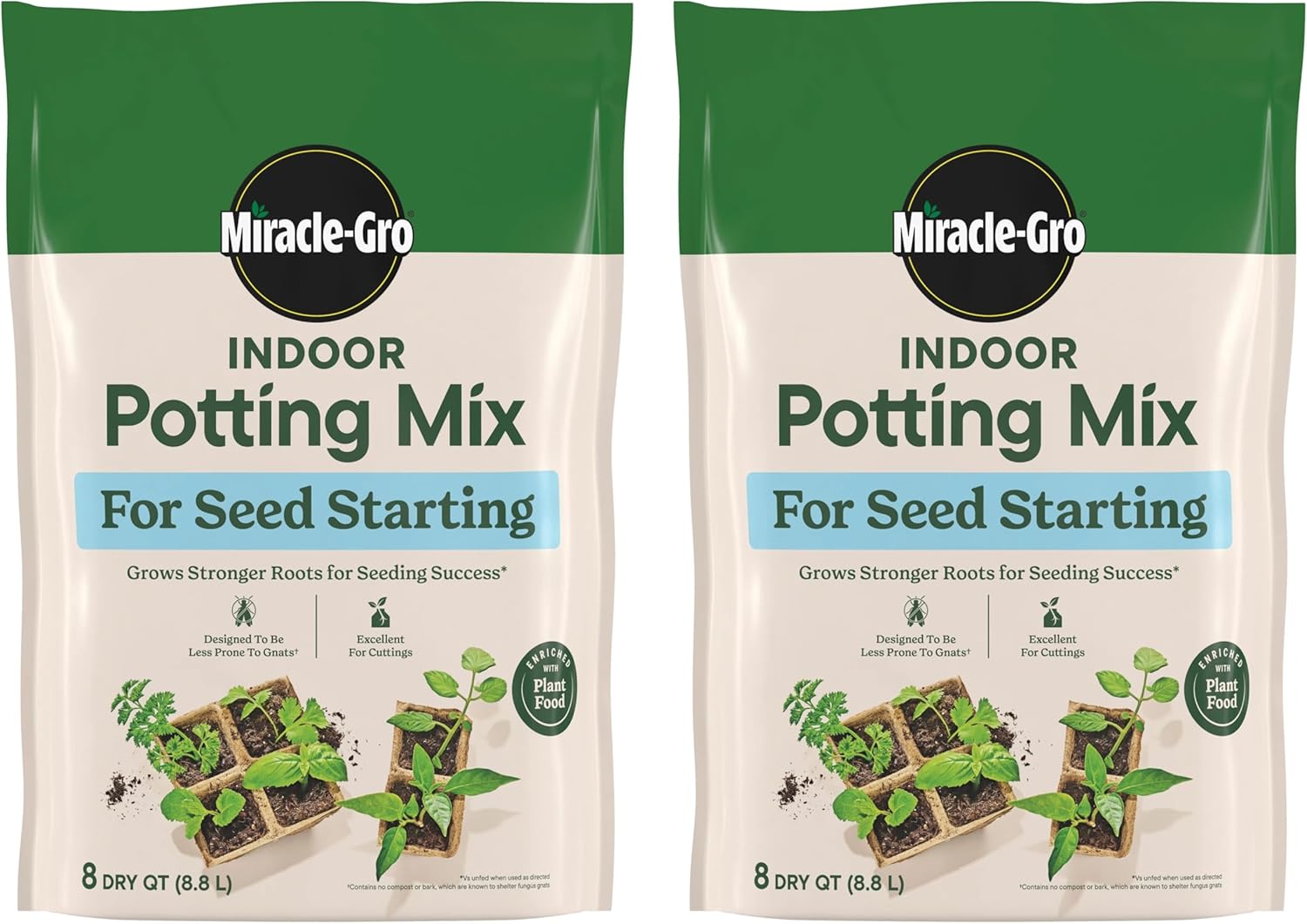
This two-pack of Miracle-Gro Indoor Potting Mix is designed for starting vegetable, flower, and herb seeds and for rooting cuttings indoors. The mix is lightweight and enriched with plant food so seedlings get an early nutrient boost that helps root development compared with unfed media. Because it does not contain compost or bark, it is less likely to harbor fungus gnats, a common problem when propagating indoors. Practical use is straightforward: fill trays or small pots, keep the medium moist and out of direct sun until germination, and transplant when true leaves appear. Each 8 qt. bag is said to fill roughly three 72-cell trays, so the two-pack gives enough media for several rounds of seedlings for a modest indoor vegetable patch. The product does contain fertilizer, so handle with care to avoid inhaling dust and follow safety guidance; it is not a custom seed-starting recipe, so those wanting fully organic or tailored mixes may prefer to amend or blend their own media. Overall it is a reliable, convenient option for getting seeds and cuttings established indoors quickly.
Best for: Home gardeners starting vegetables and herbs indoors who want a convenient, no-mix potting medium that helps seedlings establish quickly on a limited budget.
Less Ideal for: Growers seeking an organic, custom-blend, or soil-free sterile medium should consider alternative mixes or amendments instead of this pre-fertilized product.
- Lightweight, ready-to-use formula suitable for seed trays and small pots
- Enriched with plant food to promote faster root and early growth compared with unfed media
- Formulated without compost or bark to reduce habitat for fungus gnats
- Two 8 qt. bags provide enough mix for multiple 72-cell seed trays, convenient for successive sowings
- Contains fertilizer and dust that require careful handling and storage
Verdict: A practical, budget-friendly ready-to-use seed starting mix that helps indoor vegetable seedlings establish quickly without the nuisance of compost-related gnats.
Premier Horticulture Pro-Mix HP Mycorrhizae Loose Growing Medium (2.8 cu ft)

| Item Form | Loose Fill |
|---|---|
| Specific Uses For Product | Plant Growth, Root Development |
| Coverage | Medium |
| Mixing Ratio | 75:25 |
This Pro‑Mix HP Mycorrhizae loose growing medium is formulated for seedlings, cuttings, and water‑sensitive indoor vegetables that need extra air space and reliable drainage. It contains beneficial mycorrhizal inoculum (Glomus intraradices) to promote root development and nutrient uptake, and its high porosity helps prevent overwatering problems common in containers. Typical use is filling pots or trays, moistening the mix, then transplanting seeds or seedlings and following a regular watering and fertilization schedule. Practical benefits include easier root establishment for transplants, reduced risk of soggy root zones in low‑light or slow‑evaporation conditions, and a consistent, ready‑to‑use medium so you do not need to blend your own mix. Important limitations are that it is peat‑based, so it may compact over time and is not a complete fertilizer on its own, and users will still need to provide appropriate fertilization and monitor pH for some vegetable crops.
Best for: Buyers who prioritize consistent, low‑risk results for indoor vegetable seedlings and transplants and want a reliable, ready‑to‑use medium that reduces watering mistakes.
Less Ideal for: Growers seeking a peat‑free or fully amended, long‑term potting soil alternative or those who prefer to custom‑blend their own nutrient profiles.
- Preinoculated with mycorrhizae to support faster root development and nutrient uptake
- High porosity improves aeration and drainage in containers
- Ready‑to‑use loose fill eliminates the need to mix custom substrates
- Peat‑based composition may compact or deplete over long‑term reuse
- Does not include complete fertilization so periodic feeding is required
Verdict: Choose this Pro‑Mix if you want a dependable, high‑porosity, mycorrhizae‑inoculated medium that helps indoor vegetables establish strong roots with less risk of overwatering.
Miracle-Gro Indoor Potting Mix for All Plants, 6 qt. (2-Pack)

| Number of Packs | 2 |
|---|---|
| Item Highlight | Feeds for up to 6 Months |
| Unit Count | 400.58 Ounce |
| Ingredients | Sphagnum Peat Moss, Coir, Perlite, Fertilizer, Wetting Agent |
| Style Name | 6 QT |
This two-pack of Miracle-Gro Indoor Potting Mix is a lightweight, all-purpose soil blend meant for indoor container plants including herbs and small vegetables. The mix combines sphagnum peat moss, coconut coir, and perlite with a starter fertilizer and wetting agent so it retains moisture yet drains reasonably well; the manufacturer says it feeds plants for up to six months. It is ready to use straight from the bag, so repotting or filling containers is quick and simple. Notably it omits compost and bark, which the brand points out can shelter fungus gnats, so you may see fewer gnats compared with some garden soils. For an indoor vegetable garden of small pots or herb jars it provides a clean, consistent medium that promotes even watering and root aeration. Limitations to expect are modest nutrient longevity—you will need to top-dress or fertilize after the stated feeding period—and this product is tailored for containers rather than heavy-feeding or large vegetable crops that need custom blends or added amendments.
Best for: Indoor gardeners who want a convenient, consistent potting medium for herbs, small vegetables, and common houseplants and prefer a low-fuss, pre-fertilized soil.
Less Ideal for: Growers planning large or heavy-feeding vegetable plants or those who prefer to custom-blend soil amendments and fertilizers for specific crops.
- Ready-to-use blend requiring no mixing for quick repotting or pot-filling
- Contains peat moss, coir, and perlite for balanced water retention and drainage
- Includes starter fertilizer that feeds plants for up to six months
- Bark- and compost-free formulation reduces typical fungus gnat hiding spots
- Feeding lasts only up to six months so additional fertilization is required for longer-term crops
- Sold in small 6 qt. bags which may be insufficient for larger indoor vegetable setups
Verdict: A convenient, pre-fertilized indoor potting mix that simplifies starting herbs and small container vegetables while reducing common gnat habitat.
Back to the Roots Premium Organic Potting Mix, 6 Quart

| Unit Count | 192 Fluid Ounces |
|---|---|
| Item Highlight | Peat-free potting soil for outdoor plants, indoor plants, vegetables, herbs and flowers |
| Item Type Name | 100% Organic Potting Mix |
| Manufacturer | Back to the Roots |
Back to the Roots Premium Blend is a small-format potting mix designed for growers who want an organic, peat-free option for indoor vegetable containers and herb pots. The 6 quart bag contains a blend of upcycled plant matter and wood fines plus added organic plant food, yucca extract for moisture management, and dolomitic limestone to help stabilize pH. In practice it feels lighter than typical peat-heavy mixes, so it is easy to handle when filling pots and working on a countertop or windowsill. The yucca helps the mix hold and release moisture more evenly, which reduces the frequency of watering for indoor veggies and herbs. Being made in the USA and using upcycled materials appeals to buyers looking to reduce environmental impact. Limitations are the small bag size for anyone planting multiple containers and the lack of specific N-P-K fertilizer numbers, so heavier feeding schedules may be needed for long-season or heavy-feeding crops.
Best for: Buyers who want an easy, environmentally minded organic potting mix for container vegetables and herbs grown indoors and prefer a reliable, low-fuss soil base.
Less Ideal for: Gardeners establishing large numbers of containers, bigger raised beds, or those who need a pre-fertilized mix with exact nutrient values for heavy-feeding crops.
- 100% organic and peat-free composition using upcycled plant matter
- Includes yucca extract to improve moisture control in containers
- Dolomitic limestone added to help balance pH for most vegetables and herbs
- Light, easy-to-handle texture that works well for indoor potting and repotting
- Small 6 quart bag may require many bags for a full indoor vegetable garden
- No listed N-P-K fertilizer breakdown or specific nutrient levels included
Verdict: A lightweight, peat-free organic potting mix that makes growing indoor vegetables and herbs easier for cautious, sustainability-minded gardeners.
Choosing the Right Soil for Indoor Vegetable Garden: Key Factors to Consider
Drainage and Aeration
Indoor vegetable containers are more prone to waterlogging than outdoor beds because they have limited soil volume and slower evaporation. Good drainage and internal aeration keep oxygen around roots and reduce the risk of root rot and fungal problems. A mix with coarse components such as perlite, pumice, or aged bark improves pore space and helps excess water move away from the root zone while still holding enough moisture for plants between waterings.
When evaluating mixes, consider the particle size distribution and whether the soil stays friable over time. Fine-textured blends will compact as you water and can lead to poor root development, while too coarse a mix may dry out fast and demand more frequent watering.
Nutrient Retention and Release
Vegetables are relatively heavy feeders and need steady access to macronutrients. Indoor soils must retain nutrients rather than letting them leach out after every watering. Look for mixes that include slow-release organic matter or a stable carrier for fertilizer to provide a balanced release over several weeks. Some mixes are pre-amended with a starter nutrient charge to support seedlings through transplant without immediate feeding.
Also consider how the mix interacts with your fertilization plan. A very inert, soilless mix gives you precise control using soluble fertilizers but requires a disciplined feeding schedule. A richer, organic mix supplies some nutrients on its own but may vary in strength and require occasional top-ups with balanced feed.
Organic Matter and Microbial Health
Organic material fuels the soil food web that helps unlock nutrients and improve structure. For indoor vegetable gardening, stable organic matter such as well-composted material, coconut coir, or aged compost can support beneficial microbes without encouraging rapid breakdown that creates heat or nutrient spikes. Microbial life helps with nutrient cycling and root health, especially for tomatoes, peppers, and leafy greens commonly grown indoors.
Avoid mixes with unprocessed manures or fresh compost that can burn young roots or introduce weed seeds and pathogens. Products labeled as pasteurized or sterilized reduce pest risks while still supporting microbial reestablishment when you add inoculants or compost teas.
Texture, Weight, and Handling
Indoor growers often move pots around for light, rearrange trays, or fill many small containers. The physical weight and texture of the mix affect ease of handling and pot stability. Lightweight components like perlite and coir reduce overall load, making larger containers manageable, but too much lightweight filler can compromise nutrient and water holding.
Also evaluate dust level and how easy the mix is to pour into small openings. A well-graded mix that resists compaction and does not create a dusty mess improves the planting experience and reduces maintenance.
pH Stability and Salt Levels
Soil pH affects nutrient availability for indoor vegetables. Most common vegetable crops prefer a slightly acidic to neutral range, so mixes that are pH balanced for horticulture reduce the need for adjustment. Pre-amended soils sometimes carry added lime or sulfur to correct pH, which helps when you are starting many pots at once.
Salt buildup is a concern in indoor systems where evaporation concentrates salts from fertilizers. Choose mixes with low initial soluble salt levels and pair them with a leaching schedule or occasional flush to avoid tip burn and reduced uptake in salt-sensitive crops.
Pest and Disease Hygiene
Indoor environments can amplify pests and diseases because conditions are more controlled and plants are closer together. Soils that are pasteurized or sterilized reduce the introduction of fungus gnats, root pathogens, and weed seeds. Additionally, mixes that dry on the surface between waterings or contain mosquito-unfriendly aggregates lower the chance of pest breeding.
Consider also whether the product packaging and storage instructions protect the mix from moisture and contamination before use. Proper handling helps maintain the hygienic quality that many indoor growers rely on for healthy starts.
Best Mix Types for Container Vegetables
There are a few broad mix families that perform reliably for indoor vegetables. Soilless mixes often combine coco coir, peat alternatives, and perlite to offer lightweight structure and consistent water retention. These are a good choice if you prefer to control nutrients precisely with soluble feeds.
Organic potting mixes contain composted materials and slow-release organic fertilizers that provide longer-term nutrient supply and encourage microbial activity. They are forgiving for beginners but can vary in strength. Specialty blends labeled for vegetables or tomatoes often include a balanced starter charge and extra drainage amendments to suit fruiting crops.
- Soilless mixes: stable, lightweight, and predictable water behavior.
- Organic potting mixes: supply some nutrients and support microbes.
- Custom blends: combine coarse aggregates with composted materials for heavier feeders.
How to Amend Soil for Specific Crops
Different vegetables benefit from targeted amendments. Leafy greens do well in a mix with higher water-holding capacity and moderate fertility. Add a small portion of compost or worm castings to boost available nitrogen without making the mix heavy.
Fruit-bearing crops like tomatoes and peppers need stronger drainage and higher nutrient levels. Increase the proportion of coarse aggregate such as pumice or perlite and include a longer-lasting organic amendment to support bloom and fruit set. Root crops require a loose, deep medium to avoid malformed roots, so minimize bulky compost and favor a fine, friable texture.
- Leafy greens: more water retention, moderate fertility.
- Fruiting crops: good drainage, sustained nutrient release.
- Root crops: loose, fine-textured medium for straight roots.
Preparing and Refreshing Soil Between Crops
Refreshing container soil between cropping cycles keeps nutrient levels stable and reduces pest pressure. Remove old root mass and top off with fresh mix or incorporate a measured amount of compost and a slow-release amendment. For heavily used pots, consider replacing the top third to half of the soil each season.
If you suspect salt buildup, flush containers with generous water while allowing excess to drain. For persistent pest or disease issues, pasteurize reused soil by heating it in an oven-safe container or use fresh mix for new plantings to avoid carryover.
- Replace or top-dress soil annually for active indoor gardens.
- Flush containers periodically to control salt accumulation.
- Use pasteurization or fresh mix when disease risk is high.
Watering Practices That Match Your Soil Choice
Soil choice should guide how you water. Drainage-focused mixes need more frequent, thorough waterings, while richer mixes with more organic matter can be watered a bit less often. Check moisture by weight or with a probe rather than relying only on surface appearance.
Ensure pots have drainage holes and use saucers to catch runoff, emptying them to prevent standing water. Adjust watering frequency seasonally as indoor humidity and light levels change.
- Weigh pots to judge moisture for consistent watering.
- Match watering rhythm to mix water-holding capacity.
- Avoid letting pots sit in standing water to reduce root issues.
Storage and Handling of Bagged Soil
Keep unused soil in a dry, cool place and reseal bags to protect against moisture and contamination. Once a bag gets damp, it can develop mold or harbor pests, so try to use opened bags within a season for best results.
When filling containers, work in a well-ventilated area and wear a dust mask if the mix is dusty. Wetting crumbly mixes slightly before filling reduces airborne particles and helps the soil settle into containers more evenly.
- Store opened bags off the ground and sealed.
- Moisten dusty soil slightly before potting to reduce dust.
- Use gloves and avoid inhaling fine particulates while working.
How We Chose the Best Soil for Indoor Vegetable Garden
We prioritized criteria that matter most for vegetable production in indoor containers and limited-space setups. Key evaluation points included drainage and aeration to prevent root rot in frequently watered environments; nutrient retention and release profile to support continuous feeding without constant reapplication; organic content and stability to supply slow-release nutrition and encourage beneficial microbial activity; physical texture and weight so mixes are easy to fill, water, and move without compacting; and pest and disease hygiene, including sterility or pasteurization, to reduce seedling damping off and soil-borne pathogens. We excluded outdoor garden loam and unamended native soils that are prone to compaction or inconsistent fertility indoors. Products that required heavy, specialized equipment or were impractical for typical indoor potting were also filtered out. The final list emphasizes mixes and blends that balance moisture control, nutrient availability, and manageable handling for container vegetable production.
FAQ
Can I use outdoor garden soil for indoor vegetable pots?
Usually it is not recommended. Outdoor soil often compacts in containers, drains poorly, and can carry weed seeds, pests, or pathogens. A purpose-made potting mix or soilless blend gives better structure and hygiene for indoor vegetables.
How often should I repot or refresh soil in indoor vegetable containers?
For active vegetable containers, refresh the top third of the soil or repot annually. Heavy-feeding or continuously cropped pots may need more frequent topping up of organic amendments and occasional full replacement to maintain fertility and structure.
Is coco coir a good alternative to peat in indoor mixes?
Yes, coco coir is a popular peat alternative because it retains moisture, supports aeration when mixed properly, and is often more sustainable. It benefits from being paired with coarse aggregates and a nutrient plan because it is relatively low in natural nutrients.
How can I prevent fungus gnats in indoor planting mixes?
Prevent fungus gnats by using sterile or pasteurized mix, avoiding overwatering, and letting the surface dry between waterings. Sticky traps and a layer of coarse sand or fine gravel on the surface can reduce adult activity and egg laying.
Do I need to adjust pH for most indoor vegetables?
Most common vegetables thrive in slightly acidic to neutral soil. Many commercial mixes are pH adjusted for horticulture, but if you use homemade blends or suspect imbalance, test the pH and correct it with lime or sulfur as needed.
Final Verdict
For indoor vegetable gardens, prioritize mixes that manage moisture well, retain nutrients, and resist compaction. The right tradeoff depends on whether you prefer to feed precisely with inert soilless media or rely on organic mixes that supply slow nutrients and microbial benefits. Consider drainage, nutrient release, and hygiene first, and match amendments to crop type and container size for the best harvests.
