

Note: This article contains affiliate links. If you click on these links and make a purchase, I may earn a small commission at no extra cost to you. This helps support my research and content. Read my full affiliate disclosure here.
If you grow compact or patio roses, the right soil makes the difference between a cluster of steady blooms and a sluggish, stressed plant. Soil for mini roses needs to hold moisture but drain reliably, supply steady nutrients, and support a shallow, vigorous root system. This guide shortlists seven top soil options suited specifically for mini roses and explains how each choice was evaluated. Below we preview the criteria used across our picks and what to expect from different mixes so you can match a soil to your pot size, watering habits, and local climate.
Top Picks at a Glance
| Best Overall The best all-around choice for most situations | Perfect Plants Specialty Rose Soil, 4 qt, Organic Potting Mix |  |
| Best Quality Built to a higher standard if you want something more solid | Coast of Maine Roses & Flowers Organic Planting Soil, 20 qt (2-pack) |  |
| Best Value The sweet spot between price and what you get | Burpee Premium Organic Potting Mix with Coco Coir (9 Qt) |  |
| Best Budget The cheapest option that still gets the job done reliably | Doter Organic Rose Soil Mix (1 qt) |  |
| Highest Rated A top-rated pick with lots of positive feedback | FoxFarm Happy Frog Potting Soil, Container Garden, 2 cu ft (with 2 Plant Tags) |  |
| Most Popular A crowd favorite that many people choose with confidence | Miracle-Gro Indoor Potting Mix for All Plants, 6 qt., 2-Pack |  |
| Best Seller A high-volume bestseller chosen again and again | Back to the Roots Premium Organic Potting Mix, 6 Quart |  |
Perfect Plants Specialty Rose Soil, 4 qt, Organic Potting Mix

| Brand Name | PERFECT PLANTS |
|---|---|
| Item Highlight | Composted pine bark, granite sand and peat with 18-6-8 slow release fertilizer |
| Unit Count | 128 Ounce |
| Style Name | Medium Drainage and Nutrient rich |
| Volume | 4 quarts |
This 4-quart Perfect Plants Rose Soil is formulated to give roses a balance of drainage, aeration, and steady nutrition. The mix uses composted pine bark and granite sand to keep the root zone loose and well drained while peat and organic matter retain enough moisture for container-grown and miniature roses. It arrives pre-charged with an 18-6-8 slow-release fertilizer designed to feed blooms over roughly 12 months, which reduces how often you need to supplement with additional feed. Typical use is repotting minis into containers or refreshing the top few inches in patio pots to encourage fuller flowering and better fragrance. The resealable bag helps keep the remaining mix usable between plantings. Important limits to note are the small 4-quart volume for multiple plants and the presence of fertilizer and peat means gardeners wanting a completely inert, amendment-free medium or peat-free mix should look elsewhere; follow safety advice when handling to avoid irritation or inhalation.
Best for: Gardeners who want an easy, rose-specific potting mix that supports healthy blooms in containers and small beds without complex amendment work.
Less Ideal for: Growers who need large volumes for beds, strictly peat-free mixes, or who prefer to custom-blend inert substrates for propagation.
- Balanced drainage and aeration from composted pine bark and granite sand suitable for container roses
- Pre-mixed 18-6-8 slow-release fertilizer that feeds up to 12 months
- Formulated specifically for roses, so it supports bloom production and fragrance
- Resealable packaging keeps unused mix fresh between uses
- Small 4-quart bag may not be enough for multiple repottings or larger containers
- Contains peat and fertilizer, so not ideal for gardeners seeking peat-free or nutrient-free media
Verdict: A ready-to-use, rose-focused potting mix that simplifies repotting and boosts bloom performance for mini and container roses.
Coast of Maine Roses & Flowers Organic Planting Soil, 20 qt (2-pack)
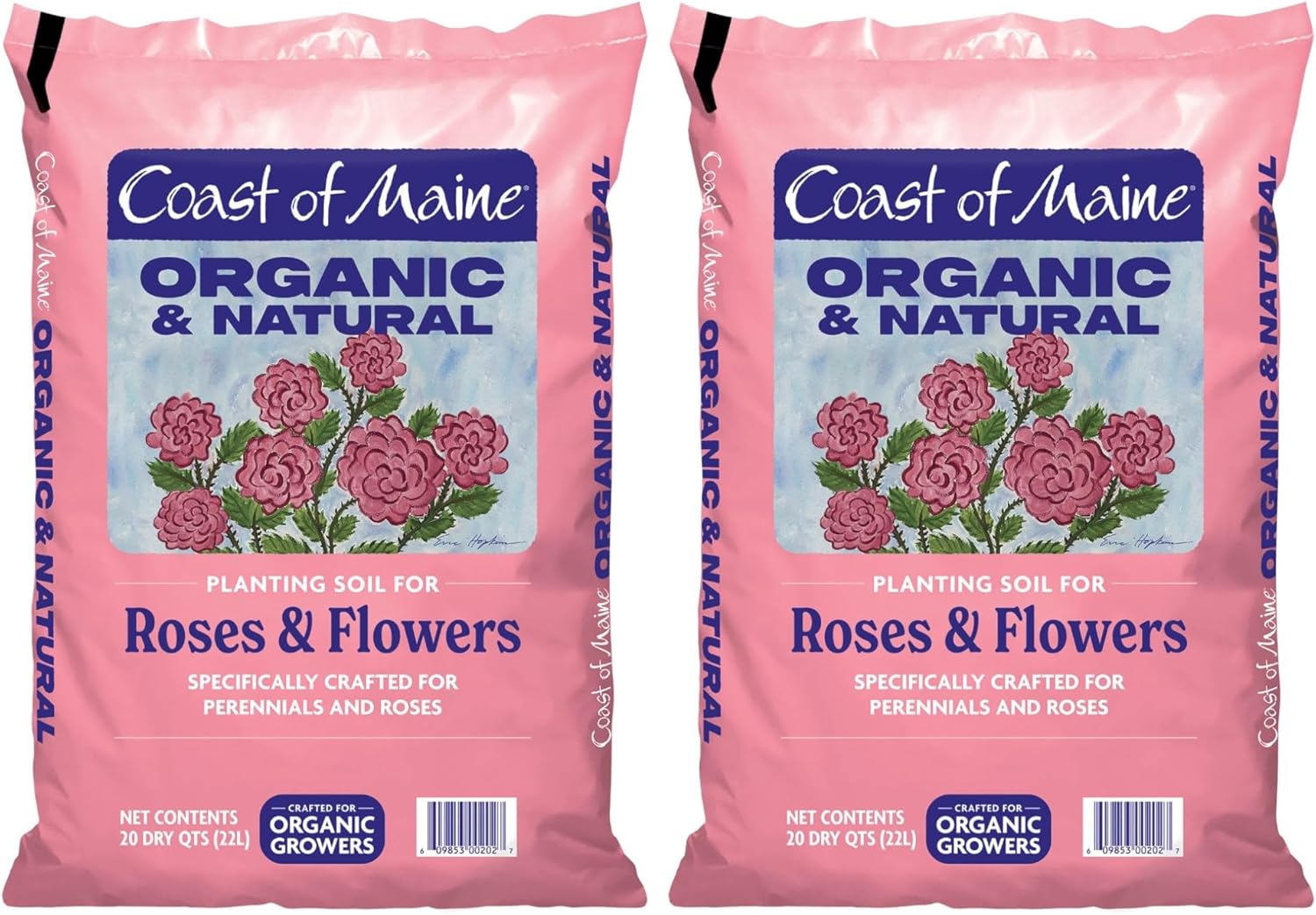
| Unit Count | 2 Count |
|---|---|
| Volume | 20 quarts |
| Brand Name | Coast of Maine |
| Item Weight | 22 pounds |
This Coast of Maine Roses & Flowers planting soil is an organic compost blend designed to revitalize planting beds and containers for roses and flowering perennials. Gardeners typically use it as a topdress, soil amendment, or potting addition to boost drainage while holding moisture for young roots. Notable features include OMRI listing, a formula containing seaweed and lobster meal-derived nutrients, and a microbial-rich compost base that supports soil life and steady bloom production. In practice it helps improve root development and flower set over time when mixed into existing soil or used as fresh media in pots. The two 20 quart bags are convenient for spot improvements and small rose plantings, and the organic ingredients make it suitable for eco-conscious gardeners. Limitations are that these bags are modest volume for larger beds so multiple bags or bulk product will be needed for extensive soil renovation, and mixing into heavy clay will still require mechanical amendment for long-term drainage improvement.
Best for: Gardeners focused on improving bloom performance and soil biology in small rose beds or containers who prefer organic inputs and steady, natural nutrient release.
Less Ideal for: Those needing large quantities to renovate whole garden beds or who require a fast-acting synthetic fertilizer solution for immediate green-up.
- OMRI listed organic formula safe for edible and ornamental beds
- Contains seaweed and lobster meal to supply slow-release nutrients and trace elements
- Microbial-rich compost supports soil biology and root health
- Suitable for use as topdress, container mix, or soil amendment for roses and perennials
- Limited volume per pack for renovating larger beds
- Not a complete replacement for heavy structural amendments in compacted clay soils
Verdict: Choose this OMRI-listed planting soil when you want an organic, microbe-rich amendment that improves root health and flowering in mini rose beds and containers.
Burpee Premium Organic Potting Mix with Coco Coir (9 Qt)

| Coverage | 9 Qt Container |
|---|---|
| Item Form | Powder |
| Specific Uses For Product | Plant Growth, Root Development, Seed Development, Soil Conditioning |
Burpee Premium Organic Potting Mix is a ready-to-use container mix that combines organic nutrients with coco coir to improve moisture retention and aeration for potted plants. You fill pots or raised containers with the mix, plant seeds or seedlings, and water as directed; the bag is formulated to feed plants for up to three months with a balanced, slow-release nutrient profile. The coco coir component helps maintain even moisture without waterlogging, which is useful for container-grown flowers such as mini roses that need consistent but not soggy root zones. The mix is OMRI listed, so it suits organic gardening and reduces the need to amend a basic potting soil with extra peat or coir. Limitations are that the bag is small at 9 quarts, so larger containers or multiple rose plants will need several bags, and specific nutrient ratios beyond the general description are not listed so heavier-feeding varieties may need supplemental fertilizer after the initial months.
Best for: Gardeners who want a reliable, low-fuss organic potting mix for container-grown flowers like mini roses and prefer a product that balances moisture retention with aeration.
Less Ideal for: Growers planning to fill large beds or many large pots who need bulk soil or those who require precise, high-strength nutrient formulations out of the bag.
- OMRI listed organic mix suitable for organic container gardening
- Coco coir improves moisture retention while maintaining aeration
- Formulated to provide slow-release nutrients for up to three months
- Designed specifically for container use with vegetables, flowers, and herbs
- Small 9-quart bag means you will need multiple bags for several pots or larger containers
- Does not list specific N-P-K values for precise fertilizer planning
Verdict: A compact, OMRI-listed potting mix with coco coir that gives container-grown mini roses a balanced, low-maintenance rooting medium.
Doter Organic Rose Soil Mix (1 qt)

| Brand | Doter |
|---|---|
| Item Type Name | Garden soil |
| Volume | 1 quarts |
This 1-quart Doter Rose Soil Mix is a ready-to-use potting blend aimed at helping potted and miniature roses establish strong roots and produce healthy blooms. It is formulated with a near-neutral pH that roses prefer, organic matter for steady nutrient release, and drainage components such as coarse sand and perlite to reduce waterlogging. In practice the bag works well for repotting mini roses, topping up small containers, or creating a rose-specific blend when mixed with additional compost. The fortified macro and micronutrients should support foliage and flowering without an immediate need for extra fertilizer. The product is compact and convenient for small-scale projects, but the 1-quart volume means frequent replenishment or multiple purchases if you have several plants. There is also a safety note about handling to avoid irritation, so use a mask or gloves when working with dry mix. For small indoor or patio rose care this mix gives a tailored starting medium, though larger beds will require bulk soil or amendment.
Best for: Buyers who care for one or a few mini or potted roses and want a rose-specific, ready-made potting mix that supports blooms without complex prep.
Less Ideal for: Gardeners planting beds, large containers, or many rose plants who need bulk soil or a larger-volume amendment.
- pH balanced around 6.0–6.5 which matches roses' needs
- Contains organic matter for sustained nutrient release and root development
- Includes coarse sand and perlite for improved drainage and reduced root rot risk
- Fortified with macro and micronutrients to support flowering and foliage
- Small 1-quart volume requires repeated purchases for multiple plants
- Manufacturer safety notice indicates dust can irritate skin, eyes, or lungs
Verdict: A convenient, rose-tailored 1-quart mix that gives mini and potted roses a balanced, well-draining start for healthier blooms.
FoxFarm Happy Frog Potting Soil, Container Garden, 2 cu ft (with 2 Plant Tags)

| Brand Name | FoxFarm |
|---|---|
| Unit Count | 600 Ounce |
| Volume | 2 cubic feet |
| Style Name | Container Garden |
FoxFarm Happy Frog Potting Soil is a ready-to-use container mix designed to give potted plants a nutrient-rich, biologically active growing medium. It is typically used to fill pots for ornamentals, small shrubs, and container trees; the blend includes earthworm castings, bat guano, aged forest products, and a mix of beneficial soil microbes and mycorrhizal fungi to promote root development and nutrient uptake. For mini roses in containers, this soil supplies organic matter and a pH-balanced base so plants can establish vigorous roots and produce healthy foliage and flowers. The bag is convenient for immediate use and the included plant tags help track varieties and planting dates. Limitations are that it is a bagged potting mix so heavier-feeding roses may need supplemental fertilizer later and you will need to choose appropriately sized containers and drainage to avoid waterlogging. Expect improved early growth from the biological amendments but plan routine feeding and pot maintenance for the best long-term results.
Best for: Buyers who want a reliable, biologically active potting mix to establish healthy mini roses in containers and prefer a ready-made soil that reduces mixing and prep time.
Less Ideal for: Gardeners who grow roses directly in garden beds or who prefer to custom-blend soils and fertilizers to exact specifications.
- Includes organic amendments such as earthworm castings and bat guano to boost nutrient availability
- Contains beneficial soil microbes and mycorrhizal fungi to improve root development and nutrient uptake
- Ready-to-use formulation tailored for container gardening
- pH adjusted to support efficient nutrient absorption
- May require additional fertilizer over time for heavy-feeding plants
- Bagged mix requires proper container selection and drainage to prevent water retention issues
Verdict: A ready-to-use, microbe-rich potting soil that makes establishing healthy container-grown mini roses simple and dependable.
Miracle-Gro Indoor Potting Mix for All Plants, 6 qt., 2-Pack

| Number of Packs | 2 |
|---|---|
| Unit Count | 400.58 Ounce |
| Item Highlight | Feeds for up to 6 Months |
| Ingredients | Sphagnum Peat Moss, Coir, Perlite, Fertilizer, Wetting Agent |
Miracle-Gro Indoor Potting Mix is a lightweight, ready-to-use blend designed for a wide range of indoor container plants. It combines sphagnum peat moss, coconut coir, and perlite to balance water retention and drainage, and includes a starter fertilizer that the manufacturer says feeds plants for up to six months. Typical use is straightforward: fill a pot with the mix, add the plant, firm and water. The bark- and compost-free formula reduces hiding places for fungus gnats, which is useful when repotting or potting delicate plants. For mini roses grown in containers indoors or in bright sheltered patios, the mix provides a neutral, moisture-managing medium that simplifies care without additional amendment. Limitations to note are that the nutrient charge is temporary so you will need to resume a feeding schedule after the initial period, and the mix is formulated for indoor use so it may not perform the same as specialty rose blends outdoors. Because the bags are small, larger collections require multiple bags or a larger source of potting soil.
Best for: Buyers who want a low-effort, reliable indoor potting soil to repot or start container plants and who prioritize products with wide positive feedback and reduced pest risk.
Less Ideal for: Gardeners looking for an outdoor rose-specific soil or a long-term, nutrient-rich planting mix for in-ground planting should choose a product formulated for outdoor roses instead.
- Ready-to-use mix with no on-the-spot blending required
- Balanced components (peat moss, coir, perlite) for both moisture retention and drainage
- Starter fertilizer included that feeds plants for up to six months
- Bark- and compost-free formula reduces potential habitat for fungus gnats
- Fertilizer is temporary so additional feeding is needed after the initial period
- Small 6 qt. bag size means you may need multiple bags for several plants
Verdict: An easy, pest-reducing indoor potting mix that simplifies repotting and gives mini roses a balanced, low-maintenance medium to thrive in containers.
Back to the Roots Premium Organic Potting Mix, 6 Quart

| Unit Count | 192 Fluid Ounces |
|---|---|
| Item Highlight | Peat-free potting soil for outdoor and indoor plants |
| Item Type Name | Premium Potting Mix |
| Volume | 6 quarts |
This 6-quart Back to the Roots Premium Organic Potting Mix is a ready-to-use, peat-free soil designed for a wide range of plants including herbs, vegetables, flowers and container-grown roses. It combines organic plant food, yucca extract for improved moisture management, and dolomitic limestone to help stabilize pH, which makes it easy to use straight from the bag in small pots or as a component in custom rose mixes. The texture is light and workable, so it fills root zones without compacting and encourages good drainage while retaining enough moisture for frequent-watering plants like mini roses. Because it is made from upcycled plant matter and wood fines and labeled 100 percent organic, it suits gardeners looking for an eco-conscious option. Limitations include the small 6-quart size, which means multiple bags are needed for several plants or larger pots, and it does not list NPK numbers so experienced growers wanting precise fertilizer ratios may supplement with their own feed schedule.
Best for: Gardeners who want a low-risk, ready-to-use organic potting mix for small containers and mini roses and prefer an eco-conscious, easy-care product that performs without complex mixing.
Less Ideal for: Growers who need bulk quantities for beds or large raised planters or those who require precise, measurable fertilizer formulations for advanced feeding programs.
- Peat-free and 100% organic formulation made from upcycled plant matter and wood fines
- Includes yucca extract to help regulate moisture and reduce water stress in containers
- Dolomitic limestone added to help balance pH for more stable growing conditions
- Light, workable texture suitable for potting mini roses and other container plants
- Small 6-quart bag requires multiple purchases for several pots or larger containers
- No detailed nutrient (NPK) analysis provided, so additional fertilization may be necessary
Verdict: A dependable, peat-free organic potting mix that simplifies growing mini roses in containers with built-in moisture control and pH support.
Choosing the Right Soil for Mini Roses: Key Factors to Consider
Drainage and Aeration
Mini roses are often grown in small pots where standing water quickly causes root suffocation. Good drainage means the mix contains materials such as coarse sand, perlite, or pumice that create air pockets and let excess water escape. Aeration keeps fine roots healthy and helps beneficial microbes thrive, which in turn supports nutrient uptake.
When choosing soil, look for a texture that feels light and crumbly rather than dense and compact. In practice this affects how often you need to water, how easily roots spread, and how quickly the surface dries-important details for preventing crown rot and fungal leaf issues.
Moisture Retention Balance
Mini roses need steady moisture without becoming waterlogged. A good potting mix balances water-holding components like composted bark or coco coir with fast-draining aggregates. That balance reduces rapid swings between bone-dry and saturated, which can stress flowering and encourage bud drop.
Consider your local climate and watering routine. In hot, dry locations favor mixes with slightly higher organic content; in cool, humid areas prioritize faster-draining blends to avoid prolonged wetness around the roots.
Nutrient Content and Release
Flowers need regular feeding, but mini roses in small containers benefit from steady low-dose nutrient delivery rather than large fertilizer spikes. Soils with a moderate baseline of organic matter and included slow-release fertilizer will support blooms for longer between feedings.
Also check the type of organic amendments included. Well-composted materials supply trace elements and improve soil structure, while inert mixes require a separate fertilization plan. The nutrient profile determines how often you must add liquid feed or granular fertilizer and influences long-term pot health.
Particle Size and Consistency
Uniform particle size makes a mix predictable to water and easier to repot into small containers. Very fine, dusty mixes can compact and reduce airflow after a few months, while overly chunky mixes may dry too quickly and need more frequent watering.
A good mini rose soil feels consistent through the bag and stays stable after watering. That consistency minimizes transplant shock and makes it easier to judge moisture by touch or a simple probe.
pH and Amendments
Roses typically prefer a slightly acidic to neutral pH. Soil that is too alkaline or too acidic can lock up nutrients and limit bloom quality. Mixes formulated with pH in mind or that include buffering amendments help maintain a favorable root environment.
Also look for beneficial additives such as mycorrhizal inoculants, proven compost, or calcium sources that reduce blossom end issues. Avoid mixes that do not disclose pH or key amendments, because hidden extremes can be difficult to correct in small containers.
Suitability for Pot Size and Repotting Frequency
Mini roses often live in small pots where root space is limited. The soil you choose should suit the pot size you plan to use and your willingness to repot. Fast-draining, stable mixes reduce the need for annual repotting, while high-organic mixes may compact and require more frequent refreshment.
Think about how often you prune roots or refresh topsoil. A mix that stays light and resists compaction makes seasonal maintenance easier and helps preserve bloom performance between repotting cycles.
Container Sizes and Soil Depth for Mini Roses
Mini roses do best in containers that provide both stable moisture and room for roots to spread. For most mini varieties, aim for pots with at least 6 to 8 inches of soil depth to support a healthy root ball without drying out too quickly. Shallow trays and tiny decorative containers can work for short-term displays but require vigilant watering and frequent feeding.
Adjust the soil mix for depth. Deeper pots can tolerate a slightly higher proportion of coarse material because there is more overall volume to retain moisture. Conversely, very small pots benefit from a finer but well-aerated mix so the roots are not left in a gravel-like medium that dries out in a day.
- Use well-draining soil for unglazed clay pots, which wick moisture.
- Choose mixes with more water retention for sunny balconies.
- Consider a small layer of coarse grit at the bottom only if drainage holes are partially obstructed.
Amendments That Help Mini Roses Bloom
Certain organic amendments improve both structure and nutrition for mini roses. Finely screened compost adds slow nutrients and microbial activity without overly increasing bulk, while well-aged bark improves aeration. Specialty rose fertilizers or balanced slow-release granules can be included in the mix or applied after potting to support a steady bloom cycle.
Avoid raw manures or high-salt amendments in tight containers because they can burn roots or create osmotic stress. Instead opt for stable, low-salt organic inputs and supplement with regular diluted liquid feed during the growing season.
- Compost for trace elements and structure
- Aged bark or coco coir for moisture control
- Slow-release fertilizer for steady feeding
Watering Practices That Match the Soil
Match your watering routine to the mix you choose. Fast-draining blends need more frequent, shorter sessions to keep the root zone evenly moist, while richer mixes hold water longer and tolerate less frequent watering. Check moisture by feeling the soil an inch below the surface or using a simple moisture meter for consistent results.
Water management also affects disease risk. Let the top half inch dry slightly between waterings to reduce fungal pressure, and water at the pot base rather than overhead to keep foliage dry when possible.
- Probe soil before watering to avoid overwatering
- Water early in the day to allow foliage to dry
- Adjust frequency with seasonal temperature changes
Repotting and Refreshing Soil
Mini roses in containers benefit from routine refreshment of the root zone. Repot every one to three years depending on growth and pot size, replacing about one third to one half of the old mix with fresh soil to rejuvenate structure and nutrients. When repotting, inspect roots for girdling or rot and trim as needed before returning the plant to fresh mix.
Top-dressing with a thin layer of fresh mix and a light feeding in early spring helps maintain vigor for repeat bloom cycles without a full repot every year.
- Partial soil replacement reduces transplant shock
- Inspect roots during repotting to identify issues
- Top-dress in spring to refresh nutrients
Dealing with Common Soil Problems
If you observe poor drainage, yellowing leaves, or persistent dampness, examine the potting mix for compaction or blocked holes. Amending the top layer with coarse material and improving drainage holes can often correct the issue without full repotting. For nutrient deficiencies, use a balanced liquid feed rather than large doses of granular fertilizer that can build up salts in small pots.
For pH-related issues such as poor color or stunted growth, test the soil and adjust gradually. Garden lime or sulfur can modify pH but should be used carefully and only after confirming the problem with a test.
- Loosen compacted soil and refresh the top layer
- Use liquid feeds to correct deficiencies quickly
- Test pH before applying corrective amendments
How We Chose the Best Soil for Mini Roses
We narrowed the field to soils and potting mixes formulated or commonly used for small shrub roses and container-grown mini roses. Our editorial filters prioritized characteristics that directly affect bloom frequency, root health, and ease of maintenance in containers and small garden beds. Evaluation criteria included drainage and aeration to prevent root rot in shallow pots, nutrient content and release profile to support frequent flowering, moisture retention balanced with quick drying of surface soil to avoid fungal issues, and particle uniformity for consistent potting and transplanting. We also considered pH suitability for roses, the presence of beneficial amendments such as compost or slow-release fertilizer, and the mix's suitability for repotting frequency typical of mini roses. Exclusions: bulk garden soil not intended for containers, mixes designed solely for heavy feeders or trees, and products lacking clear composition or horticultural guidance. The resulting selections focus on realistic, gardener-friendly soil options that perform well across common container sizes and microclimates.
FAQ
What is the ideal soil pH for mini roses?
Mini roses usually prefer slightly acidic to neutral soil, roughly pH 6.0 to 7.0. A soil test will tell you whether adjustments are needed and whether a buffered mix is the better choice for your plants.
How often should I repot a mini rose?
Repotting every one to three years is common depending on growth and pot size. Smaller pots and vigorous growers need more frequent repotting to refresh structure and nutrients.
Can I use general-purpose potting soil for mini roses?
General-purpose mixes can work if they offer good drainage and include organic matter. You may need to adjust with added perlite for aeration or compost for steady nutrients to match the needs of mini roses.
Should I add slow-release fertilizer to the potting mix?
Including a moderate slow-release fertilizer can provide steady nutrients between feedings, but avoid heavy initial doses. Balance with occasional liquid feed during the growing season for best bloom performance.
How do I prevent root rot in mini roses grown in pots?
Prevent root rot by using a well-draining mix, ensuring drainage holes are clear, and avoiding prolonged saturation. Let the top soil dry slightly between waterings and improve aeration with perlite or coarse materials when needed.
Final Verdict
Choose a potting mix that balances drainage with moisture retention, supplies steady nutrients, and matches the pot size you plan to use. Prioritize mixes with consistent particle size, slightly acidic pH, and moderate organic content to support frequent blooms and healthy roots. By balancing those tradeoffs and adjusting your watering and feeding routine to the mix, you can keep mini roses compact, floriferous, and resilient.
