

Note: This article contains affiliate links. If you click on these links and make a purchase, I may earn a small commission at no extra cost to you. This helps support my research and content. Read my full affiliate disclosure here.
Picking the right soil for palm trees in pots makes a big difference in how well container palms establish, resist root rot, and maintain steady growth. In pots, palms rely entirely on the potting mix for water, oxygen, and nutrients, so a mix that balances drainage with moisture retention is essential. This guide shortlists the seven top soil options suited for palm trees in pots and explains the practical differences you will feel in the garden. We assess mixes for drainage, nutrient holding, aeration, and long-term stability to help you match a soil to your pot size and watering routine. Read on to compare the evaluation criteria used for the picks and decide which mix fits your container palms.
Top Picks at a Glance
| Best Overall The best all-around choice for most situations | Wekiva Foliage Palm Tree Soil Mix, 2 Quarts |  |
| Best Quality Built to a higher standard if you want something more solid | FoxFarm Ocean Forest Potting Soil, 12 qt (with 2 Plant Tags) |  |
| Best Value The sweet spot between price and what you get | Gardenera Palm Tree Potting Mix (1 Quart) |  |
| Best Budget The cheapest option that still gets the job done reliably | Doter Citrus Tree Potting Soil Mix (1 qt) |  |
| Highest Rated A top-rated pick with lots of positive feedback | E.B. Stone Organics Citrus & Palm Mix Potting Soil, 1.5 cu ft |  |
| Most Popular A crowd favorite that many people choose with confidence | Miracle-Gro Cactus, Palm & Citrus Potting Mix, 8 qt. |  |
| Best Seller A high-volume bestseller chosen again and again | Back to the Roots Organic Expanding Coco Coir Potting Soil Brick (10 lb) |  |
Wekiva Foliage Palm Tree Soil Mix, 2 Quarts

| Brand Name | Wekiva Foliage |
|---|---|
| Unit Count | 2 Count |
| Style Name | 2 Quarts |
| Volume | 1 quarts |
| Item Weight | 16 ounces |
This 2-quart palm soil blend is built for potted palms and mixes peat moss, perlite, lime, gypsum, Nitroform fertilizer, and HydraFiber to create a balance of aeration, moisture retention, and nutrients. Use it when repotting or top-dressing Areca, Majesty, Parlor, or Kentia palms in containers; the perlite and HydraFiber improve drainage and root aeration while peat helps hold moisture between waterings. Lime and gypsum help adjust pH and supply calcium and sulfur, and the included Nitroform provides an initial nutrient boost so newly potted palms can establish quickly. Practical benefits include easier watering management for indoor palms and reduced risk of waterlogged roots in heavier pots. The main limitation is the small 2-quart size, which makes it best for small to medium pots or for mixing into larger volumes rather than filling large containers on its own. If you need bulk soil for multiple large palms, plan to buy multiple units or blend this with a larger base soil.
Best for: Buyers repotting or refreshing soil for one or a few potted palms who want a ready-made, palm-focused mix that simplifies watering and establishment.
Less Ideal for: Gardeners who need large volumes of soil for multiple big containers or in-ground plantings should choose bulk potting soil or mix larger quantities themselves.
- Formulated specifically for common palm varieties, supporting palm-specific needs
- Good balance of drainage and moisture retention from perlite and HydraFiber combined with peat moss
- Contains pH adjusters and minerals (lime and gypsum) to support nutrient availability
- Includes starter fertilizer (Nitroform) so newly potted palms get immediate nutrients
- Versatile for indoor and outdoor container use and for top-dressing existing pots
- Small 2-quart package is not sufficient alone for large pots or multiple plants
Verdict: A palm-specific, ready-to-use potting mix that makes repotting and establishing small to medium container palms easier and more reliable.
FoxFarm Ocean Forest Potting Soil, 12 qt (with 2 Plant Tags)

| Brand Name | FoxFarm |
|---|---|
| Unit Count | 144 Ounce |
| Item Highlight | Light, Aerated Texture with Fish Meal, Crab Meal, Earthworm Castings |
| Volume | 12 quarts |
FoxFarm Ocean Forest is a pre-mixed potting soil built from aged forest products, sandy loam and sphagnum peat moss, amended with organic inputs like fish meal, crab meal and earthworm castings. It is designed to be used straight from the bag for container-grown plants and seedlings, providing a light, well-aerated texture that helps drainage and root development. Typical use is filling pots or raised beds for starts, houseplants and container vegetables or berries; the included plant tags make labeling varieties and planting dates easier. The nutrient-rich formula supplies an initial fertility boost so you can delay heavy nitrogen feeding while young plants establish. On the downside the 12 quart bag is relatively small for larger blackberry plantings in-ground or for filling many large containers and you may need to supplement specific soil pH or long-term fertility requirements for mature brambles. For container blackberries this mix gives an easy, reliable start but plan on larger volumes or soil amendments for permanent beds.
Best for: Gardeners who want a reliable, plug-and-play potting mix to start container blackberries or seedlings and value a nutrient-rich, well-aerated medium that reduces early feeding needs.
Less Ideal for: Growers preparing large in-ground blackberry beds or those needing specific soil pH control should choose bulk soil or amend based on a lab test rather than rely on this bag alone.
- Ready-to-use blend with organic amendments for immediate planting
- Light, aerated texture that promotes drainage and root growth
- Contains fish meal, crab meal and earthworm castings for early nutrient support
- Includes plant tags for easy labeling of varieties and planting dates
- 12 quart bag size is limited for larger plantings or multiple containers
Verdict: Use this nutrient-rich, aerated potting mix to give container or young blackberry plants a strong, low-effort start.
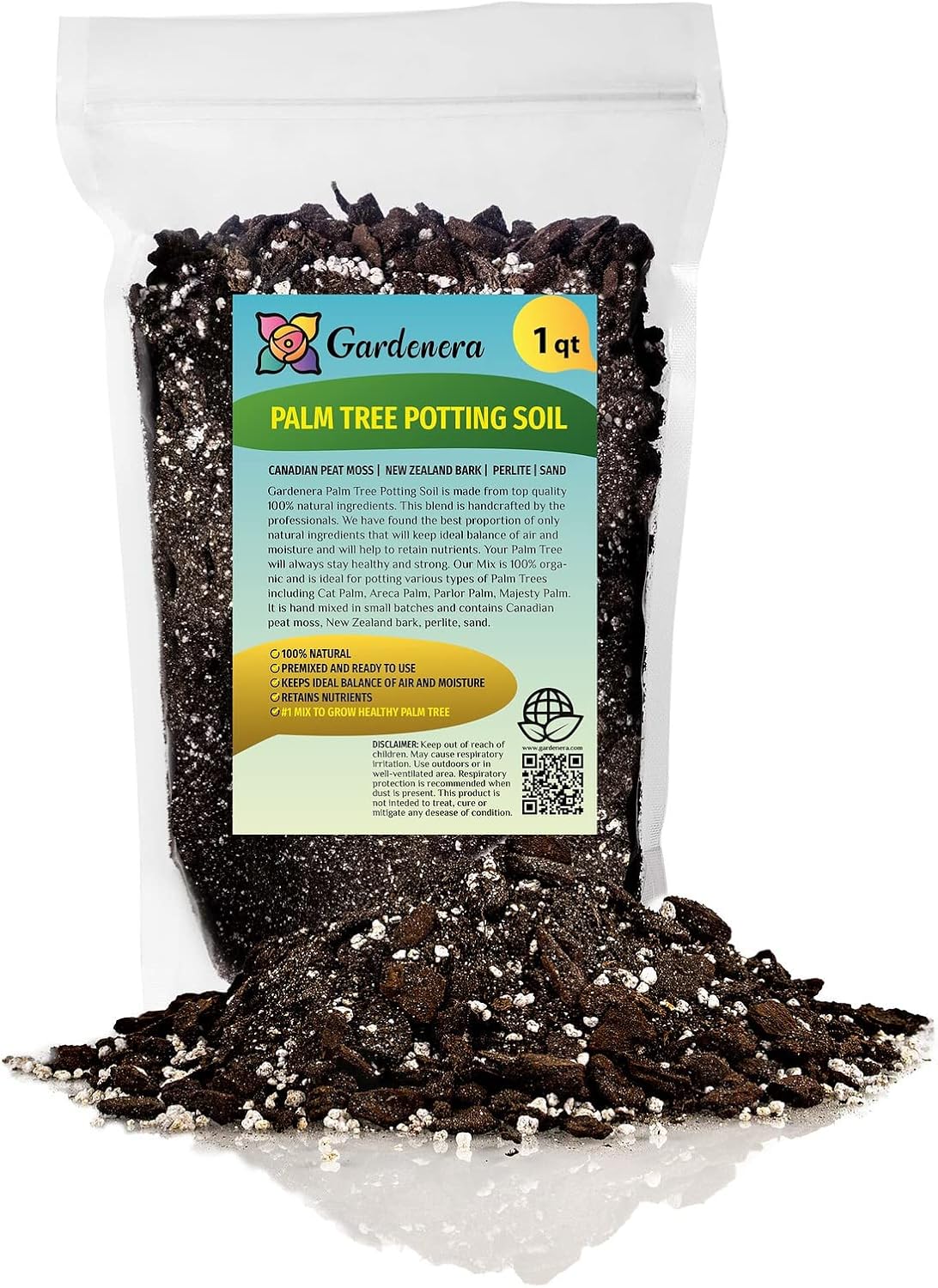
Gardenera Palm Tree Potting Mix (1 Quart)
| Unit Count | 1 Count |
|---|---|
| Item Type Name | Palm Tree Potting Mix |
| Volume | 1 quarts |
| Brand Name | Gardenera |
This Gardenera Palm Tree Potting Mix is a ready-to-use blend formulated for palm trees, combining Canadian peat moss, New Zealand bark, Ukrainian perlite, and sand to give a balance of moisture retention and drainage. It is typically used when repotting indoor or container palms or refreshing potting media for established potted specimens. The peat and bark add organic matter and structure while the perlite and sand increase aeration and reduce the risk of waterlogging. In practice this mix makes repotting straightforward: loosen roots, fill the new container, position the palm at the right height, and water to settle the soil. Because the bag is only 1 quart, it is best for single small pots, seedlings, or as a topdressing rather than filling large containers. The product notes safety precautions for handling dusty components, so wear a mask and gloves when working with it. If you want a palm-tailored, easy-to-use small bag for potting or small refreshes, this mix covers the bases; for larger jobs you will need multiple bags or a larger size option.
Best for: Buyers who need a small, palm-focused potting mix for repotting seedlings, small potted palms, or for topping up containers and who prioritize a product designed for palm root health.
Less Ideal for: Gardeners needing to fill large containers, multiple palm pots, or outdoor planting holes should avoid this size and choose bulk or larger-volume mixes instead.
- Formulated specifically for palms with peat, bark, perlite, and sand for balanced moisture and drainage
- Good aeration that helps prevent root rot in container palms
- Ready-to-use mix simplifies repotting and small pot top-ups
- Very small 1 quart volume limits use to seedlings or small pots
- Contains dusty components requiring gloves and a mask during handling
Verdict: A compact, palm-tailored potting mix that makes small repots and top-ups simple and effective.
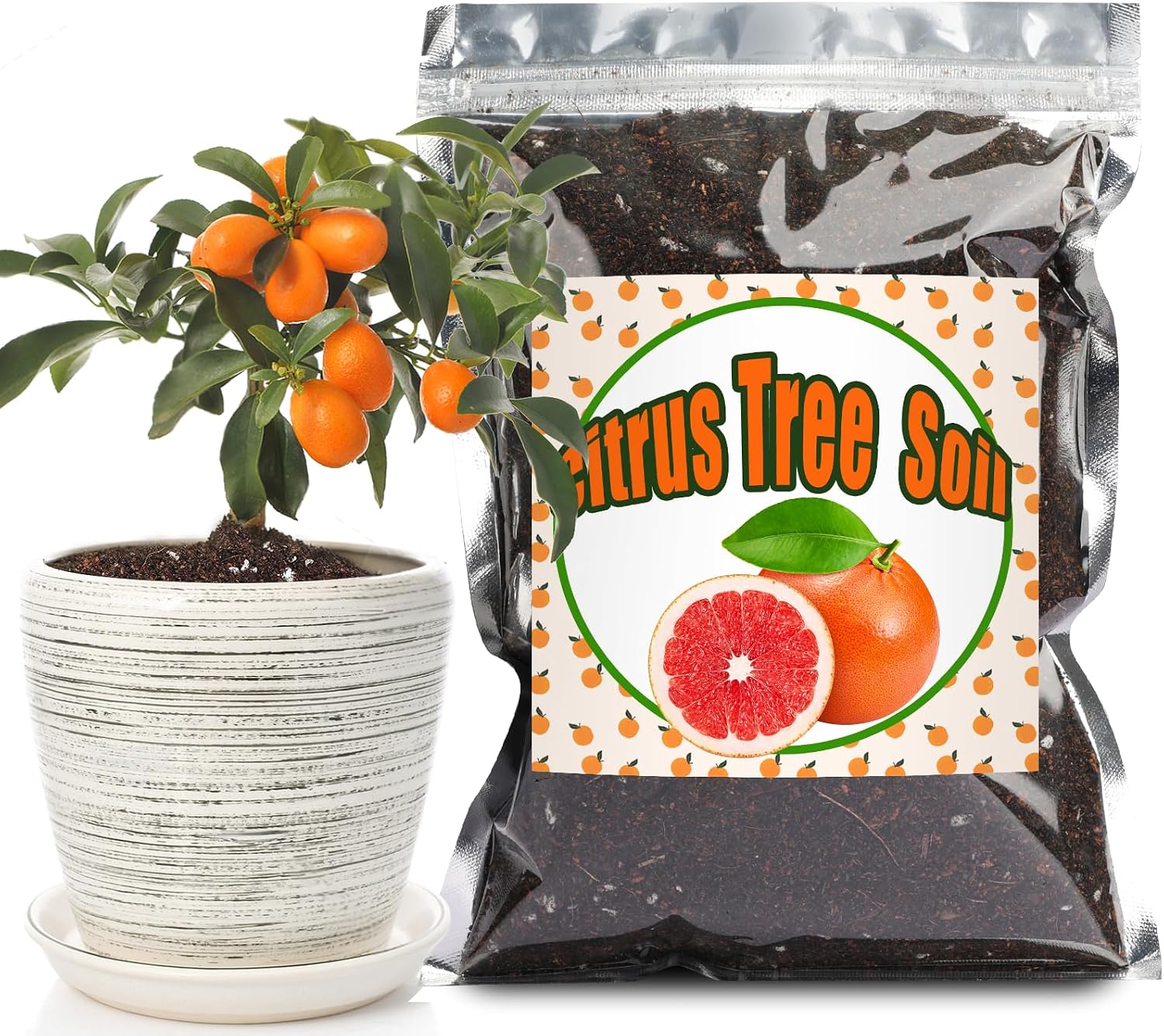
Doter Citrus Tree Potting Soil Mix (1 qt)
| Brand Name | Doter |
|---|---|
| Item Type Name | Garden soil |
| Volume | 1 quarts |
| Item Weight | 224 g |
This Doter citrus potting mix is a small, 1-quart, ready-to-use soil blend designed for container-grown lemon, lime, orange and other citrus trees. It mixes organic and mineral components to deliver a balanced nutrient profile and claims an ideal pH between 6.0 and 7.1, which helps citrus roots access nutrients. The formulation emphasizes drainage and aeration so pots do not stay waterlogged, and the bagged format makes it convenient for repotting seedlings or refreshing the top layer in containers. For budget-conscious gardeners the single-quart size is useful for small projects, trial runs, or blending into larger mixes, but you will likely need multiple bags for a single mature container tree. The product works best as a component or short-term potting medium rather than a sole long-term planting substrate for large trees. Expect good seedling establishment and faster drainage compared with generic garden soil, but plan to supplement with larger volumes or slow-release fertilizer for sustained feeding on mature citrus.
Best for: Gardeners looking for an inexpensive, small-batch citrus-specific soil to repot seedlings, top-dress containers, or trial a citrus blend before committing to larger quantities.
Less Ideal for: Growers with mature potted citrus or those who need large volumes for in-ground planting should choose bulk soils or custom mixes instead.
- Formulated pH between 6.0 and 7.1, suitable for citrus nutrient uptake
- Designed for improved drainage and aeration to reduce root rot risk
- Nutrient-rich blend of organic and mineral components to support growth
- Ready-to-use bag convenient for repotting seedlings and small containers
- Small 1-quart volume means multiple bags are required for larger pots or trees
- Not marketed as a long-term complete potting substrate for mature trees
Verdict: A convenient, budget-friendly small bag of citrus-specific potting mix ideal for repotting seedlings and topping up container citrus plants.
E.B. Stone Organics Citrus & Palm Mix Potting Soil, 1.5 cu ft

| Brand Name | E.B. Stone Organics |
|---|---|
| Unit Count | 1536 Ounce |
| Volume | 1.5 cubic feet |
| Style Name | Potting Soil |
E.B. Stone Organics Citrus & Palm Mix is a ready-to-use organic soil blend designed for container and in-ground planting of citrus, palms, avocados and tropical foliage. The mix pairs aged fir bark and pumice to keep the root zone well aerated and fast-draining so plants that dislike soggy feet avoid root rot, while added mycorrhizae improve nutrient and water uptake. It is intended to be used straight from the bag for potting or worked into beds when planting, which simplifies planting and repotting tasks. For gardeners seeking reliability, this blend delivers consistent structure and moisture retention without heavy amendments, and the organic base supports longer-term soil biology. Limitations are the single bag volume of 1.5 cubic feet, which means larger projects will require multiple bags and mixing on site, and it does not list N-P-K numbers or slow-release fertilizer content so supplemental feeding may be needed for heavy-feeding specimens.
Best for: Gardeners who prioritize reliable, low-maintenance potting media for citrus and tropical plants and want a ready-made organic blend that supports healthy roots.
Less Ideal for: People who need large volumes for landscaping projects or who prefer a potting mix with specified fertilizer content and tailored nutrient ratios.
- Formulated specifically for citrus, palms and tropicals to match their root needs.
- Aged fir bark and pumice provide good drainage and aeration to reduce risk of root rot.
- Contains beneficial mycorrhizae to enhance root nutrient and water uptake.
- Ready-to-use bag simplifies repotting or planting without on-site blending.
- Single bag is only 1.5 cubic feet so multiple bags are required for larger trees or beds.
- No detailed fertilizer analysis provided so additional feeding may be necessary for heavy feeders.
Verdict: Choose this mix when you want a consistent, ready-to-use organic soil that promotes healthy, well-aerated roots for citrus and tropical plants.
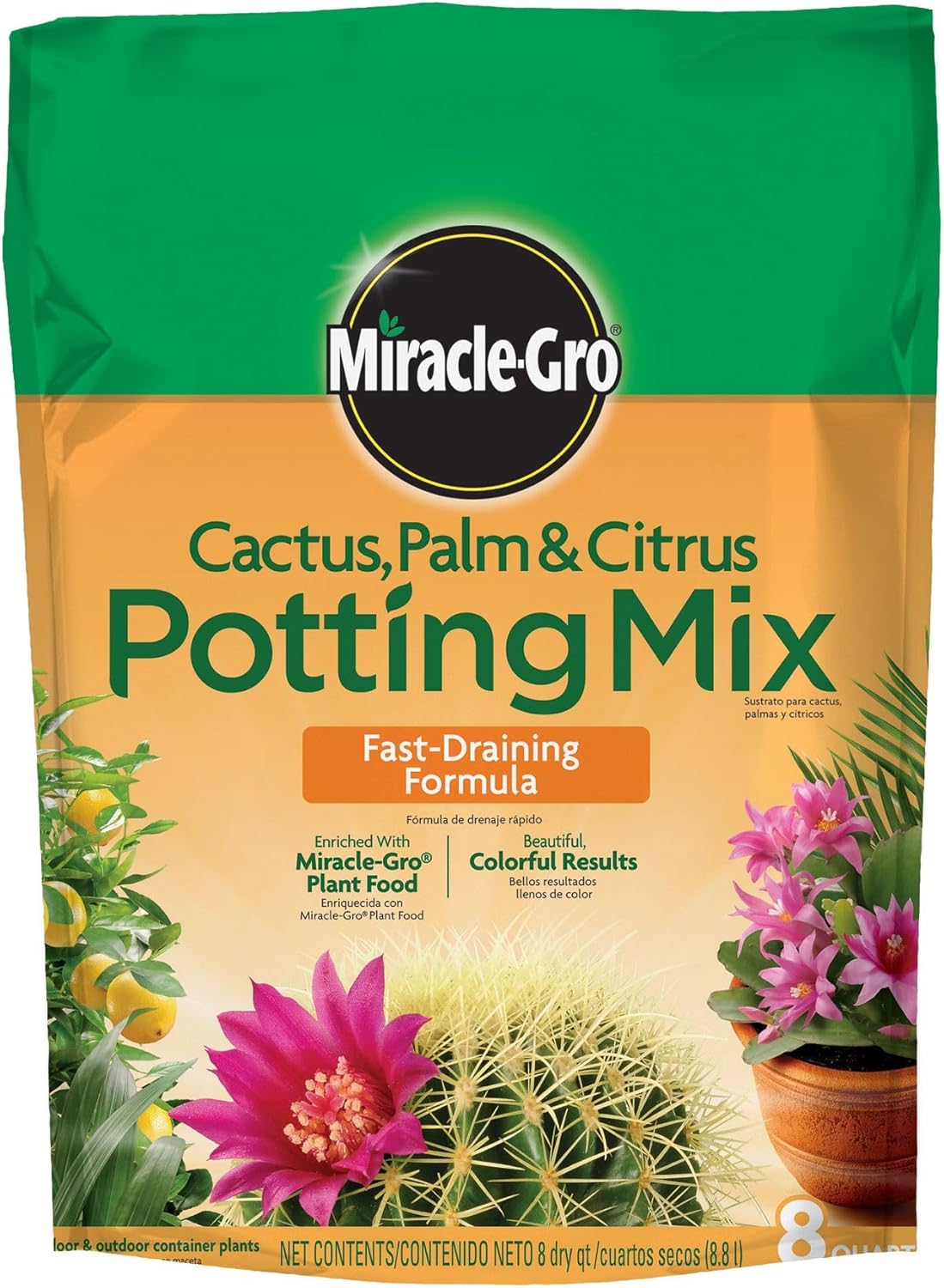
Miracle-Gro Cactus, Palm & Citrus Potting Mix, 8 qt.
| Brand Name | Miracle-Gro |
|---|---|
| Volume | 8 quarts |
| Unit Count | 1 Count |
This 8-quart Miracle-Gro potting mix is designed for container-grown cacti, palms, and citrus and combines peat moss, sand, perlite, and forest products for faster drainage and reduced compaction. It arrives ready to use and is enriched with Miracle-Gro plant food so newly potted citrus get an initial nutrient boost without immediate fertilizing. Typical use is straightforward: choose a pot with drainage, fill about one third, set the root ball and top up, then water and allow to drain. The formula helps soil dry between waterings, which is important for citrus root health in containers, and one bag is enough for two 8-inch pots. Limitations are the small volume for larger trees and the presence of peat moss if you prefer peat-free mixes; heavier or older citrus will need larger volumes and eventual repotting. For growers wanting a quick, reliable container medium that balances moisture retention with drainage, this mix performs as expected.
Best for: Growers who repot or maintain container citrus and want a ready-to-use mix that balances drainage and initial feeding for healthier root development.
Less Ideal for: Gardeners potting mature or large citrus specimens that need large volumes of soil or those seeking a peat-free or custom mineral-heavy citrus bonsai substrate.
- Fast-draining blend reduces risk of waterlogged roots for container citrus
- Pre-enriched with plant food to give newly potted plants an initial nutrient boost
- Contains perlite and sand to resist compaction and maintain aeration
- Formulated for indoor or outdoor containers so it works across sites
- 8-quart bag is small for larger or multiple citrus containers
- Contains peat moss which some buyers avoid for sustainability reasons
Verdict: A convenient, fast-draining, plant-food–enriched container mix that makes repotting small to medium citrus trees quick and reliable.
Back to the Roots Organic Expanding Coco Coir Potting Soil Brick (10 lb)

| Item Highlight | 10 lb compressed coco coir brick; peat-free; OMRI Listed |
|---|---|
| Item Type Name | Coconut Coir |
| Volume | 2 cubic feet |
| Ingredients | Coconut Coir |
| Style Name | Expanding Potting Soil |
This compressed coco coir brick provides a lightweight, peat-free potting medium that expands when you add water to create loose, airy substrate for containers and seed flats. It is typically used by hydrating the 10 lb block to about 2 cubic feet of coir and then using it alone for potted plants, mixing it into garden soil to improve drainage and aeration, or blending with compost for starting seeds. Notable features include OMRI listing for organic use, a balanced pH suited to a wide range of plants, and compact storage before expansion which saves space. Practical benefits are improved root aeration and water retention compared with heavy garden loam, easier handling than bulky bags, and versatility across vegetables, herbs, and ornamentals. Important limitations are that coco coir is a soilless substrate and does not supply significant nutrients on its own so you will need to add fertilizer or compost for long-term potted herbs like rosemary, and the product requires time and a water source to expand before use.
Best for: Buyers who prioritize low-risk, easy-to-handle, organic potting media and want a versatile base for container herbs and seed starting without dealing with heavy bags.
Less Ideal for: Gardeners who want a ready-to-plant, nutrient-rich potting mix out of the box or those who prefer soil with built-in slow-release fertilizer.
- Peat-free OMRI listed organic coco coir suitable for organic growing
- Expands from a compact brick to about 2 cubic feet for easy storage and transport
- pH balanced and airy texture that improves drainage and root aeration
- Versatile use: can be used alone, for seed starting, or mixed into existing soil
- Provides little inherent fertility so supplemental feeding or compost is needed for nutrient-hungry plants
Verdict: A compact, peat-free coco coir brick that expands into an airy, pH-balanced base ideal for low-risk organic container gardening and seed starting when paired with fertilizer or compost.
Choosing the Right Soil for Palm Trees in Pots: Key Factors to Consider
Drainage and Water Management
Well draining soil prevents water from pooling around palm roots, which reduces the risk of root diseases. In a container, water must move through the mix quickly enough that the root crown is not constantly wet, yet not so fast that the palm dries out between waterings.
Think about your watering schedule and pot material when judging drainage. Unglazed clay pots wick moisture away and can work with mixes that retain more water. Plastic or glazed pots hold moisture longer and need a faster-draining mix. Particle size and the inclusion of coarse materials like horticultural sand, perlite, or pine bark are the main ways to tune drainage.
Moisture Retention Balance
Palm roots need consistent moisture without saturation. A good container soil holds enough water to sustain the palm for several days under typical patio or indoor conditions, but it should release excess water readily during drainage events.
Organic components such as coconut coir or well-aged bark add water-holding capacity while maintaining structure. Avoid mixes that rely solely on fine peat or heavy loam in pots because they compress and can stay soggy. Consider your local climate: hotter, windier locations require mixes with greater retention; shaded, cool spots can handle a slightly drier blend.
Aeration and Root Space
Palms form fibrous root systems that need both oxygen and room to expand. Aeration comes from pore space between particles, which also allows beneficial microorganisms to thrive.
Coarse aggregates, chunky bark, or pumice increase pore space. Too many fines will compact over time, reducing oxygen flow and slowing root growth. For larger containers, include larger particles to create stable structure; for small pots, maintain a balance so the mix still supports adequate water retention while offering oxygen.
Nutrient Content and Slow-Release Feeding
Container palms rely on the potting mix for their nutrients. A good mix includes a baseline of readily available nutrients and either some slow-release fertilizer or the capacity to accept supplemental feeding.
Organic components supply initial fertility and improve microbial life, while mineral components provide structural stability. Look for mixes that list balanced macro- and micronutrients or that have a light slow-release fertilizer blended in. Remember that frequent watering in pots can leach nutrients, so choose a mix that holds nutrients or plan a feeding schedule to make up for losses.
pH and Suitability for Palm Species
Most common container palms prefer a slightly acidic to neutral pH range. The soil pH affects nutrient availability and can influence susceptibility to certain physiological problems.
Check the typical pH tendencies of the mix components: compost and bark can lower pH over time, while crushed limestone raises it. If you grow a palm species with specific pH preferences, select a mix that stays within that window or that can be adjusted with lime or sulfur. For general use, aim for mixes that are pH-stable in the slightly acidic to neutral range.
Long-Term Stability and Repotting Frequency
Some potting mixes break down quickly, losing structure and requiring more frequent repotting or top-dressing. Durable mixes retain particle size and porosity through several watering cycles.
Consider how often you are willing to repot or refresh the soil. Lightweight mixes that decompose fast might be fine for fast-growing palms but can become compacted in a year. Mixes with larger inorganic components like pumice or crushed rock maintain their profile longer and reduce the need for early repotting.
Matching Mix to Pot Size and Material
Pot size and pot material affect moisture dynamics and how a soil behaves. Small pots dry faster and need mixes that retain moisture without staying soggy. Large pots buffer moisture swings but require enough porosity so the middle of the root ball does not become anoxic.
- Small pots: increase organic water-holding components slightly, but keep coarse particles to prevent compaction.
- Large pots: include more coarse aggregate to preserve aeration throughout the soil profile.
- Unglazed clay pots: expect faster drying; choose mixes with greater retention.
- Plastic or glazed pots: select faster-draining mixes to avoid prolonged wetness.
Amending a Standard Potting Mix for Palms
You can adjust a general-purpose potting soil to better suit palm trees by adding coarse, inorganic ingredients and extra aeration. Simple tweaks make a big performance difference in containers.
- Add pumice, coarse perlite, or horticultural sand to increase drainage.
- Mix in aged bark or coconut coir to boost structure and moderate moisture hold.
- Blend in a balanced slow-release fertilizer or apply a light starter feed when repotting.
Watering Strategies for Container Palms
With the right soil, watering is simpler, but you still need to match frequency to container and climate. Let the top portion of the mix dry slightly between deep waterings for many palm species to encourage healthy root growth. Use finger tests, a moisture meter, or lift the pot to judge weight rather than relying on a fixed schedule. Avoid frequent shallow watering, which keeps only the surface moist and encourages shallow rooting.
- Deep soak until water drains from the bottom, then allow partial drying.
- Increase frequency in hot, windy conditions and reduce in cool, humid weather.
- Monitor drainage holes to ensure water is exiting freely and the mix is not clogged.
Fertilizing and Feeding in Pot Culture
Container palms benefit from a regular, mild feeding schedule because nutrients leach with each watering. Choose a fertilizer plan compatible with the mix; slow-release granules can reduce feeding frequency while liquid feeds correct deficiencies quickly. Adjust feeding for seasonal growth patterns: more frequent in active growing months and lighter in winter. Watch for yellowing or unusual leaf symptoms, which often indicate nutrient imbalance or incorrect pH rather than an inherent soil problem.
- Apply slow-release fertilizer at repotting or top-dress annually.
- Use liquid foliar or soil feeds to correct visible deficiencies between slow-release cycles.
- Flush the pot occasionally if salt buildup from feeds becomes visible on the soil surface.
Winter Care and Drainage Considerations
In cooler seasons, container soils that drain too slowly can leave roots exposed to prolonged cold and wet conditions. Choose blends that maintain porosity in cooler weather and reduce irrigation as growth slows. If you overwinter palms outdoors in cold, wet climates, raise pots off saturated ground and ensure good drainage to reduce freeze damage and root loss.
- Reduce watering in dormancy to avoid soggy roots.
- Raise pots or add gravel under the pot in winter to keep drainage from being blocked.
- Consider insulating pots of sensitive palms rather than changing the soil for winter.
How We Chose the Best Soil for Palm Trees in Pots
We prioritized practical, measurable traits that affect palm health in containers. Key evaluation criteria were drainage rate, moisture retention balance, aeration and root space, nutrient content and slow-release behavior, and mix stability over several months of watering and repotting. Drainage rate matters because palms in pots are susceptible to root rot when waterlogged. Moisture retention balance evaluates how well a mix holds enough water between irrigations without becoming soggy. Aeration and root space consider particle size and porosity to ensure oxygen reaches roots and allows healthy root architecture. Nutrient content and slow-release behavior checks for an immediate fertility boost plus a stable nutrient supply over time. Mix stability assesses how quickly a soil compacts, breaks down, or requires amendment. We excluded garden soils and mixes formulated only for lawns or unrelated plants, and we avoided mixes that rely entirely on peat without added aeration. Our selection favors blends that gardeners can use straight from the bag in pots or tweak easily for specific palm species and climates.
FAQ
How often should I repot a palm in a container?
Repotting frequency depends on growth rate and mix stability. Many container palms need repotting every 2 to 4 years when the root mass fills the pot or the mix starts to compact. Check roots during routine maintenance and refresh the soil sooner if it has lost structure.
Can I use garden soil in a container for palms?
Garden soil is usually too dense for pots and can compact, restricting oxygen to roots. A light, purpose-made container mix or an amended potting mix with coarse components is a better choice for palm health in containers.
What additives improve drainage without drying the palm out?
Pumice, coarse perlite, and horticultural sand increase drainage while preserving some moisture retention when combined with organic components. Chunky bark or coconut coir also helps maintain structure and hold moisture in a balanced way.
Should I use peat or coconut coir for container palms?
Both peat and coir provide water-holding capacity, but coir is more sustainable and holds structure better over time. Peat can compact and acidify the mix. Either can work if balanced with coarse particles for aeration.
How do I check if my potting soil is compacted?
Significant reduction in drainage, slow drying after watering, and visible root circling near the surface indicate compaction. You can also gently probe the root ball with a finger or stick to judge resistance and pore space.
What pH should soil for container palms have?
Most common container palms prefer slightly acidic to neutral pH. Aim for a stable pH in that range and adjust gradually if soil tests show the mix is too alkaline or too acidic for a specific palm species.
Final Verdict
Choose a potting mix that balances drainage, aeration, and moisture retention for predictable container palm performance. Prioritize mixes that include coarse inorganic particles for long-term structure, plus modest organic components for nutrient support. Match the mix to your pot size and material, and plan feeding and repotting around the mix's stability. Focusing on drainage rate, aeration, and nutrient behavior will help you keep container palms vigorous with fewer disease problems. Use the evaluation criteria here to weigh tradeoffs and select the soil that fits your watering habits and climate conditions.
