

Note: This article contains affiliate links. If you click on these links and make a purchase, I may earn a small commission at no extra cost to you. This helps support my research and content. Read my full affiliate disclosure here.
Picking the right soil for palms matters because these trees depend on a careful balance of drainage, aeration, and nutrient release to thrive in pots or garden beds. The wrong mix can lead to root rot in wet sites or nutrient lockup in compacted soils. This guide narrows the field to seven well-suited soil options for palm planting and repotting, each chosen for how it behaves in real outdoor and container settings. We shortlisted mixes that address palm-specific needs like fast but even drainage, feed availability over months, and physical structure that supports root spread. Below you will find practical notes on performance and the criteria used to evaluate each soil to help you pick the best option for your situation.
Top Picks at a Glance
| Best Overall The best all-around choice for most situations | FoxFarm Ocean Forest Potting Soil (1.5 cu ft) with 2 Plant Tags |  |
| Best Quality Built to a higher standard if you want something more solid | Wekiva Foliage Palm Tree Soil Mix, 2 Quart |  |
| Best Value The sweet spot between price and what you get | Duspro Pre-Mixed Tropical Potting Mix (8 QT) |  |
| Best Budget The cheapest option that still gets the job done reliably | Gardenera Palm Tree Potting Mix (1 Quart) |  |
| Highest Rated A top-rated pick with lots of positive feedback | E.B. Stone Organics Citrus & Palm Mix Potting Soil, 1.5 cu ft |  |
| Most Popular A crowd favorite that many people choose with confidence | Miracle-Gro Cactus, Palm & Citrus Potting Mix, 8 qt. |  |
| Best Seller A high-volume bestseller chosen again and again | LECHUZA PALMPON Palm and Mediterranean Potting Soil (2.7 US dry gal) |  |
FoxFarm Ocean Forest Potting Soil (1.5 cu ft) with 2 Plant Tags

| Brand | FoxFarm |
|---|---|
| Unit Count | 520 Ounce |
| Style Name | Light, Aerated Potting Mix |
| Volume | 1.5 cubic feet |
FoxFarm Ocean Forest is a premixed potting soil designed to give seedlings and container plants a strong start without immediate amendment. It combines peat moss and sandy loam for a light, aerated texture and includes organic nutrients such as fish meal, crab meal, bat guano, and earthworm castings to support early growth. The mix is pH adjusted to 6.3–6.8 to help plants take up fertilizer, and it is meant to be used straight from the bag for potting roses, starting cuttings, or refreshing container planting media. Practical benefits include good moisture retention while remaining well drained, a nutrient profile that can reduce the need for early fertilizing, and two plant tags to keep varieties and dates organized. Important limitations are that it is bagged topsoil suited to containers rather than in‑ground beds and heavy to move in large quantities, so it is best for potted roses or targeted repotting rather than large landscape projects.
Best for: Gardeners who grow roses in containers or repot individual shrubs and want an out‑of‑the‑bag mix that supplies organic nutrients and good drainage without immediate fertilizing.
Less Ideal for: People planning to amend large garden beds or landscapers needing bulk topsoil; those who prefer fully inorganic or custom mixes should look elsewhere.
- Ready to use straight from the bag for quick repotting or potting up rose transplants
- pH adjusted to promote efficient nutrient uptake from fertilizers
- Contains organic amendments (fish meal, crab meal, bat guano, earthworm castings) that supply slow‑release nutrients
- Light, aerated texture that balances drainage and moisture retention for container roots
- Not formulated for large in‑ground beds so multiple bags are inefficient for landscape projects
- Heavy 1.5 cu ft bag can be cumbersome to lift and move when handling many bags
Verdict: A nutrient‑rich, pH‑balanced potting mix that simplifies potting and repotting roses by combining aeration and organic fertility in a ready‑to‑use bag.
Wekiva Foliage Palm Tree Soil Mix, 2 Quart

| Unit Count | 2 Count |
|---|---|
| Brand Name | Wekiva Foliage |
| Volume | 1 quarts |
| Item Weight | 16 ounces |
This palm-specific soil mix is designed to give potted and in-ground palms a performance-oriented growing medium. The blend of peat moss and HydraFiber helps retain steady moisture while perlite and HydraFiber improve aeration and drainage so roots avoid waterlogging. Lime and gypsum aim to stabilize pH and supply calcium and sulfur, and Nitroform provides an initial nutrient boost that reduces the need for immediate fertilization after repotting. Typical use is repotting indoor palms or refreshing the root zone in containers; it also works as an amendment when planting palms in garden beds. The small 2-quart bag makes it convenient for repotting individual plants or mixing into larger batches, but it is not practical alone for large plantings. For growers focused on healthy root development and predictable moisture balance, this mix delivers targeted results, though heavy feeders or large-scale landscapes will need additional volume and ongoing fertilization plans.
Best for: Buyers who prioritize reliable root health and steady growth for individual indoor or container palms and want a ready-made mix tuned to palm needs.
Less Ideal for: Gardeners planting many palms or large outdoor landscapes who need bulk soil or a cost-efficient bulk amendment strategy.
- Formulated specifically for common palm varieties for targeted nutrition and pH balance
- Good drainage and aeration from perlite and HydraFiber to reduce root rot risk
- Moisture retention from peat moss and HydraFiber for consistent hydration between waterings
- Includes starter nutrient (Nitroform) to support early root and shoot growth
- Small 2-quart volume limits use to single repots or as an amendment for larger jobs
Verdict: Choose this mix when you want a palm-specific potting medium that balances drainage, moisture retention, and starter nutrition for healthier root development.
Duspro Pre-Mixed Tropical Potting Mix (8 QT)

| Item Highlight | Aroid Mix Soil for Monstera, Pothos, Philodendron & Houseplants with Pine Bark, Coco Coir, Perlite, Worm Castings & Pumice |
|---|---|
| Style Name | Tropical |
| Unit Count | 1 Count |
| Item Weight | 1.93 kg |
This pre-mixed tropical potting blend is designed to give tropical houseplants a well-aerated, moisture-balanced medium right out of the bag. You get a mix of pine bark and pumice for chunky structure and drainage, coco coir to hold reserve moisture, perlite to boost aeration, and worm castings for gentle nutrients. For pineapple plants kept in containers, that combination promotes quick drainage and prevents the soggy conditions that lead to root rot while still retaining enough moisture between waterings. The 8 quart size is convenient for repotting one to two medium pots and the product is ready to use with no amendments required for routine repotting. Limitations to note are that the mix is formulated for general tropical houseplants rather than specifically for bromeliads, so growers who want a very lean, fast-draining bromeliad blend or precise fertilizer ratios may choose to top-dress or add a specialized bromeliad fertilizer. Also quantity per bag is modest for larger collections. For most potted pineapple plants this mix makes repotting simple and reduces the need for DIY ingredient adjustments.
Best for: Buyers who want a low-effort, ready-to-use potting mix that improves drainage and root aeration for potted tropical plants like pineapple without mixing components themselves.
Less Ideal for: Growers who prefer custom ingredient ratios for specialist bromeliad culture or those repotting large numbers of mature pineapple plants who need bulk quantities.
- Balanced mix of drainage and moisture retention from pine bark, pumice and coco coir
- Perlite increases root airflow so pots dry more evenly and reduce risk of waterlogging
- Includes worm castings to provide slow-release, organic nutrients for establishment
- Ready-to-use premix saves time when repotting indoor tropical plants
- Not formulated specifically for bromeliads so may need fertilizer adjustments for peak pineapple flowering
- 8 QT bag is a limited volume for gardeners with several large pots
Verdict: A convenient premixed tropical blend that gives potted pineapple plants improved drainage and root airflow with minimal effort.
Gardenera Palm Tree Potting Mix (1 Quart)
| Unit Count | 1 Count |
|---|---|
| Item Type Name | Palm Tree Potting Mix |
| Volume | 1 quarts |
| Brand Name | Gardenera |
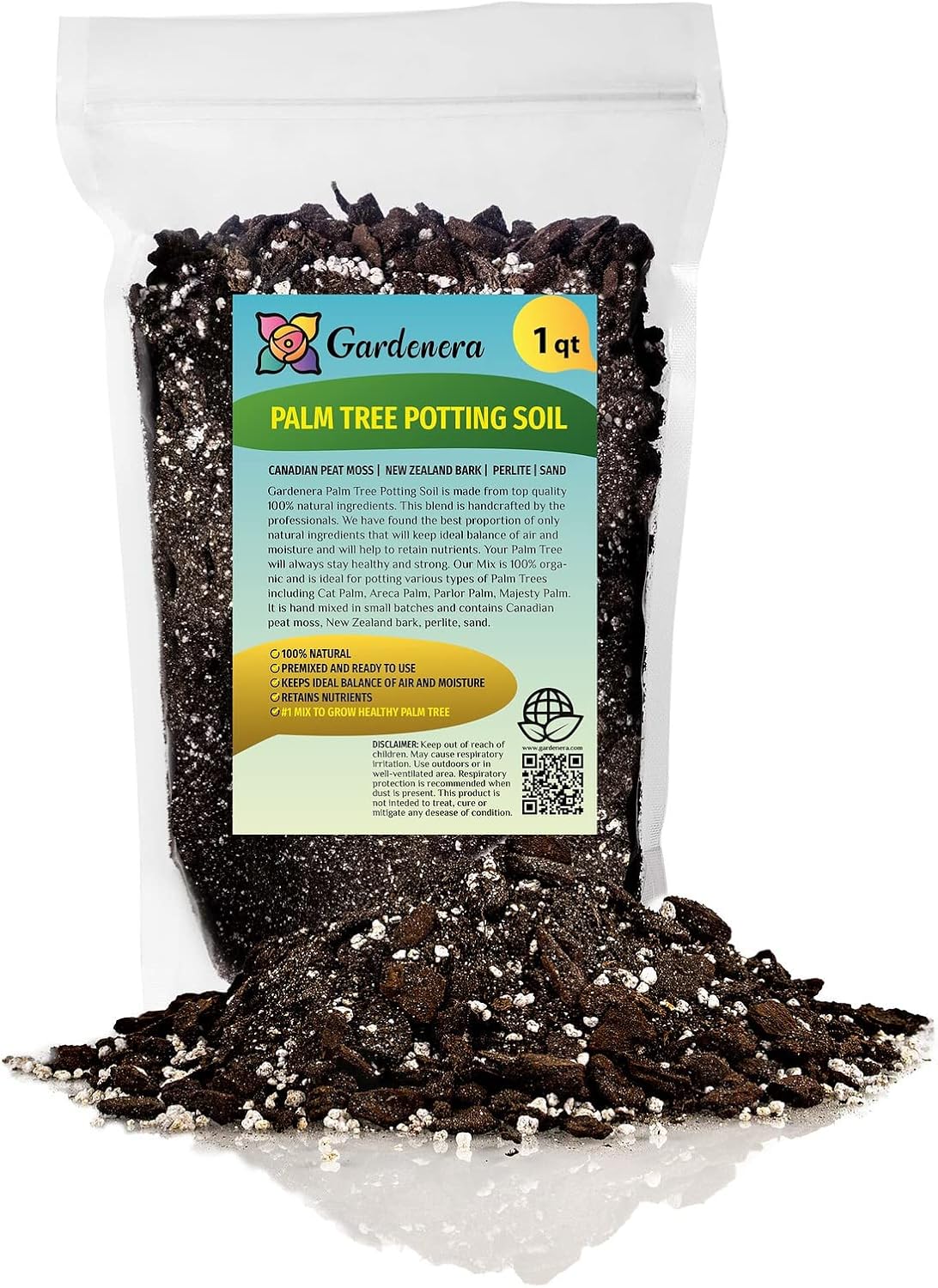
This Gardenera Palm Tree Potting Mix is a ready-to-use blend formulated for palm trees, combining Canadian peat moss, New Zealand bark, Ukrainian perlite, and sand to give a balance of moisture retention and drainage. It is typically used when repotting indoor or container palms or refreshing potting media for established potted specimens. The peat and bark add organic matter and structure while the perlite and sand increase aeration and reduce the risk of waterlogging. In practice this mix makes repotting straightforward: loosen roots, fill the new container, position the palm at the right height, and water to settle the soil. Because the bag is only 1 quart, it is best for single small pots, seedlings, or as a topdressing rather than filling large containers. The product notes safety precautions for handling dusty components, so wear a mask and gloves when working with it. If you want a palm-tailored, easy-to-use small bag for potting or small refreshes, this mix covers the bases; for larger jobs you will need multiple bags or a larger size option.
Best for: Buyers who need a small, palm-focused potting mix for repotting seedlings, small potted palms, or for topping up containers and who prioritize a product designed for palm root health.
Less Ideal for: Gardeners needing to fill large containers, multiple palm pots, or outdoor planting holes should avoid this size and choose bulk or larger-volume mixes instead.
- Formulated specifically for palms with peat, bark, perlite, and sand for balanced moisture and drainage
- Good aeration that helps prevent root rot in container palms
- Ready-to-use mix simplifies repotting and small pot top-ups
- Very small 1 quart volume limits use to seedlings or small pots
- Contains dusty components requiring gloves and a mask during handling
Verdict: A compact, palm-tailored potting mix that makes small repots and top-ups simple and effective.
E.B. Stone Organics Citrus & Palm Mix Potting Soil, 1.5 cu ft

| Brand Name | E.B. Stone Organics |
|---|---|
| Unit Count | 1536 Ounce |
| Volume | 1.5 cubic feet |
| Style Name | Potting Soil |
E.B. Stone Organics Citrus & Palm Mix is a ready-to-use organic soil blend designed for container and in-ground planting of citrus, palms, avocados and tropical foliage. The mix pairs aged fir bark and pumice to keep the root zone well aerated and fast-draining so plants that dislike soggy feet avoid root rot, while added mycorrhizae improve nutrient and water uptake. It is intended to be used straight from the bag for potting or worked into beds when planting, which simplifies planting and repotting tasks. For gardeners seeking reliability, this blend delivers consistent structure and moisture retention without heavy amendments, and the organic base supports longer-term soil biology. Limitations are the single bag volume of 1.5 cubic feet, which means larger projects will require multiple bags and mixing on site, and it does not list N-P-K numbers or slow-release fertilizer content so supplemental feeding may be needed for heavy-feeding specimens.
Best for: Gardeners who prioritize reliable, low-maintenance potting media for citrus and tropical plants and want a ready-made organic blend that supports healthy roots.
Less Ideal for: People who need large volumes for landscaping projects or who prefer a potting mix with specified fertilizer content and tailored nutrient ratios.
- Formulated specifically for citrus, palms and tropicals to match their root needs.
- Aged fir bark and pumice provide good drainage and aeration to reduce risk of root rot.
- Contains beneficial mycorrhizae to enhance root nutrient and water uptake.
- Ready-to-use bag simplifies repotting or planting without on-site blending.
- Single bag is only 1.5 cubic feet so multiple bags are required for larger trees or beds.
- No detailed fertilizer analysis provided so additional feeding may be necessary for heavy feeders.
Verdict: Choose this mix when you want a consistent, ready-to-use organic soil that promotes healthy, well-aerated roots for citrus and tropical plants.
Miracle-Gro Cactus, Palm & Citrus Potting Mix, 8 qt.
| Brand Name | Miracle-Gro |
|---|---|
| Volume | 8 quarts |
| Unit Count | 1 Count |
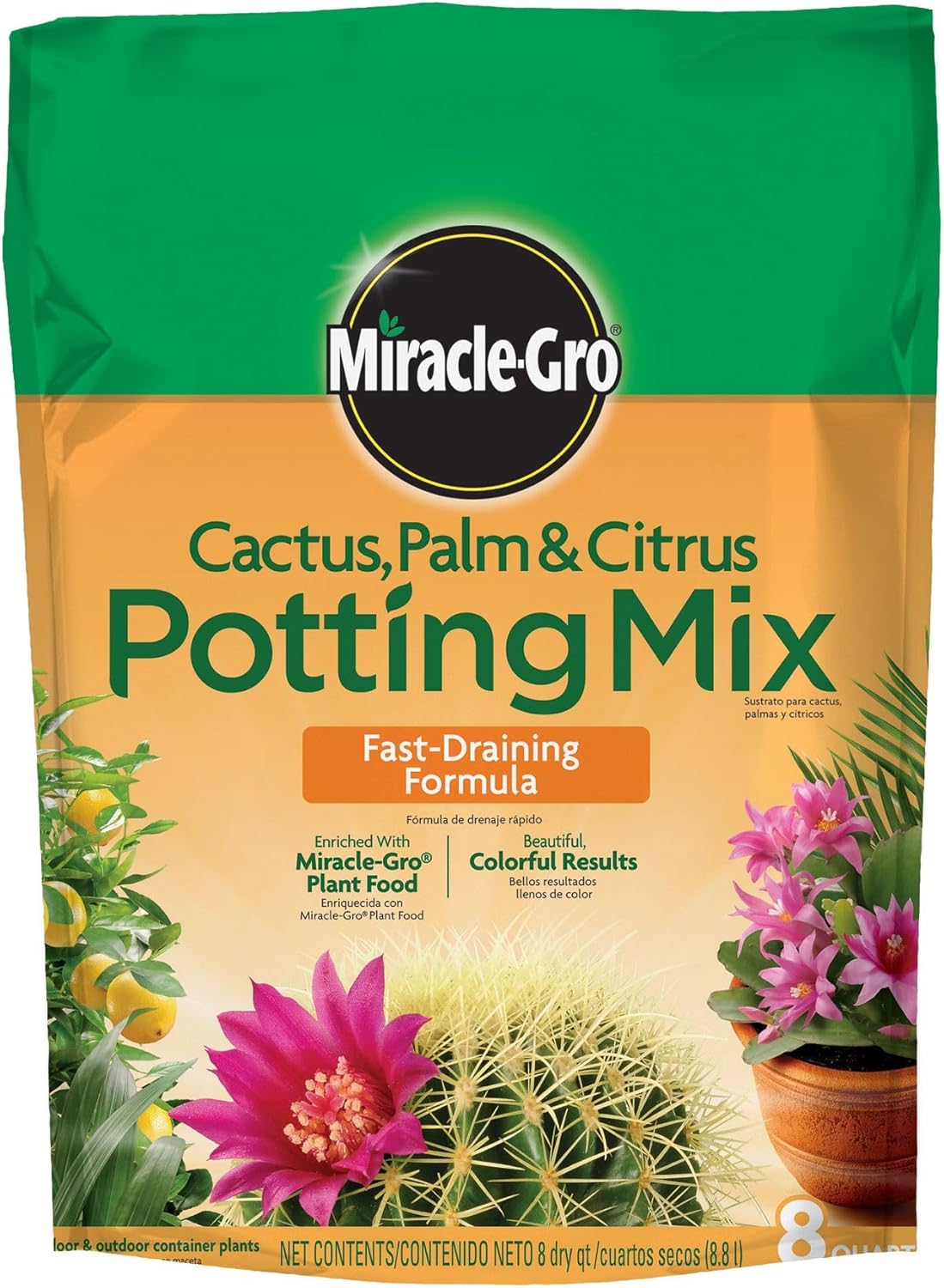
This 8-quart Miracle-Gro potting mix is designed for container-grown cacti, palms, and citrus and combines peat moss, sand, perlite, and forest products for faster drainage and reduced compaction. It arrives ready to use and is enriched with Miracle-Gro plant food so newly potted citrus get an initial nutrient boost without immediate fertilizing. Typical use is straightforward: choose a pot with drainage, fill about one third, set the root ball and top up, then water and allow to drain. The formula helps soil dry between waterings, which is important for citrus root health in containers, and one bag is enough for two 8-inch pots. Limitations are the small volume for larger trees and the presence of peat moss if you prefer peat-free mixes; heavier or older citrus will need larger volumes and eventual repotting. For growers wanting a quick, reliable container medium that balances moisture retention with drainage, this mix performs as expected.
Best for: Growers who repot or maintain container citrus and want a ready-to-use mix that balances drainage and initial feeding for healthier root development.
Less Ideal for: Gardeners potting mature or large citrus specimens that need large volumes of soil or those seeking a peat-free or custom mineral-heavy citrus bonsai substrate.
- Fast-draining blend reduces risk of waterlogged roots for container citrus
- Pre-enriched with plant food to give newly potted plants an initial nutrient boost
- Contains perlite and sand to resist compaction and maintain aeration
- Formulated for indoor or outdoor containers so it works across sites
- 8-quart bag is small for larger or multiple citrus containers
- Contains peat moss which some buyers avoid for sustainability reasons
Verdict: A convenient, fast-draining, plant-food–enriched container mix that makes repotting small to medium citrus trees quick and reliable.
LECHUZA PALMPON Palm and Mediterranean Potting Soil (2.7 US dry gal)

| Brand Name | Lechuza |
|---|---|
| Item Highlight | peat-free mineral substrate; improves drainage and aeration |
| Volume | 12 liters |
| Style Name | Potting Soil |
LECHUZA PALMPON is a specialty potting substrate designed for palms, olive trees, and other Mediterranean-type plants that prefer moist but never waterlogged roots. The mineral-based mix improves drainage and aeration so excess water moves away from the root zone while leaving enough moisture to avoid drying out quickly. It arrives pre-fertilized so you can repot and expect nutrient release for about six to eight months, which reduces the need for immediate feeding and supports greener fronds and steady growth. Being peat-free makes it a more sustainable choice than traditional peat-heavy mixes. Practical limitations are its modest 2.7 dry gallon supply, which means multiple bags for larger palms or multiple pots, and it may not replace specialized mixes for seedlings or acid-loving species. For typical repotting of established container palms and Mediterranean ornamentals it simplifies care and cuts down early fertilizing tasks.
Best for: Buyers who want a low-hassle, sustainable potting mix for established container palms and Mediterranean ornamentals and prefer a product that reduces early fertilizing chores.
Less Ideal for: Gardeners looking for bulk soil for in-ground planting, mixes for seedlings, or soils tailored to acid-loving species should consider alternatives.
- Mineral-rich, peat-free formula improves drainage and root aeration.
- Pre-fertilized to feed plants for six to eight months, reducing immediate fertilization needs.
- Formulated specifically for palms and Mediterranean plants to promote healthy fronds and steady growth.
- Small 2.7 dry gallon volume may require multiple bags for large plants or multiple pots.
- Not formulated for seedlings or plants that need highly acidic or moisture-retentive mixes.
Verdict: A ready-to-use, peat-free palm mix that simplifies repotting by combining improved drainage with six to eight months of built-in nutrition.
Choosing the Right Soil for Palm: Key Factors to Consider
Drainage and Aeration
Palms need a soil that drains freely after a heavy soak so roots do not sit in stagnant water. A mix with oversized particles such as coarse sand, grit, or crushed bark improves macroporosity and lets excess water escape while keeping air channels open around root tips. Good aeration reduces the risk of root rot and supports the oxygen demand of active root growth.
When assessing a soil, look for visible texture and a loose feel when dry. In containers, drainage holes and a free-draining mix work together; in beds, choose soils that do not form a dense, gummy mass when wet.
Moisture Retention Between Waterings
While palms dislike waterlogged soils, they also need reliable moisture between irrigations, especially in warm weather. The ideal mix holds enough capillary water in fine pores so roots can access moisture, yet it releases it gradually rather than holding a saturated film around the root collar.
Ingredients like well-aged compost, coir fiber, or a modest amount of peat can increase available moisture without causing prolonged saturation. The balance will vary with pot size, climate, and how frequently you water, so factor those into your choice.
Nutrient Balance and Release Pattern
Palms require a steady supply of macro- and micronutrients, including nitrogen, potassium, magnesium, and trace elements. A good soil provides a baseline of available nutrients and a medium that accepts supplemental feeding without rapid leaching.
Look for mixes with a blend of slow-release organic matter and mineral components that buffer nutrients. Too much fresh organic material can immobilize nitrogen as microbes break it down, so mixes that include stabilized compost or controlled-release sources are preferable for consistent feeding.
Physical Structure and Particle Mix
The particle-size distribution determines how a soil behaves mechanically. A range of particle sizes prevents tight packing and keeps pathways open for roots and water movement. Coarse elements like sand or bark maintain structure, while finer particles and humus provide contact with roots and nutrient exchange.
Avoid mixes that collapse into a dense mass after repeated watering cycles. The right physical structure supports root anchorage and encourages the fibrous root systems many palms develop.
pH and Salt Considerations
Many palms prefer slightly acidic to neutral soils, but tolerance varies by species. Soil pH affects nutrient availability, particularly for iron and manganese, which palms can be sensitive to. If irrigation water is high in salts or you use fertilizer heavily, select a mix and management plan that minimize salt buildup.
Amending with low-salt organic matter and flushing containers occasionally can help. For landscape plantings, match soil selection to the native soil pH or plan for regular soil testing and correction.
Longevity and Maintenance Needs
Soil that starts well can degrade with time as organic matter breaks down, reducing aeration and drainage. Consider how often you are willing to top-dress, repot container palms, or refresh bed soils. Long-lasting mixes maintain structure and require less frequent intervention.
Durable inert components like pumice, coarse sand, or bark extend functional life. Plan maintenance schedules around the expected breakdown rate of the mix so you can maintain healthy root conditions.
Matching Soil Choice to Planting Situation
Your planting situation changes what you need from a soil. Container palms benefit most from mixes that prioritize drainage and aeration because limited soil volume amplifies watering mistakes. For landscape or in-ground palms, soils that improve drainage while holding enough moisture for dry seasons are preferable.
Consider local climate too. In hot, arid regions choose mixes with higher moisture retention and a stable organic fraction. In wet climates favor faster-draining compositions and avoid heavy organic layers near the crown.
- Containers: prioritize aeration and quick drainage with some moisture-retentive particles
- In-ground: aim for balanced drainage and moisture retention suitable for native soils
- Windy or coastal sites: favor mixes that resist drying and salt accumulation
How to Amend Native Soil for Palms
If you are planting palms into existing garden soil, focus on improving texture and drainage without creating an abrupt interface that repels water. Work coarse aggregates and organic matter through the planting area to create a gradual transition for roots.
A common approach is to mix in coarse sand or grit, a well-aged compost or coir, and some chunky organic pieces to retain structure. Avoid incorporating large amounts of fine peat or raw compost that will settle and clog pores.
- Dig a planting hole two to three times the root ball width and blend amendments with surrounding soil
- Ensure the final planting level keeps the crown slightly above surrounding grade to discourage water pooling
Container Repotting Tips for Palms
When repotting, remove compacted old soil from around the roots where possible and replace it with a fresh, airy mix. Choose a container with adequate drainage and avoid oversizing which can hold excess moisture.
Top-dress pots annually with a light layer of slow-release organic amendments and refresh the mix every few years depending on how fast it breaks down.
- Avoid burying the trunk flare; keep crown slightly elevated
- Use a mix with visible coarse particles to preserve airflow in the pot
Irrigation and Feeding Practices
Soil choice interacts closely with irrigation. A free-draining mix will need more frequent but shorter waterings; a more retentive mix requires less frequent irrigation but careful monitoring to avoid saturation. Use moisture probes or finger tests to judge when to water.
Fertilizer timing should match the nutrient release pattern of the soil. Slow-release or split applications keep palms supplied without causing nutrient burn or leaching.
- Water deeply but infrequently for landscape palms when root volumes are large
- Containers typically need more frequent water checks especially in warm weather
Common Problems and Soil Fixes
Yellowing fronds, slow growth, and crown decline can stem from poorly draining soil, nutrient imbalance, or salt buildup. Diagnosis starts with checking soil moisture, physical structure, and recent fertilization history.
To fix drainage issues, lift the root collar and improve soil porosity with coarse amendments. For nutrient issues, test the soil or leaf tissue before making large corrections; small, staged adjustments reduce risk of overcorrection.
- Salt buildup can be mitigated by periodic flushing and using low-salt amendments
- Compaction is addressed by replacing or amending the soil with chunkier materials
How We Chose the Best Soil for Palm
We started with soils and mixes formulated or commonly used for subtropical and tropical palms, then applied practical garden filters to find options that work in containers and landscape plantings. The editorial filters emphasized drainage behavior, water-holding capacity, nutrient profile and release pattern, physical structure and aeration, and long-term stability under repeated wet-dry cycles. Drainage behavior was measured by how quickly free water moves through the mix and whether the soil stays oxygenated around roots. Water-holding capacity focused on available moisture between irrigations, not just total water retained. Nutrient profile assessed both immediate plant-available nutrients and the tendency for mixes to bind or release nutrients over time. Physical structure covered particle size distribution, organic content, and resistance to compaction. Longevity looked at how a mix holds structure through seasons and resists rapid breakdown. We excluded generic topsoil blends not tailored to palms, soils with unknown ingredient lists, and mixes that rely solely on peat or heavy clay, because those tend to either compact or retain too much water. The criteria above guided selection so gardeners can compare mixes on the most relevant performance dimensions.
FAQ
What soil texture do palms prefer?
Palms generally do best in a loamy mix that balances coarse particles and fine materials. A texture that provides both good aeration and enough fine pore space to hold moisture tends to support healthy root systems.
Can I use regular garden soil in a palm pot?
Regular garden soil often compacts in containers and restricts drainage. If used, it should be heavily amended with coarse sand, grit, or bark to improve structure and prevent waterlogging.
How often should I repot a palm into fresh soil?
Repotting frequency depends on species and container size. Many container palms benefit from a partial refresh or repot every 2 to 4 years as organic matter breaks down and drainage declines.
Does soil pH matter for palms?
Yes, pH affects nutrient availability. Many palms prefer slightly acidic to neutral pH, but tolerance varies. If you see nutrient deficiency symptoms, test soil pH and correct it gradually.
How do I prevent root rot in palm plantings?
Prevent root rot by ensuring free drainage, avoiding overwatering, and using a well-structured soil. In beds, do not plant crowns below grade where water can collect.
Final Verdict
Choose a soil that balances fast drainage with enough moisture retention and a stable physical structure. Prioritize mixes that maintain aeration, supply steady nutrients, and resist compaction over time. Match your choice to whether the palm is in a pot or planted in the ground, and plan routine maintenance like repotting, top-dressing, and occasional flushing to manage salts and nutrient levels. With the right soil and care, you can minimize common issues and keep palms vigorous and well anchored.
