

Note: This article contains affiliate links. If you click on these links and make a purchase, I may earn a small commission at no extra cost to you. This helps support my research and content. Read my full affiliate disclosure here.
Picking the right soil for planting lavender matters more than fertilizer or watering routines. Lavender prefers soils that shed excess water, stay slightly alkaline to neutral, and offer moderate fertility so roots expand without staying wet. Choosing an appropriate mix helps you avoid root rot, encourages woody, long-lived stems, and improves flower production and aroma. This guide walks through six shortlisted soils suited for planting lavender in borders, raised beds, and containers. We focus on drainage performance, pH behavior, and organic matter levels so you can match a soil to your garden site and planting method.
Top Picks at a Glance
| Best Overall The best all-around choice for most situations | Soil Sunrise Lavender Potting Soil Mix (4 Quarts) |  |
| Best Quality Built to a higher standard if you want something more solid | Doter Lavender Potting Mix, 2 qt |  |
| Best Value The sweet spot between price and what you get | Gardenera Lavender Potting Mix — 2 Quart Organic Soil |  |
| Best Budget The cheapest option that still gets the job done reliably | Doter Lavender Potting Mix (1 qt) | |
| Highest Rated A top-rated pick with lots of positive feedback | Rosy Soil Herb Mix Organic Potting Soil, 4 Quart |  |
| Most Popular A crowd favorite that many people choose with confidence | Soil Sunrise Lavender Potting Soil Mix (8 Quarts) |  |
Soil Sunrise Lavender Potting Soil Mix (4 Quarts)

| Volume | 4 quarts |
|---|---|
| Ingredients | Peat moss, pumice, perlite, charcoal, coarse sand, worm castings, lime |
| Style Name | Peat Moss,Potting Soil Mix |
| Unit Count | 1 Count |
This 4-quart Soil Sunrise mix is formulated for lavender in pots and small containers by combining peat moss with pumice, perlite, coarse sand, charcoal, worm castings, and lime. It is typically used when repotting or starting lavender in 6-inch to larger containers to recreate the Mediterranean-like, well-draining medium lavender prefers. Notable features include added pumice and sand for fast drainage and aeration, lime to keep the soil mildly alkaline, and worm castings for slow-release nutrients without synthetic fertilizers. In practice the mix helps prevent overwatering and root rot in container-grown lavender and reduces the need for frequent soil amendments. The small 4-quart size is convenient for trialing plants or treating a few pots, and the resealable bag format shown in brand materials keeps extra mix usable. Limitations are the modest volume, which means heavier users will need multiple bags for several plants, and the peat-based formula may compress over time and benefit from occasional refresh or addition of fresh grit.
Best for: Buyers who want a ready-made, plant-focused soil that reduces the guesswork when potting lavender and prefer an all-natural, low-maintenance option for a few containers.
Less Ideal for: Gardeners who need bulk soil for large beds or who prefer fully peat-free or commercial potting soils formulated for long-term container crops.
- Lavender-specific blend with sand, pumice, and perlite for excellent drainage and root aeration
- Lime-adjusted pH to better match lavender's mild alkalinity needs
- Contains worm castings for gentle organic nutrient support
- Includes horticultural charcoal to improve soil structure and reduce odors
- Small 4-quart volume may require multiple bags for more than a few plants
- Peat-based mix can compact over time and may need refreshing or added grit
Verdict: A convenient, lavender-focused potting mix that provides the drainage, mild alkalinity, and gentle nutrients container-grown lavender needs to thrive.
Doter Lavender Potting Mix, 2 qt

| Brand Name | Doter |
|---|---|
| Item Type Name | Garden soil |
| Style Name | moisture-retaining, nutrient-rich |
| Volume | 2 quarts |
This 2 quart Doter Lavender Potting Mix is a ready-to-use blend designed specifically to create favorable conditions for lavender in pots and small beds. The mix combines coir and perlite to improve drainage while retaining enough moisture to prevent plants from drying out between waterings, which helps avoid root rot. It is described as nutrient-enriched and pH balanced toward the slightly acidic to neutral range favored by many lavender varieties, so it can promote stronger root development and more fragrant blooms. Because it comes in a small bag, it is convenient for repotting, starting new plants in containers, or top-dressing existing pots. The main limitation is the volume: 2 quarts is only enough for one or two small pots, so you will need multiple bags for larger containers or beds. Also the listing gives general claims about nutrients and pH but does not provide a detailed ingredient analysis or NPK values for growers who want exact formulations.
Best for: Gardeners who want a purpose-made potting mix to repot or container-grow lavender and prefer a ready blend that balances drainage and moisture without custom mixing.
Less Ideal for: Large-scale plantings, raised beds, or gardeners who need precise nutrient or fertilizer formulations and want to tailor every component of their soil mix.
- Formulated with coir and perlite for balanced moisture retention and drainage
- Designed to support root development and enhance lavender blooms
- pH tuned to the range suitable for many lavender varieties
- Convenient small 2 quart size for repotting or container use
- Only 2 quarts per bag so multiple bags are needed for larger plantings
- No detailed nutrient analysis or NPK values provided
Verdict: Choose this small, ready-made mix when you want a convenient, lavender-focused potting soil that balances drainage and moisture for healthier potted plants.
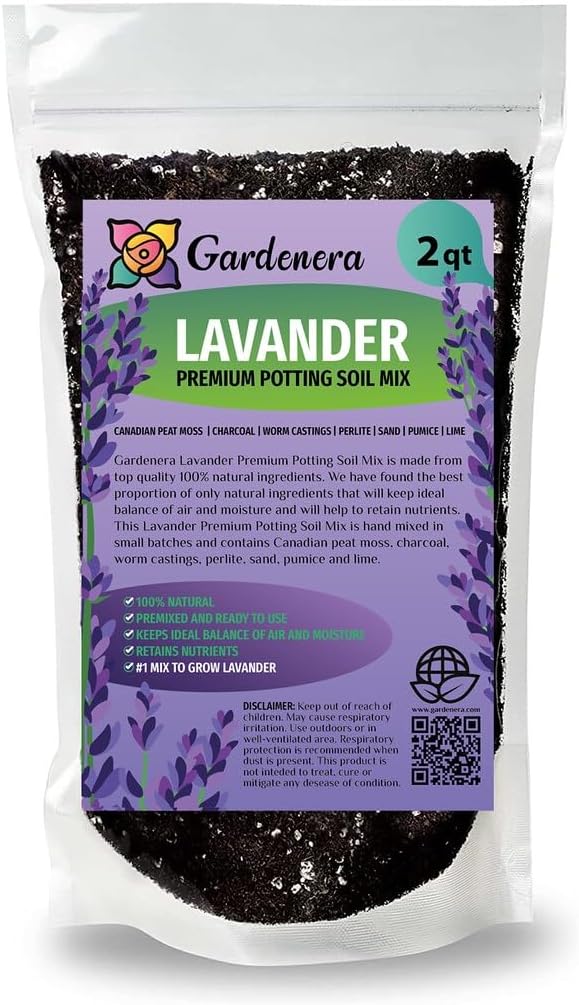
Gardenera Lavender Potting Mix — 2 Quart Organic Soil
| Brand Name | Gardenera |
|---|---|
| Item Type Name | Lavender Potting Mix |
| Unit Count | 1 Count |
| Volume | 2 quarts |
Gardenera Lavender Potting Mix is a ready‑to‑use 2‑quart blend made specifically to support lavender in containers and small beds. It combines Canadian peat moss for moisture retention with perlite, sand and pumice for fast drainage and good aeration, while charcoal and lime help keep the root zone clean and balanced. Worm castings add a mild, slow‑release nutrient boost that supports root development and flowering without heavy feeding. Use it to fill pots or to topdress young transplants; the recipe is aimed at preventing waterlogging which lavender dislikes and at maintaining a neutral to slightly alkaline pH that lavender prefers. This is a specialty mix rather than an all‑purpose potting soil, so gardeners should expect modest fertility and may need to supplement with fertilizer over the season for larger or long‑lived plants. Pack size is small, so plan quantities if repotting multiple plants or creating deeper profiles for mature specimens.
Best for: Gardeners who want a purpose‑built, low‑maintenance potting mix to establish and grow lavender in containers or small plantings and who prioritize drainage and soil cleanliness.
Less Ideal for: Those looking for a large‑volume all‑purpose potting soil or a heavily amended, long‑term substrate for many mature plants will find the small bag and light fertility limiting.
- Formulated ingredients for lavender including peat moss, perlite, sand and pumice for good drainage and aeration
- Contains worm castings to provide gentle, organic nutrient support
- Charcoal in the blend helps keep the soil clean and reduce odors or contaminants
- Includes lime to help maintain pH suitable for lavender growth
- Small 2‑quart volume requires multiple bags for several plants or larger containers
- Not a complete fertilizing solution so additional feeding may be needed for long‑term growth
Verdict: Choose this mix when you need a small, lavender‑specific potting medium that emphasizes drainage and gentle organic nutrition.
Doter Lavender Potting Mix (1 qt)
| Brand Name | Doter |
|---|---|
| Item Type Name | Garden soil |
| Volume | 1 quarts |
| Unit Count | 1 Count |
This 1-quart Doter Lavender Potting Mix is a tailored growing medium for lavender and other Mediterranean herbs, aimed at giving plants the drainage and slightly acidic to neutral pH they prefer. It combines coir and perlite to retain some moisture while allowing excess water to escape, which helps prevent root rot in containers or raised beds. The formula is described as nutrient-enriched to encourage stronger root development and more fragrant blooms, making it useful for repotting small plants, starting seedlings, or refreshing the top layer of a container. Because it comes in a 1-quart unit, it is most practical for small pots or trial plantings rather than large beds. Buyers should plan to use multiple units for bigger projects or mix with bulk soil when planting many lavender plants. The mix is simple to use straight from the bag and suits gardeners who want a ready-made lavender blend without formulating their own soil amendments.
Best for: Gardeners who want an off-the-shelf, lavender-focused potting mix for containers, small raised beds, or repotting individual plants and prefer convenience over mixing their own media.
Less Ideal for: Gardeners establishing large lavender borders or commercial growers who need bulk soil and exact nutrient analyses should choose larger, clearly specified products instead.
- Formulated specifically for lavender with balanced pH to support aromatic blooms
- Perlite and coir blend improves drainage while retaining some moisture for container growing
- Nutrient-enriched to support root development and flowering
- Convenient small 1-quart size for repotting, seed starting, or trial plantings
- Small volume means multiple bags are required for larger gardens or many containers
- No detailed ingredient ratios or guaranteed analysis provided
Verdict: A ready-made, small-format lavender mix that simplifies potting and repotting for home gardeners who want good drainage and bloom support.
Rosy Soil Herb Mix Organic Potting Soil, 4 Quart

| Unit Count | 64 Ounce |
|---|---|
| Volume | 4 quarts |
| Item Highlight | Biochar, Worm Castings, Mycorrhizae Blend, Peat-Free, Fast Draining |
This 4-quart Rosy Soil Herb Mix is a ready-to-use potting soil aimed at container herbs and small outdoor planters. It combines wood biochar, compost, worm castings, bark fines, and beneficial mycorrhizae to create a light, airy medium that drains quickly while retaining nutrients near roots. Typical use is straight from the resealable bag into 6-inch pots or balcony planters for basil, thyme, lavender, and other culinary and aromatic herbs without needing to amend or blend. The peat-free formula and microbial inputs help build a living soil that supports stronger root growth and improved nutrient uptake, which can lead to fuller, more flavorful plants. Because the mix is designed for drainage and seedling establishment it is less likely to sit wet and invite root rot in containers. Limitations are the small 4-quart volume — the bag covers only a few pots — and there is no listed NPK analysis for fine-tuning fertilization, so heavier-feeding herbs or larger plantings will need supplemental fertilizer over time.
Best for: Buyers who prioritize a reliable, peat-free, microbially active potting mix for container herbs and want a plug-and-play soil that promotes healthy roots with minimal effort.
Less Ideal for: Gardeners needing large volumes for beds or heavy-feeding herbs and those who require a measured fertilizer profile built into the mix.
- Peat-free, organic blend using biochar and worm castings to support microbial activity.
- Includes beneficial mycorrhizae to improve root establishment and nutrient uptake.
- Fast-draining, airy texture suitable for seedlings and container-grown herbs.
- Resealable 4-quart bag ready to use without additional mixing.
- Small volume per bag restricts use to a few pots or small planters.
- No nutrient (NPK) breakdown provided for precise fertilizing schedules.
Verdict: Choose this mix if you want a dependable, peat-free, microbially rich potting soil that encourages strong roots and fast drainage for container lavender and other herbs.
Soil Sunrise Lavender Potting Soil Mix (8 Quarts)

| Volume | 8 quarts |
|---|---|
| Unit Count | 1 Count |
| Ingredients | Peat, perlite, charcoal, pumice, sand, wormcastings, lime |
| Style Name | Peat Moss,Potting Soil Mix |
This Lavender Potting Soil Mix is a small-batch blend designed to mimic Mediterranean soils lavender prefers. It combines peat moss for moisture retention with perlite, pumice, sand and horticultural charcoal to keep the mix light and fast-draining, while worm castings supply gentle, organic nutrients and lime adjusts pH toward mild alkalinity. In practice the mix is best used for container-grown lavender or small raised beds where drainage and a slightly alkaline pH matter; the sandy loam texture helps prevent root rot and reduces overwatering risks. The resealable 8-quart bag is convenient for repotting one or two 10–12 inch pots and the ingredient list is straightforward and chemical-free. Limitations are the small volume if you need to fill large planters or multiple pots and peat-based content if you prefer a fully peat-free or larger-scale landscape amendment. For hobbyists focused on container lavender, this blend simplifies getting soil conditions closer to what the plants need without extra amendments.
Best for: Gardeners who want an off-the-shelf, lavender-focused potting mix for container or small raised-bed planting and value a ready-made, no-fuss soil that reduces the need for additional amendments.
Less Ideal for: Large-scale landscapers or growers who need bulk soil quantities or gardeners seeking a peat-free, landscape-grade amendment for in-ground beds.
- Formulated for lavender with ingredients that improve drainage and aeration (perlite, pumice, sand)
- Includes worm castings for gentle organic nutrient support
- Lime-adjusted to favor the slightly alkaline pH lavender prefers
- Horticultural charcoal and pumice help reduce compaction and potential root rot
- Small 8-quart bag may not be enough for multiple or large containers
- Contains peat moss, which some gardeners avoid for sustainability reasons
Verdict: If you want a convenient, lavender-specific potting mix that improves drainage and adjusts pH for healthier container plants, this ready-made 8-quart blend delivers.
Choosing the Right Soil for Planting Lavender: Key Factors to Consider
Drainage and Permeability
Lavender needs fast-draining soils because standing water leads to root rot and crown decline. A mix with coarse mineral components such as grit, coarse sand, or fine gravel improves permeability and encourages roots to explore rather than sit in saturated zones. In beds with heavy clay, amending with coarse material or selecting a naturally free-draining soil is essential.
Drainage affects how often you need to water, the risk of winter rot in colder climates, and how quickly soil warms in spring. Test drainage by digging a small hole, filling it with water, and noting how long it takes to empty. Soils that drain within a few hours are usually suitable for lavender; anything much slower will require amendment or raised planting to succeed.
Soil pH and Mineral Content
Lavender thrives in slightly alkaline to neutral soils. pH influences nutrient availability and the plant's scent and flowering. Soils that trend acidic can be adjusted with lime, but it is easier and more reliable to choose a soil that is already close to neutral to slightly alkaline if possible. Mineral content, especially calcium and magnesium, supports healthy woody growth and can help avoid nutrient lockups common in overly acidic mixes.
A simple soil test before planting helps set expectations and informs any liming needs. Avoid soils with a high peat content that tend to be acidic and retain moisture; instead favor mixes with mineral grit and modest organic matter to keep pH stable over time.
Texture and Particle Size
Coarse, open textures replicate the native Mediterranean soils lavender evolved in. A mix that combines medium-fine particles for initial moisture and finer particles for root contact with larger grit for aeration gives a balanced environment. Very fine, silt-rich soils compact easily and restrict airflow around roots.
Consider particle size relative to where you will plant. Containers benefit from a blend that resists compaction, while in-ground plantings in sandy loam may need only modest amendment. Texture also influences how quickly the soil warms in spring, which affects early-season growth and flowering timing.
Nutrient Balance and Organic Matter
Lavender is not a heavy feeder and can suffer when placed in overly rich, high-nitrogen soils that encourage soft, leafy growth at the expense of woody stems and flowers. A modest level of organic matter helps with nutrient release and microbial activity without creating excess fertility. Slow-release, low-nitrogen sources and well-composted, coarse organic matter are preferable to raw manures or high-nitrogen bagged mixes.
Think of organic matter as a tuning tool rather than a growth accelerator. It should support soil life and structure, but not overwhelm the mineral backbone of the mix. This balance affects pruning frequency, winter hardiness, and flower production.
Suitability for Containers and Raised Beds
Soils for container-grown lavender must remain free-draining while retaining enough moisture for a few days between waterings. Mixes that are too heavy dry slowly and increase root-disease risk in pots. Conversely, very low-water-holding mixes demand more frequent watering and can stress plants in hot weather.
Choose mixes formulated to resist compaction and that include aerating components. In raised beds, soil depth and bed drainage reduce the need for extremely sandy mixes, but you still want a free-draining profile. Consider whether the soil can be refreshed season to season and how easily it can be topped up or amended over time.
Longevity and Reusability
Whether you plant in-ground or in containers, think about how the soil will perform over multiple seasons. Some mixes break down quickly, increasing compaction and reducing drainage after a year or two. Others maintain structure, allowing you to reuse soil with only light renovation between plantings.
Longevity matters for maintenance time and costs. Durable mixes reduce the need for frequent replacement, help preserve root health, and keep irrigation needs consistent through successive growing seasons.
Preparing Existing Garden Beds
If you already have a garden bed, test the soil texture and drainage before planting lavender. For heavy clay soils, create raised mounds or incorporate coarse grit and sharp sand to increase permeability. Removing a portion of fine silt and mixing in mineral amendments helps prevent waterlogging.
Work amendments through at least the top foot of soil for new plantings. In larger beds, consider broad-based amendments rather than spot treatments so the entire root zone behaves predictably. After amending, water the area and observe drainage over a few days before planting.
- Dig a test hole and time water percolation to assess drainage.
- Aim for a free-draining profile in the top 8 to 12 inches of soil.
- Use raised mounds in very heavy soils to keep crowns above the wettest layer.
Soil Mixes for Containers
Container mixes should combine coarse mineral particles with a moderate organic component. Perlite, horticultural grit, and coarse sand improve aeration. Include a stable organic fraction such as well-aged compost or fine bark to provide some water retention without creating a sponge.
Ensure containers have ample drainage holes and avoid filling them with moisture-retentive potting mixes meant for foliage plants. Consider the container material: terracotta breathes and dries faster, while plastic retains moisture longer, which informs the ideal mix ratio.
- Use a mix that drains within 24 to 48 hours after heavy watering.
- Adjust mineral-to-organic ratio based on container material and local climate.
- Top-dress containers each season with coarse compost rather than repotting annually.
Adjusting pH Without Overfeeding
If soil tests show acidity, apply finely ground agricultural lime in accordance with test recommendations to nudge pH upward. Make adjustments well before planting when possible so changes stabilize. Avoid using high-nitrogen soil amendments to correct pH because they can alter the fertility balance and encourage undesirable soft growth.
Routine light applications of mineral amendments are usually sufficient to maintain a slightly alkaline to neutral profile. Avoid heavy doses of acidifying materials in lavender beds.
- Test pH before planting and recheck every one to three years.
- Apply lime sparingly and allow time for soil chemistry to equilibrate.
- Favor mineral amendments over nitrogen-rich organic products when adjusting pH.
Seasonal Care and Soil Maintenance
Mulching around lavender should be light and inorganic where possible. Organic mulches that retain moisture can create overly wet microclimates near crowns. Small gravel or coarse sand used sparingly helps suppress weeds while preserving drainage.
Every spring, check for signs of compaction and refresh the top layer of soil or add a thin dressing of coarse compost. In containers, lift and inspect roots every couple of seasons and refresh the growing medium if it has lost structure.
- Use light, inorganic mulches to maintain dry crowns.
- Refresh topsoil annually to prevent compaction and nutrient imbalances.
- Inspect container roots every two to three years and refresh mix if necessary.
Matching Soil Choice to Climate
In cool, wet climates prioritize drainage and raised planting to prevent winter wetness. In hot, dry climates focus on mixes that retain enough moisture between waterings without compromising drainage. Local rainfall patterns and freeze-thaw cycles change how a soil performs in practice.
Consider how irrigation frequency interacts with soil choice. A free-draining mix in a drought-prone location may require more frequent water but will protect roots from rot. Conversely, in wetter regions a coarser blend reduces the time the root zone spends saturated.
- Use raised beds in areas with poor natural drainage.
- Increase mineral content for wetter climates; increase modest organic matter for arid ones.
- Match irrigation scheduling to the soil's water-holding characteristics.
How We Chose the Best Soil for Planting Lavender
We focused on practical, gardener-facing criteria that influence how well lavender establishes and performs. Drainage and texture were prioritized because lavender roots are intolerant of waterlogged conditions. pH stability was included because lavender blooms and essential oil production are sensitive to soil acidity. Nutrient level and fertility were evaluated to avoid mixes that stay overly rich and encourage soft, non-woody growth. Structure and compaction resistance were assessed to ensure mixes maintain air pockets over time. Longevity in containers and reusability for successive seasons were also considered. We excluded mixes designed for moisture-loving plants or potting soils formulated for heavy-feeding annuals. Highly amended or peat-dominant blends that retain moisture were deprioritized. The short list emphasizes blends and soils whose particle size, mineral content, and organic matter balance align with lavender culture in sun-exposed beds, raised planters, and patio containers.
FAQ
Can I plant lavender directly into native soil?
Often yes if the native soil is sandy or well draining. If your soil is heavy clay or stays wet after rain, amend with coarse mineral material or create a raised bed. Testing drainage and pH first helps determine whether direct planting will work.
How alkaline should soil be for lavender?
Lavender prefers slightly alkaline to neutral conditions. A pH range from about 6.5 to 7.5 is commonly suitable. If your soil is more acidic, a measured application of lime can raise pH over time.
Is commercial potting mix okay for container-grown lavender?
Not always. Many commercial potting mixes retain more moisture than lavender tolerates. Choose or modify mixes by adding coarse grit, perlite, or coarse sand to increase drainage and airflow while retaining modest organic matter.
What type of mulch should I use around lavender?
Use light, inorganic mulches such as coarse gravel or small stones to suppress weeds while keeping crowns dry. Thick organic mulches can trap moisture and increase the risk of crown rot, especially in wetter climates.
How often should I refresh container soil for lavender?
Inspect container soil structure every two to three years. If the mix has compacted or lost drainage, refresh the top layer or repot with a more open mix. Lifting plants occasionally to check roots helps decide when to replace soil.
Can I improve drainage without replacing soil?
Yes. Amending the planting area with coarse sand, grit, or sharp sand and creating raised planting mounds both improve drainage. Installing a subsurface drainage layer is another option in persistent wet areas, but broad surface amendment and raised beds are often simpler.
Final Verdict
Choose soil for planting lavender by prioritizing drainage, stable pH, and a coarse texture that mimics the plant's native conditions. Balance organic matter so the mix supplies gentle nutrition without encouraging soft, leafy growth. Match the soil profile to your planting situation – containers, raised beds, or in-ground – and plan seasonal maintenance to preserve structure and drainage. Focusing on these tradeoffs will help you select a soil that promotes woody growth, reliable flowering, and low disease risk. With the right soil, lavender is more forgiving and easier to maintain across climates and planting styles.
