

Note: This article contains affiliate links. If you click on these links and make a purchase, I may earn a small commission at no extra cost to you. This helps support my research and content. Read my full affiliate disclosure here.
Growing potatoes in bags changes how soil behaves compared with in-ground beds. You need a mix that drains well enough to avoid waterlogged tubers but still holds moisture and nutrients between feedings. The right soil also supports aeration for healthy root systems and is light enough to make hilling and harvesting in a bag feasible. This guide shortlists six top soils for potatoes in bags and explains the practical tradeoffs you should weigh, from texture and fertility to pH and disease risk. Below you will find the criteria we used to pick these options and the key factors to consider when matching a soil mix to your container setup and growing goals.
Top Picks at a Glance
| Best Overall The best all-around choice for most situations | Miracle-Gro Organic Outdoor Potting Mix, 16 qt. |  |
| Best Quality Built to a higher standard if you want something more solid | Premier Horticulture Pro-Mix HP Mycorrhizae Loose Growing Medium (2.8 cf) |  |
| Best Value The sweet spot between price and what you get | Garden Magic Michigan Peat Organic Potting Top Soil Blend, 40 lb |  |
| Highest Rated A top-rated pick with lots of positive feedback | FoxFarm Happy Frog Potting Soil for Containers with 2 Plant Tags, 2 cu ft |  |
| Most Popular A crowd favorite that many people choose with confidence | Miracle-Gro Moisture Control Potting Mix, 16 qt. (2-Pack) |  |
| Best Seller A high-volume bestseller chosen again and again | Back to the Roots Premium Blend Organic Potting Mix, 6 Quart |  |
Miracle-Gro Organic Outdoor Potting Mix, 16 qt.

| Item Highlight | Plant Soil For Outdoor Container Plants, Contains Quick-Release Natural Fertilizer, OMRI Listed |
|---|---|
| Brand Name | Miracle-Gro |
| Volume | 1 cubic feet |
| Unit Count | 1 Count |
| Manufacturer | Scotts Miracle Gro |
This 16 qt. Miracle‑Gro Organic Outdoor Potting Mix is made for outdoor containers and supplies a light, peat‑based growing medium blended with upcycled green waste and a quick‑release natural fertilizer that feeds for up to two months. Typical use is filling pots or grow bags, loosening the plant root ball, planting, and watering; the manufacturer notes one bag fills a 12‑inch container. The OMRI listing and responsibly sourced peat make it suitable for organic container vegetables, herbs, and flowers. In practice the mix holds moisture better than plain garden soil while remaining workable for repotting every six to twelve months to avoid compaction. Expect improved early growth from the included fertilizer, but plan to supplement nutrition later in the season for heavy feeders. The bag is intended for small to medium containers rather than bulk in‑ground amendments, so gardeners growing multiple potato bags will need several bags or to blend with additional amendments for higher volume planting beds.
Best for: Gardeners who want an organic, ready‑to‑use potting mix for outdoor containers and prefer a product that gives an early nutrient boost with minimal prep.
Less Ideal for: Large‑scale growers or anyone who needs peat‑free mixes should consider bulk soil blends or peat‑free alternatives instead.
- OMRI listed and formulated for organic outdoor container use
- Contains quick‑release natural fertilizer that feeds up to two months
- Peat‑based blend with upcycled green waste for good moisture retention and structure
- Bag size suitable for filling small to medium containers or grow bags
- Contains peat so not a peat‑free option for gardeners avoiding peat products
- Single bag covers limited volume so multiple bags needed for several potato grow bags
Verdict: A convenient OMRI‑listed potting mix that gives outdoor container plants a moisture‑retentive organic base plus a two‑month nutrient boost, making it a practical pick for potato grow bags on a small scale.
Premier Horticulture Pro-Mix HP Mycorrhizae Loose Growing Medium (2.8 cf)

| Item Form | Loose Fill |
|---|---|
| Specific Uses For Product | Plant Growth, Root Development |
| Coverage | Medium |
| Mixing Ratio | 75:25 |
| Target Species | crops, plants |
This Pro-Mix HP Mycorrhizae is a peat-based potting medium formulated for strong root development and improved drainage, making it well suited for container-grown crops such as potatoes in grow bags. It contains a mycorrhizal inoculum (Glomus intraradices) that helps roots access water and nutrients, and its high porosity gives extra air capacity to reduce waterlogging in heavy soils. Typical use is to fill bags or containers, water thoroughly, plant seed potatoes or tubers, and maintain a regular watering and feeding schedule; the mix also works well for rooting cuttings or low-light starts. Practical benefits you will notice are easier watering management in bags, healthier-looking root systems, and reduced risk of root rot in water-sensitive plantings. Limitations to consider are that it is a peat-based medium so it will compress over time and may need replenishing or topping up for long-season crops, and it does not include complete fertilizer so additional feeding is required for heavy feeders like potatoes.
Best for: Gardeners growing potatoes or other container crops who prioritize strong root development and reliable drainage in bags and want a ready-to-use medium that supports quicker establishment.
Less Ideal for: Growers who prefer completely soilless or peat-free mixes or those seeking a potting medium with built-in complete fertilizer for the whole season should consider alternatives.
- High porosity improves drainage and air flow in grow bags
- Pre-inoculated with Glomus intraradices mycorrhizae to support root uptake
- Suitable for water-sensitive crops and low-light conditions
- Loose fill texture makes it easy to fill bags and plant tubers
- Peat-based mix will compress and may require topping up during a long season
- No built-in complete fertilizer so regular nutrient feedings are needed
Verdict: If you want a drainable, root-focused potting medium for growing potatoes in bags, this pre-inoculated Pro-Mix helps establish vigorous roots and reduces waterlogging risk.
Garden Magic Michigan Peat Organic Potting Top Soil Blend, 40 lb

| Brand Name | Garden Magic |
|---|---|
| Item Highlight | Dark Reed Sedge Peat and Sand – Moisture Retaining Mix for Indoor and Outdoor Planting, Potting, Gardening, and Landscaping |
| Volume | 40 liters |
This 40-pound Garden Magic top soil is a ready-to-use blend of dark reed sedge peat and sand intended for general potting, raised beds, and top dressing. For growers using grow bags for potatoes it provides a loose, moisture-retentive medium that still drains so tubers are less likely to sit in water. Typical use is filling bags or raised containers, mixing with existing garden soil to loosen clay, or topping off planting holes. Notable features include the peat-based organic mix and sand for improved structure and drainage and a moisture-retaining profile that reduces how often you need to water. Practical benefits are ease of use out of the bag, improved workability when amending heavy soils, and a consistent texture for layering in bags. Important limitations are that it does not list nutrient analysis or added fertilizer so you will likely need to add balanced fertilizer or compost for heavy feeders like potatoes, and peat-based mixes can compress over a season requiring top-ups or loosening.
Best for: Buyers who want a low-effort, reliable growing medium to fill bags or amend beds and prefer a moisture-holding mix that still drains for root crops like potatoes.
Less Ideal for: Gardeners seeking a pre-fertilized, all-in-one potato mix or those who avoid peat for environmental reasons should consider alternatives tailored to those priorities.
- Ready-to-use out of the bag for quick filling of grow bags or containers
- Peat and sand blend offers a balance of moisture retention and drainage
- Good for loosening heavy clay when mixed into existing soil
- Consistent texture useful for layering in potato grow bags
- No nutrient or fertilizer information provided so additional feeding is required
- Peat-based product may compact over time and need replenishing
Verdict: A convenient, moisture-retentive top soil blend that makes filling potato grow bags quick while providing good drainage and structure.
FoxFarm Happy Frog Potting Soil for Containers with 2 Plant Tags, 2 cu ft

| Brand Name | FoxFarm |
|---|---|
| Item Highlight | Ready-to-Use Amended Container Blend with Soil Microbes, Earthworm Castings, Bat Guano, and Aged Forest Products |
| Volume | 2 cubic feet |
| Style Name | Container Garden |
FoxFarm Happy Frog Potting Soil is a ready-to-use container blend designed to nourish potted plants without added fertilizers. It contains earthworm castings, bat guano, aged forest products, and a custom mix of beneficial microbes and mycorrhizal fungi to help roots access nutrients more efficiently. Typical use is filling pots or grow bags, planting directly in the mix, and watering; the mix is pH adjusted and formulated to promote vigorous vegetative growth and better flowering or fruiting. Practical benefits include a nutrient-dense, organic-lean formula that reduces the need for immediate fertilizer and supports healthier root development in confined containers. It also comes with two plant tags for tracking varieties or planting dates. Important limitations are that it is a potting mix rather than a fertilizing program so additional feeding may be needed over a full season for heavy feeders, and volume is fixed to the bag size so multiple bags are required for large bag-grown potato setups.
Best for: Gardeners who want a reliable, ready-made potting mix that boosts root development and reduces early-season guesswork for container-grown crops like potatoes in grow bags.
Less Ideal for: Growers who prefer to custom-blend soils from raw components or who need a long-term fertilization plan without adding supplemental fertilizers.
- Formulated for containers with beneficial microbes and mycorrhizae to support root health
- Includes organic amendments like earthworm castings and bat guano for immediate nutrient availability
- pH adjusted out of the bag to improve early nutrient uptake
- Ready to use so no pre-mixing is necessary
- Comes with plant tags to label varieties and planting dates
- Not a complete season-long fertilization solution for heavy-feeding crops
- Sold in fixed 2 cu ft bag volumes which may require buying multiple bags for larger projects
Verdict: Choose this mix when you want a dependable, microbe-rich potting soil that jump-starts root health and simplifies container potato growing.
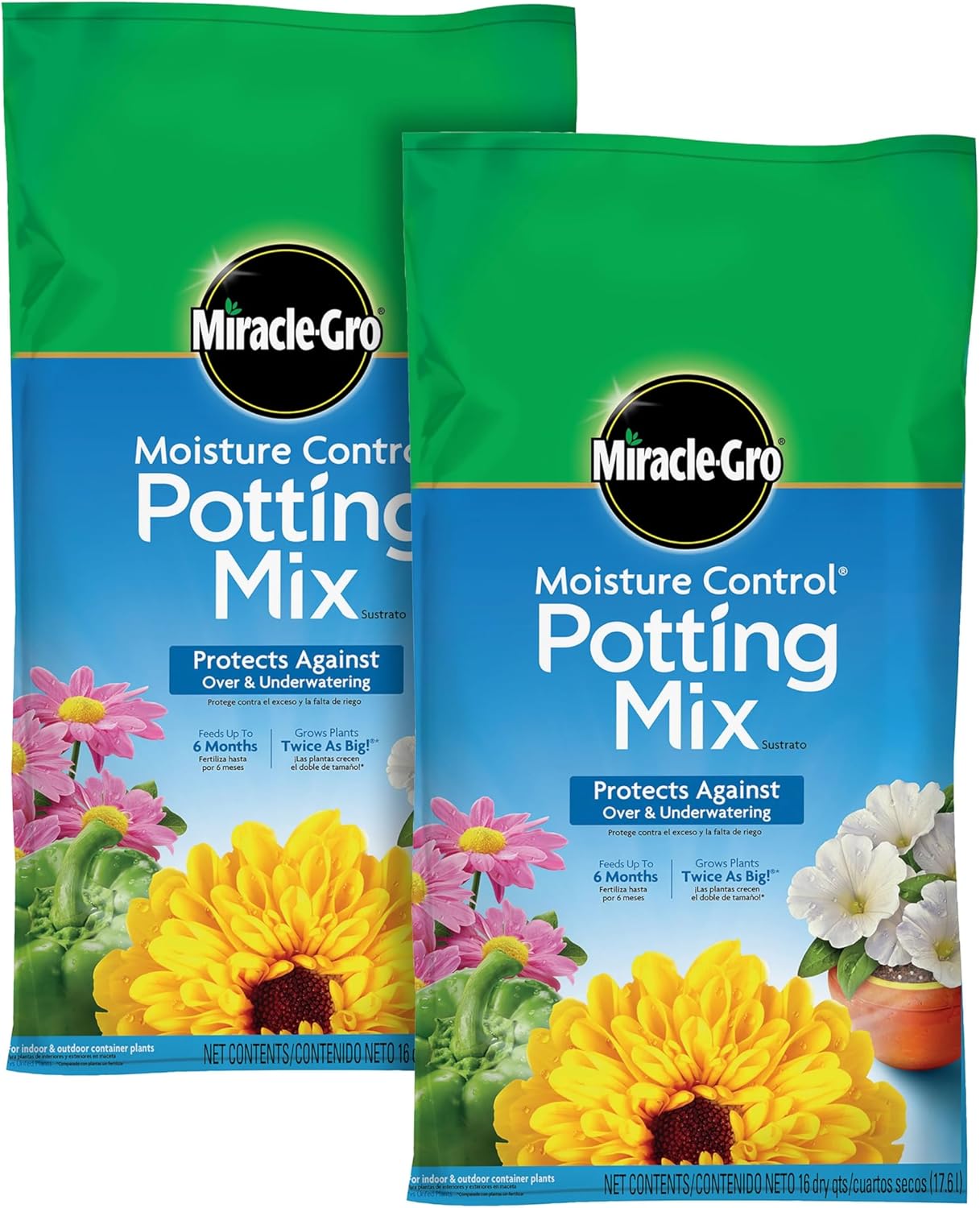
Miracle-Gro Moisture Control Potting Mix, 16 qt. (2-Pack)
| Item Highlight | Plant Soil For Container Plants, Protects against Over- and Under-Watering |
|---|---|
| Number of Packs | 2 |
| Feeds Plants | Up to 6 months |
| Style Name | 16 qt. |
This Miracle-Gro Moisture Control Potting Mix is a ready-to-use container soil designed to keep moisture more even while supplying nutrients for up to six months. In practice you fill a drain-holed bag or grow bag about one-third, set seed potatoes or transplants, top off and water through; the AquaCoir formula holds more water than standard mixes so you do not need to water as frequently and roots stay aerated. The mix is aimed at outdoor containers and is easy for beginners to use because it reduces common container problems like quick drying or waterlogging. Notable features are the moisture-control blend that claims up to 33% greater water absorption and the long-feeding nutrient charge. Limitations: the product is marketed as a potting mix rather than a specialized potato or vegetable compost so growers who want extra organic matter or custom NPK balances for heavy-feeding potato varieties may still need to amend with compost or fertilizer during the season. Also, annual repotting or soil refresh is recommended for best results in successive crops.
Best for: Gardeners who want a low-maintenance, ready-to-use potting mix for growing potatoes in bags and value fewer watering mistakes and built-in feeding during the first months.
Less Ideal for: Growers seeking a heavy, high-organic-matter vegetable compost or a mix pre-balanced specifically for high-yield potato production should consider amending this mix or choosing a dedicated vegetable soil.
- Designed for containers so it works directly in grow bags and pots without mixing
- Moisture-control AquaCoir formula helps reduce both over-watering and rapid drying
- Feeds plants for up to six months, lowering early-season fertilizer needs
- Light, airy texture intended to keep roots oxygenated in containers
- Not formulated specifically as a potato or vegetable compost so may lack the higher organic matter some growers prefer
- May require supplemental fertilizing for heavy-producing potato varieties later in the season
Verdict: A convenient moisture-control potting mix that makes growing potatoes in bags easier by cutting down watering headaches and supplying months of feed.
Back to the Roots Premium Blend Organic Potting Mix, 6 Quart

| Unit Count | 192 Fluid Ounces |
|---|---|
| Volume | 6 quarts |
| Item Highlight | Peat-free potting soil for outdoor plants, indoor plants, vegetables, herbs and flowers; yucca for moisture control; USA made |
| Item Type Name | Back to the Roots 100% Organic Potting Mix |
| Manufacturer | Back to the Roots |
This 6-quart Back to the Roots Premium Blend is a peat-free organic potting mix that works for a wide range of container and bag-grown crops. It combines upcycled plant matter and wood fines with organic plant food, yucca extract for improved moisture control, and dolomitic limestone to help stabilize pH. For growing potatoes in bags it provides a light, well-draining medium that retains enough moisture without becoming waterlogged and supplies baseline nutrients so tubers can develop. The small bag size makes it easy to handle and mix with amendments like compost or slow-release fertilizer if you want richer feed for heavy feeders. Limitations are the modest volume per bag if you need to fill multiple grow bags and that heavier amendments must be added for intensive potato crops over a full season. For a risk-averse gardener wanting a consistent, peat-free starting medium for bag-grown potatoes, this mix is straightforward and reliable.
Best for: Buyers who prioritize an organic, peat-free starting soil and want a predictable, low-risk potting mix for container or bag gardening, especially those who prefer a ready-to-use product that can be augmented as needed.
Less Ideal for: Gardeners who need bulk volumes for multiple large grow bags or who want a mix pre-loaded with high fertilizer content for intensive, high-yield potato production.
- Peat-free and 100% organic base made from upcycled plant matter
- Includes yucca extract to help with moisture control in containers and bags
- Dolomitic limestone added to support pH stability for most vegetables
- Suitable for indoor and outdoor container use, including bag-grown potatoes
- Only 6 quarts per bag so you may need multiple bags to fill standard potato grow bags
- Does not include heavy fertilizer so additional feeding may be needed for high-yield potato crops
Verdict: A dependable, peat-free organic potting mix that gives risk-averse gardeners a consistent, moisture-balanced starting medium for growing potatoes in bags.
Choosing the Right Soil for Potatoes in Bags: Key Factors to Consider
Drainage Versus Water Retention
Soil for potatoes in bags must balance fast drainage with enough moisture retention. Too much fine material holds water around tubers and invites rot. Too coarse a mix dries rapidly and stunts tuber growth.
In practice you want a medium that sheds excess water after a heavy rain or generous watering while maintaining pockets of moisture near roots. Amendments like coarse sand, perlite, or well-aged compost change the balance; understand how each affects watering frequency and the felt weight of a full bag.
Nutrient Supply and Feeding Strategy
Bags are a closed system so the soil must either contain sufficient nutrients for the season or allow predictable supplemental feeding. Slow-release granular fertilizers embedded in the mix reduce the need for frequent feeding, while a primarily inert mix will require a liquid feed program.
Consider how long you plan to grow before harvest. Early-season tuber bulking benefits from available nitrogen early, then a reduction later to encourage tuber set. Ensure the soil or your fertilization plan supplies potassium and phosphorus to support tuber development.
pH and Mineral Balance
Potatoes prefer a slightly acidic to neutral pH, typically around 5.5 to 6.5. Soil pH affects nutrient availability and the risk of scab diseases. If the mix is too alkaline, potatoes can develop surface scab and nutrient uptake problems.
Choose soils that list pH buffering or include acidifying amendments if your water or supplemental inputs tend to be alkaline. You may need to test the medium early in the season and adjust with elemental sulfur or acidic liquid feeds if required.
Disease Hygiene and Cleanliness
Soil-borne diseases and pests are easier to manage in bags, but contaminated media can introduce issues at planting. Using pasteurized or clearly labeled bagged mixes reduces the risk of common potato pathogens.
Avoid recycled garden soil unless it has been sterilized. Also scrutinize mixes for signs of weed seed or fungal activity before planting. Clean starting points reduce the need for later interventions and improve overall crop health.
Texture and Ease of Handling
The physical feel of a soil mix affects planting, hilling, and harvest. A light, friable mix makes it easier to hill soil around stems and to harvest tubers without heavy digging. Dense, clay-like mixes are hard to work with in a bag and increase effort when loosening the medium at harvest.
Consider how often you will move or tip bags. If you plan to lift or store full bags, choose lighter mixes. For gardeners who prefer minimal handling, a denser but nutrient-rich medium may be acceptable if drainage and root oxygenation are adequate.
Organic Matter and Long-Term Fertility
Organic content supplies slow-release nutrients and improves structure, but too much fresh organic matter can generate heat or lock up nitrogen while decomposing. Well-composted organic matter provides a steady nutrient release and improves water-holding capacity without the same level of decomposition-related problems.
For single-season bag crops, aim for mixes with stabilized organic matter and clear labeling on nutrient content. This reduces unpredictable changes in moisture and nutrient dynamics as the season progresses.
Best Bag Types and How Soil Choice Changes with Bag Style
Different bag materials and depths influence soil behavior. Shallow fabric sacks dry out faster than deep plastic grow bags, so choose a mix with higher moisture retention for shallow containers and a freer-draining mix for deep, well-ventilated bags. Fabric bags also encourage air pruning at the root zone, which pairs well with looser mixes that support fibrous root growth.
- Use lighter, moisture-retentive mixes in shallow or small bags.
- Choose coarser, free-draining mixes for deep bags to avoid anaerobic pockets.
- Match soil volume to the variety and intended tuber yield to prevent over- or under-filling.
Preparing the Bag and Planting Technique
Prepare bags with drainage holes if they are not already provided and place them on a raised surface to allow excess water to escape. Fill the bottom third with a quick-draining layer if your chosen mix tends to retain too much moisture. Plant seed tubers with eyes facing up and leave room for hilling as stems grow.
- Start with clean, dry bags to avoid introducing disease.
- Hilling with extra mix or loose compost encourages more tuber production.
- Label bags with variety and planting date to track maturity and moisture needs.
Watering and Feeding Schedule for Bag-Grown Potatoes
Bag-grown potatoes dry out more quickly than in-ground crops, so you will need a consistent watering rhythm. Check moisture with a finger or moisture meter rather than relying only on weight. Early growth needs steady moisture; reduce watering slightly once tubers begin to bulk to limit surface cracking. Feed according to the soil type. A mix with embedded slow-release fertilizer usually needs fewer supplements. For inert mixes, use a balanced liquid feed at scheduled intervals and add a potassium-rich boost when tubers are forming.
- Water deeply and less frequently to encourage strong root systems.
- Monitor both moisture and plant signs like yellowing leaves or slowed growth.
- Switch to lower nitrogen feeding once tubers begin swelling to favor tuber over foliage growth.
Common Problems and Quick Fixes in Bag Systems
Watch for signs of overwatering such as yellowing foliage, soft tubers, and foul odors. If that happens, improve drainage, reduce watering, and remove obvious rotten tubers. For nutrient deficiencies, foliar feeds give a fast correction but also adjust the soil feeding plan for the rest of the season. Pests like wireworms or slugs may still find bags. Use physical barriers, clean soil, and timely inspection to reduce infestations. Regular observation of the foliage will often reveal issues early enough to intervene without losing the crop.
- Improve aeration by adding perlite or coarse grit to heavy mixes.
- Remove and replace contaminated soil rather than trying to treat a severely diseased bag.
- Use raised platforms or stands to deter some ground-dwelling pests.
How We Chose the Best Soil for Potatoes in Bags
We evaluated candidate soils using practical, garden-tested dimensions that matter when growing potatoes in bags. Our criteria prioritized texture and drainage because tubers are vulnerable to rot in poorly draining mixes. Nutrient retention and controlled-release feeding were considered next since bag-grown potatoes rely entirely on the supplied medium for a season. pH stability and buffering ability were assessed because potatoes prefer slightly acidic conditions and stray alkalinity reduces tuber quality. We also looked at soil structure and aeration to ensure mixes support healthy root and stolon formation, plus organic content that affects both water-holding capacity and long-term fertility. Disease screening and sanitation considerations were applied to exclude mixes with a history of persistent pathogens or contaminants. We excluded bulk garden loam with unknown provenance and mixes lacking basic labelling on texture or nutrient sources. Overall we selected soils that balance drainage, moisture retention, nutrient supply, and disease safety for successful bag-grown potatoes.
FAQ
Can I use regular garden soil in a potato bag?
You can, but garden soil is often too dense and may contain weed seeds or pathogens. If you use it, mix in coarse material to improve drainage and ensure it has been well-aged or pasteurized to reduce disease risk.
How deep should the soil be in a potato bag?
Aim for at least 10 to 12 inches of soil for small varieties and 14 to 18 inches for larger types. More depth allows for additional hilling and room for tuber development, but match depth to the bag size and variety.
Do I need to adjust pH before planting?
Testing pH is a good step because potatoes prefer slightly acidic conditions. If the mix is above the recommended range, use acidifying amendments or choose a different soil formulated for acid-loving root crops.
How often should I fertilize soils that are mostly peat or coir?
Inert bases like peat or coir hold little nutrient, so plan on regular liquid feeding every two to three weeks, and include a potassium-rich formula as tubers begin to swell. Slow-release granules in the mix reduce the frequency of liquid feeds.
Can I reuse soil from last season's potato bags?
Reusing soil increases the risk of carrying over pathogens and depleting nutrients. If you must reuse, solarize or sterilize the media and refresh it with compost and balanced fertilizer before planting again.
Final Verdict
For potatoes grown in bags, prioritize drainage, moisture balance, and a stable nutrient supply. The right soil minimizes rot risk while providing accessible nutrients for tuber bulking and keeps handling and harvest manageable. Weigh the tradeoffs between ready-to-grow mixes with built-in fertility and lighter inert blends that require routine feeding. Focus on pH, aeration, and cleanliness when choosing a soil so you can plan a reliable watering and feeding schedule and harvest healthy tubers with minimal fuss.
