

Note: This article contains affiliate links. If you click on these links and make a purchase, I may earn a small commission at no extra cost to you. This helps support my research and content. Read my full affiliate disclosure here.
Picking the right soil for a snake plant kept indoors makes a big difference in root health, watering frequency, and overall plant resilience. Snake plants prefer mixes that shed excess water, resist compaction, and provide steady but not excessive nutrients. This guide covers the top shortlisted soils suited to that indoor use, with attention to drainage, aeration, and pH compatibility. Below you will find the top picks and what they do best, plus clear criteria we used to evaluate each soil so you can match a mix to your watering style and pot choice.
Top Picks at a Glance
| Best Overall The best all-around choice for most situations | Jessi Mae Organic Potting Soil with Perlite, Slightly Acidic 4-Quart |  |
| Best Quality Built to a higher standard if you want something more solid | Leaves & Soul Professional Snake Plant Potting Soil, 8.2 Quarts |  |
| Best Value The sweet spot between price and what you get | Omitgoter Organic Snake Plant Potting Soil, 1 qt |  |
| Highest Rated A top-rated pick with lots of positive feedback | Perfect Plants Snake Plant Soil, 4 qt Coco Coir & Bark Potting Mix |  |
| Most Popular A crowd favorite that many people choose with confidence | Grow Queen Craft Houseplant Potting Mix (2 Quart) |  |
| Best Seller A high-volume bestseller chosen again and again | Back to the Roots Organic Indoor Potting Mix, 6 Quart |  |
Jessi Mae Organic Potting Soil with Perlite, Slightly Acidic 4-Quart

| Brand Name | Jessi Mae |
|---|---|
| Unit Count | 128 Fluid Ounces |
| Volume | 4 quarts |
| Style Name | Planting Soil,Potting |
This Jessi Mae potting soil is a light, slightly acidic mix formulated for houseplants and works well for snake plants that prefer good drainage. The bagged 4-quart mix combines organic components with perlite to keep the texture airy so roots get oxygen while excess water drains away, reducing the risk of root rot. It is hand-mixed in small batches and marketed as chemical-free, which makes it suitable for indoor use around people and pets when used as directed. Typical use is potting or repotting snake plants, parlor palms, pothos, and other common houseplants where a balance of moisture retention and drainage is important. Because the volume is modest, it is best for single pots, small repots, or topping up soil rather than large-scale refills. The clear practical benefit is a ready-to-use, well-draining mix that saves time compared with blending your own components, but buyers needing bulk soil for multiple large containers will need larger quantities.
Best for: Buyers who want a ready-made, well-draining indoor potting mix for one or a few houseplants and prefer an organic, chemical-free option that simplifies repotting.
Less Ideal for: Gardeners who need bulk soil for multiple large containers or outdoor beds should choose a larger-volume product or mix components themselves.
- Slightly acidic pH tailored to many common houseplants including snake plants
- Perlite and light, fluffy texture improve aeration and drainage
- Organic, chemical-free formulation suitable for indoor use
- Made in the USA and hand-mixed in small batches for consistent texture
- Only 4 quarts per bag, so not economical for repotting many or large plants
Verdict: A convenient, slightly acidic potting mix with perlite that gives snake plants the drainage and airy texture they need in small-scale indoor potting jobs.
Leaves & Soul Professional Snake Plant Potting Soil, 8.2 Quarts

| Volume | 8.2 quarts |
|---|---|
| Made in | USA |
| Components | Peat moss, coco coir, perlite, dolomite |
Leaves & Soul’s Snake Plant Potting Soil is a purpose-built, ready-to-use mix for repotting and maintaining indoor snake plants. The blend of peat moss and coco coir holds enough moisture for steady root uptake while perlite creates air spaces for faster drainage, and dolomite helps buffer the medium. In practice this means fewer episodes of waterlogged roots and better oxygen flow around the rootball, which helps upright foliage stay firm and reduces rot risk. The product comes in a resealable 8.2 quart bag that is convenient for one or multiple repottings and is suited to terracotta, ceramic, and plastic pots with drainage. It is simple to use straight from the bag with no extra amendments required for typical houseplant care. Limitations to note are that it does not include a slow-release fertilizer and fast drainage can mean more frequent watering in cooler or low-light rooms, so monitoring moisture rather than following a fixed schedule is advisable.
Best for: Plant owners focused on reliable root health and drainage for snake plants who want an easy, purpose-made soil that reduces overwatering risk and supports steady growth.
Less Ideal for: Growers who prefer an all-in-one soil with built-in long-term fertilization or those who need a moisture-retentive mix for very low-light, consistently cool interiors.
- Blend of peat moss, coco coir, perlite, and dolomite for balanced moisture retention and quick drainage
- Ready-to-use mix so no additional amendments are required when repotting
- Resealable 8.2 quart bag makes storage and multiple projects convenient
- Formulation promotes root aeration which helps reduce risk of root rot
- No built-in slow-release fertilizer so feeding must be managed separately
- Fast-draining mix may require more frequent watering in low-light or cool indoor conditions
Verdict: Choose this mix when you want a ready-to-use, fast-draining potting soil that prioritizes root aeration and dependable drainage for healthy indoor snake plants.
Omitgoter Organic Snake Plant Potting Soil, 1 qt

| Brand | Omitgoter |
|---|---|
| Unit Count | 32 Ounce |
| Style Name | Succulent, Well-draining |
| Volume | 32 fluid ounces |
This 1 qt Omitgoter potting mix is designed specifically to give snake plants the drainage and aeration they need while supplying gentle, long-lasting nutrients. The blend lists coconut fiber, peat, perlite, bark, and humus castings, plus a slow-release organic fertilizer, so it both improves porosity and provides steady feeding that reduces the need for frequent fertilizing. Its slightly acidic pH (6.0–6.5) supports nutrient uptake and helps prevent yellowing. In practice the mix repots easily into terracotta or ceramic containers and resists compaction so roots stay airy and less prone to rot from overwatering. The small 1 qt volume is convenient for individual pots or topping up mixes but means multiple bags are needed for larger plants or several pots. If you want a tailored, ready-made substrate for indoor snake plants that minimizes tweaking, this product performs well, though larger-volume options may be more economical for multiple or large specimens.
Best for: Buyers who want a no-fuss, plant-specific potting mix that reduces repotting guesswork and keeps indoor snake plants healthy with minimal adjustments.
Less Ideal for: Gardeners needing bulk soil for many pots or large specimens should consider larger-capacity mixes or commercial bale options.
- Formulated for drainage and aeration to reduce root rot risk in snake plants
- Contains organic components and slow-release fertilizer for steady nutrient supply
- Pre-mixed, ready-to-use for quick repotting without additional amendments
- pH adjusted to 6.0–6.5 to support nutrient uptake and healthy foliage
- Small 1 qt volume requires multiple bags for larger or multiple plants
Verdict: A compact, ready-made organic mix that gives snake plants the drainage and steady nutrition they need with minimal setup.
Perfect Plants Snake Plant Soil, 4 qt Coco Coir & Bark Potting Mix
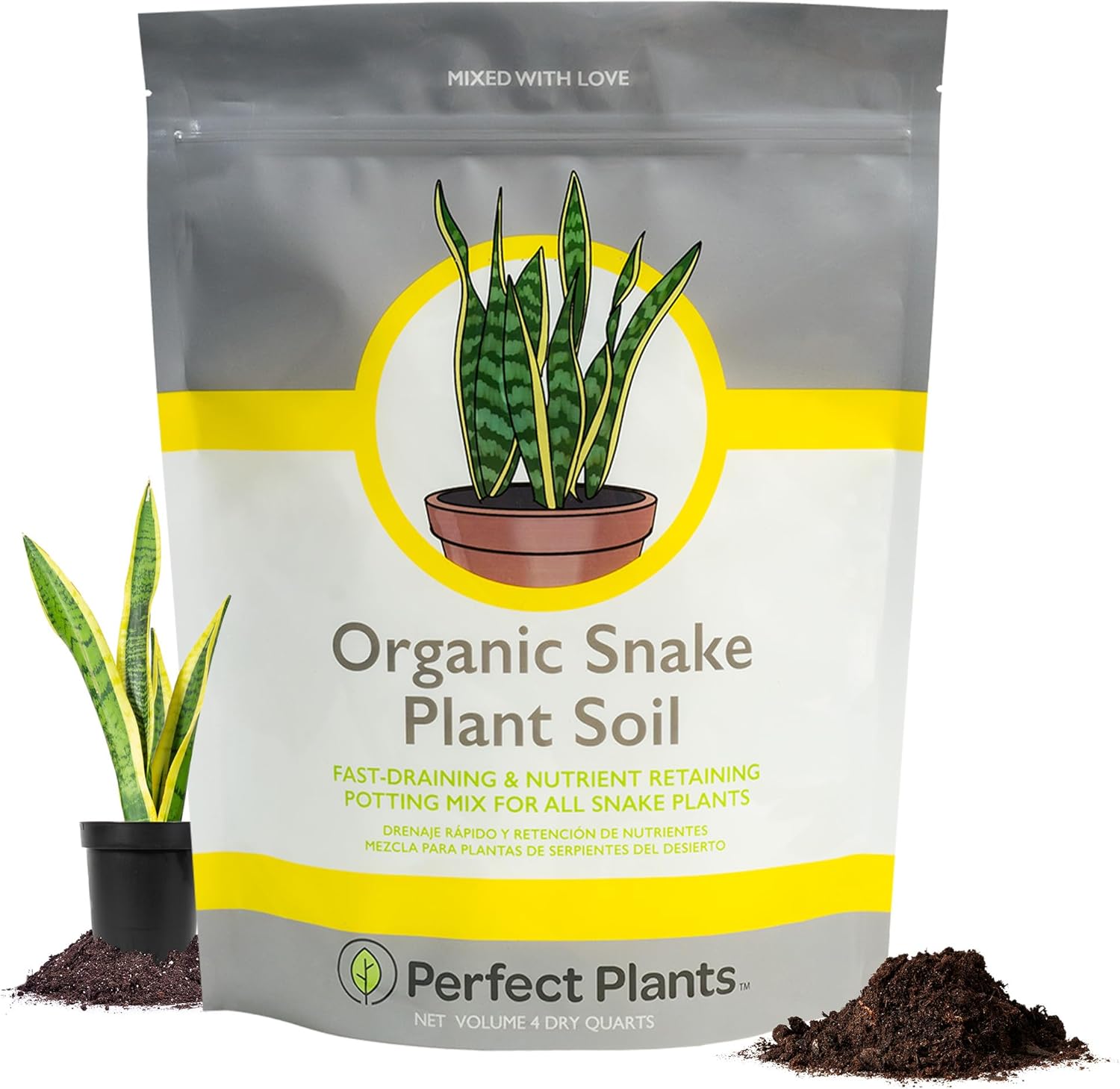
| Item Highlight | All-natural pine bark, perlite and sand blend for Sansevieria varieties, drains fast to protect roots, no added fertilizer |
|---|---|
| Item Type Name | Snake Plant Soil 4qt. |
| Volume | 4 quarts |
This snake plant soil is a purpose-made potting mix for Sansevieria varieties that prioritizes drainage and root health. The blend of coconut coir, pine bark chips, perlite, and sand creates a light, airy medium that sheds excess water quickly, so it is typically used when repotting or topping up containers for indoor snake plants. The mix contains no slow-release fertilizer, which lets you control feeding separately and reduces the risk of overfertilizing slow-growing plants. Packaged in a resealable bag and produced in the USA, it is convenient for small repotting jobs and for keeping on hand between plantings. Limitations to note are the small 4 quart volume, which is best suited to individual pots rather than multiple large plants, and the lack of added nutrients means you will need to plan a feeding schedule. For growers who want a reliable, well-draining substrate for snake plants, this mix simplifies maintenance and protects roots from sitting wet.
Best for: Buyers who want a dependable, low-maintenance potting medium that prioritizes root health for indoor snake plants and who plan to control fertilization themselves.
Less Ideal for: Gardeners repotting many large plants at once or those who prefer an all-in-one fertilized mix that requires no additional feeding.
- Formulated specifically for snake plants to improve drainage and reduce root rot risk
- Lightweight mix of coir, bark, perlite and sand for good aeration
- No added slow-release fertilizer so feeding can be controlled
- Resealable packaging suitable for storing leftover mix
- Made and mixed in the USA by a specialist nursery brand
- Small 4 quart volume may not be enough for several or larger repots
- Contains no nutrients so plants require separate fertilization
Verdict: Choose this mix when you need a reliable, fast-draining substrate that protects snake plant roots and lets you manage feeding separately.
Grow Queen Craft Houseplant Potting Mix (2 Quart)

| Brand Name | Grow Queen |
|---|---|
| Item Type Name | Potting Mix |
| Unit Count | 64 Ounce |
| Volume | 2 quarts |
This Grow Queen Craft Houseplant Potting Mix is a ready-to-use, peat-free soil designed for indoor plants that need fast drainage without drying out completely. The mix combines Douglas fir bark, lava rock and pumice to create permanent air pockets so roots get oxygen and water drains quickly, which helps prevent root rot in snake plants and other succulents. It also contains coco coir, organic worm castings and charged biochar that hold nutrients and moisture near the root zone, reducing the need for frequent fertilizing. The bag arrives pre-moistened and works straight from the package for repotting, refreshing pots, or rooting cuttings. Practical benefits include a stable, non-compacting structure and organic amendments that support steady growth. Limitations are the small 2 quart size for larger collections and the warning about irritation if mishandled, so use gloves and a dust mask when repotting. Overall it is a purposeful indoor mix that favors health of drought-tolerant houseplants when you want reliable drainage and some moisture retention.
Best for: Buyers who prioritize plant health and want a well-draining, low-compaction soil for snake plant repots and single-pot refreshes while relying on product performance and positive user feedback.
Less Ideal for: People repotting many large plants or filling multiple containers at once should consider larger-volume commercial mixes or bulk options.
- Chunky blend (Douglas fir bark, lava rock, pumice) provides consistent aeration and fast drainage
- Contains organic worm castings and charged biochar for nutrient and moisture retention at the roots
- Peat-free and perlite-free formulation that resists compaction over time
- Pre-moistened and ready to use straight from the bag
- Small 2 quart bag is best for single repots not for refurbishing multiple large pots
- Contains ingredients that can irritate skin or lungs if handled without protection
Verdict: Choose this mix if you want a peat-free, chunky indoor soil that prevents soggy roots and supports healthy snake plant growth.
Back to the Roots Organic Indoor Potting Mix, 6 Quart

| Unit Count | 192 Fluid Ounces |
|---|---|
| Item Type Name | Indoor Potting Mix 6qt |
| Item Highlight | Peat-free, 100% organic, made in the USA |
| Ingredients | Coconut Coir, Yucca, Mycorrhizae, Perlite, Horticultural Sand |
This 6 quart indoor potting mix is designed for common houseplants and works well when repotting snake plants and other drought-tolerant varieties. The blend uses coconut coir as the primary medium with horticultural sand and perlite for improved drainage and aeration, while added mycorrhizae supports root health and nutrient uptake. Yucca extract helps the mix retain useful moisture without becoming waterlogged, which reduces the risk of root rot when you water conservatively. Because it is peat-free and made in the USA, it also appeals to buyers who prefer organic and lower-environmental-impact options. The texture is loose and easy to work with in pots and allows water to pass through rather than compacting around roots. On the downside the 6 qt bag is relatively small for multiple repots or larger plants, and concentrated commercial mixes like this do not include long-term fertilizer, so occasional feeding will still be necessary for heavy feeders.
Best for: Buyers who prioritize low-risk, pet-safe organic soils and want a ready-to-use mix that reduces overwatering problems for common houseplants like snake plants.
Less Ideal for: Gardeners needing large volumes for many or very large plants or those who want an all-in-one soil with prolonged fertilizer built in.
- Peat-free organic blend suited for indoor plants and environmentally conscious buyers
- Contains mycorrhizae to support root development and nutrient uptake
- Coconut coir plus sand and perlite provide good drainage and prevent compaction
- Yucca extract helps retain modest moisture without causing soggy soil
- Small 6 quart volume may require multiple bags for several or larger plants
- No built-in long-term fertilizer so periodic feeding is still needed
Verdict: A pet-safe, peat-free organic potting mix that helps snake plants avoid soggy roots while supporting healthy root growth.
Choosing the Right Soil for Snake Plant Indoor: Key Factors to Consider
Drainage and Aeration
Good drainage prevents waterlogged pockets around snake plant roots, which are highly prone to rot when left in saturated soil. A mix that includes coarse particles such as perlite, pumice, horticultural sand, or small bark pieces lets water move through quickly and maintains air spaces so roots can respire.
Aeration matters because compacted, fine-textured mixes collapse after repeated wetting and drying, reducing oxygen availability. Choose a medium that keeps a balance between moisture retention and open pore space so roots stay healthy between waterings.
Resistance to Compaction
Indoor pots are subject to wetting and drying cycles and occasional top watering that can crush fine soils. Materials that break down slowly, like coarse pumice or decomposed granite, help the mix retain structure for longer.
Compaction increases watering frequency and the chance of root disease. Consider mixes that list durable aggregates and avoid blends that rely mainly on fine peat or silt, unless you plan to amend them with perlite or grit.
pH and Mineral Stability
Snake plants typically do best in slightly acidic to neutral conditions, though they tolerate a range. Soil pH affects nutrient availability, so a stable pH prevents sudden deficiencies or toxicities from developing in an indoor container.
Some amendments like lime or certain composts alter pH over time. Look for mixes formulated for houseplants or succulents that state pH ranges or contain neutral buffering materials to avoid frequent adjustments.
Nutrient Balance and Longevity
Indoor snake plants need modest feeding. A soil with light, slow-release nutrients reduces the risk of overfertilizing and minimizes watering frequency changes caused by nutrient salts building up.
Mixes that provide a baseline of nutrition but remain easy to topdress or supplement let you control growth without forcing frequent repotting. Longevity also matters for busy gardeners who prefer fewer repots and stable performance across seasons.
Particle Size and Texture
Particle size determines how quickly a mix drains and how well it holds some moisture. Coarse textures speed drainage and are ideal for shallow pots, while finer textures retain more water and may suit larger, deep containers if amended correctly.
Texture also affects root anchorage and the ease of repotting. A balance of chunky and fine components supports root spread while preventing the mix from washing out through drainage holes.
Suitability for Containers and Pot Types
Different container materials and sizes change how a mix dries. Terra cotta wicks moisture faster than plastic, so a slightly finer mix might be acceptable in terracotta pots. Conversely, plastic pots hold moisture longer and benefit from chunkier, faster-draining blends.
Also consider pot depth and plant size. Small or shallow containers need mixes that drain rapidly to avoid standing water near the base, while deep pots can tolerate mixes with a bit more moisture retention in the lower half.
When to Repot or Refresh Soil
Repot or refresh the top layer when you see slowed drainage, a dense crust, or the plant becomes rootbound. For adult snake plants, repotting every two to three years is common depending on growth rate and the original mix quality.
Refreshing soil can be as simple as replacing the top 2 to 3 inches with a fresh fast-draining mix and loosening roots to remove compacted material. Full repots give a chance to inspect root health and adjust mix composition if drainage has degraded.
- Signs to refresh: slow drainage, salt crusts, or stunted growth
- Partial topdressing preserves beneficial microbes and reduces transplant stress
- Full repot allows inspection and removal of any rotted roots
Simple Amendments to Improve Any Indoor Mix
You can tailor commercial houseplant soils by adding coarse elements. Perlite, pumice, coarse builder's sand, or grit improves drainage and reduces compaction. Start with a small proportion and increase for shallow pots.
For gardeners who prefer organic content, small amounts of well-aged compost add slow nutrients without holding excessive water. Avoid fresh compost that can retain moisture and introduce high microbial activity that upsets root balance.
- Add 10 to 30 percent coarse aggregate for better drainage
- Use coarse sand or grit rather than fine play sand
- Mix in a little aged compost for nutrition, not water retention
Watering Practices That Match the Right Soil
Soil choice and watering go hand in hand. Fast-draining mixes allow less frequent, deeper waterings because excess moisture exits quickly. Slower mixes need more careful, shallow watering and longer drying intervals between waterings.
Check moisture at the root level, not just the surface. Stick a finger or a wooden skewer down several inches to gauge true dryness. Adjust frequency rather than changing soil unless persistent problems appear.
- Let the upper 1 to 2 inches dry for young plants; older snake plants can tolerate deeper dryness
- Avoid daily light misting that keeps the top layer damp
- Use pots with drainage holes and elevate them slightly to avoid water pooling beneath
Preparing Soil for Different Indoor Climates
Homes with high humidity can get away with mixes that retain a touch more moisture, while dry, heated indoor air benefits from chunkier mixes to prevent overly rapid drying of the root ball. Match particle size to the ambient conditions.
In cooler rooms, choose mixes that do not hold excessive moisture at low temperatures. Cooler soil temperatures slow evaporation and root uptake, increasing rot risk if the mix is too water-retentive.
- High humidity: reduce aggregate slightly to hold modest moisture
- Low humidity or warm rooms: increase pumice or perlite content
- Cool rooms: prioritize drainage and avoid peat-heavy mixes
Troubleshooting Common Soil-Related Problems
Yellowing leaves and mushy bases usually indicate overwatering or poor drainage. Inspect the soil structure and root ball, and consider repotting into a faster-draining mix if rot is present. Removing soft, blackened roots and letting the crown dry before repotting helps recovery.
Slow growth with compacted soil can be helped by gently teasing roots and adding fresh chunkier material. If salt buildup appears on the surface, flush the pot thoroughly with water and replace the top layer of soil.
- Overwatering signs: soft, dark roots and collapsing leaves
- Compaction signs: water pooling on the surface and slow infiltration
- Salt buildup: white crusts on the soil surface, remedied by flushing and partial soil replacement
How We Chose the Best Soil for Snake Plant Indoor
We selected mixes that address the specific needs of indoor snake plants. Key evaluation criteria included drainage and aeration, because these plants are vulnerable to root rot; resistance to compaction over repeated wet-dry cycles; pH stability, since snake plants prefer neutral to slightly acidic soils; nutrient balance and longevity, to limit overfertilizing while providing enough feeding between repots; and texture compatibility with common container sizes and materials. To build the list we filtered for mixes formulated for succulents or houseplants with explicit drainage components such as coarse sand, perlite, or pumice. We excluded heavy garden loams, pure peat-only mixes that retain water excessively, and any products intended solely for outdoor beds. Performance notes emphasized how mixes behave in containers over time rather than lab claims, and we prioritized mixes that are easy to amend for different pot sizes and watering habits.
FAQ
Can I use regular potting soil for a snake plant indoors?
Regular potting soil can work if it is amended to improve drainage. Add coarse perlite, pumice, or grit to increase aeration and prevent the soil from holding too much water. Avoid unamended peat-heavy mixes that stay soggy.
How much perlite or pumice should I add to a houseplant mix?
A common starting point is 10 to 30 percent by volume, adjusting based on pot depth and your watering routine. Shallow pots and humid homes benefit from the higher end of that range.
Does cactus or succulent mix work for snake plants indoors?
Succulent mixes are often a good match because they are designed to drain quickly. Check that the texture includes chunky particles rather than just fine sand, and add a little organic matter if you want more steady nutrients.
How can I tell if soil pH is a problem for my snake plant?
Symptoms of pH-related issues are usually nutrient imbalances such as yellowing or purpling of leaves not explained by watering. A simple pH test of the potting mix can reveal extremes. Most snake plants do well in neutral to slightly acidic ranges.
Should I topdress with compost or slow-release fertilizer?
Light topdressing with well-aged compost or a small amount of slow-release fertilizer can provide nutrients without upsetting moisture balance. Apply sparingly and monitor plant response, avoiding rich feeds on recently repotted plants.
Is distilled or filtered water better for snake plants in indoor soil?
Filtered or distilled water can help if your tap water is hard or high in salts, which can accumulate in container soils. In most cases regular tap water is fine if you flush the pot occasionally to remove buildup.
Final Verdict
Choose a soil that prioritizes drainage and stable structure for indoor snake plants. Focus on mixes with coarse aggregates and modest organic content so roots get oxygen and do not sit in water. Match particle size to your pot material and indoor climate, and be ready to amend or refresh soil if you notice compaction or slow drainage. Prioritize drainage, pH stability, and longevity when selecting a mix. With the right soil and a watering routine that lets the root zone dry between waterings, you will reduce stress on the plant and minimize repotting and pest problems.
