

Note: This article contains affiliate links. If you click on these links and make a purchase, I may earn a small commission at no extra cost to you. This helps support my research and content. Read my full affiliate disclosure here.
Picking the right soil for Spathiphyllum matters because these houseplants need a mix that holds moisture without staying waterlogged. Use soil that gives roots oxygen, drains excess water, and holds enough reserve moisture between waterings so leaves stay glossy and flowers last. This guide shortlists seven top soils chosen for typical indoor Spathiphyllum growing conditions, from well-lit living rooms to lower-light bedrooms and offices. Each option was evaluated on practical gardener concerns like drainage, aeration, and nutrient buffering. Read on to understand which soil characteristics matter most and why the shortlisted mixes perform well for Peace Lilies.
Top Picks at a Glance
| Best Overall The best all-around choice for most situations | Grow Queen Craft Houseplant Potting Mix, 4 Quart (Peat-Free, Chunky Indoor Potting Soil) |  |
| Best Quality Built to a higher standard if you want something more solid | Leaves & Soul Professional Peace Lily Potting Soil, 8.2 Quarts |  |
| Best Value The sweet spot between price and what you get | Soil Sunrise Aroid Potting Soil Mix (8 Quarts) |  |
| Best Budget The cheapest option that still gets the job done reliably | Doter Organic Peace Lily Soil Mix, 2 qt |  |
| Highest Rated A top-rated pick with lots of positive feedback | Grow Queen Craft Aroid Potting Mix, Chunky Monstera & Tropical Plant Soil, 2 qt |  |
| Most Popular A crowd favorite that many people choose with confidence | Soil Sunrise Peace Lily Potting Mix (2 Quarts) |  |
| Best Seller A high-volume bestseller chosen again and again | Back to the Roots Organic Indoor Potting Mix, 6 Quart |  |
Grow Queen Craft Houseplant Potting Mix, 4 Quart (Peat-Free, Chunky Indoor Potting Soil)

| Unit Count | 128 Ounce |
|---|---|
| Item Type Name | Potting Mix |
| Volume | 4 quarts |
| Ingredients | Douglas Fir Bark, Lava Rock, Pumice, Coco Coir, Worm Castings, Charged Biochar |
This Grow Queen craft potting mix is designed for indoor plants that need airy, well‑draining media with gentle nutrition. The mix combines Douglas fir bark, pumice and lava rock to create permanent air pockets that resist compaction, so it is useful for repotting pothos, snake plants and other tropical houseplants that dislike soggy roots. Charged biochar and organic worm castings hold water and micronutrients near the root zone, which helps steady growth without relying on synthetic fertilizer. The bag arrives pre‑moistened and ready to use, making it convenient for refreshing pots, rooting cuttings or repotting new arrivals. Because it is peat‑free and perlite‑free the texture stays chunky rather than breaking down into a dense mass, but that composition means it dries faster than peat‑heavy mixes so plants in very dry homes may need more frequent watering. The mix is aimed at indoor containers and also works for patio planters when drainage is important.
Best for: Buyers who want an all‑around indoor potting mix that keeps roots aerated, supplies steady organic nutrition, and reduces the need for frequent repotting for common tropical houseplants.
Less Ideal for: People who prefer heavy, moisture‑retentive peat mixes for plants that need consistently high substrate moisture or gardeners who want a very fine, uniform soil texture.
- Chunky, well‑draining formula that resists compaction and prevents waterlogging.
- Contains charged biochar to hold moisture and nutrients near roots for steadier feeding.
- Includes organic worm castings for biological nutrition without synthetic fertilizer.
- Pre‑moistened and ready to use straight from the bag for quick repotting.
- Dries more quickly than peat‑based mixes, so watering frequency may increase in dry indoor conditions.
- No perlite means less visible white aeration particles which some users expect.
Verdict: A sustainable, chunky peat‑free potting mix that keeps Spathiphyllum roots airy while delivering steady organic nutrition.
Leaves & Soul Professional Peace Lily Potting Soil, 8.2 Quarts

| Brand Name | Leaves and Soul |
|---|---|
| Style Name | Peace Lily Soil (8.2 Quarts) |
| Volume | 8.2 quarts |
| Made in | USA |
This ready-to-use Leaves & Soul Peace Lily potting soil is a purpose-built mix for repotting and routine care of Spathiphyllum and similar indoor flowering plants. It combines peat moss, coco coir, perlite, and dolomite to produce a light, airy medium that holds adequate moisture without staying waterlogged, which helps reduce the risk of root rot while still supplying a stable root environment. The blend is convenient for typical repotting: loosen the root ball, position the plant in a container with drainage, and backfill without heavy packing. The resealable 8.2 quart bag makes it easy to store between projects. Practical growers will appreciate that the mix supports fertilizer uptake and improved aeration, so plants recover and establish quickly after repotting. Limitations are that the product description does not list specific nutrient analysis or pH, so heavier feeders or growers who need exact soil chemistry may want to supplement with fertilizer or test the mix for precise adjustments.
Best for: Practical indoor plant owners who want a dependable, ready-made soil that improves root aeration and reduces watering mistakes when repotting peace lilies and similar houseplants.
Less Ideal for: Growers who require exact soil chemistry or a tailored nutrient profile for specialist plants should choose a mix with published pH and nutrient analyses or plan to amend and test the soil.
- Formulated blend of peat moss, coco coir, perlite, and dolomite for good aeration and drainage
- Ready to use from the bag which simplifies repotting and routine top-ups
- Resealable 8.2 quart bag for convenient storage between uses
- Designed to support nutrient uptake and make fertilizer more effective
- No nutrient N-P-K values or pH listed for precise fertilization planning
- May need additional fertilizer for heavy-feeding plants or long-term potted growth
Verdict: A convenient, ready-to-use potting mix that gives peace lilies better drainage and root aeration for healthier growth.
Soil Sunrise Aroid Potting Soil Mix (8 Quarts)
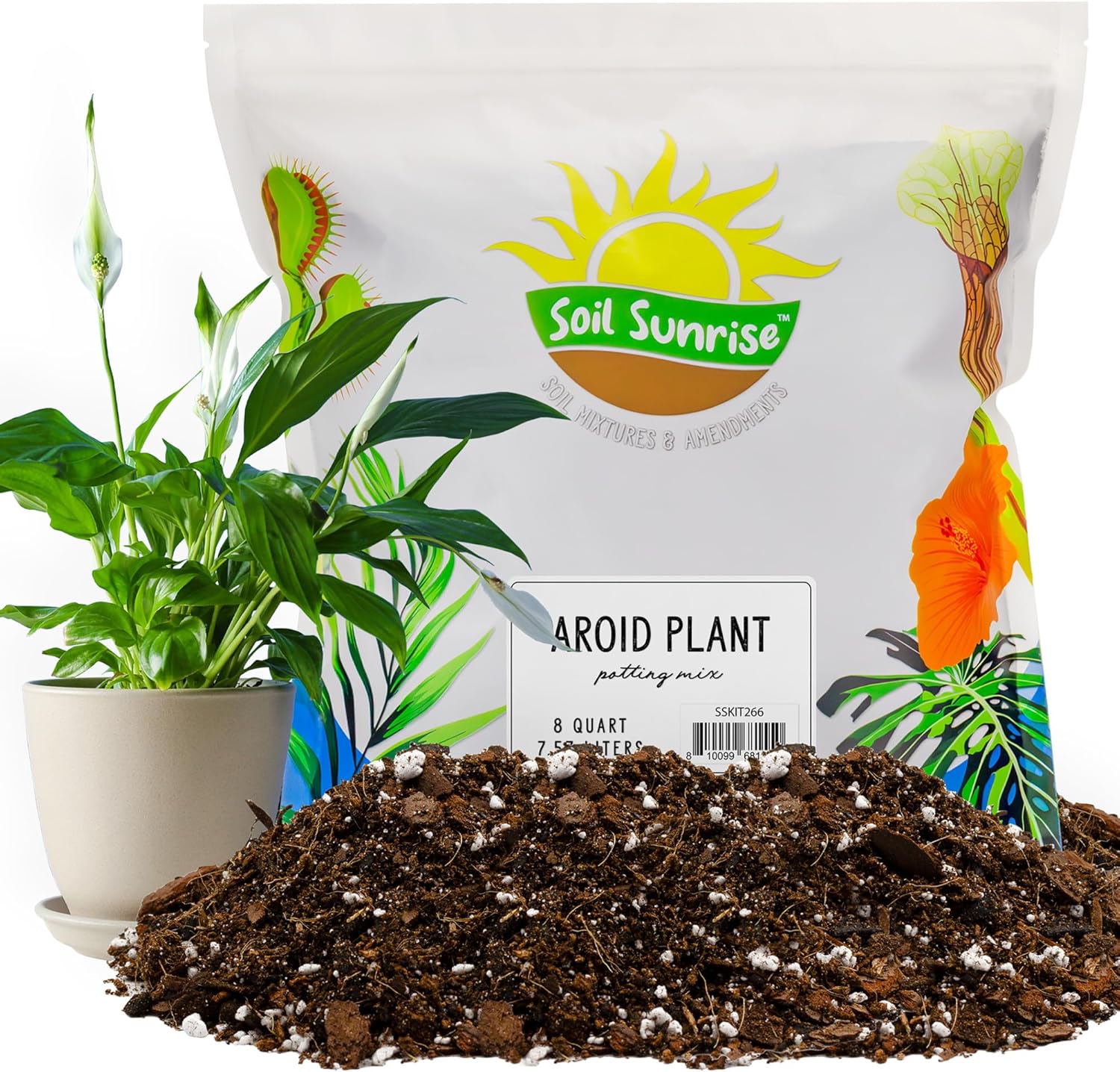
| Volume | 8 quarts |
|---|---|
| Ingredients | Coco coir, bark, perlite, worm casting, charcoal |
| Unit Count | 1 Count |
This 8-quart Soil Sunrise aroid mix is designed specifically for jungle-type houseplants like golden pothos and other Araceae. The blend of coco coir, pine bark, perlite, worm castings, and horticultural charcoal creates a light, chunky texture that promotes fast drainage while holding enough moisture for steady root growth. In practice it is useful for repotting store plants into a more breathable medium or refreshing the top layer of older pots. Notable features include organic amendments for nutrition, perlite and bark for aeration to reduce root rot risk, and charcoal to help with moisture regulation and odor control. The bag states it will fill a large 12-inch planter, so a single pack suits one or two typical pothos repots. Limitations are the small volume for multi-plant households and the absence of added slow-release fertilizer, so you will need to plan feedings after repotting for vigorous growth.
Best for: Balanced houseplant owners who want a ready-made, all-natural mix that mimics jungle soils for healthy pothos root development and easier repotting.
Less Ideal for: People who need large quantities for many plants or who want a potting mix with built-in slow-release fertilizer.
- Aroid-specific blend with coco coir, pine bark, perlite and charcoal for matching pothos root needs
- Includes worm castings to provide natural, gentle nutrients
- Light, chunky texture improves aeration and reduces chance of root rot
- Suitable for both young and mature plants and fits a 12-inch pot
- 8-quart bag is modest volume if you need to repot many plants
- No added fertilizer means you must supplement nutrients after repotting
Verdict: A purpose-made, all-natural aroid mix that gives golden pothos the drainage and airy texture they need for healthier roots and easier repotting.
Doter Organic Peace Lily Soil Mix, 2 qt

| Brand Name | Doter |
|---|---|
| Item Type Name | Garden soil |
| Manufacturer | Doter |
| Volume | 2 quarts |
This 2 qt Doter soil mix is made specifically for peace lilies and arrives ready to use for planting, repotting, or topping up containers. In practice it provides a looser, more aerated medium than plain garden dirt, with added conditioners intended to improve drainage and encourage healthy root growth while holding enough moisture for a moisture-loving houseplant. The listing highlights a balanced pH and built-in nutrients, which simplifies care for busy owners who prefer a single product rather than blending peat, perlite, and fertilizers. The bag is small and easy to handle for working with 4 to 6-inch to medium pots, but you will need larger quantities or a different size for multiple plants or big containers. Also the formulation details and nutrient levels are not fully specified on the label, so experienced growers who track exact mixes or feed schedules may want to supplement with known amendments or fertilizers over time.
Best for: Buyers who want a convenient, plant-specific potting mix for indoor peace lilies and prefer an off-the-shelf product that simplifies repotting and routine care.
Less Ideal for: Large collections, growers who make custom soil blends, or anyone needing precise ingredient ratios for strict fertilizing programs should consider bulk mixes or separate amendments instead.
- Formulated specifically for peace lilies to support moisture retention and root health
- Pre-mixed and ready to use so beginners save time blending amendments
- Balanced pH claimed to help with nutrient uptake
- Small 2 qt bag is easy to handle for repotting small to medium houseplants
- Only 2 quarts so you will need multiple bags for several plants or larger pots
- Exact ingredient ratios and nutrient concentrations are not provided
Verdict: A convenient, ready-to-use 2 qt potting mix tailored to peace lilies that saves time and simplifies repotting for practical indoor plant owners.
Grow Queen Craft Aroid Potting Mix, Chunky Monstera & Tropical Plant Soil, 2 qt

| Brand | Grow Queen |
|---|---|
| Volume | 2 quarts |
| Ingredients | Tree fern fiber, earthworm castings, lava rock, biochar, coco coir, gypsum, alfalfa meal |
| Designed for | Monstera, Alocasia, Philodendron, Anthurium and tropical houseplants |
This Grow Queen Craft Aroid Mix is a ready-to-use, chunky potting soil built to replicate a rainforest floor for Monsteras, Alocasias and similar tropical houseplants. The blend combines large bark pieces, pumice and lava rock for fast drainage and aeration, while coco coir and charged biochar retain modest moisture so the mix does not go bone dry between waterings. It also includes earthworm castings, alfalfa meal and gypsum to support beneficial microbes and provide gentle nutrition out of the bag. The mix arrives pre‑moistened and is straightforward for repotting, especially when you want to reduce compaction and lower the risk of overwatering. Notable limitations are the small 2 quart bag size for larger repotting jobs and the absence of perlite if you prefer that specific amendment. This is a practical, botanist‑informed option for people who want a sustainable, peat‑free alternative tailored to aroids and other chunky‑soil‑loving houseplants.
Best for: Buyers who want a ready-made, sustainable potting mix that mimics tropical forest soil for Monsteras and other aroids and who value drainage with living amendments over DIY mixing.
Less Ideal for: Growers repotting many large plants at once or those who prefer to fully customize their own soil recipe with specific additives like perlite or added fertilizer concentrates.
- Chunky, well aerated formula with bark, pumice and lava rock to improve drainage and prevent compaction
- Includes charged biochar and earthworm castings to support microbes and provide starter nutrients
- Peat free and perlite free, using coco coir and natural porous aggregates for sustainability
- Pre‑moistened and ready to use straight from the bag for easy repotting
- Small 2 quart volume may be impractical for repotting multiple or large plants
- Does not contain perlite, which some growers prefer for a lighter texture
Verdict: Choose this mix if you want a peat‑free, botanist‑designed chunky soil that gives Monsteras and other aroids the fast drainage and living nutrition they need straight from the bag.
Soil Sunrise Peace Lily Potting Mix (2 Quarts)

| Ingredients | Pine bark, peat moss, perlite, sand, and lime |
|---|---|
| Volume | 2 quarts |
| Intended plant | Peace Lily (Spathiphyllum) |
Soil Sunrise Peace Lily Potting Mix is a ready‑to‑use, 100% natural blend intended for repotting or topping up indoor Peace Lilies. The mix combines peat moss for moisture retention, pine bark and sand for improved drainage, and perlite to increase aeration around roots, while lime helps balance pH. In practice it provides a lighter, more porous medium than plain garden soil, which reduces the risk of waterlogged roots and supports healthy new growth and flowering in low‑light conditions. The 2‑quart bag is convenient for repotting small plants or refreshing a couple of 5–6 inch pots, and the chemical‑free formula suits cautious plant parents who prefer simple, natural ingredients. Limitations are that the small volume only covers a few pots at a time and there are no added fertilizers, so new or shocked plants may need supplemental feeding later. Also it is a specialty mix for Peace Lilies rather than a universal potting soil, so gardeners repotting many or larger plants will need larger quantities or a different blend.
Best for: Plant owners who want a tailored, low‑risk repotting mix for indoor Peace Lilies and prefer natural, simple ingredients over fortified commercial soils.
Less Ideal for: Those repotting many or larger Peace Lilies or gardeners who want an all‑in‑one soil with built‑in fertilizer should look for larger bags or enriched potting mixes.
- Formulated specifically for Peace Lily needs with peat, pine bark, perlite, sand, and lime
- Promotes good drainage while retaining enough moisture to prevent drought stress
- Perlite and pine bark increase root aeration to reduce risk of root rot
- 100% natural, no chemical additives for a simple, low‑risk option
- Small 2‑quart volume only suitable for a few small pots
- No added fertilizer so plants may need feeding after repotting
Verdict: A cautious plant parent’s choice for repotting small Peace Lilies because it balances moisture retention, drainage, and pH with simple natural ingredients.
Back to the Roots Organic Indoor Potting Mix, 6 Quart

| Unit Count | 192 Fluid Ounces |
|---|---|
| Item Type Name | Indoor Potting Mix 6qt |
| Item Highlight | Peat-free, 100% organic, made in the USA |
| Ingredients | Coconut Coir, Yucca, Mycorrhizae, Perlite, Horticultural Sand |
This Back to the Roots indoor potting mix is a ready-to-use, 6-quart blend designed for common houseplants such as pothos, monstera and ferns. It combines coconut coir, yucca extract, mycorrhizae, perlite and horticultural sand to improve moisture retention, drainage and root development without peat. In practice it feels light and friable, so it is easy to pot seedlings or repot mature plants and it reduces compaction that can suffocate roots. The added mycorrhizae helps young roots establish and take up nutrients more efficiently while yucca extract helps the mix hold water between waterings, which is convenient for forgetful or busy plant owners. Because it is peat-free and made in the USA, it is a more sustainable choice versus traditional peat-based mixes. Limitations are the small 6-quart size, which means frequent repurchasing for larger collections, and the bag does not include fertilizer so you will need to feed plants separately as they grow.
Best for: Buyers who prioritize low-risk, easy-care houseplant solutions and want an organic, ready-to-use potting mix that reduces watering hassles and supports healthy root growth.
Less Ideal for: Not ideal for gardeners who need large-volume soil for many pots or for those expecting a mix that includes built-in fertilizer for long-term feeding.
- Peat-free organic formula that reduces environmental impact
- Yucca extract improves moisture retention between waterings
- Contains mycorrhizae to support root development and nutrient uptake
- Light, well-draining texture suitable for repotting seedlings and houseplants
- Small 6-quart volume may require frequent repurchasing for larger plant collections
- Does not include fertilizer so additional feeding is necessary
Verdict: A compact, peat-free potting mix that simplifies indoor plant care by holding moisture and boosting root establishment.
Choosing the Right Soil for Spathiphyllum: Key Factors to Consider
Drainage and Aeration
Spathiphyllum roots need oxygen. A mix with good drainage prevents water from pooling around roots, which reduces the risk of root rot and anaerobic conditions. Aeration comes from coarse components such as perlite, pumice, or coarse bark that create pore spaces for air movement.
When a potting mix compacts, airflow drops and roots can suffocate even if the surface looks dry. Look for mixes that advertise a balance of fine and coarse particles so water moves through without washing nutrients away.
Moisture Retention
Peace lilies prefer consistently moist but not waterlogged soil. Mixes with organic components like peat, coir, or well-aged compost provide reservoir moisture between waterings while still letting excess drain away.
Too little retention forces more frequent watering and stresses the plant, while too much retention keeps roots waterlogged. Choose a blend that matches how often you can water and the typical humidity of your space.
Nutrient Content and Buffering
A starting level of nutrients helps young roots establish and supports steady leaf growth. Many container mixes include slow-release fertilizer or balanced starter nutrients tailored for houseplants. Equally important is buffering capacity: the mix should resist rapid pH swings so nutrients remain available over weeks and months.
Avoid mixes that are completely inert unless you plan to feed regularly, because Spathiphyllum responds well to modest, steady nutrients rather than irregular heavy feeding.
Texture and Long-Term Stability
Soil texture affects root penetration and how the mix behaves over time. A stable mix holds structure for multiple seasons, resisting compaction and the breakdown that reduces aeration. Components like bark chunks and inorganic aggregates help maintain openness.
If a mix breaks down quickly, you will need to refresh or repot more frequently. Consider mixes designed for container longevity if you prefer less frequent repotting.
pH and Chemical Compatibility
Spathiphyllum performs best in a slightly acidic to neutral pH range. The potting medium should not push pH to extremes that lock out key nutrients. Components such as sphagnum peat or coir will influence pH differently, and some amendments raise alkalinity.
Test or check the product's typical pH range if maintaining leaf color and nutrient uptake is important. If you use tap water with high alkalinity, choose a mix with better buffering to avoid rapid pH drift.
Container Fit and Repotting Practicality
Consider how the soil behaves when you repot. A light, well-draining mix slips into new pots easily and shakes off old roots without clumping, making it simpler to check root health. Denser mixes can make root inspection and division more difficult.
Also think about the container size and drainage hole configuration. Some mixes settle more than others, so you may need less soil in taller pots to avoid creating a perched water table.
How Spathiphyllum Uses Water and Oxygen
Peace lilies balance steady moisture uptake with the need for oxygen at the root tips. In indoor pots the root zone can become anaerobic quickly if the medium remains saturated, which shows up as yellowing leaves and slowed growth. A potting mix that offers both moisture reserve and pore space for air helps the plant maintain healthy roots between waterings.
Adjust your watering routine to the mix you choose. A free-draining mix will need more frequent top-ups, while a higher-retention blend stretches the interval. Observe the top inch of soil and the plant's leaves rather than following a fixed schedule.
- Roots need regular oxygen; look for visible coarse particles in the mix.
- Match watering frequency to the mix's retention characteristics.
- Consider how pot size changes drying speed; larger pots dry slower.
Choosing Amendments to Customize a Mix
If you buy a general indoor potting soil, you can tune it for Spathiphyllum by adding small amounts of amendments. Perlite or pumice increases drainage and aeration, while coco coir or peat increases water-holding capacity without heavy compaction.
Use bark fines or composted wood to add long-lived structure that prevents the mix from collapsing over time. Additions like slow-release granules can supply steady nutrients, but avoid excessive fertilizer that can scorch roots in shallow containers.
- Add perlite 10-30% to improve drainage in heavier mixes.
- Mix in coir or peat 10-25% if you need extra moisture retention.
- Include bark chunks for long-term porosity in larger pots.
Adapting Soil Choices to Indoor Conditions
Light level and ambient humidity change how quickly soil dries. In bright, warm rooms soil will lose moisture faster and benefit from a higher retention mix or larger pot. In cooler, shaded spots, a lighter, faster-draining mix helps prevent soggy roots.
If you live in dry indoor air, choose a mix with higher organic content to hold humidity at the root zone. In humid rooms, prioritize drainage and aeration to keep root crowns healthy.
- Higher light and heat = choose mixes with better retention.
- Low light and cool locations = choose faster-draining mixes.
- Indoor humidity should influence the organic versus inorganic balance.
Container Considerations and Drainage Strategies
A well-draining pot and an appropriate soil combine to reduce the risk of root problems. Ensure your pot has drainage holes and consider adding a layer of coarse material at the bottom only if it improves drainage for that container shape. Often the better approach is a free-draining mix rather than relying on a bottom layer.
Elevating pots on feet or using a saucer that allows airflow under the pot can speed drying. For decorative cachepots without drainage holes, plant in an inner pot with holes and transfer that into the decorative container to keep the root environment correct.
- Always prefer a porous mix over relying on a gravel bottom layer.
- Use an inner drainage pot for cachepot setups.
- Match pot volume to plant size to avoid excessive moisture retention.
Long-Term Care and When to Refresh Soil
Container soils degrade with time, losing structure and nutrient balance. Expect to refresh or repot every 12 to 24 months depending on the mix and plant growth. Signs that soil needs attention include slow drainage, compacted texture, excessive salt buildup, or reduced vigor despite correct watering.
When repotting, gently tease roots and replace a portion of old soil with fresh mix to restore aeration and nutrients. Regular light feeding with a balanced houseplant fertilizer helps, but it does not replace the need to replenish a tired medium.
- Repot or refresh when the mix compacts or drains poorly.
- Remove the top layer if salt buildup becomes visible.
- Tease roots, replace some old soil, and keep a gentle feeding schedule.
How We Chose the Best Soil for Spathiphyllum
We focused on properties that consistently affect Spathiphyllum health in indoor settings. Primary evaluation criteria included drainage and aeration, water retention, nutrient content and buffering, physical texture and stability, and ease of repotting. Drainage and aeration measure how quickly excess water moves through the mix and how well the root zone gets oxygen. Water retention tests how well the mix holds moisture between watering intervals without becoming soggy. Nutrient content and buffering examine starter fertility and how the medium stabilizes pH over time. Physical texture and stability assess whether the mix stays crumbly and resists compaction, which matters for root expansion. Ease of repotting looks at how manageable the soil is when moving plants between containers. We excluded mixes formulated exclusively for outdoor planting or heavy garden amendments that do not stay consistent in containers. Soil blends that require substantial per-plant modification to perform for Spathiphyllum were also filtered out. Our selections favor blends that deliver balanced moisture and aeration in typical indoor pots and that work across a range of light and humidity conditions.
FAQ
Can I use standard indoor potting soil for Spathiphyllum?
Often yes if you adjust it. Many indoor potting soils work for Peace Lilies when amended with perlite or bark to improve aeration. If a standard mix is dense or peat-heavy, add coarse materials to prevent waterlogging.
How often should I repot Spathiphyllum because of soil breakdown?
Usually every 12 to 24 months depending on the mix and growth rate. Fast-growing plants or mixes that compact quickly benefit from more frequent repotting to restore aeration and nutrient levels.
What is the ideal pH for Spathiphyllum soil?
Spathiphyllum generally prefers slightly acidic to neutral soil. Aim for a moderately acidic to neutral range so essential nutrients remain available. If you use high-alkaline tap water, prioritize mixes with buffering capacity.
Should I add fertilizer to a soil formulated for houseplants?
It depends on the product. Many houseplant mixes include starter nutrients, so begin with light feeding after a few weeks. If the mix is inert, plan a regular, mild feeding schedule tailored to indoor foliage plants.
Is coco coir a good component for Peace Lily soil?
Coco coir can be a good alternative to peat because it holds moisture and drains reasonably well. It also tends to be lighter and more sustainable. Make sure coir is balanced with some coarse particles so it does not compact in long-term container use.
How can I tell if my soil is retaining too much water?
Signs include consistently wet surface, yellowing lower leaves, and soggy pot weight even several days after watering. Check by feeling the root ball or using a moisture meter; if the root zone stays saturated, the mix may need more drainage or replacement.
Final Verdict
Choose a soil that provides a middle ground between moisture retention and good aeration. Prioritize drainage and pore space to keep roots oxygenated while using organic components to hold steady moisture between waterings. Consider your indoor light, pot size, and watering cadence when selecting a mix. Balance tradeoffs by selecting a stable mix that requires minimal frequent adjustment; if you prefer to customize, amend a general potting soil with perlite, coir, or bark to hit the right texture. With the right medium, you will reduce stress on the plant and make watering and repotting straightforward decisions.
