

Note: This article contains affiliate links. If you click on these links and make a purchase, I may earn a small commission at no extra cost to you. This helps support my research and content. Read my full affiliate disclosure here.
Choosing the right soil for growing squash changes how plants establish, set flowers, and finish fruit. Squash are heavy feeders with shallow roots and a tendency to rot in poorly drained ground, so soil that balances water movement, aeration, and available nutrients matters more than picking the richest bag you can find. This guide looks at seven top soils suited for squash growing situations, from in-ground beds to raised planters and large containers. We shortlisted options that deliver reliable drainage, steady nutrient release, and structure that supports vigorous vines. Below you will find practical criteria gardeners use to compare these soils and tips for getting the best results in your patch.
Top Picks at a Glance
| Best Overall The best all-around choice for most situations | FoxFarm Raised Bed Planting Mix, 1.5 cu ft |  |
| Best Quality Built to a higher standard if you want something more solid | FoxFarm Ocean Forest Potting Soil, 12 qt (with 2 Plant Tags) |  |
| Best Value The sweet spot between price and what you get | Espoma Organic Vegetable & Flower Garden Soil Mix, 1 cu ft |  |
| Best Budget The cheapest option that still gets the job done reliably | Miracle-Gro Organic Outdoor Potting Mix, 16 qt. |  |
| Highest Rated A top-rated pick with lots of positive feedback | FoxFarm Happy Frog Potting Soil, 2 cu ft (Container Garden) with 2 Plant Tags |  |
| Most Popular A crowd favorite that many people choose with confidence | Miracle-Gro Potting Mix, 16 qt. (2-Pack) |  |
| Best Seller A high-volume bestseller chosen again and again | Back to the Roots Organic Expanding Coconut Coir Potting Soil Brick (10 lb) |  |
FoxFarm Raised Bed Planting Mix, 1.5 cu ft

| Brand Name | FoxFarm |
|---|---|
| Volume | 1.5 cubic feet |
| Style Name | Raised Bed |
| Ingredients | Aged forest products, sphagnum peat moss, earthworm castings, oyster shell, dolomite lime |
This FoxFarm Raised Bed Planting Mix is a ready-to-use soil blend intended for raised beds and container gardens. The bag combines aged forest products and sphagnum peat moss to hold moisture while maintaining aeration, and it is amended with earthworm castings, oyster shell, and dolomite lime for gentle, slow-release nutrition and pH buffering. For growing squash, the mix gives a loose, workable medium that encourages root development and helps retain water between irrigations without becoming compacted. You can simply fill a raised bed or large container, plant transplants or seeds, and expect a balanced starting medium that reduces the need for immediate fertilizing. Limitations to note are the small 1.5 cubic foot bag size for sprawling crops like squash and the presence of peat, which some gardeners avoid for sustainability reasons. Also, heavier feeding schedules may still be necessary later in the season for heavy feeders like squash.
Best for: Gardeners who want a convenient, nutrient-rich starting medium for raised beds or containers and prefer a plug-and-play soil for growing vegetables like squash.
Less Ideal for: Large-scale growers or those planting many squash vines who need bulk soil by the cubic yard or gardeners seeking peat-free or completely organic-certified mixes.
- Ready-to-use mix removes need to blend soils before planting
- Good moisture retention with aeration for healthy root growth
- Includes organic amendments like earthworm castings for slow-release nutrients
- Formulated specifically for raised beds and containers
- Small 1.5 cu ft volume means multiple bags are required for large or multiple squash plants
- Contains sphagnum peat moss, which some gardeners avoid for environmental reasons
Verdict: A convenient, nutrient-amended planting mix that gives raised beds and containers a ready-made, moisture-retentive medium well suited to growing squash.
FoxFarm Ocean Forest Potting Soil, 12 qt (with 2 Plant Tags)

| Brand Name | FoxFarm |
|---|---|
| Unit Count | 144 Ounce |
| Item Highlight | Light, Aerated Texture with Fish Meal, Crab Meal, Earthworm Castings |
| Volume | 12 quarts |
FoxFarm Ocean Forest is a pre-amended potting soil designed to give seedlings, container vegetables and houseplants a strong start without immediate fertilizer. The mix is light and aerated, combining aged forest products, sandy loam and sphagnum peat moss for good drainage and root air access while fish meal, crab meal and earthworm castings supply slow-release nutrients. Typical use is filling pots or raised containers and planting squash starts or seeds, then watering and allowing the built-in fertility to support early growth. The included plant tags make keeping track of varieties and planting dates easier. Practical benefits include fewer early fertilizer applications and a texture that reduces compaction in containers. Important limitations are that a 12 qt bag covers only a few containers so multiple bags are needed for larger squash plantings, and heavier feeders will still need supplemental feeding later in the season for sustained fruit production.
Best for: Gardeners who prioritize strong early growth for container-grown squash and want a ready-made, nutrient-rich mix to reduce early fertilizing and reworking of media.
Less Ideal for: Large in-ground beds or growers planning to plant many full-size squash plants who need bulk soil or long-term fertility management.
- Pre-amended with fish meal, crab meal and earthworm castings for early nutrient availability
- Light, aerated texture that promotes drainage and reduces compaction in containers
- Ready to use straight from the bag so no mixing required
- Includes plant tags for easy labeling of varieties and planting dates
- Small 12 qt volume means you will need multiple bags for full-size squash plantings
Verdict: Choose this potting mix when you want a ready-to-use, nutrient-rich, well-aerated medium to jump-start container squash seedlings and young plants.
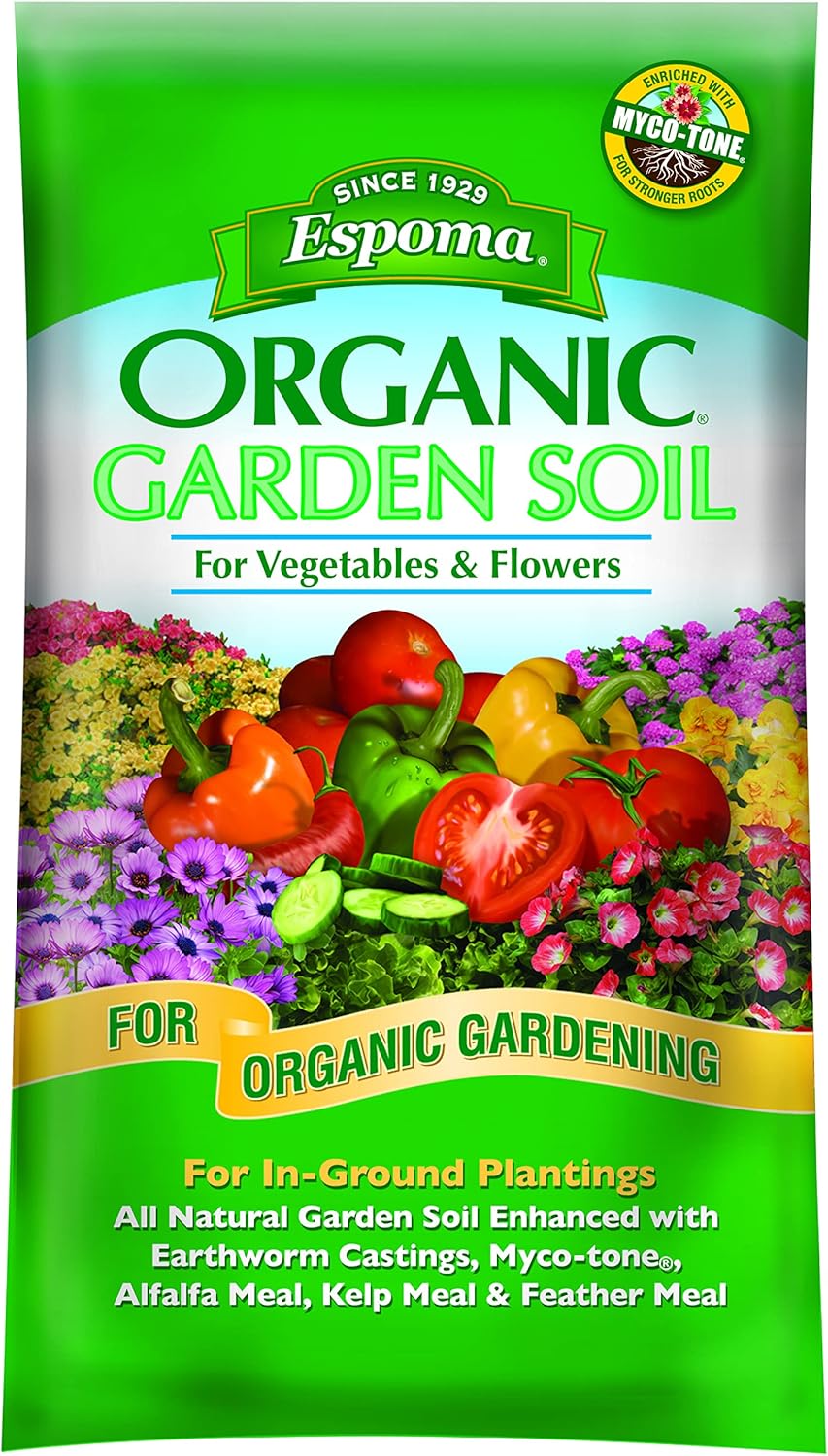
Espoma Organic Vegetable & Flower Garden Soil Mix, 1 cu ft
| Volume | 1 cubic feet |
|---|---|
| Style Name | Peat Moss |
| Unit Count | 1536 Ounce |
Espoma Organic Vegetable & Flower Garden Soil is a 1 cubic foot, peat-based planting mix designed to be blended into native garden soil at planting or transplanting. It contains Canadian sphagnum peat moss, earthworm castings, alfalfa meal, kelp meal, feather meal, limestone for pH adjustment, and a mycorrhizal blend to help root establishment. In practice you work a few inches of this mix into planting holes or rows to loosen dense soil, add organic matter, and give young squash transplants a nutrient-rich root zone. The organic amendments supply slow-release nutrients and biological activity that support early growth, while the mycorrhizae improve water and nutrient uptake. Limitations to note are the peat-heavy base, which dries faster than compost-rich mixes and may require more frequent watering, and the small 1 cu ft bag size that means multiple bags are needed for larger beds. For gardeners who prefer organic inputs and want an easy-to-use planting mix to boost transplant success, this product is straightforward and effective.
Best for: Gardeners who prioritize organic inputs and want a convenient planting mix to boost transplant success for vegetables like squash in established beds.
Less Ideal for: Large-scale landscapers or gardeners needing bulk soil amendments for entire raised beds who prefer compost-rich mixes or peat-free alternatives.
- Formulated with organic amendments like earthworm castings, alfalfa meal, kelp meal, and feather meal for slow-release nutrients
- Contains a mycorrhizal blend to support root establishment and improved nutrient uptake
- pH adjusted with limestone to better suit common garden plants
- Ready-to-use planting mix that blends easily with native soil when transplanting
- Peat-heavy base can dry out faster than compost-rich mixes, increasing watering frequency
- Small 1 cubic foot bag requires many bags for larger squash beds
Verdict: A compact, organic planting mix that makes transplanting squash easier by giving young roots nutrient-rich, biologically active soil.
Miracle-Gro Organic Outdoor Potting Mix, 16 qt.

| Item Highlight | Plant Soil For Outdoor Container Plants, Contains Quick-Release Natural Fertilizer, OMRI Listed |
|---|---|
| Manufacturer | Scotts Miracle Gro |
| Volume | 1 cubic feet |
| Unit Count | 1 Count |
Miracle-Gro Organic Outdoor Potting Mix is a ready-to-use organic blend intended for outdoor containers and small beds. It is made with responsibly sourced peat and upcycled green waste and includes a quick-release natural fertilizer that feeds plants for up to two months. Typical use is to partially fill a pot, settle the plant's root ball into the mix, top up, and water; one 16 qt. bag fills roughly a 12-inch container. For gardeners growing squash in containers or small raised beds this mix offers improved moisture retention and an organic nutrient boost at planting, which helps seedlings and transplants establish quickly. The OMRI listing means it fits an organic approach. Limitations are the small bag volume for heavy feeders like squash and the recommendation to repot or refresh soil bi-annually, so larger or continuous squash crops will need multiple bags or supplemental feeding over the season.
Best for: Gardeners who want an easy, organic potting mix for outdoor containers or small raised beds and prioritize simple, starter nutrition for transplanted squash and other vegetables.
Less Ideal for: Growers planning to produce large quantities of squash in in-ground rows or large beds should choose bulk garden soil or amend existing soil rather than rely on small potting mix bags.
- Organic formulation with OMRI listing suitable for organic container gardening
- Contains quick-release natural fertilizer that feeds up to two months to help transplants establish
- Blended to retain moisture for outdoor exposure to sun and wind
- Made using responsibly sourced peat and upcycled green waste
- 16 qt. bag is small for heavy-feeding crops so multiple bags or extra fertilizer may be needed
Verdict: A convenient OMRI-listed potting mix that gives outdoor container-grown squash a moisture-retentive, organically fed start.
FoxFarm Happy Frog Potting Soil, 2 cu ft (Container Garden) with 2 Plant Tags

| Brand | FoxFarm |
|---|---|
| Unit Count | 600 Ounce |
| Style Name | Container Garden |
| Volume | 2 cubic feet |
FoxFarm Happy Frog Potting Soil is a premixed container blend designed to supply potted plants with organic nutrients and beneficial soil microbes. It is used straight from the bag to fill containers for vegetables, ornamentals, and small trees; the included plant tags help track varieties and planting dates. Notable features are the amended formula containing earthworm castings, bat guano, forest humus, and a custom microbial blend and mycorrhizal fungi to encourage stronger root development and improved nutrient uptake. For growing squash in containers, that translates to faster establishment and more vigorous vegetative growth when containers are sized appropriately. The mix is pH adjusted and free of inert fillers, so you do not need to add compost before planting, though heavy-feeding squash will still benefit from staged fertilization during fruit set. Because this is a premium, heavily amended potting soil, gardeners who need large volumes for in-ground beds or who prefer to tailor exact N-P-K ratios may prefer a bulk garden soil or custom blend instead.
Best for: Gardeners who want a dependable, ready-made potting mix for container-grown vegetables or shrubs and who value a microbe-rich organic formula that promotes steady root and plant development.
Less Ideal for: People planting large in-ground squash beds or landscaping multiple beds where buying bulk soil or custom-amended mixes is more economical and easier to tailor to soil test results.
- Ready-to-use container blend with organic amendments that supports immediate planting
- Contains beneficial microbes and mycorrhizal fungi to expand root growth and nutrient uptake
- Includes earthworm castings and bat guano for natural nutrient sources
- pH adjusted to improve nutrient availability for container-grown plants
- Sold in relatively small bags compared with bulk garden soil, which can be less efficient for large plantings
- Nutrient levels are organic and not tailored for precise fertilization schedules required by heavy feeders
Verdict: A reliable, microbe-rich potting mix that gets container squash off to a strong start without additional pre-mixing.
Miracle-Gro Potting Mix, 16 qt. (2-Pack)

| Feeds Plants | Up to 6 months |
|---|---|
| Volume | 16 quarts |
| Number of Packs | 2 |
| Ingredients | Sphagnum Peat Moss, Peat, Perlite, Compost, Fertilizer |
Miracle‑Gro Potting Mix is a lightweight, fast‑draining mix intended for outdoor containers, hanging baskets, and planters. Gardeners use it to pot vegetables, annuals, perennials, herbs, and shrubs; the bag instructions walk you through filling a pot, loosening the root ball, and watering until drainage. The formula lists peat moss, perlite, compost, and fertilizer so it both improves aeration and supplies nutrients that the brand says feed plants for up to six months. That makes it convenient for seasonal crops like squash grown in containers where frequent soil changes are impractical. Practical benefits include easier watering (better drainage reduces standing water) and a nutrient boost that can support vigorous early growth. Expect to repot or refresh the mix after a season for heavy feeders because the advertised feeding period still may not match the uptake of large fruiting plants. Also this product is formulated specifically for containers so it is not a substitute for in‑ground soil amendment.
Best for: Gardeners growing squash or other vegetables in pots who want a ready‑to‑use, fast‑draining mix that provides an initial nutrient boost and simplifies watering.
Less Ideal for: Growers planning permanent in‑ground planting or who need a long‑term high‑nutrition soil for large, continuous-producing squash plants should choose garden soil or amend native soil instead.
- Designed for outdoor containers so it matches common potting workflows
- Contains perlite and peat for good drainage and root aeration
- Includes fertilizer formulated to feed plants up to six months
- Easy to use with clear potting and watering instructions
- Nutrient supply may be insufficient long term for heavy feeders like mature squash plants
- Not intended for in‑ground beds or as a soil amendment for raised beds
Verdict: A convenient, fast‑draining potting mix that gives container squash a seasonal nutrient boost and simplifies watering care.
Back to the Roots Organic Expanding Coconut Coir Potting Soil Brick (10 lb)

| Item Highlight | 10 lb compressed coco coir brick; peat-free; OMRI Listed |
|---|---|
| Item Type Name | Coconut Coir |
| Volume | 2 cubic feet |
| Ingredients | Coconut Coir |
This 10 lb Back to the Roots coco coir brick expands into a light, fluffy growing medium when you add water, giving roughly 2 cubic feet of potting soil for containers or to amend garden beds. It is peat-free and OMRI listed so it fits organic growing and improves water retention and aeration compared with heavy garden loam. Typical use is simple: rehydrate the compressed block, break it up, then use alone for seed starting or mix with existing soil to improve structure for vegetables like squash. Practical benefits include easy storage before use, consistent pH for general-purpose planting, and reduced mess versus loose bagged soil. Important limitations are that coco coir has limited native nutrients so you will need to add fertilizer or compost for nutrient-hungry crops like squash, and it does not replace the need for regular feeding in long-season beds. For a gardener prioritizing low-mess, organic amendments that boost drainage and root development this is a dependable option.
Best for: Practical gardeners who want a low-mess, organic soil amendment to improve drainage and root health for container and bed-grown squash without dealing with bulky bags.
Less Ideal for: Gardeners who need a ready-to-plant, nutrient-rich potting mix or those unwilling to add fertilizer or compost should consider a finished potting soil instead.
- Expands to about 2 cubic feet so one compact block covers multiple pots or a bed amendment
- Peat-free and OMRI listed for organic gardening
- Light, airy texture improves aeration and water retention when mixed into soil
- Easy to store and transport compared with bulky soil bags
- Contains no significant nutrients on its own so regular fertilization or compost is required for heavy feeders
Verdict: A compact, OMRI-listed coco coir brick that gives you easy-to-store organic growing medium to improve soil structure for productive squash beds.
Choosing the Right Soil for Squash: Key Factors to Consider
Drainage and Aeration
Squash roots need oxygen and dislike sitting in water. Good drainage prevents crown and root rot and encourages roots to explore laterally. Evaluate soil particle size and look for a mix containing coarse components such as coarse sand, perlite, or screened compost to keep pore spaces open.
Aeration affects nutrient uptake and microbial activity. A well-aerated soil warms faster in spring, which helps early growth and earlier fruiting. For heavy clay sites, choose a soil or amendment that improves structure rather than one that solely increases water retention.
Nutrient Availability and Feeding Schedule
Squash are heavy feeders during vine growth and fruit development. Soils with a balanced starter nutrient profile or slow-release fertilizer reduce early deficiencies and give steady support during fruit set. Check whether a soil lists N-P-K values or includes composted organics that supply micronutrients.
Even with nutrient-rich soil, plan for midseason feeding or side-dressing when vines begin to set fruit. A soil that accepts amendments easily or already contains stable organic matter will make supplemental feeding more predictable and effective.
Water Retention Balance
Squash needs steady moisture during flowering and fruit fill, but excess water increases disease risk. The best soils hold enough moisture to bridge short dry spells while permitting excess to drain away quickly after heavy rain or irrigation.
Look for soils described as 'well-draining' with some moisture-holding components like compost or coconut coir. In hot, windy sites, a slightly higher retention mix helps reduce daily watering, while in poorly drained beds you want a much coarser blend to shed water.
Soil Structure and Resistance to Compaction
Loose, friable soil lets roots grow and makes harvesting easier. Squash roots are shallow but wide, so the soil should resist compaction from irrigation or foot traffic. A mix with stable aggregates-particles that hold shape but break apart when worked-supports root penetration and gas exchange.
Repeated watering cycles and heavy vines can compress weak soils. Choosing a structure-stable soil reduces the need for frequent cultivation and prevents oxygen loss that stunts growth.
Organic Matter and Microbial Activity
Organic matter supplies nutrients slowly, improves water-holding capacity, and supports beneficial microbes that help nutrient cycling. For squash, a moderate to high organic fraction feeds the plants through fruiting and improves texture.
Composted materials are preferable to fresh raw amendments because they are less likely to tie up nitrogen. A soil with visible, well-decomposed compost will often establish quicker and require less immediate fertilization.
Suitability for Containers Versus In-Ground Beds
Soil needs differ between large containers, raised beds, and native ground. Containers require mixes that are lighter, drain reliably, and hold moisture without becoming heavy when wet. In-ground beds can benefit from higher organic content and may tolerate heavier textures if drainage is managed.
If you plan to grow squash in pots or fabric planters, choose a soil specifically blended for containers. For in-ground planting, focus on amendment compatibility and the ability to mix with native soil to improve long-term structure.
Preparing Existing Soil for Squash
If you are improving native soil rather than using bagged mixes, start by testing drainage and basic texture. Incorporate coarse materials to open heavy soils and add several inches of well-rotted compost to boost fertility and structure. For clay, add coarse sand and compost and avoid adding only fine organic matter that can increase stickiness.
Work amendments through the top 8 to 12 inches where most squash roots develop. Lightly fork the soil to avoid creating a compacted layer and allow the amended bed to settle for a week before planting. Mulch after transplanting to moderate soil temperature and preserve moisture.
- Test drainage with a simple hole test: dig, fill with water, and time how fast it drains.
- Avoid incorporating fresh high-nitrogen manures immediately before planting.
Adjusting pH and Nutrient Levels
Squash prefers a near-neutral pH. If a soil test shows acidity or alkalinity outside the ideal range, make gradual corrections before planting. Lime raises pH slowly, while sulfur lowers it over time. Address pH at least a few weeks before planting to allow changes to stabilize.
Use soil test results to plan supplemental feeding. If phosphorus or potassium is low, target those nutrients since they support flowering and fruit development. Slow-release fertilizers or targeted side-dressings during early fruiting work well with most squash-friendly soils.
- Collect a representative soil sample from the root zone for testing.
- Avoid over-applying nitrogen once fruit set begins to prevent excessive leaf growth at the expense of fruit.
Watering Practices That Complement Your Soil Choice
Match irrigation frequency to the soil's water-holding capacity. Well-draining, coarse soils need more frequent but shorter waterings. Mixes with higher organic matter allow less frequent watering but monitor to prevent waterlogging after heavy rain.
Use drip irrigation or soaker hoses under mulch to deliver consistent moisture to the root zone while keeping foliage drier to reduce disease pressure.
- Water deeply to encourage root spread, then allow the top inch to dry in between waterings for most soils.
- Reduce overhead watering during flowering to limit powdery mildew and other leaf diseases.
Seasonal Maintenance and Amendment Timing
Apply supplemental fertility as vines begin to run and again at early fruit set. Organic amendments can be applied as side dressings, and granular slow-release fertilizers work in soils designed to accept them. Avoid heavy tilling; light surface incorporation preserves soil structure.
Top up organic mulches and compost annually to maintain fertility and improve structure over multiple seasons. For container-grown squash, refresh soils or replace top layers each season to prevent nutrient depletion and compaction.
- Side-dress with compost or fish emulsion when flowers appear.
- Refresh potting mixes every season if they show signs of compaction or nutrient decline.
Common Soil Problems and Fixes
Poor drainage, compaction, nutrient lock-up, and low organic matter are the most frequent issues when growing squash. Address drainage by adding coarse amendments and creating raised rows or beds. Reduce compaction with organic matter and avoid walking on beds when soils are wet.
If fruit rot appears, reassess drainage and surface mulch practices. For persistent nutrient deficiencies, perform a soil test and correct specific lacking elements rather than blanket fertilizing.
- Install a raised bed or mound if your garden has a high water table.
- Use mulch to moderate surface conditions but clear it from touching the plant crown.
How We Chose the Best Soil for Squash
We prioritized criteria that directly affect squash growth and fruit quality. Texture and drainage were required filters because squash needs free-moving soil to avoid crown and root rot. Nutrient profile and organic matter were evaluated to ensure consistent feeding through rapid fruit set and development. Water retention balance tested how well a mix holds moisture without becoming waterlogged. Structure and compaction resistance were considered so vigorous vines and shallow roots can explore the soil. Longevity and amendment compatibility were included to reflect how a bag behaves over a season and how easy it is to boost with compost or fertilizer. Excluded items included mixes formulated only for seedlings or acid-loving plants, and any product designed exclusively for ornamental containers with heavy water retention. We focused on soils intended for vegetable production and practical garden use. The editorial filters emphasized measurable attributes gardeners can verify: particle size and drainage, percent organic matter or visible compost, initial nutrient analysis or stated feeding strategy, and observed behavior in containers versus in-ground beds.
FAQ
How deep should soil be for planting squash?
Aim for at least 8 to 12 inches of loose, amended soil for most squash varieties so roots can spread. Larger vining types benefit from deeper, friable soils when available.
Can I use regular garden soil in containers for squash?
Regular native garden soil is usually too dense for containers and can compact or drain poorly. Use a container-specific mix that balances drainage and moisture retention for best results.
How often should I feed squash planted in prepared soil?
Soil with good organic content may only need one or two midseason side-dressings. Plan to feed when vines start running and again at early fruit set, depending on plant vigor and soil test results.
What signs show my soil is holding too much water?
Yellowing at the base, wilting despite wet conditions, and slow-draining surface puddles indicate poor drainage. These symptoms often lead to root issues if not corrected.
Is compost alone enough to grow healthy squash?
Compost supplies nutrients and structure but may not provide the right drainage or exact nutrient balance. Mixing compost with coarse material and a mineral component usually produces a better all-around growing medium.
When is the best time to refresh soil in a raised bed for squash?
Refresh or top-dress beds in early spring before planting, adding compost and any needed mineral amendments. For heavily cropped beds, add more compost midseason or in the fall to rebuild fertility.
Final Verdict
Prioritize drainage, nutrient availability, and stable structure when choosing soil for squash. Tradeoffs are common: mixes with higher organic matter supply steady fertility but may hold more moisture, while very coarse soils drain brilliantly but require more frequent feeding and watering. Decide first where you will grow squash-container, raised bed, or in-ground-and then pick a soil that matches that setting. Focus on healthy aeration, moderate water retention, and a plan for midseason feeding to support strong vines and abundant fruit.
