

Note: This article contains affiliate links. If you click on these links and make a purchase, I may earn a small commission at no extra cost to you. This helps support my research and content. Read my full affiliate disclosure here.
Choosing the right soil mix for container gardening matters more than most gardeners expect. Pots and planters limit root space and change how water and nutrients move, so using a mix designed for containers directly affects plant health, watering frequency, and root development. This guide covers a curated shortlist of top-performing soil mixes for container gardening and explains the practical tradeoffs between drainage, moisture retention, and nutrition. We evaluated mixes for real-world container conditions like heat stress, frequent watering, and varied plant types. Below you will find what we looked for and clear practical guidance to help you pick the best mix for your pots and planters.
Top Picks at a Glance
| Best Overall The best all-around choice for most situations | Miracle-Gro Indoor Potting Mix for All Plants, 6 qt., 2-Pack |  |
| Best Quality Built to a higher standard if you want something more solid | FoxFarm Ocean Forest Potting Soil, 12 qt |  |
| Best Value The sweet spot between price and what you get | Miracle-Gro Moisture Control Potting Mix, 16 qt. (2-Pack) |  |
| Best Budget The cheapest option that still gets the job done reliably | Office Roast 3 Qt All-Purpose Potting Mix (Seed Starter Ready) |  |
| Highest Rated A top-rated pick with lots of positive feedback | KXUPOIAV Premium Potting Mix, Compressed Bale (Expands to 4 cu ft) |  |
| Most Popular A crowd favorite that many people choose with confidence | Miracle-Gro Potting Mix, 16 qt. (2-Pack) |  |
| Best Seller A high-volume bestseller chosen again and again | Back to the Roots Organic Expanding Coco Coir Potting Soil Brick (10 lb) |  |
Miracle-Gro Indoor Potting Mix for All Plants, 6 qt., 2-Pack

| Number of Packs | 2 |
|---|---|
| Item Highlight | Feeds for up to 6 Months |
| Ingredients | Sphagnum Peat Moss, Coir, Perlite, Fertilizer, Wetting Agent |
| Volume | 6 quarts |
This Miracle-Gro Indoor Potting Mix is a lightweight, ready-to-use soil blend for container houseplants that combines sphagnum peat moss, coconut coir, and perlite. It is designed to retain and release moisture so roots get water without staying waterlogged, and includes a built-in fertilizer formulation that feeds plants for up to six months. Because it is free of compost and bark, it should reduce hiding places for fungus gnats and is suitable for a wide range of indoor plants from herbs and foliage to flowering varieties. Typical use is straightforward: fill a pot with drainage, plant, and water; one 6-quart bag fills about four 6-inch pots, and this bundle supplies two bags. Practical benefits include consistent drainage and reduced need to mix amendments, plus season-long nutrition for newly repotted plants. Limitations are that it is a general-purpose mix so growers wanting specialty media for orchids, succulents, or very heavy feeders may need a more specific formula, and you should still repot annually to refresh structure and nutrients.
Best for: Buyers who want an easy, no-mix potting soil that works reliably for a wide range of indoor container plants and reduces common pests without extra prep.
Less Ideal for: Growers who require specialist media for orchids, cactus and succulent mixes, or who prefer to custom-blend their own soils for specific crop needs.
- Ready-to-use mix combining peat moss, coir, and perlite for balanced water retention and drainage
- Includes fertilizer that feeds plants for up to six months, reducing immediate need for supplements
- Free of compost and bark to help minimize shelter for fungus gnats
- Lightweight formula that makes repotting and handling easier for indoor container gardening
- General-purpose formula may not meet the drainage or moisture needs of specialty plants like true succulents or epiphytic orchids
- Nutrient supply is time-limited so annual repotting or additional feeding is still necessary
Verdict: A convenient, all-purpose indoor potting mix that simplifies repotting and gives most houseplants balanced moisture control and six months of feeding.
FoxFarm Ocean Forest Potting Soil, 12 qt

| Item Form | Granules |
|---|---|
| Specific Uses For Product | Dry Fertilizer |
| Coverage | 4.8 sq ft |
| Mixing Ratio | 1:1 |
FoxFarm Ocean Forest is a premixed potting soil built to get container plants off to a fast, vigorous start. The bagged mix combines aged forest products, sandy loam and sphagnum peat moss for a light, well-aerated texture that drains yet retains moisture. It also contains fish meal, crab meal and earthworm castings so seedlings and transplants have an immediate nutrient supply for the first few weeks. Typical use is straight from the bag for filling pots, top dressing, or blending 1:1 with heavier garden soil to improve structure; no additional fertilizer is needed for about 30 days. Practical benefits include easy, consistent results for houseplants and patio containers, good root development from the airy texture, and convenience for growers who want a performance-focused soil without mixing ingredients. Limitations are that it is a packaged, peat-containing product so repeated use in large volumes raises sustainability concerns and heavier feeders may need supplemental feeding after the initial nutrient window closes.
Best for: Gardeners who prioritize fast, reliable performance for container and indoor plants and want a plug-and-play soil that supports vigorous early growth.
Less Ideal for: Buyers focused on peat-free or fully sustainable growing media or those planning to fill very large beds where bulk soil would be more economical.
- Ready-to-use blend that needs no amendment for about 30 days
- Light, aerated texture that promotes healthy root growth and drainage
- Includes organic amendments (fish meal, crab meal, earthworm castings) for initial nutrient boost
- Versatile for container planting, top dressing, or mixing with native soil
- Contains sphagnum peat which may concern gardeners seeking peat-free mixes
- Packaged bag limits for very large projects compared with bulk soil options
Verdict: Choose this ready-made mix when you want a performance-oriented, nutrient-rich potting soil that delivers quick, healthy starts for container plants.
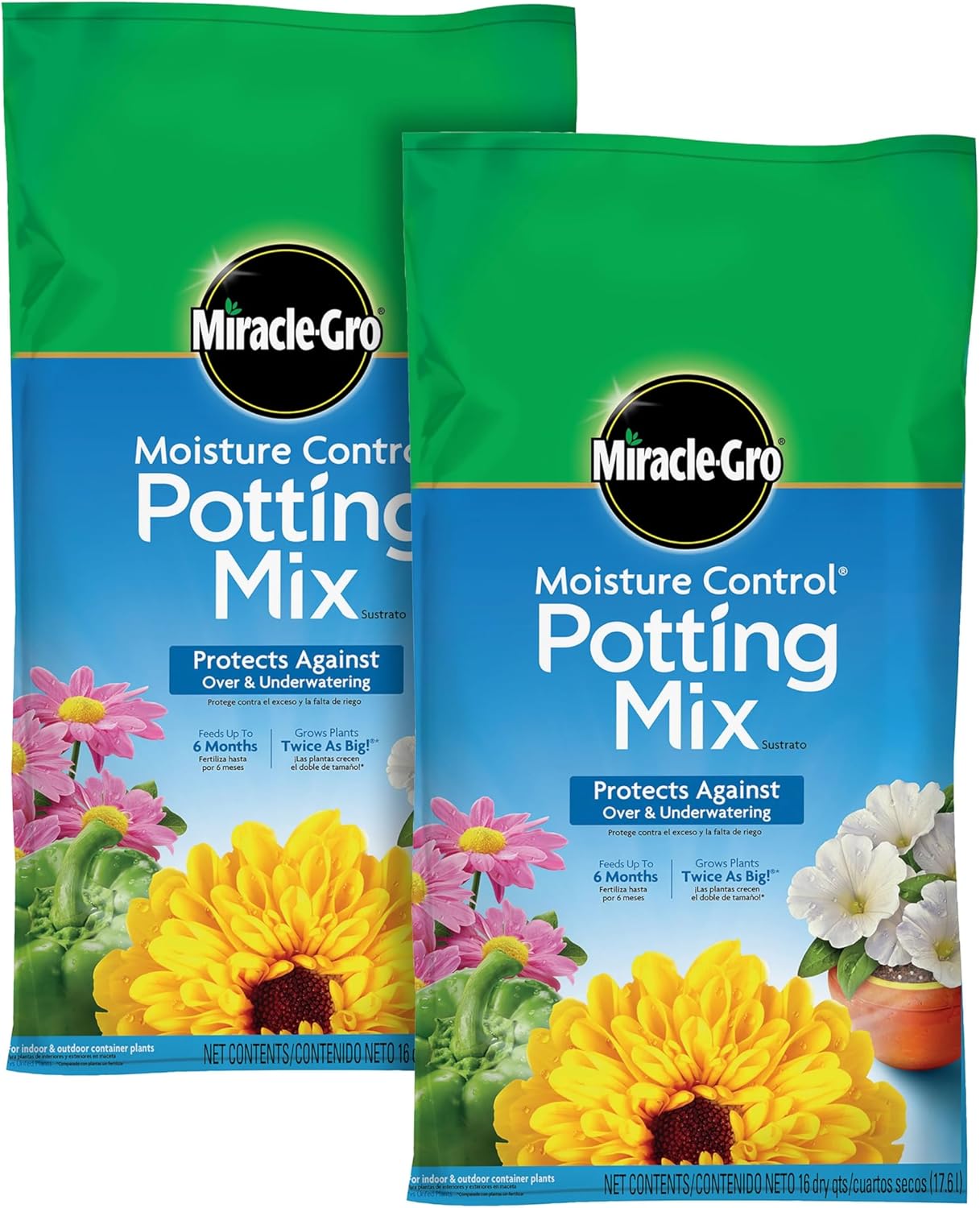
Miracle-Gro Moisture Control Potting Mix, 16 qt. (2-Pack)
| Number of Packs | 2 |
|---|---|
| Item Highlight | Plant Soil For Container Plants, Protects against Over- and Under-Watering |
| Feeds Plants | Up to 6 months |
| Style Name | 16 qt. |
This two-pack of Miracle-Gro Moisture Control Potting Mix is made for container gardening and aims to simplify watering and feeding for outdoor pots. The mix uses an AquaCoir formula with sphagnum peat, coir, and a wetting agent so it absorbs more water than basic potting soils while remaining airy for root health. Typical use is straightforward: pick a drained pot, fill, set the plant, top off and water through; the bag states it feeds plants for up to six months so you get extended nutrition between repottings. Practically, it reduces how often you need to water and helps prevent both over- and under-watering in hanging baskets and planters. The texture is designed to drain yet retain enough moisture for container roots. Limitations to note are that it is optimized for containers rather than in-ground beds and container plants will still need annual refresh to avoid compaction and depleted nutrients. Also the stated coverage (one 16 qt. bag per 12-inch pot) can vary with root size, so plan quantity accordingly.
Best for: Best for gardeners who want a low-maintenance potting mix that reduces watering chores and provides longer-lasting nutrition for outdoor containers and hanging baskets.
Less Ideal for: Not a good choice for gardeners planting directly in the ground or for projects that need a bulk soil amendment for large beds.
- AquaCoir formula absorbs up to 33% more water than basic potting soil, helping prevent over- and under-watering
- Feeds plants for up to six months, reducing the frequency of fertilizer applications
- Airy texture that promotes healthy root breathing and drainage for container plants
- Sold as a two 16 qt. bag bundle suitable for filling multiple 12-inch pots
- Formulated for containers and not intended as a replacement for in-ground garden soil
- Pots and plants still need annual repotting to avoid compaction and nutrient depletion
Verdict: A convenient moisture-control potting mix that cuts down watering frequency and feeds container plants for up to six months.
Office Roast 3 Qt All-Purpose Potting Mix (Seed Starter Ready)

| Brand Name | Office Roast |
|---|---|
| Unit Count | 16 Ounce |
| Volume | 3 quarts |
This Office Roast potting mix is a ready-to-use soil blend aimed at container gardening and seed starting. In practice you can use it straight from the bag for seed trays, small pots, herb containers, and houseplants without needing to amend it. The formula emphasizes moisture retention while still draining quickly, which helps reduce overwatering and supports root aeration for young seedlings and established container plants. The 3-quart volume is convenient for small projects and trial pots, and the lightweight texture makes filling pots and transplanting seedlings easy. On the downside the small bag size means you will need multiple units for several containers or larger planters, and there is no detailed nutrient analysis or slow-release fertilizer listed so heavier-feeding vegetables may require extra feeding as they grow. For everyday container use and starting seeds this mix delivers a simple, no-fuss growing medium that performs as described.
Best for: Ideal for beginner to budget-conscious gardeners who need a convenient, ready-made potting mix for seed trays, small containers, and indoor plants and prefer a simple product they can use immediately.
Less Ideal for: Not a great choice for large-scale container gardens or growers who want a soil with a specified nutrient profile or built-in long-term fertilizers.
- Ready-to-use mix suitable for seed starting and container plants
- Balanced moisture retention with fast drainage to reduce risk of root rot
- Lightweight texture that is easy to handle and transplant with
- Versatile for indoor and outdoor container projects
- Small 3-quart volume requires multiple bags for larger container gardens
- No listed fertilizer content or N-P-K breakdown for long-term feeding planning
Verdict: A compact, ready-to-use potting mix that makes seed starting and small container gardening quick and hassle-free.
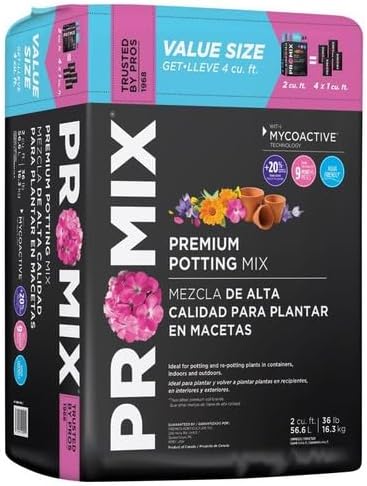
KXUPOIAV Premium Potting Mix, Compressed Bale (Expands to 4 cu ft)
| Volume | 4 cubic feet |
|---|
This compressed premium potting mix is designed for container gardening and seed starting, expanding from a compressed bale to roughly 4 cubic feet of usable soil. It contains mycorrhizae to encourage stronger root systems and a slow-release fertilizer that supplies nutrients for up to nine months, which reduces the need for frequent feeding. The included water-holding polymer gel helps soil retain moisture so containers dry out more slowly between waterings. Typical use is filling pots, planters, and seed flats where a lightweight, ready-to-use media is wanted and where consistent moisture and steady feeding are priorities. Practical benefits include less frequent watering and fertilizing, improved root development for healthier plants, and convenience from the compressed packaging. Important limitations are that the product description does not list exact nutrient analysis or pH, which some growers need to match specific plants, and compressed mixes can require full expansion and mixing before use to avoid pockets of uneven texture.
Best for: Buyers who prioritize low-maintenance, reliable container performance and want a ready-to-use mix that reduces watering and feeding chores.
Less Ideal for: Growers who need exact nutrient profiles or pH control for specialist or sensitive plants should consider mixes with published analyses or amend this mix accordingly.
- Contains mycorrhizae to promote larger, healthier root systems
- Slow-release fertilizer that feeds plants for up to nine months
- Water-retention polymer gel reduces watering frequency
- Compressed bale expands to provide convenient storage and transport
- No detailed N-P-K breakdown or pH value provided
- Requires full expansion and mixing before use to ensure even texture
Verdict: A low-maintenance potting mix that expands from a compressed bale and combines mycorrhizae, long-lasting fertilizer, and water-holding gel to keep container plants healthier with less upkeep.
Miracle-Gro Potting Mix, 16 qt. (2-Pack)

| Volume | 16 quarts (per bag) |
|---|---|
| Number of Packs | 2 |
| Feeds plants | Up to 6 months |
| Intended use | Outdoor containers |
| Ingredients | Sphagnum Peat Moss, Peat, Perlite, Compost, Fertilizer |
Miracle-Gro Potting Mix is a general-purpose soil blend designed specifically for outdoor container gardening. It is typically used to fill pots, planters, and hanging baskets for flowers, vegetables, herbs, and small shrubs. The blend lists sphagnum peat moss, peat, perlite, compost, and fertilizer, which translates to a lightweight, fast-draining mix that helps roots breathe and reduces the chance of waterlogged root zones. The bags are sized to fill typical 12-inch containers and the formula includes plant food that the manufacturer says feeds up to six months, so you can expect improved early growth without immediate fertilizing. Practical benefits include ease of use, consistent drainage for container culture, and a nutrient boost that supports quick establishment. Important limitations are that it is intended for containers rather than in-ground beds and that nutrient release is time-limited, so plan to refresh or fertilize after the feeding period; gardeners who need specific pH control or an organic-certified mix should verify those needs separately.
Best for: Gardeners who want a reliable, easy-to-use potting mix that jump-starts container plants and minimizes fiddly feeding for the first season.
Less Ideal for: Growers who need an organic-certified or custom soil recipe, or those planting directly in the ground should choose a product formulated for in-ground use.
- Formulated for outdoor container plants with ingredients that promote drainage and root aeration
- Includes fertilizer that feeds plants for up to six months, reducing immediate need for extra feed
- Consistent bagged mix that makes potting and repotting straightforward for beginners
- Suitable for a wide range of container crops including flowers, vegetables, herbs, and small shrubs
- Feeding effect is time-limited, so additional fertilizer is needed after the stated period
- Not formulated for in-ground planting or heavy soil amendment
- Contains peat and compost components that may not meet strict organic standards
Verdict: A dependable, ready-made potting mix that makes planting and caring for outdoor containers easier by improving drainage and providing up to six months of feed.
Back to the Roots Organic Expanding Coco Coir Potting Soil Brick (10 lb)

| Item Type Name | Coconut Coir |
|---|---|
| Unit Count | 1632 Fluid Ounces |
| Item Highlight | 10 lb compressed coco coir brick; expands to over 2 cubic feet |
| OMRI Listed | Yes |
This compressed coco coir brick provides a lightweight, peat-free growing medium that expands with water into roughly 2 cubic feet of loose potting soil. It is intended for container gardening, seed starting, and as a soil amendment when mixed with garden soil or compost. The block arrives dry and stores compactly until you hydrate it, at which point it becomes fluffy, holds moisture well, and improves aeration around roots—benefits that help avoid overcompaction in pots and promote healthy root development. It is OMRI listed and described as pH balanced, so it suits organic container mixes and is friendly for vegetables, herbs, and flowers. Because it is a single-ingredient product (coconut coir), you may need to add nutrients or blend it with compost or a complete potting mix for long-term container plant feeding. Also, hydrated volume can vary with how much water you add, so expect to measure and mix to your preferred consistency.
Best for: Buyers who want a reliable, easy-to-store base medium for container gardening and seed starting and prefer organic, peat-free options that improve drainage and moisture retention.
Less Ideal for: Gardeners who want an all-in-one fertilized potting mix or who prefer ready-to-use mixes with built-in slow-release nutrients should look elsewhere.
- Expands to provide about 2 cubic feet of loose, easy-to-handle potting medium from a compact block
- Peat-free and OMRI listed, suitable for organic container growing
- Good water retention while maintaining aeration to support root health in pots
- Compact, lightweight storage until hydrated reduces handling mess
- Contains only coconut coir so it does not supply significant nutrients on its own
- Final volume and texture depend on how much water is added requiring some mixing or adjustment for specific containers
Verdict: A compact, peat-free coco coir brick that reliably expands into a fluffy, moisture-retentive base medium ideal for organic container gardening and seed starting.
Choosing the Right Soil Mix for Container Gardening: Key Factors to Consider
Drainage and Aeration
How quickly water moves through the mix and how much air remains around roots determines whether plants suffer from root rot or oxygen starvation. In containers, roots are confined and excess water has nowhere to disperse. A mix with coarse components such as perlite, coarse sand, or pumice helps create large pore spaces that shed surplus water while leaving micro-pores that hold moisture for roots.
Drainage also affects fertilizer behavior and microbial life. A heavy, poorly aerated mix compacts faster and reduces beneficial microbial activity, which in turn decreases nutrient availability. Choose a mix with visible coarse particles and light organic matter to balance water flow and air exchange.
Moisture Retention
Containers dry out faster than in-ground soil because they are exposed on all sides and warm up quickly. Moisture-retentive components such as coconut coir, composted bark, or well-aged compost moderate that drying without making the mix soggy. The ideal container mix holds enough plant-available water that you do not need to water multiple times a day in heat, yet it still releases excess after a heavy soak.
Consider the plants you grow and the container size. Shallow pots lose moisture most quickly, so a slightly higher proportion of water-holding organic matter is helpful there. For large deep containers, balance retention with drainage so the bottom does not remain saturated.
Nutrient Content and Longevity
Plants in containers rely entirely on what the mix and your feedings provide. A good container mix contains a modest baseline of nutrients and pairs well with slow-release fertilizers or liquid feeds. Stable organic materials and compost provide a steady nutrient supply, while immediate-release components can cause spikes and salt buildup if overapplied.
Also consider how long the mix will support plants before needing replenishment. Fast-breaking materials release nutrients quickly but decompose and compact, shortening container life. Longer-lasting components reduce the frequency of full repotting and keep root zones healthy.
Particle Size and Stability
Particle size distribution controls texture, water movement, and long-term structure. A mix with a range of particle sizes-coarse aggregates for air, medium particles for moisture, and fine organics for nutrient exchange-performs reliably. If most particles are too fine, the mix compacts and loses porosity; if too coarse, it drains quickly and struggles to retain moisture.
Stability matters because components break down at different rates. Materials like perlite and pumice remain stable for years, while bark and coir will gradually degrade. A well-designed mix balances short-term plant needs and long-term stability to minimize repotting.
pH and Salt Levels
Container plants are sensitive to root-zone pH and salt accumulation. Many mixes start with a near-neutral pH that fits most vegetables and ornamentals, but amendments and irrigation water can shift pH over time. Salt buildup from fertilizers or tap water can cause leaf burn and reduced growth.
Look for mixes with measured pH ranges and low initial soluble salt levels. That reduces early stress and gives you predictable responses to fertilization. Regular flushing and occasional replacement are part of management when growing in containers.
Sustainability and Ingredient Sourcing
Where components come from affects both environmental impact and product consistency. Peat-based materials can provide excellent water retention but have sustainability concerns; coconut coir is a renewable alternative with similar properties. Other amendments like perlite and pumice are mined and vary in environmental footprint.
Choosing mixes that disclose ingredients and use responsibly sourced components helps ensure repeatable results and aligns with gardeners who prioritize sustainability. Also check for weed seeds or undecomposed green material, which can introduce pests to containers.
How Container Mixes Differ From Garden Soil
Container mixes are engineered to behave differently than in-ground soil because roots in pots need immediate access to both air and moisture. Garden soil relies on a larger volume and surrounding microorganisms to regulate drainage and nutrients. In a pot, those buffering systems are absent, so mixes must provide balanced porosity and water-holding capacity in a much smaller volume.
Expect lighter textures, more coarse particles, and a measured organic fraction in container mixes. That avoids compaction and maintains a healthier root environment throughout the season.
- Designed to prevent compaction in small volumes
- Higher ratios of coarse aggregates for aeration
- Organics tailored to controlled nutrient release
Adjusting Mixes for Specific Plants
Not every container plant needs the same balance. Cacti and succulents prefer very fast-draining blends with minimal organic matter, while herbs and many annuals do best in mixes that hold moderate moisture and supply steady nutrients. For fruiting vegetables, choose mixes with higher nutrient stability and good moisture retention to support flowering and fruit set.
You can tweak a base container mix by adding coarse sand or grit for faster drainage, or by folding in more compost or slow-release fertilizer for hungry plants. Small adjustments can significantly change watering frequency and plant vigor.
- Succulents: increase coarse aggregates, reduce organics
- Herbs: balanced retention with good drainage
- Vegetables: more nutrients and stable moisture
Container Size, Material, and Watering Interaction
The same mix performs differently in tiny clay pots, large plastic planters, or fabric grow bags. Clay pots lose moisture quickly through their walls, which can be beneficial in humid microclimates but demands more frequent watering. Plastic retains moisture longer and may need coarser mixes to avoid waterlogging. Fabric pots increase aeration around the root ball and often allow for a slightly richer organic content.
Match your mix to the container material and expected watering routine. Consider shallow saucers and drainage holes as part of the system so excess water clears and salts can be flushed.
- Clay: faster drying, may need more retention
- Plastic: slower drying, consider coarser aggregates
- Fabric: excellent aeration, tolerates richer mixes
Maintaining and Refreshing Container Mixes
Over time organic components break down, reducing porosity and changing water behavior. Expect to refresh or top-dress containers yearly with compost or fresh mix, and plan for a full repot every 2 to 4 years depending on plant growth and mix breakdown. Top-dressing provides nutrients and improves surface structure without disturbing roots for many species.
Regular feeding and periodic flushing help manage salts. If you notice slower drainage, stunted growth, or persistent wetness, it may be time to replace the mix or blend in fresh coarse material to restore aeration.
- Top-dress annually with compost or slow-release fertilizer
- Flush containers occasionally to reduce salt buildup
- Repot or replace mix when structure collapses
Simple Recipes to Modify a Base Mix
Start with a general-purpose container mix and modify it for different uses. For faster drainage, add one part pumice or coarse sand to three parts base mix. To boost moisture retention, fold in one part coconut coir or well-aged compost. For heavy-feeding vegetables, incorporate a measured amount of slow-release organic fertilizer into the root zone.
Small, measured changes allow you to tune the mix without overcorrecting. Record proportions and results so you can repeat successful blends next season.
- Drainage boost: add coarse pumice or grit
- Retention boost: add coir or aged compost
- Feeding boost: mix in slow-release organic feed
How We Chose the Best Soil Mix for Container Gardening
We prioritized traits that matter in real container gardens rather than marketing claims. Key evaluation criteria included drainage and aeration, because pots need a porous matrix to prevent root rot; moisture retention, to reduce watering frequency while avoiding waterlogging; nutrient content and slow-release stability, so mixes support growth without constant fertilizing; particle stability and breakdown rate, which affect how long a mix performs before compacting; and pH balance suitable for common container plants. We also checked organic matter content and weed seed risk to favor mixes that support plant health without bringing pests. Exclusions focused on mixes designed only for in-ground beds, heavy clay-based potting soils, or products tailored exclusively to one species such as bonsai or peat-only formulations. We excluded blends that rely on non-sustainable or hazardous amendments. The editorial selection process combined ingredient transparency, typical particle size distributions, and expected field performance in hot, sunny patios and shaded balconies. These filters ensured the listed mixes are practical, stable, and suited to a wide range of container crops.
FAQ
How often should I water containers with the recommended soil mix?
Watering frequency depends on container size, plant type, and weather. In hot weather small pots may need daily watering, while larger planters can go several days. Check moisture by feeling the top inch of mix and adjust based on plant response.
Can I use garden soil in containers if I mix it with compost?
Garden soil is usually too dense for containers and tends to compact. Mixing with compost helps but often does not provide enough drainage or aeration. It is better to start with a purpose-made container mix and amend that if needed.
Is coconut coir a good replacement for peat in container mixes?
Coconut coir is a widely used alternative to peat because it retains moisture and resists compaction when properly rinsed and buffered. It performs well in many container mixes but may need additional nutrients since it has low inherent fertility compared with compost.
How do I prevent salt buildup in container soil mixes?
Prevent salt buildup by using slow-release fertilizers at recommended rates, occasionally flushing containers with plenty of water, and repotting or refreshing the mix every couple of years. If salts accumulate, a thorough flush and partial mix replacement can restore plant health.
When should I repot and replace the soil mix in my containers?
Repot or replace mix when you see reduced drainage, compacted texture, slow plant growth, or roots circling the pot. Many containers benefit from a partial refresh or top-dress annually and a full mix replacement every 2 to 4 years depending on plant vigor.
Final Verdict
Choose a container soil mix that balances drainage, moisture retention, and nutrient stability for the plants and pots you use. Prioritize mixes with stable coarse particles for aeration, modest organic content for steady nutrition, and low soluble salts for predictable feeding. Adjust a reliable base mix slightly to suit succulents, herbs, or heavy-feeding vegetables. With the right balance you will reduce watering headaches, keep roots healthy, and extend the time between full repots.
