

Note: This article contains affiliate links. If you click on these links and make a purchase, I may earn a small commission at no extra cost to you. This helps support my research and content. Read my full affiliate disclosure here.
Growing tomatoes in containers changes the rules compared with in-ground culture. Containers warm and dry faster, roots are confined, and a soil mix that holds enough water while still draining is essential for steady growth and fruiting. This guide looks at seven top soil mixes selected for container tomato culture and explains what to expect from each option. You will find practical guidance on moisture management, nutrient stability, and mix structure so you can pick a soil that fits your watering style, container size, and tomato variety. The shortlisted mixes were evaluated for drainage, water retention, nutrient content, and ease of use.
Top Picks at a Glance
| Best Overall The best all-around choice for most situations | Espoma Organic Potting Mix, 16-Quart |  |
| Best Quality Built to a higher standard if you want something more solid | FoxFarm Ocean Forest Potting Soil (1.5 cu ft) with 2 Plant Tags |  |
| Best Value The sweet spot between price and what you get | Miracle-Gro Moisture Control Potting Mix, 8 qt. (2-Pack) |  |
| Best Budget The cheapest option that still gets the job done reliably | Readi Soil Tomato Planting Blend, 8 qt (Ready-to-Use) |  |
| Highest Rated A top-rated pick with lots of positive feedback | Coast of Maine Tomatoes and Veggies Planting Soil, 20 qt (Pack of 8) |  |
| Most Popular A crowd favorite that many people choose with confidence | Miracle-Gro Potting Mix, 16 qt. (2-Pack) |  |
| Best Seller A high-volume bestseller chosen again and again | Back to the Roots 3-in-1 Seed Starting Mix, 6 Quart, Organic Peat-Free |  |
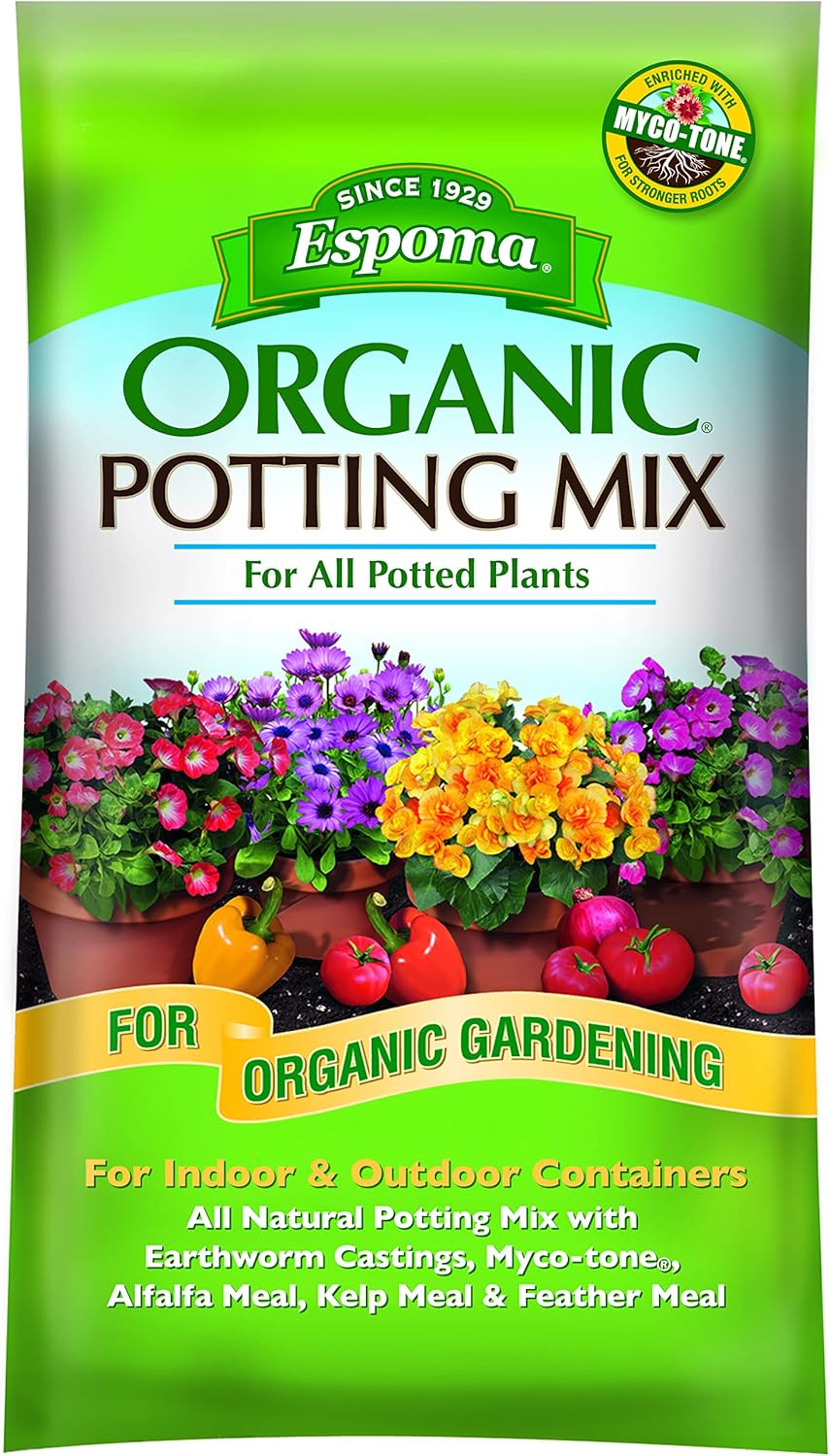
Espoma Organic Potting Mix, 16-Quart
| Volume | 16 quarts |
|---|---|
| Item Weight | 16 ounces |
| Style Name | Mix |
Espoma Organic Potting Mix is a general-purpose, organic blend designed for container gardening and transplanting. It combines sphagnum peat moss, humus and perlite for drainage and aeration, and is enriched with earthworm castings, alfalfa, kelp and feather meals to supply slow-release nutrients. The added Myco-tone mycorrhizae can help roots establish faster after potting, which is helpful when repotting or starting new plants. In practice this mix works well for potted herbs, vegetables and ornamentals where a balance of moisture retention and drainage is needed. Because it is peat-based it holds water longer than coarse, mineral-heavy mixes so you will likely water less frequently but should monitor for overwatering with moisture-sensitive plants. It is fully organic and does not include synthetic fertilizers, so nutrient buildup and salt stress are less of a concern for sensitive plants when used as directed. The bagged 16-quart size is convenient for small patios and containers but may require multiple bags for several large pots.
Best for: Gardeners who prioritize organic inputs and want a reliable, nutrient-rich potting medium for container-grown herbs and ornamentals and who value easier establishment after repotting.
Less Ideal for: Growers seeking an extremely fast-draining, gritty mix tailored to Mediterranean plants that require very low moisture between waterings should look for a cactus or specialized lavender mix instead.
- Organic ingredient blend with no synthetic fertilizers
- Includes mycorrhizal inoculant to support root establishment
- Perlite and humus improve drainage and aeration compared with pure peat
- Contains slow-release organic amendments for steady nutrient supply
- Peat-based formula retains more moisture than very gritty mixes preferred by some Mediterranean herbs
Verdict: Choose this organic mix if you want a balanced, nutrient-rich potting soil with mycorrhizae that helps container plants establish and grow well.
FoxFarm Ocean Forest Potting Soil (1.5 cu ft) with 2 Plant Tags

| Brand | FoxFarm |
|---|---|
| Unit Count | 520 Ounce |
| Style Name | Light, Aerated Potting Mix |
| Volume | 1.5 cubic feet |
FoxFarm Ocean Forest is a premixed potting soil designed to give seedlings and container plants a strong start without immediate amendment. It combines peat moss and sandy loam for a light, aerated texture and includes organic nutrients such as fish meal, crab meal, bat guano, and earthworm castings to support early growth. The mix is pH adjusted to 6.3–6.8 to help plants take up fertilizer, and it is meant to be used straight from the bag for potting roses, starting cuttings, or refreshing container planting media. Practical benefits include good moisture retention while remaining well drained, a nutrient profile that can reduce the need for early fertilizing, and two plant tags to keep varieties and dates organized. Important limitations are that it is bagged topsoil suited to containers rather than in‑ground beds and heavy to move in large quantities, so it is best for potted roses or targeted repotting rather than large landscape projects.
Best for: Gardeners who grow roses in containers or repot individual shrubs and want an out‑of‑the‑bag mix that supplies organic nutrients and good drainage without immediate fertilizing.
Less Ideal for: People planning to amend large garden beds or landscapers needing bulk topsoil; those who prefer fully inorganic or custom mixes should look elsewhere.
- Ready to use straight from the bag for quick repotting or potting up rose transplants
- pH adjusted to promote efficient nutrient uptake from fertilizers
- Contains organic amendments (fish meal, crab meal, bat guano, earthworm castings) that supply slow‑release nutrients
- Light, aerated texture that balances drainage and moisture retention for container roots
- Not formulated for large in‑ground beds so multiple bags are inefficient for landscape projects
- Heavy 1.5 cu ft bag can be cumbersome to lift and move when handling many bags
Verdict: A nutrient‑rich, pH‑balanced potting mix that simplifies potting and repotting roses by combining aeration and organic fertility in a ready‑to‑use bag.
Miracle-Gro Moisture Control Potting Mix, 8 qt. (2-Pack)

| Number of Packs | 2 |
|---|---|
| Unit Count | 512 Ounce |
| Item Type Name | Potting Mix |
| Feeds Plants | Up to 6 months |
| Style Name | 8 qt. |
This Miracle-Gro Moisture Control Potting Mix is designed for outdoor container gardening and makes potting and repotting straightforward. The proprietary AquaCoir formula combines coir, sphagnum peat moss, and a wetting agent so the mix absorbs more water than standard potting soils and helps protect plants from both over- and under-watering. It also contains plant food that feeds up to six months, so newly potted flowers, vegetables, and shrubs get an extended nutrient boost. Use it in pots, planters, and hanging baskets with drainage holes; the manufacturer’s instructions to fill a third of the pot, set the plant, then top off are practical and easy to follow. The mix is airy to encourage root breathing and reduces compaction compared with dense garden soils. Important limitations: it is formulated for containers rather than in-ground beds and you should repot annually to refresh nutrients and avoid compaction over time. Also follow basic safety guidance to avoid skin or eye contact.
Best for: Buyers who want a low-fuss, reliable potting mix that stabilizes watering and gives container plants a long-lasting nutrient boost without frequent feeding; good for practical gardeners optimizing maintenance time.
Less Ideal for: Gardeners who need a soil for in-ground beds or who prefer organic-only mixes should consider alternatives tailored to those uses.
- Moisture-control formula absorbs up to 33% more water than basic potting soil
- Feeds plants for up to six months, reducing immediate need for fertilizing
- Airy texture promotes root aeration and reduces compaction in containers
- Suitable for a wide range of outdoor container plants including flowers, vegetables, and shrubs
- Formulated specifically for container use and not intended as in-ground garden soil
- Nutrients decline over time so annual repotting or supplemental feeding is recommended
Verdict: Choose this mix when you want a fuss-minimizing potting soil for containers that improves water retention and feeds plants for months.
Readi Soil Tomato Planting Blend, 8 qt (Ready-to-Use)

| Volume | 8 quarts |
|---|---|
| Contains | Worm castings and peat moss |
| Intended use | Tomato transplants |
| Made in | USA |
Readi Soil Tomato Planting Blend is a small, ready-to-use soil mix designed for moving young tomato transplants into containers, raised beds, or garden spaces. The formula combines on-site produced worm castings with peat moss to add organic matter and improve moisture retention around developing roots. In practice you scoop this mix into pots or planting holes to give transplants an immediately conditioned root zone without pre-mixing compost. The worm castings supply naturally occurring nutrients during early growth, while the peat helps keep the medium light and moisture-manageable. Because the package is only 8 quarts, it is best for single pots, starter containers, or small patch installations rather than large beds. It does not include added calcium or act as a complete fertilizer, so expect to supplement nutrients later and address blossom-end rot separately. Safety directions advise avoiding skin and eye contact. For gardeners wanting a convenient starter medium that improves root establishment, this blend is practical and simple to use.
Best for: Gardeners who need a convenient, no-mix starter medium for a few tomato transplants and prioritize an affordable, ready-made option for containers or small raised beds.
Less Ideal for: Large-scale tomato growers or anyone planting many plants or filling full raised beds should choose bulk soil or mixes sized for larger projects.
- Ready-to-use 8 qt size for quick transplanting
- Contains worm castings to add organic matter and natural nutrients
- Peat moss component helps retain moisture and keeps the mix lightweight
- Made in the USA with on-site produced worm castings
- Small volume limits use to a few containers or small plantings
- No added calcium or complete fertilizer so additional feeding may be required
Verdict: A convenient, budget-friendly ready mix that gives a conditioned root zone for a few tomato transplants without needing to blend your own soil.
Coast of Maine Tomatoes and Veggies Planting Soil, 20 qt (Pack of 8)

| Volume | 20 quarts per bag |
|---|---|
| Number of Packs | 8 |
| Brand Name | Coast of Maine |
This Coast of Maine planting soil is a purpose-built mix for vegetables and container-grown tomatoes, sold as eight 20-quart bags so you can top-dress or fill several raised beds. It is made with composted manure and sphagnum peat moss, which helps improve organic matter and moisture retention in garden beds and pots during seeding, transplanting, or as a dressing around established plants. The bulk pack makes it convenient for dependable, repeatable use across multiple beds, and the US-made formula is designed to revitalize tired soil rather than act as a concentrated fertilizer. Expect good structure and water-holding capacity for tomato root development, though you will still want to manage fertility with regular feeding because the product is a soil conditioner rather than a complete nutrient program. Bags are mid-sized and manageable for two-person handling but will require multiple bags to fill or top-dress standard raised beds. For gardeners prioritizing consistency and a tried-and-true organic base for tomatoes, this mix is a solid, low-risk choice.
Best for: Gardeners who need a dependable organic soil base for tomatoes in raised beds or containers and who value consistent, repeatable results across multiple plantings.
Less Ideal for: Growers looking for an all-in-one fertilized potting mix or those who want a single bag to fill very large raised beds without buying multiple units.
- Formulated specifically for vegetables and container tomatoes with composted manure and sphagnum peat moss
- Sold in an eight-pack of 20 quart bags for consistent coverage across multiple raised beds
- Improves soil structure and moisture retention to support tomato root development
- Made in the United States with recognizable organic ingredients
- Designed as a soil conditioner rather than a complete fertilizer so additional feeding is needed
Verdict: A reliable, organic soil conditioner sold in bulk that provides consistent structure and moisture retention for tomatoes in raised beds and containers.
Miracle-Gro Potting Mix, 16 qt. (2-Pack)

| Feeds Plants | Up to 6 months |
|---|---|
| Volume | 16 quarts |
| Number of Packs | 2 |
| Intended Use | Outdoor containers |
| Ingredients | Sphagnum Peat Moss, Peat, Perlite, Compost, Fertilizer |
Miracle-Gro Potting Mix is a general-purpose container soil designed for outdoor pots, planters, and hanging baskets. It combines peat-based media, perlite, compost, and built-in fertilizer so you can pot vegetables, herbs, annuals, perennials, and shrubs without blending amendments. Typical use is straightforward: fill a pot about one third, set the plant at nursery depth, top off, and water until excess drains. Notable features are fast drainage to prevent root rot, an all-purpose nutrient charge that feeds plants for up to six months, and a texture that helps roots establish quickly. In practice this means less upfront prep and fewer immediate feedings compared with plain soil, and it is handy for seasonal repotting and new container plantings. Important limitations are that it is formulated for containers only (not in-ground beds) and the nutrient boost will diminish after the stated feeding period so you will need to supplement or repot for long-term specimens. Also peat-based mixes can compress over time and require refreshing each season.
Best for: Gardeners who want a low-effort, dependable potting soil for seasonal container planting and quick repots, especially those optimizing time and results across many pots.
Less Ideal for: Those wanting a soil to amend in raised beds or long-term in-ground planting should choose a garden soil formulated for in-ground use instead.
- Ready-to-use mix with built-in fertilizer that feeds up to six months
- Formulated for fast drainage to reduce risk of overwatering and root rot in containers
- Versatile for a wide range of outdoor container plants including vegetables, herbs, and flowers
- Not intended for in-ground garden beds
- Fertilizer effect is temporary and requires refeeding or repotting after about six months
Verdict: A convenient, fast-draining potting mix that simplifies container planting while providing up to six months of built-in nutrition.
Back to the Roots 3-in-1 Seed Starting Mix, 6 Quart, Organic Peat-Free

| Unit Count | 192 Fluid Ounces |
|---|---|
| Style Name | 3-in-1 Seed Starting Mix |
| Brand Name | Back to the Roots |
| UPC | 810667035822 |
This 6-quart Back to the Roots 3-in-1 Seed Starting Mix is a peat-free, organic blend aimed at making seed starting and early potting simple. You use it straight from the bag to fill trays, small pots, or starter cells; the mix includes coconut coir for water retention, dolomitic limestone to balance pH, mycorrhizae to support root uptake, and yucca extract for moisture control. Practically, that means fewer extra amendments for a new gardener and a more forgiving environment for delicate seedlings. The formula is designed to drain well while retaining enough moisture for even watering, and the included nutrients and worm castings can reduce early feeding. Limits to note are the small 6-quart volume, which is best for hobby-scale starting rather than large beds, and a lighter texture that may dry faster in very hot, exposed conditions. For budget growers who want an all-in-one starter mix without experimenting with multiple additives, this is a convenient choice.
Best for: Great for budget-minded home gardeners who want a single, ready-to-use seed starting mix that reduces extra amendments and simplifies starting herbs, vegetables, and flowers.
Less Ideal for: Not the best fit for landscapers or gardeners starting large numbers of plants or filling large containers where bulk bagged mixes would be more economical.
- Peat-free organic formula with coconut coir for moisture retention and aeration
- Includes mycorrhizae and worm castings to support early root development and nutrient uptake
- pH balancing with dolomitic limestone reduces the need for corrective amendments
- Ready-to-use blend suitable for seed trays, small pots, and indoor container starts
- Only 6 quarts per bag, so multiple bags are needed for larger projects
- Light, fast-draining texture can require more frequent watering in hot or windy conditions
Verdict: A convenient, peat-free all-in-one starter mix that saves time and extra purchases for home gardeners starting small batches of seeds.
Choosing the Right Soil Mix for Growing Tomatoes in Containers: Key Factors to Consider
Drainage and Aeration
Tomato roots need access to oxygen and will suffer in soggy, compacted mixes. In containers, poor drainage can quickly cause root rot and yellowing. Look for mixes with coarse components such as perlite, pumice, or coarse sand to create pore space. These materials prevent the mix from collapsing around roots and improve air exchange, which supports healthy root tips and faster drying between waterings.
Drainage also influences how often you water. A very free-draining mix requires more frequent irrigation, while a heavier mix holds moisture longer but risks saturation. Think about your daily routine and whether you can water frequently before choosing a formula.
Moisture Retention and Reservoir Capacity
Containers dry out faster than beds because they have limited soil volume and more surface area exposed to warm air. A good container mix balances free-draining elements with materials that hold water, such as coco coir, peat, or well-aged compost. These components act as a moisture reservoir and release water to roots between irrigations.
The goal is steady availability rather than waterlogging. Mixes with sponge-like components reduce watering frequency but still need sufficient drainage to avoid anaerobic conditions. Consider the local climate and how hot and windy the spot is when evaluating retention.
Nutrient Content and Stability
Tomatoes are heavy feeders that demand steady access to nitrogen, phosphorus, potassium, and micronutrients during fruiting. Container mixes must either contain a reliable slow-release fertilizer or be compatible with regular feeding schedules. Quality organic matter and compost provide slow-release nutrients and support microbial life that helps free nutrients to the plant.
Nutrient stability matters because some mixes leach nutrients quickly during frequent container watering. Choosing a mix with time-released feeding components or adding a controlled-release amendment reduces the need for constant fertilizing and helps maintain an even supply through flowering and fruit set.
pH Buffering and Organic Matter Quality
Tomatoes prefer a slightly acidic soil, usually in the 6.0 to 6.8 pH range. A mix with stable organic matter and good buffering capacity resists pH swings that can lock up nutrients. High-quality compost or well-processed amendments improve nutrient availability and microbial activity, both important for tomato health.
Avoid mixes with raw, undecomposed materials that can tie up nitrogen as they break down. Also watch for excess salts in some amendments, which can stress container plants, especially when root volume is limited.
Texture, Bulk Density, and Weight
The physical weight of a filled container matters for placement and moved planters. Dense, heavy mixes may be fine for ground-level beds but make larger containers difficult to move. Lightweight components like perlite, pumice, or coir reduce weight without sacrificing structure.
Bulk density also affects root penetration and drainage. Lighter mixes warm more quickly in spring and are easier for roots to colonize. Match mix weight to your container size and whether you will relocate pots seasonally.
Container Size and Mix Volume
The volume of soil in a container dictates how long plants can go between waterings and how much reserve nutrients are available. Small pots heat and cool fast and need mixes with higher moisture retention. Larger containers provide more buffer, allowing freer-draining mixes that favor vigorous root systems.
Match the mix to pot size: choose a lighter, more open blend for large patio planters to encourage root growth, and a moisture-holding mix for 5-gallon or smaller pots to reduce daily watering.
- Small pots: increase water-holding components such as coco coir or compost.
- Large pots: favor drainage with more coarse amendments for deeper root growth.
- Use liner or top-dress materials to reduce surface evaporation in shallow containers.
Watering Strategy with Different Mix Types
How you water should reflect the mix you choose. Fast-draining mixes need more frequent, shorter irrigations, while mixes with greater retention benefit from deeper, less frequent soakings. Consistent watering is especially important during fruit set to avoid blossom end rot caused by uneven moisture.
Consider installing a simple drip line or using self-watering inserts for hot, exposed locations to maintain steady moisture without overwatering.
- Check moisture at root zone, not just surface.
- Mulch the surface with straw or shredded bark to reduce evaporation.
- Adjust frequency during heat waves and after heavy rain if outdoors.
Feeding and Fertilizer Compatibility
Container mixes vary in their baseline fertility. Some include slow-release fertilizers or compost that support tomatoes for several weeks, while others are intentionally low-nutrient to let you control feeding. Decide whether you want a ready-to-use mix or prefer to manage nutrients with liquid feedings.
If using a low-nutrient mix, plan a schedule for regular feeding tailored to tomato needs: higher nitrogen during vegetative growth, then increased phosphorus and potassium during flowering and fruiting.
- Slow-release amendments reduce maintenance but monitor for salt buildup.
- Liquid feeds allow precise control but require a reliable schedule.
- Flush pots occasionally to prevent salt accumulation in closed containers.
Amendments to Improve Poor Mixes
If you start with a basic potting mix, you can improve it for tomatoes by adding a few key amendments. Perlite or pumice opens structure and enhances drainage. Coco coir or well-rotted compost raises moisture-holding capacity. A balanced slow-release fertilizer or composted manure supplies sustained nutrition.
Work amendments through the mix rather than simply topping, so roots encounter the improved structure throughout the pot. Replacing the top few inches yearly avoids layering that can impede water movement.
- Add 10 to 30 percent coarse amendment for better aeration.
- Blend in 10 to 20 percent compost for nutrient reserve.
- Avoid fresh wood chips or uncomposted manures that can immobilize nitrogen.
Monitoring Root Health and Repotting
Roots in containers can become rootbound or suffer from compacted soil over a season. Check roots when plants show slowed growth or poor water uptake. Healthy roots are white and spread freely; dark, mushy roots suggest overwatering or poor drainage.
Repot into a larger container or refresh the mix annually for indeterminate tomato varieties that remain in pots multiple seasons. Refreshing the top 2 to 4 inches of soil each year helps maintain organic matter and nutrient levels.
- Inspect roots at transplant time to avoid shocking the plant.
- Refresh potting media annually for long-term container culture.
- Prune congested roots carefully when repotting to encourage new growth.
How We Chose the Best Soil Mix for Growing Tomatoes in Containers
We prioritized factors that matter most when tomatoes are grown in pots. First, structure and drainage were assessed because containers need a mix that resists compaction while shedding excess water to avoid root rot. Water retention and reservoir capacity were next, evaluating how well a mix holds moisture between waterings without becoming waterlogged. Nutrient stability and slow-release feeding properties were considered so the soil can supply consistent fertility over a cropping cycle. Lightweight weight and handling were important for portability and for use in larger patio pots or hanging planters. Finally, organic matter quality and pH buffering were checked because tomato plants prefer slightly acidic, biologically active mixes. We excluded mixes designed solely for seed starting or dense in-ground beds that lack the airy texture needed for containers. The final shortlist emphasizes blends formulated or adaptable for container culture, and we focused on specs and characteristics gardeners can verify: particle size, organic amendment type, presence of drainage components, nutrient sources, and typical pH range. These evaluation points align with the scorecard metrics used across the recommendations.
FAQ
How deep should the soil be for container tomatoes?
Aim for at least 12 inches of good soil for determinate patio types and 18 inches or more for indeterminate varieties. Greater depth gives roots room and increases moisture reserve, reducing watering frequency.
Can I use garden soil in containers for tomatoes?
Garden soil is usually too dense for containers and can compact, reducing drainage and aeration. It is better to use a purpose-made container mix or to amend garden soil heavily with coarse materials before potting.
How often should I fertilize tomatoes in containers?
Frequency depends on the mix and fertilizer type. Mixes with slow-release amendments may only need supplemental feeding every 4 to 8 weeks, while low-nutrient mixes often require a balanced liquid feed every one to two weeks during the growing season.
What causes blossom end rot in container tomatoes and how does soil mix help?
Blossom end rot is usually caused by calcium deficiency linked to irregular moisture. A mix that holds moisture evenly and does not dry out suddenly helps maintain calcium uptake. Regular, consistent watering and adequate calcium in the soil reduce the risk.
Should I top-dress containers with compost during the season?
Light top-dressing with well-aged compost can replenish nutrients and improve biological activity without disturbing roots. Apply a thin layer and mix lightly into the topsoil to prevent a crusted surface that limits water infiltration.
Final Verdict
For container tomatoes, prioritize a mix that balances drainage with moisture retention and supplies steady nutrition. Your ideal choice depends on container size, watering routine, and whether you prefer low-maintenance slow-release fertility or precise liquid feeding. Focus on mixes with good structure and quality organic matter, and be prepared to adjust amendments or watering rather than expecting a single perfect mix. With the right balance, container-grown tomatoes will set fruit reliably and thrive through the season.
