

Note: This article contains affiliate links. If you click on these links and make a purchase, I may earn a small commission at no extra cost to you. This helps support my research and content. Read my full affiliate disclosure here.
Picking the right soil mix for Kalanchoe has a big effect on flowering, root health, and how often you need to water. These succulents prefer a light, well-draining medium that still supplies enough nutrients for repeat blooms. In this guide we shortlisted the seven best mixes for Kalanchoe and tested how they perform in typical home and patio growing situations. You will find descriptions of how each mix behaves in a real garden or container, plus the evaluation criteria we used – drainage, aeration, nutrient retention, and ease of use – to help you pick the right blend for your setup.
Top Picks at a Glance
| Best Overall The best all-around choice for most situations | Back to the Roots Organic Succulent & Cacti Soil, 6 Quart |  |
| Best Quality Built to a higher standard if you want something more solid | Rosy Soil Cactus & Succulent Potting Mix, 4 Quart |  |
| Best Value The sweet spot between price and what you get | Hoffman Organic Cactus & Succulent Soil Mix, 4 Quart |  |
| Best Budget The cheapest option that still gets the job done reliably | Miracle-Gro Indoor Potting Mix for Cactus & Succulent, 8 qt. (2-Pack) |  |
| Highest Rated A top-rated pick with lots of positive feedback | Gardenera Kalanchoe Premium Potting Mix, 1 Quart |  |
| Most Popular A crowd favorite that many people choose with confidence | Miracle-Gro Succulent Potting Mix, 4 qt. |  |
| Best Seller A high-volume bestseller chosen again and again | Miracle-Gro Cactus, Palm & Citrus Potting Mix, 8 qt. |  |
Back to the Roots Organic Succulent & Cacti Soil, 6 Quart

| Volume | 6 quarts |
|---|---|
| Item Highlight | Fast-draining cactus and succulent soil; peat-free; made in the USA |
| Ingredients | Dolomitic Limestone, Perlite, Horticultural Sand, Aged Bark, Plant Food |
This 6-quart Succulent & Cacti Mix from Back to the Roots is a ready-to-use potting soil made to give desert plants the aeration and drainage they need. The blend includes aged bark, perlite, horticultural sand and dolomitic limestone to promote quick drainage and healthy root growth while supplying basic nutrients. It is peat-free and made in the USA, so you can pot aloe, jade, echeveria or small cacti without mixing your own amendments. Typical use is topping or repotting container succulents and cacti, or refreshing the surface of established pots to improve structure and drainage. For risk-averse gardeners the packaged mix removes guesswork and reduces overwatering problems. Limitations: a 6-quart bag is best for a few small pots or single repots rather than large planters, and heavier feeding may still be needed after a month since the product advises adding organic fertilizer for sustained nutrition. Follow handling precautions to avoid dust and wear gloves when working with the soil.
Best for: Buyers who want a no-fuss, pre-mixed soil that reduces overwatering risk for potted succulents and cacti and prefer an organic, peat-free option made domestically.
Less Ideal for: Gardeners who need soil in bulk for many large containers or those who want a custom mix with specific ratios of grit and soil for advanced specimens.
- Formulated specifically for succulents and cacti with perlite and horticultural sand for fast drainage
- Peat-free organic blend that includes aged bark to improve aeration and root support
- Contains dolomitic limestone and plant food for baseline nutrients
- Made in the USA and sold in a ready-to-use 6 quart bag for convenience
- Small 6 quart volume is insufficient for multiple large repots or big planters
- Nutrient content is limited so supplemental organic fertilizer is recommended after transplanting
Verdict: A convenient, peat-free ready mix that simplifies potting and repotting small succulents and cacti by providing reliable drainage and basic nutrients.
Rosy Soil Cactus & Succulent Potting Mix, 4 Quart

| Unit Count | 64 Ounce |
|---|---|
| Ingredients | Biochar,Pumice,Mycorrhizae,Sand,Pine Bark Fines,Compost |
| Style Name | Cactus & Succulent |
This 4 quart Rosy Soil cactus and succulent mix is built for growers who need consistently fast-draining media. The chunky blend of pumice, sand, pine bark fines and biochar keeps the mix airy so roots do not sit in water, while added mycorrhizae and worm castings supply biological activity that supports steady root growth without synthetic fertilizers. Typical use is repotting small-to-medium cacti and succulent pots or refreshing the top few inches of established containers; the resealable bag makes it easy to store between jobs. Practical benefits include reduced risk of root rot, less frequent repotting from compacted soil, and improved transplant success for drought-tolerant species. Because the formula is peat-free it drains more quickly than peat-heavy mixes but may require slightly more frequent watering in very dry indoor conditions. The 4 quart size suits a few plants at a time rather than large collections, so performance-focused growers managing many specimens will need multiple bags.
Best for: Growers who prioritize drainage and root performance for cacti and succulents and want a biologically active, peat-free mix for repotting individual plants or small collections.
Less Ideal for: People who need large volumes of soil at once or who prefer a moisture-retentive mix for tropical houseplants should look elsewhere.
- Chunky, pumice- and bark-based texture promotes rapid drainage and prevents compaction
- Includes mycorrhizae and worm castings to support root health without synthetic fertilizers
- Peat-free formula reduces water retention and environmental impact
- Resealable bag keeps remaining mix fresh between uses
- Small 4 quart volume means multiple bags are required for larger collections or frequent repotting
- Faster drainage can lead to more frequent watering in very dry indoor environments
Verdict: Choose this mix when you need a fast-draining, biologically active peat-free soil that reliably reduces soggy roots for cacti and succulents.
Hoffman Organic Cactus & Succulent Soil Mix, 4 Quart

| Unit Count | 40 Ounce |
|---|---|
| Style Name | Organic |
| Ingredients | Compost, Peat Moss, Sand, Limestone |
This Hoffman organic cactus and succulent mix is a pre-blended medium designed to give drought-tolerant plants the fast drainage they need. It arrives in a 4 quart bag and combines compost, peat moss, sand, and limestone so you do not have to measure and mix components yourself. In practice the mix helps prevent waterlogging and promotes root growth and flowering for plants that prefer lean, airy substrates, which makes repotting small agave pups and succulents quick and tidy. The bag is easy to pour and store, and the organic ingredients mean you are using a natural base rather than a synthetic substitute. Limitations are the small bag size if you are potting larger agaves or multiple plants at once and the inclusion of peat moss may be a consideration for gardeners avoiding peat for sustainability reasons. For small to medium container projects this saves time and delivers the gritty, well-draining texture agaves need.
Best for: Ideal for gardeners who want a convenient, time-saving soil that produces the gritty, well-draining conditions agaves need in containers or small planting projects.
Less Ideal for: Not a good choice for landscaping large agave specimens or bulk projects where buying larger volumes or making a custom mix is more cost effective.
- Pre-mixed formula of compost, peat moss, sand, and limestone for consistent drainage
- Ready to use straight from the bag, saving time when repotting
- Organic ingredients that support root development and flowering
- Easy to pour and store packaging for neat application
- Small 4 quart bag may not be economical for large agave plants or multiple repots
- Contains peat moss, which some gardeners avoid for environmental reasons
Verdict: Buy this if you want a ready-made organic mix that gives agaves the fast drainage they need without the hassle of blending your own soil.
Miracle-Gro Indoor Potting Mix for Cactus & Succulent, 8 qt. (2-Pack)

| Item Highlight | Fast-Draining Cactus and Succulent Potting Mix with Plant Food |
|---|---|
| Number of Packs | 2 |
| Included Components | 2 bags |
| Item Type Name | Soil |
| Ingredients | Sphagnum Peat Moss, Sand, Perlite |
This two-pack of Miracle-Gro Indoor Potting Mix is designed for repotting indoor cacti, succulents and other desert-loving container plants like Thanksgiving cactus. The mix combines sphagnum peat moss, sand, perlite and other forest products to promote fast drainage and reduce water retention that can cause root rot. Each bag is pre-mixed and ready to use, so you simply fill a pot with drainage, add the plant and firm the soil around the root ball. It also contains a measured amount of plant food to support early growth so you may not need extra fertilizer right away. Practical benefits include easier watering schedules for moisture-sensitive plants and a light, airy texture that helps roots establish after repotting. Limitations are that the bags are small for larger specimens and the formula is focused on drainage rather than long-term nutrient reserve, so plan to feed or repot periodically for established or heavy-feeding plants.
Best for: Buyers who prioritize protecting moisture-sensitive indoor succulents and want a trusted, ready-to-use mix that reduces the chance of overwatering issues when repotting.
Less Ideal for: Gardeners who prefer to custom-blend potting mixes for long-term nutrient delivery or who need large-volume soil for many or large containers.
- Formulated for cacti and succulents with fast-draining components like sand and perlite
- Pre-mixed and ready to use so no additional amendments are required at potting
- Includes plant food to give new repots an initial nutrient boost
- Light texture helps roots establish and reduces risk of overwatering-related rot
- 8 qt. bag size is limited for repotting larger plants or multiple sizable pots
Verdict: A convenient, fast-draining potting mix that makes repotting Thanksgiving cactus and other succulents safer and simpler.
Gardenera Kalanchoe Premium Potting Mix, 1 Quart

| Brand Name | Gardenera |
|---|---|
| Item Type Name | Kalanchoe Plant Potting Mix |
| Unit Count | 1 Count |
| Volume | 1 quarts |
| Style Name | Kalanchoe Plant Potting Mix |
This Gardenera Kalanchoe Premium Potting Mix is formulated specifically for Kalanchoe care and is useful for repotting plants or filling small containers for new starts. The blend of Canadian peat moss and perlite provides moisture retention without becoming waterlogged, while added sand improves drainage so roots get oxygen. Lime is included to help moderate pH for plants that prefer slightly neutral conditions. The product is hand-mixed in small batches, which should give consistent texture and predictable performance from bag to bag. It is sold in a 1 quart volume, so it is best for small pots, cuttings, or topping up soil rather than full-scale replanting of many plants. The mix can irritate skin and eyes if dusty, so handle carefully and avoid inhaling dust. For growers who prioritize a reliable, purpose-made medium for Kalanchoe, this mix delivers a balanced growing environment; larger projects will require buying multiple units or switching to bigger-volume products.
Best for: Buyers who want a purpose-made, dependable potting medium for individual Kalanchoe plants or small collections and value consistent, ready-to-use mixes.
Less Ideal for: People repotting many plants or filling large containers who need larger-volume soil mixes or bulk bags.
- Formulated ingredients (peat moss, perlite, sand, lime) tailored to Kalanchoe needs
- Small-batch hand-mixed production for consistent texture
- Good balance of moisture retention and drainage for potted succulents
- Compact 1 quart size convenient for single pots, cuttings, or topping up
- Small 1 quart volume limits use to a few pots or touch-ups
- Contains dust that may irritate skin and eyes if not handled carefully
Verdict: Choose this small-batch, Kalanchoe-specific potting mix when you want a reliable, ready-made medium that balances moisture retention and drainage for individual plants.
Miracle-Gro Succulent Potting Mix, 4 qt.

| Brand Name | Miracle-Gro |
|---|---|
| Unit Count | 128 Ounce |
| Volume | 4 quarts |
| Style Name | Succulent |
This 4-quart Miracle-Gro Succulent Potting Mix is formulated for indoor succulent and cactus container gardening and is intended to make repotting simple for hobbyists and casual plant owners. The blend of sphagnum peat moss, processed forest products, and built-in Miracle-Gro plant food gives seedlings and established succulents a loose, moisture-moderating medium that drains more quickly than standard potting soil. Use it to fill an 8-inch pot (one bag typically fills that size), position your plant with a loosened root ball, and water lightly so excess drains from the pot. Notable features include the pre-mixed fertilizer for initial nutrition and a composition that reduces compaction compared with all-purpose mixes. The practical benefits are easier watering management for shallow-rooted succulents and less frequent repotting thanks to recommended two-year refreshes. Limitations are the small bag size for larger collections and that it is peat-based, which some gardeners avoid for sustainability reasons; very arid growers may still prefer coarser, mineral-heavy mixes for maximum drainage.
Best for: Buyers who want an easy, ready-to-use potting mix tailored to indoor succulents and prefer a balanced product that simplifies repotting and early care.
Less Ideal for: Collectors with many large pots or growers who require a coarser, grit-heavy or completely peat-free medium should look for larger or mineral-focused mixes.
- Formulated specifically for succulents and cacti to improve drainage compared with general potting soils
- Includes Miracle-Gro plant food for initial nutrition after potting
- Loose peat-based blend resists compaction and eases root placement when repotting
- One 4 qt. bag fills an 8-inch container, convenient for single-plant repots
- Small 4 qt. volume is insufficient for multiple or larger pots
- Peat-based composition may be undesirable for gardeners seeking peat-free or more mineral-heavy mixes
Verdict: A convenient, plant-food–boosted potting mix that makes repotting and establishing indoor succulents quick and low-effort.
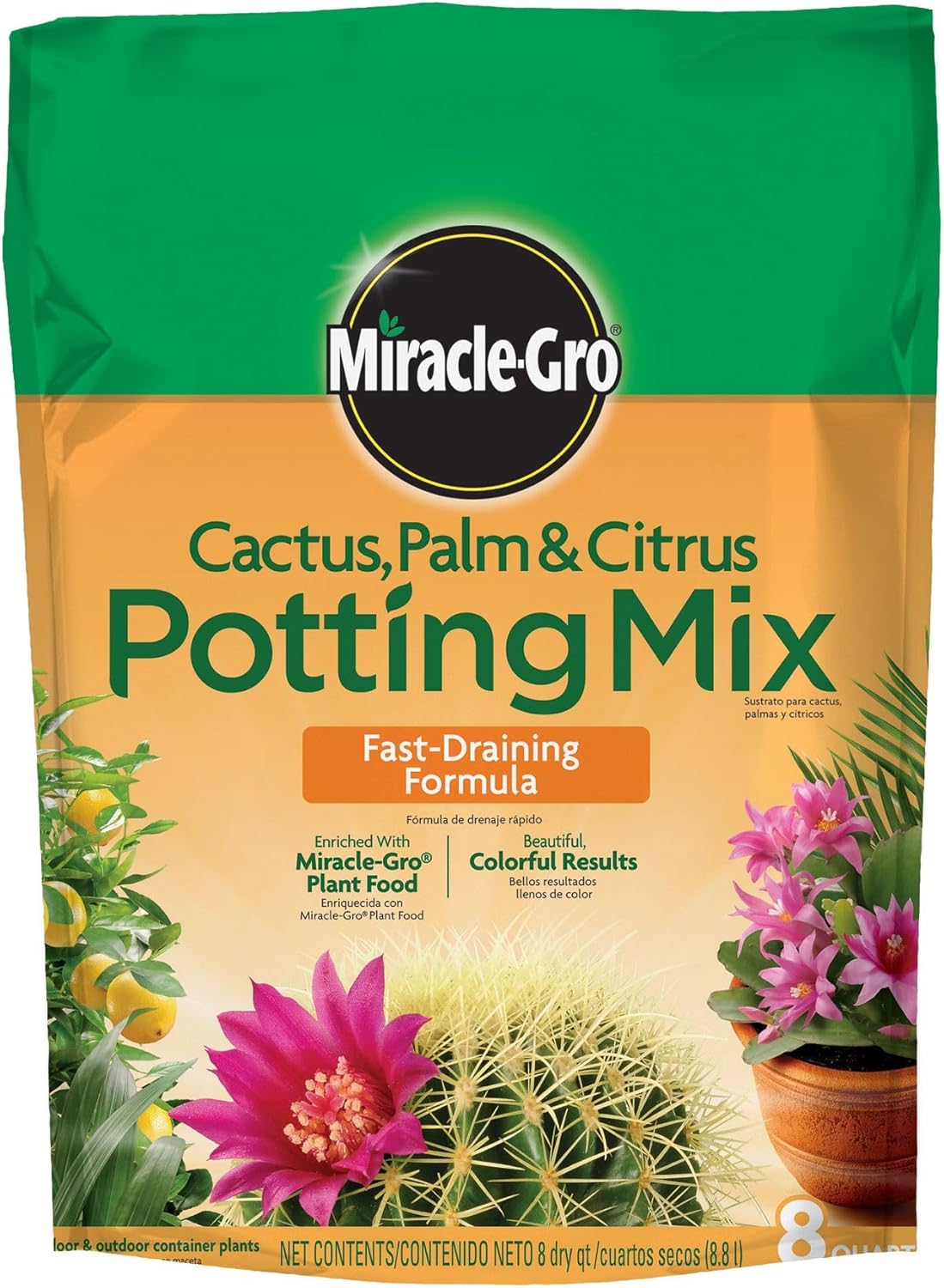
Miracle-Gro Cactus, Palm & Citrus Potting Mix, 8 qt.
| Brand Name | Miracle-Gro |
|---|---|
| Volume | 8 quarts |
| Unit Count | 1 Count |
This 8-quart Miracle-Gro potting mix is designed for container-grown cacti, palms, and citrus and combines peat moss, sand, perlite, and forest products for faster drainage and reduced compaction. It arrives ready to use and is enriched with Miracle-Gro plant food so newly potted citrus get an initial nutrient boost without immediate fertilizing. Typical use is straightforward: choose a pot with drainage, fill about one third, set the root ball and top up, then water and allow to drain. The formula helps soil dry between waterings, which is important for citrus root health in containers, and one bag is enough for two 8-inch pots. Limitations are the small volume for larger trees and the presence of peat moss if you prefer peat-free mixes; heavier or older citrus will need larger volumes and eventual repotting. For growers wanting a quick, reliable container medium that balances moisture retention with drainage, this mix performs as expected.
Best for: Growers who repot or maintain container citrus and want a ready-to-use mix that balances drainage and initial feeding for healthier root development.
Less Ideal for: Gardeners potting mature or large citrus specimens that need large volumes of soil or those seeking a peat-free or custom mineral-heavy citrus bonsai substrate.
- Fast-draining blend reduces risk of waterlogged roots for container citrus
- Pre-enriched with plant food to give newly potted plants an initial nutrient boost
- Contains perlite and sand to resist compaction and maintain aeration
- Formulated for indoor or outdoor containers so it works across sites
- 8-quart bag is small for larger or multiple citrus containers
- Contains peat moss which some buyers avoid for sustainability reasons
Verdict: A convenient, fast-draining, plant-food–enriched container mix that makes repotting small to medium citrus trees quick and reliable.
Choosing the Right Soil Mix for Kalanchoe: Key Factors to Consider
Drainage and Perched Water Table
Kalanchoe is vulnerable to sitting in wet soil, so the mix must allow excess water to pass quickly. A high proportion of coarse particles such as perlite, coarse sand, or pumice reduces the perched water table in containers and lowers the risk of root rot.
In practical terms, look for a medium where water flows through within a minute or two after thorough watering in a small pot. Drainage also influences how often you water, so faster-draining mixes suit busy gardeners or indoor environments with lower humidity.
Particle Size and Porosity
Particle size determines how much air roots can access. Larger, stable particles keep channels open for oxygen while smaller components hold moisture and nutrients. For Kalanchoe, a mix that combines chunky inorganic material with a light organic fraction gives the best balance between breathability and moisture-holding ability.
Porosity also affects repotting and root development. Mixes that compact over time reduce oxygen availability, so choose blends with durable inorganic components that resist breakdown.
Nutrient Holding Capacity
Kalanchoe needs a steady supply of nutrients during its active growth and bloom cycles, but it does not require rich, soggy soil. Organic components such as composted bark, coco coir, or a small portion of peat can store nutrients and release them slowly.
Too much organic matter raises water retention and can lead to rot, so aim for a modest amount that supports feeding between light fertilizer applications rather than replacing them entirely.
pH and Salt Considerations
Kalanchoe prefers a slightly acidic to neutral pH range. A mix that is overly alkaline or contains high soluble salts from certain fertilizers or reclaimed materials can stress plants and reduce blooms. Test new media or leach it well before use if you suspect salts.
When using pre-mixed media, check product claims about pH and avoid mixes with added slow-release fertilizers that could build up salts in small containers.
Weight and Pot Choice
The weight of the soil matters for pot stability and handling. Heavy mixes increase shipping and moving effort and may be unnecessary for indoor plants. Lightweight mixes with pumice or perlite make hanging pots and wall arrangements easier to manage.
However, very light mixes can shift or float during heavy watering in shallow dishes, so balance weight with container shape and drainage options. Match the medium to the pot material and placement to avoid tipping or waterlogging.
Ease of Use and Repotting
A practical mix should be easy to work with during planting and repotting. It should form a stable root ball without crumbling or sticking excessively to gloves. Components that clump when wet can make dividing or repotting messy.
Also consider whether you will amend the mix yourself. If you prefer ready-to-use blends, choose one that does not require additional perlite or sand to achieve proper drainage. If you like mixing, pick components that combine predictably.
When to Repot Kalanchoe
Repot when roots start to circle the pot or when the plant becomes top-heavy during active growth. Most Kalanchoe benefit from a light refresh of the medium every one to two years to restore porosity and replace depleted organic matter.
Choose a pot only one size larger than the current container. Using a much larger pot forces the plant to spend energy growing roots into unused soil rather than making flowers. After repotting, allow the plant a week of reduced watering while roots reestablish.
- Check roots by gently sliding the plant from its pot.
- Trim only circling or dead roots with clean shears.
- Let the root ball dry a few hours if the old soil was very wet before repotting.
Mixes for Indoor Vs Outdoor Containers
Indoor containers and outdoor pots face different moisture and temperature patterns. Indoor environments tend to be drier and more temperature-stable, so a slightly richer mix with better nutrient retention can reduce the need for frequent feeding. For outdoor pots, prioritize drainage and weather resistance since rain events can quickly saturate shallow containers.
Adapt the same base approach but tweak particle size and organic content. For outdoor use in rainy climates, increase inorganic coarse fraction to prevent waterlogging. For sheltered patios or frost-free indoor spots, a balanced indoor-oriented blend works well.
- Outdoor pots: increase pumice or coarse sand for faster runoff.
- Indoor pots: include a bit more organic matter for steady feeding.
DIY Soil Mix Recipes and Simple Tweaks
You can make an effective Kalanchoe mix by combining equal parts of a light potting medium and coarse inorganic material, then adding a small portion of organic humus. A common starting point is 1 part potting mix, 1 part perlite or pumice, and 1 part coco coir or composted bark.
If your plants show signs of overwatering, increase the inorganic fraction. If they consistently slump or show nutrient deficiency, add a modest amount of slow-release or liquid fertilizer rather than changing the whole mix.
- Simple indoor blend: potting mix + perlite + composted bark (1:1:1).
- Fast-drain outdoor tweak: potting mix + coarse sand + pumice (1:2:1).
- Always sterilize reused soil and check pH after mixing.
Watering Rhythm for Fast-Draining Media
Fast-draining mixes dry more quickly, which changes the ideal watering rhythm. Water deeply but less frequently, allowing the top inch of soil to dry before watering again. Overwatering is the most common cause of decline for Kalanchoe in well-draining mediums.
Monitor plants rather than the clock. Leaf firmness and overall posture tell you more than a fixed schedule. In winter, reduce water further as growth and evaporation slow.
- Use a finger test to check the top inch for dryness.
- Water until excess runs out of the drainage holes, then let the pot drain fully.
Fertilizing with a Fast-Draining Mix
Because fast-draining mixes do not hold nutrients as long, regular light feedings during the growing season help sustain blooms. Use a balanced liquid fertilizer at half strength every two to four weeks or a low-dose slow-release formula that does not build salts.
Avoid high-strength feedings in small pots, which can concentrate salts and harm roots. If leaf-tip burn or brown margins appear, flush the pot with water to leach excess salts and cut back on fertilizer.
- Preferred feeding: light liquid feed during active growth.
- Flush soil occasionally if you notice salt buildup.
How We Chose the Best Soil Mix for Kalanchoe
We focused on mixes formulated for succulent or indoor flowering plants and applied practical garden-use filters. Key criteria included drainage rate measured by how fast excess water passes through the potting medium, porosity and aeration to prevent root rot, and nutrient retention that supports repeat blooming without frequent heavy feeding. We also evaluated texture and ease of repotting, since Kalanchoe benefits from a medium that roots can penetrate but that still resists compaction. Longevity under regular watering cycles and pH balance suitable for kalanchoe were considered, plus how well the mixes work in both small containers and larger patio pots. We excluded heavy garden soils, straight clay mixes, and formulations designed exclusively for orchids or carnivorous plants because those use cases demand very different physical properties. The final shortlist favors blends that balance quick drainage with modest water-holding capacity and stable structure so plants stay healthy with common indoor care routines.
FAQ
Can I use regular houseplant potting soil for Kalanchoe?
You can start with standard potting soil but should amend it to improve drainage and aeration. Mixing in perlite, pumice, or coarse sand helps prevent water retention that leads to root rot.
How often should I water Kalanchoe in a fast-draining mix?
Water deeply and then allow the top inch of the mix to dry before watering again. Frequency depends on light and temperature but is usually every one to two weeks for indoor plants during active growth.
Is it necessary to use inorganic additives like perlite or pumice?
Yes. Inorganic additives maintain long-term porosity and prevent compaction better than organic matter alone. They are particularly important in small containers where drainage is limited.
What signs indicate my soil mix is holding too much water?
Look for yellowing or limp leaves, soft blackened roots, and a musty smell from the potting medium. These are typical indicators of overwet conditions and a need to repot into a faster-draining mix.
Can I reuse old potting mix for Kalanchoe?
You can reuse it after refreshing with fresh inorganic material and some organic matter, and after sterilizing if it was associated with disease. Reused mixes often have reduced porosity and nutrient content, so amend them accordingly.
Final Verdict
Choose a soil mix that emphasizes drainage and stable porosity while retaining just enough organic material to supply nutrients between feedings. For most gardeners the biggest tradeoff is between water-holding capacity and breathability: increase inorganic components to reduce rot risk, or add a modest organic fraction to support blooms if you can maintain careful watering. Prioritize the physical properties that match your pot type and environment rather than chasing a single perfect recipe. With the right balance, you will reduce common issues and encourage consistent flowering in Kalanchoe.
