

Note: This article contains affiliate links. If you click on these links and make a purchase, I may earn a small commission at no extra cost to you. This helps support my research and content. Read my full affiliate disclosure here.
Getting the right soil mix for a ponytail palm matters because this bulbous, drought-tolerant houseplant depends on quick drainage and good aeration to avoid root rot. Choose a mix that dries evenly after watering but still holds some available moisture and nutrients around the root neck. This guide shortlists six top soil mixes for ponytail palm and explains why each type suits indoor or patio-grown plants. We evaluated mixes for drainage, soil structure, nutrient-holding capacity, and ease of potting so you can pick a blend that matches your watering habits and container setup. Read on for practical guidance and what to watch for when repotting or mixing your own blend.
Top Picks at a Glance
| Best Quality Built to a higher standard if you want something more solid | Rosy Soil Cactus & Succulent Potting Mix, 4 Quart |  |
| Best Value The sweet spot between price and what you get | Espoma Organic Cactus Potting Soil Mix, 4 qt |  |
| Best Budget The cheapest option that still gets the job done reliably | Back to the Roots Organic Succulent & Cacti Soil, 6 Quart |  |
| Highest Rated A top-rated pick with lots of positive feedback | Miracle-Gro Cactus, Palm & Citrus Potting Mix, 8 qt. |  |
| Most Popular A crowd favorite that many people choose with confidence | Miracle-Gro Indoor Potting Mix for Cactus & Succulent, 8 qt. (2-Pack) |  |
| Best Seller A high-volume bestseller chosen again and again | Miracle-Gro Succulent Potting Mix, 4 qt. |  |
Rosy Soil Cactus & Succulent Potting Mix, 4 Quart

| Unit Count | 64 Ounce |
|---|---|
| Ingredients | Biochar,Pumice,Mycorrhizae,Sand,Pine Bark Fines,Compost |
| Style Name | Cactus & Succulent |
This 4 quart Rosy Soil cactus and succulent mix is built for growers who need consistently fast-draining media. The chunky blend of pumice, sand, pine bark fines and biochar keeps the mix airy so roots do not sit in water, while added mycorrhizae and worm castings supply biological activity that supports steady root growth without synthetic fertilizers. Typical use is repotting small-to-medium cacti and succulent pots or refreshing the top few inches of established containers; the resealable bag makes it easy to store between jobs. Practical benefits include reduced risk of root rot, less frequent repotting from compacted soil, and improved transplant success for drought-tolerant species. Because the formula is peat-free it drains more quickly than peat-heavy mixes but may require slightly more frequent watering in very dry indoor conditions. The 4 quart size suits a few plants at a time rather than large collections, so performance-focused growers managing many specimens will need multiple bags.
Best for: Growers who prioritize drainage and root performance for cacti and succulents and want a biologically active, peat-free mix for repotting individual plants or small collections.
Less Ideal for: People who need large volumes of soil at once or who prefer a moisture-retentive mix for tropical houseplants should look elsewhere.
- Chunky, pumice- and bark-based texture promotes rapid drainage and prevents compaction
- Includes mycorrhizae and worm castings to support root health without synthetic fertilizers
- Peat-free formula reduces water retention and environmental impact
- Resealable bag keeps remaining mix fresh between uses
- Small 4 quart volume means multiple bags are required for larger collections or frequent repotting
- Faster drainage can lead to more frequent watering in very dry indoor environments
Verdict: Choose this mix when you need a fast-draining, biologically active peat-free soil that reliably reduces soggy roots for cacti and succulents.
Espoma Organic Cactus Potting Soil Mix, 4 qt

| Brand | Espoma |
|---|---|
| Volume | 4 quarts |
| Unit Count | 128 Ounce |
| Contains | Peat moss, humus, perlite, mycorrhizae |
Espoma Organic Cactus Potting Soil Mix is a lightweight, peat-based blend designed to improve drainage and root aeration for container plants. Typical uses include repotting succulents, cacti, and smaller container palms and citrus where fast drainage is important. The mix contains sphagnum peat moss, humus and perlite, plus a mycorrhizal inoculant to support root establishment. In practice this means soil that dries out more quickly than all-purpose mixes, reducing the risk of root rot in drought-tolerant species and helping young palms settle after repotting. Because it is organic and free of synthetic fertilizers, gardeners who prefer natural inputs can use it without adding immediate chemical feeds. Limitations are its small 4 quart volume and peat-heavy base, which may require mixing with coarser materials or regular feeding for larger palms or long-term container culture.
Best for: Buyers looking for an organic, fast-draining potting mix to repot succulents or small container palms and who prefer natural ingredients over synthetic additives.
Less Ideal for: Gardeners needing large volumes for big specimen palms or long-term container culture should choose a coarser, larger-volume mix or blend this with chunky amendments.
- Formulated for drainage and aeration with peat moss and perlite
- Includes mycorrhizae to encourage root growth and establishment
- Organic blend with no synthetic fertilizers or chemicals
- Suitable for repotting succulents, cacti and smaller container palms
- Small 4 quart bag may not be cost-effective for large pots or multiple palms
- Peat-heavy mix can compress over time and may need amendment for long-term container use
Verdict: A compact, organic, fast-draining mix that helps establish roots in succulents and small container palms when you need a natural potting medium.
Back to the Roots Organic Succulent & Cacti Soil, 6 Quart

| Volume | 6 quarts |
|---|---|
| Item Highlight | Fast-draining cactus and succulent soil; peat-free; made in the USA |
| Ingredients | Dolomitic Limestone, Perlite, Horticultural Sand, Aged Bark, Plant Food |
This 6-quart Succulent & Cacti Mix from Back to the Roots is a ready-to-use potting soil made to give desert plants the aeration and drainage they need. The blend includes aged bark, perlite, horticultural sand and dolomitic limestone to promote quick drainage and healthy root growth while supplying basic nutrients. It is peat-free and made in the USA, so you can pot aloe, jade, echeveria or small cacti without mixing your own amendments. Typical use is topping or repotting container succulents and cacti, or refreshing the surface of established pots to improve structure and drainage. For risk-averse gardeners the packaged mix removes guesswork and reduces overwatering problems. Limitations: a 6-quart bag is best for a few small pots or single repots rather than large planters, and heavier feeding may still be needed after a month since the product advises adding organic fertilizer for sustained nutrition. Follow handling precautions to avoid dust and wear gloves when working with the soil.
Best for: Buyers who want a no-fuss, pre-mixed soil that reduces overwatering risk for potted succulents and cacti and prefer an organic, peat-free option made domestically.
Less Ideal for: Gardeners who need soil in bulk for many large containers or those who want a custom mix with specific ratios of grit and soil for advanced specimens.
- Formulated specifically for succulents and cacti with perlite and horticultural sand for fast drainage
- Peat-free organic blend that includes aged bark to improve aeration and root support
- Contains dolomitic limestone and plant food for baseline nutrients
- Made in the USA and sold in a ready-to-use 6 quart bag for convenience
- Small 6 quart volume is insufficient for multiple large repots or big planters
- Nutrient content is limited so supplemental organic fertilizer is recommended after transplanting
Verdict: A convenient, peat-free ready mix that simplifies potting and repotting small succulents and cacti by providing reliable drainage and basic nutrients.
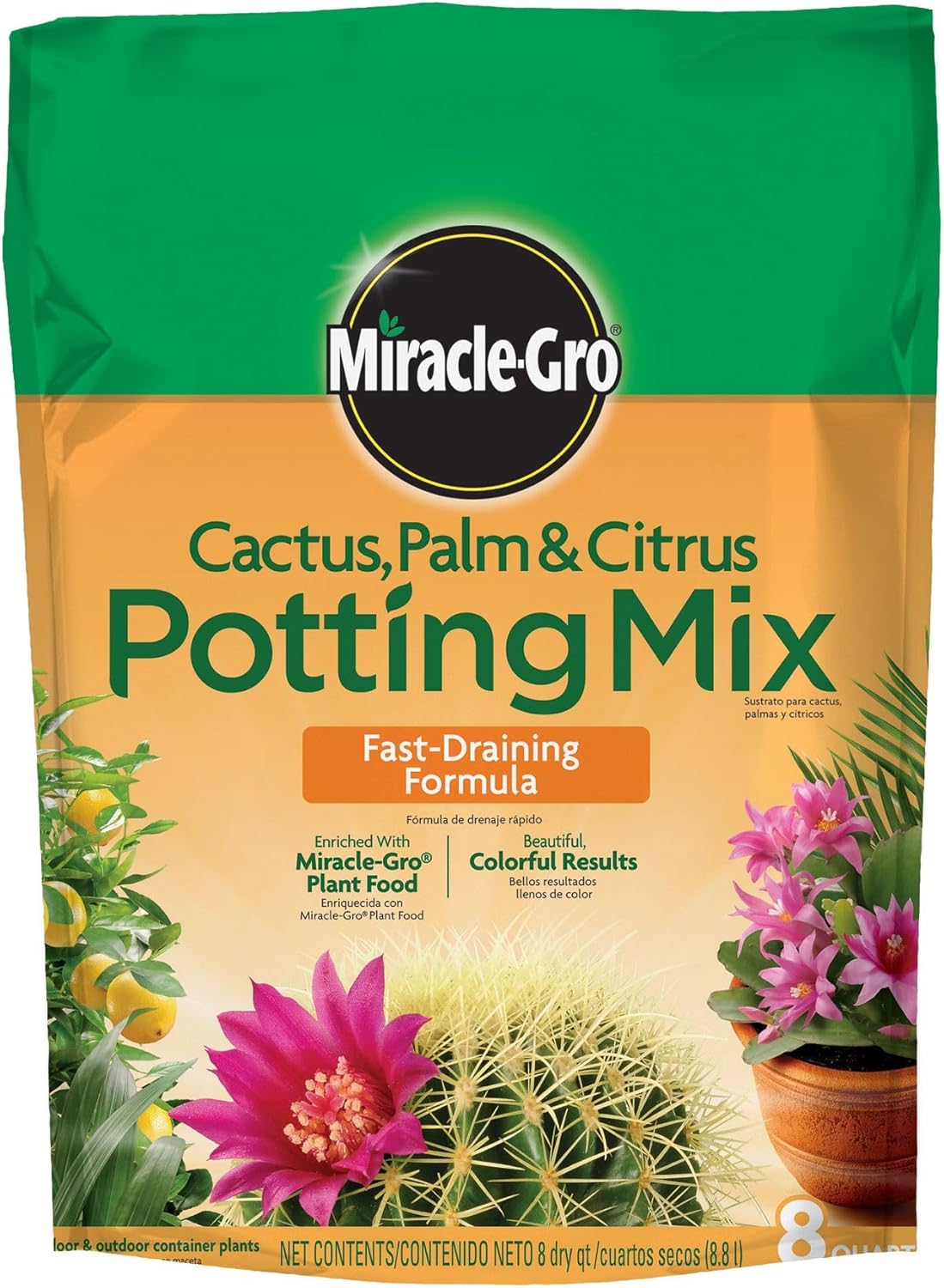
Miracle-Gro Cactus, Palm & Citrus Potting Mix, 8 qt.
| Brand Name | Miracle-Gro |
|---|---|
| Volume | 8 quarts |
| Unit Count | 1 Count |
This 8-quart Miracle-Gro potting mix is designed for container-grown cacti, palms, and citrus and combines peat moss, sand, perlite, and forest products for faster drainage and reduced compaction. It arrives ready to use and is enriched with Miracle-Gro plant food so newly potted citrus get an initial nutrient boost without immediate fertilizing. Typical use is straightforward: choose a pot with drainage, fill about one third, set the root ball and top up, then water and allow to drain. The formula helps soil dry between waterings, which is important for citrus root health in containers, and one bag is enough for two 8-inch pots. Limitations are the small volume for larger trees and the presence of peat moss if you prefer peat-free mixes; heavier or older citrus will need larger volumes and eventual repotting. For growers wanting a quick, reliable container medium that balances moisture retention with drainage, this mix performs as expected.
Best for: Growers who repot or maintain container citrus and want a ready-to-use mix that balances drainage and initial feeding for healthier root development.
Less Ideal for: Gardeners potting mature or large citrus specimens that need large volumes of soil or those seeking a peat-free or custom mineral-heavy citrus bonsai substrate.
- Fast-draining blend reduces risk of waterlogged roots for container citrus
- Pre-enriched with plant food to give newly potted plants an initial nutrient boost
- Contains perlite and sand to resist compaction and maintain aeration
- Formulated for indoor or outdoor containers so it works across sites
- 8-quart bag is small for larger or multiple citrus containers
- Contains peat moss which some buyers avoid for sustainability reasons
Verdict: A convenient, fast-draining, plant-food–enriched container mix that makes repotting small to medium citrus trees quick and reliable.
Miracle-Gro Indoor Potting Mix for Cactus & Succulent, 8 qt. (2-Pack)

| Item Highlight | Fast-Draining Cactus and Succulent Potting Mix with Plant Food |
|---|---|
| Number of Packs | 2 |
| Included Components | 2 bags |
| Item Type Name | Soil |
| Ingredients | Sphagnum Peat Moss, Sand, Perlite |
This two-pack of Miracle-Gro Indoor Potting Mix is designed for repotting indoor cacti, succulents and other desert-loving container plants like Thanksgiving cactus. The mix combines sphagnum peat moss, sand, perlite and other forest products to promote fast drainage and reduce water retention that can cause root rot. Each bag is pre-mixed and ready to use, so you simply fill a pot with drainage, add the plant and firm the soil around the root ball. It also contains a measured amount of plant food to support early growth so you may not need extra fertilizer right away. Practical benefits include easier watering schedules for moisture-sensitive plants and a light, airy texture that helps roots establish after repotting. Limitations are that the bags are small for larger specimens and the formula is focused on drainage rather than long-term nutrient reserve, so plan to feed or repot periodically for established or heavy-feeding plants.
Best for: Buyers who prioritize protecting moisture-sensitive indoor succulents and want a trusted, ready-to-use mix that reduces the chance of overwatering issues when repotting.
Less Ideal for: Gardeners who prefer to custom-blend potting mixes for long-term nutrient delivery or who need large-volume soil for many or large containers.
- Formulated for cacti and succulents with fast-draining components like sand and perlite
- Pre-mixed and ready to use so no additional amendments are required at potting
- Includes plant food to give new repots an initial nutrient boost
- Light texture helps roots establish and reduces risk of overwatering-related rot
- 8 qt. bag size is limited for repotting larger plants or multiple sizable pots
Verdict: A convenient, fast-draining potting mix that makes repotting Thanksgiving cactus and other succulents safer and simpler.
Miracle-Gro Succulent Potting Mix, 4 qt.

| Brand Name | Miracle-Gro |
|---|---|
| Unit Count | 128 Ounce |
| Volume | 4 quarts |
| Style Name | Succulent |
This 4-quart Miracle-Gro Succulent Potting Mix is formulated for indoor succulent and cactus container gardening and is intended to make repotting simple for hobbyists and casual plant owners. The blend of sphagnum peat moss, processed forest products, and built-in Miracle-Gro plant food gives seedlings and established succulents a loose, moisture-moderating medium that drains more quickly than standard potting soil. Use it to fill an 8-inch pot (one bag typically fills that size), position your plant with a loosened root ball, and water lightly so excess drains from the pot. Notable features include the pre-mixed fertilizer for initial nutrition and a composition that reduces compaction compared with all-purpose mixes. The practical benefits are easier watering management for shallow-rooted succulents and less frequent repotting thanks to recommended two-year refreshes. Limitations are the small bag size for larger collections and that it is peat-based, which some gardeners avoid for sustainability reasons; very arid growers may still prefer coarser, mineral-heavy mixes for maximum drainage.
Best for: Buyers who want an easy, ready-to-use potting mix tailored to indoor succulents and prefer a balanced product that simplifies repotting and early care.
Less Ideal for: Collectors with many large pots or growers who require a coarser, grit-heavy or completely peat-free medium should look for larger or mineral-focused mixes.
- Formulated specifically for succulents and cacti to improve drainage compared with general potting soils
- Includes Miracle-Gro plant food for initial nutrition after potting
- Loose peat-based blend resists compaction and eases root placement when repotting
- One 4 qt. bag fills an 8-inch container, convenient for single-plant repots
- Small 4 qt. volume is insufficient for multiple or larger pots
- Peat-based composition may be undesirable for gardeners seeking peat-free or more mineral-heavy mixes
Verdict: A convenient, plant-food–boosted potting mix that makes repotting and establishing indoor succulents quick and low-effort.
Choosing the Right Soil Mix for Ponytail Palm: Key Factors to Consider
Drainage and Percolation
Ponytail palms are susceptible to root rot when left in wet, poorly drained soil. A fast-draining soil mix prevents water from pooling at the base of the caudex and helps oxygen reach the roots after watering.
When assessing drainage, think about particle size and the proportion of coarse inorganic materials. Larger particles such as pumice or coarse sand create macropores that speed percolation. In a container environment, drainage determines how often you will need to water and how forgiving the plant is of occasional overwatering.
Aeration and Root Space
Good aeration keeps fine roots from suffocating and supports beneficial microbial activity near the root zone. Aeration depends on the mix structure more than on organic content alone.
Open-structured mixes with stable pore spaces maintain air channels even when slightly moist. Avoid mixes that compact with repeated watering cycles. Aeration affects how well roots can explore the pot and influences transplant timing, especially for larger, older specimens that have dense root systems.
Moisture Retention Balance
Even though ponytail palms tolerate drought, they still need some available moisture between waterings. The ideal mix holds enough moisture in the root-accessible fraction without becoming waterlogged.
Components like coconut coir or small amounts of peat can increase available moisture, but they must be balanced with coarse materials to keep the overall mix fast-draining. Consider your local indoor humidity and heating patterns: homes with dry air will need mixes that retain a little more water than very humid spaces.
Particle Stability and Longevity
Over time, fine organic particles can break down and reduce drainage by filling pore space. A good soil mix resists rapid breakdown and keeps structure for at least a couple of years in container use.
Stable inorganic components such as pumice, perlite, or coarse sand help preserve pore space. When choosing a ready-made mix or making your own, favor ingredients that maintain their shape and size under repeated watering to reduce repotting frequency and avoid root suffocation.
Nutrient Holding and Fertility
While ponytail palms are not heavy feeders, the soil should supply or retain enough nutrients for steady growth. Organic matter provides cation exchange capacity and slow-release nutrients but too much can increase moisture retention undesirably.
Aim for a modest proportion of organic amendments that release nutrients slowly. Consider mixes with balanced mineral content or the option to top-dress with slow-release fertilizer. Nutrient holding also affects how often you feed and how the plant responds after repotting.
pH and Mineral Content
Ponytail palms prefer a neutral to slightly acidic soil pH for nutrient availability. Extreme pH can lock up nutrients or cause deficiencies even if other mix qualities are ideal.
Check the typical pH range of any preblended mix or the components you plan to mix. Some inorganic additives can raise alkalinity while sphagnum peat lowers pH. Matching the mineral content and pH to your water quality and fertilization plan reduces issues like chlorosis or stunted growth.
When To Repot A Ponytail Palm
Small specimens may only need repotting every 2 to 3 years while larger plants can go longer if root-bound is not causing stress. Signs you should repot include roots circling the pot, slow growth despite adequate light, or soil that drains poorly even after watering.
Choose a container only slightly larger than the root ball and refresh the soil mix to restore aeration and nutrient balance. Repotting is also the best time to correct an overly moisture-retentive mix by replacing it with a faster-draining blend.
- Inspect roots before repotting to assess health and remove rotted sections
- Use pots with ample drainage holes and avoid oversized containers
- Refresh top couple inches of soil annually if full repotting is not needed
DIY Mix Recipes For Different Watering Styles
You can tailor a mix to your watering routine. For infrequent waterers, increase coarse inorganic content to improve drainage. For gardeners who water more regularly or have dry indoor air, add a slightly higher proportion of fibrous organic matter to hold available moisture.
When mixing, measure components by volume for consistency and test the final mix by watering a small test pot to observe drainage and moisture retention before repotting valuable plants.
- Dry-style mix: high pumice or coarse sand, moderate pine bark fines, little to no peat
- Moderate-style mix: balanced pumice, bark, and coir for steady moisture access
- Moisture-help mix: added coir or a small amount of peat balanced with larger pumice fraction
Container Choice and Drainage Extras
The pot you choose influences how any soil mix performs. Terracotta pots wick moisture and can help prevent overwatering, while plastic retains moisture longer. Ensure containers have several drainage holes and consider adding a layer of coarse material under the soil only if it does not create a perched water table.
Use pot feet or a raised shelf inside saucers to keep drainage holes clear. For long-lived specimens, combine a breathable pot with a fast-draining mix to reduce wetness-related stress.
- Avoid sealed containers unless you plan strict watering control
- Use mesh or coarse fabric to keep soil from washing out of drainage holes
- Consider saucer use only to catch excess; do not leave water pooled
Watering Approach With Fast-Draining Mixes
Fast-draining mixes dry more quickly, so adapt your watering frequency to the pot size and ambient conditions. Water thoroughly until it flows from the drainage holes, then allow the top few centimeters to dry before the next watering.
Monitor the plant rather than following a rigid schedule. Signs of underwatering include wrinkling of the bulbous trunk and leaf desiccation. Signs of overwatering include yellowing leaves and a soft base.
- Check pot weight to judge moisture content for larger pots
- Use a moisture probe for deeper pots to avoid guesswork
- Adjust frequency seasonally: less water in winter dormancy
Preventing Common Soil Problems
Compaction, salts from water or fertilizer, and poor drainage are common problems in container soils. Flushing the soil lightly during the growing season can reduce salt build-up, while repotting can correct compaction and restore structure.
Avoid overusing fine compost or worm castings that can fill pore space over time. Instead, top-dress with compost sparingly and refresh the mix when drainage noticeably slows.
- Leach pots occasionally with clear water to remove salts
- Replace part of the mix if you see persistent wet spots or foul odors
- Use balanced fertilizers at recommended rates to prevent salt accumulation
How We Chose the Best Soil Mix for Ponytail Palm
We selected soil mixes that match the specific needs of ponytail palm growers: rapid drainage to prevent prolonged moisture around the swollen stem base, stable aeration to keep fine roots healthy, and enough organic matter to provide slow-release nutrients between feedings. Our filters prioritized particle size distribution, presence of coarse inorganic components, and the stability of the mix over time so it does not compact in pots. Concrete evaluation criteria included drainage rate in typical container conditions, water retention versus available moisture, particle stability and resistance to compaction, nutrient-holding capacity and amendments, and mix suitability for standard container sizes and indoor light levels. We excluded blends designed solely for bog plants or heavy moisture-loving palms, and any mixes that rely on slow-to-dry substrates inappropriate for drought-adapted bulbs. We also filtered out mixes requiring specialized treatments or professional greenhouse conditions to perform well. The final shortlist emphasizes practical gardener use: mixes that are easy to repot with, compatible with common potting containers, and supportive of the ponytail palm growth habit without frequent transplanting.
FAQ
Can I use cactus mix for a ponytail palm?
Often a cactus mix works because it is formulated for fast drainage. However, check that it still holds a bit of moisture and has some organic content. If the cactus mix is very lean, add a small portion of coir or bark to improve moisture availability.
How much pumice or perlite should I add to a standard potting soil?
A good starting point is 20 to 40 percent coarse inorganic material by volume, depending on how heavy the base potting soil is. Increase the proportion if your potting soil compacts quickly or if you tend to overwater.
Does pot size affect soil choice for ponytail palm?
Yes. Larger pots hold more moisture, so use an even faster-draining mix in large containers. Small pots dry faster and can tolerate slightly more organic material without risking root rot.
How often should I feed a ponytail palm in a fast-draining mix?
Usually feed lightly during the active growing season every 6 to 8 weeks with a balanced fertilizer. Fast-draining mixes flush nutrients more quickly, so monitor growth and adjust feeding if leaves pale or growth stalls.
Will using coir instead of peat change performance?
Coir holds moisture while remaining more open than peat and is a good sustainable alternative. It can increase available moisture without significantly reducing drainage when used in modest proportions.
Final Verdict
When choosing a soil mix for ponytail palm, prioritize drainage and aeration first, then balance in just enough organic matter to supply moisture and nutrients between waterings. Match the mix structure to your pot size and watering habits so you do not create a persistently wet root environment. Aim for a stable, open mix that resists compaction and offers modest nutrient retention. That approach reduces root-rot risk and keeps your ponytail palm healthy with less fuss.
