

Note: This article contains affiliate links. If you click on these links and make a purchase, I may earn a small commission at no extra cost to you. This helps support my research and content. Read my full affiliate disclosure here.
Getting the soil right is one of the simplest ways to improve potted roses. In containers, roses face different challenges than in the ground: roots have limited space, water moves faster through the medium, and nutrients can be depleted quickly. Choosing an appropriate soil mix for roses in pots helps regulate moisture, support steady feeding, and give roots the air they need to thrive. This guide examines seven shortlisted soil mixes that suit container roses, focusing on drainage, nutrient retention, and ease of use. Read on to understand the practical differences between mixes and which characteristics matter most for your patio, balcony, or small garden pots.
Top Picks at a Glance
| Best Overall The best all-around choice for most situations | Coast of Maine Roses & Flowers Planting Soil, 20 qt |  |
| Best Quality Built to a higher standard if you want something more solid | Perfect Plants Specialty Rose Soil, 8 qt, Organic Potting Mix |  |
| Best Value The sweet spot between price and what you get | Midwest Hearth Premium Potting Soil Mix (4 qt) |  |
| Best Budget The cheapest option that still gets the job done reliably | Omitgoter Rose Potting Soil — Natural Organic Mix (32 fl oz) |  |
| Highest Rated A top-rated pick with lots of positive feedback | Rosy Soil Garden Mix Biochar Potting Soil, 8 Quart |  |
| Most Popular A crowd favorite that many people choose with confidence | Miracle-Gro Potting Mix, 16 qt. (2-Pack) |  |
| Best Seller A high-volume bestseller chosen again and again | Back to the Roots Organic Indoor Potting Mix, 6 Quart |  |
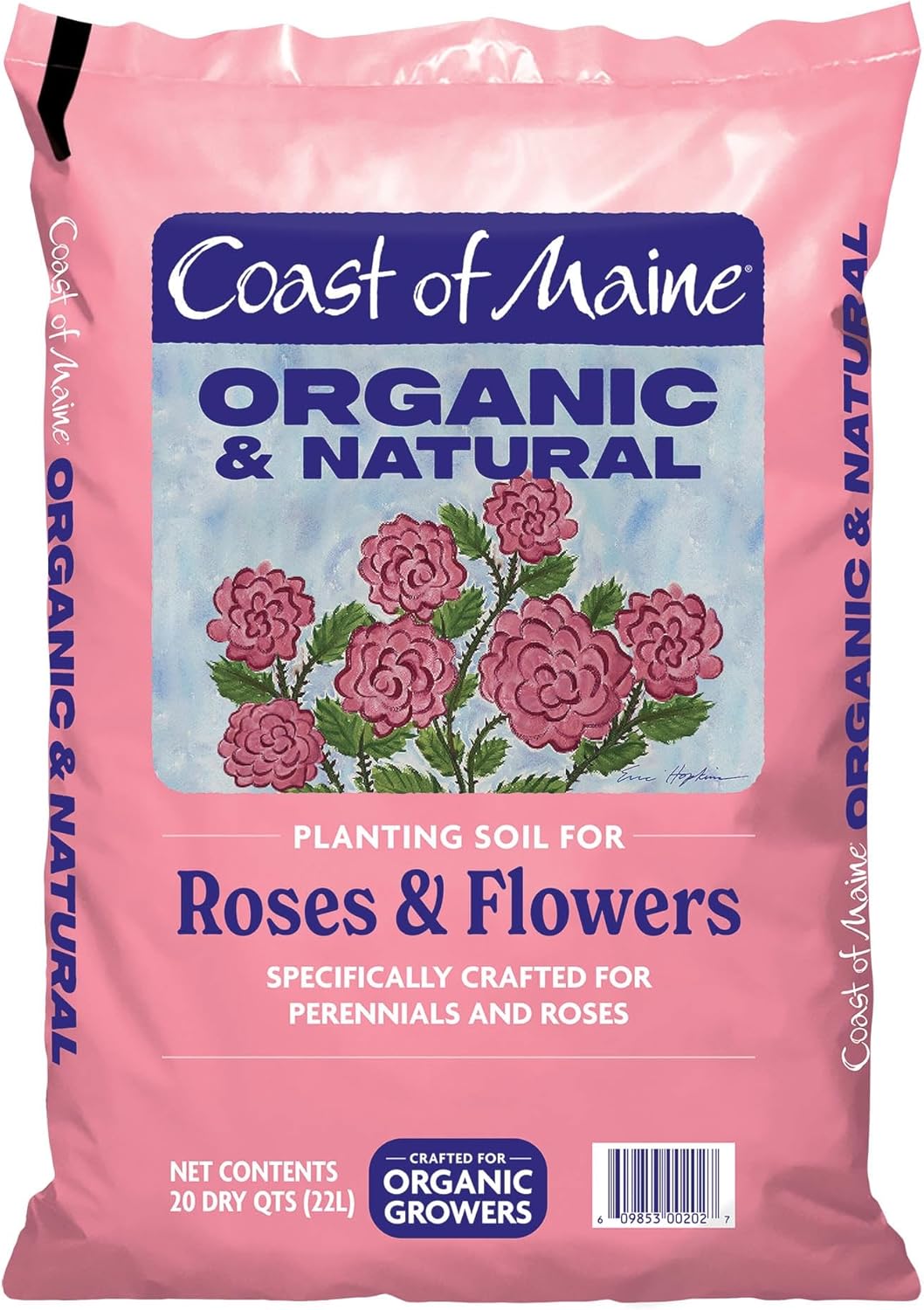
Coast of Maine Roses & Flowers Planting Soil, 20 qt
| Unit Count | 740 Ounce |
|---|---|
| Volume | 20 quarts |
| OMRI Listed | Yes |
| Intended Use | Roses, annuals, perennials, containers |
Coast of Maine Roses & Flowers is an OMRI-listed, organic planting soil designed specifically for roses, annuals, and perennials in garden beds and pots. The 20 qt bag is a lightweight mix of composted manure, sphagnum peat moss, and aged bark that improves structure, retains moisture while offering drainage, and encourages aeration around roots. It includes ocean- and land-sourced amendments such as kelp and lobster meal that supply slow-release nutrients and support soil biology, which helps produce stronger roots and fuller blooms over time. Typical use is topping or refreshing potting mixes, filling containers, or amending garden beds where roses need richer, living soil without synthetic fertilizers. Because it is an organic, nutrient-forward blend it may not deliver immediate, high N-P-K numbers like chemical fertilizers, so gardeners seeking fast, measurable feed will need to supplement with targeted fertilizers. The bag size is convenient for container growers but frequent repotting or large beds will require multiple bags. For a balanced, eco-minded gardener who wants healthier soil and better blooms in pots, this is a practical choice.
Best for: Gardeners who want an organic, living soil approach for container-grown roses and flowering plants and who prioritize soil health and sustained bloom performance over instant synthetic feeding.
Less Ideal for: Growers who need immediate, measurable fertilizer results or who are filling large beds quickly and prefer bulk commercial garden soil options.
- OMRI-listed organic formula that is pet- and family-safe
- Blend of composted manure, peat moss, and aged bark improves moisture retention and drainage
- Includes seaweed and lobster meal to feed soil biology and provide slow-release nutrients
- Lightweight 20 qt bag is easy to handle for container and pot use
- May require additional fertilizer for rapid nutrient boosts since nutrients release slowly
- 20 qt volume means multiple bags are needed for larger containers or garden beds
Verdict: A small, organic, soil-first mix that consistently improves pot-grown roses by feeding soil life for healthier roots and better blooms.
Perfect Plants Specialty Rose Soil, 8 qt, Organic Potting Mix

| Item Highlight | Composted pine bark, granite sand and peat with 18-6-8 slow release fertilizer |
|---|---|
| Unit Count | 256 Ounce |
| Item Type Name | Rose Soil Mix 8qt |
| Style Name | Medium Drainage and Nutrient rich |
| Volume | 4 quarts |
This specialty rose soil is designed for roses grown in pots and containers, combining coarse ingredients for drainage with a year-long slow-release fertilizer. It is typically used when repotting patio roses, container drift varieties, or small hedging roses to give roots both air and steady nutrition. Key features include composted pine bark and granite sand for improved aeration and drainage, peat for moisture retention, and an 18-6-8 granular slow-release fertilizer intended to feed blooms for up to 12 months. In practice that means less frequent feeding and a lower risk of waterlogging compared with standard potting mixes, which helps keep potted roses healthier and more floriferous. The resealable bag is convenient for seasonal storage. Limitations are that peat-based mixes compact over time and will eventually need freshening or amendment with extra coarse material for long-term container use, and the pre-mixed fertilizer makes it harder to fine-tune nutrient levels for different rose varieties or soil-testing results.
Best for: Gardeners who grow roses in pots and want a ready-made, performance-focused mix that improves drainage and provides steady nutrition without frequent feeding.
Less Ideal for: People seeking a neutral, amendment-free base to customize fertilizer dosing or those managing large in-ground rose beds where bulk garden soil is more appropriate.
- Formulated specifically for roses with composted pine bark and granite sand to improve drainage and root aeration
- Includes 18-6-8 slow-release fertilizer designed to feed plants for up to 12 months
- Resealable packaging helps keep remaining mix fresh between uses
- Balanced blend of moisture retention (peat) and coarse components reduces waterlogging in containers
- Peat content can compact over time and may require additional coarse amendment for long-term container use
- Pre-mixed fertilizer limits ability to precisely adjust nutrient ratios for specific rose varieties
Verdict: Choose this mix if you want a ready-to-use, rose-focused potting soil that improves container drainage and delivers season-long feeding with minimal fuss.
Midwest Hearth Premium Potting Soil Mix (4 qt)

| Unit Count | 128 Ounce |
|---|---|
| Item Type Name | Potting Soil |
| Brand Name | Midwest Hearth |
| Volume | 4 quarts |
This Midwest Hearth potting soil is a small, ready-to-use 4 quart mix combining peat moss, perlite, and vermiculite to support root development and balance moisture for container-grown plants. You would typically use it to fill pots, refresh topsoil in containers, or start seeds and cuttings; the mix drains well while retaining enough water to reduce frequent watering. Notable features are its peat-based organic content, added perlite for drainage and vermiculite for moisture buffering, and pH-controlled formulation suitable for many plant types. For roses in pots it gives a good, airy foundation that encourages strong roots and reduces compaction compared with straight garden soil. The main limitations are the small bag size, which means multiple bags for larger pots or several rose containers, and that peat-based mixes can dry out faster in hot, exposed conditions so you may still need to mulch or supplement with slow-release fertilizer for heavy-feeding roses.
Best for: A practical gardener who wants a convenient, all-purpose potting mix to quickly fill or refresh pots and prioritize good root health without custom-blending components.
Less Ideal for: Not the best choice for growers who need large volumes at once or who prefer peat-free, high-nutrient mixes built specifically for heavy-feeding roses.
- Ready-to-use mix of peat moss, perlite, and vermiculite for balanced aeration and moisture retention
- pH-controlled formula suitable for a wide variety of plants including potted ornamentals
- Light, airy texture that promotes root growth and reduces soil compaction
- Small 4 quart volume requires multiple bags for several or large rose containers
- Peat-based mixes can dry out faster in hot, sunny locations without additional mulching or water management
Verdict: A convenient, pH-balanced potting mix that gives potted roses an airy, moisture-retentive rooting medium ideal for small containers or top-ups.
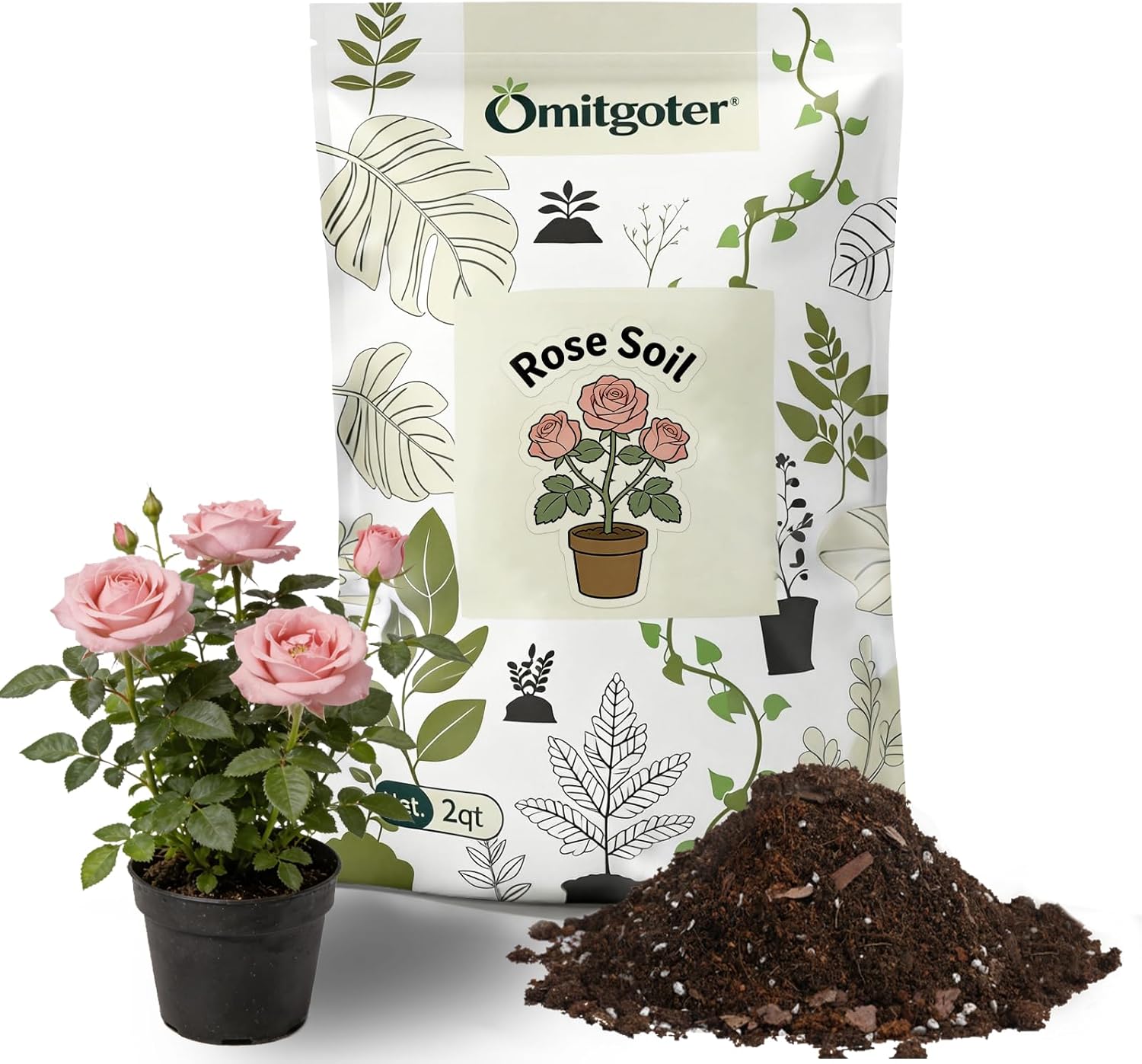
Omitgoter Rose Potting Soil — Natural Organic Mix (32 fl oz)
| Brand Name | Omitgoter |
|---|---|
| Unit Count | 32 Ounce |
| Style Name | Well-draining, Bonsai-specific |
| Volume | 32 fluid ounces |
This Omitgoter rose potting soil is a ready-to-use organic mix designed to make growing roses easier, especially in pots and bonsai containers. The formula combines peat moss, coco coir, perlite, bark, and humus to create a loose, well-draining medium that helps prevent waterlogging and root rot while keeping roots aerated. It is typically used straight from the bag for repotting rose bushes, topping up containers, or as the planting medium for new transplants. Practical benefits include built-in long-lasting nutrients that reduce the need for immediate fertilizer applications and a lightweight texture that improves root development and flowering. Because it is formulated specifically for roses, it suits both indoor potted roses and outdoor container plantings. Limitations to note are the small 32 fl oz volume, which means multiple bags will be needed for larger pots or several plants, and the product does not list specific nutrient analysis or feed schedules, so gardeners wanting precise fertilizer planning will need to supplement accordingly.
Best for: Gardeners on a budget who want an easy, natural potting mix for potted or container roses and prefer a ready-to-use product that improves drainage and bloom potential.
Less Ideal for: Large-scale rose beds or multiple full-size shrubs where bulk soil or custom mixes are more economical; growers who require exact nutrient breakdowns for fertilization planning should look elsewhere.
- 100% natural organic ingredients including peat, coco coir, perlite, bark, and humus
- Designed for superior drainage and aeration to reduce risk of root rot
- Contains long-lasting nutrients to support flowering without immediate additional feeding
- Ready to use with no mixing required, convenient for beginners
- Small 32 fl oz volume means limited coverage per bag
- No detailed N-P-K or nutrient analysis provided for precision feeding
Verdict: A convenient, natural potting mix that improves drainage and supports healthy blooms, perfect for budget-minded gardeners caring for potted roses.
Rosy Soil Garden Mix Biochar Potting Soil, 8 Quart

| Brand Name | Rosy Soil |
|---|---|
| Item Highlight | Organic Garden Soil with Worm Castings for Vegetables, Herbs, and Flowers, Peat-free Outdoor Potting Mix, Made in USA |
| Volume | 8 quarts |
Rosy Soil Garden Mix is a ready-to-use organic potting soil designed for outdoor vegetables, herbs, and container-grown plants. The formula combines biochar, compost, worm castings, mycorrhizae, and pine bark fines to create a loose, well-aerated medium that holds moisture and supports beneficial microbes. In practice you can use it straight from the resealable 8 quart bag to fill patio planters, raised beds, or large tomato containers, or blend it into existing soil to improve drainage and structure. Biochar helps the mix retain water and nutrients between waterings while resisting compaction that can lead to root rot. The inclusion of mycorrhizae and worm castings supplies biological activity that benefits young tomato roots and helps with nutrient uptake. Limitations are the small bag size for larger plantings and that specific nutrient levels are not listed, so heavier-feeding tomatoes may still need additional fertilizer later in the season.
Best for: Gardeners who prioritize consistent, biologically active, peat-free soil for container-grown tomatoes and want a low-maintenance mix that resists compaction and holds moisture.
Less Ideal for: Growers planting large numbers of tomato plants or filling big raised beds who need bulk soil or a pre-fertilized mix for heavy-feeding varieties.
- Peat-free organic blend with biochar that improves moisture retention and soil structure
- Includes worm castings and mycorrhizae to boost microbial activity and root health
- Pine bark fines keep the mix well drained and resistant to compaction
- Resealable 8 quart bag keeps unused mix fresh and is easy to store
- 8 quart volume is small for multiple or large tomato containers
- No guaranteed NPK or specific fertilizer analysis provided
Verdict: A compact, peat-free garden mix built with biochar and microbial amendments to give container tomatoes reliable drainage, moisture retention, and root support.
Miracle-Gro Potting Mix, 16 qt. (2-Pack)

| Feeds Plants | Up to 6 months |
|---|---|
| Volume | 16 quarts |
| Number of Packs | 2 |
| Intended Use | Outdoor containers |
| Ingredients | Sphagnum Peat Moss, Peat, Perlite, Compost, Fertilizer |
Miracle-Gro Potting Mix is a general-purpose container soil designed for outdoor pots, planters, and hanging baskets. It combines peat-based media, perlite, compost, and built-in fertilizer so you can pot vegetables, herbs, annuals, perennials, and shrubs without blending amendments. Typical use is straightforward: fill a pot about one third, set the plant at nursery depth, top off, and water until excess drains. Notable features are fast drainage to prevent root rot, an all-purpose nutrient charge that feeds plants for up to six months, and a texture that helps roots establish quickly. In practice this means less upfront prep and fewer immediate feedings compared with plain soil, and it is handy for seasonal repotting and new container plantings. Important limitations are that it is formulated for containers only (not in-ground beds) and the nutrient boost will diminish after the stated feeding period so you will need to supplement or repot for long-term specimens. Also peat-based mixes can compress over time and require refreshing each season.
Best for: Gardeners who want a low-effort, dependable potting soil for seasonal container planting and quick repots, especially those optimizing time and results across many pots.
Less Ideal for: Those wanting a soil to amend in raised beds or long-term in-ground planting should choose a garden soil formulated for in-ground use instead.
- Ready-to-use mix with built-in fertilizer that feeds up to six months
- Formulated for fast drainage to reduce risk of overwatering and root rot in containers
- Versatile for a wide range of outdoor container plants including vegetables, herbs, and flowers
- Not intended for in-ground garden beds
- Fertilizer effect is temporary and requires refeeding or repotting after about six months
Verdict: A convenient, fast-draining potting mix that simplifies container planting while providing up to six months of built-in nutrition.
Back to the Roots Organic Indoor Potting Mix, 6 Quart

| Unit Count | 192 Fluid Ounces |
|---|---|
| Item Type Name | Indoor Potting Mix 6qt |
| Item Highlight | Peat-free, 100% organic, made in the USA |
| Ingredients | Coconut Coir, Yucca, Mycorrhizae, Perlite, Horticultural Sand |
This Back to the Roots indoor potting mix is a ready-to-use, 6-quart blend designed for common houseplants such as pothos, monstera and ferns. It combines coconut coir, yucca extract, mycorrhizae, perlite and horticultural sand to improve moisture retention, drainage and root development without peat. In practice it feels light and friable, so it is easy to pot seedlings or repot mature plants and it reduces compaction that can suffocate roots. The added mycorrhizae helps young roots establish and take up nutrients more efficiently while yucca extract helps the mix hold water between waterings, which is convenient for forgetful or busy plant owners. Because it is peat-free and made in the USA, it is a more sustainable choice versus traditional peat-based mixes. Limitations are the small 6-quart size, which means frequent repurchasing for larger collections, and the bag does not include fertilizer so you will need to feed plants separately as they grow.
Best for: Buyers who prioritize low-risk, easy-care houseplant solutions and want an organic, ready-to-use potting mix that reduces watering hassles and supports healthy root growth.
Less Ideal for: Not ideal for gardeners who need large-volume soil for many pots or for those expecting a mix that includes built-in fertilizer for long-term feeding.
- Peat-free organic formula that reduces environmental impact
- Yucca extract improves moisture retention between waterings
- Contains mycorrhizae to support root development and nutrient uptake
- Light, well-draining texture suitable for repotting seedlings and houseplants
- Small 6-quart volume may require frequent repurchasing for larger plant collections
- Does not include fertilizer so additional feeding is necessary
Verdict: A compact, peat-free potting mix that simplifies indoor plant care by holding moisture and boosting root establishment.
Choosing the Right Soil Mix for Roses in Pots: Key Factors to Consider
Drainage and Percolation
Roses in pots need a mix that sheds excess water quickly enough to prevent root rot while still holding moisture between waterings. A balance of coarse components like horticultural grit, coarse sand, or perlite with finer organic matter prevents puddling and gives roots oxygen.
Poor drainage causes oxygen starvation and fungal problems. Conversely, an overly fast-draining mix forces more frequent watering and can stress plants during hot periods. Consider how often you can water and whether your pots have drainage holes when weighing drainage needs.
Nutrient Retention and Feeding Schedule
Container-grown roses cannot forage for nutrients, so a mix must store and slowly release plant-available elements. Organic components such as well-aged compost, leaf mold, or coconut coir hold nutrients and feed microbes that support uptake.
If a mix is too inert, you will need to feed more often with soluble fertilizers. If it is too rich, young roots can be overwhelmed and foliage may grow at the expense of blooms. Match the mix's nutrient-holding capacity to your willingness to feed and your rose variety's fertility needs.
Aeration and Resistance to Compaction
Roots need pore space for oxygen and drainage. Ingredients like chunky bark, perlite, or pumice maintain long-term structure and reduce compaction from repeated watering and root growth. A mix that compacts will trap water at the base of the pot and limit root expansion.
Think about pot size and root volume: smaller containers require lighter, more open mixes to avoid compaction, while large containers can accommodate slightly denser mixes if they still include coarse particles.
pH Compatibility and Stability
Most roses prefer a slightly acidic to neutral pH. A stable pH helps with nutrient availability and prevents micronutrient lockup. Ingredients such as lime, dolomite, or certain composts can shift pH over time, so a potting mix should either be pre-balanced or easy to adjust with amendments.
Test the medium occasionally, especially if you notice yellowing leaves or poor growth, because container media can change pH faster than garden soil due to frequent watering and fertilization.
Water-Holding Capacity Versus Weight
Gardeners on upper-level balconies or with many containers must consider how heavy a saturated mix becomes. Materials like coconut coir and peat hold water well but add weight. In contrast, lightweight aggregates reduce overall mass but may require more frequent watering.
Balance the desire for longer between-watering intervals with the practical limits of weight for your location. Also consider whether you need mixes suitable for hanging baskets or very large planter boxes, which have different weight and moisture profiles.
Organic Content and Longevity
Organic matter feeds soil life and helps nutrient retention, but it also breaks down over time and can shrink or change structure. A mix that starts with a blend of durable organics and stable mineral components will remain usable for longer without becoming compacted or depleted.
Plan for seasonal top-ups or partial repotting. Durability matters more in large containers where full replacement is difficult, while small pots are often refreshed annually.
Adapting Mixes to Different Pot Sizes
Pot size changes how a soil mix performs. Small pots dry out faster and need mixes with higher water-holding capacity balanced by ample aeration. Larger planters can support mixes with more stable organic matter because they provide a larger root zone and more buffering between waterings.
When using very small containers, prioritize lighter particles and coarser drainage components so roots do not sit in water. For deep or large containers, include more composted organic matter to retain nutrients and support longer-term growth.
- Small pots: more coir or compost plus extra grit for aeration.
- Large planters: higher organic content and gradual-release feeding.
Seasonal Repotting and Refresh Strategies
Container roses benefit from partial refreshes rather than full replacements every year. Remove the top few inches of spent medium and replace with fresh mix in spring to restore nutrients and improve texture without disturbing roots too often.
Every few years perform a full repot or root pruning if the plant becomes root-bound. That is also a good time to correct pH or major structural issues in the mix.
- Top-dress annually with fresh compost-rich mix.
- Full repot every 2 to 4 years depending on growth rate and pot size.
Mixing Your Own Versus Using Preblended Media
Making your own mix gives control over drainage, weight, and organic content. Typical home blends combine a loamy base, coarse aggregate, and a stable organic component. Homemade mixes allow you to tailor the formula to local water quality, climate, and container type.
Preblended media are convenient and often formulated for general container use. If you choose a commercial mix, consider amending it with extra grit or compost based on the mix's stated properties so it better matches rose needs.
- DIY advantage: precise control over particle sizes and ingredients.
- Preblend advantage: consistent texture and less labor.
Watering Practices That Complement Your Mix
Watering technique affects how a mix performs. Deep, infrequent watering encourages roots to explore the entire pot volume and reduces surface salt buildup. Light, frequent watering keeps salts near the surface and can promote shallow rooting.
Use a moisture meter or the finger test to check the middle of the root ball, not just surface dampness. Adjust the frequency based on weather, pot material, and exposure rather than a strict schedule.
- Deep soak until water flows from drainage holes, then allow partial drying.
- Reduce watering frequency in cooler months and increase during heat waves.
Fertilization Rhythm for Container Roses
Because container mixes have finite nutrient reserves, a predictable feeding plan is important. Use a balanced, rose-appropriate fertilizer on a regular schedule or choose a mix that includes slow-release nutrients if you prefer less frequent feeding.
Watch for signs of over-fertilization such as leaf burn or excessive vegetative growth. Match fertilizer strength and timing to the mix's nutrient-holding profile so you do not under- or over-feed.
- Fast-draining mixes: more frequent, dilute feedings.
- High-organic mixes: slower, less frequent feedings; occasional supplement with liquid feed.
How We Chose the Best Soil Mix for Roses in Pots
We prioritized properties that directly affect how roses behave in containers rather than abstract lab measures. Key evaluation criteria included drainage rate, nutrient retention and slow-release capacity, organic matter content and texture, and root aeration and compaction resistance. We also looked at pH stability appropriate for most rose varieties and how easy a mix is to use for repotting or seasonal refreshes. Exclusions: blends designed solely for seed starting, waterlogged soils for ponds, or mixes with untested chemical additives were not considered. We filtered out media that would require heavy modification to suit roses in pots. Our selection process favored mixes that deliver consistent moisture without waterlogging, hold enough organic material to support flowering without frequent overfeeding, and resist compaction so roots stay healthy. Practical factors such as weight for balcony gardeners and ease of mixing at home were also part of the editorial checks. These filters align with the scoring criteria used for each shortlisted mix.
FAQ
How often should I repot roses in pots?
It depends on growth rate and pot size. Many container roses benefit from a partial top-up each spring and a full repot every 2 to 4 years when roots become crowded. Fast-growing plants may need attention more frequently.
Can I use garden soil for roses in pots?
Garden soil is usually too dense for containers and can compact, reducing aeration and drainage. Blending garden soil with coarse aggregates and substantial organic matter is necessary if you must use it, but a purpose-made container mix is generally easier and safer.
What pH should soil for potted roses be?
Most roses prefer slightly acidic to neutral soil, roughly pH 6.0 to 7.0. Container media can drift over time, so test occasionally and adjust with lime or sulfur as needed to keep nutrients available.
How can I make a heavy mix lighter for balcony planters?
Reduce the proportion of fine, water-retentive materials and increase pumice, perlite, or horticultural grit. Those materials lower saturated weight while maintaining pore space and drainage. Also consider using coir instead of peat for lighter bulk.
Is adding slow-release fertilizer to the mix a good idea?
Slow-release fertilizer helps maintain steady nutrient availability and reduces the need for frequent liquid feeding. It works well when combined with organic matter that supports microbial activity, but you should still monitor plant growth and supplement if blooms lag.
Final Verdict
Selecting the right soil mix for roses in pots is about balancing drainage, nutrient availability, and long-term structure. Prioritize a medium that keeps roots oxygenated while holding enough organic matter to feed blooms between applications of fertilizer. Decide based on your pot sizes, watering routine, and how often you want to repot. Favor mixes that resist compaction and allow easy pH adjustments for the most consistent results with potted roses.
