

Note: This article contains affiliate links. If you click on these links and make a purchase, I may earn a small commission at no extra cost to you. This helps support my research and content. Read my full affiliate disclosure here.
Picking the right soil mix for a veggie garden changes how your vegetables establish roots, access nutrients, and handle water. The correct mix gives seedlings a faster start, reduces water stress, and creates a workable bed that simplifies weeding and seasonal maintenance. This guide covers seven shortlisted soil mixes chosen for common vegetable garden situations. We evaluate texture, nutrient-holding capacity, and how mixes behave in raised beds, containers, and in-ground plots so you can match a mix to your planting style and climate.
Top Picks at a Glance
| Best Overall The best all-around choice for most situations | Espoma Organic Vegetable & Flower Garden Soil Mix, 1 cu ft |  |
| Best Quality Built to a higher standard if you want something more solid | FoxFarm Ocean Forest Potting Soil, 12 Quart |  |
| Best Value The sweet spot between price and what you get | Espoma Organic Potting Mix, 16-Quart |  |
| Best Budget The cheapest option that still gets the job done reliably | Back to the Roots 3-in-1 Seed Starting Mix, 6 Quart, Organic Peat-Free |  |
| Highest Rated A top-rated pick with lots of positive feedback | KXUPOIAV Ultimate Organic Vegetable & Herb Mix, Compressed Bale, 2 cu ft (expands to 4 cu ft) |  |
| Most Popular A crowd favorite that many people choose with confidence | Miracle-Gro Potting Mix, 16 qt. (2-Pack) |  |
| Best Seller A high-volume bestseller chosen again and again | Back to the Roots Organic Expanding Coco Coir Potting Soil Brick (10 lb) |  |
Espoma Organic Vegetable & Flower Garden Soil Mix, 1 cu ft

| Volume | 1 cubic feet |
|---|---|
| Style Name | Peat Moss |
| Unit Count | 1536 Ounce |
Espoma Organic Vegetable & Flower Garden Soil is a 1 cubic foot, peat-based planting mix designed to be blended into native garden soil at planting or transplanting. It contains Canadian sphagnum peat moss, earthworm castings, alfalfa meal, kelp meal, feather meal, limestone for pH adjustment, and a mycorrhizal blend to help root establishment. In practice you work a few inches of this mix into planting holes or rows to loosen dense soil, add organic matter, and give young squash transplants a nutrient-rich root zone. The organic amendments supply slow-release nutrients and biological activity that support early growth, while the mycorrhizae improve water and nutrient uptake. Limitations to note are the peat-heavy base, which dries faster than compost-rich mixes and may require more frequent watering, and the small 1 cu ft bag size that means multiple bags are needed for larger beds. For gardeners who prefer organic inputs and want an easy-to-use planting mix to boost transplant success, this product is straightforward and effective.
Best for: Gardeners who prioritize organic inputs and want a convenient planting mix to boost transplant success for vegetables like squash in established beds.
Less Ideal for: Large-scale landscapers or gardeners needing bulk soil amendments for entire raised beds who prefer compost-rich mixes or peat-free alternatives.
- Formulated with organic amendments like earthworm castings, alfalfa meal, kelp meal, and feather meal for slow-release nutrients
- Contains a mycorrhizal blend to support root establishment and improved nutrient uptake
- pH adjusted with limestone to better suit common garden plants
- Ready-to-use planting mix that blends easily with native soil when transplanting
- Peat-heavy base can dry out faster than compost-rich mixes, increasing watering frequency
- Small 1 cubic foot bag requires many bags for larger squash beds
Verdict: A compact, organic planting mix that makes transplanting squash easier by giving young roots nutrient-rich, biologically active soil.
FoxFarm Ocean Forest Potting Soil, 12 Quart

| Item Form | Granules |
|---|---|
| Specific Uses For Product | Dry Fertilizer |
| Coverage | 4.8 sq ft |
| Mixing Ratio | 1:1 |
FoxFarm Ocean Forest is a pre-mixed potting soil that combines aged forest products, sandy loam and sphagnum peat moss with organic amendments like fish meal, crab meal and earthworm castings. It is sold ready to use straight from the bag for planting in containers, seed starting or top dressing; the manufacturer recommends no additional nitrogen fertilizer for the first 30 days. The mix has a light, aerated texture that promotes drainage while still retaining moisture, and the built-in micronutrients make it practical for growers who want strong early growth without immediate feeding. Practical benefits include easy pot filling, good root zone aeration for roses in containers, and built-in organic fertility to support blooms. Limitations to consider are that the bag is best for containers or small beds only and heavier feeders may need supplemental feeding after the initial month; users should also follow handling precautions to avoid skin or eye irritation.
Best for: Gardeners who want a high-quality, nutrient-rich potting medium to get container roses or plant starts off to a strong, flowering start and prefer a ready-made organic blend.
Less Ideal for: Large in-ground rose beds or landscapers needing bulk soil amendments should look for bulk garden soil or custom rose mixes instead.
- Ready-to-use out of the bag so you can pot immediately
- Organic amendments (fish meal, crab meal, earthworm castings) supply early nutrients
- Light, aerated texture that supports drainage and root development
- pH adjusted for optimal nutrient uptake per product description
- Pack size (12 qt) covers a small area and may require multiple bags for several roses
- No long-term feeding provided after the first 30 days so additional fertilizer is needed for sustained heavy bloom
Verdict: Choose this soil if you want a ready-made, organically amended potting mix that jump-starts container roses and seedlings with good drainage and early fertility.
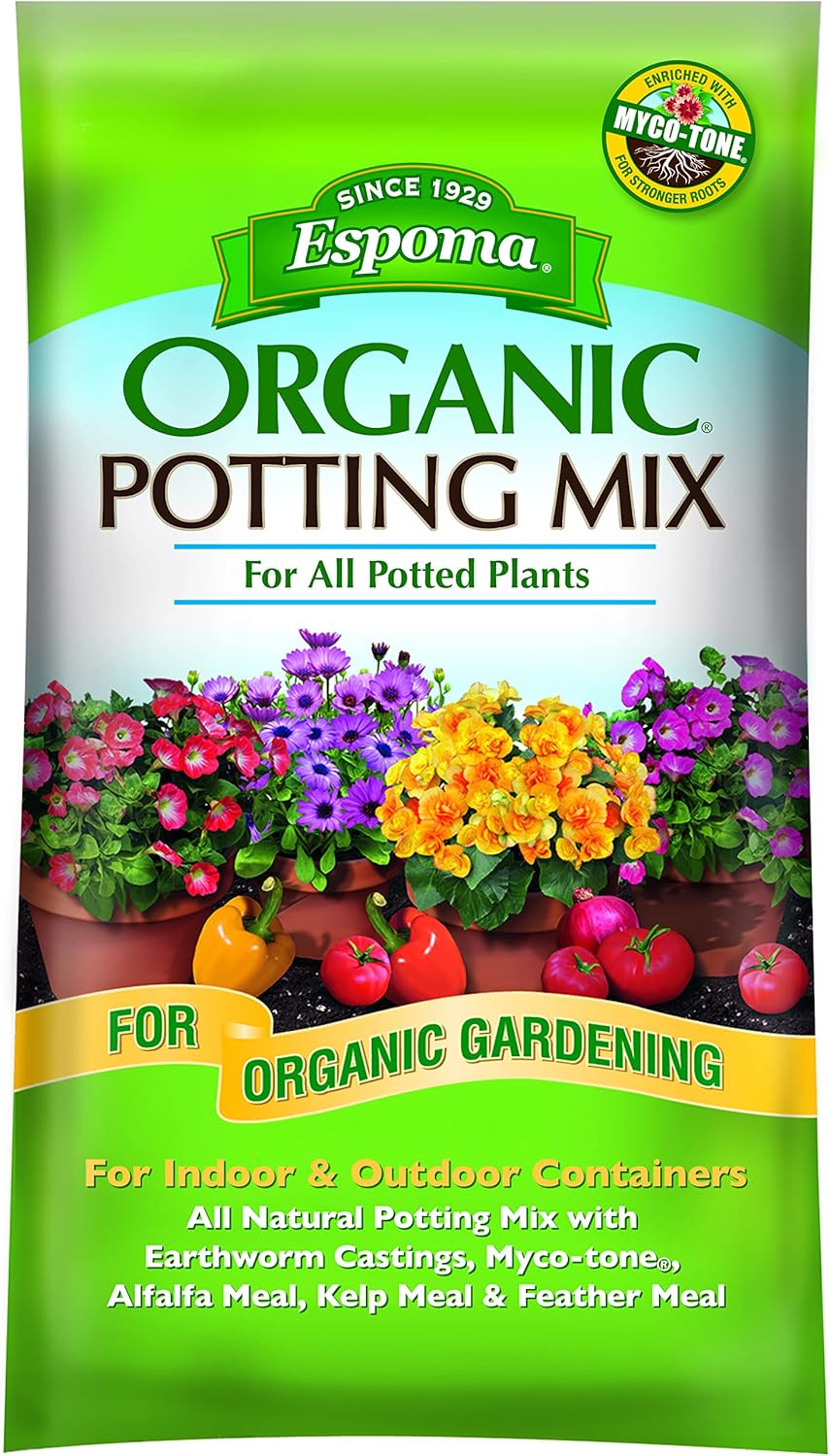
Espoma Organic Potting Mix, 16-Quart
| Volume | 16 quarts |
|---|---|
| Item Weight | 16 ounces |
| Style Name | Mix |
Espoma Organic Potting Mix is a general-purpose, organic blend designed for container gardening and transplanting. It combines sphagnum peat moss, humus and perlite for drainage and aeration, and is enriched with earthworm castings, alfalfa, kelp and feather meals to supply slow-release nutrients. The added Myco-tone mycorrhizae can help roots establish faster after potting, which is helpful when repotting or starting new plants. In practice this mix works well for potted herbs, vegetables and ornamentals where a balance of moisture retention and drainage is needed. Because it is peat-based it holds water longer than coarse, mineral-heavy mixes so you will likely water less frequently but should monitor for overwatering with moisture-sensitive plants. It is fully organic and does not include synthetic fertilizers, so nutrient buildup and salt stress are less of a concern for sensitive plants when used as directed. The bagged 16-quart size is convenient for small patios and containers but may require multiple bags for several large pots.
Best for: Gardeners who prioritize organic inputs and want a reliable, nutrient-rich potting medium for container-grown herbs and ornamentals and who value easier establishment after repotting.
Less Ideal for: Growers seeking an extremely fast-draining, gritty mix tailored to Mediterranean plants that require very low moisture between waterings should look for a cactus or specialized lavender mix instead.
- Organic ingredient blend with no synthetic fertilizers
- Includes mycorrhizal inoculant to support root establishment
- Perlite and humus improve drainage and aeration compared with pure peat
- Contains slow-release organic amendments for steady nutrient supply
- Peat-based formula retains more moisture than very gritty mixes preferred by some Mediterranean herbs
Verdict: Choose this organic mix if you want a balanced, nutrient-rich potting soil with mycorrhizae that helps container plants establish and grow well.
Back to the Roots 3-in-1 Seed Starting Mix, 6 Quart, Organic Peat-Free

| Unit Count | 192 Fluid Ounces |
|---|---|
| Style Name | 3-in-1 Seed Starting Mix |
| Brand Name | Back to the Roots |
| UPC | 810667035822 |
This 6-quart Back to the Roots 3-in-1 Seed Starting Mix is a peat-free, organic blend aimed at making seed starting and early potting simple. You use it straight from the bag to fill trays, small pots, or starter cells; the mix includes coconut coir for water retention, dolomitic limestone to balance pH, mycorrhizae to support root uptake, and yucca extract for moisture control. Practically, that means fewer extra amendments for a new gardener and a more forgiving environment for delicate seedlings. The formula is designed to drain well while retaining enough moisture for even watering, and the included nutrients and worm castings can reduce early feeding. Limits to note are the small 6-quart volume, which is best for hobby-scale starting rather than large beds, and a lighter texture that may dry faster in very hot, exposed conditions. For budget growers who want an all-in-one starter mix without experimenting with multiple additives, this is a convenient choice.
Best for: Great for budget-minded home gardeners who want a single, ready-to-use seed starting mix that reduces extra amendments and simplifies starting herbs, vegetables, and flowers.
Less Ideal for: Not the best fit for landscapers or gardeners starting large numbers of plants or filling large containers where bulk bagged mixes would be more economical.
- Peat-free organic formula with coconut coir for moisture retention and aeration
- Includes mycorrhizae and worm castings to support early root development and nutrient uptake
- pH balancing with dolomitic limestone reduces the need for corrective amendments
- Ready-to-use blend suitable for seed trays, small pots, and indoor container starts
- Only 6 quarts per bag, so multiple bags are needed for larger projects
- Light, fast-draining texture can require more frequent watering in hot or windy conditions
Verdict: A convenient, peat-free all-in-one starter mix that saves time and extra purchases for home gardeners starting small batches of seeds.
KXUPOIAV Ultimate Organic Vegetable & Herb Mix, Compressed Bale, 2 cu ft (expands to 4 cu ft)

| Brand Name | KXUPOIAV |
|---|---|
| Unit Count | 1536 Ounce |
| Style Name | Compressed Bale |
| Volume | 4 cubic feet |
This compressed bale of organic vegetable and herb mix is designed to expand into a ready-to-use planting medium for in-ground beds and containers. The bag compresses to 2 cu ft and expands to about 4 cu ft, making storage and transport easier before you need it. It is peat-based, OMRI-listed, and includes mycorrhizae plus a slow-release organic fertilizer that feeds for up to three months, which helps establish transplants and supports steady growth. In practice it works well for starting vegetables and herbs in raised beds or pots where a uniform, nutrient-containing mix is wanted without blending multiple amendments. The included beneficial fungi improve root uptake while the gradual fertilizer reduces the need for immediate feeding. Limitations are typical for peat mixes: it may compact over time and benefit from added coarse material for long-term in-ground beds, and some users should follow safety guidance to avoid skin or eye contact during handling. Overall it is a convenient, reliable choice when you need a consistent organic planting medium for vegetable production.
Best for: Gardeners who prioritize a dependable, ready-made organic soil for starting vegetables and herbs in raised beds or containers and want consistent performance without mixing their own amendments.
Less Ideal for: Those seeking a long-term in-ground soil amendment without additional aeration or gardeners who prefer completely peat-free mixes.
- OMRI-listed organic formula suitable for vegetable, fruit, and herb production
- Includes mycorrhizae to support root development and nutrient uptake
- Pre-mixed slow-release organic fertilizer feeds plants for up to three months
- Compressed bale format expands from 2 cu ft to 4 cu ft for easier storage and transport
- Peat-based mixes can compact over time and may need aeration or added coarse material for long-term beds
- Safety precautions recommended during handling due to potential allergic reactions
Verdict: A reliable, ready-to-use organic vegetable and herb mix that expands from a compressed bale and supplies mycorrhizae plus slow-release fertilizer for steady early-season growth.
Miracle-Gro Potting Mix, 16 qt. (2-Pack)

| Feeds Plants | Up to 6 months |
|---|---|
| Volume | 16 quarts |
| Number of Packs | 2 |
| Intended Use | Outdoor containers |
| Ingredients | Sphagnum Peat Moss, Peat, Perlite, Compost, Fertilizer |
Miracle-Gro Potting Mix is a general-purpose container soil designed for outdoor pots, planters, and hanging baskets. It combines peat-based media, perlite, compost, and built-in fertilizer so you can pot vegetables, herbs, annuals, perennials, and shrubs without blending amendments. Typical use is straightforward: fill a pot about one third, set the plant at nursery depth, top off, and water until excess drains. Notable features are fast drainage to prevent root rot, an all-purpose nutrient charge that feeds plants for up to six months, and a texture that helps roots establish quickly. In practice this means less upfront prep and fewer immediate feedings compared with plain soil, and it is handy for seasonal repotting and new container plantings. Important limitations are that it is formulated for containers only (not in-ground beds) and the nutrient boost will diminish after the stated feeding period so you will need to supplement or repot for long-term specimens. Also peat-based mixes can compress over time and require refreshing each season.
Best for: Gardeners who want a low-effort, dependable potting soil for seasonal container planting and quick repots, especially those optimizing time and results across many pots.
Less Ideal for: Those wanting a soil to amend in raised beds or long-term in-ground planting should choose a garden soil formulated for in-ground use instead.
- Ready-to-use mix with built-in fertilizer that feeds up to six months
- Formulated for fast drainage to reduce risk of overwatering and root rot in containers
- Versatile for a wide range of outdoor container plants including vegetables, herbs, and flowers
- Not intended for in-ground garden beds
- Fertilizer effect is temporary and requires refeeding or repotting after about six months
Verdict: A convenient, fast-draining potting mix that simplifies container planting while providing up to six months of built-in nutrition.
Back to the Roots Organic Expanding Coco Coir Potting Soil Brick (10 lb)

| Item Highlight | 10 lb compressed coco coir brick; peat-free; OMRI Listed |
|---|---|
| Item Type Name | Coconut Coir |
| Volume | 2 cubic feet |
| Ingredients | Coconut Coir |
| Style Name | Expanding Potting Soil |
This compressed coco coir brick provides a lightweight, peat-free potting medium that expands when you add water to create loose, airy substrate for containers and seed flats. It is typically used by hydrating the 10 lb block to about 2 cubic feet of coir and then using it alone for potted plants, mixing it into garden soil to improve drainage and aeration, or blending with compost for starting seeds. Notable features include OMRI listing for organic use, a balanced pH suited to a wide range of plants, and compact storage before expansion which saves space. Practical benefits are improved root aeration and water retention compared with heavy garden loam, easier handling than bulky bags, and versatility across vegetables, herbs, and ornamentals. Important limitations are that coco coir is a soilless substrate and does not supply significant nutrients on its own so you will need to add fertilizer or compost for long-term potted herbs like rosemary, and the product requires time and a water source to expand before use.
Best for: Buyers who prioritize low-risk, easy-to-handle, organic potting media and want a versatile base for container herbs and seed starting without dealing with heavy bags.
Less Ideal for: Gardeners who want a ready-to-plant, nutrient-rich potting mix out of the box or those who prefer soil with built-in slow-release fertilizer.
- Peat-free OMRI listed organic coco coir suitable for organic growing
- Expands from a compact brick to about 2 cubic feet for easy storage and transport
- pH balanced and airy texture that improves drainage and root aeration
- Versatile use: can be used alone, for seed starting, or mixed into existing soil
- Provides little inherent fertility so supplemental feeding or compost is needed for nutrient-hungry plants
Verdict: A compact, peat-free coco coir brick that expands into an airy, pH-balanced base ideal for low-risk organic container gardening and seed starting when paired with fertilizer or compost.
Choosing the Right Soil Mix for Veggie Garden: Key Factors to Consider
Texture and Particle Size
Texture determines how easily roots penetrate the mix and how well water moves through it. A loamy balance of sand, silt, and finer organic particles gives vegetables both support and aeration. Coarse particles like coarse sand or perlite improve drainage but too much creates poor moisture retention, while overly fine mixes compact and suffocate roots. Assess the particle mix by feel: a good vegetable soil mix should crumble under light pressure yet hold together enough to support transplants.
Particle size also affects long-term structure. Stable aggregates resist compaction through a season, which matters if you frequently water, amend, or plant heavy-rooted crops like tomatoes.
Organic Matter and Nutrient-Holding Capacity
Organic matter supplies slow-release nutrients, feeds beneficial microbes, and helps retain water between irrigations. High organic content from well-composted materials increases cation exchange capacity so nutrients stay available to plant roots rather than washing away.
However, not all organic inputs are equal. Fresh uncomposted materials can rob nitrogen as they decompose, so choose mixes with mature compost or stable humus. Consider mixes that include materials known to hold nutrients well, such as composted leaf mold, finished compost, or well-aged manure, especially if you want to reduce the need for frequent fertilizing.
pH and Mineral Balance
Most vegetables prefer a near-neutral pH range. A mix that is too acidic or too alkaline will limit nutrient uptake even when nutrients are present. Look for mixes formulated or tested to sit in the 6.0 to 7.0 range, or that include buffering materials like compost to moderate pH shifts.
Mineral balance also matters for long-season vegetable beds. Adequate calcium prevents blossom end rot in fruiting crops, while available magnesium and trace elements support leafy growth. For gardeners in areas with very hard or very soft water, consider how irrigation water will alter mix pH and mineral levels over time.
Moisture Retention and Drainage Balance
Vegetables need consistent moisture without standing water. A good soil mix for vegetables holds enough water to sustain plants between waterings but drains quickly enough to avoid root rot. Components like coconut coir and peat can increase water-holding capacity, while grit, sand, or pumice improve drainage.
Think about your irrigation habits and climate: hot, dry regions benefit from mixes that retain more moisture, while cool, wet climates require faster-draining blends. Mulching on top further stabilizes moisture and reduces surface evaporation, regardless of the mix.
Structure Stability and Longevity
Some mixes break down quickly, losing structure and becoming compacted within a single season. For raised beds and containers that you reuse, a stable mix reduces the need for annual full replacement. Look for blends that include well-composted organics and mineral stabilizers that preserve porosity.
Longevity ties into maintenance: a stable mix requires less frequent top-dressing and fewer corrective amendments. If you plan seasonal crop rotations or multi-year beds, prioritize mixes that maintain crumbly texture over time.
Suitability for Planting Method and Container Type
Different planting methods-direct in-ground sowing, raised beds, and containers-place different demands on a soil mix. Containers need lighter mixes that drain well and do not compact; raised beds can handle heavier, more nutrient-dense mixes. In-ground mixes should integrate well with existing soil rather than sit as an isolated layer that creates a perched water table.
Also consider the container material. Clay pots dry faster and may need mixes with higher water-holding capacity, while self-watering systems change how moisture moves through the mix. Choose a mix based on where and how you plan to grow.
Matching Mixes to Vegetable Types
Different vegetable families place different demands on root environment. Shallow-rooted crops like lettuce and herbs do well in lighter, moisture-retentive mixes, while deep-rooted or fruiting crops such as carrots, beets, tomatoes, and peppers need mixes that allow deeper root exploration and consistent nutrient supply.
- Leafy greens: lean toward mixes with higher water retention and fine tilth.
- Root crops: prefer deeper, looser mixes with low compaction and minimal coarse debris.
- Fruiting crops: benefit from mixes with good nutrient-holding capacity and stable structure.
Adapting Mixes for Raised Beds, Containers, and In-Ground Gardens
Raised beds allow you to use richer, deeper mixes without worrying about mixing into native soil. Aim for a balance of compost, mineral ballast, and airy components so beds hold fertility and drain properly. For containers, keep the mix lighter and ensure fast drainage to avoid soggy root zones. When working in-ground, blend a high-quality mix into existing soil rather than creating a sharp boundary that traps water.
- Raised beds: deeper mixes with stable organic content.
- Containers: lighter, fast-draining blends with moisture-holding components.
- In-ground: amend native soil gradually to improve structure and fertility.
Seasonal Care and Rejuvenation of Vegetable Mixes
Over a growing season the mix will lose volume and nutrients. Plan for mid- and end-of-season care: top-dress with compost, replace a portion of container mix, and test pH if plants show deficiency symptoms. Incorporate cover crops or green manures in beds to rebuild organic content between seasons.
- Top-dress beds with compost in spring and after heavy crops.
- Replace one-quarter of container mix annually for optimal structure.
- Use winter cover crops to restore nutrients and reduce erosion.
Organic Amendments and Safe Additives
Choose well-aged compost and natural amendments to boost fertility without introducing pathogens or excessive salts. Avoid raw manures that can burn seedlings or introduce weeds. Incorporate mineral amendments like lime or gypsum only based on soil tests and vegetable needs to avoid upsetting pH or salt balance.
- Use finished compost rather than fresh organic waste.
- Test before adding lime or gypsum.
- Prefer low-salt, horticultural-grade amendments.
How We Chose the Best Soil Mix for Veggie Garden
We prioritized practical garden performance that matters to vegetable growers. Selection focused on tangible, measurable attributes: particle size and texture for drainage and root penetration; organic matter content and nutrient-holding capacity for fertile, long-lasting beds; pH stability to suit a wide range of vegetables; and moisture management so the mix neither drowns roots nor dries out quickly. We also looked at how mixes support transplant success and early root development, since that stage heavily influences yield. Exclusions included mixes designed only for ornamentals, mixes with unverified components, and blends intended exclusively for acid-loving or decorative plants. We filtered out products that rely heavily on temporary additives that break down within weeks rather than contributing to season-long structure. The shortlisted mixes are those that score well across the four to six concrete dimensions gardeners care about: texture and drainage, organic matter and nutrient retention, pH and mineral balance, and moisture regulation.
FAQ
How often should I refresh soil mix in containers used for vegetables?
Usually replace or refresh about 20 to 30 percent of container mix each year. Heavily planted or long-season containers may need a larger refresh every one to two years to restore structure and fertility.
Can I use a single soil mix for both raised beds and containers?
You can, but it is better to tailor mixes. A single mix may be a compromise that works adequately, but container mixes should be lighter and faster-draining compared with raised-bed mixes that can be denser and richer.
How do I test whether a mix is holding too much water?
Check moisture by hand: squeeze a handful of mix. If water drips or the mix forms a slimy ball, it is too wet. Also monitor plants for yellowing, slow growth, or root decline which often signal poor drainage.
Should I add fertilizer to a soil mix before planting vegetables?
Mixes with well-composted organic matter often contain baseline fertility suitable for early growth. For heavy feeders or long-season crops, plan a sidedress program or slow-release nutrient source rather than overloading the mix at planting.
Is peat-free mix a good choice for vegetable gardens?
Peat-free mixes can work well if they include alternative moisture-retaining organics like coir or well-composted materials. The key is stable structure and nutrient retention, not the specific organic source.
Final Verdict
Choose a soil mix that matches how you grow and what you grow. Prioritize texture and drainage first so roots can access air and water, then focus on organic matter and nutrient retention to support steady growth. Account for pH and mineral needs of your key crops and pick a mix that maintains structure through a season. Balancing those tradeoffs will let you choose a mix that reduces maintenance and improves yields. Select a mix based on planting method and planned crops, then maintain it with seasonal top-dressing and periodic refreshes to keep beds productive.
