

Note: This article contains affiliate links. If you click on these links and make a purchase, I may earn a small commission at no extra cost to you. This helps support my research and content. Read my full affiliate disclosure here.
Choosing the right soil mix for propagating cuttings changes how quickly stems callus and form roots, and it also affects disease risk and transplant success. In moist greenhouse bays, small indoor setups, or outdoor shaded flats, the growing medium determines oxygen availability at the cutting base and how evenly you hold moisture between waterings. This guide presents seven shortlisted soil mixes that suit a range of propagation setups and explains the practical tradeoffs you should expect in the garden or on the patio. We evaluate mixes for drainage, disease suppression, and handling so you can pick the right base for your propagation method.
Top Picks at a Glance
| Best Overall The best all-around choice for most situations | Rio Hamza Trading Plant Propagation Soilless Mix (4 Quarts) |  |
| Best Quality Built to a higher standard if you want something more solid | FoxFarm Light Warrior Seed Starter Growing Medium, 12 Quart |  |
| Best Value The sweet spot between price and what you get | Old Potters Germination Mix (24 qt) — Peat Moss with Fine Perlite & Vermiculite |  |
| Best Budget The cheapest option that still gets the job done reliably | SunGro Horticulture Organic Seedling Mix (8 Quart) |  |
| Highest Rated A top-rated pick with lots of positive feedback | Sol Soils Seedling & Propagation Mix (1 gal) |  |
| Most Popular A crowd favorite that many people choose with confidence | Miracle-Gro Indoor Potting Mix for Seed Starting, 8 qt. (2-Pack) |  |
| Best Seller A high-volume bestseller chosen again and again | Back to the Roots Organic Indoor Potting Mix, 6 Quart |  |
Rio Hamza Trading Plant Propagation Soilless Mix (4 Quarts)

| Volume | 4 quarts |
|---|---|
| Ingredients | Peat moss, perlite, worm casting, lime |
| Style Name | Plant Propagation Soil Mix |
This 4-quart soilless propagation mix is designed specifically to root cuttings and establish young plants. The blend combines peat moss for moisture retention, horticultural perlite to keep the medium airy and prevent compaction, lime to balance pH, and worm castings for gentle nutrient support. You typically use it dampened in trays, small pots, or propagation cells when starting houseplant cuttings or seedlings. The lightweight, open texture helps roots breathe and reduces rot risk compared with garden soil, and the added worm castings give new roots a mild nutrient boost without overwhelming tender cuttings. Because it is soilless, it will need supplemental feeding once roots form and plants are potted into regular potting mix. The 4-quart bag is convenient for small projects and beginners, but frequent propagators or those working at larger scale may find the volume limiting and need to buy multiple bags.
Best for: Gardeners who want a reliable, ready-to-use propagation medium for rooting houseplant cuttings and starting seedlings, especially those who value ease and consistent results.
Less Ideal for: Large-scale propagators or outdoor bed transplanting projects who need bulk volumes or a long-term planting medium should look for larger commercial mixes or garden soil alternatives.
- Soilless formula promotes aeration and reduces damping-off risk
- Contains perlite to prevent compaction and improve drainage
- Worm castings provide mild, natural nutrient support for new roots
- Hand-blended batches aim for consistent texture and moisture balance
- Small 4-quart volume may be insufficient for multiple or large propagation projects
- Contains peat moss which can compact over long periods and may require refreshing
Verdict: A lightweight, hand-blended soilless mix that makes rooting cuttings easier and more reliable for small-scale home propagation.
FoxFarm Light Warrior Seed Starter Growing Medium, 12 Quart

| Volume | 12 quarts |
|---|---|
| Unit Count | 1 Count |
| Brand Name | FoxFarm |
| UPC | 752289790089 |
FoxFarm Light Warrior is a premixed seed-starting medium designed for growers who want a plug-and-play option for germination, cuttings, and young seedlings. The bag combines sphagnum peat moss and perlite for light, airy texture, plus added soil microbes, humic acid, and earthworm castings to encourage root efficiency and nutrient uptake. It arrives ready to use so you can sow seeds or pot cuttings immediately without blending amendments. In practice the mix stays well drained while retaining enough moisture for consistent germination, and the biological additives can help seedlings establish stronger root systems. Because it contains a fertilizer component, you may need to delay additional feeding for a few weeks to avoid overfertilizing delicate seedlings. The 12-quart bag is convenient for small-scale indoor seed flats or multiple pots, but larger growers will need multiple bags or a bulk option. If you want a performance-focused, no-fuss starter medium that supports fast rooting and healthy early growth, Light Warrior is a solid choice.
Best for: Growers who prioritize quick, reliable seed germination and healthy root development and want a convenient, preamended medium for indoor seed starting.
Less Ideal for: People seeking large-volume, unamended sterile mixes for commercial-scale propagation or those who prefer completely fertilizer-free starting media.
- Ready-to-use out of the bag so you can sow immediately
- Light, well-draining texture from sphagnum peat moss and perlite
- Contains soil microbes and humic acid to improve root efficiency and nutrient uptake
- Includes earthworm castings for gentle, natural seedling nutrition
- Contains fertilizer which may require delaying supplemental feeding for young seedlings
- Sold in a 12-quart size that may be small for larger or repeated sowing projects
Verdict: Choose Light Warrior when you want a ready-made, performance-focused seed starter that promotes fast rooting and healthier seedlings.
Old Potters Germination Mix (24 qt) — Peat Moss with Fine Perlite & Vermiculite

| Volume | 24 quarts |
|---|---|
| Unit Count | 768 Fluid Ounces |
| pH range | 5.4 – 6.3 |
| Electrical conductivity | 1.0 – 1.5 mmhos/cm |
This germination mix is built for starting seeds and propagating cuttings with consistent results. Its formula is 80–90% finely milled Canadian sphagnum peat moss combined with fine horticultural perlite and vermiculite to provide a balance of moisture retention and aeration that promotes uniform root development. Calcitic and dolomitic limestone are added to hold the pH in the 5.4–6.3 range and a wetting agent helps the medium rehydrate evenly so you avoid dry pockets in small cells or trays. A mild starter nutrient charge and a modest EC (1.0–1.5 mmhos/cm) give seedlings a gentle early feed without burning young roots. The fine texture makes it well suited to both sub-irrigation and overhead watering systems and to use in seed flats, plug trays, and small pots. Be aware the mix is peat-based, so it will compress over time and may hold more water than soilless mixes with higher perlite content, requiring attention to drainage for long-term potting. For reliable, repeatable seed starts this is a practical, no-nonsense choice.
Best for: Gardeners who prioritize consistent, predictable seed starts and propagation results and want a ready-to-use medium that performs across trays and small pots.
Less Ideal for: Growers looking for an entirely peat-free or very fast-draining mix for succulents or long-term container culture should consider alternatives.
- High peat content for even moisture retention and fine texture ideal for seeds and cuttings
- Added fine perlite and vermiculite improve aeration and uniform water holding in trays
- pH balanced with calcitic and dolomitic limestone for consistent nutrient availability
- Wetting agent promotes quick, even rehydration to reduce dry spots in small cells
- Peat-based formulation can compress and retain more water over time compared with higher-drainage mixes
- Contains a light starter charge but not a complete fertilizer for longer-term growth
Verdict: Choose this germination mix when you need a dependable, fine-textured medium that gives repeatable, uniform seed and cutting starts.
SunGro Horticulture Organic Seedling Mix (8 Quart)

| Brand Name | SUN GRO |
|---|---|
| Style Name | Peat Moss |
| Volume | 8 quarts |
SunGro Horticulture Seedling Mix is a fine-textured, peat-based starting mix formulated to germinate seeds in flats, pots, and plug trays. It contains sphagnum peat moss, perlite for lightness and drainage, and an organic wetting agent to promote even water absorption, which helps maintain consistent moisture for small seeds. The mix also includes a silicon-enriched additive called RESiLIENCE intended to support stronger seedlings and reduce wilting during establishment. Typical use is filling trays or small pots, keeping the medium evenly moist but not waterlogged, then transplanting seedlings once roots are established. Practical benefits include predictable moisture retention, a clean fine texture that allows delicate roots to develop, and OMRI listing for organic onion transplants and other edible starts. Limitations are its small 8 quart volume for larger onion seed programs and that peat-based mixes dry out faster than heavier soils, so frequent monitoring is required; it also provides limited long-term nutrients so potting up into a richer mix or fertilizing before transplant is necessary.
Best for: Gardeners who want an organic, predictable seed starting medium for small to medium onion seed batches and who prioritize reliable germination over bulk volume.
Less Ideal for: Commercial growers or anyone starting very large quantities of onion seedlings should choose larger-volume or more nutrient-dense starting media.
- Fine, light texture suitable for delicate seed germination
- Organic wetting agent promotes uniform water absorption
- OMRI listed so safe for organic edible starts
- Contains perlite for improved drainage and root aeration
- Small 8 quart bag may not be cost-effective for starting large onion batches
- Peat-based mix has low long-term nutrient content and needs fertilizing before transplant
Verdict: A reliable OMRI-listed seed starting mix that delivers even moisture and a fine texture ideal for producing healthy onion seedlings in small home gardens.
Sol Soils Seedling & Propagation Mix (1 gal)

| Brand Name | sol soils |
|---|---|
| Style Name | Seedling & Propagation Mix |
| Unit Count | 128 Ounce |
| Volume | 1 gallons |
This Seedling & Propagation Mix is designed specifically for starting seeds and rooting cuttings. It combines calcined clay for moisture buffering and aeration, hardwood biochar to improve structure and microbial activity, coconut husk as a peat-free moisture-retentive medium, and earthworm castings to supply gentle nutrients. In practice the mix is fine-textured and holds water without becoming soggy, which helps delicate roots establish while reducing the risk of damping-off. It is sterile out of the bag and compatible with most plant types, so you can use it in trays, small pots, or plug cells for both indoor seed starting and greenhouse propagation. Bags are hand-mixed in small batches so texture varies slightly between bags, but the ingredients are chosen to extend time between waterings and resist compaction over a single growing cycle. Important limitations: the bag is one gallon so larger or repeated projects will require multiple bags, and users should soak coconut husk as recommended to remove tannins before heavy use.
Best for: Buyers who prioritize reliable, low-maintenance seed starting want a consistent, sterile medium that reduces overwatering risk and helps fragile roots establish. Ideal for hobbyists and small greenhouse growers focused on dependable results.
Less Ideal for: Not a good fit for growers who need large volumes for broadscale sowing or those who prefer DIY mixes tailored to specific crop nutrient profiles.
- Blend formulated for seedlings with calcined clay for moisture consistency and aeration
- Hardwood biochar and castings support beneficial microbes and gentle nutrient supply
- Peat-free coconut husk improves moisture retention while providing aeration
- Fine texture and sterile mix suitable for trays, small pots, and cuttings
- Small 1 gallon volume may be insufficient for larger seed-starting projects
- Batch-to-batch texture variability due to small-batch mixing
Verdict: A dependable, fine-textured peat-free propagation mix that helps seedlings and cuttings establish with less risk of overwatering.
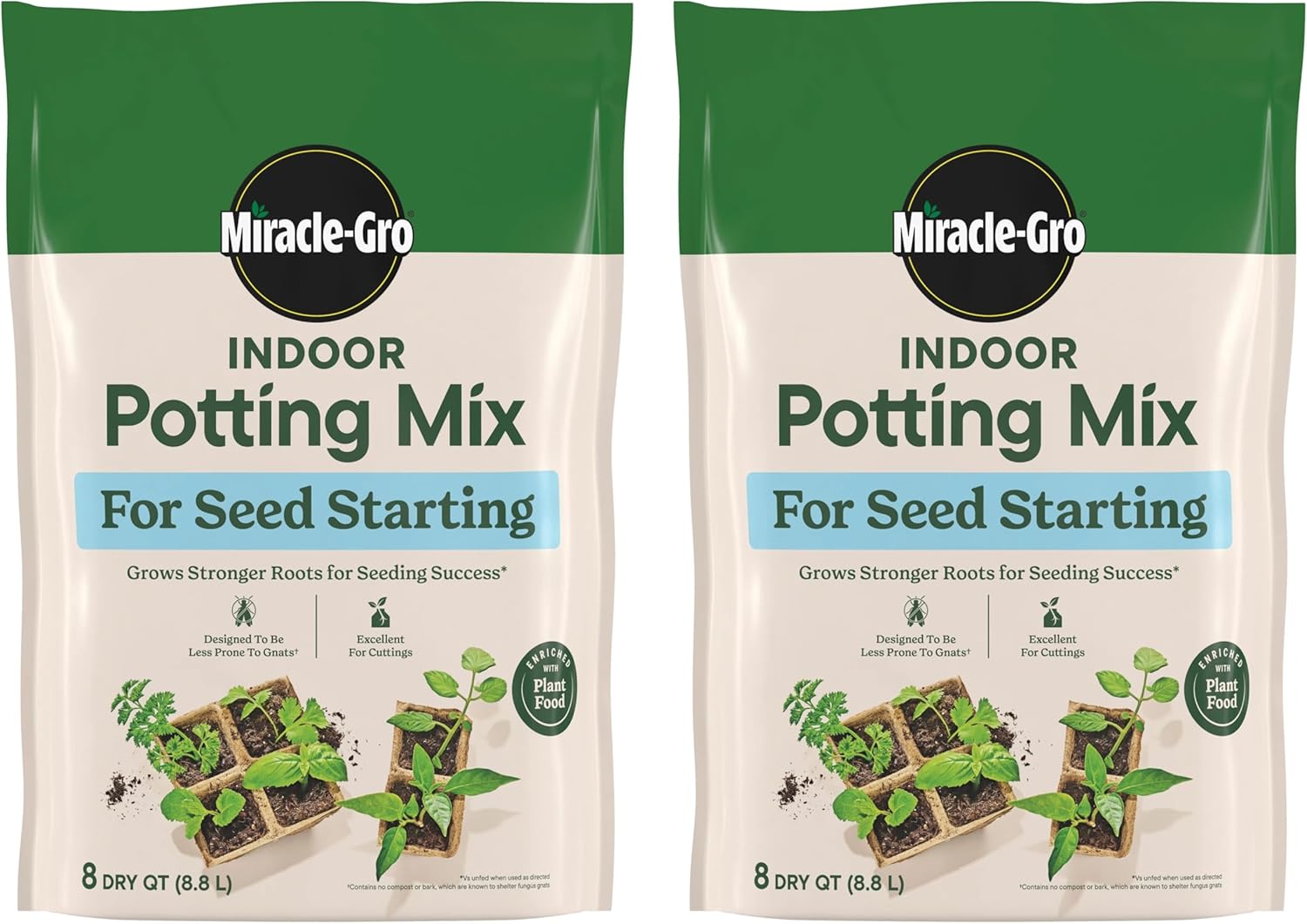
Miracle-Gro Indoor Potting Mix for Seed Starting, 8 qt. (2-Pack)
| Brand Name | Miracle-Gro |
|---|---|
| Item Type Name | Potting Mix |
| Number of Packs | 2 |
| Volume | 8 quarts |
This two-pack of Miracle-Gro Indoor Potting Mix is designed specifically for starting seeds and rooting cuttings indoors. The blend is lightweight and pre-enriched with plant food so seedlings get a nutrient boost during early root development, and the manufacturer says it yields stronger roots compared with unfed mixes when used as directed. It is intended for vegetables, flowers, and herbs and works well in cell trays and small containers; one 8 qt. bag will fill roughly three 72-cell trays. Notably, the formula omits compost and bark, which helps lower the chance of fungus gnat infestations in damp seed-starting setups. Use it by filling trays or pots, keeping the mix evenly moist, and shielding newly sown seeds from direct sun until germination. Important limitations are standard for enriched mixes: it contains fertilizer (so handle carefully) and it is a seed-starting medium rather than an all-purpose potting soil for mature plants, so you will likely transplant seedlings into a different mix or amend soil later.
Best for: Buyers who want a low-effort, indoor seed-starting medium that supports faster root development and reduces common pest risks while following proven seed-starting practices.
Less Ideal for: Gardeners who need a permanent potting soil for mature container plants or who prefer fully organic, compost-rich mixes should consider alternatives.
- Lightweight, ready-to-use formula tailored for seed germination and cuttings
- Pre-enriched with plant food to support early root and seedling growth
- Excludes compost and bark to reduce habitat for fungus gnats
- Comes as a two-pack so you have enough mix for multiple trays
- Contains fertilizer which requires careful handling and storage
- Intended for seed starting so not formulated as long-term potting soil for mature plants
Verdict: A practical, low-risk seed-starting mix that boosts early root growth and reduces fungus gnat risk, making it a reliable choice for indoor vegetable seedlings.
Back to the Roots Organic Indoor Potting Mix, 6 Quart

| Unit Count | 192 Fluid Ounces |
|---|---|
| Item Type Name | Indoor Potting Mix 6qt |
| Item Highlight | Peat-free, 100% organic, made in the USA |
| Ingredients | Coconut Coir, Yucca, Mycorrhizae, Perlite, Horticultural Sand |
This Back to the Roots indoor potting mix is a ready-to-use, 6-quart blend designed for common houseplants such as pothos, monstera and ferns. It combines coconut coir, yucca extract, mycorrhizae, perlite and horticultural sand to improve moisture retention, drainage and root development without peat. In practice it feels light and friable, so it is easy to pot seedlings or repot mature plants and it reduces compaction that can suffocate roots. The added mycorrhizae helps young roots establish and take up nutrients more efficiently while yucca extract helps the mix hold water between waterings, which is convenient for forgetful or busy plant owners. Because it is peat-free and made in the USA, it is a more sustainable choice versus traditional peat-based mixes. Limitations are the small 6-quart size, which means frequent repurchasing for larger collections, and the bag does not include fertilizer so you will need to feed plants separately as they grow.
Best for: Buyers who prioritize low-risk, easy-care houseplant solutions and want an organic, ready-to-use potting mix that reduces watering hassles and supports healthy root growth.
Less Ideal for: Not ideal for gardeners who need large-volume soil for many pots or for those expecting a mix that includes built-in fertilizer for long-term feeding.
- Peat-free organic formula that reduces environmental impact
- Yucca extract improves moisture retention between waterings
- Contains mycorrhizae to support root development and nutrient uptake
- Light, well-draining texture suitable for repotting seedlings and houseplants
- Small 6-quart volume may require frequent repurchasing for larger plant collections
- Does not include fertilizer so additional feeding is necessary
Verdict: A compact, peat-free potting mix that simplifies indoor plant care by holding moisture and boosting root establishment.
Choosing the Right Soil Mix for Propagating Cuttings: Key Factors to Consider
Particle Size and Structure
Particle size determines how much air and water the mix holds. Coarse particles such as perlite, coarse sand, or crushed bark create pore space for oxygen and prevent the medium from becoming waterlogged around the cutting base. Finer particles hold more moisture but can pack down and reduce oxygen, which slows root initiation.
When selecting or assembling a mix, look for a balance of coarse and fine components. The right structure gives cuttings access to both moisture and oxygen at the root zone, which encourages rapid, healthy rooting while keeping rot pathogens from establishing.
Water-Holding Balance
A propagation mix should hold enough moisture to prevent the cutting from desiccating, yet drain quickly enough to avoid saturated conditions that favor fungal attack. Different species have different demands; soft-stemmed tropical cuttings often need more consistent moisture than woody shrubs. Adjust the ratio of water-retentive ingredients like peat or coco coir against fast-draining elements like perlite to match the plant's needs.
Overly thirsty mixes can be corrected with added coarse mineral material. Conversely, if the mix dries too fast, incorporate finer or organic components to increase available moisture without compromising aeration.
Pathogen Suppression and Cleanliness
Propagation is vulnerable to damping-off and stem rot. Sterile, clean ingredients and attention to pathogen suppression reduce failure rates. Peat, coco coir, and sterile commercial propagation substrates typically arrive low in microbial load, but you should still avoid garden soil or compost that can contain fungi and bacteria.
Sanitizing reusable trays and using fresh or toasted components where possible lowers biological risk. Some gardeners use brief heat treatments or cold storage for small batches, but the simplest approach is to start with clean, inert base materials and keep humidity and ventilation balanced.
pH and Nutrient Considerations
Cuttings root primarily on stored resources, so a propagation mix does not need high nutrient content. In fact, heavy feeding can harm delicate new roots. A slightly acidic to neutral pH often suits a broad range of species and supports microbe balance when beneficial microbes are desired.
If you plan to leave cuttings in propagation medium for several weeks, consider a very dilute starter nutrient only after roots are visible. Otherwise, focus on substrate physical properties rather than fertility for initial rooting.
Workability and Preparation Time
Gardeners want mixes they can measure, blend, and use without long prep time. Pre-mixed propagation substrates reduce effort, but custom blends let you tailor drainage and moisture for specific plants. Consider how much time you have for mixing, sifting, or moistening ingredients before use.
Also think about repeatability: simple ratios expressed by volume let you recreate a successful mix easily each season. Lightweight amendments also reduce the strain of handling large trays or benches.
Transplanting and Potting-Up Behavior
How a mix behaves when you move rooted cuttings into larger pots matters. A propagation mix that breaks apart or compresses severely can damage fragile root systems during transplant. Conversely, a medium that integrates well with typical potting mixes eases the transition and reduces transplant shock.
Aim for a propagation mix that retains some body and does not wash away when watered during the first potting. If your final potting soil is much heavier, plan a transition potting step with an intermediate blend to reduce stress on young roots.
Best Propagation Setups for Different Plant Types
Not every cutting benefits from the same environment. Soft, tropical houseplant cuttings often root best in warm, humid conditions with a finer, moisture-retentive medium. Semi-hardwood and hardwood cuttings from shrubs and trees prefer cooler conditions and a coarser, more aerated substrate to prevent rot.
- Warm, humid bench with higher moisture retention works for tropical and succulent leaf cuttings.
- Cooler, well-aerated mixes suit woody cuttings and long-term benching.
- Adjust misting frequency, tray covers, and airflow to match the medium and species.
Preparing Mixes at Home Without Special Tools
You can make effective propagation mixes with basic backyard or garden supplies. Measure by volume: common ratios like one part fine organic base to one part coarse mineral amendment are easy to scale. Damp the blended mix slightly before use so it holds shape when you press a cutting in, but avoid making it soggy.
If you need sterilization and lack an oven, consider small-batch solarization in clear bags on a hot surface or using commercially sterile components like washed perlite and coco coir. Sifting larger particles saves time and yields a consistent surface for rooting.
- Use clean containers and fresh water to hydrate dry ingredients.
- Work on a clean surface and use separate tools for potting to reduce contamination risk.
- Label trays with date and species to track rooting time and success.
Managing Moisture and Humidity Without a Misting System
You do not need an automated misting system to maintain humidity. Simple plastic domes, clear covers, or humidity trays raise local humidity and reduce the need for frequent watering. Monitor the medium and air: condensation on a dome indicates high humidity, but standing droplets or pooled water can promote rot.
Watering from below using shallow trays helps the medium wick moisture upward while keeping the surface drier. Combine this with short, regular checks and good ventilation to strike a balance between moisture and air movement.
- Use capillary mats or shallow trays for gentle bottom watering.
- Open covers briefly each day to reduce stagnant air and let leaves dry slightly.
- Avoid overhead drenching once leaves are present to limit pathogen spread.
When to Introduce Nutrients and Harden Off Rooted Cuttings
Wait until you see visible root development before adding nutrients. A weak, diluted feed after roots appear helps transitional growth but avoid full-strength fertilizer until plants are established in a larger pot. Gradual hardening-reducing humidity, increasing airflow, and introducing brighter light-prepares cuttings for normal container conditions.
Move plants into slightly drier cycles and increase light over several days to weeks depending on species tolerance. This staged approach reduces transplant shock and encourages a robust root-to-shoot ratio.
- Begin with a quarter-strength fertilizer only after roots are established.
- Increase ventilation and reduce cover duration over a week to harden cuttings.
- Pot up into a mix that bridges the physical traits of the propagation medium and final potting soil.
How We Chose the Best Soil Mix for Propagating Cuttings
We focused on real-world propagation needs that matter to gardeners who routinely strike stems or leaf cuttings. Our selection filters prioritized mixes that consistently support root initiation without promoting stem rot. We evaluated each option across several concrete dimensions: particle drainage and aeration, water-holding balance, resistance to common pathogens, and ease of preparation or rewetting. Mixes that required exotic or hard-to-source ingredients were deprioritized, as were blends that created too-dense a medium once settled. Exclusions included potting soils formulated for mature container plants that retain high moisture and heavy garden loams that reduce oxygen at the cutting base. We also excluded mixes that rely on chemical fungicides or proprietary wetting agents that many hobbyists avoid. The end result is a set of practical, gardener-friendly mixes that work across indoor propagation trays, mist benches, and small greenhouse benches. The criteria below reflect the attributes we measured and considered when deciding which soil mixes make sense for propagation tasks.
FAQ
Can I use garden soil to propagate cuttings?
Garden soil is usually too dense and contains microbes that cause damping-off and stem rot. For reliable rooting, use sterile or inert components like peat, coco coir, and perlite rather than raw garden loam.
How wet should the propagation mix be when inserting cuttings?
The mix should be evenly moist but not saturated. When squeezed lightly it should hold together without dripping water. Excess moisture at the base of the cutting increases the risk of rot.
Is peat or coco coir better for propagation?
Both work well. Peat holds moisture effectively and is sterility-friendly, while coco coir drains a bit faster and is more renewable. Choose based on availability and desired moisture retention, and balance either with drainage amendments.
Do I need rooting hormone with a proper soil mix?
Rooting hormone can speed and improve success for many species but is not strictly required if the mix provides good aeration and the plant is healthy. Use hormone for difficult-to-root cuttings or when you need a quicker, more reliable result.
How long should cuttings stay under covers or domes?
Keep covers in place until roots form and leaves show normal turgor, then gradually remove covers over several days. The exact time depends on species and conditions but avoid leaving covers on so long that condensation pools and fosters disease.
Can I reuse propagation mix for new cuttings?
Reusing mix increases pathogen risk and often leads to lower success. If you must reuse, refresh the mix by removing decomposed material, re-sterilizing small batches, and adding fresh coarse amendments to restore aeration.
Final Verdict
For propagating cuttings, prioritize a medium that balances oxygen and moisture. Good particle structure and drainage reduce rot, while modest moisture retention prevents desiccation during the rooting phase. Clean, sterile components and simple preparation methods make propagation practical for both hobbyists and serious gardeners. Focus on matching the mix texture to the species you are rooting and plan a smooth potting-up step so young roots transition gradually. With attention to drainage, cleanliness, and workability, you can reliably raise healthy new plants from cuttings.
