

Note: This article contains affiliate links. If you click on these links and make a purchase, I may earn a small commission at no extra cost to you. This helps support my research and content. Read my full affiliate disclosure here.
Choosing the right soil for potted fruit trees has a direct effect on root health, water needs, and fruiting success. In containers the root zone is limited and conditions swing faster than in the ground, so the wrong mix can mean poor growth, root rot, or uneven yields. This guide outlines top soil options suited for potted fruit trees and explains the attributes that matter in a real patio, balcony, or greenhouse situation. We shortlisted the top products for container fruiting and evaluated each on drainage, water- and nutrient-holding capacity, structure, and ease of re-potting. Read on to see which mixes suit shallow patio pots, large planted tubs, or trees you plan to overwinter indoors.
Top Picks at a Glance
| Best Overall The best all-around choice for most situations | Miracle-Gro Cactus, Palm & Citrus Potting Mix, 8 qt. |  |
| Best Quality Built to a higher standard if you want something more solid | FoxFarm Ocean Forest Potting Soil, 12 Qt (4 Bags) |  |
| Best Value The sweet spot between price and what you get | Duspro Pre-Mixed 4‑in‑1 Citrus Tree Potting Soil Mix, 6 Quarts |  |
| Best Budget The cheapest option that still gets the job done reliably | Doter Citrus Tree Potting Soil Mix (1 qt) |  |
| Highest Rated A top-rated pick with lots of positive feedback | E.B. Stone Organics Citrus & Palm Mix Potting Soil, 1.5 cu ft |  |
| Most Popular A crowd favorite that many people choose with confidence | Miracle-Gro Organic Outdoor Potting Mix, 16 qt. |  |
| Best Seller A high-volume bestseller chosen again and again | Back to the Roots Premium Organic Potting Mix, 6 Quart |  |
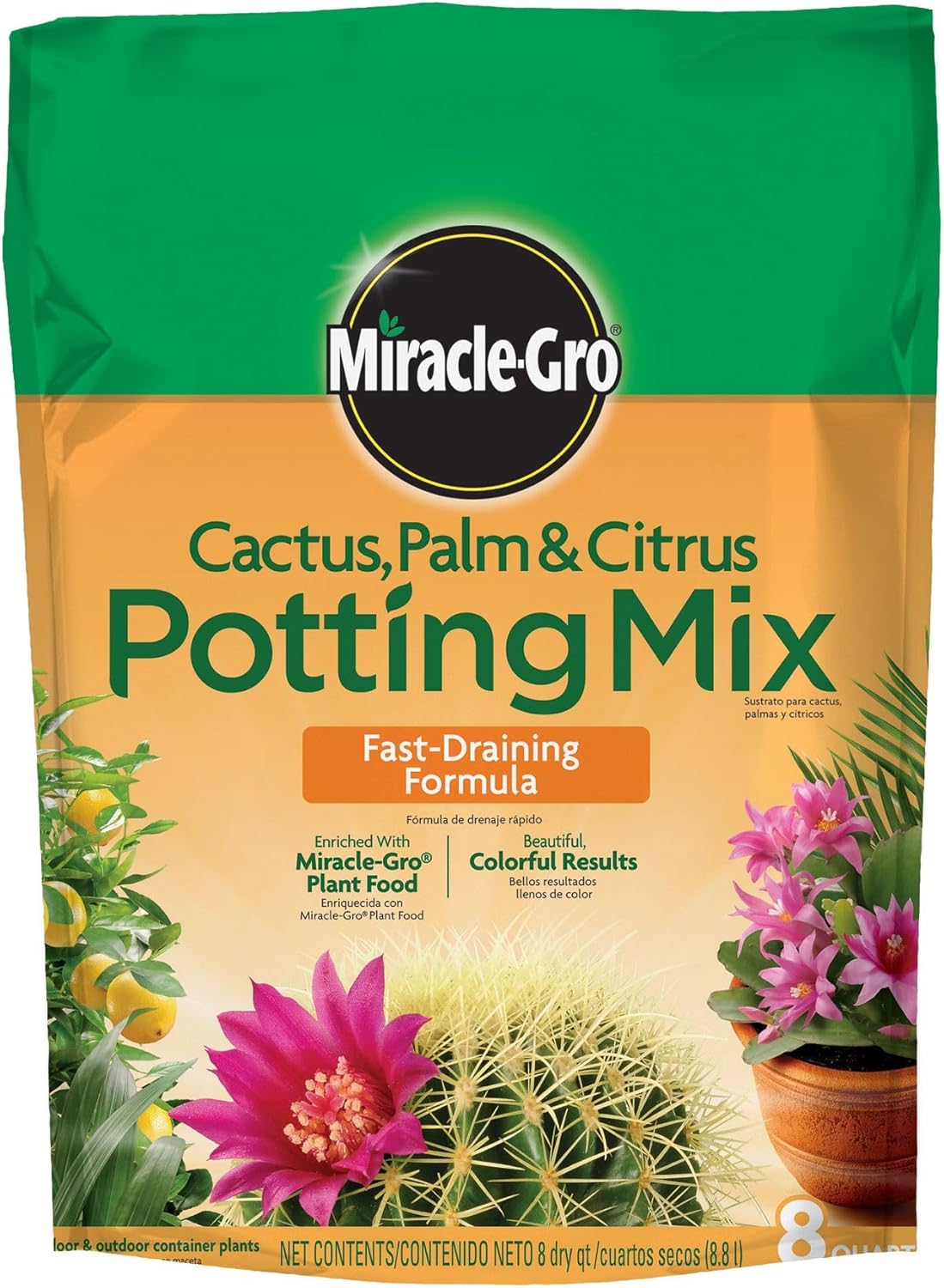
Miracle-Gro Cactus, Palm & Citrus Potting Mix, 8 qt.
| Brand Name | Miracle-Gro |
|---|---|
| Volume | 8 quarts |
| Unit Count | 1 Count |
This 8-quart Miracle-Gro potting mix is designed for container-grown cacti, palms, and citrus and combines peat moss, sand, perlite, and forest products for faster drainage and reduced compaction. It arrives ready to use and is enriched with Miracle-Gro plant food so newly potted citrus get an initial nutrient boost without immediate fertilizing. Typical use is straightforward: choose a pot with drainage, fill about one third, set the root ball and top up, then water and allow to drain. The formula helps soil dry between waterings, which is important for citrus root health in containers, and one bag is enough for two 8-inch pots. Limitations are the small volume for larger trees and the presence of peat moss if you prefer peat-free mixes; heavier or older citrus will need larger volumes and eventual repotting. For growers wanting a quick, reliable container medium that balances moisture retention with drainage, this mix performs as expected.
Best for: Growers who repot or maintain container citrus and want a ready-to-use mix that balances drainage and initial feeding for healthier root development.
Less Ideal for: Gardeners potting mature or large citrus specimens that need large volumes of soil or those seeking a peat-free or custom mineral-heavy citrus bonsai substrate.
- Fast-draining blend reduces risk of waterlogged roots for container citrus
- Pre-enriched with plant food to give newly potted plants an initial nutrient boost
- Contains perlite and sand to resist compaction and maintain aeration
- Formulated for indoor or outdoor containers so it works across sites
- 8-quart bag is small for larger or multiple citrus containers
- Contains peat moss which some buyers avoid for sustainability reasons
Verdict: A convenient, fast-draining, plant-food–enriched container mix that makes repotting small to medium citrus trees quick and reliable.
FoxFarm Ocean Forest Potting Soil, 12 Qt (4 Bags)

| Brand | FoxFarm |
|---|---|
| Item Highlight | Ready-to-use, aerated soil with fish emulsion, crab meal and earthworm castings. |
| Number of Packs | 4 |
| Volume | 12 quarts |
FoxFarm Ocean Forest is a pre-mixed potting soil designed to give seedlings, container plants, and raised-bed plantings a nutrient-dense, well-aerated growing medium straight from the bag. The mix combines aged forest products, sandy loam and sphagnum peat moss for good drainage and air porosity while organic inputs such as fish emulsion, crab meal and earthworm castings provide immediate feeding for young plants. In practice it is most useful for transplanting seedlings, filling pots and topping raised beds where you want plants to establish quickly without a long wait for soil amendments. Notable features include an airy texture that reduces compaction and a built-in nutrient profile that can delay the need for early fertilizers. Important limitations are that it is sold in 12 quart bags which may require many bags for large raised beds and that the peat-based content may dry faster than heavier garden soils, so more frequent watering can be necessary. For gardeners focused on vigorous starts and faster establishment, it is a straightforward, high-performance potting mix.
Best for: Gardeners who prioritize fast, vigorous establishment in containers and raised beds and want a high-performance, plug-and-play soil to get plants growing quickly.
Less Ideal for: Those building large in-ground beds who need bulk topsoil or want a lower-maintenance, water-retentive soil for drought-prone sites should consider bulk garden soil alternatives.
- Ready-to-use, no mixing required for quick planting
- Aerated, light texture that reduces compaction and improves root oxygenation
- Contains organic amendments (fish meal, crab meal, earthworm castings) for immediate nutrient availability
- Small bag volume means multiple bags are needed for larger raised beds
- Peat-based mix can dry out faster than heavier soils, requiring more frequent watering
Verdict: Choose this mix when you want a ready-made, nutrient-rich potting soil that gives seedlings and raised-bed plantings a fast, high-performance start.
Duspro Pre-Mixed 4‑in‑1 Citrus Tree Potting Soil Mix, 6 Quarts

| Style Name | 6 Quarts |
|---|---|
| Brand Name | Duspro |
| Item Highlight | Indoor Fruit Tree Mix for Potted Lemon Tree, Oranges & Other Citrus Trees |
This Duspro 4-in-1 citrus potting mix is built for repotting potted lemon, lime and other citrus trees without the need to measure or blend ingredients yourself. The pre-mixed formula pairs coco coir and coco fiber with vermiculite to help retain balanced moisture while perlite increases drainage and root aeration, which reduces the risk of waterlogged roots in containers. It is easy to use: pour into a pot with drainage, center the tree, fill around roots and water. The product is double-screened for a consistent texture that pours cleanly and is available in sizes suitable for one to several 8-inch pots. Practical benefits include saving time, avoiding mixing errors, and a formulation tailored to the moisture and airflow needs of container citrus. Limitations to note are that the bag can be dusty when opened so some caution is needed during handling and the smallest 6-quart size only covers a limited number of repots for larger trees.
Best for: Buyers who want a reliable, no-mix potting medium for indoor or patio citrus trees and prefer a ready-made blend that reduces repotting guesswork and effort.
Less Ideal for: Growers who need very large volumes for multiple mature trees or who prefer to custom-blend their own media with specific amendments.
- Pre-mixed 4-in-1 formula (coco coir, coco fiber, perlite, vermiculite) tailored for container citrus
- Double-screened texture for cleaner pouring and more consistent repotting
- Promotes balanced moisture retention while improving drainage and root aeration
- Available in multiple sizes to match small to medium container needs
- Dusty when opened, requiring a mask or careful handling to avoid inhaling particles
- 6-quart size covers only a small number of repots for larger citrus trees
Verdict: A convenient, professionally blended potting mix that takes the guesswork out of repotting potted citrus trees.
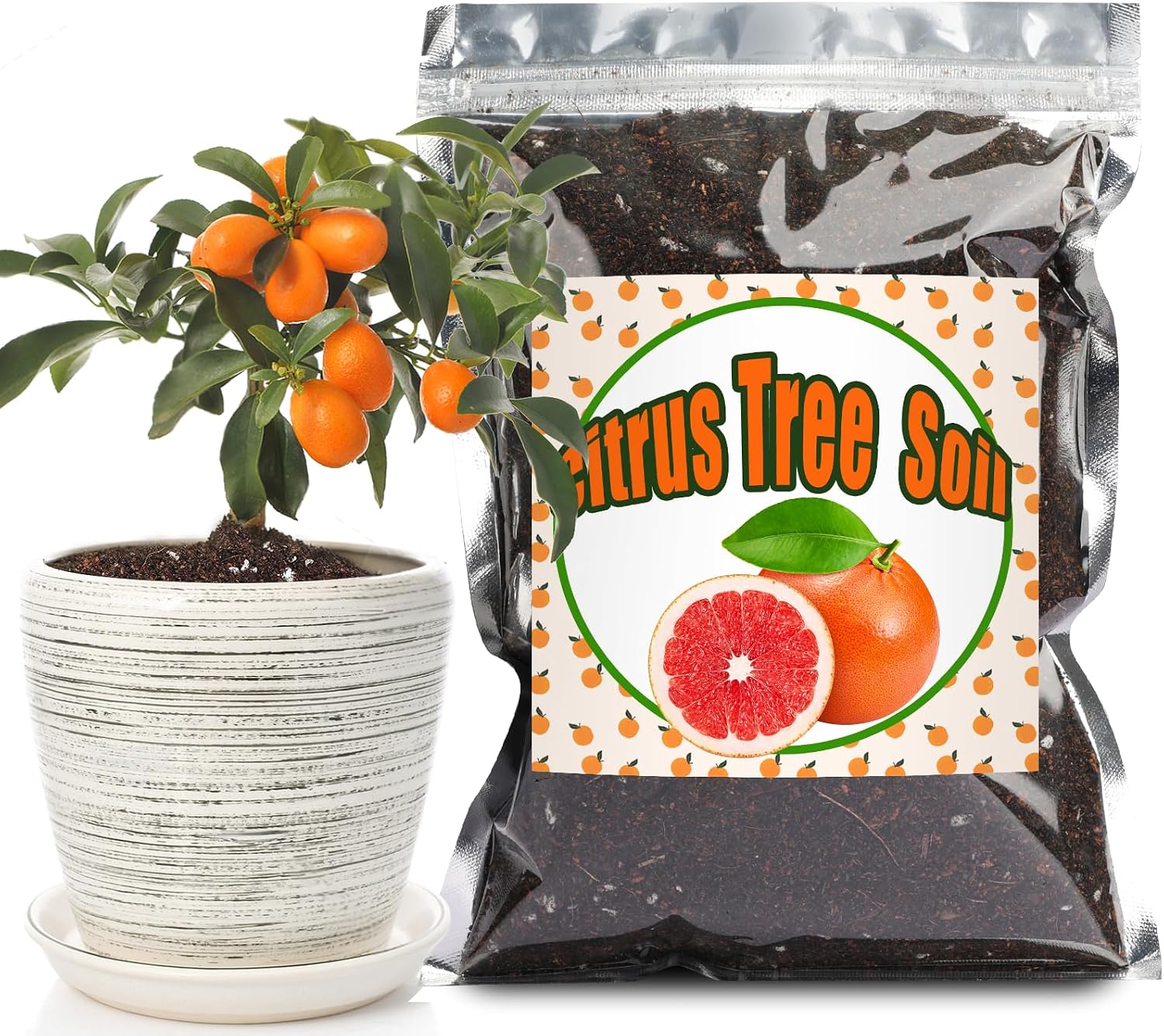
Doter Citrus Tree Potting Soil Mix (1 qt)
| Brand Name | Doter |
|---|---|
| Item Type Name | Garden soil |
| Volume | 1 quarts |
| Item Weight | 224 g |
This Doter citrus potting mix is a small, 1-quart, ready-to-use soil blend designed for container-grown lemon, lime, orange and other citrus trees. It mixes organic and mineral components to deliver a balanced nutrient profile and claims an ideal pH between 6.0 and 7.1, which helps citrus roots access nutrients. The formulation emphasizes drainage and aeration so pots do not stay waterlogged, and the bagged format makes it convenient for repotting seedlings or refreshing the top layer in containers. For budget-conscious gardeners the single-quart size is useful for small projects, trial runs, or blending into larger mixes, but you will likely need multiple bags for a single mature container tree. The product works best as a component or short-term potting medium rather than a sole long-term planting substrate for large trees. Expect good seedling establishment and faster drainage compared with generic garden soil, but plan to supplement with larger volumes or slow-release fertilizer for sustained feeding on mature citrus.
Best for: Gardeners looking for an inexpensive, small-batch citrus-specific soil to repot seedlings, top-dress containers, or trial a citrus blend before committing to larger quantities.
Less Ideal for: Growers with mature potted citrus or those who need large volumes for in-ground planting should choose bulk soils or custom mixes instead.
- Formulated pH between 6.0 and 7.1, suitable for citrus nutrient uptake
- Designed for improved drainage and aeration to reduce root rot risk
- Nutrient-rich blend of organic and mineral components to support growth
- Ready-to-use bag convenient for repotting seedlings and small containers
- Small 1-quart volume means multiple bags are required for larger pots or trees
- Not marketed as a long-term complete potting substrate for mature trees
Verdict: A convenient, budget-friendly small bag of citrus-specific potting mix ideal for repotting seedlings and topping up container citrus plants.
E.B. Stone Organics Citrus & Palm Mix Potting Soil, 1.5 cu ft

| Brand Name | E.B. Stone Organics |
|---|---|
| Unit Count | 1536 Ounce |
| Volume | 1.5 cubic feet |
| Style Name | Potting Soil |
E.B. Stone Organics Citrus & Palm Mix is a ready-to-use organic soil blend designed for container and in-ground planting of citrus, palms, avocados and tropical foliage. The mix pairs aged fir bark and pumice to keep the root zone well aerated and fast-draining so plants that dislike soggy feet avoid root rot, while added mycorrhizae improve nutrient and water uptake. It is intended to be used straight from the bag for potting or worked into beds when planting, which simplifies planting and repotting tasks. For gardeners seeking reliability, this blend delivers consistent structure and moisture retention without heavy amendments, and the organic base supports longer-term soil biology. Limitations are the single bag volume of 1.5 cubic feet, which means larger projects will require multiple bags and mixing on site, and it does not list N-P-K numbers or slow-release fertilizer content so supplemental feeding may be needed for heavy-feeding specimens.
Best for: Gardeners who prioritize reliable, low-maintenance potting media for citrus and tropical plants and want a ready-made organic blend that supports healthy roots.
Less Ideal for: People who need large volumes for landscaping projects or who prefer a potting mix with specified fertilizer content and tailored nutrient ratios.
- Formulated specifically for citrus, palms and tropicals to match their root needs.
- Aged fir bark and pumice provide good drainage and aeration to reduce risk of root rot.
- Contains beneficial mycorrhizae to enhance root nutrient and water uptake.
- Ready-to-use bag simplifies repotting or planting without on-site blending.
- Single bag is only 1.5 cubic feet so multiple bags are required for larger trees or beds.
- No detailed fertilizer analysis provided so additional feeding may be necessary for heavy feeders.
Verdict: Choose this mix when you want a consistent, ready-to-use organic soil that promotes healthy, well-aerated roots for citrus and tropical plants.
Miracle-Gro Organic Outdoor Potting Mix, 16 qt.

| Volume | 16 qt. |
|---|---|
| Item Highlight | Plant Soil For Outdoor Container Plants, Contains Quick-Release Natural Fertilizer, OMRI Listed |
| Manufacturer | Scotts Miracle Gro |
This 16 qt. Miracle-Gro Organic Outdoor Potting Mix is designed specifically for outdoor container plants and is useful for planting strawberries in pots. The mix contains responsibly sourced peat and upcycled green waste and includes a quick-release natural fertilizer that feeds for up to two months, which helps young strawberry plants establish and start producing. It is OMRI listed so it fits an organic container-gardening approach. Typical use is to partially fill a 12-inch pot, set the plant with a loosened root ball, add more mix, and water thoroughly; a single bag is sized to fill about one 12-inch container. Practical benefits include moisture retention suitable for exposed pots and a built-in starter nutrient charge so you may not need immediate additional feeding. Important limitations are that nutrients last about two months so plan a feeding schedule for fruiting plants and that peat-based mixes can compact over time, so repotting or refreshing the soil biannually is recommended for continued vigor.
Best for: Gardeners who want an organic-ready potting mix for outdoor container strawberries and prefer a product that gives an initial nutrient boost while simplifying first-season care.
Less Ideal for: Growers who need a long-term, self-sustaining soil blend for mature strawberry beds or those who avoid peat entirely should consider alternatives.
- OMRI listed and made with responsibly sourced peat suitable for organic container gardening
- Includes quick-release natural fertilizer that feeds plants for up to two months
- Formulated to retain moisture for outdoor containers exposed to sun and wind
- Contains upcycled green waste and is locally crafted to reduce transport distance
- Fertilizer effect is limited to about two months so additional feeding is needed for ongoing fruiting
- Peat-based mix can compact over time and requires bi-annual repotting to refresh structure
Verdict: A convenient OMRI-listed container potting mix that gives outdoor strawberry starters an organic nutrient boost and good moisture retention for the first months.
Back to the Roots Premium Organic Potting Mix, 6 Quart

| Unit Count | 192 Fluid Ounces |
|---|---|
| Volume | 6 quarts |
| Item Highlight | Peat-free potting soil for outdoor plants, indoor plants, vegetables, herbs and flowers |
| Made in | USA |
Back to the Roots Premium Organic Potting Mix is a small-batch, all-purpose soil designed for indoor and outdoor container plants, including flowers, herbs, and vegetables. The 6 quart bag contains a peat-free blend made from upcycled plant matter and wood fines, with added organic plant food, yucca extract to help retain and regulate moisture, and dolomitic limestone to stabilize pH. In practice this mix is easy to use straight from the bag for potting annuals and bedding plants or for refreshing topsoil in containers. Its light, well-draining texture helps roots establish without becoming waterlogged while still holding enough moisture for frequent flowering plants. Because it is organic and made in the USA, it suits growers who want a lower-carbon-footprint option. Limitations are the small bag size for larger projects and that very heavy feeders or long-term container plantings may need periodic fertilization or larger volumes of soil to maintain vigor.
Best for: Buyers who want a safe, organic, ready-to-use potting mix for potted flowers and small container gardens and prefer products with predictable performance and lower environmental impact.
Less Ideal for: Gardeners planning large-scale repotting, heavy-feeding perennials, or long-term container plantings that require bulk soil or extended nutrient release.
- Peat-free organic formula made from upcycled plant matter and wood fines
- Includes yucca extract for improved moisture retention and control
- Dolomitic limestone added to help balance soil pH for flowering plants
- Light, well-draining texture suitable for container-grown flowers and annuals
- Small 6 quart bag is not economical for large pots or multiple containers
- Does not include slow-release fertilizer strong enough for long-term heavy feeders
Verdict: A reliable, peat-free organic potting mix that delivers predictable moisture control and pH balance for potted flowers and small container gardens.
Choosing the Right Soil for Potted Fruit Trees: Key Factors to Consider
Drainage and Aeration
Good drainage is essential because container roots sit in a limited volume where excess water can cause oxygen deprivation. A soil that drains well prevents waterlogging and root rot while allowing roots to access air pockets. Look for mixes with coarse components such as pine bark, perlite, or pumice that create channels for water to move through the pot.
Aeration also affects root temperature and microbial activity. Soils that compact quickly will reduce pore space and stress the tree during hot or wet weather. For potted fruit trees you want a structure that stays open season after season so roots can grow and fine roots can exchange gases efficiently.
Water-Holding Capacity
Containers dry out faster than ground soil, especially in full sun or on a warm patio. Water-holding capacity determines how long a pot stays moist between waterings and whether you must water daily or weekly. Organic matter such as composted bark, coir, and peat alternatives will hold moisture, but the balance is important so the mix does not stay soggy.
Consider your local climate and the pot size. Large tubs hold more moisture by volume, but a mix with poor water retention will still dry rapidly in hot conditions. Conversely, a mix that retains too much water is risky in cool, poorly drained situations. The best container soils keep moisture accessible but do not remain saturated.
Nutrient Retention and Release
Fruit trees in pots rely on the contained soil for their nutrients, so a mix that holds nutrients between feedings matters. Some components bind and release nutrients slowly, creating steadier availability for roots. Organic amendments like composted bark and well-aged compost supply slow-release nutrients, while mineral constituents such as clay or zeolite can help retain cations so they are not washed out at each watering.
Good nutrient retention reduces the frequency of heavy fertilizing and supports consistent leaf growth, flowering, and fruit set. At the same time, a soil should allow deliberate feeding programs, so avoid mixes overloaded with a one-time chemical charge that can cause salt stress over time.
Particle Size and Stability
Particle size determines how a mix behaves under repeated wetting and drying cycles. Larger, stable particles maintain pore space and resist compaction, while fine particles break down and make the mix dense. Stable structure preserves drainage and aeration and makes re-potting easier because the root ball holds together without becoming a weighty, waterlogged mass.
Durability also matters: some organic components decompose faster and shrink, changing the potting depth and root environment over a season. Choosing a mix with a blend of durable aggregate and finer organic matter balances initial moisture retention with long-term structure.
pH and Salt Levels
Most common fruit trees prefer a slightly acidic to neutral pH. A soil that drifts too alkaline or too acidic can limit nutrient uptake and lead to deficiencies. Additionally, salts build up in containers from fertilizing and from some amendments, and high salinity stresses roots and reduces fruit set.
Inspect soil ingredient lists and opt for mixes that state low-salt content or include buffering components. Regular rinsing through deep watering and occasional repotting will also mitigate salt accumulation, but starting with a low-salt, pH-stable medium reduces risk.
Weight and Pot Size Considerations
The weight of a filled pot affects placement, mobility, and structural load on a balcony or deck. Heavy mineral-rich soils can make large containers difficult to move and may require a sturdy support. Lighter mixes that still provide structure are often preferred for rooftop or balcony trees.
Think about the pot dimensions and whether you intend to move the tree for winter or positioning. Lightweight aggregates like pumice or perlite reduce overall weight while contributing to drainage. For very large tubs, blending heavier mineral components with lighter organics can balance stability and manageability.
Best Mix Components for Container Fruit Trees
A reliable container soil blends coarse inorganic aggregates with stable organic matter. Common components that perform well include coarse bark or aged wood fines, pumice or expanded clay, and a modest proportion of coconut coir or well-aged compost for moisture and nutrients.
Avoid mixes that are primarily fine garden loam or that contain a heavy proportion of uncomposted green matter. The goal is to combine good drainage and aeration with enough moisture retention to prevent daily watering during warm spells.
- Coarse bark or wood chips for structure
- Pumice, perlite, or expanded clay for aeration
- Coconut coir or peat alternatives for water retention
- Small proportion of well-aged compost for nutrients
Adjusting Soil for Different Fruit Tree Types
Citrus, fig, and stone fruit have subtly different preferences. Citrus often does best in a free-draining, slightly acidic mix with good calcium availability. Figs tolerate a bit more moisture and heavier feeding, while stone fruits prefer excellent drainage to avoid root disease.
You can tweak a base container mix by increasing coarse aggregate for very drainage-sensitive trees, or by adding more organic matter for species that need higher moisture. Always test a small change on a single tree before applying it across multiple containers.
- Increase aggregate for cherries and plums to improve drainage
- Add more organic matter for figs in dry climates
- Use pH-buffering amendments for citrus if your water is alkaline
Repotting and Refreshing Container Soil
Potted fruit trees benefit from periodic repotting to replenish depleted organic matter and reset structure. Inspect roots every 2 to 4 years depending on growth rate and pot size. When repotting, refresh the mix around the root ball with a similar blend rather than replacing the entire volume unless the soil is collapsed or salt-damaged.
Top-dressing with fresh compost and a thin layer of replacement mix can extend the interval between full repots. Always avoid placing new soil deeper than the original root flare to prevent burying the trunk.
- Inspect for circling roots and root-bound conditions
- Refresh top 20-30% of soil for minor rejuvenation
- Fully repot larger or compromised specimens every 3-5 years
Watering Strategies With Container Soils
How you water depends on the soil blend and pot size. For mixes with excellent drainage, water thoroughly until excess drains and allow the upper portion to dry slightly before the next irrigation. For mixes with higher water retention, monitor moisture deeper in the root zone rather than relying on surface dryness alone.
Use a moisture meter or the finger test to check depth moisture. Mulching the soil surface with a light layer of organic material can reduce evaporation but should not block air exchange around the trunk base.
- Water deeply to encourage root extension into the mix
- Monitor moisture at root depth rather than surface only
- Mulch lightly to reduce evaporation without trapping moisture against the trunk
Feeding and Soil Amendments in Containers
Because containers have a finite nutrient supply, regular feeding is part of container fruit tree care. Prefer controlled-release organic fertilizers or a measured liquid feed schedule based on tree vigor and leaf color. Soil amendments such as slow-release organic matter help maintain a steady nutrient flow and improve microbial activity.
Avoid heavy one-time chemical drenches that spike salts. Instead, plan a consistent, moderate feeding program and flush the pot thoroughly with water periodically to prevent salt buildup.
- Use slow-release organic fertilizers or regular liquid feeds
- Top-dress with compost yearly to replenish organic matter
- Flush containers occasionally to reduce salt accumulation
How We Chose the Best Soil for Potted Fruit Trees
We filtered candidate soils for attributes that matter inside containers rather than in garden beds. First, we prioritized drainage and aeration characteristics that reduce the risk of waterlogging in limited root volumes. Second, we assessed water-holding capacity so containers do not dry out within a day or two during heat. Third, nutrient retention and slow-release organic content were checked to ensure steady feeding between scheduled fertilizing. Fourth, physical structure and particle size were reviewed to prevent compaction over a season and to support healthy root expansion. Fifth, ingredients and amendments were considered for pH stability and salinity control to avoid salt build-up that stresses fruit trees. We excluded mixes formulated exclusively for annuals or for lawn topdressing, and we set aside potting soils containing persistent, high-salt chemical fertilizers. We also filtered out heavy garden soils and unamended topsoil that do not drain well in containers. The final list focuses on mixes that balance drainage and water retention, maintain suitable pH for common fruit trees, resist compaction, and contain stable organic matter and mineral amendments useful in container growing.
FAQ
How often should I repot a fruit tree in a container?
It depends on the species and pot size. Slow-growing trees in large tubs may only need attention every 4 to 5 years, while fast growers or trees in smaller pots often benefit from repotting every 2 to 3 years. Check for circling roots and compacted soil as triggers for repotting.
Can I use garden soil or topsoil in pots for fruit trees?
Usually no. Garden soil and plain topsoil tend to be too dense and can compact in containers, leading to poor drainage and root oxygen deficiency. Better results come from purpose-made container mixes or amended blends that prioritize porosity and stable structure.
Should I add fertilizer directly to potting soil when I plant a fruit tree?
A modest amount of slow-release organic material mixed into the planting medium helps initial growth, but avoid heavy doses of soluble chemical fertilizer at planting. Start a steady feeding schedule a few weeks after planting once the tree has begun to establish roots in the new soil.
How can I tell if my container soil has too much salt?
Symptoms include leaf tip burn, yellowing between veins, and slowed growth. You can flush the pot thoroughly with extra water and allow excess to drain to reduce salts. If symptoms persist, consider partially replacing the soil and adjusting your fertilizer regimen to lower-salt options.
Is coir better than peat for potted fruit trees?
Coir is a sustainable alternative to peat and holds water well while providing aeration when mixed with coarse components. Both can work, but coir is often preferred for sustainability and stable structure. Adjust the rest of the mix to balance drainage if using a high coir proportion.
Final Verdict
Pick a container soil that balances drainage with moisture retention and maintains stable structure over time. Prioritize mixes with coarse aggregates for aeration, a measured amount of organic matter for steady nutrients, and low salt content to protect roots. Your final choice should reflect pot size, climate, and the specific fruit species you are growing. With the right soil and a consistent watering and feeding routine, potted fruit trees will establish stronger roots and deliver more reliable flowering and fruit set.
