

Note: This article contains affiliate links. If you click on these links and make a purchase, I may earn a small commission at no extra cost to you. This helps support my research and content. Read my full affiliate disclosure here.
Raspberries respond strongly to the soil they grow in. The right planting mix controls water around roots, supplies steady nutrients through the growing season, and sets the stage for repeated fruiting years. In this guide we shortlist six top soil options for raspberries for different garden situations, from containers and raised beds to in-ground patches. We evaluated mixes for drainage, nutrient profile, organic matter content, and pH stability so you can pick a soil that matches your site and pruning plan. Read on for practical tips and what each soil type offers for cane health and fruit quality.
Top Picks at a Glance
| Best Overall The best all-around choice for most situations | Coast of Maine Organic Planting Soil for Acid-Loving Plants (20 Qt) |  |
| Best Quality Built to a higher standard if you want something more solid | FoxFarm Strawberry Fields Fruiting & Flowering Potting Soil, 1.5 cu ft |  |
| Best Value The sweet spot between price and what you get | Espoma Organic Potting Mix, 16-Quart |  |
| Highest Rated A top-rated pick with lots of positive feedback | PRO-MIX HP-CC Mycorrhizae High Porosity Grower Mix, 2.8 cu. ft. |  |
| Most Popular A crowd favorite that many people choose with confidence | Miracle-Gro Organic Outdoor Potting Mix, 16 qt. |  |
| Best Seller A high-volume bestseller chosen again and again | Back to the Roots Premium Blend Organic Potting Mix, 6 Quart |  |
Coast of Maine Organic Planting Soil for Acid-Loving Plants (20 Qt)

| Brand Name | Coast of Maine |
|---|---|
| Unit Count | 20 Ounce |
| Volume | 20 quarts |
| OMRI Listed | Yes |
This Coast of Maine planting soil is an OMRI-listed organic blend designed for acid-loving plants and works well as a soil amendment for raspberry beds. It combines composted manure, sphagnum peat moss, seaweed and other natural inputs to lower pH, increase organic matter, and support microbial life. Gardeners typically use it to top-dress existing beds, mix into planting holes, or refresh container media to improve drainage while retaining enough moisture for root development. Notable features include a low-pH formulation targeted at ericaceous plants and a composition intended to boost biodiversity and long-term soil health. Practical benefits for raspberries are improved root establishment, better flower and fruit set from healthier soil biology, and a ready-to-use organic option that reduces the need for immediate fertilizer applications. Important limitations are that it is a planting soil rather than a complete fertilizer so additional nutrient management may be needed for heavy-bearing raspberry varieties, and peat-containing mixes can compress over time requiring occasional reworking.
Best for: Gardeners who want an organic, low-pH soil amendment to establish or refresh raspberry beds and prefer products that support soil life and sustainable practices.
Less Ideal for: Growers who need a complete, high-nitrogen feed-and-grow mix for maximum early-season yields should consider a dedicated fertilizer program or specialty raspberry-specific soil blends.
- Low-pH, acid-loving formulation suitable for raspberries and other ericaceous plants
- OMRI listed organic ingredients that support soil biology and biodiversity
- Ready-to-use mix that improves drainage while retaining moisture
- Contains composted manure and seaweed to add organic nutrients and beneficial microbes
- Not a complete fertilizer so additional feeding may be needed for high-yield raspberry patches
- Includes peat moss which can settle and may require periodic loosening or top-up
Verdict: Use this organic, low-pH planting soil to quickly improve bed conditions and soil biology for healthier raspberry plants and better fruit production.
FoxFarm Strawberry Fields Fruiting & Flowering Potting Soil, 1.5 cu ft

| Volume | 1.5 cubic feet |
|---|---|
| Ingredients | Coco fiber, sphagnum peat moss, aged forest products, perlite, fertilizer from earthworm castings and oyster shell |
| Included components | Potting Soil |
| Item Type Name | Potting Soil |
FoxFarm Strawberry Fields is a ready-to-use potting soil blended to encourage strong blooms and higher fruit yields for herbaceous fruiting plants like berries. It is typically used when planting or when boosting container-grown raspberries during the flowering and fruiting phase: lightly firm the mix around roots and water thoroughly. The formula pairs 35–45% coco fiber for improved water holding with sphagnum peat, aged organic materials, and perlite for aeration. Added mycorrhizae and fertilizer inputs derived from earthworm castings and oyster shell aim to improve root efficiency and nutrient uptake. In practice the mix keeps containers and raised beds evenly moist without becoming waterlogged and gives young raspberry plants a nutrient-rich medium to develop fruiting shoots. Limitations include the relatively small 1.5 cu ft bag for larger plantings and the presence of peat and coconut fiber, which may compact over time and require replenishment or additional amendment for long-term in-ground beds.
Best for: Gardeners focused on maximizing fruit and bloom performance in containers or small raised beds who want a plug-and-play mix that supports berry production.
Less Ideal for: Large-scale raspberry growers or those preparing extensive in-ground beds who need bulk soil or long-term ammendment strategies.
- Formulated for fruiting and flowering to support berry production.
- High coco fiber content improves water retention in containers and raised beds.
- Includes mycorrhizae to help root efficiency and nutrient uptake.
- Balanced mix of organic materials and perlite for aeration and fertility.
- Small 1.5 cu ft bag may not be economical for multiple raspberry plants or large beds.
- Contains peat and coco fiber that may require periodic replenishing as plants mature.
Verdict: Choose this mix when you want a performance-focused, ready-made soil that gives container or raised-bed raspberries a moisture-retentive, nutrient-rich medium to improve fruiting and blooms.
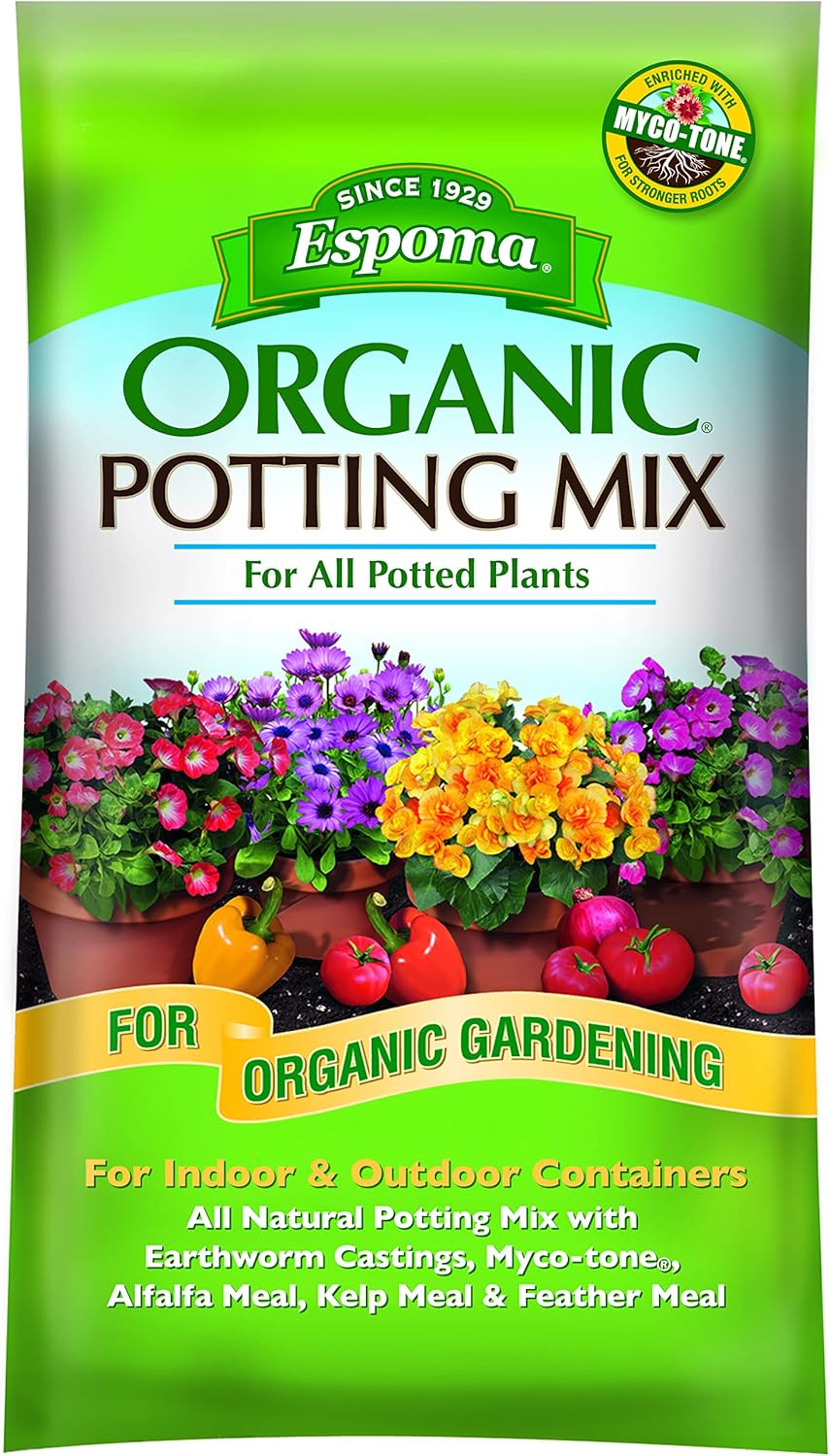
Espoma Organic Potting Mix, 16-Quart
| Brand | Espoma |
|---|---|
| Volume | 16 quarts |
| Style Name | Mix |
Espoma Organic Potting Mix is a ready-to-use, organic potting soil designed for containers and vegetable gardens. It blends sphagnum peat moss, humus and perlite for structure and drainage, and is enriched with earthworm castings, alfalfa, kelp and feather meals to supply slow-release nutrients. The included Myco-tone mycorrhizal inoculant helps roots establish more quickly in containers and promotes nutrient uptake, which is useful when replanting raspberries into pots or large grow bags. Because it is a lightweight, well-draining mix it reduces the risk of waterlogged roots compared with heavier garden soils. This product is focused on organic, natural ingredients so it does not contain synthetic fertilizers for immediate high nutrient release, meaning you may need to supplement with liquid feed during heavy fruiting. Packaged in a 16-quart bag, it is convenient for hemming planting and repotting tasks but you will need multiple bags for larger raspberry plantings or deep containers.
Best for: Gardeners who prioritize natural, organic growing and want an easy, ready-made potting mix for container raspberries or other edible container crops.
Less Ideal for: Growers who need a heavy, moisture-retentive soil or who prefer a pre-fertilized mix that supplies high nutrient levels throughout a full fruiting season.
- Organic formula with natural amendments like earthworm castings, kelp and alfalfa meal
- Includes Myco-tone endo and ecto mycorrhizae to support root establishment and nutrient uptake
- Lightweight, well-draining blend suitable for container-grown vegetables and herbs
- Ready to use out of the bag for planting or repotting without mixing additional ingredients
- Does not contain synthetic quick-release fertilizers so additional feeding may be needed during heavy fruiting
- 16-quart bag is small for multiple raspberry plants and requires several bags for larger containers
Verdict: A convenient organic potting mix that helps container raspberries establish strong roots thanks to mycorrhizae and natural soil amendments.
PRO-MIX HP-CC Mycorrhizae High Porosity Grower Mix, 2.8 cu. ft.

| Item Form | Liquid |
|---|---|
| Specific Uses For Product | Plant Growth, Root Development |
| Coverage | Lightweight,Medium |
| Target Species | horticultural plants |
| Liquid Volume | 2.8 cubic feet |
This PRO-MIX HP-CC Mycorrhizae grower mix is a high-porosity, peat-based medium blended with chunk coir and an incorporated Glomus intraradices mycorrhizae inoculum. It is typically used by mixing into potting blends or as a root-zone amendment for plants that benefit from extra drainage and air capacity, such as water-sensitive crops and cuttings. The mix promotes root development by improving oxygenation around roots and by helping plants access phosphorus and trace micronutrients through the mycorrhizal fungi. Practical benefits include faster rooting, better establishment in low-light or moisture-variable conditions, and reduced risk of root rot where drainage is important. Limitations: it is a growing medium rather than a complete fertilizer so you will still need to supply nutrients as the season progresses, and its peat base means repeat applications or blending with organic matter may be needed for long-term in-ground raspberry beds. For reliability-focused gardeners, it works best as a consistent, high-quality root medium for nursery starts, transplanting, or raised-bed plantings where control over drainage and root health matters most.
Best for: Gardeners who prioritize dependable root health and consistent establishment for starts, transplants, or raised beds and want a medium that reduces watering-related failures.
Less Ideal for: Those looking for an all-in-one soil for long-term in-ground raspberry rows or growers who prefer peat-free, fully organic perennial bed amendments.
- High porosity improves root oxygenation and drainage for water-sensitive plants
- Contains a mycorrhizae inoculum that helps plants access phosphorus and micronutrients
- Chunk coir blended with peat gives a consistent, lightweight texture useful for starts and transplants
- Not a complete fertilizer so requires supplemental feeding for established raspberry beds
- Peat-based composition may require amendment or replacement for long-term soil health in perennial plantings
Verdict: Choose this mix when you need a reliable, high-porosity root medium that boosts establishment and root vigor for raspberries started or grown in controlled beds.
Miracle-Gro Organic Outdoor Potting Mix, 16 qt.

| Volume | 1 cubic feet |
|---|---|
| Item Highlight | Plant Soil For Outdoor Container Plants, Contains Quick-Release Natural Fertilizer, OMRI Listed |
| Brand Name | Miracle-Gro |
| Manufacturer | Scotts Miracle Gro |
Miracle-Gro Organic Outdoor Potting Mix is a ready-to-use soil blend made for planting and repotting outdoor containers. It is formulated with responsibly sourced peat, upcycled green waste, and a quick-release natural fertilizer that the brand says feeds plants for up to two months. Typical use is filling pots or adding fresh mix when repotting vegetables, herbs, annuals, and perennials; one 16 qt. bag is intended to fill a 12-inch container. Practical benefits include improved moisture retention compared with plain garden soil and an initial nutrient boost that reduces the need for immediate fertilizer applications. The OMRI listing supports organic container gardening. Limitations to consider are that this bag is sized for small containers rather than in-ground beds and the fertilizer effect is short term, so raspberries or other heavy feeders will need follow-up feeding and bi-annual repotting to maintain vigor. Also, peat-based mixes compress over time and require refreshment to avoid compaction.
Best for: Buyers who want an organic, ready-to-use container mix with an initial nutrient boost and prefer products that carry third-party organic verification for their outdoor potted crops.
Less Ideal for: Gardeners looking to amend large in-ground raspberry rows or supply season-long nutrition for mature heavy-feeding plants should choose bulk soil amendments and a longer-term fertilizer strategy instead.
- Formulated for outdoor containers and suitable for vegetables, herbs, and flowering plants
- Contains quick-release natural fertilizer that feeds up to two months for an immediate growth boost
- OMRI listed for use in organic gardens
- Includes responsibly sourced peat and upcycled green waste, supporting sustainable sourcing
- Small 16 qt. bag is best for single pots not large beds
- Fertilizer benefit is temporary so heavy-feeding plants will need additional fertilization and more frequent repotting
Verdict: A compact, OMRI-listed outdoor potting mix that gives container-grown raspberries and other potted edibles an organic, short-term nutrient boost while simplifying initial planting.
Back to the Roots Premium Blend Organic Potting Mix, 6 Quart

| Unit Count | 192 Fluid Ounces |
|---|---|
| Item Highlight | Peat-free potting soil for outdoor plants, indoor plants, vegetables, herbs and flowers |
| Made in | USA |
This 6-quart Back to the Roots Premium Blend is an all-purpose organic potting mix intended for container and garden use. It combines upcycled plant matter and wood fines with organic plant food, yucca extract to help with moisture management, and dolomitic limestone to moderate pH. Typical use is repotting container plants, topping up raised beds, or starting herbs and vegetables in small containers. The peat-free formula reduces peat reliance and presents a lighter carbon footprint while still offering a light, workable texture that drains reasonably well. For gardeners growing raspberries in containers or amending small raised beds, it can provide a pleasant, plant-ready medium without needing immediate additives. Limitations are its small 6-quart volume, which makes it practical only for pots, seedlings, or spot amendments rather than filling large beds or multiple raspberry plants, and you may still need to blend with coarser amendments for long-term cane crops in large planters.
Best for: Gardeners who prefer low-risk, organic, ready-to-use potting mix for containers, seed starting, or small raised-bed amendments and who value a peat-free option with built-in moisture and pH helpers.
Less Ideal for: Growers planning to establish multiple raspberry canes in large beds or deep planters who need bulk soil tailored for woody fruiting shrubs.
- 100% organic and peat-free formula made from upcycled plant matter
- Includes yucca extract to help with moisture control in containers
- Dolomitic limestone added to help stabilize pH for many garden plants
- Light, workable texture suited to potting, seed starting, and small raised beds
- Small 6-quart volume is insufficient for large planting projects or multiple raspberry plants
- Not formulated specifically for heavy-feeding, long-term fruiting shrubs without additional amendments
Verdict: Choose this organic, peat-free potting mix when you want a small, ready-to-use, low-risk soil for containers or seed starts that includes moisture control and pH adjustment.
Choosing the Right Soil for Raspberries: Key Factors to Consider
Drainage and Soil Texture
Raspberries need soil that drains freely while still holding enough moisture between waterings. A mix with a balance of sand or grit, loam, and organic matter prevents waterlogged roots that invite rot.
Texture affects how quickly the soil warms in spring and how easily roots spread. Heavy clay soils should be amended with coarse materials and organic matter to improve structure. In contrast, very sandy soils benefit from added compost to increase water and nutrient retention without losing drainage.
Nutrient Profile and Release Timing
Raspberries prefer steady nutrient availability rather than quick bursts. Soils with a moderate-to-high organic matter content release nitrogen and other elements slowly as microbes break down material, supporting cane growth and fruit development.
Avoid mixes with extremely high initial soluble fertilizer levels that can burn young roots or force excessive vegetative growth at the expense of fruit. Consider whether you want a mix that needs topdressing with compost each season or a pre-enriched soil that supplies nutrients for multiple months.
pH and Mineral Availability
Raspberries thrive in slightly acidic to neutral soils, typically in the pH range of about 5.5 to 6.8. Soil pH affects the availability of key nutrients like iron, manganese, and phosphorus.
A soil that buffers pH changes will require fewer corrective applications. If your native soil is alkaline, choose a mix or amend with acidifying organic matter such as pine fines or sulfur if you need to lower pH gradually. Conversely, highly acidic spots can be limed carefully before planting to reach the target range.
Organic Matter and Water-Holding Balance
Organic matter feeds soil life, improves structure, and increases the soil's capacity to hold water between irrigations. Well-decomposed compost or peat alternatives create a crumbly texture that supports root proliferation and microbial activity important to nutrient cycling.
Too much undecomposed organic material can lead to nitrogen immobilization as microbes consume available nitrogen to break down fresh carbon. Choose soils with mature, stable compost or mixes formulated for fruits to avoid short-term nutrient locking.
Disease Suppression and Root Health
Soil that resists common root pathogens reduces long-term losses in raspberry patches. Good drainage is the first line of defense against root rot organisms. Additionally, soils with diverse organic matter and active microbial populations can suppress some soilborne diseases naturally.
Avoid soils with a history of hosting susceptible crops in the same location unless you pasteurize or replace the infected material. Consider incorporating disease-suppressive amendments such as well-aged compost and avoiding raw manure that can introduce pathogens.
Suitability for Containers Versus In-Ground Planting
Container-grown raspberries need mixes that drain well but retain enough moisture because root volumes are limited. Lightweight soils with added coconut coir or aged compost work well in pots and grow bags.
In-ground plantings tolerate a wider range of textures but benefit from amendments to address local soil shortcomings. Match the soil product to your planting method: a heavy field soil may be acceptable in the ground after amending, while containers require a ready-to-use potting mix designed for fruiting shrubs.
Preparing Existing Garden Beds for Raspberries
If you already have an in-ground bed, improving existing soil is usually more economical than full replacement. Start by testing the soil pH and basic nutrient levels so you know whether lime or sulfur is needed and how much compost to add. Deeply incorporate mature compost and a coarse mineral amendment like sharp sand or grit to improve structure in heavy soils.
- Work amendments into the top 12 to 18 inches for established raspberry root systems.
- Avoid freshly added high-carbon materials that can immobilize nitrogen until they decompose.
- Create raised rows or beds in very poorly drained sites to keep roots above persistent wet layers.
Mixes and Amendments for Container Planting
Containers demand consistent moisture and good aeration since roots are confined. Choose a potting mix formulated for shrubs and small fruit, or make your own by blending equal parts high-quality compost, pine bark fines, and coarse horticultural perlite or grit for drainage. Add a slow-release balanced fertilizer if the mix is not pre-fertilized to maintain steady growth through the season.
- Use containers with drainage holes and a saucer that is emptied after watering.
- Topdress containers midseason with compost to replenish organic matter and nutrients.
- Consider using a slightly deeper pot to accommodate vigorous cane roots and prevent the mix from drying out too quickly.
Amending Heavy Clay and Compacted Soils
Heavy clay can be loosened by incorporating generous amounts of mature compost and coarse mineral aggregates. Avoid simply adding small quantities of organic matter; significant volume often needs to be replaced or mixed in to change drainage and aeration characteristics meaningfully. If compaction is severe, double-digging or creating raised beds filled with improved soil is often the most reliable approach for long-term raspberry health.
- Incorporate at least 3 to 6 inches of mature compost into the topsoil when possible.
- Add poultry grit or horticultural sand in moderation to avoid creating a cement-like layer; coarse grit works better.
- Allow amended beds to settle and stabilize for a few weeks before planting, if possible.
Mulching and Ongoing Soil Care
Mulch conserves moisture, suppresses weeds, and gradually contributes organic matter as it breaks down. Around raspberries use an organic mulch such as straw, shredded leaves, or well-aged bark placed in a 2 to 4 inch layer, kept a few inches away from cane bases to reduce crown rot risk. Annual topdressing with compost and monitoring pH every few years keeps the soil in the sweet spot for nutrients. Rotate or replace soil in containers every two to three years to refresh organic matter and reduce pathogen buildup.
- Refresh mulch each year after pruning and cleaning out old debris.
- Avoid deep layers of fresh manure near crowns; use only well-rotted compost.
- Monitor soil moisture with a probe or finger test rather than relying on set watering intervals.
How We Chose the Best Soil for Raspberries
We focused on how soils behave in real raspberry plantings rather than marketing claims. Our selection favored mixes and amendments that reliably support cane establishment, fruiting, and winter survival across common garden situations. We evaluated soils using several concrete dimensions: particle mix and drainage, nutrient content and release pattern, organic matter and water-holding balance, pH buffering and amendability, and suitability for containers versus in-ground beds. We prioritized materials that reduce root rot risk while supplying nitrogen, phosphorus, and potassium at rates appropriate for berry production. Exclusions included specialty soils formulated for unrelated crops, products lacking ingredient transparency, and mixes with persistent synthetic salts that can stress young canes. We also excluded soils that require extensive modification before use. The result is a list of practical soil options and amendments that gardeners can apply with minimal extra testing or correction.
FAQ
What soil pH do raspberries prefer?
Raspberries usually perform best in slightly acidic to neutral soils, typically around pH 5.5 to 6.8. Test the planting area and adjust gradually with lime to raise pH or sulfur and acidic organic matter to lower it.
Can I plant raspberries in pots using garden soil?
Garden soil is generally too heavy for containers and can compact, restricting roots. Use a loose potting mix blended with compost and grit, or a ready-made mix designed for fruiting shrubs to ensure adequate drainage and aeration.
How much compost should I add when preparing a bed?
For raised or amended beds, incorporate 3 to 6 inches of mature compost into the top 12 inches of soil. In heavy clay, larger volumes or full replacement with a constructed mix may be needed to achieve lasting improvement.
Will adding too much organic matter cause problems?
Excess fresh organic material can temporarily tie up nitrogen as microbes decompose carbon-rich matter, leading to deficiency in young plants. Use well-aged compost and avoid large amounts of raw wood chips in the planting zone.
How often should I test soil under raspberry plants?
A soil test every two to three years is usually sufficient unless you notice poor growth or leaf discoloration. Testing helps track pH drift and nutrient availability so you can make targeted corrections.
Final Verdict
Choose a soil strategy that matches how you are planting raspberries. Prioritize good drainage and stable, moderate nutrient release for long-term cane health and reliable yields. In containers, select a light, well-draining mix with steady fertility; in-ground plantings benefit most from improving native soil structure with mature compost and coarse mineral amendments. Focus on pH, organic matter quality, and disease-reducing practices when deciding. These tradeoffs determine whether you need a ready-to-use fruiting mix, modest amendments to native soil, or a full bed rebuild. With those priorities in mind, you can select a soil approach that supports vigorous canes and better fruit year after year.
