

Note: This article contains affiliate links. If you click on these links and make a purchase, I may earn a small commission at no extra cost to you. This helps support my research and content. Read my full affiliate disclosure here.
Growing strawberries in containers concentrates all of the plant's needs into a small volume of media, so the soil you choose determines how often you water, how well roots breathe, and how many berries you harvest. The right mix drains quickly enough to avoid root rot but holds enough moisture and nutrients to sustain fruiting through hot spells. This guide covers seven shortlisted soils for strawberries in containers and explains the practical tradeoffs every container gardener faces. We evaluate mixes for moisture management, nutrient delivery, and structure so you can pick the option that suits your pot size and climate.
Top Picks at a Glance
| Best Overall The best all-around choice for most situations | Espoma Organic Potting Mix, 16-Quart |  |
| Best Quality Built to a higher standard if you want something more solid | FoxFarm Strawberry Fields Fruiting & Flowering Potting Soil, 1.5 cu ft |  |
| Best Value The sweet spot between price and what you get | Burpee Premium Organic Potting Mix with Coconut Coir (9 Qt) |  |
| Best Budget The cheapest option that still gets the job done reliably | Doter Organic Strawberry Potting Mix (1 qt) |  |
| Highest Rated A top-rated pick with lots of positive feedback | Omitgoter All-Natural Strawberry Potting Mix, 4 qt |  |
| Most Popular A crowd favorite that many people choose with confidence | Miracle-Gro Organic Outdoor Potting Mix, 16 qt. |  |
| Best Seller A high-volume bestseller chosen again and again | Miracle-Gro Organic Indoor Potting Mix, 16 qt. |  |
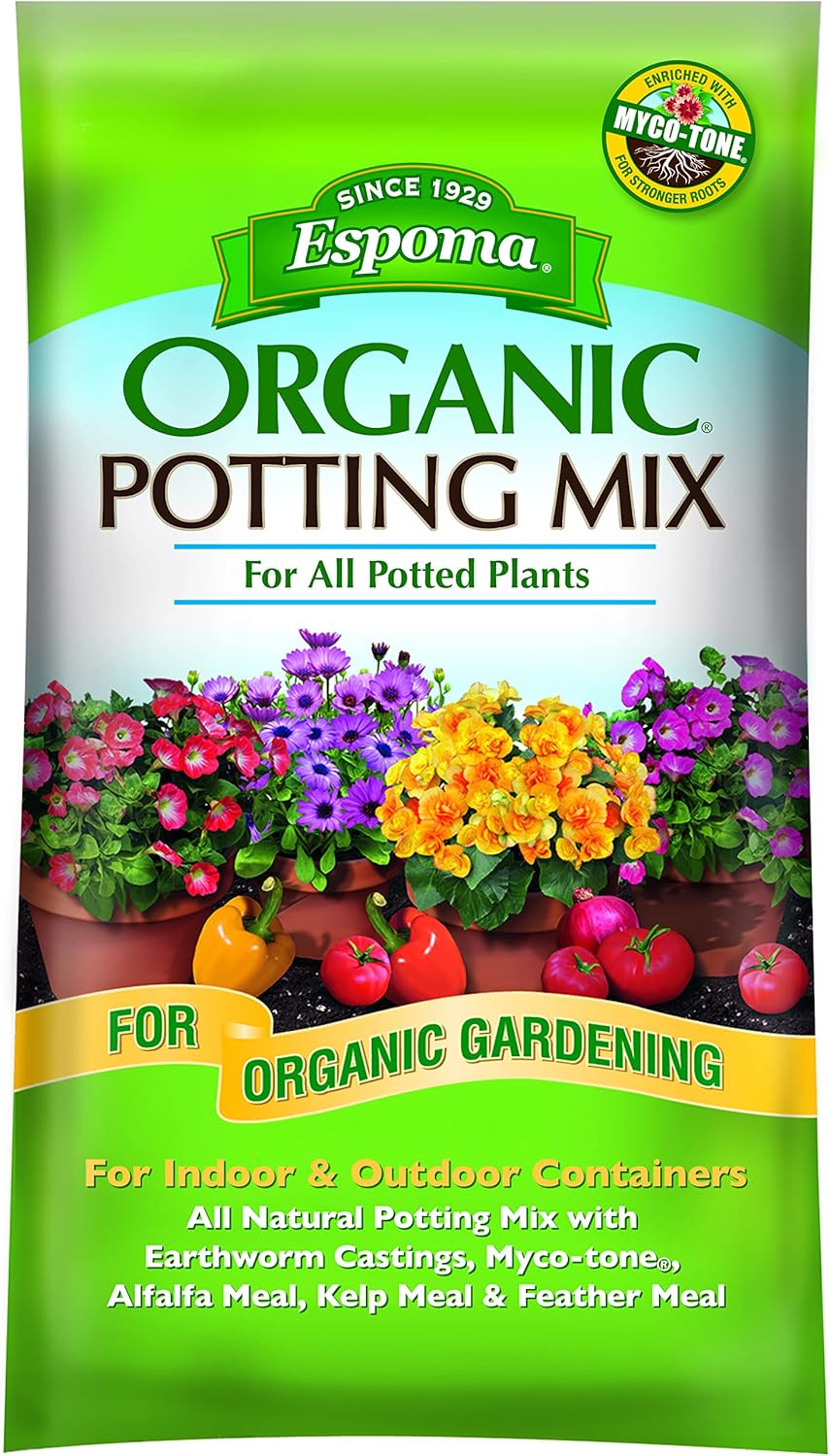
Espoma Organic Potting Mix, 16-Quart
| Brand Name | Espoma |
|---|---|
| Style Name | Mix |
| Volume | 16 quarts |
Espoma Organic Potting Mix is a ready-to-use, organic blend intended for container gardening and repotting. It combines sphagnum peat moss, humus and perlite with organic amendments such as earthworm castings, alfalfa meal, kelp meal and feather meal to provide a light, well-draining medium that still holds moisture for roots. The formula includes a mycorrhizal inoculant to help root establishment when transplanting or starting plants in pots. Use it for strawberries in containers by filling pots or planters, planting crowns at the proper depth, and watering to keep the mix evenly moist without waterlogging. Practical benefits are that it is organic, free of synthetic fertilizers, and balanced for a wide range of edible and ornamental container plants. Limitations are the modest bag volume for larger projects and that peat-based mixes will gradually compress and may need occasional refreshment or top-up for long-term containers.
Best for: Buyers who want an organic, ready-to-use potting mix that supports strawberries and other edibles in containers and value natural amendments and easier transplant establishment.
Less Ideal for: Gardeners needing bulk soil for raised beds or large-scale planting should choose a larger volume product or bulk soil option.
- Organic blend with natural amendments suitable for edible containers
- Contains perlite for good drainage and aeration in pots
- Includes mycorrhizal inoculant to support root growth after transplanting
- Peat-based mix that can compress over time and may need refreshing
- 16-quart bag is small for multiple or large containers
Verdict: A convenient, organic potting mix designed to give container strawberries healthy root growth and balanced nutrition from the start.
FoxFarm Strawberry Fields Fruiting & Flowering Potting Soil, 1.5 cu ft

| Volume | 1.5 cubic feet |
|---|---|
| Ingredients | Coco fiber, sphagnum peat moss, aged forest products, perlite, fertilizer (earthworm castings, oyster shell, dolomite lime) |
| Item Highlight | Mycorrhizae, moisture retention, nutrient uptake |
FoxFarm Strawberry Fields is a ready‑to‑use potting mix aimed at boosting blooms and fruit set in containers and garden beds. It combines a high proportion of coco fiber for water retention with sphagnum peat, perlite and aged forest products to create an airy yet moisture‑holding medium. The blend also includes mycorrhizae and a fertilizer based on earthworm castings and oyster shell to encourage root colonization and steady nutrient uptake during the flowering and fruiting stages. In practice this mix is easy to use: lightly pack around roots, water thoroughly, and it holds moisture longer than coarse mixes while still draining thanks to perlite. For container strawberries it helps reduce watering frequency and can improve fruit production compared with basic potting soils. The main downsides are that nutrient levels are preset so heavy feeders may need supplemental fertilizer over the season and coco/peat components can compress over time requiring occasional refresh or topdressing.
Best for: Gardeners focused on maximizing bloom and fruit production in container strawberries who want a ready‑made mix that improves moisture retention and encourages root health.
Less Ideal for: Growers who prefer to custom‑mix their media or those who need a long‑term, high‑strength fertilizer schedule without supplementing the soil.
- Formulated specifically to support flowering and fruiting plants like strawberries
- High coco fiber content improves water retention in containers
- Contains mycorrhizae to promote root efficiency and nutrient uptake
- Includes organic‑derived fertilizers such as earthworm castings for initial nutrition
- Preblended nutrient levels may be insufficient for heavy‑feeding plants over a full season
- Coco fiber and peat components can compress or deplete and may require periodic refresh
Verdict: Choose this mix when you want a container soil that holds moisture, supports roots with mycorrhizae, and is built to boost flowering and fruiting in strawberries.
Burpee Premium Organic Potting Mix with Coconut Coir (9 Qt)

| Item Form | Powder |
|---|---|
| Specific Uses For Product | Plant Growth, Root Development, Seed Development, Soil Conditioning |
| Coverage | 9 Qt Container |
| Included Components | Fertilizer |
| OMRI Listed | Yes |
Burpee Premium Organic Potting Mix is a ready-to-use container blend designed to give seedlings and established container plants a balanced growing medium. The mix combines coco coir for improved aeration and moisture retention with organic nutrients that feed plants for up to three months, so it is typically used to fill pots, planters, and small raised beds for vegetables, herbs, and flowers. Practical features include OMRI listing for organic gardening and a lightweight powder form that is easy to work into pots and seed trays. In practice it helps maintain even moisture without waterlogging, supports root development for transplanting, and reduces watering frequency compared with plain garden soil. Limitations are the small 9-quart bag size, which means you will need multiple bags for larger container setups, and the product is a general-purpose mix rather than a strawberry-specific formulation, so you may still want to supplement with strawberry-aimed fertilizer or add extra drainage amendments for very wet climates.
Best for: Gardeners who want a reliable, low-fuss organic potting mix to optimize container-grown strawberries and other edibles without frequent fertilizing or complex amendments.
Less Ideal for: People planning to fill large beds or many strawberry pots at once who prefer a crop-specific or bulk soil solution should consider larger or specialty products instead.
- OMRI-listed organic mix suitable for organic container gardening
- Coco coir improves moisture retention while maintaining good aeration
- Includes slow-release nutrients that feed plants for up to three months
- Lightweight, easy-to-handle bag and fine texture suited to seed starting and transplanting
- Small 9-quart bag requires multiple purchases for several containers or larger planters
- General-purpose formula not customized specifically for strawberries
Verdict: A compact, OMRI-listed potting mix that simplifies container strawberry growing by combining coco coir for moisture balance with built-in nutrients for several months of growth.
Doter Organic Strawberry Potting Mix (1 qt)

| Unit Count | 32 Ounce |
|---|---|
| Item Type Name | Garden soil |
| Manufacturer | Doter |
| Volume | 1 quarts |
This 1 qt Doter strawberry potting mix is designed to give container strawberries a balanced, easy start. It blends organic matter and soil conditioners to improve aeration and water retention while maintaining a pH aimed at strawberry health. Typical use is repotting seedlings or topping up small containers and window boxes; the slow‑release nutrients mean you can plant and then rely on the mix to support the crop through early growth without intensive feeding. The mix is compact and convenient for small projects or trialing varieties, and the safety guidance about dust and compost content is useful when handling. Limitations are obvious: the 1 quart volume is small so you will need multiple bags for larger planters or many pots, and the listing gives limited specifics on exact ingredient ratios or fertilizer N-P-K numbers, so heavier feeders or long-season crops may need supplemental fertilizer later.
Best for: Growers who want an affordable, ready‑to‑use mix to start or refresh strawberries in small containers and window boxes without mixing amendments.
Less Ideal for: Gardeners planting many containers, large raised beds, or those who need precise fertilizer formulations should choose larger or more specified mixes.
- Formulated specifically for strawberries with pH balance for better root uptake
- Contains organic matter and soil conditioners to improve aeration and moisture retention
- Slow‑release nutrient formula reduces the need for immediate feeding
- Convenient 1 qt package suitable for small containers and trial plantings
- Small 1 quart volume requires buying multiple bags for larger container projects
- No detailed N‑P‑K or ingredient percentages provided for precision feeding
Verdict: A compact, strawberry‑focused potting mix that makes starting or refreshing plants in small containers simple and budget friendly.
Omitgoter All-Natural Strawberry Potting Mix, 4 qt

| Brand Name | Omitgoter |
|---|---|
| Unit Count | 128 Ounce |
| Volume | 4 quarts |
| Style Name | Well-draining, Bonsai-specific |
This Omitgoter potting mix is a ready-to-use, organic blend designed specifically for strawberries and container growing. It mixes peat moss, coconut coir, perlite, worm castings, and humus to deliver light, airy media that drains well while holding enough moisture for fruiting plants. In practice you can use it straight from the bag for seed starting, transplanting into pots, or topping up containers without additional amendments. The presence of worm castings and humus supplies slow-release nutrients that support flowering and fruit set, and the perlite and coconut fiber improve aeration to reduce root rot risk in small containers. Because it is marketed as all-natural with no synthetic additives, it suits gardeners who want a simple, chemical-free option for edible crops. Limitations to note are the small 4 quart volume, which means multiple bags are needed for even a few 6 to 8 inch pots, and it does not list specific N-P-K values or long-term feeding rates, so you may still need to supplement with fertilizer over the season for heavy feeders.
Best for: Gardeners who prioritize reliable, chemical-free growing media for container strawberries and want a simple plug-and-play mix that supports plants through seedling to fruiting stages.
Less Ideal for: Gardeners who need large volumes for raised beds or entire plantings without buying many bags or those who want exact commercial fertilizer formulations built into the mix.
- Formulated for strawberries with organic ingredients suited to fruiting and flowering
- Good drainage and aeration from perlite and coconut coir to protect roots in containers
- Contains worm castings and humus for slow-release organic nutrients
- Ready-to-use straight from the bag, convenient for beginners and container growers
- Small 4 quart bag requires multiple purchases for several containers
- No detailed nutrient analysis or N-P-K values provided
Verdict: A convenient, all-natural potting mix that reliably gives container strawberries good drainage and organic feeding without any pre-mixing.
Miracle-Gro Organic Outdoor Potting Mix, 16 qt.

| Unit Count | 1 Count |
|---|---|
| Item Highlight | Plant Soil For Outdoor Container Plants, Contains Quick-Release Natural Fertilizer, OMRI Listed |
| Volume | 1 cubic feet |
| Item Weight | 13.1 pounds |
This 16 qt. bag of Miracle-Gro Organic Outdoor Potting Mix is blended for outdoor containers and supplies a moisture-retentive, peat-based growing medium with a quick-release natural fertilizer that feeds for up to two months. It is intended for use in pots: partially fill a container, loosen the plant root ball, settle the plant in the mix, top up and water thoroughly. Notable features include responsibly sourced peat, upcycled green waste in the blend, and OMRI listing for organic use, which makes it suitable for edible containers like strawberries. The mix is locally crafted and designed to hold moisture against heat and wind, helping container strawberries stay consistently moist without becoming waterlogged when paired with pots that drain. Limitations are that nutrient release lasts about two months so you will need to supplement feeding for fruiting plants over the season, and the bag size covers one 12-inch pot so larger or multiple strawberry containers require additional bags or larger volumes of soil.
Best for: Gardeners who want an organic, ready-to-use potting mix for outdoor container-grown strawberries and value verified organic ingredients and practical moisture retention.
Less Ideal for: Growers who prefer peat-free or large-scale soil volumes for many containers should consider alternatives or bulk mixes instead.
- OMRI listed and contains natural quick-release fertilizer suitable for organic container gardening
- Formulated to retain moisture in outdoor conditions like sun and wind
- Includes responsibly sourced peat and upcycled green waste for a consistent blend
- Fertilizer feeds only up to two months so ongoing feeding is required for fruiting strawberries
Verdict: A vetted organic potting mix that makes starting and maintaining strawberry plants in single outdoor containers easy and reliable.
Miracle-Gro Organic Indoor Potting Mix, 16 qt.

| Unit Count | 1 Count |
|---|---|
| Item Type Name | Miracle-Gro Organic Indoor Potting Mix |
| Style Name | Indoor |
| Volume | 1 cubic feet |
Miracle-Gro Organic Indoor Potting Mix is a ready-to-use organic blend intended for seed starting and container-grown houseplants. It combines coir for improved air space and moisture holding capacity with sphagnum peat moss to retain and slowly release water, plus a quick-start natural fertilizer to give newly potted plants an early nutrient boost. Typical use is filling pots or seed trays with the mix, transplanting seedlings by loosening the root ball and filling around roots, then watering and allowing drainage. Practical benefits include better moisture regulation to reduce both over- and under-watering and an OMRI listing for organic use, which is reassuring if you prefer organic inputs. The bag size fills a standard 12-inch container, so it is convenient for one-plant projects and seed batches. Limitations are the relatively small 16 qt. volume for larger container plans and that the mix includes peat which some gardeners avoid for sustainability reasons. For best results with fruiting container plants like strawberries, use pots with drainage and consider supplementing nutrients over the growing season for heavy feeders.
Best for: Buyers who want a dependable, organic-certified potting mix for single pots, seed starting, or small container strawberry plants and who prioritize easy moisture control and predictable performance.
Less Ideal for: Gardeners planning to fill many large containers or large strawberry tower systems should choose bulk potting mix or blends formulated specifically for heavy-feeding fruit crops.
- Formulated to help regulate moisture, reducing over- and under-watering.
- OMRI listed for organic use, suitable for organic container gardening.
- Includes coir and peat moss for a balance of aeration and water retention.
- Contains quick-start natural fertilizer to support seedlings and recent transplants.
- 16 quart bag is small for multiple or large containers.
- Contains sphagnum peat moss, which some buyers avoid for environmental reasons.
Verdict: A compact OMRI-listed indoor potting mix that delivers reliable moisture balance and starter nutrition for container-grown strawberries and other small indoor plantings.
Choosing the Right Soil for Strawberries in Containers: Key Factors to Consider
Moisture Retention Versus Drainage Balance
Strawberries in containers need a soil that holds enough moisture to feed developing fruit between waterings but also drains freely so roots do not sit in water. A mix with too much fine organic matter or compactable peat will stay wet and encourage root rot, while a mix that is too coarse or very fast-draining will leave plants dry and stressed during hot weather.
When choosing a soil, look for a blend that combines water-retentive components such as aged compost or coco coir with chunky drainage ingredients like perlite, pumice, or coarse sand. That balance reduces watering frequency without sacrificing oxygen to the roots, which is especially important in small pots that experience rapid temperature swings.
Nutrient Profile and Release Pattern
Container strawberries rely entirely on what the potting mix and any added fertilizers provide. A good soil supplies a baseline of nutrients and supports predictable feeding. Some mixes include slow-release fertilizer for several weeks, which can simplify early season care, while others are intentionally low in nutrients so you control fertilization precisely.
Consider your fertilizing plan and how often you want to amend. For gardeners who prefer minimal feeding, choose a mix with a balanced slow-release formula. If you use liquid feeding or organic fertilizers regularly, a leaner base mix with good structure is usually preferable so nutrient salts do not build up quickly.
Physical Structure and Longevity
Soil structure determines how long a container will maintain good aeration and drainage. Organic components break down over time, causing compaction and reduced pore space, which impairs root growth. Lightweight amendments like perlite or pumice keep mixes open; fibrous materials like coir or shredded bark slow compaction better than plain peat.
Think about how long you plan to keep plants in a container before repotting. Annual repotting or topping up the soil can tolerate faster-breaking mixes, but if you want to keep strawberries in the same pot for multiple seasons, choose a mix with components that resist rapid decomposition to maintain a healthy root environment.
pH and Suitability for Strawberries
Strawberries prefer slightly acidic to neutral soil. A potting mix that holds pH in the 5.5 to 6.8 range makes micronutrients more available and reduces stress-related problems. Some mixes include lime or other pH-adjusting materials; others leave pH neutral so you can adjust with additives.
If your water supply is alkaline or if you plan to use alkaline fertilizers, select a mix formulated to retain appropriate acidity. Gardeners using rainwater or acidic inputs may require less adjustment. Periodic pH checks in containers help you catch drift before fruit development is affected.
Weight and Handling for Container Types
The weight of the soil matters when filling many pots or mounting planters in elevated positions. Heavier mixes with garden compost or mineral aggregates can burden hanging baskets or balcony planters. Lighter mixes based on coir and perlite are easier to handle and reduce stress on containers and supports.
Also consider how the media behaves during watering and transport. Heavier soils hold more water and place more load on container walls, and very lightweight mixes may dry faster and need more frequent watering. Match the soil weight to the container material and mounting location.
Drainage Features and Pot Preparation
Drainage is only as good as the whole container system. Even the best soil will hold water if pots lack adequate holes or become blocked. Use soil that works with your drainage strategy, whether that is simple bottom holes, adding a coarse layer at the base, or using self-watering containers with reservoirs.
Also think about how quickly the soil will leach salts with regular fertilizing. Better-structured mixes leach excess salts more evenly, reducing the risk of fertilizer burn in the root zone. For container strawberries, predictable water movement through the pot is as important as the mix itself.
Choosing a Mix for Small Pots and Hanging Baskets
Small pots and hanging baskets dry out faster and tolerate less root volume, so favor mixes that combine fast drainage with good water-holding particles. Look for media with a high percentage of chunky aeration components and water-retentive fibers that swell slowly rather than collapsing once wet.
In these confined volumes, regular feeding is more important because nutrient reserves are limited. A lightweight mix that holds moisture but allows air to circulate will reduce stress and support steady flowering and fruit set.
- Prefer perlite or pumice over fine sand to maintain air pockets.
- Use a coir-based mix for better water retention without excessive compaction.
- Plan for more frequent, lighter feedings than in-ground plantings.
Soil Choices for Large Planters and Raised Containers
Larger containers buffer temperature and moisture fluctuations better, allowing for mixes with greater organic content and longer nutrient reserves. In big planters, you can include more compost or well-rotted manure to supply sustained fertility, while still adding drainage components to prevent waterlogging.
These bigger volumes also let you design layers or integrated irrigation systems more effectively, which affects your ideal soil blend. If you use in-pot watering or drip tubing, choose a mix that wets evenly to avoid dry pockets.
- Increase organic matter proportion for longer feeding intervals.
- Ensure uniform wetting characteristics if using drip or wick systems.
- Include coarse aggregates near drainage outlets to prevent clogging.
Organic Versus Synthetic Fertility Strategies
Organic mixes often include composted material and slow-release nutrient sources that feed plants steadily, which is attractive for gardeners wanting to avoid synthetic fertilizers. However, organic media can decompose faster and tie up nitrogen temporarily unless well-matured.
Synthetic or inert base mixes with controlled-release granules give predictable nutrient availability and less biological variability. Both approaches work for container strawberries, so choose based on how you prefer to feed, whether you want microbial life in the pot, and how hands-on you want your maintenance to be.
- Organic mixes support soil life but may require topping up as they break down.
- Inert mixes let you control nutrient dosing precisely with liquid feeds.
- Combine approaches by adding compost in moderation to inert bases for best of both worlds.
Managing Watering and Fertility Through the Season
Strawberries need consistent moisture while flowers set and fruits swell. Monitor pots frequently during heat spells and after rains, and adjust watering so the top inch of soil remains slightly moist but not soggy. Use a visual and tactile check rather than relying only on a fixed schedule.
Fertilize according to the mix you chose: blends with slow-release inputs need less frequent feeds early on, while lean mixes benefit from regular balanced liquid feeds. Watch plant vigor and fruit size as cues to adjust feeding rate rather than following a rigid calendar.
- Check moisture at the root crown periodically, not just the surface.
- Flush containers lightly after heavy feeding to prevent salt buildup.
- Reduce nitrogen in late season to encourage fruiting instead of foliage growth.
Preparing and Refreshing Potting Soil Between Seasons
Container soil degrades over time, losing volume and structure and concentrating salts from fertilizers. Each season consider topping up the surface with fresh mix or repotting entirely if the media has compacted. Removing old roots and replacing a portion of the soil helps prevent disease carryover and restores aeration.
For multi-year containers, replace at least one-third of the potting mix annually or fully repot every two seasons depending on how quickly the original mix breaks down. Sterilize or discard media that shows signs of persistent disease or pest infestation.
- Top-dress with fresh mix and compost in spring to renew nutrients.
- Inspect root systems during repotting to check for rot or overcrowding.
- Avoid filling pots with only garden soil when refreshing; blend with lightweight potting media.
How We Chose the Best Soil for Strawberries in Containers
We prioritized mixes and media formulations that address the main challenges of growing strawberries in containers: maintaining consistent moisture without waterlogging, providing readily available nutrients for flowering and fruiting, and offering a stable structure that resists rapid compaction or breakdown. Evaluation criteria included moisture retention versus drainage balance, nutrient profile and release behavior, physical structure and aeration, and suitability for container sizes and exposed outdoor conditions. To narrow candidates we favored blends designed for fruiting container crops or lightweight potting mixes amended for berries, and excluded heavy garden soils, plain topsoil, or products formulated only for ornamental bedding where nutrient and drainage needs differ. We also filtered out mixes with poor ingredient transparency or those that rely solely on peat without added aeration or drainage components. The resulting picks reflect soil behavior you can expect in pots, not lab test claims.
FAQ
How often should I water strawberries in containers?
Usually daily to every few days in warm weather depending on pot size and mix. Small pots dry fastest. Check the top inch for moisture and adjust; aim to keep the root zone evenly moist but not waterlogged.
Can I use garden soil in a strawberry container?
Garden soil is generally too dense for containers and can compact, reducing oxygen to roots. If used, it should be mixed with coarse amendments and compost, but a purpose-made potting mix is usually a better starting point.
Should I add fertilizer to pre-mixed potting soils?
It depends on the mix. Many potting soils include initial or slow-release fertilizer. If the mix is low-nutrient or you want control, supplement with regular liquid feeds during the growing season.
What pH should container soil be for strawberries?
Aim for slightly acidic to near-neutral, typically about pH 5.5 to 6.8. This range keeps most micronutrients available and supports healthy berry development.
How can I prevent soil compaction in pots?
Use mixes with coarse components such as perlite or pumice and include fibrous materials like coir. Avoid heavy, fine-textured materials and refresh or repot when the mix shows signs of compaction.
When should I replace potting mix for strawberries?
Top up soil annually and consider full repotting every one to two seasons depending on how quickly the mix breaks down and how vigorous the plants remain. Replace sooner if you see root rot, persistent pests, or severe compaction.
Final Verdict
Choosing the best soil for strawberries in containers comes down to balancing drainage, water retention, and nutrient availability for the pot size and location you use. Smaller pots need faster-draining yet moisture-holding mixes and more frequent feeding, while larger containers allow richer organic content and longer intervals between amendments. Prioritize a stable structure that resists compaction, a nutrient strategy that matches how you like to feed, and a pH that keeps micronutrients available. With those tradeoffs in mind, you can pick a soil that reduces watering stress and supports steady fruit production season after season.
