

Note: This article contains affiliate links. If you click on these links and make a purchase, I may earn a small commission at no extra cost to you. This helps support my research and content. Read my full affiliate disclosure here.
Squirrels can be charming until they start stripping bulbs, digging in raised beds, or raiding bird feeders. Choosing the right squirrel repellent for yards matters because different products behave very differently in a real outdoor space. You need solutions that actually deter local squirrels while fitting your routine for reapplication, planting plans, and pet safety. This guide shortlists the top picks for yard use and walks through how each option performs on effectiveness, ease of application, and how it holds up in weather. Read on to see which product types suit flower beds, vegetable plots, lawns, or ornamental plantings and why those evaluation criteria matter.
Top Picks at a Glance
| Best Overall The best all-around choice for most situations | CKCOEO Solar Ultrasonic Animal Repellent with Motion Sensor and Strobe Light |  |
| Best Quality Built to a higher standard if you want something more solid | Broox RB-101 Solar Ultrasonic Animal Repellent |  |
| Best Value The sweet spot between price and what you get | ROTIAH Peppermint Oil Pest Rodent Repellent Pellets, 24-Pack |  |
| Best Budget The cheapest option that still gets the job done reliably | Crobirware 16-Pack Peppermint Squirrel Repellent Pouches |  |
| Highest Rated A top-rated pick with lots of positive feedback | Migdracy Squirrel Repellent Balls, 10-Pack, Plant-Based Pouches |  |
| Most Popular A crowd favorite that many people choose with confidence | Messinas Squirrel Stopper Repellent Spray, 32 oz |  |
CKCOEO Solar Ultrasonic Animal Repellent with Motion Sensor and Strobe Light

| Power source | Solar |
|---|---|
| Detection angle | 150 degrees |
| Detection range | 25-30 ft |
| Waterproof rating | IP65 |
This solar ultrasonic repellent combines a PIR motion sensor, high-frequency sound pulses, and a flashing strobe to keep small mammals out of gardens and yards. Install it on a stake about 9 to 10 inches above the ground or hang it on a fence facing animal paths; when the sensor detects movement within about 25 to 30 feet and 150 degrees, the unit emits ultrasonic bursts and a bright LED flash for immediate deterrence and then returns to standby. The built-in solar panel charges the internal battery so the device runs after dark without wiring, and the IP65 ABS housing tolerates rain and sprinklers for year-round outdoor use. Practical benefits include easy, tool-free setup, chemical-free operation, and coverage that targets a wide range of species. Limitations to note are the need for good sun exposure to maintain charge, an advertised adjustment period of a few weeks for persistent animals, and the typical line-of-sight requirement of ultrasonic devices which reduces effectiveness around dense vegetation or obstructed approaches.
Best for: Gardeners and yard owners who want a low-maintenance, chemical-free deterrent that can be set-and-forgotten to reduce small mammal damage around beds and lawns.
Less Ideal for: People with shaded sites that get little direct sun or those who need immediate, guaranteed removal of persistent animals in heavily obstructed areas.
- Solar-powered with on-board charging so it runs at night without external power
- PIR motion sensor covers up to about 150 degrees and 25–30 feet for triggered activation
- IP65-rated ABS housing protects electronics from rain and outdoor conditions
- Dual-action deterrent using ultrasonic pulses plus flashing LED to startle animals
- Performance depends on direct sunlight for reliable charging and runtime
- Ultrasonic effectiveness is reduced by obstacles and may take weeks for animals to adapt or leave
Verdict: A hands-off, solar-powered ultrasonic repeller that gives practical, weatherproof protection against squirrels and other small pests for sun-exposed gardens.
Broox RB-101 Solar Ultrasonic Animal Repellent

| Target Species | Cat, Dog, Rabbit, Raccoon, Skunk, Squirrel |
|---|---|
| Infrared sensor angle | 110 degrees |
| Detection range | 20-25 feet |
| Power supply | Solar plus 3 Ni-MH rechargeable batteries with USB charging |
The Broox RB-101 is a weatherproof, solar-powered ultrasonic animal repellent intended to keep gardens and yards clear of cats, squirrels, raccoons, deer and similar animals. It mounts in the ground or on a wall, uses an infrared motion sensor to trigger ultrasonic tones and a flashing LED, and offers five frequency modes and a sensitivity knob so you can match output to different species and detection distances. Practical benefits include solar charging with USB backup so it can run with minimal maintenance, a 110 degree sensor sweep and roughly 20–25 foot detection range for decent coverage of small to medium areas, and clearly labeled mode settings that make it easy to adjust. Limitations are that effectiveness depends on animals being sensitive to ultrasonic frequencies and on correct placement and orientation, and some users may not hear the device because the sound is above human hearing range. The unit is a straightforward, low-effort option for reducing nuisance wildlife where a humane, nonchemical approach is preferred.
Best for: Someone who wants a low-maintenance, humane way to discourage common garden pests and prefers configurable settings to tailor coverage to specific animals and areas.
Less Ideal for: People needing guaranteed removal of burrowing or hearing-insensitive animals or those who require a solution for very large acreage beyond the stated detection range.
- Solar panel with USB backup reduces need for frequent battery changes
- Adjustable frequency and sensitivity knobs let you target different species and distances
- Motion-activated ultrasonic sound plus flashing LED adds both audio and visual deterrence
- IP65 weatherproof construction suitable for outdoor exposure
- Relies on animals being able to hear ultrasonic frequencies so it will not affect all species
- Effectiveness depends on correct placement and periodic repositioning if animals habituate
Verdict: A simple, weatherproof solar ultrasonic repeller with adjustable frequency and motion detection that offers a low-effort, humane way to reduce common garden pests.
ROTIAH Peppermint Oil Pest Rodent Repellent Pellets, 24-Pack

| Item model number | PT-QSW |
|---|---|
| Manufacturer | ROTIAH |
| Date First Available | April 1, 2026 |
| ASIN | B0FVLPXRNY |
This ROTIAH repellent uses concentrated peppermint and lemon essential oils in premeasured pellets that slowly release scent to discourage rodents and small pests. Use is straightforward: open the sealed pellet, drop it into the included mesh bag and place the pouch where you see activity—kitchens, garages, attics, vehicle engine bays and storage areas are all listed uses. Each pellet is stated to scent roughly 120 sq ft and to last up to 30 days, so the pack can cover multiple trouble spots over time. The natural formula and lack of toxins make it a safer alternative to poison or sticky traps around family spaces and pets, and the lemony aroma is more pleasant than many chemical repellents. Limitations are that effectiveness depends on scent levels and placement so results can vary in heavy infestations, and pellets will need regular replacement to maintain protection rather than offering an ongoing mechanical or lethal solution.
Best for: Buyers who want a low-risk, easy-to-deploy deterrent to reduce occasional rodent or pest activity around the home, garage, or vehicle without using poisons.
Less Ideal for: People dealing with heavy, established infestations or those who need immediate removal rather than deterrence should look at more aggressive control methods.
- Natural essential-oil formula that avoids poisons or glue traps
- Easy four-step use with mesh bags for quick placement
- Each pellet covers about 120 sq ft and is claimed to last up to 30 days
- Suitable for indoor and outdoor problem areas including vehicles and storage spaces
- Effectiveness relies on maintaining scent so frequent replacement is required for continuous protection
- May be less effective in severe infestations where professional measures are needed
Verdict: Choose this pack if you want a nonpoisonous, easy-to-place peppermint oil deterrent for routine prevention and spot treatment of household rodents and pests.
Crobirware 16-Pack Peppermint Squirrel Repellent Pouches

| Ingredients | peppermint |
|---|---|
| Package contents | 16 pouches |
| Manufacturer | Crobirware |
| Date First Available | March 12, 2026 |
These Crobirware pouches use peppermint as the active scent to discourage squirrels, chipmunks, and similar rodents from chewing plants, bird feeders, and exposed wiring. You place the small pouches where you see activity — in flower beds, near feeders, along fences, or inside sheds and attics — and the scent provides continuous, passive deterrence without sprays or traps. The product is marketed as non‑toxic and biodegradable, so it is suitable for areas used by children and pets where contact is unlikely. Because the pack contains 16 pouches, it is convenient for treating multiple spots around a typical yard without frequent repurchases. Limitations include reliance on scent only, which some persistent animals may ignore, and the need to replace pouches as the fragrance dissipates after weather exposure or several weeks. This is a low‑effort, low‑risk option that works best as part of broader squirrel control measures like securing food sources and physical exclusion.
Best for: A yard owner looking for an affordable, low‑effort way to reduce squirrel activity around flower beds, feeders, and outbuildings who prefers non‑toxic options.
Less Ideal for: People facing heavy, entrenched infestations or who need immediate removal should consider traps or exclusion methods instead.
- Contains 16 pouches for treating multiple areas
- Uses plant‑based peppermint ingredient rather than poisons
- Non‑toxic and biodegradable formulation suitable for family yards
- Simple passive placement requires no tools or installation
- Works by scent only so effectiveness can vary with persistent animals
- Pouches will need replacement after exposure to weather or after scent fades
Verdict: Buy this if you want a budget friendly, non‑toxic, scent‑based option to reduce squirrel activity across multiple spots in a yard.
Migdracy Squirrel Repellent Balls, 10-Pack, Plant-Based Pouches

| Ingredients | Peppermint oil, garlic oil, putrescent egg solids, corn cobs |
|---|---|
| Package quantity | 10 pouches |
| Suggested coverage | 1–2 pouches per 50 sq ft |
| Longevity | 30–60 days per pouch |
These repellent balls are small breathable pouches filled with corn cobs and a plant-based scent mix (peppermint oil, garlic oil and putrescent egg solids) designed to discourage squirrels, skunks, chipmunks and raccoons from specific areas. Use is straightforward: open a pouch and place 1–2 per 50 square feet in gardens, under decks, in attics or near vehicle engines where animals are a problem. The corn cob carrier claims a slow scent release for roughly 30–60 days, so they can provide weeks of protection without messy sprays or ongoing maintenance. The drawstring pouches make placement and replacement tidy, and a 10-pack gives flexible coverage for small yards or several hotspots. Limitations are that effectiveness depends on placement and local animal behavior, and they are odor-based so heavy rain or very windy sites may reduce longevity and impact. These work best as a low-effort, nonlethal layer of deterrence combined with exclusion or habitat modifications for more persistent problems.
Best for: Buyers who want a low-maintenance, nonlethal deterrent that can be placed around gardens, attics and vehicles and prefer plant-based solutions that do not require sprays or frequent upkeep.
Less Ideal for: People needing immediate removal of entrenched pests or those who require solutions that work reliably in constantly wet or exposed, windy locations.
- Plant-based ingredients avoid harsh chemicals while targeting animal senses.
- Corn cob carrier formulated for slow scent release lasting multiple weeks per pouch.
- Drawstring, breathable pouches are clean and easy to position or replace.
- 10-pack provides flexible coverage for multiple problem areas.
- Scent-based deterrent can lose potency in heavy rain or windy conditions.
- Effectiveness varies with local wildlife habits and may not stop determined animals.
Verdict: A simple, low-effort plant-based option for people who want reliable, hands-off scent deterrence to reduce squirrel and small mammal visits around yards and structures.
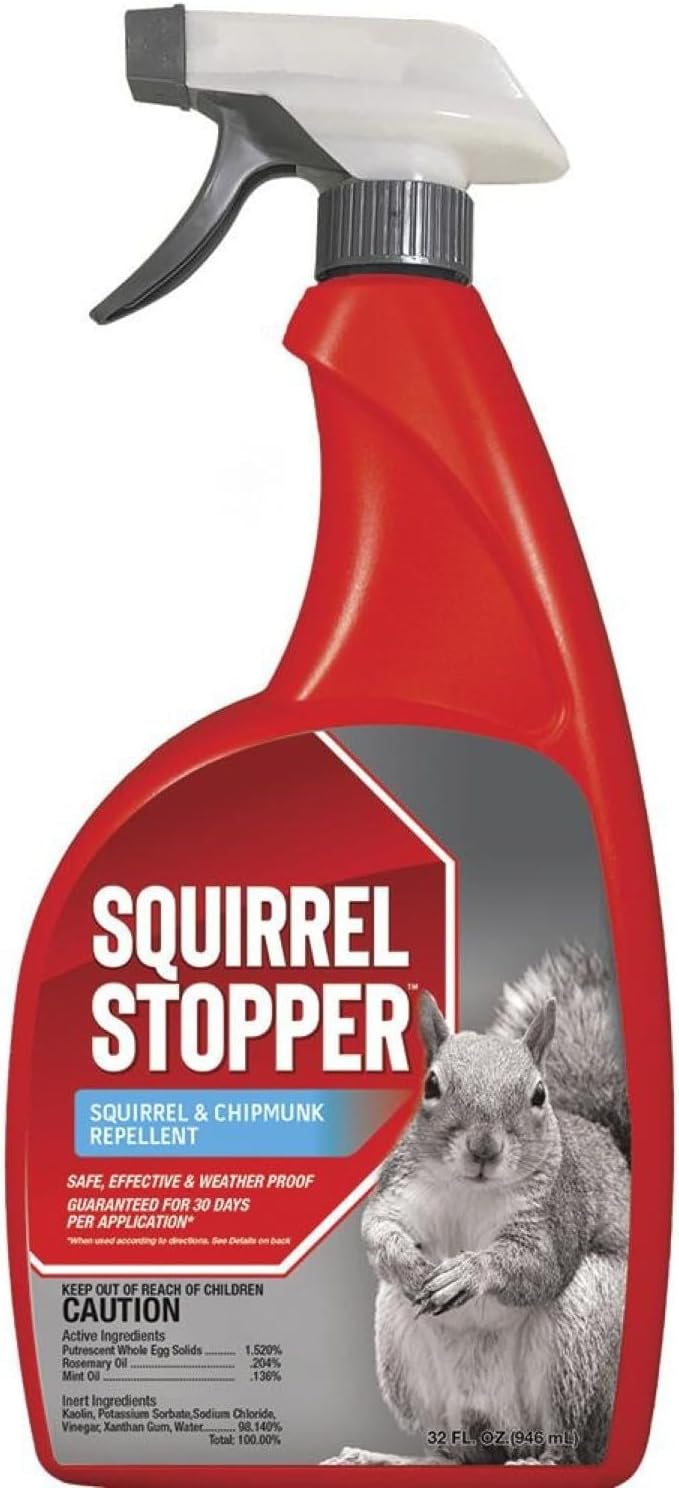
Messinas Squirrel Stopper Repellent Spray, 32 oz
| Item Volume | 32 fluid ounces |
|---|---|
| Item Form | Liquid |
| Scent Name | Cinnamon |
| Target Species | Bird |
| Coverage Area | Up to 1,000 sq. ft. per quart |
Messinas Squirrel Stopper is a 32-ounce trigger-spray repellent that creates a scent, taste, and touch barrier to discourage squirrels and chipmunks from chewing, digging, and nesting around your yard. You use it by misting a fine spray on problem areas — bird feeders, roof edges, attic vents, garden perimeters, patios, and car engines — and each application is intended to remain weather-resistant for about 30 days. The formula is plant-based and marketed as safe around children and pets when applied as directed, and it dries clear and largely odor-free. Practical benefits include easy spray application with no mixing, coverage of roughly 1,000 sq ft per quart, and the ability to treat varied surfaces indoors or out. Important limitations: do not spray directly on edible plants because it can cause damage, and results can vary with persistent animals or heavy pressure which may require earlier or more frequent reapplication. Some users also report mixed effectiveness in high-activity areas, so expect to combine this with exclusion or other deterrents for best results.
Best for: Buyers who want an easy, low-toxicity spray to reduce squirrel and chipmunk damage around feeders, structures, and outdoor living spaces and who prefer a humane, plant-based deterrent over traps or poisons.
Less Ideal for: Those seeking a guaranteed single-step solution for heavy or chronic infestations or someone who needs a repellent safe to apply directly on edible garden plants.
- Ready-to-use trigger spray for quick application with no mixing
- Plant-based formula safe for use around kids and pets when used as directed
- Weather-resistant protection that dries clear and covers up to ~1,000 sq ft per quart
- Versatile — suitable for bird feeders, attics, vehicles, patios, and garden perimeters
- Should not be applied to edible plants or directly on food crops
- May require more frequent or combined measures in areas with persistent squirrel activity
- Effectiveness can vary by local animal pressure and individual behavior
Verdict: A convenient, plant-based spray for homeowners who want a humane, easy-to-apply way to reduce squirrel and chipmunk activity around yards and feeders.
Choosing the Right Squirrel Repellent for Yards: Key Factors to Consider
How the Repellent Works
Different squirrel repellents use scent, taste, visual deterrents, or motion and sound to change squirrel behavior. Scent- and taste-based products rely on odors or flavors squirrels find unpleasant; these can be effective where squirrels forage but may need reapplication after rain. Visual and motion deterrents alter the environment so squirrels avoid an area, which can be useful around feeders or specific planting beds.
Understanding the mechanism matters because it determines where the repellent will be most effective. For example, a taste deterrent does well protecting bulbs and plants squirrels nibble, while a motion-based device is more useful for open lawn areas or near feeders. Match the mechanism to the squirrel behavior you see in your yard.
Application Method and Frequency
Some repellents are simple granular or spray formulations you scatter or mist over affected areas, while others are devices that emit sound, motion, or flashing light. Granules and sprays often require periodic reapplication after heavy rain or irrigation. Devices need placement and battery or power maintenance and may require occasional repositioning to stay effective.
Consider how much time you are willing to spend on upkeep. If you prefer a low-maintenance approach for beds and borders, prioritize products with longer residual action or weatherproof housings. If you can regularly reapply treatments, more active scent or taste options may fit well.
Coverage Area and Scalability
Yards come in many sizes, and a product that works for a small ornamental bed may be impractical for an acre of lawn. Check typical coverage area per unit or per application and plan how many units or how much product you will need. Devices usually list an effective radius, while sprays and granules state square feet per treatment.
Scalability also affects ongoing cost and effort. A single device that protects a wide area can be more convenient than several small units, but devices may be targeted to pathways and feeders rather than dense garden beds. Map problem spots in your yard first, then choose a solution that covers those zones efficiently.
Weather Resistance and Longevity
Outdoor repellents face rain, sun, and lawn irrigation. Weather-resistant formulations or water-repellent housings keep treatments working longer and reduce the frequency of reapplication. Some sprays bond to plant foliage or soil and last through light rain, while other scent-based treatments fade quickly after a downpour.
Longevity affects both effectiveness and convenience. A longer-lasting option reduces labor, but may require more careful placement to avoid impacting non-target areas. For areas with frequent rain or heavy irrigation, choose products designed to withstand moisture.
Safety for Pets, Children, and Wildlife
Because repellents are used in shared outdoor spaces, safety is a top concern. Many formulations are designed to be unpleasant to squirrels but safe for dogs, cats, and songbirds when used as directed. Still, read instructions for setbacks from feeders, edible plants, or play areas. Devices that use motion or sound typically avoid chemical exposure but can startle pets or nearby humans if placed too close.
Balance deterrent strength with acceptable risk. If you have curious pets or attract beneficial wildlife, choose options labeled safe for non-target animals and position treatments to limit accidental contact.
Impact on Garden Plants and Soil
Some repellents are formulated to be plant-safe and can be applied directly to bulbs, bulbs' planting sites, or foliage. Others should be kept away from tender shoots or directly edible parts of vegetable crops. Granular products that dissolve into the soil can affect surface moisture or pH slightly depending on composition.
Think about where you will use the repellent. For ornamental beds and non-edible plantings you may accept broader options, but for vegetable gardens and newly planted seedlings prioritize products explicitly safe for edible plants and root systems.
Matching Repellent Type to Yard Problems
Different yard situations call for different approaches. If squirrels are digging up newly planted bulbs in flower beds, a taste- or scent-based ground treatment applied around bulbs is often the most direct fix. If the problem is persistent raiding of bird feeders, a motion-activated device or feeder-mounted deterrent reduces visits without treating garden soil.
For lawns where squirrels dig for grubs or bury nuts, consider solutions that alter the squirrels' willingness to forage in that zone rather than trying to treat the entire lawn surface. Focus on buffers around planting beds, vegetable patches, and high-value ornamentals.
- Bulb and bed protection: taste or scent repellents applied at planting
- Bird feeder protection: motion devices or feeder-specific deterrents
- Lawn digging: targeted perimeter treatments and habitat modification
Placement Tips for Maximum Effect
Correct placement extends effectiveness and reduces non-target exposure. For sprays and granules follow label guidance for setbacks from edible plants and water sources. Place devices where squirrels typically enter or travel, such as fence lines, tree bases, and along hedgerows.
Avoid clustering devices in one spot and leaving other problem areas untreated. Rotating placement every few weeks can counter habituation if squirrels start ignoring a fixed deterrent location.
- Treat entry points and travel routes first
- Maintain recommended distances from play areas and water features
- Rotate device or spray placement periodically
Combining Methods for Longer Control
Using two complementary approaches often improves results. For example, a base layer of a scent-based ground treatment combined with a motion-activated device near feeders addresses both foraging and repeated visits. Combining methods reduces reliance on frequent reapplications of any single product.
When combining methods, stagger application intervals and monitor for signs of overuse on plants or unintended impacts on pets. Documenting which combination reduces activity fastest helps you streamline your long-term strategy.
- Base treatments prevent digging, devices stop repeat visits
- Stagger reapplication to maintain effectiveness
- Monitor and adjust to minimize non-target impacts
Seasonal Considerations for Yard Repellents
Squirrel behavior and repellent needs change with the seasons. Spring and fall are peak times for digging and bulb theft, so stronger or more frequent treatments may be needed. In winter, activity focuses on caching and sheltering, which may call for perimeter deterrents rather than plant treatments.
Adjust the type and frequency of treatments to match seasonal activity. Reducing applications in dormant seasons lowers labor and limits exposure to beneficial wildlife during migration and breeding periods.
- Spring and fall: focus on bulb and planting protection
- Summer: concentrate on feeders and young plants
- Winter: perimeter control and habitat modification
Maintenance and Troubleshooting
Regular inspection is key. Check treated areas after heavy rain, reapply where scent or taste is gone, and ensure devices are upright and powered. If squirrels appear to ignore a repellent, try relocating devices, increasing coverage, or switching mechanisms.
Keep a simple log of treatments and animal activity. Noting weather, application dates, and observed behavior helps identify patterns of effectiveness and tells you when to escalate to a different approach.
- Inspect after rain and reapply as needed
- Relocate or rotate devices if effectiveness drops
- Log treatments and animal activity to spot trends
How We Chose the Best Squirrel Repellent for Yards
We focused on practical, yard-oriented performance when narrowing the list of squirrel repellents. Criteria included deterrent effectiveness against common squirrel behaviors such as digging, bulb digging, and feeder raiding; application method and ease of use for garden and lawn settings; durability and weather resistance so treatments last between reapplications; and safety profile for people, pets, and desirable wildlife. We also considered coverage area so gardeners can estimate how many units or how much product they need for typical yard sizes, and the speed of action-whether a repellent acts immediately or needs repeated applications to be effective. Products were excluded if they required specialized equipment not suited to average homeowners, if they posed high risks to pets or non-target animals, or if their instructions depended on frequent, impractical maintenance. The final selection emphasizes approaches that balance real-world effectiveness with straightforward application and low ongoing effort. These evaluation dimensions align with the scorecard used for each entry so you can compare options on the same practical yard-care terms.
FAQ
Are scent-based repellents safe around vegetable gardens?
It depends on the formulation. Some scent-based repellents are labeled safe for use around edible plants when applied to the soil, while others should be kept away from leaves and fruit. Always follow product instructions and choose options specifically cleared for use in vegetable plots if that is your target area.
How often do I need to reapply a spray or granular repellent?
Frequency varies with product and weather. Many sprays and granules require reapplication after heavy rain or every few weeks during peak activity. Weather-resistant formulations can stretch intervals, but regular inspection is the best guide.
Will motion-activated devices scare away other wildlife or pets?
Motion devices can startle non-target animals and pets, especially if placed near pet paths or play areas. Position devices to avoid frequent triggering by pets and check settings for sensitivity where possible to reduce accidental activations.
Can repellents permanently stop squirrels from returning?
Repellents rarely offer a permanent solution on their own. They work best as part of an integrated approach that includes habitat modification, removal of attractants, and periodic treatment. Over time squirrels may habituate to a single tactic if it is not reinforced or varied.
Is it better to use a device or a chemical repellent in a small yard?
In small yards a device that targets entry points or a concentrated spray around plantings can be effective and reduce overall product use. Choose based on the specific behavior you are addressing and how much maintenance you are willing to do.
Will repellents affect earthworms or soil health?
Most repellents designed for yard use have minimal documented impact on earthworms and soil when used as directed, but formulations vary. Avoid overapplication and follow label guidance to protect soil organisms and overall garden health.
Final Verdict
Pick a squirrel repellent for yards based on the specific behavior you need to stop and how much maintenance you are willing to manage. Prioritize options that match the problem area-a ground treatment for digging and bulbs, a device for feeder raids, or a combined approach for persistent activity. Balance deterrent effectiveness, weather resistance, and safety for pets and beneficial wildlife. With the right match of method and placement, you can reduce squirrel damage while keeping your yard and garden healthy and usable.
