

Note: This article contains affiliate links. If you click on these links and make a purchase, I may earn a small commission at no extra cost to you. This helps support my research and content. Read my full affiliate disclosure here.
If you tackle overgrown fence lines, stubborn weeds, or small saplings, a tool built for brush cutting matters more than a standard lawn trimmer. Choosing the right string trimmer for brush cutting affects how quickly you clear dense patches, how often you stop to change line, and how safe and comfortable the job feels. This guide covers seven top picks narrowed from practical criteria gardeners care about, including motor or engine torque, line system durability, and cutting reach. Read on to understand the features that matter in heavy-duty trimming and which attributes make a model a dependable brush cutter for real-world yard work.
Top Picks at a Glance
| Best Overall The best all-around choice for most situations | Husqvarna 525RX 25.4cc Gas Brush Cutter with Tap 'n Go Trimmer Head |  |
| Best Quality Built to a higher standard if you want something more solid | COOCHEER 58cc 4-in-1 Gas Brush Cutter with Bike Handles |  |
| Best Value The sweet spot between price and what you get | COOCHEER 4‑in‑1 58cc Gas String Trimmer with Straight Shaft |  |
| Highest Rated A top-rated pick with lots of positive feedback | DOWILIN 52CC 2-Stroke Backpack Gas String Trimmer with 3 Cutting Heads |  |
| Most Popular A crowd favorite that many people choose with confidence | PROYAMA PBC43 42.7cc 3-in-1 Gas Brush Cutter and String Trimmer | 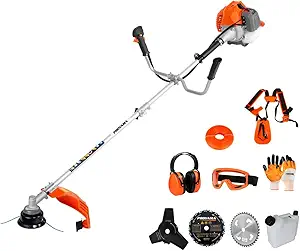 |
| Best Seller A high-volume bestseller chosen again and again | PROYAMA PBC52 51.7cc Gas Brush Cutter and String Trimmer |  |
Husqvarna 525RX 25.4cc Gas Brush Cutter with Tap 'n Go Trimmer Head

| Power Source | Gas Powered |
|---|---|
| Engine Displacement | 25.4 CC |
| Cutting Width | 17 inches |
| Engine Cycle | 2-Cycle |
| Sound Level | 93 dBA |
The Husqvarna 525RX is a pro-oriented gas brush cutter built to clear thick weeds, undergrowth, and large areas of grass. It pairs a 25.4-cc X-TORQ two-cycle engine with a straight shaft and an ergonomic harness for all-day work, and includes a heavy-duty T35 Tap 'n Go trimmer head plus a guard that accepts either a blade or trimmer line. Smart Start and Air Purge make cold starts easier, and the unit is tuned to reduce fuel use and emissions compared with older two-stroke designs. In practice the 17-inch cutting width and commercial-grade components let you cut dense patches and trim edges efficiently, while the harness and offset handle improve balance and control on slopes or around obstacles. Expect typical gas-engine considerations: it is louder and requires fuel mixing, periodic maintenance, and more storage care than battery models. The 93 dBA sound level and 10.8 to 11.2 pound listed weight mean it is best for buyers who need power and run time rather than ultra-quiet or ultra-light operation.
Best for: Buyers who need a powerful, reliable brush cutter for frequent or heavy-duty yard work and who prioritize cutting performance and long run time over low noise or minimal maintenance.
Less Ideal for: Casual users with small lawns, those who prefer low-noise or low-maintenance cordless tools, or anyone unwilling to perform routine fuel and engine upkeep should consider quieter electric alternatives.
- Commercial-grade 25.4 cc X-TORQ engine delivers strong torque for thick weeds and undergrowth
- Includes T35 Tap 'n Go trimmer head and versatile guard for both line and blade cutting
- Straight shaft with included harness and offset handle improves balance and control during extended use
- Gas two-stroke engine requires fuel mixing, routine maintenance, and more storage care than cordless models
Verdict: Choose the 525RX if you want a durable, professional gas brush cutter that delivers strong cutting power and long run time for heavy brush and large yards.
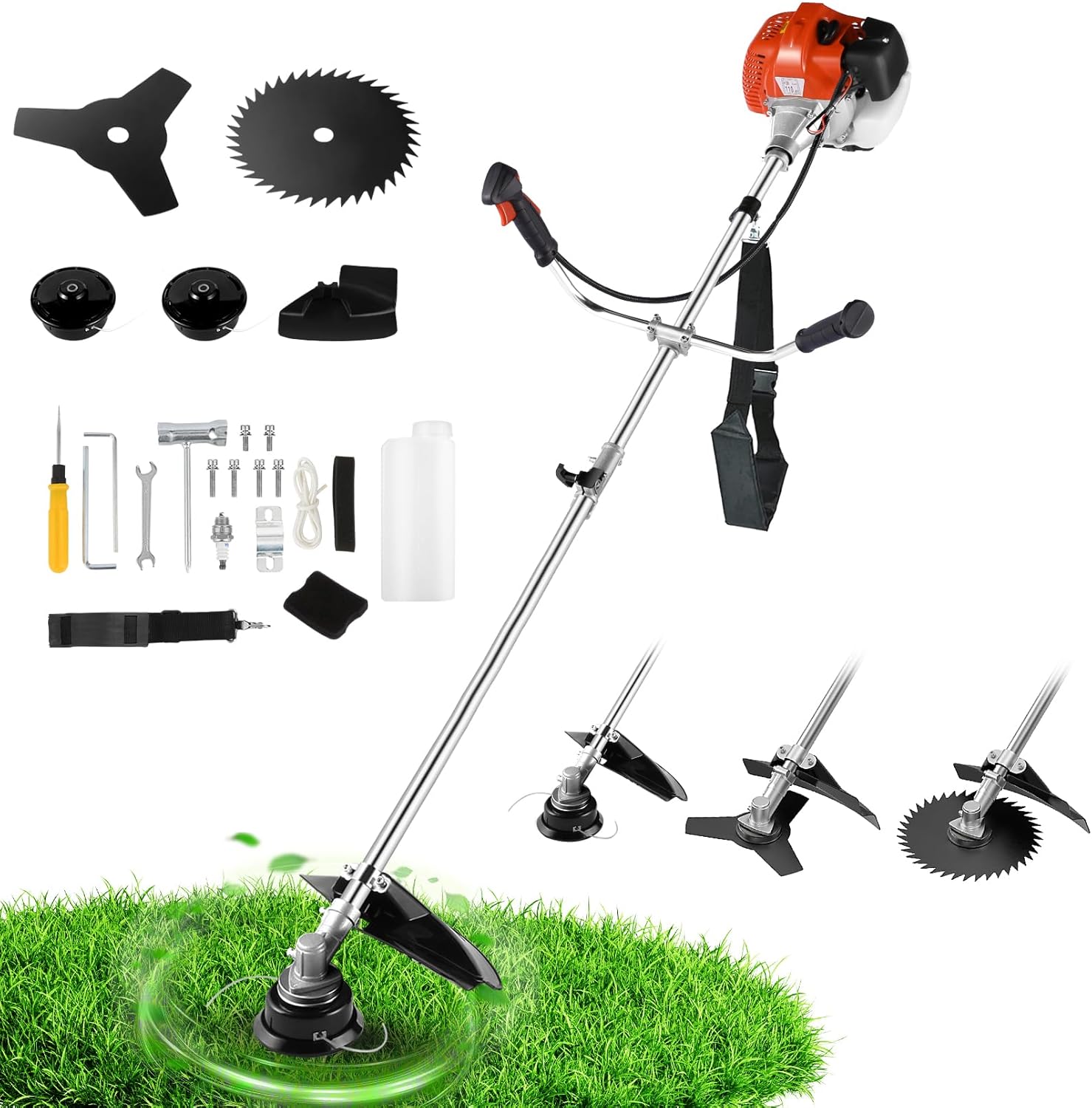
COOCHEER 58cc 4-in-1 Gas Brush Cutter with Bike Handles
| Power Source | Gas Powered |
|---|---|
| Speed | 9300 rpm |
| Displacement | 58CC |
| Fuel Mixed Ratio | 25:1 |
This COOCHEER 58cc gas brush cutter is built for heavy-duty brush and overgrowth where a basic trimmer stalls. It uses a 2-stroke, air-cooled 58cc engine that spins up to about 9,300 RPM and accepts four attachments: dual-line trimmer heads for precise edging, a 3-tooth blade for tall weeds, and a 40-tooth circular blade for denser brush and small saplings. The straight shaft and bike-style handle give better leverage and reach under shrubs and along fences, while the adjustable shoulder strap and anti-vibration features reduce operator fatigue during long clearing sessions. Practical touches like a transparent fuel window, recoil starter, instant-stop switch, and included tool kit and spare parts make it field-ready out of the box. Expect typical gas-tool maintenance such as fuel mixing and occasional carburetor tuning, and realize this is heavier and louder than electric alternatives, so it is best for large lots and thick growth rather than fine lawn trimming or noise-sensitive neighborhoods.
Best for: Buyers who need a performance-oriented, gas-powered tool to clear thick brush, tall weeds, and small saplings on large properties and who prioritize cutting power over low noise or light weight.
Less Ideal for: Homeowners with small, manicured lawns, frequent neighbors nearby, or those who prefer low-maintenance electric or battery trimmers should consider quieter, lighter alternatives.
- Powerful 58cc two-stroke engine delivering up to 9,300 RPM for cutting thick weeds and small saplings
- Four interchangeable heads (dual-line, 3-tooth blade, 40-tooth circular blade) cover edging, brush clearing, and heavy-duty cutting
- Bike-handle and adjustable shoulder strap design improves leverage and reduces wrist strain during extended use
- Includes useful accessories and spares such as tool kit, shoulder strap, spark plug, starter rope, and fuel mixing bottle
- Requires fuel mixing and regular maintenance typical of 2-stroke gas engines
- Relatively heavy and noisy compared with battery or electric trimmers
Verdict: If you need raw cutting power for thick brush and overgrowth, this 58cc multi-head gas cutter delivers the performance to get the job done.
COOCHEER 4‑in‑1 58cc Gas String Trimmer with Straight Shaft

| Power Source | Gas Powered |
|---|---|
| Speed | 9300 rpm |
| Cutting width | 18.5 inches |
This COOCHEER 4-in-1 gas string trimmer is built around a 58cc two-stroke engine and a straight shaft for extended reach and tougher cutting jobs. It ships with a dual-line bump-feed head plus 3T and 4T brush blades and a circular saw blade, so you can switch heads to trim lawn edges, clear thick weeds, or attack heavy brush without a second machine. The engine claims up to 9,300 RPM which delivers strong cutting power and speeds through dense growth more quickly than smaller consumer trimmers. Practical extras include a shoulder strap, safety guard, spare parts, and an easy-start system to simplify setup and use. Expect the usual two-stroke maintenance: mixing fuel and oil, periodic spark plug and carburetor attention, and louder operation than electric options. The unit is heavier and has more vibration than lightweight cordless models, so longer sessions will be more tiring despite the shoulder strap. For budget buyers who need versatile cutting power for medium to large yards, this trimmer offers a lot of capability for the price but requires regular fuel upkeep and protective gear during use.
Best for: Buyers on a tight budget who need a single, versatile gas tool to handle lawns, thick weeds, and occasional brush-clearing across medium to large yards.
Less Ideal for: Those who prioritize low noise, low maintenance, or very frequent short trimming sessions in small yards should consider lighter electric or battery models instead.
- Powerful 58cc two-stroke engine provides strong cutting performance for dense grass and brush
- Interchangeable 4-in-1 heads (dual-line bump feed, 3T and 4T blades, circular saw blade) for versatile tasks
- Straight shaft design improves reach under shrubs and along edges
- Comes with practical accessories including shoulder strap, spare parts, and tools for out-of-box use
- Requires two-stroke fuel mixing and regular engine maintenance
- Heavier and louder than electric or battery trimmers, which increases fatigue and noise
Verdict: If you need budget-friendly raw cutting power and versatility to tackle grass, weeds, and brush with one machine, this 58cc 4-in-1 gas trimmer delivers the most capability for the price.
DOWILIN 52CC 2-Stroke Backpack Gas String Trimmer with 3 Cutting Heads

| Power Source | Gas Powered |
|---|---|
| Cutting width | 10 inches |
| Speed | 3000 rpm |
This DOWILIN backpack trimmer puts the engine on your back to reduce arm fatigue while you handle heavier clearing tasks. It pairs a 52cc two-stroke motor with three cutting heads: a dual-line trimmer head for grass, a 3-tooth blade for thicker weeds, and a 40-tooth saw blade for light brush, so you can switch between fine trimming and more aggressive cutting without changing tools. The padded harness and straight shaft keep the cutting head easy to maneuver over extended periods and the rubber non-slip handle with throttle and on-off switch gives predictable control. Practical benefits include faster clearing of overgrown patches and less operator strain compared with handheld backpack engines. Expect typical two-stroke considerations such as mixing fuel and oil, routine spark plug and air filter checks, and higher noise and vibration than electric alternatives. The unit is well suited to frequent brush-cutting jobs but will require basic maintenance and sensible hearing protection for long sessions.
Best for: A buyer who needs a dependable, high‑power tool for regular brush and overgrowth clearing and values reduced operator fatigue during longer jobs.
Less Ideal for: Not a good fit for those who want a low-maintenance, quiet electric trimmer for small lawns or noise-restricted neighborhoods.
- Powerful 52cc two-stroke engine for strong cutting performance
- Three interchangeable heads (dual-line, 3-tooth blade, 40-tooth saw blade) for versatile cutting from grass to light brush
- Backpack harness with padded straps reduces arm fatigue during extended use
- Requires mixed fuel and routine two-stroke maintenance
- Heavier and louder than electric trimmers, so not ideal for noise-sensitive areas
Verdict: Choose this backpack 52cc trimmer if you need durable, high‑power brush cutting with reduced arm fatigue for frequent heavy-duty clearing tasks.
PROYAMA PBC43 42.7cc 3-in-1 Gas Brush Cutter and String Trimmer

| Power Source | Gas Powered |
|---|---|
| Cutting width | 18 inches |
| Speed | 10000 rpm |
| Size | 42.7cc |
The PROYAMA PBC43 pairs a 42.7cc two-cycle gas engine with a straight steel shaft and multiple cutting attachments so you can move between lawn edging, light trimming, and heavy brush clearing without buying separate machines. Typical use is garden maintenance on medium to large lots: fit the trimmer head for grass near fences and trees, then swap to the 3T or 40T metal blades or chain blade for thick weeds, brush, and small woody stems. Notable features include an ergonomic harness and a U-shaped bike handle that improve control during extended runs, and a claimed easy-start system that reduces starter cord resistance. In practice the metal blades make quick work of dense vegetation, while the straight shaft gives reach for awkward spots. Expect some learning curve for correct starting and carburetor adjustments and occasional tuning if the engine stalls under load. It is a heavier, louder tool best suited to established mower-operator workflows rather than casual backyard trimming.
Best for: Buyers who need a single, gas-powered tool to handle both regular trimming and aggressive brush cutting on medium to large properties and who value robust cutting power over low noise.
Less Ideal for: Not a good fit for users who want a lightweight, low-maintenance electric trimmer or who need a quiet tool for small urban yards.
- Powerful 42.7cc two-cycle engine for cutting thick weeds and brush
- Four cutting attachments (trimmer head plus metal blades and chain) for versatile tasks
- Straight steel shaft and bike-style handle give good reach and control
- Included harness reduces operator fatigue on longer jobs
- Requires regular carburetor tuning and proper fuel mix for reliable starting and idle
- Heavier and louder than electric models, so less suitable for small yards or noise-restricted areas
Verdict: Choose this PROYAMA if you want a single gas machine that shifts from lawn trimming to heavy brush clearing without swapping tools.
PROYAMA PBC52 51.7cc Gas Brush Cutter and String Trimmer

| Power Source | Gas Powered |
|---|---|
| Cutting width | 18 inches |
| Size | 51.7cc |
| Item Highlight | 3 in 1 Straight Shaft String Trimmer, Anti-Vibration System |
The PROYAMA PBC52 is a gas-powered 3-in-1 brush cutter and string trimmer designed for heavy-duty yard work. It uses a 51.7cc 2-cycle engine and a straight steel shaft to switch between string trimming and metal blade brush cutting for tall grass, thick weeds, and overgrown brush. The unit includes an anti-vibration system and an ergonomic harness to reduce fatigue during extended use, and the broad cutting width helps cover larger areas faster. Practical benefits include strong cutting power suited to farms and large properties, compatibility with multiple cutting heads, and easier handling thanks to the harness and vibration dampeners. Important limitations are that it is a gas 2-cycle engine so it requires correct fuel/oil mixing and routine carburetor and air filter maintenance; it may stall or need adjustments if not warmed up or if fuels/filters are neglected. Noise, emissions, and periodic tuning are expected compared with electric alternatives, and the heavier setup requires careful handling during transport and storage.
Best for: Buyers who prioritize reliable cutting power for large yards or heavy brush and prefer a proven gas tool that can be maintained rather than a lightweight electric option.
Less Ideal for: Small-plot gardeners, noise-sensitive neighborhoods, or users who prefer low-maintenance electric or battery trimmers should consider quieter, lighter alternatives.
- Powerful 51.7cc 2-cycle engine suited for thick weeds and brush cutting
- 3-in-1 straight shaft design supports both string head and metal blade attachments
- Anti-vibration system and ergonomic harness reduce operator fatigue during long jobs
- Steel shaft construction supports durable cutting heads for heavy use
- Requires 2-cycle fuel/oil mixing and regular carburetor and air filter maintenance
- Heavier and louder than electric trimmers, with typical gas-engine emissions
Verdict: Choose this model if you need a rugged, harnessed gas brush cutter that delivers the power and attachment flexibility to tackle thick brush and large areas reliably.
Choosing the Right String Trimmer for Brush Cutting: Key Factors to Consider
Power Source and Sustained Torque
Whether gasoline, battery, or corded, the power source defines how well a trimmer maintains cutting force through dense brush. Gas engines typically deliver sustained torque for long runs and can bite through thicker stalks, while battery systems vary by battery capacity and motor design. For brush cutting you want a powertrain that does not bog down when the head meets woody stems. Consider how the power output drops under load and whether the design includes cooling or torque management to prevent stalls.
Runtime under load matters as much as peak power. A battery trimmer with strong rated torque but limited runtime will force frequent battery swaps. Gas units require fuel mixing or refueling but usually run longer between stops. Also factor in how easy it is to replace batteries or service the engine in the field when doing large clearing jobs.
Cutting Line System Strength
Line type, thickness, and feed mechanism determine how the trimmer handles knocks against rocks, branches, and stubborn stalks. Thicker, reinforced or braided lines resist snapping and can deliver more cutting force, but they may require a head that accepts heavier line or multiple strands. Look for heads with robust feed systems that keep line coming reliably and let you reload in the field with minimal fuss.
Some heavy-duty line systems pair with specific head geometries that reduce line slippage and protect the spool from heat. Ease of spooling, availability of replacement line, and whether the head accepts prewound spools are practical considerations for long brush-clearing sessions.
Cutting Reach and Head Geometry
Reach matters when you need to cut through thick patches without bothersome repositioning. Shaft length and cutting head tilt influence how easily you can get line under low branches or into fence corners. A straight shaft usually gives better reach and leverage for heavy work, while curved shafts can be lighter and more maneuverable for tight spots.
Head geometry, including line diameter clearance and guard design, affects how aggressively the trimmer engages dense material. Guards that deflect debris away from the operator and allow clear vision of the cutting line contribute to safer, more efficient work. Consider how the head angle interacts with the shaft and handles to reduce awkward wrist or shoulder positions.
Ergonomics, Weight, and Vibration Control
Brush cutting is physical work, often performed for extended periods. Weight distribution, handle design, and vibration damping determine how long you can work comfortably without fatigue. A harness-compatible trimmer or one with adjustable loop or bicycle handles spreads load and reduces strain on shoulders and lower back.
Vibration damping helps prevent numbness and allows finer control when cutting close to structures or desirable plants. Also consider trigger placement and throttle control responsiveness since coarse handling can make repeated passes more tiring and reduce cutting precision.
Durability and Serviceability
A trimmer working on brush takes more abuse than a light lawn trimmer. Look for rugged gearbox construction, sealed components where possible, and parts that are easy to service or replace in the field. Simple head designs and accessible gearboxes reduce downtime and keep you cutting longer during a clearing project.
Consider availability of replacement spools, line sizes, and common wear parts like drive shafts and clutch assemblies. Units with straightforward maintenance access and clear service documentation save time and prevent trips to a shop during peak clearing season.
Safety Features and Guarding
Cutting thicker vegetation raises the chance of ricocheted debris and accidental line breakage into unseen objects. Effective guards that deflect cut material and a secure, visible trimmer head reduce risk. Safety features such as dead-man throttle controls and clear operator sightlines help you keep control around obstacles, pets, and people.
Also evaluate whether the design helps avoid accidental engagement while carrying or moving between work areas. Simple locking mechanisms, well-placed kill switches, and clear operator instructions are practical safety aids for heavy-duty trimming tasks.
When to Use a String Trimmer Instead of a Brush Cutter Blade
String trimmers remain a practical choice for many brush jobs because they are lighter and more forgiving than metal-blade brush cutters. In situations with mixed vegetation, young saplings, and lots of hidden debris, thick line can shred through stalks while deflecting around immovable objects rather than causing violent kickback.
Choose a string-head approach when you need a balance between cutting aggressiveness and maneuverability. Metal blades excel on heavy woody stems and dense brambles, but thicker line and the right tensioned head let you clear large areas of mixed growth with less risk of damaging the trimmer when you hit small rocks or fence posts.
- String is safer near hidden obstacles because it tends to snap rather than grab.
- Line can be faster to reload in the field than changing a blade.
- Use line for mixed vegetation and blades for very dense woody stands.
Preparing the Area and Practical Techniques
Before starting, walk the area to remove obvious hazards like rocks, metal, or large dead limbs. Clearing a path with pruning tools reduces the load on the trimmer and lowers the chance of snapping valuable line.
Work in overlapping passes rather than trying to cut everything in one go. Keep the head at a slight angle into the vegetation and let the line do the cutting; forceful hacking can bog down the motor. For persistent clumps, make several light passes to gradually reduce height and density.
- Clear or mark hidden hazards to avoid abrupt line breaks.
- Use scouting passes to plan safe cutting lines and minimize rewinding.
- Wear eye, ear, and leg protection when cutting dense brush.
Line Types and When to Choose Them
Round, twisted, and serrated lines each have tradeoffs. Round line spools more easily and resists tangling, while twisted or reinforced lines cut more aggressively and last longer against woody stalks. Serrated or multi-strand lines increase cutting efficiency on fibrous plants but may draw more power and reduce runtime.
Match line diameter to the motor torque and head compatibility. Thicker diameter lines deliver stronger cutting but need a head that accepts the extra thickness. For heavy brush, favor reinforced or braided options designed to resist abrasion and maintain shape under impact.
- Round line: easy to spool and good for general use.
- Reinforced/braided line: better for woody stems and prolonged brush work.
- Serrated line: cuts fibrous material efficiently but can increase motor load.
Maintenance Tips for Brush Cutting Durability
Regularly inspect the gearbox and head for wear after heavy use. Keep gearboxes lubricated per manufacturer guidance and replace worn bushings, driveshaft sections, or clutch parts before they lead to failure. Clean the head and guard of sap and debris to prevent line binding and overheating.
If using battery systems, rotate batteries and store them at recommended temperatures to preserve capacity. For gasoline engines, use fresh fuel and follow spark plug and air filter maintenance intervals. Small preventative steps save time and reduce the risk of breakdowns during large clearing jobs.
- Lubricate the gearbox and check for play in the drive shaft.
- Replace frayed or uneven line before it breaks frequently.
- Store fuel or batteries according to guidelines to maximize lifespan.
Working Safely Around Fences and Structures
When trimming close to fences, walls, or planted areas, reduce throttle and use controlled, short strokes. That keeps cut material from ricocheting and lowers the chance of sending fragments into fragile plants or painted surfaces. Consider using a narrower guard or a guide edge if you need precise control.
Adjust handles and use a harness to steady the tool and minimize accidental contact. Maintain a stable stance and avoid reaching too far, which can make the head contact objects unexpectedly. Proper PPE and planning reduce the risk of injury when working near property features.
- Slow the head speed near structures to reduce ricochet.
- Use a harness for better control when trimming vertical edges.
- Keep bystanders well back and mark the work zone.
How We Chose the Best String Trimmer for Brush Cutting
We focused on attributes that determine real-world effectiveness on thick weeds, brambles, and regrowth rather than features that only matter for light lawn edging. Primary filters included motor or engine torque and whether the power system sustains a cut through dense vegetation. We also evaluated cutting line system durability and capacity to resist breakage when hitting twigs or tough stalks. Reach and cutting head geometry were considered for accessibility around fences and under shrubs, while handle ergonomics and vibration control affect how long you can work without fatigue. Fuel or battery runtime and serviceability were assessed because heavy brush jobs demand sustained power and easy maintenance. Excluded items included lightweight consumer trimmers meant exclusively for grass edging, and tools that rely only on fragile line systems without reinforcement. We did not include products intended solely for mowing or heavy metal-blade brush cutters because their operating characteristics differ. The resulting shortlist emphasizes sustained torque, rugged line-feed systems, operator comfort for prolonged use, cutting reach, and ease of maintenance.
FAQ
Can a string trimmer handle saplings and thick woody stems?
Often it depends on line type and power. Thick, reinforced line paired with a high-torque motor can handle young saplings and woody stems up to a certain diameter. For very large or mature trunks, a metal blade or pruning tools are usually more effective.
Is a straight shaft better than a curved shaft for brush cutting?
A straight shaft usually offers better reach and leverage for heavy work and is easier to use with a shoulder harness. Curved shafts can be lighter and more maneuverable for tight spots but may transmit more vibration to the operator during sustained brush cutting.
How thick should cutting line be for brush work?
Line diameter depends on motor torque and head compatibility, but heavier-duty brush work often benefits from thicker, reinforced lines. Check that the head accepts the diameter you plan to use; overloading the head can reduce feed reliability and increase strain on the drive system.
Do battery trimmers work for large brush-clearing jobs?
Battery trimmers can be effective if they offer high sustained torque and you have spare batteries for rotation. For very large or remote jobs where swapping batteries is impractical, gasoline units often provide longer continuous runtime. It usually depends on the battery capacity and how many cells are available.
What protective gear should I wear when brush cutting?
Wear eye protection, hearing protection, long pants, and sturdy boots. Gloves and a face shield are often recommended when cutting dense brush because ricocheting debris and small branches are common.
Final Verdict
Choose a string trimmer for brush cutting by prioritizing sustained torque, a durable line system, and ergonomic features that reduce fatigue during long jobs. Consider reach and head design for the kinds of obstacles and vegetation in your space, and weigh the maintenance and runtime tradeoffs between gas and battery systems. Focus on the criteria most relevant to your situation-whether that is continuous runtime for large clearings, lighter weight for maneuvering in tight areas, or a rugged head for mixed vegetation-to pick the right tool for reliable, efficient brush clearing.
