

Note: This article contains affiliate links. If you click on these links and make a purchase, I may earn a small commission at no extra cost to you. This helps support my research and content. Read my full affiliate disclosure here.
If you regularly tackle thick weeds, saplings, and overgrown edges, choosing the right string trimmer for clearing brush matters. A brush-capable trimmer behaves differently than a standard lawn trimmer: it needs higher torque at low speed, a robust cutting head that handles thicker line or blades, and a powertrain and guard system that stand up to heavy debris. This guide shortlists six top trimmers built for brush work and evaluates them across real-world gardener concerns like cutting power, line-feed reliability, and durability. Read on for the practical buying factors we used and quick guidance to match a trimmer to your yard or property. The product list follows next.
Top Picks at a Glance
| Best Overall The best all-around choice for most situations | DEWALT DCST970B FLEXVOLT 60V MAX Cordless String Trimmer (Tool Only) |  |
| Best Quality Built to a higher standard if you want something more solid | Husqvarna 525RX 25.4cc Gas Brush Cutter with Tap 'n Go Trimmer Head |  |
| Best Value The sweet spot between price and what you get | COOCHEER 58cc 4-in-1 Gas Brush Cutter with Bike Handles |  |
| Highest Rated A top-rated pick with lots of positive feedback | Elegarden 51.7cc 2-Cycle Gas 4‑in‑1 Weed Wacker and Brush Cutter |  |
| Most Popular A crowd favorite that many people choose with confidence | Wild Badger Power 52cc 2-Cycle Straight Shaft String Trimmer with Brush Cutter Blade |  |
| Best Seller A high-volume bestseller chosen again and again | PROYAMA PBC43 42.7cc 3-in-1 Gas Brush Cutter and String Trimmer | 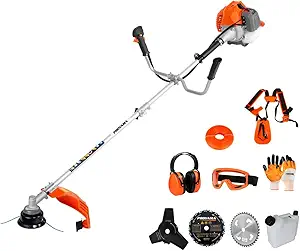 |
DEWALT DCST970B FLEXVOLT 60V MAX Cordless String Trimmer (Tool Only)

| Power Source | Battery Powered |
|---|---|
| Cutting width | 15 inches |
| Included Components | DEWALT 60V STRING TRIMMER BARE |
The DEWALT DCST970B FLEXVOLT is a purpose-built cordless string trimmer that brings a commercial-level brushless motor and a 15-inch cutting swath to battery-powered trimming. Intended for demanding jobs, it uses DEWALT's FLEXVOLT battery platform (battery sold separately) to deliver sustained power and the option to run at Hi/Lo speeds with a variable trigger to balance performance and runtime. The bump-feed head ships with a quick-load spool and accepts both 0.080 and 0.095-inch line for thicker weeds. Its lightweight ergonomic design and gear-drive edger capability make it easy to control for extended periods and effective at cutting through overgrowth. Expect reduced maintenance compared with gas units and longer motor life from the high-efficiency brushless design. The main limitations are that it is sold as a tool-only unit so you must factor in battery and charger purchase, and runtime depends on battery choice, so sustained commercial use requires spare batteries for continuous operation.
Best for: Contractors and landscapers who need a cordless trimmer that delivers commercial-grade cutting power and control and who plan to pair it with high-capacity FLEXVOLT batteries for sustained jobs.
Less Ideal for: Casual homeowners who want an all-in-one package or do only occasional light trimming should consider simpler, battery-included consumer models instead.
- Brushless motor for improved runtime and longer motor life
- 15-inch cutting swath handles wide passes and heavier vegetation
- Variable speed trigger with Hi/Lo control to tune power versus battery life
- Accepts 0.080 and 0.095-inch line and ships with a quick-load spool for fast reloading
- Lightweight ergonomic design reduces operator fatigue during extended use
- Tool-only listing requires separate purchase of battery and charger for operation
- Runtime and continuous commercial use depend on battery capacity and spare batteries
Verdict: A commercial-minded cordless trimmer built for heavy-duty, battery-powered performance when paired with DEWALT FLEXVOLT batteries.
Husqvarna 525RX 25.4cc Gas Brush Cutter with Tap 'n Go Trimmer Head

| Power Source | Gas Powered |
|---|---|
| Engine Displacement | 25.4 CC |
| Cutting Width | 17 inches |
| Engine Cycle | 2-Cycle |
| Sound Level | 93 dBA |
The Husqvarna 525RX is a pro-oriented gas brush cutter built to clear thick weeds, undergrowth, and large areas of grass. It pairs a 25.4-cc X-TORQ two-cycle engine with a straight shaft and an ergonomic harness for all-day work, and includes a heavy-duty T35 Tap 'n Go trimmer head plus a guard that accepts either a blade or trimmer line. Smart Start and Air Purge make cold starts easier, and the unit is tuned to reduce fuel use and emissions compared with older two-stroke designs. In practice the 17-inch cutting width and commercial-grade components let you cut dense patches and trim edges efficiently, while the harness and offset handle improve balance and control on slopes or around obstacles. Expect typical gas-engine considerations: it is louder and requires fuel mixing, periodic maintenance, and more storage care than battery models. The 93 dBA sound level and 10.8 to 11.2 pound listed weight mean it is best for buyers who need power and run time rather than ultra-quiet or ultra-light operation.
Best for: Buyers who need a powerful, reliable brush cutter for frequent or heavy-duty yard work and who prioritize cutting performance and long run time over low noise or minimal maintenance.
Less Ideal for: Casual users with small lawns, those who prefer low-noise or low-maintenance cordless tools, or anyone unwilling to perform routine fuel and engine upkeep should consider quieter electric alternatives.
- Commercial-grade 25.4 cc X-TORQ engine delivers strong torque for thick weeds and undergrowth
- Includes T35 Tap 'n Go trimmer head and versatile guard for both line and blade cutting
- Straight shaft with included harness and offset handle improves balance and control during extended use
- Gas two-stroke engine requires fuel mixing, routine maintenance, and more storage care than cordless models
Verdict: Choose the 525RX if you want a durable, professional gas brush cutter that delivers strong cutting power and long run time for heavy brush and large yards.
COOCHEER 58cc 4-in-1 Gas Brush Cutter with Bike Handles
| Power Source | Gas Powered |
|---|---|
| Speed | 9300 rpm |
| Displacement | 58CC |
| Fuel Mixed Ratio | 25:1 |
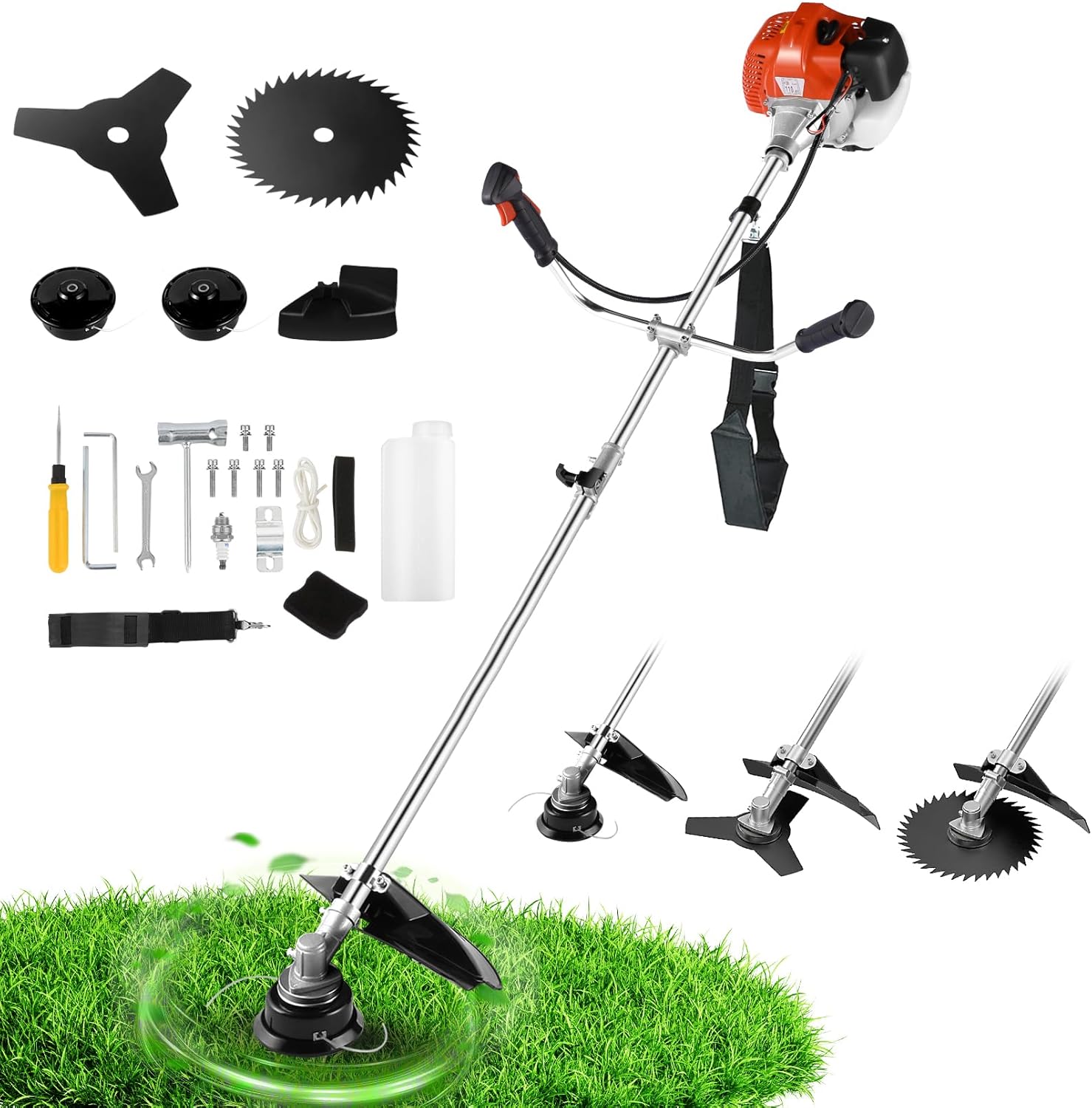
This COOCHEER 58cc gas brush cutter is built for heavy-duty brush and overgrowth where a basic trimmer stalls. It uses a 2-stroke, air-cooled 58cc engine that spins up to about 9,300 RPM and accepts four attachments: dual-line trimmer heads for precise edging, a 3-tooth blade for tall weeds, and a 40-tooth circular blade for denser brush and small saplings. The straight shaft and bike-style handle give better leverage and reach under shrubs and along fences, while the adjustable shoulder strap and anti-vibration features reduce operator fatigue during long clearing sessions. Practical touches like a transparent fuel window, recoil starter, instant-stop switch, and included tool kit and spare parts make it field-ready out of the box. Expect typical gas-tool maintenance such as fuel mixing and occasional carburetor tuning, and realize this is heavier and louder than electric alternatives, so it is best for large lots and thick growth rather than fine lawn trimming or noise-sensitive neighborhoods.
Best for: Buyers who need a performance-oriented, gas-powered tool to clear thick brush, tall weeds, and small saplings on large properties and who prioritize cutting power over low noise or light weight.
Less Ideal for: Homeowners with small, manicured lawns, frequent neighbors nearby, or those who prefer low-maintenance electric or battery trimmers should consider quieter, lighter alternatives.
- Powerful 58cc two-stroke engine delivering up to 9,300 RPM for cutting thick weeds and small saplings
- Four interchangeable heads (dual-line, 3-tooth blade, 40-tooth circular blade) cover edging, brush clearing, and heavy-duty cutting
- Bike-handle and adjustable shoulder strap design improves leverage and reduces wrist strain during extended use
- Includes useful accessories and spares such as tool kit, shoulder strap, spark plug, starter rope, and fuel mixing bottle
- Requires fuel mixing and regular maintenance typical of 2-stroke gas engines
- Relatively heavy and noisy compared with battery or electric trimmers
Verdict: If you need raw cutting power for thick brush and overgrowth, this 58cc multi-head gas cutter delivers the performance to get the job done.
Elegarden 51.7cc 2-Cycle Gas 4‑in‑1 Weed Wacker and Brush Cutter

| Power Source | Gas Powered |
|---|---|
| Cutting width | 16 inches |
| Speed | 10000 rpm |
The Elegarden 51.7cc gas weed wacker is built for heavy yard work where a battery trimmer would struggle. Its 2-cycle 51.7cc engine delivers about 2 HP and up to 10,000 rpm, driving a 16-inch dual-line head for wide swaths and multiple metal blades (3T, 40T and 80T) for cutting dense weeds, brush and small saplings. The straight shaft, U-handle and shoulder strap make longer sessions more manageable, and the quick-release split shaft simplifies assembly, transport and storage. The kit ships with protective gear and tools so you can switch cutting attachments on the job. Expect strong cutting performance and durability for farm, trail or overgrown-property cleanup, but keep in mind it is a two-stroke gas tool so it needs fuel mixing, regular maintenance and generates more vibration and noise than electric models. It is not CARB certified and cannot be used in California.
Best for: Buyers who prioritize a dependable, gas-powered cutter for heavy-duty trimming and brush clearing and who prefer a tool that handles a variety of tough cutting tasks with metal blades.
Less Ideal for: Casual lawn owners who prefer quieter, low-maintenance electric or battery trimmers or users restricted by state emissions rules.
- Powerful 51.7cc 2-cycle engine provides strong cutting performance up to 10,000 rpm
- 4-in-1 configuration includes dual-line trimmer plus 3T, 40T and 80T metal blades for versatile cutting tasks
- Straight shaft with U-handle and shoulder strap improves control and reduces fatigue during extended use
- Quick-release split shaft enables faster assembly, transport and storage
- Complete kit includes safety gear and installation tools so it is ready to use out of the box
- Requires two-stroke fuel mixing and regular engine maintenance
- Not CARB certified and cannot be used in California
Verdict: Choose this robust gas trimmer if you need a reliable, heavy-duty machine that swaps between line and metal blades to tackle thick grass, dense weeds and brush.
Wild Badger Power 52cc 2-Cycle Straight Shaft String Trimmer with Brush Cutter Blade

| Power Source | Gas Powered |
|---|---|
| Cutting width | 17.02 inches |
| Speed | 7000 rpm |
| Item Highlight | 18-inch trimmer swath and 10-inch brush-cutter blade |
This Wild Badger Power 52cc trimmer is built for heavy yard work and commercial-style jobs where raw cutting power matters. The full-crank 52cc two-cycle engine delivers enough torque to run an 18-inch string head for wide swaths and a 10-inch brush-cutter blade for thick weeds and light brush. It is a straight-shaft multi-tool designed for longer runs and accepts compatible attachments to expand its functionality. Practical features include a tool-free air filter cover for quicker maintenance, an ergonomic handle and included shoulder harness to reduce operator fatigue during extended use, and a claimed easy start within five pulls. Expect strong clearing performance and reasonable fuel efficiency for a gas unit, but plan on routine two-cycle mixing, regular maintenance, and hearing and vibration protection during long shifts. The unit is heavier than lightweight consumer trimmers and is best suited to users who prioritize durable cutting capability over cordless convenience.
Best for: A buyer who needs a robust, gas-powered trimmer for frequent commercial or heavy residential clearing and values durability, serviceability, and the ability to handle thick vegetation.
Less Ideal for: Casual homeowners who prioritize low maintenance, lighter weight, or cordless operation should consider battery models instead.
- Powerful 52cc full-crank 2-cycle engine suitable for dense grass, tall weeds, and light brush
- 18-inch string-trimmer swath plus a 10-inch brush-cutter blade for versatile cutting modes
- Tool-free air filter cover simplifies routine maintenance in the field
- Straight shaft and attachment-capable powerhead expandability for other yard-care tasks
- Included shoulder harness and ergonomic handle reduce operator fatigue on long jobs
- Heavy for extended handheld use compared with battery models
- Requires two-cycle fuel mixing and regular maintenance typical of gas engines
- Higher noise and vibration levels than cordless electric trimmers
Verdict: Choose this 52cc Wild Badger trimmer when you need a workhorse gas tool that tackles dense grass, thick weeds, and light brush with serviceable, attachment-ready design.
PROYAMA PBC43 42.7cc 3-in-1 Gas Brush Cutter and String Trimmer

| Power Source | Gas Powered |
|---|---|
| Cutting width | 18 inches |
| Speed | 10000 rpm |
| Size | 42.7cc |
The PROYAMA PBC43 pairs a 42.7cc two-cycle gas engine with a straight steel shaft and multiple cutting attachments so you can move between lawn edging, light trimming, and heavy brush clearing without buying separate machines. Typical use is garden maintenance on medium to large lots: fit the trimmer head for grass near fences and trees, then swap to the 3T or 40T metal blades or chain blade for thick weeds, brush, and small woody stems. Notable features include an ergonomic harness and a U-shaped bike handle that improve control during extended runs, and a claimed easy-start system that reduces starter cord resistance. In practice the metal blades make quick work of dense vegetation, while the straight shaft gives reach for awkward spots. Expect some learning curve for correct starting and carburetor adjustments and occasional tuning if the engine stalls under load. It is a heavier, louder tool best suited to established mower-operator workflows rather than casual backyard trimming.
Best for: Buyers who need a single, gas-powered tool to handle both regular trimming and aggressive brush cutting on medium to large properties and who value robust cutting power over low noise.
Less Ideal for: Not a good fit for users who want a lightweight, low-maintenance electric trimmer or who need a quiet tool for small urban yards.
- Powerful 42.7cc two-cycle engine for cutting thick weeds and brush
- Four cutting attachments (trimmer head plus metal blades and chain) for versatile tasks
- Straight steel shaft and bike-style handle give good reach and control
- Included harness reduces operator fatigue on longer jobs
- Requires regular carburetor tuning and proper fuel mix for reliable starting and idle
- Heavier and louder than electric models, so less suitable for small yards or noise-restricted areas
Verdict: Choose this PROYAMA if you want a single gas machine that shifts from lawn trimming to heavy brush clearing without swapping tools.
Choosing the Right String Trimmer for Clearing Brush: Key Factors to Consider
Cutting Power and Low-End Torque
Brush clearing requires torque more than high RPM. A trimmer that delivers steady low-speed torque slices through thick stems and small saplings instead of merely whipping line at high speed. When a motor or engine stalls under load you lose forward progress and risk accelerated wear on the gearbox.
Check how the trimmer performs under sustained resistance. In practical terms that means heavier-duty powerheads or motors designed for load, and gearboxes rated for higher torque. If you regularly work dense, fibrous brush choose a system specified for brushcutting rather than a lawn-only unit.
Line Feed or Cutting-Head Reliability
Feeding line reliably under heavy load is essential. Simple bump-feed spools can work for light jobs but often jam or use fragile short line when faced with woody growth. Automatic or dual-line systems with thicker, knurled or square line hold up better.
For heavy brush consider heads that accept heavy-duty twisted or braided line, or convertible heads that take blades for particularly stubborn patches. Ease of reloading in the field matters when you are working away from a bench. Look for heads that allow quick line replacement without specialized tools.
Shaft, Gearbox, and Build Durability
The gearbox and shaft transmit the motor's torque to the cutting head and are the usual failure points under heavy use. Hollow, thin-walled shafts and lightweight gear housings save weight but often wear faster, especially when cutting through brush and small branches.
A reinforced drive shaft, metal gearbox housing, and serviceable seals extend life and reduce downtime. Consider whether the gearbox is serviceable or replaceable and whether common wear parts are easy to source. Robust build increases initial weight but reduces repair frequency for repeated brush jobs.
Ergonomics and Operator Control
Clearing brush is physically demanding and sessions can last an hour or more. How the trimmer balances, how vibration is damped, and whether it accepts a shoulder harness change how long you can work comfortably.
Look for anti-vibration features, adjustable handles, and clear throttle placement. A loop handle helps in tight spaces while a bike handlebar style is better for wide swaths. Harness compatibility spreads weight and reduces fatigue when working slopes or large areas.
Debris Protection and Safety Features
Brush clearing produces more flying chips, sap, and hooked vegetation that can catch on clothing. A sturdy guard, debris deflectors, and a spark-arresting muffler for gas models reduce hazards and limit damage to the trimmer.
Assess guard coverage and ease of adding aftermarket shields. For electric units, sealed switches and a raised motor position help protect electrical components from moisture and clippings. Good protection increases the lifespan of the trimmer and lowers maintenance frequency.
Maintenance Accessibility and Serviceability
Frequent cleaning and occasional part replacement are normal after heavy brush work. How easy it is to access the air filter, spark plug, gearbox, cutting head, and fuel system affects downtime and ongoing costs.
Choose models with user-friendly access panels, clear routine-maintenance instructions, and common fasteners rather than proprietary clips. For battery units, consider battery access and whether the battery is a common format used across other outdoor tools to simplify charging and spares.
When To Use Line Versus Blade Attachments
Thicker woody stems and small saplings often stop standard trimmer line. Heavy braided line or square-profile line can cut through tougher material, but blades are still the go-to for persistent brush. Blades convert a trimmer into a lightweight brushcutter capable of removing dense thickets and small trees more cleanly than line alone.
- Line is quieter, cheaper, and better for grassy or mixed patches.
- Blades last longer against wood but require stronger gearboxes and stricter safety precautions.
- Convertible heads let you switch in the field; check compatibility and mounting method.
Gas, Cordless, or Electric: Choosing the Right Power Source
Gas models traditionally deliver the torque needed for heavy brush and long run times, but they require more maintenance and produce emissions. Battery cordless trimmers have improved significantly and now offer high torque packages with the convenience of low noise and instant start. Corded electric units are rarely suitable for heavy brush because of limited mobility and lower power output.
- Pick gas if you need continuous, long-run power for remote properties.
- Choose high-voltage battery systems for quieter, cleaner work on smaller to medium properties.
- Consider duty cycle and accessory battery availability when evaluating cordless options.
Protective Gear and Safe Operating Practices
Clearing brush raises the risk of flying debris and entanglement. Use eye and ear protection, gloves, long pants, and sturdy boots. A full-face shield is recommended when cutting with blades or in locations with overhead branches.
- Keep bystanders and pets well away from the work zone.
- Shut the engine and disconnect power before servicing the head or changing line.
- Inspect the cutting area for hidden obstacles like rocks, wire, or garden furniture before starting.
Routine Maintenance for Reliable Field Performance
After brush work, clean the head, vents, and guards to prevent buildup that can reduce cooling and feed reliability. Replace or sharpen blades as needed and check gearbox seals for leaks. For gas engines, service the air filter and spark plug more often when cutting dusty or dirty brush.
- Lubricate the gearbox per manufacturer guidance if serviceable.
- Keep spare line and basic tools in a field kit for quick reloads.
- Store battery packs in a cool dry place and avoid deep discharge cycles for lifespan.
How We Chose the Best String Trimmer for Clearing Brush
We selected the six trimmers on this list by focusing on attributes that affect performance and longevity when clearing brush rather than light lawn edging. Editorial filters prioritized cutting capability, robust line-feed or blade systems, and operator control for sustained heavy use. We also considered durability of drive components and the presence of protective features that reduce wear and risk from flying debris. Concrete evaluation criteria included low-end torque and sustained cutting power, the reliability and ease of the line-feed or blade-change system, build quality of the shaft and gearbox, and ergonomics for extended use such as harness compatibility and vibration control. We excluded products designed solely for light trimming, decorative edging, or indoor greenhouse use. Units with unclear torque specs or minimal protective guards were not shortlisted. The final selections balance field performance with practical maintenance needs for gardeners facing dense overgrowth.
FAQ
Can a regular string trimmer handle woody brush?
Often it depends on the trimmer. Many standard lawn trimmers struggle with woody stems. For consistent results you want either a heavy-duty line head rated for thicker cord or a blade attachment and a power unit with higher torque.
Is a blade safer than heavy line for clearing thick growth?
Blades are effective but not inherently safer. They cut more cleanly and reduce repeated jamming, yet they increase kinetic energy and require stricter guarding and safe handling practices. Use the correct guard and personal protective equipment whenever using blades.
How important is a harness when clearing large areas of brush?
A harness is very helpful. It redistributes weight away from your arms and shoulders, reducing fatigue and improving control during long sessions. For larger properties or steeper terrain a harness is strongly recommended.
Will battery trimmers handle heavy brush as well as gas models?
Battery technology has progressed and some high-voltage cordless units can handle moderate brush. For sustained heavy cutting or remote jobs without power access, gas models still offer longer continuous run times and consistent torque under load.
How often should I replace the cutting line when working brush?
Frequency varies with material and intensity of use. Expect to reload line more often with dense or sandy brush. Using thicker or braided line reduces reload frequency, and keeping spare spools in your kit shortens downtime.
What maintenance keeps a trimmer reliable after brush work?
Regularly clean debris from the head and vents, inspect guards and gearbox seals, sharpen or replace blades as needed, and follow scheduled servicing for engines or batteries. Quick field checks before each job reduce unexpected failures.
Final Verdict
Prioritize cutting power, a robust line-feed or blade system, and durable drivetrain components when choosing a string trimmer for clearing brush. Balance weight and ergonomics against torque needs so you can work longer without excessive fatigue. Protective guards and easy maintenance access reduce downtime and keep the tool working when you need it most. Choose a trimmer that matches the density and extent of the brush you face: heavier-duty builds and blade-capable heads for dense thickets, high-torque batteries or gas units for long runs, and lighter options only for occasional, thinner growth. Focus on these tradeoffs and you will pick a tool that lasts and performs in real garden conditions.
