

Note: This article contains affiliate links. If you click on these links and make a purchase, I may earn a small commission at no extra cost to you. This helps support my research and content. Read my full affiliate disclosure here.
Picking the right summer fertilizer matters because warm-season conditions change how plants use nutrients. Too much quick-release nitrogen can push soft growth that burns in heat, while the wrong ratio leaves flowers, vegetables, and turf undernourished during peak demand. This guide covers seven shortlisted summer fertilizers chosen for typical garden situations, from containers and annual beds to lawns and vegetable plots. We evaluate products by nutrient formulation, release profile, and application ease so you can match a feed schedule to your garden's heat tolerance and watering routine. Read on for practical advice that helps you pick a summer fertilizer suited to your plants and climate.
Top Picks at a Glance
| Best Overall The best all-around choice for most situations | Scotts Turf Builder SummerGuard Lawn Food with Insect Control (5,000 sq. ft., 13.35 lb) |  |
| Best Quality Built to a higher standard if you want something more solid | The Andersons Professional PGF Complete 16-4-8 Granular Lawn Fertilizer (covers 5,000 sq ft) |  |
| Best Value The sweet spot between price and what you get | Scotts Turf Builder Lawn Food, 37.5 lb. |  |
| Best Budget The cheapest option that still gets the job done reliably | Miracle-Gro Liquid All Purpose Plant Food Concentrate, 32 oz |  |
| Highest Rated A top-rated pick with lots of positive feedback | Miracle-Gro Water Soluble All Purpose Plant Food, 1.5 lb |  |
| Most Popular A crowd favorite that many people choose with confidence | Miracle-Gro Water Soluble All Purpose Plant Food, 10 lb | 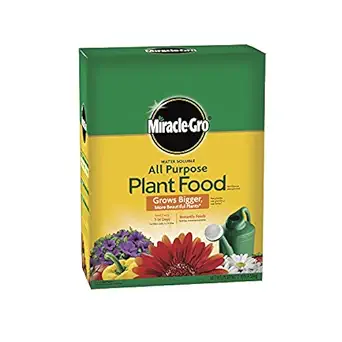 |
| Best Seller A high-volume bestseller chosen again and again | Scotts Green Max Lawn Food (16.67 lb) |  |
Scotts Turf Builder SummerGuard Lawn Food with Insect Control (5,000 sq. ft., 13.35 lb)

| Item Form | Granules |
|---|---|
| Application Method | spreader |
| Coverage | 5000 square feet |
| Specific Uses For Product | Lawn |
| Mixing Ratio | 20:0:8 |
Scotts Turf Builder SummerGuard combines a summer lawn fertilizer with a built-in insect control so you feed and protect turf in a single application. It is designed for broadcast or drop spreader use across up to 5,000 sq ft and contains bifenthrin to target listed pests such as ants, chinch bugs, armyworms, ticks, and spiders. Typical use is a one-time summer application to a dry lawn when insect activity or damage first appears, followed by watering in. The practical benefits are convenience and season-long reinforcement: it supplies nutrients aimed at heat and drought defense while reducing insect pressure that can thin turf. Important limitations are that it is a combined product rather than a targeted insect-only treatment and it requires careful spreader calibration and adherence to timing and re-entry guidance; you should not mix other weed or insect products for at least a week after applying. It is straightforward for DIY homeowners but requires following label directions for safe, effective results.
Best for: Homeowners who want a simple, do-it-yourself summer treatment that both feeds turf and reduces common lawn pests without separate applications.
Less Ideal for: Those who need a targeted pest control program, organic-only gardeners, or users managing large lawns who prefer separate products for fertilizer and insecticide.
- Feeds lawn while providing insect protection in one product
- Formulated to help lawns resist heat and drought during summer
- Covers up to 5,000 square feet per bag for small to mid-size yards
- Granular formula applied with standard broadcast or drop spreaders
- Contains bifenthrin, so users must follow label safety and disposal instructions
- Not intended to be combined with other weed or insect products within seven days
Verdict: Buy this if you want one convenient summer application that feeds your lawn and protects it from common insects at the same time.
The Andersons Professional PGF Complete 16-4-8 Granular Lawn Fertilizer (covers 5,000 sq ft)

| Item Form | Granules |
|---|---|
| Specific Uses For Product | Soil Conditioning |
| Target Species | lawn grasses |
| Unit Count | 288 Ounce |
| Mixing Ratio | 4-1-2 ratio |
This granular fertilizer is built to boost turf performance with a 16-4-8 N-P-K ratio that delivers both immediate and extended nitrogen release for up to eight weeks. It is typically applied with a broadcast spreader at the recommended rate on dry foliage, then lightly watered to activate the Humic DG technology that helps nutrients move into the root zone. Notable features include super-fine particles for even coverage, added iron and micronutrients for richer color, and a mix of quick and slow-release nitrogen for steady growth without frequent reapplication. Practical benefits for a performance-focused buyer are visibly greener turf, reduced application frequency, and improved soil conditioning from humic acids. Important limitations are that it is a granular product so precise spreader calibration and steady walking are required for uniform results, and it is not labeled for sale in California which restricts availability in that state.
Best for: Gardeners focused on high-performance, visibly greener lawns who want a single application product that delivers both immediate and extended feeding and supports soil health.
Less Ideal for: Small container gardeners or people who prefer liquid or organic-only fertilizer programs should consider other formats or formulations.
- Balanced 16-4-8 N-P-K with both quick- and slow-release nitrogen for immediate color and sustained feeding
- Super-fine particles designed for even distribution across the lawn
- Includes iron and multiple micronutrients to improve turf color and overall plant nutrition
- Humic DG additive to help move nutrients into the soil and support soil conditioning
- Requires correct spreader settings and consistent walking speed to avoid streaking
- Not available for sale in California
Verdict: Choose this fertilizer when you want a performance-focused granular formula that delivers quick color boost plus up to eight weeks of sustained feeding for greener grass.
Scotts Turf Builder Lawn Food, 37.5 lb.

| Item Form | Granules |
|---|---|
| Specific Uses For Product | Lawn |
| Coverage | 15000 |
| Mixing Ratio | 32:0:4 |
Scotts Turf Builder Lawn Food is a granular, all-purpose lawn fertilizer formulated to thicken and green lawns while building deeper roots. It is used by broadcasting with a spreader or dropping with a drop spreader; Scotts gives specific spreader settings for easy, repeatable application. The bag covers a large area so it is convenient for whole-yard spring feeding routines. Practical benefits include improved root strength and better nutrient and water uptake compared with unfed turf, plus flexible timing since it can be applied to wet or dry grass and lightly watered in for faster greening. The product is pesticide-free and intended for any grass type, so it can fit into a seasonal program for warm-season grasses like Zoysia. Limitations are that it is a straight lawn food without weed control or insect ingredients, so you will need separate products for weeds or pests, and handling a 37.5 lb bag can be bulky for small yards or single-application needs.
Best for: Homeowners who want a straightforward, high-coverage spring fertilizer to strengthen and green their Zoysia lawn as part of a planned feeding routine.
Less Ideal for: Gardners who need one-step weed and feed or combined pest control solutions or those with very small lawns who prefer smaller package sizes.
- Covers up to 15,000 sq. ft. from one 37.5 lb. bag
- Formulated to build stronger roots and improve nutrient uptake
- Can be applied to wet or dry lawns and used with common spreaders
- Pesticide-free lawn food suitable for any grass type
- Does not include weed or insect control so additional products may be required
- Large bag size may be awkward for small properties or single applications
Verdict: A simple, high-coverage lawn food that reliably builds root strength and greens Zoysia when used as part of a seasonal feeding plan.
Miracle-Gro Liquid All Purpose Plant Food Concentrate, 32 oz

| Item Form | Liquid |
|---|---|
| Specific Uses For Product | Plant Growth, Root Development |
| Application Method | Mix with water in a watering can |
| Mixing Ratio | 1:10 (concentrate to water, estimate) |
Miracle-Gro Liquid All Purpose is a water-soluble concentrate you mix into a watering can and apply every 1 to 2 weeks to container and in-ground plants. It is formulated for general plant growth and root development and is marketed for flowers, vegetables, shrubs and houseplants, so it works as a straightforward feed for flowering bulbs like calla lilies. The bottle’s mixing guidance (cap measures for garden application and 1 teaspoon per gallon for containers) makes it easy to dose for pots or small beds. Practical benefits include fast uptake through the soil when applied as directed and compatibility with routine watering schedules. Limitations to note are that it is an all-purpose formula rather than a bloom-focused or calcium-rich fertilizer tailored specifically to calla lilies, so growers seeking targeted bloom enhancement or specialty nutrition may want a supplement. Also, frequent use at higher-than-recommended strength can risk fertilizer burn, so follow the mixing directions and schedule.
Best for: Buyers who want an affordable, easy-to-use liquid fertilizer to keep calla lilies and other flowering plants regularly fed without fuss.
Less Ideal for: Growers seeking a specialist bloom-boost or a fertilizer formulated for specific micronutrient needs should consider a targeted or bloom-specific product instead.
- Concentrated liquid mixes easily with water for quick application
- Clear dosing instructions for both garden beds and container plants
- Suitable for a wide range of plant types including flowering bulbs and houseplants
- General all-purpose formula not specifically formulated for enhancing blooms of calla lilies
Verdict: A budget-friendly, easy-to-use liquid concentrate that reliably feeds calla lilies and other common garden plants on a regular schedule.
Miracle-Gro Water Soluble All Purpose Plant Food, 1.5 lb

| Item Form | Powder |
|---|---|
| Application Method | Watering Can |
| Target Species | For all flowers, vegetables, trees, shrubs and houseplants |
| Mixing Ratio | 24-8-16 |
Miracle-Gro Water Soluble All Purpose Plant Food is a powder concentrate you mix with water to give a quick nutrient boost to flowers, vegetables, houseplants, shrubs and trees. It is typically dissolved in a watering can or used with a compatible garden feeder to soak soil at the base of plants, delivering nitrogen-heavy nutrition that shows effects faster than granular fertilizers. Notable features include an easy scooping method for indoor and outdoor dosing, compatibility with containers and in-ground planting, and clear directions for feeding every one to two weeks. In practice this makes the product a convenient option when you want visible growth and greener foliage quickly, and the 1.5 lb container covers roughly 600 sq. ft. Important limitations are that it is a fast-release, high-nitrogen formula best used as a regular quick feed rather than a long-term slow-release solution, and it requires careful measuring to avoid overfeeding. For routine maintenance combine with good watering and follow the label to avoid nutrient imbalance.
Best for: Buyers who prefer proven, easy-to-use feeding routines and want noticeable growth quickly for a variety of garden and houseplants, guided by established usage directions and broad user experience.
Less Ideal for: Gardeners seeking a single, long-term slow-release solution or those who prefer organic or low-nitrogen fertilizers for sensitive plantings should consider alternative products.
- Water-soluble powder starts working quickly at the roots when mixed and applied
- Clear, simple dosing for indoor and outdoor use with included scoop guidance
- Suitable for a wide range of plants including vegetables, flowers, shrubs and houseplants
- Covers a large area from a small container (about 600 sq. ft. per 1.5 lb)
- Fast-release formula means benefits are short-term compared with slow-release granular fertilizers
- Requires precise measuring and regular reapplication to avoid overfeeding
Verdict: A reliable, fast-acting water-soluble plant food for gardeners who want easy, repeatable feeding and quick visible results.
Miracle-Gro Water Soluble All Purpose Plant Food, 10 lb

| Item Form | Granules, Powder |
|---|---|
| Application Method | watering can |
| Target Species | For all flowers, vegetables, trees, shrubs and houseplants |
| Fertilizer Analysis | 24-8-16 |
Miracle-Gro Water Soluble All Purpose Plant Food is a fast-acting granular formula that dissolves in water to feed shrubs, flowers, vegetables and houseplants. You mix measured scoops into a watering can or garden feeder and apply at the soil line every 1 to 2 weeks; the water-soluble format delivers nutrients quickly to roots, which can produce visibly fuller growth compared with unfed plants. The product is labeled safe for all common plant types when used as directed and includes guidance for indoor and outdoor dilution rates. Notable features are the broad target list (shrubs included), the 24-8-16 NPK balance that favors leafy growth, and a large 10 lb container that covers extensive garden area. Practical benefits for shrub care are rapid nutrient availability during the growing season and easy application with routine watering. Important limitations are the relatively high nitrogen proportion, which is ideal for leaf development but may be less suitable when the goal is to limit vegetative growth or to force blooms or fruit without adjusting timing or concentration. Follow the package directions to avoid overfeeding and protect nearby sensitive plants.
Best for: Gardeners who want a reliable, quick-feed fertilizer to boost shrub vigor and see noticeable growth within weeks and who value products with extensive customer use and guidance.
Less Ideal for: Growers seeking a low-nitrogen bloom booster or a slow-release, low-maintenance fertilizer for seasonal feeding should consider more specialized formulas.
- Water-soluble formula delivers nutrients quickly to roots for faster response
- Broadly labeled for indoor and outdoor use including shrubs, trees, flowers and vegetables
- Clear dilution and application instructions for watering can or garden feeder
- High-coverage 10 lb container suitable for large gardens
- High nitrogen ratio may encourage leafy growth over blooms or fruiting if used during flowering
- Requires regular reapplication every 1–2 weeks rather than long-term slow feeding
Verdict: A dependable, fast-acting water-soluble fertilizer that reliably boosts shrub growth when used as directed.
Scotts Green Max Lawn Food (16.67 lb)

| Item Form | Granules |
|---|---|
| Coverage | 5000 square feet |
| Specific Uses For Product | Lawn |
| Target Species | lawn grass |
Scotts Green Max Lawn Food is a granular, all-purpose lawn fertilizer formulated to deliver fast greening with a 2-in-1 feed plus 5% iron supplement. It is applied with a broadcast or drop spreader to any grass type and is recommended for routine spring, summer, or fall applications. Notable features include a guaranteed nonstaining formula when used as directed and settings provided for Scotts spreaders to help get an even application across the advertised 5,000 sq ft coverage. The iron content speeds visible greening in as little as three days and the granules are ready to water in for faster uptake. For a risk-averse homeowner growing fescue in spring, the product is straightforward to use and safe to re-enter the lawn immediately after application. Limitations are that proper spreader settings and sweeping up excess product are important to avoid runoff and that it is a general lawn food rather than a specialized product for nutrient-deficient soils, so a soil test is still useful for targeted corrections.
Best for: Homeowners who want a low-risk, easy-to-apply lawn food that produces quick green results on fescue lawns in spring and prefer established brand guidance for application.
Less Ideal for: Gardeners seeking a product to correct a specific nutrient imbalance or those who prefer liquid or organic-only fertilizing approaches.
- Includes 5% iron for faster, deeper greening visible in about three days
- Premeasured granular form covers up to 5,000 sq ft from one bag
- Manufacturer provides spreader settings to simplify even application
- Formulated not to stain concrete or driveways when used as directed
- Not a tailored corrective fertilizer for specific soil deficiencies
- Requires correct spreader settings and cleanup to prevent runoff
Verdict: A simple, fast-acting granular lawn food with added iron that reliably greens fescue lawns when applied with a spreader.
Choosing the Right Summer Fertilizer: Key Factors to Consider
Nutrient Ratios and Target Plants
Summer fertilizer formulas vary in N-P-K ratios to suit different garden targets. Lawns often benefit from a higher nitrogen proportion to maintain green, dense turf, but flowering beds and vegetables may need more balanced or bloom-focused ratios to support fruit set and flower production.
Choosing the right ratio affects plant vigor and stress tolerance. Excess nitrogen in hot weather can encourage soft, tender growth that is prone to scorch and insect damage. Conversely, too little nitrogen or phosphorus can reduce flowering and fruiting. Look at the guaranteed analysis and match that balance to whether you are feeding lawn, annuals, perennials, or edibles.
Release Mechanism and Timing
How a fertilizer releases nutrients determines how often you apply it and how plants respond during warm conditions. Quick-release fertilizers provide an immediate boost but can spike growth that is vulnerable to heat and drought. Slow-release or controlled-release products feed over weeks or months, smoothing nutrient availability and reducing the risk of burn.
Consider local watering patterns and rainfall when selecting release types. In hot, dry spells a slow-release formula paired with regular irrigation gives steady nourishment. In well-watered or irrigated beds, a controlled-release product reduces leaching and frequent reapplications.
Salt Index and Plant Safety
Fertilizer salt content influences root health, especially when temperatures climb and evaporation increases soil salt concentration. High-salt formulations can cause leaf tip burn and root stress if applied too heavily or without adequate watering.
Check product guidance for salt index clues, apply at recommended rates, and avoid fertilizing stressed or drought-bound plants. For container-grown plants and new transplants, use lower-salt or specialty formulations to reduce risk of root desiccation in heat.
Compatibility with Watering and Irrigation
Summer feeding needs to fit the garden's irrigation schedule. Granular fertilizers may require watering-in to activate and avoid foliage contact, while soluble feeders are mixed and applied with irrigation or by hand watering. Some slow-release granules work well with automatic sprinklers; others need periodic hand watering to distribute nutrients evenly.
Match fertilizer choice to how you water. If you rely on drip irrigation, pick formulations labeled safe for that system or that dissolve predictably without clogging emitters. Where hand-watering is the norm, soluble feeds can be applied more flexibly but may need more frequent dosing.
Application Convenience and Measuring
Ease of application directly affects whether you will follow feeding schedules. User-friendly packaging with clear measurement guidance, spreader-compatible granules, or premixed soluble packets reduces guesswork. Products requiring complex dilution ratios or frequent reapplications raise the chance of under- or overfeeding.
Consider how much time you have during summer maintenance. Larger properties benefit from spreader-ready granules, while small patios and containers often do better with water-soluble or liquid concentrates for precise, low-lift applications.
Soil Health and Long-Term Effects
Fertilizers influence soil biology and structure over multiple seasons. Formulas that include organic matter or micronutrients can support microbial activity and long-term fertility, whereas reliance on high-analysis synthetic salts may necessitate additional soil-building practices.
Think beyond immediate greening. Incorporating periodic organic amendments, cover crops, or compost alongside summer feeding helps maintain soil structure and moisture retention, reducing the need for heavy nutrient inputs and improving plant resilience to heat.
When To Feed During the Heat
Timing fertilizer applications around heat peaks helps prevent stress. Aim to feed in early morning or late afternoon when temperatures are lower and plants can make the most of the nutrients without rapid transpiration driving salt concentration in leaf tissue.
Adjust frequency depending on whether you use quick-release or slow-release products. Quick feeds may be monthly in summer but require careful watering. Slow-release options often allow for single applications that cover several weeks of demand.
- Avoid feeding during heat waves or drought stress
- Water thoroughly after applying granules to move nutrients into the root zone
- Match application timing to your irrigation schedule
Feeding Lawns Vs Flower Beds Vs Vegetables
Different garden areas have different nutrient priorities. Lawns prioritize consistent nitrogen for color and density, while flowering beds and fruiting vegetables need balanced blends that support blooms and fruit set.
Vegetable gardens, especially fruiting crops, benefit from formulations that include phosphorus and potassium to support root development and fruit quality. For ornamentals, lower nitrogen and higher potassium can improve bloom durability and disease resistance.
- Lawns: steady nitrogen, controlled-release to avoid flushes
- Flowers: balanced N-P-K and micronutrients for blooms
- Vegetables: timing of phosphorus and potassium around fruiting stages
Organic Options and Soil-Building Approaches
Organic summer fertilizers feed both plants and soil organisms, often releasing nutrients more slowly and improving structure. They can reduce the risk of burn and support long-term fertility, though they may act more slowly than synthetic quick feeds.
Consider blending organic amendments with targeted mineral feeds when specific deficiencies appear. Compost teas, well-aged compost, and steady applications of organic granular fertilizers can maintain summer vigor while building soil health.
- Organic feeds are gentler but slower to act
- Combine organic matter with targeted mineral supplements if rapid correction is needed
- Monitor soil tests to guide long-term organic strategies
Safety and Environmental Considerations
Avoid overapplication that can leach nutrients into waterways, especially during summer storms. Use recommended rates and avoid fertilizing before heavy rain. Buffer zones near water features reduce runoff risk.
Store fertilizers in a dry, cool place away from children and pets. When handling, follow label directions and wear simple protective gear if handling concentrated formulations.
- Follow label rates to minimize runoff
- Store securely and dry
- Rinse spreaders and sprayers away from storm drains
Interpreting Product Labels and Guaranteed Analysis
The guaranteed analysis shows the percentage of nitrogen, phosphorus, and potassium and sometimes the split between immediately available and slow-release nitrogen. Learn to read these numbers to match a product to your garden's needs.
Labels also include application rates and timing. Use those guidelines as starting points and adjust slightly based on observed plant response and soil moisture.
- Look for slow-release nitrogen percentages for heat-season safety
- Check for micronutrients if you have known deficiencies
- Follow the application table for area coverage
How We Chose the Best Summer Fertilizer
We focused on attributes that matter most to gardeners feeding plants through hot months. First, nutrient formulation was assessed for appropriate nitrogen, phosphorus, and potassium ratios for summer use, including any micronutrient content relevant to blooms and heat stress recovery. Second, release profile was evaluated, distinguishing quick-release vs slow-release options and the predictability of nutrient delivery under high-temperature, high-moisture conditions. Third, application practicality looked at ease of measuring and spreading, compatibility with common spreaders and sprayers, and frequency needed to maintain steady growth without burning foliage. Fourth, effect on soil and plant health considered salt index, pH influence, and whether the formula supports beneficial soil life. We excluded products designed exclusively for winterization, seed starting, or houseplants outside typical outdoor summer use. We also filtered out formulations with unclear nutrient labeling or incomplete instructions. The shortlisted items passed these editorial filters and were further compared on packaging sizes, clarity of guaranteed analysis, and recommended timing for heat-prone landscapes.
FAQ
Can I use any fertilizer in summer if I water regularly?
Regular watering helps, but fertilizer type still matters. Quick-release formulas can still cause tender flushes that scorch in high temperatures. Choose release profiles and application rates that match your irrigation and heat conditions.
How often should I apply summer fertilizer to my lawn?
Frequency depends on formulation. Controlled-release products often need one to two applications over the season. Water-soluble or quick-release feeds may be applied every 4 to 6 weeks but require careful dosing and adequate watering to avoid stress.
Are organic summer fertilizers as effective as synthetic ones?
Organic fertilizers supply nutrients more slowly and improve soil health, which can be advantageous long term. They may not produce as rapid a green-up as synthetic quick feeds, so the choice depends on whether you need immediate results or prefer sustained soil improvement.
Will summer fertilizer harm blooming plants?
If applied at recommended rates and with attention to release type, summer fertilizer should not harm blooms. Excessive nitrogen or application during heat waves can reduce flower resilience, so use balanced formulas and avoid heavy feeding when plants are heat-stressed.
Can I use the same fertilizer for containers and in-ground beds?
Containers are more sensitive to salts and moisture swings. Use lower-salt or specifically labeled container feeds for pots, or reduce application rates compared with in-ground beds to prevent root burn and nutrient buildup.
How does fertilizer affect soil pH during summer?
Most summer fertilizers have limited immediate effect on pH, but repeated use of certain ammonium-based products can acidify soils over time. If pH is a concern, monitor with tests and amend soils or choose formulations that are pH-neutral for your crops.
Final Verdict
Prioritize a summer fertilizer that matches your garden's watering routine, target plants, and heat tolerance. Choose release profiles that avoid sudden growth flushes in extreme heat and consider salt index and soil health to protect roots and long-term fertility. Balance convenience with the specific nutrient needs of lawns, flowers, or vegetable plots. With the right formulation and timing, you can maintain vigor through the season while minimizing stress and environmental risk.
