

Note: This article contains affiliate links. If you click on these links and make a purchase, I may earn a small commission at no extra cost to you. This helps support my research and content. Read my full affiliate disclosure here.
A well-chosen group of terrarium plants turns a glass container into a living scene that stays healthy with little fuss. The right plants match your enclosure size, available light, and how often you want to water. This guide covers five top terrarium plants shortlisted for their compact habits, humidity tolerance, and ease of care in enclosed or open glass displays. We'll explain which environmental needs matter, how to read a plant's growth tendencies, and what to expect for maintenance. Read on for practical guidance to pick plants that fit your terrarium setup and gardening style.
Top Picks at a Glance
| Best Overall The best all-around choice for most situations | Optiflora Mini Terrarium Plants (6-pack, 2" Pots) |  |
| Best Quality Built to a higher standard if you want something more solid | Altman Plants 20-Pack Live Succulent Assortment (2" Pots) |  |
| Best Value The sweet spot between price and what you get | Altman Plants Assorted 12-Pack Live Houseplants (2 in.) |  |
| Best Budget The cheapest option that still gets the job done reliably | Shop Succulents Assorted Live Air Plants 4-Pack |  |
| Most Popular A crowd favorite that many people choose with confidence | Plants for Pets Pothos 4-Pack (assorted varieties) |  |
Optiflora Mini Terrarium Plants (6-pack, 2" Pots)

| Indoor Outdoor Usage | Indoor |
|---|---|
| Other Special Features of the Product | High Humidity Tolerant, Low Maintenance, Pest Resistant |
| Sunlight Exposure | Partial Shade |
| Moisture Needs | Moderate Watering |
| Unit Count | 6 Count |
These Optiflora mini terrarium plants are sold as a six-pack of assorted varieties in 2-inch pots and are intended for use in closed or open terrariums, fairy gardens, or small decorative containers. They are greenhouse-grown and selected for tolerance of high humidity and lower light, so they perform well in shaded terrarium environments and near vivaria for reptiles or amphibians. Care is straightforward: keep the soil consistently damp, water when the top feels dry, and provide indirect light. The compact size makes them easy to position and arrange, and ordering multiple packs increases variety without extra repotting work. Limitations to expect are the small initial pot size and compact growth habit, which means plants will need occasional trimming or transplanting as they establish. Because the set is assorted, you may receive varieties that grow at different rates, so plan placement and care accordingly. For a balanced terrarium setup these plants provide reliable foliage and easy maintenance, but growers wanting faster large-scale growth or specific named species may prefer individual selections.
Best for: Gardners assembling a balanced terrarium or vivarium who want an easy-care mix of small, humidity-loving foliage plants that establish quickly in shaded indoor displays.
Less Ideal for: People who need uniform, named species or fast-growing plants for quick coverage should choose single-variety, larger nursery specimens instead.
- Assorted varieties in one pack provide immediate visual interest and mixing options
- Grown for high humidity and low light so they thrive in closed terrariums and shaded spots
- Compact 2" pots are easy to arrange and fit in small terrariums or fairy gardens
- Low maintenance care: keep soil damp and provide indirect light
- Small starter pots mean plants may need trimming or repotting as they grow
- Assorted pack can include varieties with different growth rates, requiring occasional rearrangement
Verdict: A convenient, low‑maintenance six-pack of mini plants designed specifically to thrive in humid, low-light terrarium and vivarium environments.
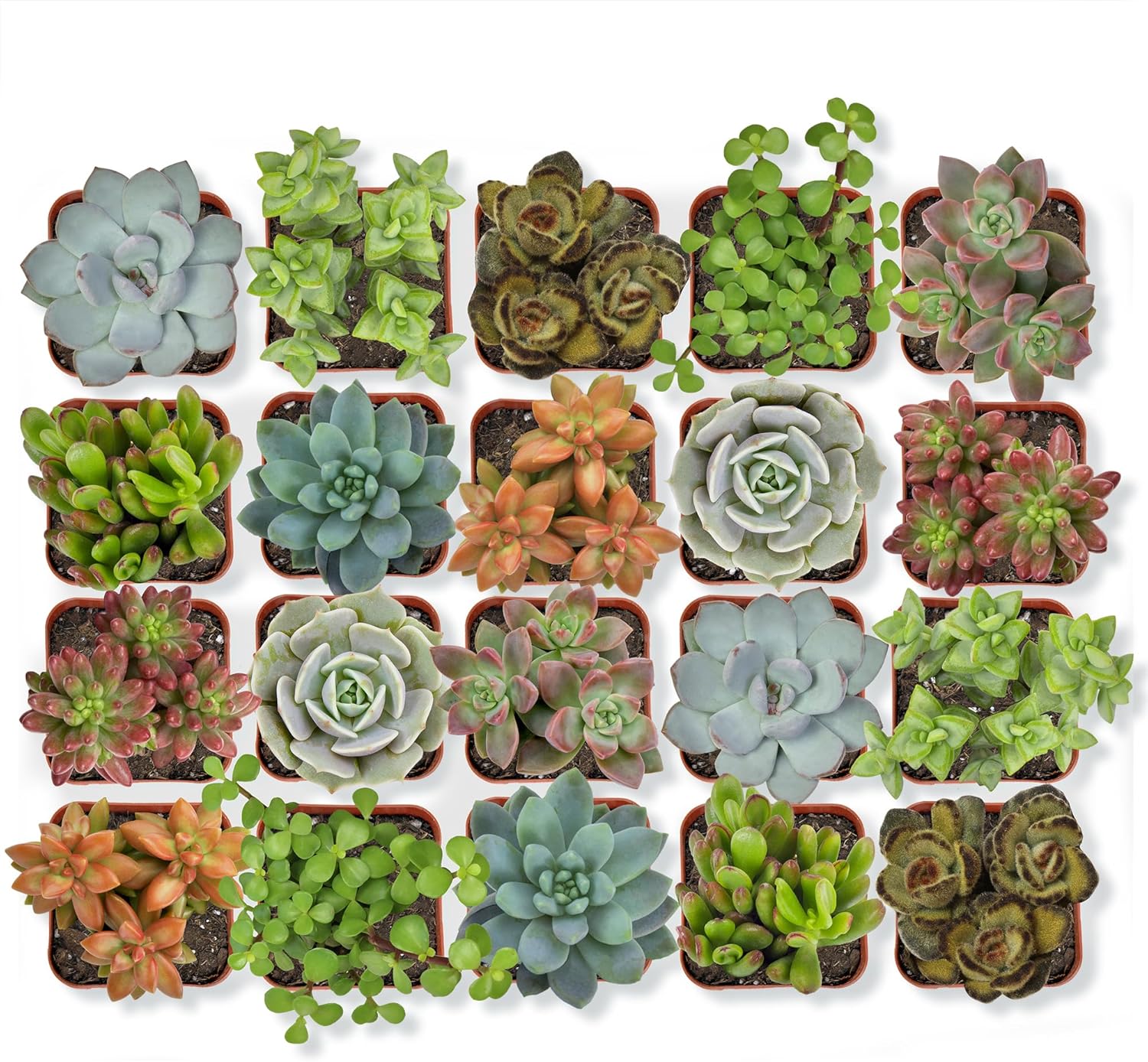
Altman Plants 20-Pack Live Succulent Assortment (2" Pots)
| Indoor Outdoor Usage | Indoor, Outdoor |
|---|---|
| Sunlight Exposure | Full Sun |
| Moisture Needs | Little To No Watering |
| USDA Hardiness Zone | 5 |
| Number of Pieces | 20 |
This 20‑pack from Altman Plants delivers a ready collection of 2" succulents that are well suited for terrariums, mixed containers, or a beginner collection. The set contains ten paired varieties such as Echeveria, Crassula, Sedum and others, each in a small nursery pot so you can pot up or arrange them immediately. These succulents are bred for resilience and low water needs, which makes them easy to maintain inside a bright terrarium or on a sunny windowsill. Notable features are the wide variety of shapes and colors and the plants arriving fully rooted and ready to use for DIY projects or display. Limitations include the small pot size on arrival, so expect to transplant larger specimens into the terrarium substrate or into slightly bigger pots for longer term growth, and seasonal variation means exact varieties may differ between orders. For terrarium use pick bright indirect light and be conservative with watering to keep these drought‑tolerant plants healthy.
Best for: Buyers who want a performance‑focused starter collection for terrariums or small container displays and value robust, low‑care plants that establish quickly.
Less Ideal for: Gardeners seeking mature specimens or specific named cultivars for showy displays should look for larger, single‑variety plants instead.
- Large, curated variety: 10 paired succulent varieties give visual diversity for terrariums and mixed displays
- Low maintenance: drought‑tolerant plants that need little watering once established
- Ready to use: arrive in 2" nursery pots and are fully rooted for immediate planting or arranging
- Suitable for indoor terrariums: bred for resilience and vibrant foliage year round
- Plants arrive in very small pots so many will need repotting for long‑term growth
- Exact varieties can vary by season, so you may not receive every pictured cultivar
Verdict: A convenient, performance‑oriented 20‑plant pack that supplies a diverse, low‑maintenance foundation for terrariums and small container projects.
Altman Plants Assorted 12-Pack Live Houseplants (2 in.)

| Indoor Outdoor Usage | Indoor |
|---|---|
| Other Special Features of the Product | Air Purification, Compact, Low Maintenance |
| Sunlight Exposure | Partial Sun |
| Moisture Needs | Regular Watering |
| Unit Count | 1 Count |
This 12-pack from Altman Plants delivers a variety of popular, compact houseplants grown in 2-inch grower pots that work well for grouped displays, terrariums, desks, and windowsills. The assortment commonly includes pothos, peperomia, spider plant, fittonia, croton and other foliage varieties that tolerate indirect light and regular, moderate watering. Plants arrive rooted and packaged for safe delivery, and seasonal rotation keeps the selection interesting. The small size makes them convenient for creating mixed mini-planters or filling a terrarium, but expect limited initial foliage and the need to repot as they establish. Care guidance is simple: indirect bright light and water when the soil dries, though specific varieties in the box may have slightly different needs. If you want an easy way to populate a small indoor display or start multiple terrarium specimens, this pack provides a cost-effective, low-maintenance jump start, while buyers who need mature plants or exact variety selection should plan to upgrade individual specimens later.
Best for: Gardeners and hobbyists who want an efficient way to fill terrariums, create mixed mini-planters, or stock-test several easy-care indoor varieties at once.
Less Ideal for: Buyers who need mature, display-ready plants or must select exact species for a collection should consider ordering individual larger specimens instead.
- Twelve fully rooted, ready-to-use plants ideal for groupings, terrariums, or small planters
- Rotating assortment exposes you to a variety of popular indoor species
- Small 2-inch pots make placement flexible for desks, shelves, and windowsills
- Low-maintenance varieties that do well in indirect light with moderate watering
- Plants are juveniles and will need repotting for long-term growth
- Varieties are not guaranteed so you may not receive specific species you want
Verdict: A convenient, low-effort way to populate terrariums and small indoor displays with a diverse set of young, easy-care houseplants.
Shop Succulents Assorted Live Air Plants 4-Pack

| Indoor Outdoor Usage | Indoor |
|---|---|
| Expected Blooming Period | Summer |
| Sunlight Exposure | Partial Sun |
| Moisture Needs | Moderate Watering |
| Unit Count | 4 Count |
This 4-pack of assorted air plants delivers an easy, low-maintenance way to stock a terrarium or small indoor display. The bundle contains four different Tillandsia species chosen at shipment so sizes and shapes vary, which makes it useful for layered or mixed arrangements. Care is straightforward: mist every 1–2 days or soak for 20–60 minutes weekly and allow to drain, and give bright indirect light rather than direct sun. Because they absorb water through their leaves there is no potting soil required, so they work well attached to wood, shells, or decorative substrates inside closed or open terrariums. Practical benefits include instant visual variety, minimal ongoing cost for supplies, and compatibility with creative displays. Limitations are that individual plants vary by season and selection, so you may not get specific species pictured and small plants can be more sensitive to overwatering or prolonged low light compared with larger houseplants.
Best for: Buyers who want an inexpensive, low-effort way to populate terrariums or small indoor displays with varied, no-soil plants and who prefer ready-to-use mixes over selecting individual species.
Less Ideal for: People who need specific named Tillandsia species for collection purposes or those seeking large, long-established specimen plants for focal displays.
- No soil required so they are simple to place in terrariums or mounted displays
- Low routine care: misting or short weekly soaks keep them healthy
- Assorted species provide immediate visual variety for arrangements
- Compact 4-pack is convenient for decorating multiple small displays
- Assortment means specific species or exact appearance is not guaranteed
- Smaller air plants can be more sensitive to low light and improper watering
Verdict: An affordable, ready-to-decorate 4-pack of air plants that makes adding low-maintenance, soil-free greenery to terrariums quick and easy.
Plants for Pets Pothos 4-Pack (assorted varieties)

| Indoor Outdoor Usage | Indoor |
|---|---|
| Other Special Features of the Product | Air Purification |
| Sunlight Exposure | Full Sun |
| Moisture Needs | Regular Watering |
| Style Name | 4" Assorted Pothos, 4-Pack |
These pothos arrive as a ready-to-display set of four young vining plants in 4" pots and are intended for indoor use. They are typically used in hanging planters, terrariums with open tops, on shelves, or trained along supports to produce trailing greenery. The listing emphasizes a rotating assortment that can include Marble Queen, Golden, Neon, Silver Satin, Hawaiian pothos and occasional philodendron relatives, so you get visual variety rather than identical specimens. Pothos are forgiving plants that tolerate low light and irregular watering, and the care guidance here—bright indirect light preferred, allow soil to dry between waterings, and keep temperatures above 60°F—matches common pothos practice. Notable benefits are their fast trailing growth and air-purifying reputation, which make them useful for adding green texture to small indoor displays. Limitations are that variety selection is not guaranteed and some variegated types grow more slowly than solid-green forms. Also these plants are listed as pet toxic so they need placement out of reach in shared homes.
Best for: Someone who wants an easy, low-maintenance set of small trailing plants to populate terrariums, hanging planters, or indoor displays and values social proof of a popular houseplant choice.
Less Ideal for: People who need specific named cultivars or immediate large specimens for instant impact, or households that cannot safely isolate pet-toxic plants.
- Includes four individual plants for a quick group display or multiple terrarium-style placements
- Assortment increases visual interest with variegated and solid-leaf varieties
- Easy-care species that tolerates low light and infrequent watering
- Arrives potted and ready to place into hanging baskets, shelves, or small indoor planters
- Specific varieties are not guaranteed so appearance may vary from photos
- Potted size is small at delivery and will need time to develop noticeable trailing growth
- Plants are listed as toxic to pets and require careful placement out of reach
Verdict: This four-pack is an easy, variety-rich way to add low-maintenance trailing pothos to small indoor displays and terrariums.
Choosing the Right Terrarium Plants: Key Factors to Consider
Light Requirements And Placement
Light is the single most important environmental factor for terrarium plants. Many terrarium species prefer bright, indirect light rather than direct afternoon sun that can overheat glass containers. Low-light tolerant plants are ideal for bedrooms or offices with north-facing windows, while medium-light plants suit bright rooms with filtered sun.
Consider how long natural light falls on the terrarium each day and whether you will supplement with artificial grow lights. Matching plant choice to actual light prevents leggy growth, leaf loss, and stress that invite rot or pests.
Humidity And Ventilation Needs
Closed terrariums build up humidity and are perfect for moisture-loving species that would sulk in dry air. Conversely, some plants prefer a semi-open container with occasional airflow to avoid constant wetness around stems and crowns. Know whether you want a closed ecosystem or a display you will open frequently for pruning and watering.
Ventilation reduces mold and slows fungal issues, while constant humidity favors ferns, mosses, and tropical understory plants. Balance the plant's natural moisture preference with the terrarium style you plan to maintain.
Mature Size And Growth Rate
Terrarium plants must stay small relative to the container or be easily pruned back. Plants with slow, compact growth require less frequent trimming and keep the display balanced over time. Fast growers can overpower a tiny space and create shading problems for neighbors in the same terrarium.
Check the typical mature height and spread and choose varieties known to remain miniature or to be controllable through routine pinching and root pruning.
Root And Soil Behavior
Plants that root aggressively can destabilize shallow substrates or push into drainage layers, while shallow-rooted species suit thin layers of soil and decorative gravel. Consider root depth, how the plant reacts to repotting, and whether it tolerates the thin, well-draining mixes used in terrariums.
A good terrarium plant will not demand frequent repotting and will do well in the moisture-retentive yet airy substrate mixes that limit rot.
Disease Resistance And Cleanliness
Enclosed environments concentrate humidity and any pathogens present. Choose plants with healthy leaf surfaces and natural resistance to crown and root rot. Smooth, waxy leaves can be easier to clean, while plants with delicate hairs or crevices may trap moisture and encourage fungal growth.
Routine inspection, removing dead material, and avoiding overwatering are essential. Selecting inherently resilient species reduces the chances of major cleanup or losing the whole display.
Propagation And Replacement Ease
Plants that root easily from cuttings make it simple to replace specimens or expand your collection without buying new stock. Fast, reliable propagation also lets you control size by restarting growth from cuttings.
Consider whether you are comfortable taking cuttings and whether the plant will re-root in water or a small soil plug. Species that propagate readily lower long-term maintenance and replacement effort.
Designing A Miniature Ecosystem
Think beyond single plants and plan a composition with variation in texture, height, and leaf color. Use a mix of groundcover mosses, low-growing rosettes, and a taller focal plant to create depth inside the glass. Keep scale in mind so taller pieces do not crowd smaller neighbors.
- Use substrate layers: drainage, charcoal, and a thin potting mix for stability and water control.
- Place taller plants toward the back or center depending on vessel shape to preserve sightlines.
- Add decorative elements such as stones or driftwood for contrast and to anchor plants visually.
Soil Mixes And Drainage Strategies
Terrariums need a balance of moisture retention and drainage. Start with a drainage layer of small pebbles or gravel and a thin layer of activated charcoal to reduce odor and toxins. Top with a light, well-draining potting mix suited to tropical understory plants or succulents depending on the species chosen.
- Avoid deep, heavy garden soil that stays too wet.
- Use a soil mix with good aeration to prevent root rot.
- For closed terrariums, keep the planting layer thin to limit water accumulation.
Watering And Maintenance Schedule
Adjust watering to container type. Closed terrariums typically need less frequent attention because the glass recycles moisture; look for condensation levels and water only if the soil becomes dry to the touch. Open terrariums and dish gardens need a regular but modest watering rhythm to avoid drought or oversaturation.
Regular maintenance includes removing yellowing leaves, trimming runners or shoots that outgrow the space, and inspecting for pests or mold. A small hand mister and long tweezers are handy tools for working inside the glass without damaging plants.
- Mist lightly for humidity-loving species, but avoid constant dripping on crowns.
- Rotate the terrarium occasionally to promote even light exposure.
- Trim back overgrown stems to maintain scale.
Mosses And Groundcovers For Texture
Mosses and low groundcovers are essential for filling negative space and providing a finished forest-floor look. They help retain surface moisture and create a unified aesthetic under taller plants. Choose species that tolerate the same moisture and light as your main selections.
Groundcovers vary in speed and tolerance; match them to the terrarium environment to avoid aggressive spread or dieback that leaves bare patches.
- Live sheet moss creates a soft carpet but needs steady humidity.
- Small-leaved groundcovers add contrast without competing for light.
- Avoid groundcovers that root deeply in very shallow containers.
Lighting Options For Indoor Displays
If natural light is limited, use a low-profile LED grow light rated for indoor plant use. Position lights to mimic bright, indirect sun and run them on a timer for consistent daily exposure. Be cautious with high-intensity bulbs that can heat the glass and stress plants.
Adjust light duration and distance based on plant response. Signs of insufficient light include leggy growth and pale leaves; excess light shows as scorched or bleached foliage.
- Use cool-spectrum LEDs for balanced growth.
- Aim for several hours of bright, indirect light rather than prolonged direct sun.
- Monitor plant response and adjust fixture height or runtime accordingly.
How We Chose the Best Terrarium Plants
We selected plants that reliably perform inside glass containers and small enclosed ecosystems. Priority went to species with compact growth habits and predictable size so they fit common terrarium dimensions. We evaluated how each plant tolerates low to medium light, since many terrariums are kept indoors away from direct sun. Humidity response was another key filter: only plants that handle consistently high moisture or benefit from occasional misting were considered. Resistance to common terrarium issues such as rot and mold was weighed, alongside ease of propagation for ongoing planting or replacements. We excluded plants known to outgrow small containers quickly, species that need frequent pruning beyond basic upkeep, and those requiring specialized pest treatments. The final shortlist favors plants that offer clear visual appeal while minimizing maintenance work in a closed or semi-closed glass environment. Our criteria focus on real gardener concerns: light tolerance, humidity needs, mature size, disease resistance, and ease of care and propagation.
FAQ
Can any houseplant be used in a terrarium?
Not every houseplant is suitable. Many common houseplants grow too large or need drier air than a closed terrarium provides. Choose species known for compact size and tolerance of high humidity.
How often should a closed terrarium be watered?
Closed terrariums usually need very little watering. You may only need to add water a few times per year. Look for condensation on the glass and check soil moisture before adding water.
What causes mold to grow inside my terrarium?
Mold commonly appears when there is organic debris, persistent surface wetness, or poor air circulation. Remove dead plant material, reduce watering, and briefly open the container to improve airflow if mold appears.
How do I control plant size without repotting?
Regular pinching and pruning of shoots and roots keeps plants compact. You can also remove and root healthy cuttings to replace overgrown specimens or maintain balance.
Is fertilizing necessary in a terrarium?
Fertilizing is usually minimal. Closed systems recycle nutrients, so feed sparingly with a diluted, balanced fertilizer only during active growth periods and at low strength to avoid runoff and algae growth.
Can terrarium plants be moved outdoors seasonally?
Some terrarium species tolerate brief outdoor placement in similar humidity and light conditions, but sudden changes in temperature or direct sun can stress them. Acclimate plants slowly and avoid full sun exposure.
Final Verdict
Choose terrarium plants that match the container's light and humidity profile, and prioritize compact, slow-growing species that are resistant to rot. Pay attention to root behavior and propagation ease so you can manage size and replace plants without major disturbance. With the right balance of plant selection, substrate, and maintenance rhythm, you can create a low-effort, long-lasting miniature garden that suits your space and time commitment.
