

Note: This article contains affiliate links. If you click on these links and make a purchase, I may earn a small commission at no extra cost to you. This helps support my research and content. Read my full affiliate disclosure here.
If you need a machine that stands up to heavy, frequent cleaning tasks, a triplex pump pressure washer is designed for sustained performance. These units are built for long runtimes, high duty cycles, and steady water delivery, which matters if you clean equipment, prepare surfaces for coatings, or maintain large properties. This guide covers six shortlisted Triplex Pump Pressure Washers suited to demanding jobs and varied site conditions. We evaluated flow and pressure characteristics, pump longevity, and serviceability so you can pick the right model for your workload and maintenance preferences.
Top Picks at a Glance
| Best Overall The best all-around choice for most situations | Simpson PowerShot PS60869 4000 PSI Gas Pressure Washer, 3.5 GPM, Honda GX270 | 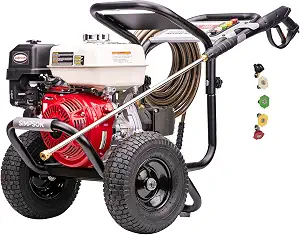 |
| Best Quality Built to a higher standard if you want something more solid | SIMPSON Aluminum Series ALH3425 Gas Pressure Washer, 3600 PSI 2.5 GPM (Honda GX200) |  |
| Best Value The sweet spot between price and what you get | TOOLCY 3400 PSI Triplex Pressure Washer Pump, 3/4" Horizontal Shaft |  |
| Best Budget The cheapest option that still gets the job done reliably | VEVOR 3/4" Horizontal Triplex Pressure Washer Pump, 3300 PSI 2.5 GPM |  |
| Highest Rated A top-rated pick with lots of positive feedback | Hochspuel 1" Shaft Triplex Pressure Washer Pump — 4300 PSI, 4.4 GPM |  |
| Most Popular A crowd favorite that many people choose with confidence | Simpson PowerShot PS3228 3300 PSI Gas Pressure Washer with Honda GX200 |  |
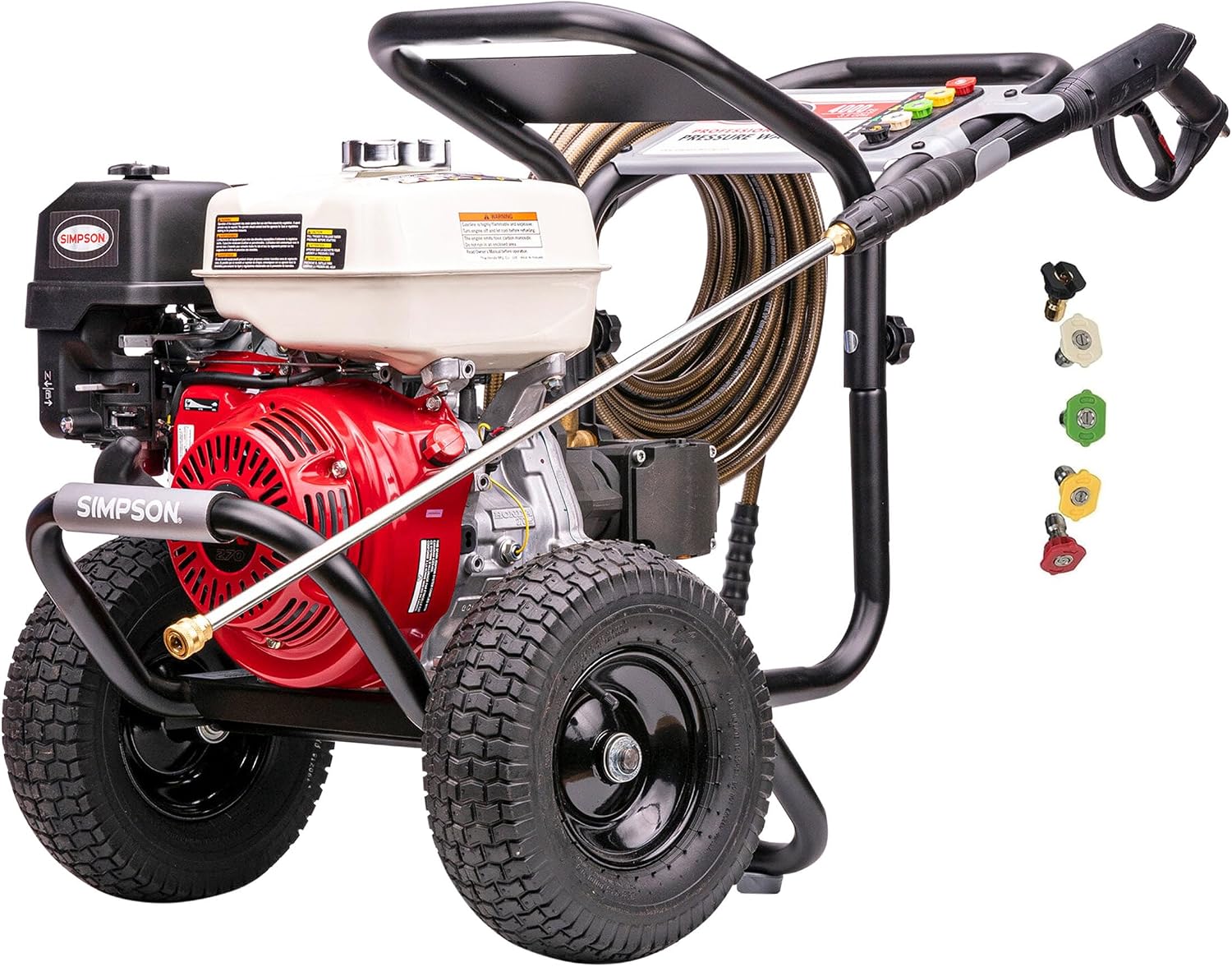
Simpson PowerShot PS60869 4000 PSI Gas Pressure Washer, 3.5 GPM, Honda GX270
| Power Source | gas_powered |
|---|---|
| Maximum Flow Rate | 3.5 gpm |
| Maximum Pressure | 4000 psi |
| Hose Length | 50 feet |
| Tank Volume | 3.5 gallons |
The Simpson PowerShot PS60869 is a contractor-focused gas pressure washer meant for demanding exterior cleaning like deck restoration, paint prep, and graffiti removal. It pairs a Honda GX270 engine with an AAA industrial triplex plunger pump that produces 4000 PSI and 3.5 GPM, and PowerBoost technology raises nozzle pressure for tougher stains. The unit ships on a welded steel frame with 13-inch pneumatic tires and includes a 50-foot kink-resistant high-pressure hose, five quick-connect nozzles, an ergonomic gun, and a 31-inch steel wand. In real work, that package translates to reliable high-impact cleaning power, long continuous run capability thanks to the commercial pump, and mobility across uneven job sites. The tough frame and thermal relief on the pump improve durability under heavy use. Expect the unit to be heavy and more maintenance-intensive than consumer electric washers, and it requires proper fuel, oil, and pump care for long life and EPA compliance in most states. This is a performance-first machine built for pros or serious DIYers who need commercial-level cleaning output.
Best for: Buyers who prioritize raw cleaning performance for commercial or heavy residential projects and need a durable, high-pressure machine that can tackle large, stubborn jobs.
Less Ideal for: Casual users with small yards, occasional car washing needs, or those who prefer low-maintenance, lightweight, or electric options should look elsewhere.
- Commercial-grade AAA triplex plunger pump rated 4000 PSI at 3.5 GPM for high cleaning force
- Honda GX270 engine for dependable starting and sustained power on heavy jobs
- Includes long 50-foot kink- and abrasion-resistant high-pressure hose and five quick-connect nozzle tips
- Welded steel frame and pneumatic tires for job-site durability and easier maneuvering
- Thermal relief on pump and PowerBoost at the nozzle help prevent overheating and increase cleaning impact
- At about 120 pounds it is heavy and not suited to lift-and-carry jobs
- Gas engine and industrial pump require regular maintenance and fuel handling
- Lacks the near-silent operation and low maintenance of electric models
Verdict: Choose this Simpson PowerShot when you need commercial-level pressure and flow for heavy-duty cleaning jobs and reliable on-site performance.
SIMPSON Aluminum Series ALH3425 Gas Pressure Washer, 3600 PSI 2.5 GPM (Honda GX200)

| Power Source | Gas Powered |
|---|---|
| Maximum Flow Rate | 2.5 gpm |
| Maximum Pressure | 3400 psi |
| Hose Length | 35 feet |
| Tank Volume | 2.5 gallons |
The SIMPSON ALH3425 is a contractor-focused cold-water gas pressure washer that pairs a Honda GX200 engine with an AAA triplex plunger pump to deliver up to 3600 PSI at 2.5 GPM. It is typically used for heavy cleaning jobs like decks, concrete, siding, paint prep, and equipment degreasing where high pressure and continuous run time matter. Notable features include PowerBoost for stronger nozzle pressure, a 35 ft MorFlex high-pressure hose, five quick-connect nozzles, a professional spray gun with safety lock, thermal relief to reduce overheating risk, and a corrosion-resistant aircraft-grade aluminum frame for easier transport. Practical benefits include fast, deep cleaning performance, reliable starting and low-oil shutdown from the Honda engine, and mobility over jobsite terrain thanks to 10" pneumatic tires. Important limitations are the unit's weight and bulk compared with consumer electric washers and that it is a cold-water model, so it will not substitute for hot-water cleaning when grease removal is required.
Best for: Buyers who need a durable, high-pressure machine for regular contractor or serious homeowner cleaning tasks and value proven engine and pump reliability over lightweight portability.
Less Ideal for: Casual users with only occasional light cleaning jobs or those who need hot-water cleaning for heavy grease should look at smaller electric units or dedicated hot-water washers instead.
- Commercial-grade Honda GX200 engine with low-oil shutdown for reliable starts and extended use
- AAA triplex plunger pump with PowerBoost for high cleaning force at the nozzle
- 35 ft MorFlex high-pressure hose and five quick-connect nozzles for versatile reach and task coverage
- Aircraft-grade aluminum frame and 10" pneumatic tires for corrosion resistance and easier jobsite mobility
- Cold-water operation cannot match hot-water washers for heavy oil and grease removal
- Heavier and larger than consumer electric models, making storage and lift-in transport more demanding
Verdict: Choose this SIMPSON when you need professional-level pressure and reliable Honda engine performance for frequent heavy-duty cleaning.
TOOLCY 3400 PSI Triplex Pressure Washer Pump, 3/4" Horizontal Shaft

| Power Source | Gas Powered |
|---|---|
| Flow Rate | 3 gpm |
| Horsepower | 6 hp |
| Material Type | Aluminum, Brass |
This TOOLCY triplex pump is designed as a direct-replace upgrade for horizontal 3/4" shaft gas pressure washers and targets users who want stronger, longer-lasting cleaning power. It uses a triplex plunger design with ceramic plungers, a brass pump head, and an upgraded forged connecting rod to reduce wear and extend service life, and an anodized crankcase for corrosion resistance. The pump ships with a 3/8" quick-connect outlet adapter, five spray tips (0, 15, 25, 40, soap), a soap hose, and mounting hardware for a straightforward 10-minute install on compatible units. A built-in sight glass makes oil checks quick and the adjustable pressure unloader lets you dial pressure from about 2600 PSI for gentle tasks up to 3400 PSI for concrete or heavy-duty cleaning. Practical benefits include broad model compatibility with many Honda, Simpson, Karcher and Troy-Bilt engines and reduced vibration during operation. Limitations are that it is only for horizontal 3/4" shafts and specified engine sizes, so buyers must confirm shaft orientation and fit before purchasing.
Best for: Buyers who want a durable, serviceable replacement pump to boost cleaning power on existing horizontal 3/4" shaft gas pressure washers and prefer straightforward installation and adjustable pressure control.
Less Ideal for: People replacing pumps on vertical-shaft or non-3/4" machines or those who need a pump matched to very high GPM commercial systems.
- Triplex plunger design with ceramic plungers and forged connecting rod for improved durability
- Adjustable pressure unloader allowing 2600–3400 PSI to match tasks from vehicle washing to concrete
- Includes install kit with 3/8" QC to M22 adapter, five nozzles, soap hose, and mounting bolts for quick setup
- Sight glass for easy oil monitoring and advanced sealing to reduce leak risk
- Compatible only with horizontal 3/4" shaft gas engines so it will not fit many vertical or different-shaft machines
Verdict: A durable, easy-to-install triplex replacement pump that raises cleaning performance and offers adjustable pressure for homeowners and pros with horizontal 3/4" shaft gas washers.
VEVOR 3/4" Horizontal Triplex Pressure Washer Pump, 3300 PSI 2.5 GPM

| Power Source | gasoline-powered |
|---|---|
| Flow Rate | 3 gpm |
| Compatible Devices | Simpson MorFlex Models 40224, 40225, 40226, Santoprene model 41182 |
| Material Type | Brass |
This VEVOR triplex pump is a budget-friendly replacement for horizontal-shaft gas pressure washers that need a reliable boost in pressure. It is designed for everyday cleaning tasks and installs to engines with a standard SAE bolt pattern; common uses include washing walls, sidewalks, vehicles, and light construction cleanup. The cast/plated brass one-piece head and hardened plungers aim to resist wear from impurities and extend seal life, while a sight glass makes oil checks quick and visual. The pump supports adjustable operating pressure in the 2700 to 3300 PSI range and delivers roughly 2.5 GPM, which matches many residential machines and smaller pro units. Important limitations are that it is intended for horizontal-shaft gas engines only and buyers must confirm shaft diameter, PSI/GPM, and inlet/outlet fittings for compatibility. The pump is a practical option if you want to repair and keep an existing machine running rather than replace the whole unit, but it is not a direct solution for vertical-shaft or much higher-flow commercial systems.
Best for: Buyers seeking an economical repair to restore pressure on a residential or small pro gas pressure washer who prioritize value over buying a new unit.
Less Ideal for: Contractors or users who need high-flow or vertical-shaft commercial pumps or who cannot verify matching shaft and plumbing compatibility.
- Cast brass one-piece pump head for improved sealing and durability
- Hardened plungers and wear-resistant seals reduce damage from impurities
- Sight glass allows quick visual oil level and contamination checks
- Standard SAE bolt pattern simplifies installation on compatible horizontal engines
- Limited to horizontal-shaft gasoline engines and specific shaft diameters
- Rated flow and pressure are modest compared with higher-flow commercial pumps
Verdict: An affordable replacement triplex pump that restores near-3300 PSI performance for horizontal-shaft residential gas pressure washers without replacing the whole machine.
Hochspuel 1" Shaft Triplex Pressure Washer Pump — 4300 PSI, 4.4 GPM

| Maximum Pressure | 4300 psi |
|---|---|
| Maximum Flow Rate | 4.3 gpm |
| Power Source | Gas Powered |
This Hochspuel triplex pressure washer pump is built as a direct replacement for 1" horizontal shaft gas engines and focuses on durable, commercial-style performance. It installs using a standard mounting flange and 3/4" inlet and 3/8" quick-connect outlet, so it is typically used to restore or upgrade a gas-powered washer driven by GX270/GX340/GX390-class engines. Key features include a forged brass manifold, ceramic-coated plungers, an anodized aluminum crankcase and a built-in oil sight glass; those choices reduce corrosion, wear and simplify maintenance. The pump ships factory-filled with premium oil so you can install and run it immediately. It is rated to produce up to 4300 PSI and about 4.3–4.4 GPM, with recommended operation near 3500 PSI at 3400 RPM for long life. Limitations to note are that it is for cold-water use only and it requires a compatible 1" horizontal shaft engine and correct plumbing to get full performance. Overall it is a workhorse replacement for owners who prioritize longevity and serviceability.
Best for: Owners of gas-powered pressure washers who need a dependable, serviceable replacement pump and who prioritize long-term durability over low cost.
Less Ideal for: Casual users with small electric pressure washers or anyone needing a hot-water pump should look for a different product.
- Commercial-grade triplex design with ceramic-coated plungers for smoother output and extended wear life
- Forged brass manifold and anodized aluminum crankcase resist corrosion and improve durability
- Factory-filled oil and integrated sight glass make initial setup and ongoing oil checks quick
- Fits common 9–15 HP horizontal shaft gas engines and uses standard inlet/outlet fittings for straightforward replacement
- Cold-water use only so not suitable for hot-water cleaning applications
- Requires a compatible 1" horizontal shaft engine and correct plumbing to achieve rated pressure and flow
Verdict: Buy this pump if you want a rugged, serviceable triplex replacement that restores commercial-grade pressure and longevity to a 1" horizontal-shaft gas washer.
Simpson PowerShot PS3228 3300 PSI Gas Pressure Washer with Honda GX200

| Power Source | Gasoline |
|---|---|
| Maximum Flow Rate | 2.5 gpm |
| Maximum Pressure | 3300 psi |
| Hose Length | 25 feet |
| Tank Volume | 2.5 gallons |
The Simpson PowerShot PS3228 is a pro-oriented gas pressure washer designed for demanding cleaning tasks like deck restoration, graffiti removal, fleet maintenance, and jobsite cleanup. It pairs a commercial Honda GX200 engine with a maintenance-free AAA triplex plunger pump to produce 3300 PSI at 2.5 GPM, and includes a 25-foot MorFlex hose, five quick-connect nozzles, an ergonomic gun, and a 16-inch wand for reaching tight or elevated areas. The welded steel frame and 10-inch pneumatic tires make it straightforward to move between work sites, and the pump’s thermal relief and integrated unloader improve durability under heavy use. Important limitations are its weight and bulk compared with lighter residential models and the need for gasoline and basic service skills to maintain the engine and pump. Also note this model is 49-state compliant and may not meet all local emissions rules. For professionals and serious prosumers who need consistent cleaning power and rugged components, the PS3228 is built to handle repeated, professional use.
Best for: Professionals and focused prosumers who need a portable, heavy-duty cold-water washer for frequent commercial or large-scale cleaning jobs and value reliability and serviceable components.
Less Ideal for: Casual homeowners who only need occasional light cleaning or users who prefer electric models for quieter, low-maintenance operation.
- Commercial Honda GX200 engine offers reliable starting and low-oil shutdown for jobsite durability
- AAA triplex plunger pump rated 3300 PSI at 2.5 GPM with thermal relief and integrated unloader to protect the pump
- Includes 25' kink- and abrasion-resistant MorFlex hose and five quick-connect nozzles for versatile cleaning
- Welded steel frame and 10" pneumatic tires provide sturdy transport and long-term durability
- Relatively heavy and bulky compared with residential units, making solo transport and storage harder
- Requires gasoline and routine engine/pump maintenance that some casual users may not want to manage
Verdict: A rugged, pro-grade gas pressure washer delivering high cleaning power and durable components for contractors and serious prosumers.
Choosing the Right Triplex Pump Pressure Washer: Key Factors to Consider
Flow Rate and Pressure Match to Job
Flow rate and pressure determine how quickly and effectively the washer cleans. Higher flow rates rinse detergent and debris faster on large surfaces like building exteriors, trucks, or heavy machinery. Pressure influences how much force you have to remove stuck-on grime and coatings. Picking a unit with an appropriate gallons-per-minute rating and psi range for your most common tasks prevents chasing a machine that is either underpowered or unnecessarily large.
Consider both peak pressure and pressure stability under continuous operation. A machine that holds pressure during long runs will deliver consistent cleaning results and reduce the need to rework surfaces.
Pump Construction and Expected Lifespan
Triplex pumps have multiple plungers and are typically serviceable, but construction details matter. Look for quality materials in seals, valves, and housings because these parts wear with abrasive water and detergents. A robust crankcase, heat management, and quality valves extend service intervals and reduce downtime.
Understand typical maintenance intervals for seals, valve kits, and packing. Machines with accessible wear parts and clear maintenance guidance will keep a Triplex pump running longer in a professional context.
Serviceability and Parts Availability
Being able to access and replace wear components quickly is crucial for commercial or frequent use. Machines that allow valve access without removing the entire pump or that use standard replacement kits save labor. Clear labeling of fittings, straightforward plumbing, and a modular pump-to-engine mounting system reduce service time.
Also factor in the availability of replacement valves, seals, and pump kits in your region. A durable machine that cannot be serviced locally loses value in an operational setting.
Engine or Motor Compatibility and Cooling
The engine or motor must match the pump's duty expectations. Gas or diesel engines used with Triplex pumps should offer steady torque at the pump's operating speed and include adequate cooling systems for extended runs. Electric motors should be rated for continuous duty when used in long cleaning shifts.
Cooling and ventilation design prevent overheating of both pump and engine components. Units intended for contractor use often include larger radiators, forced-air cooling, or duty-rated motors to withstand long operating cycles.
Frame, Vibration Control, and Mounting
Triplex pumps and the engines that drive them produce significant vibration. A rigid frame, proper isolation mounts, and alignment features limit stress on fasteners and plumbing. Solid mounting reduces premature wear on seals and valves and keeps couplings aligned.
Durable frames also protect components during transport and on rough job sites. Consider skid or trailer mounting options and how the unit will be secured in your workflow.
Accessory Compatibility and Safety Features
Practical accessories such as hose reels, chemical injection systems, and adjustable nozzles influence how versatile the washer will be on different jobs. Built-in safety features like thermal protection, pressure relief valves, and clear shutdown controls reduce the risk of pump damage and operator injury.
Compatibility with common accessory fittings and the presence of service-friendly attachment points speed setup and expand how you can use the machine across applications.
Sizing a Triplex Pump System for Real Jobs
Match the machine to the tasks you do most often rather than the biggest possible job. For daily heavy-duty cleaning of equipment or large exterior surfaces, prioritize higher flow rates that reduce overall wash time. For occasional heavy-duty jobs, a mid-range flow unit with excellent pump longevity and serviceability can be more practical.
Think in terms of both pressure and flow. If you strip paint or remove baked-on grease, you need pressure and water volume working together. For rinsing large surfaces like siding or fleet vehicles, flow becomes the dominant factor for speed.
- Estimate typical daily run time to choose continuous-duty components
- Plan hose length and diameter to avoid pressure loss
- Consider whether you will need a trailer- or skid-mounted setup
Maintenance Routines That Extend Pump Life
Routine maintenance is the difference between a pump that lasts months and one that lasts years. Daily checks should include water supply quality, inlet filters, and quick visual inspection of fittings and mounts. Scheduled tasks include valve and seal inspections, oil changes, and verifying alignment.
Keeping a small parts kit with common seals and valves on site minimizes downtime. Record run hours and service events to predict when rebuilds will be needed rather than waiting for a failure.
- Flush detergents and contaminants after use
- Monitor crankcase oil condition and level regularly
- Replace valve kits on manufacturer-recommended intervals or at early signs of performance loss
Water Supply, Filtration, and Chemical Use
Consistent, clean water supply protects pump internals. Use an adequately sized supply line and a sediment filter before the inlet to prevent abrasive particles from damaging valves and seals. If using reclaimed or non-potable water, install appropriate filtration and consider chemical compatibility.
When applying detergents or heavy cleaners, verify that the pump and seals are rated for chemical exposure. Some seals and valves tolerate detergents better than others. Metered chemical injection systems deliver cleaner results and reduce unnecessary chemical contact with pump internals.
- Match inlet strainer mesh to your water source quality
- Use chemical injectors designed for high-flow systems
- Consider a thermostatic bypass for hot-water applications
Transport and Onsite Setup Considerations
How you move and secure the machine affects longevity. Machines mounted to rigid skids or with vibration isolation handles are easier to transport and set up without stressing plumbing. Check clearance and weight for your vehicle or trailer and plan tie-down points.
Onsite setup should allow for easy access to service points and clear routing of hoses to avoid kinks. A well-organized hose reel and quick-connect layout save time and reduce wear.
- Verify weight and center of gravity before mounting
- Plan routing to avoid heat sources and sharp edges
- Provide a clean, dry storage area to limit corrosion
Hot-Water Vs Cold-Water Triplex Pump Use Cases
Triplex pumps are used in both hot- and cold-water systems. Hot-water setups improve cleaning of oils, grease, and baked-on contaminants, but they impose higher thermal demands on the pump and require temperature-rated seals and valves. Cold-water units are simpler and often more forgiving in mixed-use scenarios.
Decide based on the soils you tackle most often and the additional maintenance tasks you are willing to accept. Hot-water systems may require more frequent checks of seals and thermal protection systems.
- Use hot water for degreasing and heavy-duty surface prep
- Reserve cold water for general washing and rinsing tasks
- Confirm pump materials are rated for the temperatures you expect
How We Chose the Best Triplex Pump Pressure Washer
We focused on attributes that determine how well a Triplex Pump Pressure Washer performs in high-demand settings. Selection began with machines designed for repeated, long-duration use rather than light-duty consumer units. We excluded single-axial or axial-piston pump designs and small consumer-class units that lack serviceable parts or replacement pump cores. Primary evaluation criteria included sustained flow rate and pressure stability under load, pump construction and expected lifespan, and ease of maintenance such as accessibility of wear parts and availability of service components. We also considered engine or motor compatibility with the pump for continuous duty, the machine's cooling and duty-cycle design, and build quality of the frame and mounts to resist vibration and misalignment. Safety features and accessory compatibility were reviewed to ensure practical onsite operation. Products that demonstrated poor serviceability, unproven pump designs, or inadequate cooling for extended runs were excluded. The final list balances raw cleaning capability with real-world durability and maintainability for contractors and serious property owners.
FAQ
How often do Triplex pump valves need to be replaced?
Valve life depends on water quality, chemical exposure, and run hours. In heavy professional use, valve kits may be replaced every several hundred hours. With good filtration and conservative chemical use, intervals can be much longer.
Can I run a Triplex pump with reclaimed or untreated water?
You can use reclaimed water if it is filtered to remove abrasive solids. A proper inlet strainer and sediment filter are essential to prevent premature valve and seal wear. Always confirm chemical compatibility with the pump materials.
Is a Triplex pump worth it for occasional heavy cleaning?
If you only have occasional heavy-duty jobs, a Triplex pump offers durability but may be overbuilt compared with mid-range units. Consider how often you will run long cycles and whether the maintenance requirements fit your schedule.
What maintenance can I do onsite to prevent failures?
Keep an onsite parts kit of common seals and valves, change crankcase oil at recommended intervals, flush the pump after detergent use, and inspect hose and coupling alignment regularly. Quick preventive checks reduce the risk of unexpected downtime.
Do Triplex pumps require special mounts or vibration control?
Proper mounting and vibration isolation extend seal and coupling life. Rigid frames combined with isolation mounts or pads reduce transmitted vibration and help maintain alignment during transport and operation.
Final Verdict
Choose a Triplex Pump Pressure Washer that matches the type and frequency of cleaning you do. Prioritize flow and pressure that suit your common tasks, and select pump construction and serviceability features that minimize downtime in a professional or heavy-use environment. Balance engine or motor capability, cooling, and frame robustness against your maintenance capacity and transport needs. When you prioritize these tradeoffs, you will select a unit that delivers steady cleaning performance and predictable service intervals, helping you finish work faster and with fewer interruptions.
