

Note: This article contains affiliate links. If you click on these links and make a purchase, I may earn a small commission at no extra cost to you. This helps support my research and content. Read my full affiliate disclosure here.
Picking the right UV grow light affects how plants flower, set fruit, and resist pests in an indoor or small-space setup. You want a fixture that delivers the right ultraviolet output without overheating leaves or spiking electricity use. This guide shortlists seven top options and explains the performance and handling differences that matter for hobby and small-scale growers. We evaluated each unit for spectrum accuracy, heat management, build and mounting options, and how easy it is to use in a real grow space. Read on to see which types of UV grow lights suit seedlings, flowering stages, and compact grow tents.
Top Picks at a Glance
| Best Overall The best all-around choice for most situations | AGLEX M240 240W Full-Spectrum Foldable LED Grow Light (Dimmable, Daisy Chain) | 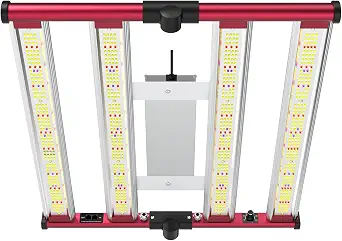 |
| Best Quality Built to a higher standard if you want something more solid | Spider Farmer SUPP-UV60 & IR30 UV + IR Grow Light Bars (4‑Bar, 35.4") |  |
| Best Value The sweet spot between price and what you get | Uallhome 2-Pack Full-Spectrum LED Grow Light Panels (200W, Remote Control) |  |
| Best Budget The cheapest option that still gets the job done reliably | CASTNOO 100W Equivalent Full Spectrum LED Grow Light Panel (75 LEDs) |  |
| Highest Rated A top-rated pick with lots of positive feedback | East Grace 15W UV LED Grow Light (395–400nm) UFO Hanging |  |
| Most Popular A crowd favorite that many people choose with confidence | Juhefa 45W Full-Spectrum LED Panel Grow Light with IR and UV |  |
| Best Seller A high-volume bestseller chosen again and again | AC Infinity IONBEAM U4 UV LED Grow Light Bars (11") |  |
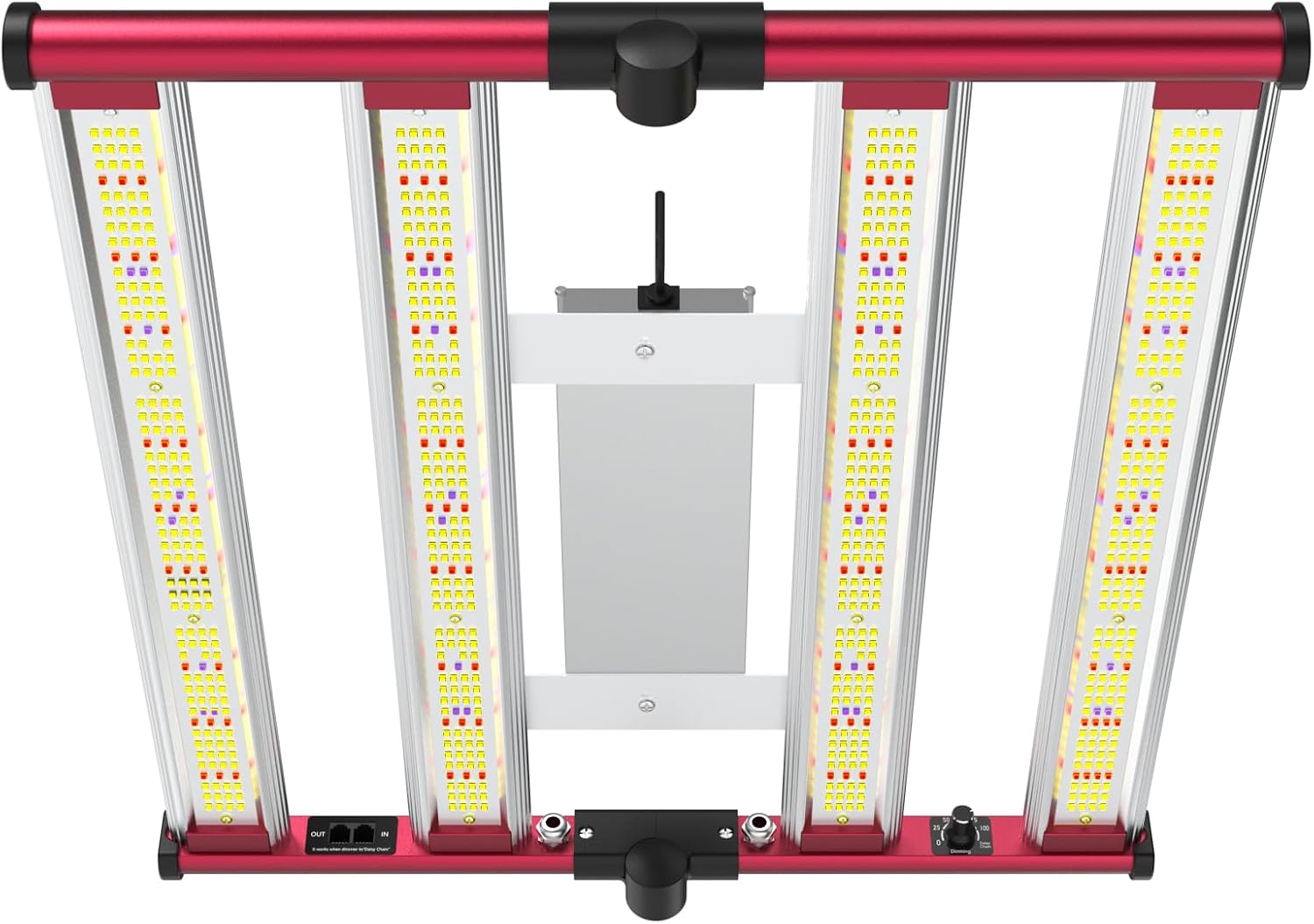
AGLEX M240 240W Full-Spectrum Foldable LED Grow Light (Dimmable, Daisy Chain)
| Wattage | 240 watts |
|---|---|
| Number of Light Sources | 780 |
| Dimmable | Yes |
| Mounting Type | Ceiling Mount |
| Power Source | Corded Electric |
The AGLEX M240 is a 240W full-spectrum LED panel built for 3×3 to 3×4 foot setups and small commercial racks. It combines warm and cool white diodes with blue, red, UV and IR wavelengths so it can support seedling, veg and flowering stages. The fixture is dimmable from 0 to 100 percent and supports daisy-chaining multiple units, which simplifies scaling a tent or multi-tier system. Its fanless aluminum housing relies on passive heat dissipation to lower noise and protect plants from hot spots, and the manufacturer claims a PPFD capable output comparable to much higher-wattage HPS while drawing about 240W. Included hardware covers basic mounting and a waterproof external driver helps keep wiring tidy. Limitations to note are that the light is relatively compact for its output so coverage is best for the recommended 3×3/3×4 area rather than larger rooms, and setup requires confirming your tent or circuit supports the unit count when daisy-chaining. For growers who want a quiet, energy-efficient light with full-spectrum including UV/IR and easy expansion, this is a practical midrange choice.
Best for: Growers who want a quiet, energy-efficient full-spectrum fixture that can be scaled across tents or racks and who value easy intensity control and UV/IR in the spectrum.
Less Ideal for: People needing single-fixture coverage for large rooms or those who want an integrated controller and timer built into the light.
- True full spectrum including 405nm UV and 730nm IR for both veg and bloom stages
- Dimmable 0–100% for tailoring intensity to growth stage
- Daisy-chainable for simpler multi-light setups
- Fanless aluminum body reduces noise and provides passive heat dissipation
- Included waterproof driver and mounting hardware make installation straightforward
- Best suited to 3×3–3×4 coverage so not ideal as a single light for larger grow areas
- No integrated controller or timer included so external control gear may be needed
Verdict: Choose this light if you need a quiet, energy-efficient full-spectrum fixture with UV/IR and easy daisy-chain expansion for a 3×3–3×4 grow space.
Spider Farmer SUPP-UV60 & IR30 UV + IR Grow Light Bars (4‑Bar, 35.4")

| Wattage | 500 watts |
|---|---|
| Light Source Type | LED |
| Mounting Type | Wall Mount |
| Additional Features | App Control, Timer |
| Indoor Outdoor Usage | Indoor |
The Spider Farmer SUPP-UV60 & IR30 is a purpose-built supplemental bar set that delivers concentrated UV (365–370 nm) and far‑red/IR (730–745 nm) light to indoor plants during critical growth stages. It ships as four 35.4-inch aluminum bars with dense diode arrays designed for pairing with existing main fixtures in 2×4 and 5×5 grow tents. Use it to run short UV pulses around lights‑on for trichome and pigment development and to add 15 minutes of IR before and after the photoperiod to encourage stretch and flowering. Notable features include app control and timer functions for scheduling, fixed cabling for stable connections, and quick‑mount brackets that simplify installation and aiming. The unit is rated at 500 watts overall and claims a long diode life of roughly 50,000 hours. Practical limitations are that this is a supplemental product not intended to replace full‑spectrum main lights and its waterproof labeling is inconsistent in the specs, so it should be kept in typical indoor grow conditions. Gardeners should also plan layout so the dense UV/IR coverage complements rather than overloads their primary light source.
Best for: A grower focused on maximizing flowering, resin, and yield by adding precise UV and far‑red supplementation to an existing, performance‑oriented lighting setup. It fits users who want schedulable, high‑density supplemental light bars for tent grows.
Less Ideal for: Beginners looking for an all‑in‑one grow light or anyone who needs a standalone full‑spectrum fixture for primary canopy coverage.
- Dedicated UV and 730–745 nm IR spectrums for targeted flowering and trichome development
- Dense diode layout across four bars for even supplemental coverage in recommended tent sizes
- App control and timer support for automated scheduling of short UV/IR cycles
- Sturdy aluminum construction and fixed cable for reliable mounting and long service life
- Designed strictly as a supplemental light so it cannot replace a full‑spectrum main fixture
- Specifications list both "Waterproof" and "Is Waterproof: false" which creates uncertainty for wet or humid setups
Verdict: If you run a performance‑oriented grow and already have a strong main fixture, these high‑density UV and 730nm IR bars are the most direct way to push flowering and resin production.
Uallhome 2-Pack Full-Spectrum LED Grow Light Panels (200W, Remote Control)

| Wattage | 200 watts |
|---|---|
| Light Source Type | LED |
| Control Method | Remote |
| Mounting Type | Floor Mount |
| Is Waterproof | false |
These two Uallhome LED panels provide full-spectrum light (including UV and IR) intended to support plants from seedlings to flowering. They are slim, fanless panels that mount or hang using the included suspension kit and run quietly with low heat output, so you can place them relatively close to foliage. The lights are rated at 200 watts combined and use an aluminum housing for heat dissipation while offering remote and push-button control for convenient daily adjustments. The manufacturer gives guidance on hanging height and daily hours for different plant types, and the panels are promoted as energy efficient compared with HID fixtures. Practical benefits include compact footprint for small tents or indoor racks, wide spectrum suitable as a sole source or supplemental bloom boost, and long LED life. Limitations are that the unit is not water resistant so it must stay dry, and the coverage per panel is modest so larger setups will need multiple units for uniform light across a canopy.
Best for: Growers who want an efficient, space-saving LED solution to optimize light for small tents, seed trays, and hobby indoor gardens while keeping heat and noise low.
Less Ideal for: Large-scale or commercial growers who need wide-area uniform coverage or waterproof fixtures for humid grow rooms should consider larger or IP-rated fixtures instead.
- Full-spectrum output including UV and IR to support all growth stages
- Fanless, low-heat design suitable for close mounting to plants
- Compact, slim panels that fit small grow tents and can be daisy-chained for better coverage
- Remote control and simple plug-and-play suspension for easy daily operation
- Not water resistant so must be kept away from humidity and direct wetting
- Coverage per panel is limited; multiple units may be needed for even canopy illumination
Verdict: A compact, full-spectrum LED panel pair that delivers efficient, low-heat light for small indoor grows and supplemental bloom lighting.
CASTNOO 100W Equivalent Full Spectrum LED Grow Light Panel (75 LEDs)

| Light Source Type | LED |
|---|---|
| Number of Light Sources | 75 |
| Wattage | 15 watts |
| Control Method | Remote |
| Bulb Base | E27 |
This CASTNOO LED grow light is a low-power full-spectrum panel built for small indoor gardens and seedlings. It uses 75 LEDs in a mix of red, blue, infrared and UV chips to cover vegetative and flowering stages while drawing about 15 watts, so it is suitable for continuous daily use without a big energy bill. The unit is made with aluminum and acrylic components and hangs using the included kit; a reflector and optical lens design boost PAR output and help spread light over a modest footprint. Controls are simple via IR remote for adjusting run times or modes. Practical benefits include long rated life (about 50,000 hours), low heat thanks to the aluminum housing, and suggested hang heights and run times for veg and bloom that simplify setup. Important limitations are its modest physical size and single-panel coverage, which makes it best for a few pots or a seed tray rather than a larger canopy, and the UV and IR diodes are very dim so their effect is subtle rather than dramatic.
Best for: Buyers who want an inexpensive, energy-efficient grow light for a few seedlings, individual pots, or a small indoor herb patch and who prioritize low operating cost over large coverage.
Less Ideal for: Growers who need to light a larger canopy, multiple mature plants, or a full grow tent should choose a higher-output multi-panel fixture instead.
- Full spectrum LED array (red, blue, IR, UV) suitable for all growth stages
- Very low power draw (15 watts) for energy-conscious indoor growing
- Aluminum housing and reflector design reduce heat and improve light delivery
- Includes hanging kit and remote control for easy installation and timing
- Long rated lifespan (about 50,000 hours) for extended use
- Single compact panel covers a limited area and is not suited for larger grows
- IR control requires line-of-sight to operate the remote
Verdict: If you want a budget-friendly, energy-sipping grow light for seedlings and a few small plants, this compact full-spectrum panel delivers useful light without a big electricity cost.
East Grace 15W UV LED Grow Light (395–400nm) UFO Hanging

| Wattage | 15 watts |
|---|---|
| LED Light Source | 395nm |
| LED Qty | 144 |
| IP Rating | IP44 |
| Light Source Operating Life | 30000 hours |
The East Grace 15W UV LED Grow Light is a compact UFO-style lamp that supplies a focused 395–400nm UV-A spectrum to support late-stage plant maturation, pigmentation, and aroma development. It screws into a standard E26/E27 socket or hangs over plants and uses 144 UV LED chips to produce uniform 120° coverage through a transparent PC lampshade. At 15 watts it claims the output influence of a much higher-wattage bulb while running cool and rated for roughly 30,000 hours, so it is suitable as a dedicated supplemental fixture rather than a full-spectrum sole source. Practical benefits include easy installation, low power draw, and durable aluminum construction with IP44 resistance for indoor grow tents or rooms. Limitations are that the unit provides only UV-A light, so it should be paired with full-spectrum grow lights for vegetative growth and overall photosynthesis, and the stated lumen output is low because UV is not a visible-light substitute. For growers who want reliable, long-lasting UV supplementation to intensify color and terpene production, this is a straightforward, purpose-built option.
Best for: Growers who prioritize a reliable supplemental UV source to improve flower and fruit coloration and aroma during the finishing stages and want a plug-and-play fixture that runs consistently over time.
Less Ideal for: If you need an all-in-one full-spectrum fixture for vegetative growth or to light an entire canopy by itself, choose a broader-spectrum grow light instead.
- Targeted 395–400nm UV-A output for enhanced pigmentation and aroma
- Wide 120° beam for even coverage across a small canopy
- Low power consumption (15W) with long rated life (~30,000 hours)
- Standard E26/E27 fit and simple hanging installation
- Emits only UV-A spectrum and not a full-spectrum light, so it cannot replace regular grow lights
- Provided lumen rating is low because UV light is not broad visible output
Verdict: If you want a dependable, low-power UV supplement to intensify color and aroma during flowering, this compact East Grace 15W UV lamp delivers consistent results.
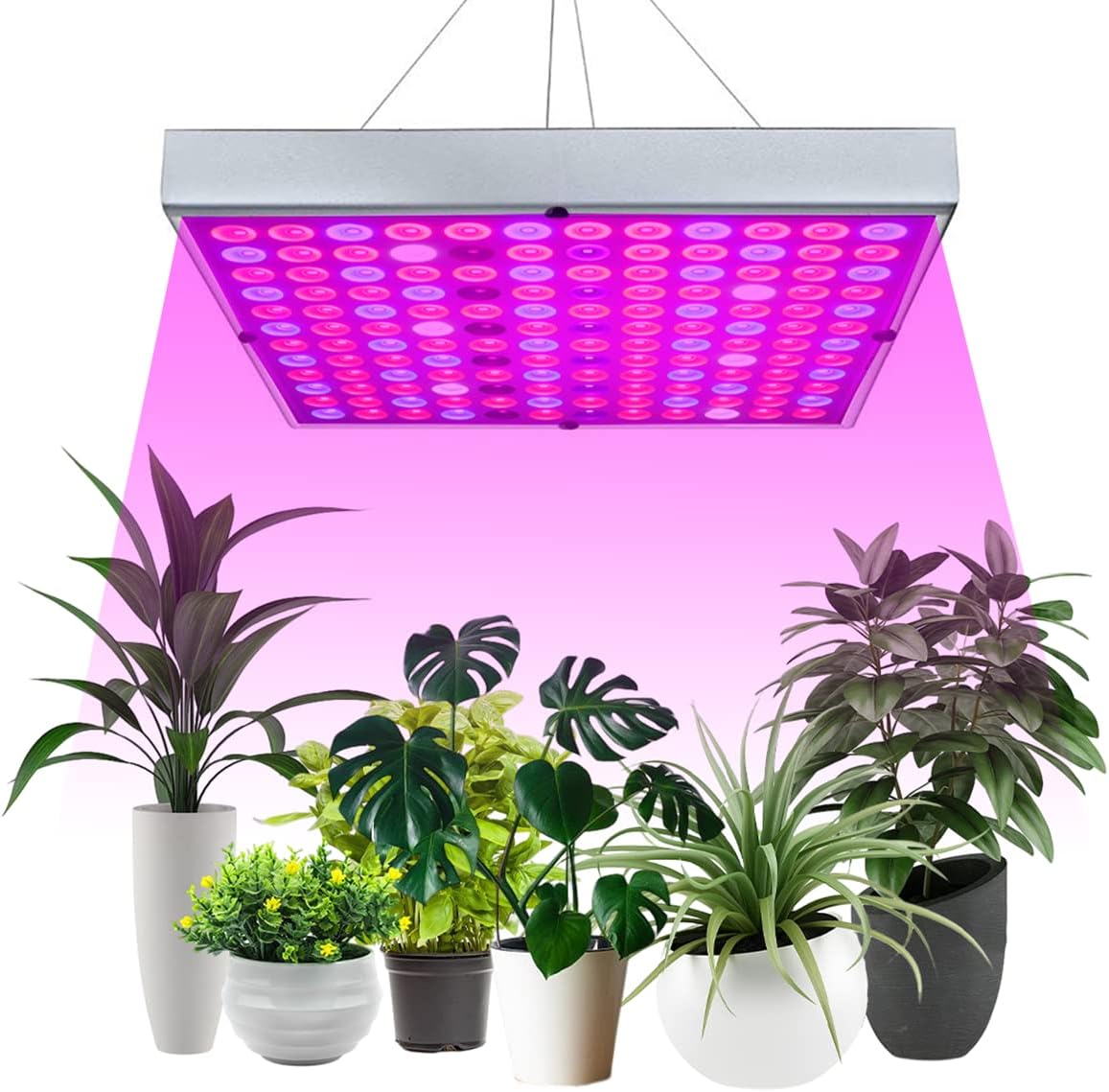
Juhefa 45W Full-Spectrum LED Panel Grow Light with IR and UV
| Light Source Type | Light Emitting Diode |
|---|---|
| Wattage | 45 watts |
| Number of Light Sources | 144 |
| Light Source Special Features | Full Spectrum with IR & UV Bulbs |
| Power Source | Corded Electric |
This Juhefa panel is a plug-and-play 45W LED grow light intended as a compact supplemental fixture for seed starting, microgreens and small pots. The flat 9.9 x 9.9 inch panel packs 144 LEDs in a mix of red, blue, white plus a small number of IR and UV emitters to give a broader spectrum that can support vegetative growth and encourage certain flowering or oil-production responses. It hangs with the included steel kit and is straightforward to position above trays or a small bench. The unit runs on corded AC power, uses ABS and iron construction for basic durability, and claims a long lifespan and modest energy draw compared with older lamps. Limitations are its small effective footprint, so it is best as a single-panel supplement rather than the sole light for larger crop areas, and the product documentation notes the UV and IR diodes appear dim in normal viewing which is expected but means those bands are low intensity compared with the main LEDs. For growers who want a low-cost, compact panel with IR/UV added, it is a practical choice; commercial or large tent setups will need larger or multiple fixtures.
Best for: Buyers who want a low-cost, easy-to-install supplemental panel to boost light for seedlings, microgreens, or a few small potted plants and who value products with established user feedback.
Less Ideal for: Large-scale hobbyists or growers running full tent systems who need higher PPFD or wider coverage should choose larger, higher-output fixtures or multiple panels.
- Full spectrum LED array including dedicated red, blue, white plus IR and UV diodes for broader plant response
- Compact panel and included hanging kit make installation quick for seed trays and small benches
- Low power draw (45W) with claimed long lifespan for energy-efficient supplemental lighting
- Small coverage area suited to seedlings and microgreens rather than larger beds or full tent setups
- UV and IR LEDs are low-intensity and not visually prominent, so those bands contribute only modestly
Verdict: A compact, energy-efficient full-spectrum panel that adds IR and UV bands for growers who need a budget-friendly supplemental light for seedlings and small indoor crops.
AC Infinity IONBEAM U4 UV LED Grow Light Bars (11")

| Wattage | 48 watts |
|---|---|
| Light Source Type | Light Emitting Diode |
| Light Spectrum | 365 nm, 395 nm |
| Mounting Type | Wall Mount |
The AC Infinity IONBEAM U4 is a supplemental UV LED kit intended to add targeted UVA light to an existing grow setup. It includes four 11-inch bars with 365nm and 395nm LEDs and a digital controller that offers ten intensity levels plus daily scheduling. Typical use is mounting the bars magnetically to a tent frame or wall and programming daily on/off cycles or intensity ramps to expose plants to UV during flowering or fruiting. Practical benefits include focused UV output to enhance flower and fruit expression, IP65-rated durability for humid tent environments, and the convenience of a schedule-capable controller for hands-off operation. The slim aluminum bars and magnetic mounting make installation quick and tidy in small to medium grows. Important limitations are that this is a supplemental UV source rather than a full-spectrum primary light so it must be paired with a main grow light, and its effectiveness depends on correct placement and dosing of UV which requires some grow experience to avoid leaf stress.
Best for: Growers who want a reliable, easy-to-install UV supplement to boost flower and fruit quality and prefer scheduled, low-maintenance operation.
Less Ideal for: Beginners who need an all-in-one primary light or growers who want a full-spectrum fixture as their sole light source.
- Targeted UV spectrum (365nm and 395nm) to boost flowering and fruit traits
- Digital controller with 10 intensity levels and daily scheduling for automated cycles
- Magnetic mounting and slim aluminum construction for easy, tidy installation
- IP65 water resistance suitable for humid indoor grow environments
- Designed only as a supplemental UV source and cannot replace a full-spectrum primary light
- Requires pairing with a compatible controller or ecosystem for advanced automation beyond basic scheduling
Verdict: Add precise UVA exposure to an established grow setup with a compact, schedule-ready supplement that simplifies automated UV dosing.
Choosing the Right UV Grow Light: Key Factors to Consider
Spectrum and Wavelength Balance
UV output is not a single number. Plants respond differently to UV-A and near-UV bands, so the specific wavelengths a fixture emits matter for flowering, resin production, and pest deterrence. Fixtures that list spectral curves or peak wavelengths let you match output to the plant stage, while broad-spectrum units can be useful for general vigor but may sacrifice targeted benefits.
For growers focused on flowering and secondary metabolites, a clear spike in the UV-A region is usually desirable but should be balanced so it does not overwhelm PAR. If you plan to run UV for limited daily periods, consider how the fixture's spectral balance interacts with the main grow light to avoid unexpected leaf bleaching or stressed stomatal response.
Intensity and Canopy Distance
UV intensity drops quickly with distance, so canopy height and fixture coverage are critical. A lamp that performs well at one foot may be ineffective at three feet. Look for fixtures that publish intensity or irradiance values at different distances, or plan to position the light closer with adjustable mounting.
Higher intensity can speed photomorphogenic responses but also raises the risk of leaf damage. For seedlings and clones, lower-intensity, short-duration UV exposure is safer. For mature flowering plants, short targeted exposures at higher intensity can stimulate desirable plant chemistry without causing stress, provided you manage timing and distance carefully.
Heat Output and Canopy Safety
UV diodes can add heat to the canopy even when overall wattage seems modest. Too much heat increases transpiration and can cause leaf curl or burn in confined tents. Fixtures with effective heat sinks, active cooling, or designs that direct thermal load away from the canopy reduce the need for extra ventilation.
Consider total heat added to the grow environment, not just the fixture surface temperature. In small tents or poorly ventilated cabinets, even low-wattage UV lights can tip the microclimate into a stress zone. Plan for additional ventilation or choose fixtures that minimize radiant heat toward plants.
Control Options and Scheduling
Being able to dim UV output or schedule short daily runs is useful because plants usually need small doses rather than continuous UV exposure. Fixtures with built-in dimming, external controller compatibility, or simple on-off timers let you tailor UV delivery across stages without manual intervention.
Automatic scheduling also helps prevent accidental overexposure. For multi-tier racks or mixed-stage grows, zoned control prevents young plants from getting the same UV dose as mature flowerers. Evaluate how easily a fixture integrates with your existing controllers or timers before buying.
Mounting, Coverage, and Physical Fit
The fixture's shape and mounting options determine how well it fills your canopy. Slim, adjustable designs work better in hanging or shelf systems, while wider panels can offer more even coverage for a single canopy layer. Look for units with multiple hanging points, adjustable brackets, or rail mounts that match your space.
Also consider build height and clearance. A compact fixture that tucks above a tent bar is often easier to use than a deeper unit that forces the canopy down or limits light placement options.
Durability and Long-Term Output
LED diodes and their drivers degrade over time, and UV-emitting diodes can shift output characteristics as they age. Durable fixtures will use quality diodes, well-specified drivers, and include cooling strategies to extend useful life. Check for clear specifications on expected mean time to failure or lumen maintenance where available.
Long-term reliability matters more for growers who run lights daily across multiple cycles. A slightly higher initial build quality can avoid spectrum drift and uneven output that complicates later crop consistency.
When to Add UV to Your Grow
UV is not required for every grow stage. It is most commonly added during late vegetative and flowering stages to enhance pigment development, trichome density, and plant defense responses. For seedlings and clones, brief, low-intensity exposures can harden tissue, but prolonged high-intensity UV risks stunting.
Decide whether UV will be a daily supplement or a short-cycle treatment. Many growers use UV for an hour or two late in the day during flower to trigger secondary metabolite pathways without disrupting core light schedules.
- Use low-dose UV for seedlings and clones.
- Apply targeted higher-intensity UV late in flowering.
- Monitor plants closely for signs of stress after the first sessions.
Integrating UV with Existing Lighting
Think of UV as a spectral supplement, not a replacement for PAR. When adding UV grow lights to a PAR-heavy setup, watch for combined heat and the total daily light integral. Adjust main light schedules if you add significant UV energy to avoid exceeding the plant's light tolerance.
If your main fixtures have controllable spectra, you can reduce certain bands while adding UV to maintain a balanced total. Otherwise, use short UV windows to capture benefits without major schedule changes.
- Check combined canopy temperature after adding UV.
- Avoid long simultaneous runtime with the hottest main lighting.
- Use a PAR meter and an irradiance meter where possible to measure combined effects.
Safety and Human Exposure
UV-A is less hazardous than UV-B or UV-C, but direct and prolonged exposure can still irritate skin and eyes. Use shielded fixtures, positioning, or timed operation to minimize accidental human exposure during hands-on tasks.
Wear protective eyewear if you must work near active UV fixtures, and add interlocks or signage for multi-user spaces. Consider automated timers so fixtures are off during routine maintenance and on only during planned UV sessions.
- Limit direct human exposure to active UV lights.
- Use timers or interlocks in shared grow areas.
- Provide protective eyewear when adjusting fixtures while powered.
Measuring Performance Without Labs
Not every grower has access to lab spectral analysis, but you can still make useful checks. Use a handheld spectrometer or UV meter where possible to confirm that the fixture emits in the expected bands and to compare intensity at canopy height. If meters are not available, follow published manufacturer distance charts and start with conservative exposure durations.
Keep a grow log during initial trials and photograph leaves under consistent lighting to track any bleaching or pigment changes. Incremental adjustments over several cycles reveal whether the fixture delivers the desired plant response.
- Use a UV or spectrometer meter to validate output when available.
- Start with short exposure windows and record plant responses.
- Adjust distance before increasing daily exposure time.
Common Installation Mistakes to Avoid
A frequent error is mounting UV lights too close without checking intensity, which can cause leaf burn and reduce yields. Another is failing to consider added heat in small tents, which leads to stunted growth or increased pest pressure. Finally, neglecting simple control options like dimming or timers removes the ability to fine-tune dosing across stages.
Plan installation with accessibility in mind so you can adjust angle and height easily. Secure hanging points and use adjustable straps or ratchets to simplify changes between cycles.
- Do not mount directly over young seedlings at high intensity.
- Account for cumulative heat load in enclosed spaces.
- Include a dimmer or timer in the initial installation plan.
How We Chose the Best UV Grow Light
We focused on attributes that directly affect plant response and day-to-day usability in indoor garden setups. Primary evaluation criteria included measured spectrum output in the UV-A and near-UV bands, heat output under typical run conditions, mounting and coverage flexibility for tight grow tents, power draw and dimming control for run-cost and stage tuning, and long-term component durability such as LED diodes and driver quality. Units were excluded if they lacked clear spectral data, had no mounting or hanging options suitable for small spaces, or relied on unregulated power electronics that risk flicker or premature failure. We also filtered out fixtures that did not provide user-adjustable controls or clearly stated UV intensity at canopy height. Our testing framework prioritized practical trade-offs: spectral accuracy for stimulating secondary metabolites, manageable heat to avoid canopy damage, flexible mounting to match common grow setups, and driver reliability for consistent output over many grow cycles.
FAQ
How long should I run a UV grow light each day?
It depends on plant stage and intensity. Many growers use short windows of one to three hours during late vegetative and flowering stages. Start short and watch for stress, then gradually increase if plants tolerate it.
Will UV damage my plants or just help them?
UV can both help and harm. Low, controlled doses often stimulate beneficial pigment and resin production. Excessive or too-close exposure can cause bleaching, leaf curl, or stunted growth, so dose and distance matter.
Can I use UV grow lights in a small tent without extra ventilation?
Often you will need at least modest additional ventilation. Even low-wattage UV fixtures add heat and can raise canopy temperature in small, sealed tents. Monitor temperature after the first runs and add exhaust or circulation if needed.
Do I need a meter to use UV lights effectively?
A meter is helpful but not strictly required. Meters let you quantify intensity and ensure safe distances. If you do not have one, follow published distance charts, start with brief exposures, and keep careful records of plant response.
Are all UV LEDs the same quality?
No. Diode quality and driver regulation vary and affect both spectral output and lifespan. Fixtures with better heat management and stable drivers maintain their output longer and are less likely to shift spectrum with age.
Final Verdict
Choose a UV grow light based on your grow area, the stage you want to influence, and how much control you need over dosing. Prioritize fixtures that provide clear spectral information, reliable heat control, and mounting flexibility so you can adjust distance and timing without stressing plants. Balance intensity with exposure time and make incremental changes while tracking plant responses to find the sweet spot for your setup.
