

Note: This article contains affiliate links. If you click on these links and make a purchase, I may earn a small commission at no extra cost to you. This helps support my research and content. Read my full affiliate disclosure here.
When growing room is limited, a vertical planter can multiply your planting area without expanding your footprint. Whether you have a narrow balcony, a tiny patio, or a compact urban garden bed, the right vertical planter changes how you use vertical space, soil volume, and irrigation. This guide covers six shortlisted vertical planters suited to small-space gardening and evaluates them on the practical traits that matter in the garden: durability, planting capacity, and how they handle water and root growth. Read on to find the option that matches your site, crop choices, and maintenance routine.
Top Picks at a Glance
| Best Overall The best all-around choice for most situations | ALTO GARDEN GX Hydroponic Tower Vertical Planter with 24 Net Pots and LED Grow Lights |  |
| Best Quality Built to a higher standard if you want something more solid | GreenStalk 5-Tier Vertical Garden Planter with Internal Self-Watering System |  |
| Best Value The sweet spot between price and what you get | VECELO 5-Tier Vertical Self-Watering Garden Planter (White) |  |
| Best Budget The cheapest option that still gets the job done reliably | VIVOSUN 5-Tier Stackable Vertical Planter (Brown) |  |
| Highest Rated A top-rated pick with lots of positive feedback | Roixeeds 6-Tier Stackable Vertical Garden Planter |  |
| Most Popular A crowd favorite that many people choose with confidence | VIVOSUN 5-Tier Stackable Vertical Planter (Ivory) |  |
ALTO GARDEN GX Hydroponic Tower Vertical Planter with 24 Net Pots and LED Grow Lights

| Capacity | 10 gallons |
|---|---|
| Number of Levels | 6 |
| Plant or Animal Product Type | Plant |
| Material Type | Food-grade material (BPA-Free) |
The ALTO GARDEN GX Hydroponic Tower is a floor-standing vertical planter engineered for indoor, soil-free growing of vegetables and herbs. It uses a 10 gallon reservoir and an included pump to circulate nutrient solution from the base to the top so water and nutrients trickle through 24 net pots as they return by gravity. Built-in broad-spectrum LED grow lights with a timer handle daily light cycles without Wi-Fi, and the tower ships with starter nutrients, rockwool cubes, a pH pen and a germination light so you can seed, transfer and grow in one system. The one-piece layered body and 2 mm walls reduce leak risk while widely spaced pots give plants room to bulk up without overcrowding. Practical benefits include fast, space-saving growth, high water efficiency and easy mobility on reservoir wheels for positioning and harvests. Expect some setup and routine reservoir maintenance, and the unit occupies a vertical footprint so very small corners are required but floor space is still needed for stability and access to the lights.
Best for: Home growers who want a turnkey vertical system to produce a variety of vegetables and herbs indoors with automated lighting and watering and minimal daily fuss.
Less Ideal for: People who prefer traditional soil gardening outdoors or those who need a compact tabletop solution for very small spaces.
- Fully contained hydroponic system with pump and 10 gallon reservoir for automated watering
- Broad-spectrum LED grow lights with built-in timer for automated light cycles
- Includes starter kit components: A+B nutrients, rockwool cubes, pH test pen and germination light
- Wide-spaced 24 net pot layout to reduce crowding and allow fuller plant growth
- Wheels on the reservoir for easy repositioning and harvest access
- Requires periodic reservoir refills and basic nutrient and pH management
- Taller unit needs sufficient ceiling height and stable floor space
Verdict: A complete, space-saving vertical hydroponic kit that automates light and water so you can reliably grow 24 plants indoors with minimal setup.
GreenStalk 5-Tier Vertical Garden Planter with Internal Self-Watering System

| Number of Levels | 5 |
|---|---|
| Capacity | 120 quarts |
| Material Type | BPA-Free Food Grade Polypropylene Plastic #5 |
| Other Special Features of the Product | Self Watering |
| Mounting Type | Floor Standing |
The GreenStalk 5-Tier Vertical Garden Planter is a soil-based, stackable planter that lets you grow multiple crops in a small footprint using a patented internal watering reservoir. Typical use is outdoor container gardening for strawberries, herbs, lettuces and compact vegetables; you assemble the tiers, fill each with potting mix, then fill the top reservoir to water all levels evenly. Notable features include BPA-free, UV-resistant plastic construction, a 5-tier layout that holds a substantial planting volume, and a self-watering system that reduces the need for daily hand watering. Practical benefits are efficient vertical use of space, consistent moisture distribution to lower tiers without over-saturating the top, and durable materials backed by a five-year crack/fade guarantee for outdoor exposure. Important limitations are that it is a soil-based system so it requires regular potting mix replenishment and does not support hydroponics or electricity-based automation, and its vertical design is better for shallow-rooted plants rather than large indeterminate tomatoes or heavy root crops without additional support.
Best for: Gardeners who prioritize reliable, low-maintenance production of strawberries and other small edibles in tight outdoor spaces and want consistent watering without daily fuss.
Less Ideal for: Growers seeking hydroponic setups, automated irrigation with timers, or those planning to grow very large, heavy root crops in the same planter.
- Patented internal reservoir waters all five tiers from the top for even moisture distribution
- Made from BPA-free, UV-resistant polypropylene with a five-year outdoor durability guarantee
- Compact vertical footprint maximizes planting area for small gardens, balconies, and patios
- Soil-based design works with regular potting mix—no special nutrients or power required
- Not suitable for hydroponic growing or automated, electricity-driven systems
- Better for shallow-rooted or compact plants; large, heavy-rooted crops may need extra support
Verdict: For small-space growers who want reliable, low-effort strawberry production, this 5-tier self-watering planter delivers consistent moisture and durable outdoor performance.
VECELO 5-Tier Vertical Self-Watering Garden Planter (White)

| Material Type | Plastic |
|---|---|
| Number of Levels | 5 |
| Indoor Outdoor Usage | Indoor, Outdoor |
| Other Special Features of the Product | Adjustable Height, Self Watering, Stackable |
| Included Components | 5 Pots |
The VECELO 5-tier vertical planter stacks five round pots into a single freestanding column so you can grow multiple strawberry plants or a mix of herbs and flowers in a small footprint. It is made of painted plastic, includes a soil separator and built-in drainage that channels excess water into a base tray, and rolls on integrated wheels to reposition for light or shelter. Typical use is patio or balcony container gardening where space is limited or for indoor windowsill setups that need more planting area. The self-draining, breathable design helps prevent waterlogging while the soil holding boards keep mix from spilling between tiers, which reduces mess when watering and harvesting. Because it is plastic it is lightweight and easy to assemble, but that also means it will be less robust than metal or heavy-duty resin in very windy or rough outdoor conditions. The five-tier layout offers good planting density but limits root volume per plant, so choose shallow-rooted varieties like strawberries, compact herbs, or small salad greens for best results.
Best for: Buyers who want a space-efficient, low-maintenance planter to grow multiple strawberries or compact herbs on a patio, balcony, or indoors and prioritize easy mobility and simple watering management.
Less Ideal for: Gardeners who need deep root space for large vegetables or who want a heavy-duty, permanent outdoor planter for exposed locations should consider other options.
- Stacks five planting levels to maximize plants in a small footprint
- Integrated drainage and soil separator reduce waterlogging and mess
- Wheels make it easy to move for sun or storage
- Lightweight plastic construction simplifies assembly and handling
- Individual pots have limited root volume so not suitable for deep‑rooted crops
- Plastic construction is less durable in very exposed, high-wind outdoor locations
Verdict: If you want a compact, mobile solution to grow several strawberries or herbs in limited space, this five-tier self-draining planter delivers convenient, low-maintenance planting.
VIVOSUN 5-Tier Stackable Vertical Planter (Brown)

| Material Type | Polypropylene (PP) |
|---|---|
| Number of Levels | 5 |
| Mounting Type | Hanging, Tabletop, Wall Mount |
| Indoor Outdoor Usage | Indoor, Outdoor |
This VIVOSUN 5-tier stackable planter is built for space-conscious gardeners who want multiple plants in a small footprint. Made from fade-resistant polypropylene, the planter stacks into five oval tiers and can be used hanging, wall-mounted, or on a tabletop, so it adapts to balconies, patios, and kitchens. Each tier contains multiple pockets for planting strawberries, herbs, or small flowering plants, and the integrated top-to-bottom drainage system channels excess water down while a bottom dish protects surfaces. Setup is straightforward and the lightweight material makes it easy to move or reconfigure into shorter stacks. Expect it to hold several small plants without soil compaction issues common to deep pots. Important limits are the thin plastic build and modest capacity per pocket, so larger vegetables or mature plants will outgrow it; also strong winds could stress a hanging installation. For small-fruit growers who need a tidy, modular planting solution, this planter saves space and keeps watering simple.
Best for: Ideal for gardeners who want to grow strawberries or herbs in small patios, balconies, or kitchen spaces and who prioritize maximizing planting area while keeping setup and watering simple.
Less Ideal for: Not a good fit for growers who need deep, high-volume containers for large vegetables or for those seeking heavy-duty, permanent planters.
- Stackable five-tier design maximizes planting area in tight spaces
- Made from fade-resistant polypropylene for outdoor/indoor durability
- Versatile mounting options: hanging, tabletop, or wall mount
- Integrated drainage system channels excess water and includes a bottom dish to protect surfaces
- Per-pocket capacity is small so larger or mature plants will quickly outgrow the pockets
- Lightweight plastic construction is less robust than ceramic or metal alternatives
Verdict: A modular, space-saving planter that makes growing strawberries and herbs in tiny outdoor or indoor spots much easier.
Roixeeds 6-Tier Stackable Vertical Garden Planter
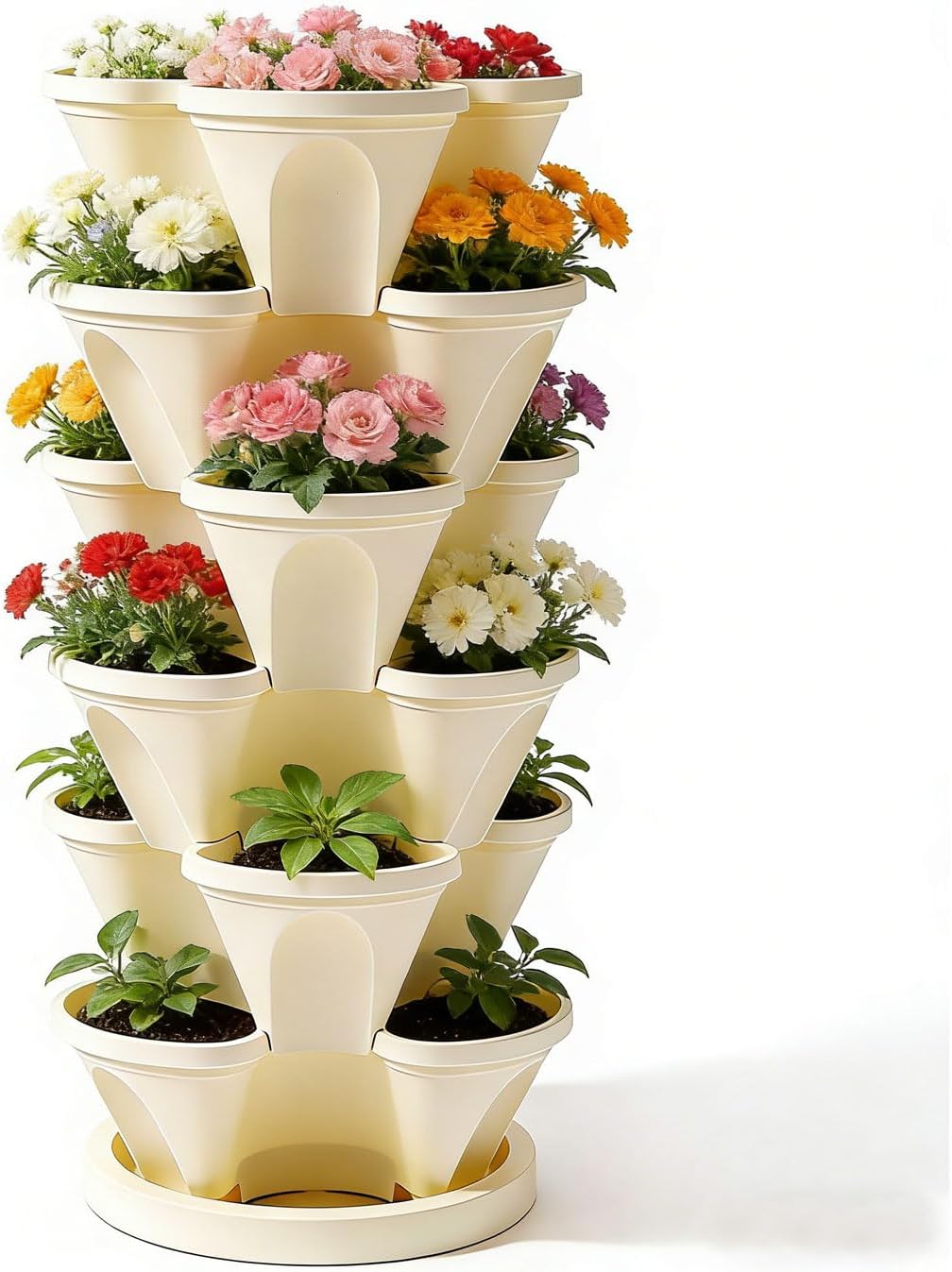
| Number of Levels | 6 |
|---|---|
| Material Type | Plastic |
| Indoor Outdoor Usage | Outdoor |
| Other Special Features | Adjustable Height, Stackable |
This Roixeeds 6-tier stackable vertical planter is a simple, no-tools solution for creating a compact strawberry or herb garden on a balcony, patio, or small yard. The tiers snap together with an interlocking design, so setup is fast and the unit is easy to move or reconfigure. Each level includes a built-in drainage path that channels excess water downward, helping prevent waterlogged roots and keeping moisture more consistent across tiers. Made of plastic, the planter is lightweight and simple to clean, and its vertical footprint lets you grow several plants in the space one pot would occupy. Important limitations are the modest planting volume per tier and the lightweight plastic construction, which can be less durable in very hot sun or heavy winds compared with thicker resin or ceramic alternatives. For reliability-minded gardeners this planter performs well for small fruits and herbs if you monitor watering and anchor or shelter it in exposed locations.
Best for: Gardeners who need a reliable, space-saving solution for growing strawberries or herbs on a balcony or small patio and prefer an easy-assembly, low-maintenance planter.
Less Ideal for: Those who need large single-plant containers or who require heavy-duty materials for permanent exposed installations should consider sturdier, larger alternatives.
- Stackable interlocking tiers for quick assembly and flexible configuration
- Built-in drainage system that directs excess water to lower layers
- Lightweight plastic makes it easy to move and clean
- Six planting levels maximize vertical growing space for strawberries and herbs
- Individual tier planting volume is limited so larger-rooted vegetables may be constrained
- Plastic construction may degrade faster than heavier materials under prolonged sun exposure
Verdict: Choose this planter when you want a dependable, easy-to-assemble vertical solution to grow multiple strawberries or herbs in a small outdoor space.
VIVOSUN 5-Tier Stackable Vertical Planter (Ivory)

| Capacity | 62 liters |
|---|---|
| Number of Levels | 5 |
| Material Type | Plastic |
| Mounting Type | Hanging, Tabletop, Wall Mount |
The VIVOSUN 5-Tier Stackable Vertical Planter is a modular plastic planter you can stack, hang, or set on a table to create a compact multi-level planting tower. Each tier holds several pots and the system is intended for herbs, strawberries, flowers, and other small edibles or ornamentals. It is made from thick PP plastic described as fade resistant, and includes drainage holes and a bottom dish so excess water drains without staining surfaces. You can combine two to five tiers to scale capacity to your available space and hang it from a chain or mount it on a wall or rod. Practical benefits include strong space savings for balconies or small patios, easy repositioning because it is lightweight, and a flow design that helps water trickle through the stack rather than pooling. Limitations are that the plastic construction is not insulated for extreme cold, pots are relatively shallow so large-rooted vegetables will be constrained, and assembly and stacking require some care to keep tiers aligned and stable when fully loaded with wet soil.
Best for: Gardeners who want to maximize planting area on small balconies, patios, or kitchen corners and who prioritize proven design and clear product feedback when choosing container solutions.
Less Ideal for: Growers planning to cultivate large vegetables or long-term perennial shrubs or those needing insulated, heavy-duty planters for freezing climates should consider other options.
- Stackable modular design saves vertical space and scales from 2 to 5 tiers.
- Built-in drainage with a bottom dish prevents waterlogging and protects surfaces.
- Made from thick PP plastic marketed as fade resistant for outdoor exposure.
- Multiple mounting options: hanging, tabletop, or wall/rod mounting for flexible placement.
- Shallow pot depth limits suitability for plants with large or deep root systems.
- Plastic construction offers limited insulation in very cold climates and can become brittle over many seasons.
Verdict: A compact, well-reviewed stackable planter that turns tight outdoor or indoor spots into a multi-level herb and flower garden.
Choosing the Right Vertical Planter: Key Factors to Consider
Material and UV Resistance
Material choice drives how long a vertical planter lasts outdoors. Rigid plastics, metal frames, heavy-duty fabrics, and treated wood each behave differently under sun and rain. Fabrics breathe and drain well but can degrade faster under UV exposure unless treated. Metal frames give structure but need rust protection. Rigid plastics resist rot but can become brittle if not UV-stabilized.
Consider the local climate and exposure. A planter on a sun-drenched balcony should prioritize UV-stabilized materials. For covered patios, breathability and lighter-weight construction may be preferable. Durable materials reduce replacement cycles and lower long-term maintenance demands.
Planting Depth and Pocket Size
Different plants need different soil volumes. Shallow herbs and lettuces do fine in modest pockets, while tomatoes, peppers, and other deeper-rooted vegetables need more depth and soil volume for root development and moisture buffering. Check pocket depth and overall soil capacity when choosing a vertical planter.
Smaller pockets dry out faster and require more frequent watering and feeding. If you plan to rotate crops or grow a mix of herbs and vegetables, choose a planter with varied pocket sizes or modular inserts so you can match root space to plant type.
Water Management and Drainage
Water flow behaves differently in vertically stacked soil. Top pockets often receive more water, while lower pockets can become waterlogged. Good vertical planters include drainage channels, wicking layers, or integrated reservoirs to even out moisture distribution. Some designs use gravity-fed irrigation or capillary mats to supply lower pockets.
Think about how often you can water and whether you need a self-watering feature. Infrequent-watering situations benefit from reservoir systems or thicker soil mixes that retain moisture. Ensure excess water can escape to prevent root rot in lower pockets and to avoid soggy soil that invites disease.
Mounting Options and Stability
Where the planter will live dictates mounting and stability needs. Wall-mounted systems must have secure anchors rated for wet weight, while freestanding towers need a stable base to prevent tipping in wind. Railing-mounted planters require hardware that fits a range of rail sizes and clamps that will not damage the structure.
Consider accessibility for refilling soil, changing plants, and harvesting. Mobile stands or modular components can make rearranging easier. If you plan to hang a planter, confirm the wall or balcony can safely support the soaked weight plus plants.
Plant Accessibility and Maintenance
Vertical planters can hide lower pockets behind upper rows, making pruning, pest checks, and harvests awkward. Designs that allow you to reach every pocket without disassembling the system will save time and reduce plant stress. Removable pockets, front-facing planting pockets, or rotating towers make maintenance simpler.
Also evaluate how easy it is to top up soil or replace pockets seasonally. Systems that require lifting heavy soil-filled modules are less practical for gardeners with limited strength. Choose a planter that fits your maintenance habits and physical capabilities.
Portability and Seasonal Use
Decide whether the planter will stay in place year-round or be moved for season changes. Lightweight fabric systems are easy to store or relocate but may offer less insulation in winter. Heavier framed planters are stable but harder to move when emptying soil or repositioning for sun.
If you plan to overwinter plants or shift crops seasonally, consider whether the system can be protected from frost and whether soil can be removed and replaced without damaging the structure. Portability affects both convenience and how you plan crop rotations.
Best Plants for Vertical Planters
Vertical planters work best with shallow- to medium-rooted species that do not demand a large single root zone. Herbs such as parsley, basil, thyme, and chives thrive in pockets with modest depth. Salad greens and baby spinach do well too, offering frequent harvests from small soil volumes. Bush varieties of strawberries are classic vertical planter crops because they are light feeders with shallow roots.
Tomatoes, peppers, and cucumbers can work if you select deeper pockets or dedicate a column to a single heavy feeder and supplement with regular feeding. Use stronger support for vining crops and plan for water and nutrient needs accordingly.
- Herbs and microgreens: fast turnover and low root depth
- Lettuces and salad greens: frequent harvests, shallow pockets
- Strawberries and compact berries: trailing varieties suit vertical setups
- Compact vegetables with staking: choose deeper pockets and support
Soil Mixes and Feeding Strategies
Soil in a vertical planter should be lightweight, well-draining, and nutrient-dense because pockets hold less volume than ground beds. Mixes with compost, coconut coir, and a light aerating material like perlite work well to retain moisture without becoming compacted. Avoid heavy topsoil mixes that will compact and impede drainage.
Fertilizer strategies must account for faster nutrient leaching. Use slow-release granular feeds at planting and supplement with regular liquid feedings during the growing season. For continuous harvests, plan a steady feeding schedule rather than large, infrequent doses to keep plants productive.
- Use a light, well-draining potting mix with organic matter
- Incorporate slow-release fertilizer at planting and supplement with liquid feed
- Monitor nutrient signs and adjust feed frequency based on crop response
Watering Tips and Irrigation Setups
Hand-watering is possible for small vertical planters but can be uneven. Aim water at the soil line rather than foliage to encourage root uptake and reduce disease risk. Water slowly to allow soil to absorb moisture and avoid runoff from higher pockets.
For hands-off care, consider drip tubing with emitters placed in each pocket or a gravity-fed reservoir that wicks moisture down through the column. If using an irrigation system, size emitters for pocket volume to prevent overwatering lower pockets. Mulching pocket surfaces with lightweight materials can reduce evaporation.
- Water slowly and aim at the soil line
- Use drip or wicking reservoir systems for consistent moisture
- Adjust emitter output by pocket size to prevent waterlogging
Placement, Sun Exposure, and Microclimates
Match planter placement to the light requirements of the intended crops. South-facing walls and balconies offer the most light and heat, supporting fruiting crops and sun-loving herbs. Shadier spots are fine for lettuces, spinach, and shade-tolerant herbs. Consider how reflected heat from walls affects soil moisture and plant stress.
Microclimates also change watering needs. Windy, exposed positions dry out pockets faster, while sheltered corners retain moisture. Grouping planters or providing afternoon shade can protect sensitive plants and extend the productive season.
- Place sun-loving crops in the brightest exposures
- Reserve shadier locations for leafy greens and tender herbs
- Account for wind and heat reflection when estimating water needs
Seasonal Care and Crop Rotation
Treat vertical planters like any other container garden when it comes to seasonality. Refresh soil annually or between heavy crops, and rotate families of plants to limit pest and disease buildup. Removing spent plants promptly prevents pests from establishing in compact systems.
For winter, either empty and store fabric planters or protect permanent structures and insulate soil if overwintering containers. Planning a rotation that alternates heavy feeders with light feeders will help maintain soil structure and fertility in limited volumes.
- Refresh soil or replace top layers each season
- Rotate plant families to reduce pest buildup
- Protect or store planters in winter depending on material
How We Chose the Best Vertical Planter
We prioritized features that matter to gardeners using vertical planters in small spaces. Selection focused on construction materials and build quality because UV resistance and robust seams determine longevity outdoors. We measured planting capacity and pocket depth to ensure each option can support a range of crops from herbs to shallow-rooted vegetables. Water management was a key filter, including built-in reservoirs, drainage design, and material breathability since vertical systems often suffer from uneven moisture. Ease of installation and modularity were considered so gardeners can adapt a planter to a balcony railing, wall, or freestanding frame. We also evaluated maintenance factors like how easy pockets are to refill or replace and how accessible plants are for pruning and harvest. Any system that required specialized tools or complicated assembly was excluded. Final selections balance long-term durability, planting flexibility, water control, and straightforward upkeep.
FAQ
Can I grow tomatoes in a vertical planter?
Yes, tomatoes can grow in a vertical planter if pockets are deep enough and the system provides adequate support. Choose indeterminate varieties carefully and ensure consistent feeding and watering to support fruiting.
How often will I need to water a vertical planter?
Frequency depends on pocket size, material, exposure, and plant type. Shallow pockets in hot, windy spots may need daily attention, while planters with reservoirs or thicker soil mixes might only need watering every few days.
Are fabric vertical planters better than rigid systems?
Fabric planters offer excellent drainage and breathability, which helps root health, but they may degrade faster in strong sun and can dry out quickly. Rigid systems last longer and can include reservoirs, but they may retain moisture unevenly.
Can I mount a vertical planter on a balcony railing?
Many vertical planters are designed for railing mounting, but you must confirm clamps fit your rail and that the structure can handle the wet weight. Secure mounting and weight distribution are essential for safety.
What soil mix works best for vertical planters?
A lightweight, well-draining potting mix with compost and an aerating component like perlite or coir works best. Avoid heavy soils that compact and reduce drainage in small pockets.
How do I prevent lower pockets from becoming waterlogged?
Choose a design with drainage channels or reservoirs that equalize moisture, and avoid overwatering. Adjust irrigation emitter output by pocket level and use mixes with good drainage to reduce waterlogging.
Final Verdict
For small-space gardeners, the right vertical planter balances material durability, pocket volume, and water management. Prioritize UV-stable construction if the unit will be in full sun, and match pocket depth to the crops you plan to grow. Expect tradeoffs between breathability and longevity: fabric systems drain well but may require replacement sooner, while rigid systems are durable but need good drainage design. Decide whether you need portability or a permanent installation, and choose mounting and irrigation features that fit your routine. With attention to soil mix, feeding, and plant selection, a vertical planter can substantially increase productivity in a limited footprint and make harvesting and maintenance easier.
