

Note: This article contains affiliate links. If you click on these links and make a purchase, I may earn a small commission at no extra cost to you. This helps support my research and content. Read my full affiliate disclosure here.
Preparing your lawn in autumn with the right weed and feed sets the stage for healthier turf next spring. Fall formulations combine targeted weed control with fertilizer designed to encourage root development, store carbohydrates, and reduce weed competition during cool-season dormancy. This guide shortlists seven top-rated options formulated for fall application and explains the practical tradeoffs gardeners face. You will find concise guidance on spread patterns, nutrient balance, and timing so you can pick a product that suits your grass type and maintenance plan. The picks were evaluated for application consistency and winterization benefits; read on for the selection criteria and practical tips before the product list.
Top Picks at a Glance
| Best Overall The best all-around choice for most situations | The Andersons Surge Weed & Feed 16-0-9 Granular Lawn Fertilizer (40 lb) |  |
| Best Quality Built to a higher standard if you want something more solid | The Andersons Premium Weed and Feed 24-0-16 (18 lb) |  |
| Best Value The sweet spot between price and what you get | GreenView Weed & Feed Lawn Fertilizer, 13 lb Bag |  |
| Highest Rated A top-rated pick with lots of positive feedback | Scotts Turf Builder WinterGuard Fall Weed & Feed5, 11.28 lb | 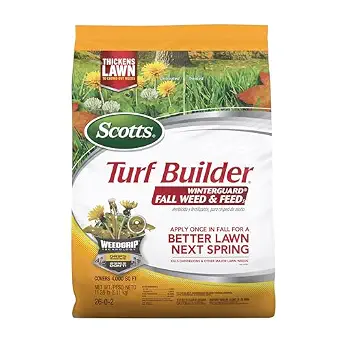 |
| Most Popular A crowd favorite that many people choose with confidence | Scotts Turf Builder WinterGuard Fall Weed & Feed, 11.43 lb |  |
| Best Seller A high-volume bestseller chosen again and again | Scotts Turf Builder Weed & Feed 3, Granular Lawn Fertilizer and Weed Killer, 14.29 lb |  |
The Andersons Surge Weed & Feed 16-0-9 Granular Lawn Fertilizer (40 lb)

| Item Form | Granule |
|---|---|
| Coverage | 16000 square_feet |
| Unit Count | 640 Ounce |
| Active Ingredients | Herbicide |
The Andersons Surge Weed and Feed is a professional four‑way granular treatment that combines herbicide action with a 16-0-9 fertilizer to feed lawns while eliminating broadleaf weeds. It is applied with a broadcast spreader to established turf when broadleaf weeds are actively growing; best results come from mowing 1–2 days before application, applying to a damp lawn so granules adhere, and avoiding irrigation for at least 24 hours afterward. The product claims control of more than 250 common weeds and uses relatively small granules for wider coverage per square inch. In practice this means you can treat a large yard quickly and expect both greening and weed suppression over the season, including cooler spring and fall windows. Important limitations are that it is not suitable for certain turf types such as Floratam St. Augustine, dichondra, carpetgrass, creeping bentgrass, or lawns with desirable clovers, and you must follow timing and watering instructions to avoid reduced effectiveness or damage to new grass. For a homeowner focused on strong seasonal performance, this delivers broad control and fertilizer in one application.
Best for: Buyers who prioritize strong, season‑long weed control and want a professional‑grade product that also feeds established lawns and can treat a large area efficiently.
Less Ideal for: People with sensitive or excluded turf species, newly seeded/sodded lawns, or those who prefer spot treatments rather than whole‑lawn broadcast applications.
- Combines broadleaf weed control with fertilizer (16-0-9) for two functions in one application
- Covers up to 16,000 square feet, suitable for medium to large lawns
- Small granule size increases coverage per square inch for more uniform application
- Formulated to work through a wide part of the growing season, including cooler spring and fall conditions
- Not safe for specific turf types including Floratam St. Augustine, dichondra, carpetgrass, and creeping bentgrass
- Requires careful timing and withholding irrigation for at least 24 hours to be effective
- Not recommended for newly seeded or recently sodded lawns without reduced rates and waiting periods
Verdict: Choose this if you want a professional, large‑area weed‑and‑feed that delivers broadleaf control plus fertilizer in a single application.
The Andersons Premium Weed and Feed 24-0-16 (18 lb)

| Item Form | Granule |
|---|---|
| Coverage | 5,000 sq ft |
| Unit Count | 288 Ounce |
| Active Ingredients | Herbicide, Iron, Nitrogen, Sulfur |
The Andersons Premium Weed and Feed 24-0-16 is a granular lawn product designed to kill broadleaf weeds while feeding turf with a mix of quick- and slow-release nitrogen plus iron for deeper greening. You apply it with a rotary or drop spreader to a dry lawn, following the label spreader settings and the two-step application schedule for best control. It targets over 250 broadleaf weeds and lists compatibility with St. Augustine and other common warm- and cool-season grasses, making it useful for seasonal lawn program maintenance. Practical benefits include combined weed control and extended feeding in one pass and improved lawn color from added iron. Important limitations are geographic restrictions and the need to follow the two-application procedure and post-application watering to activate herbicide; it is also not suitable for dichondra or carpet grass. For performance-focused users, correct spreader calibration and adherence to timing will determine results more than the product alone.
Best for: Homeowners who prioritize visible lawn performance and want a combined weed-control plus feeding product for regular seasonal maintenance of St. Augustine and similar grasses.
Less Ideal for: People managing sensitive or restricted lawns such as dichondra or carpet grass or those located in states where this product is not approved.
- Combines herbicide and fertilizer so you kill weeds while feeding grass in one application
- Includes both quick- and slow-release nitrogen for immediate green-up and longer-lasting feeding
- Contains iron for deeper, faster greening of turf
- Covers up to 5,000 sq ft per bag, suitable for medium-sized yards
- Not approved for sale or use in some states which limits availability
- Requires specific spreader settings and a two-step application schedule for full effectiveness
Verdict: Choose this product if you want a single granular treatment that controls broadleaf weeds and delivers both quick and extended feeding for a noticeably greener St. Augustine lawn.
GreenView Weed & Feed Lawn Fertilizer, 13 lb Bag

| NPK | 27-0-4 |
|---|---|
| Form | Granule |
| Coverage | 5000 square_feet |
| Active ingredient | Nitrogen |
GreenView Weed & Feed is a combined granular fertilizer and selective herbicide designed to feed established turf while controlling broadleaf weeds. You apply it to a dry, established lawn when weeds are actively growing, then water to activate the product and avoid mowing for two days. It uses a controlled-release nitrogen formulation to deliver steady feeding for up to eight weeks, which helps green-up without pushing surge growth and supports deeper roots for better drought tolerance. The herbicide component targets more than 250 common lawn weeds such as dandelion, clover, and plantain, so one application handles both nutrition and weed pressure across many cool- and warm-season grasses. Practical benefits include long feeding duration, wide weed control, and coverage suitable for medium to large yards. Important limitations are that it is for established turf only, it can damage certain grasses like St. Augustine (in Florida), dichondra, and carpetgrass, and timing matters because weeds must be actively growing for best control.
Best for: Homeowners who want a single, budget-friendly product to both feed and reduce broadleaf weeds on established lawns and prefer less frequent applications over the season.
Less Ideal for: Gardeners establishing new turf, owners of sensitive or excluded grass types, or those seeking an organic or granular fertilizer without herbicide.
- Controlled-release nitrogen feeds lawns for up to eight weeks, reducing the need for frequent applications
- Provides selective control of over 250 broadleaf weeds alongside fertilization
- Covers approximately 5,000 square feet from a single 13 lb bag, suitable for medium to large yards
- Zero phosphate formulation to reduce risk of waterway runoff
- Not safe for certain turf types such as St. Augustine in Florida, dichondra, and carpetgrass
- Requires correct timing and watering after application for effective weed control
- Intended only for established lawns and can harm seedlings or sensitive grasses
Verdict: A cost-effective all-in-one weed-and-feed that delivers eight weeks of controlled-release nitrogen while knocking back a wide range of common broadleaf weeds.
Scotts Turf Builder WinterGuard Fall Weed & Feed5, 11.28 lb

| Item Form | Granule |
|---|---|
| Coverage | 4000 sq ft |
| Unit Count | 1 Count |
Scotts Turf Builder WinterGuard Fall Weed & Feed5 is a granular lawn treatment intended for a single fall application to kill listed broadleaf weeds while feeding cool- and warm-season grasses for winter hardiness and spring green-up. You apply it to a wet lawn when weeds are actively growing and temperatures are between 60°F and 90°F, using a broadcast or drop spreader (Scotts provides recommended settings). The formula targets more than 50 common lawn weeds such as dandelions and clover and supplies fertilizer so the lawn stores nutrients over winter. Practical benefits include clear application guidance, single-bag coverage of 4,000 sq ft, and the convenience of combined weed control plus fertilization so you skip separate products. Important limitations are that it requires calm, dry weather for 24 hours after application and specific timing to be effective, and it is not a post-emergent solution for all weed types or for use outside the listed grass species. Follow safety and disposal instructions and keep children and pets away until the product is settled.
Best for: Homeowners who prioritize a dependable, no-fuss fall treatment to reduce weeds and feed their lawn before winter and who prefer a single product with clear application guidance.
Less Ideal for: People needing immediate control of weeds outside the listed species or those who cannot ensure the recommended 24-hour dry window and application timing.
- Combines broadleaf weed control and fertilizer in one application
- Covers up to 4,000 sq ft per 11.28 lb bag
- Clear application instructions and spreader settings for consistent results
- Targets a long list of common fall lawn weeds
- Requires specific temperature and moisture conditions for best results
- Must stay dry for 24 hours after application which limits timing windows
Verdict: A reliable single-bag fall weed-and-feed that treats 4,000 sq ft and simplifies fall lawn care by combining broadleaf control with winter-feeding.
Scotts Turf Builder WinterGuard Fall Weed & Feed, 11.43 lb

| Item Form | Granule |
|---|---|
| Coverage | 4000 square feet |
Scotts Turf Builder WinterGuard is a fall granular weed-and-feed formulated to kill common broadleaf weeds such as clover and dandelion while feeding cool- and warm-season grasses. It is applied with a broadcast or drop spreader to a moist lawn on a calm day when temperatures are between 60°F and 90°F. Notable features include WeedGrip Technology to improve granule adhesion to weed leaves, instructions tuned for Scotts spreaders, and coverage sized for about 4,000 square feet per 11.43 lb bag. In practice it simplifies a seasonal task by combining weed control and fertilization in one application, which helps build root strength and recover summer stress heading into winter. Important limitations are that it is labeled for specific grass types only and must not be used on St. Augustinegrass, bentgrass, or several groundcover species, and you must avoid watering for 24 hours after application for best effect. For homeowners who want a dependable, single-step fall treatment for typical lawn weeds, this performs as advertised; those with unsupported grass types or very large lawns will need a different product or multiple bags.
Best for: Homeowners who prioritize a reliable, low-effort fall solution to eliminate clover and other broadleaf weeds while feeding their lawn for winter hardiness.
Less Ideal for: Properties planted with unsupported turf species or buyers who need coverage for very large lawns without buying multiple bags.
- Kills over 50 listed lawn weeds including clover and dandelion
- Combined fertilizer and weed control saves an extra application
- WeedGrip Technology helps granules stick to moist weed leaves for better uptake
- Clear application guidance for use with Scotts spreaders and recommended timing
- Labeled for specific grass types only and should not be used on St. Augustinegrass, bentgrass, or certain groundcovers
Verdict: Choose this product if you want a dependable one-step fall treatment that both kills clover and feeds your lawn to build stronger roots for spring.
Scotts Turf Builder Weed & Feed 3, Granular Lawn Fertilizer and Weed Killer, 14.29 lb

| Item Form | Granule |
|---|---|
| Coverage | 5000 square_feet |
| Active Ingredients | 2,4-D 1.220%, Mecoprop 0.081% |
Scotts Turf Builder Weed & Feed3 is a granular lawn product that combines a fertilizer with broadleaf weed control for routine lawn maintenance. It is applied with a broadcast or drop spreader to a wet lawn when daytime temperatures are between 60 and 90°F, and it uses WeedGrip technology to help granules stick to weed leaves for better uptake. In practice it kills common weeds such as dandelion and clover while delivering nutrients to thicken grass, so treated areas often green up and look fuller over a few weeks. The package covers about 5,000 sq. ft. and manufacturer instructions recommend avoiding certain grass types and keeping people and pets off the lawn until dust settles. Important limitations are that it is not safe for some turf species and must not be watered for 24 hours after application; timing and correct spreader settings affect results. For homeowners wanting a combined feed-and-weed treatment for standard lawns, it simplifies two tasks into one application, but it requires following the label closely for safe and effective use.
Best for: Homeowners seeking a straightforward, combined fertilizer and weed-control treatment to maintain and thicken common cool- and warm-season turf in a typical yard.
Less Ideal for: Specialist turf managers, owners of sensitive turf varieties (listed on the label), or those who need spot treatment only rather than whole-lawn applications.
- Combines fertilizer and broadleaf weed control in one granular product
- WeedGrip formulation helps granules adhere to weed leaves for improved herbicide contact
- Covers approximately 5,000 sq. ft. per 14.29 lb bag, suitable for many small to medium lawns
- Clear application guidance for use with common spreaders and specific temperature/wetting windows
- Contains active herbicide ingredients not appropriate for all turf types and must be avoided on listed grasses
- Requires strict timing and no watering for 24 hours after application to be effective and safe
Verdict: A practical one-step weed-and-feed for typical lawns that feeds turf while targeting common broadleaf weeds across a 5,000 sq. ft. area.
Choosing the Right Weed and Feed for Fall: Key Factors to Consider
Active Ingredients and Target Weeds
Different fall formulations use different herbicides and fertilizer mixes. Know which broadleaf weeds are common in your yard and choose a product whose active ingredients target those species. Some herbicides are more effective on rosette-forming weeds in cooler weather, while others need active leaf growth to translocate into roots.
Timing matters because translocation into perennial weed roots slows as temperatures drop. A product suited to fall will include actives that remain effective at lower temperatures or pair with a nutrient program that supports translocation. Read labels to confirm the list of controlled species and the temperature window for best results.
Fertilizer Ratio and Root Development
Fall fertilizers typically emphasize potassium and a moderate nitrogen dose to support root carbohydrate storage and stress tolerance rather than lush top growth. Check the N-P-K ratio to ensure it favors root-strengthening goals. A product with too much quick-release nitrogen can encourage late-season leaf growth that is vulnerable to frost and disease.
Slow-release nitrogen forms and higher potassium content promote steady feeding and improved winter hardiness. Consider whether you want an immediate greening effect or long-term root benefits when selecting a fall-specific formula.
Granule Size and Spread Pattern
Granule shape and size affect how evenly a weed and feed distributes across the lawn. Irregularly sized granules can clump, causing uneven fertilizer spots or concentrated herbicide areas that risk turf damage. Look for products whose granule specs and recommended spreader settings produce a consistent spread pattern.
Application technique also influences outcomes. A calibrated broadcast or drop spreader and overlapping passes reduce striping and missed zones. Consider whether the product's granules are compatible with your spreader type and whether the label provides spreader settings.
Application Timing and Weather Sensitivity
Effective fall treatment requires applying during a window when weeds are actively transporting nutrients to roots but daytime temperatures are cooling. Rain within a day of application can affect herbicide absorption and fertilizer wash-off, while a long dry spell before rain can reduce herbicide uptake.
Plan for stable, mild weather and follow label guidance on rainfast periods and optimal soil temperatures. Some formulations allow a wider timing window and are more forgiving of variable fall conditions, which can be important in regions with unpredictable autumn weather.
Lawn Type Compatibility
Not all weed and feed products suit every grass species or lawn use. Cool-season grasses have different fall needs than warm-season lawns. Carefully match the product to your turf type to avoid stressing turf that is entering dormancy or promoting unwanted top growth.
Consider tolerance for overseeding, if you plan to seed in fall. Some herbicides can harm seedlings, so choose a formulation labeled safe for lawns where seeding will occur or adjust your seeding schedule accordingly.
Environmental and Runoff Considerations
Fall applications can coincide with higher rainfall in some climates, which raises runoff risk for both nutrients and herbicides. Select products with clear label instructions about buffer zones near waterways and recommended application rates to minimize environmental impact.
Biodegradability of inert ingredients, recommendations for avoiding application before heavy rain, and guidance for post-application watering are all factors that help lower runoff risk. Responsible application practices protect pollinators and nearby plantings as well.
When To Apply Weed and Feed in Autumn
Timing is the single most important practical decision for fall applications. For cool-season grasses, aim for a window after peak summer stress has passed but while soil and air temperatures still allow weed root translocation. That often means mid- to late autumn, depending on your region.
Warm-season lawns have an earlier transition into dormancy and usually benefit from a different schedule. Check local extension guidance and the product label to pick a timing that matches your grass type and local climate. Applying too late can reduce herbicide efficacy, while applying too early may stimulate unwanted top growth.
- Target periods when daytime temperatures are cool but weeds are still active
- Avoid heavy rain forecasts within 24 to 48 hours of application
- Consider soil temperature thresholds listed on the product label
Spreader Calibration and Application Technique
Get consistent results by calibrating your spreader before treating the whole lawn. Many granulated weed and feed products list recommended spreader settings on the label. Test a small swath to confirm the spread pattern and adjust overlap to prevent striping.
Even coverage matters both for uniform fertilization and for avoiding streaks of concentrated herbicide that can damage turf. Walk at a steady pace, use the recommended overlap pattern, and avoid sudden changes in speed or direction that create uneven distribution.
- Use the same spreader settings across the lawn for consistent coverage
- Overlap passes by 25 percent to avoid missed zones
- Apply half the rate in one direction and half in the perpendicular direction for better uniformity
Combining Weed and Feed with Overseeding or Aeration
If you plan to overseed, check the product label because many herbicides in weed and feed can inhibit seed germination or damage seedlings. In some cases, you may need to delay overseeding by several weeks after applying a weed and feed or choose an alternative schedule.
Aeration can improve root access to nutrients, but timing relative to application matters. Core aeration followed by a fall fertilization without herbicide is often the safest sequence when seeding. If using a combined weed-and-feed product, perform aeration and seeding at a different time based on label guidance.
- Avoid overseeding within the restricted window after herbicide application
- Prefer aeration several weeks before fertilizing if you plan to seed
- Read label restrictions about seeding intervals carefully
Managing Rain and Irrigation After Application
Rain can be both helpful and harmful. A light, timely watering may be recommended to move nutrients into the soil, but heavy rain soon after application can wash away granules and reduce herbicide contact with leaves. Follow the label's rainfast period and irrigation recommendations.
If rain is forecast, delay application until you have a reasonable dry window. For irrigation, plan a brief watering only if the product instructs it and avoid saturating the lawn immediately after treatment unless specified.
- Check the product's rainfast interval before applying
- Delay application if heavy rain is likely within 24 hours
- Use irrigation only when the label recommends it
Safety Around Beds, Water Features, and Pollinator Plants
Take care near ornamental beds, vegetable gardens, and water features. Granules drifting into planting beds or into pond edges can harm desirable plants and aquatic life. Use barriers or hand-apply around sensitive areas when necessary.
Many fall herbicides have label restrictions to protect pollinators during bloom. While most fall applications coincide with reduced flowering, avoid applying near active pollinator habitats and follow label guidance to minimize exposure.
- Protect non-target plants with physical barriers during spreading
- Keep granules away from pond and stream edges
- Avoid application on flowering plants or within pollinator activity windows
How We Chose the Best Weed and Feed for Fall
We focused on attributes that matter in late-season lawn care. Key evaluation criteria included active-ingredient fit for common fall broadleaf weeds and the fertilizer N-P-K balance geared toward root growth. We also judged spread uniformity and granule behavior to assess how evenly treatments cover turf without creating burn spots. Winterization benefits were weighed by looking at formulations that boost carbohydrate storage and root hardiness rather than top-growth stimulation. Application window and timing flexibility were important because cool-season grasses and warm-season grasses require different fall schedules. Environmental safety and runoff risk were considered by preferring formulations with lower immediate mobility and clear label directions for fall use. We excluded products that lack specific fall instructions, are intended only for spring use, or that rely solely on herbicides without a nutrient component. The final shortlist balances weed control efficacy, lawn recovery support, and predictable application performance.
FAQ
Can I apply weed and feed while overseeding my lawn in fall?
Usually not. Many herbicides in weed and feed products can prevent seed germination or damage seedlings. Check the label for seeding intervals; if overseeding is planned, consider separating the tasks or using a fertilizer-only product until seedlings are established.
How long after application will I see weed control results?
Results vary by active ingredient and weather. Some broadleaf weeds show visible decline within a week, while perennial root control may take several weeks. Cooler temperatures can slow herbicide movement into roots and delay visible effects.
Is it safe to use fall weed and feed near a pond or stream?
Caution is needed. Many products advise buffer zones from water and recommend avoiding application before heavy rain to reduce runoff. Choose a formulation with clear aquatic safety instructions and follow label setback distances.
Will fall weed and feed make my lawn greener immediately?
Some formulas include quick-release nitrogen that produces rapid greening, but fall-specific products often emphasize root-strengthening over lush top growth. Expect slower, steadier improvements in overall turf health rather than instant color alone.
Can I apply weed and feed if temperatures drop below freezing overnight?
Herbicide effectiveness depends on active weed growth. If nighttime freezes are occurring, translocation into roots is reduced and efficacy can decline. Apply when temperatures allow weeds to remain physiologically active during the day.
How often should I apply a fall weed and feed treatment?
Most lawn programs require a single targeted fall application, but follow label instructions. Frequency depends on product formulation, lawn condition, and local recommendations for cool-season or warm-season turf. Avoid repeated applications outside labeled intervals.
Final Verdict
For fall lawn care, prioritize products that combine broadleaf control with a fertilizer balance that supports root growth and winter hardiness. Focus on application timing, spreader calibration, and weather windows to get predictable control without encouraging vulnerable late-season top growth. Decide based on your grass type, whether you plan to overseed, and local autumn weather patterns. A well-timed, properly applied fall weed and feed will reduce weed competition and strengthen turf going into dormancy.
