

Note: This article contains affiliate links. If you click on these links and make a purchase, I may earn a small commission at no extra cost to you. This helps support my research and content. Read my full affiliate disclosure here.
If you grow tall fescue, choosing the right weed and feed changes how quickly bare spots fill in and how many broadleaf weeds survive the season. You want a formula that feeds without encouraging excessive thatch or scorch and a herbicide mix that targets common yard invaders while being safe for fescue at the labeled rate. This guide shortlists seven top options suited for tall fescue lawns and explains why each made the cut. We evaluated products on the balance of nitrogen timing, herbicide spectrum, application safety for cool-season grasses, and ease of use. Read on to match a product to your lawn goals and conditions before you apply treatments this season.
Top Picks at a Glance
| Best Overall The best all-around choice for most situations | BioAdvanced 5-in-1 Weed and Feed Granules (9.6 lb) |  |
| Best Quality Built to a higher standard if you want something more solid | The Andersons Premium Weed and Feed 24-0-16 (18 lb) |  |
| Best Value The sweet spot between price and what you get | Jonathan Green Green-Up Weed & Feed Lawn Fertilizer (21-0-3), 5,000 sq. ft. |  |
| Best Budget The cheapest option that still gets the job done reliably | Bonide Liquid Weed & Feed 20-0-0 Ready-to-Spray, 32 oz |  |
| Highest Rated A top-rated pick with lots of positive feedback | Fertilome Weed-Out Pro Turf 25-0-4 Broadleaf + Crabgrass, 26 lb | 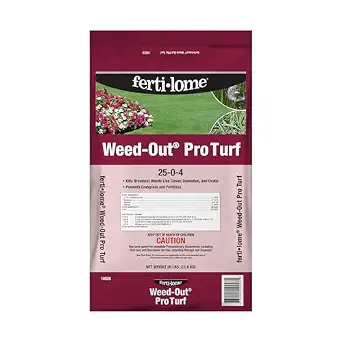 |
| Most Popular A crowd favorite that many people choose with confidence | Scotts Turf Builder Weed & Feed 3, Granular Lawn Fertilizer and Weed Killer, 14.29 lb |  |
| Best Seller A high-volume bestseller chosen again and again | GreenView Weed & Feed Lawn Fertilizer, 39 lb (Covers 15,000 sq ft) |  |
BioAdvanced 5-in-1 Weed and Feed Granules (9.6 lb)

| Item Form | Granule |
|---|---|
| Coverage | 4000 square_feet |
| Active Ingredients | Dicamba, Quinclorac |
BioAdvanced 5-in-1 Weed and Feed is a granular lawn treatment that combines multiple herbicides with fertilizer so you can kill existing weeds and feed turf in a single application. You apply it with a broadcast or drop spreader to an established, dry lawn, then water in and avoid mowing for at least a day. The formula targets over 200 broadleaf weeds and large crabgrass and creates a soil barrier that helps prevent new listed weeds for up to six months while feeding and greening the lawn for about three months. Practical features include granular form for easy even coverage and instructions for follow-up watering and safety precautions. Important limitations are usual for combined herbicide-fertilizers: it is intended for established turf rather than newly seeded lawns, and precautions are needed around children, pets, and windy applications. It is not labeled for sale in all states and requires following label directions closely for best results.
Best for: Homeowners who want a low-effort, maintenance-friendly product to reduce separate purchases and applications and keep an established lawn greener while controlling common weeds.
Less Ideal for: People establishing a new lawn from seed, managing sensitive ornamentals near turf, or those who prefer non-chemical weed control methods.
- Combines weed control and fertilizer in one application for convenience
- Controls both broadleaf weeds and large crabgrass and helps prevent new weeds for up to six months
- Granular formula spreads evenly with a broadcast or drop spreader for uniform coverage
- Feeds and greens turf for up to three months after application
- Not suitable for newly seeded or delicate lawns where herbicides can inhibit germination
- Requires careful handling and exclusion of children and pets until treated areas are dry
Verdict: Use this product when you want one granular application to both kill common and crabgrass weeds and feed an established lawn for months of reduced maintenance.
The Andersons Premium Weed and Feed 24-0-16 (18 lb)

| Item Form | Granule |
|---|---|
| Coverage | 5,000 sq ft |
| Unit Count | 288 Ounce |
| Active Ingredients | Herbicide, Iron, Nitrogen, Sulfur |
The Andersons Premium Weed and Feed 24-0-16 is a granular lawn product designed to kill broadleaf weeds while feeding turf with a mix of quick- and slow-release nitrogen plus iron for deeper greening. You apply it with a rotary or drop spreader to a dry lawn, following the label spreader settings and the two-step application schedule for best control. It targets over 250 broadleaf weeds and lists compatibility with St. Augustine and other common warm- and cool-season grasses, making it useful for seasonal lawn program maintenance. Practical benefits include combined weed control and extended feeding in one pass and improved lawn color from added iron. Important limitations are geographic restrictions and the need to follow the two-application procedure and post-application watering to activate herbicide; it is also not suitable for dichondra or carpet grass. For performance-focused users, correct spreader calibration and adherence to timing will determine results more than the product alone.
Best for: Homeowners who prioritize visible lawn performance and want a combined weed-control plus feeding product for regular seasonal maintenance of St. Augustine and similar grasses.
Less Ideal for: People managing sensitive or restricted lawns such as dichondra or carpet grass or those located in states where this product is not approved.
- Combines herbicide and fertilizer so you kill weeds while feeding grass in one application
- Includes both quick- and slow-release nitrogen for immediate green-up and longer-lasting feeding
- Contains iron for deeper, faster greening of turf
- Covers up to 5,000 sq ft per bag, suitable for medium-sized yards
- Not approved for sale or use in some states which limits availability
- Requires specific spreader settings and a two-step application schedule for full effectiveness
Verdict: Choose this product if you want a single granular treatment that controls broadleaf weeds and delivers both quick and extended feeding for a noticeably greener St. Augustine lawn.
Jonathan Green Green-Up Weed & Feed Lawn Fertilizer (21-0-3), 5,000 sq. ft.

| Item Form | Granule |
|---|---|
| Coverage | 5,000 sq. ft |
| N-P-K Ratio | 21-0-3 |
Jonathan Green Green-Up Weed & Feed combines a 21-0-3 fertilizer with a broadleaf weed control in a fine granular form so you can fertilize and treat weeds in a single application. It is intended for spring or fall use on established lawns and is applied with a rotary, drop, or hand-held spreader when weeds are actively growing. The slow, consistent nutrient release gives up to three months of feeding while the herbicide targets more than 250 broadleaf weeds such as dandelions, clover, and thistle. Practical benefits for tall fescue lawns include longer-lasting greening and reduced need for separate weed treatments. Important limitations are that it cannot be used when seeding or overseeding and it is formulated for broadleaf weeds rather than grassy weeds or crabgrass control. Follow safety directions carefully to avoid contact with skin and eyes and keep pets and children away during application.
Best for: Homeowners with established tall fescue lawns who want a straightforward, time-saving way to feed turf and reduce broadleaf weeds with a single spring or fall application.
Less Ideal for: Those planning to seed or overseed, or gardeners who need targeted grassy weed or crabgrass control should consider separate specialized products.
- Two-in-one formula combines fertilizer and broadleaf weed control to save time and applications.
- Slow-release nitrogen provides up to three months of feeding for sustained greening.
- Fine granules spread evenly for consistent coverage with common spreaders.
- Controls a wide range of broadleaf weeds (over 250 listed).
- Not safe to use when seeding or overseeding a lawn.
- Does not provide post-emergent control for grassy weeds or full crabgrass prevention at later stages.
Verdict: A practical single-application solution for established tall fescue lawns that combines slow-release feeding with broadleaf weed control to keep turf green with less effort.
Bonide Liquid Weed & Feed 20-0-0 Ready-to-Spray, 32 oz

| Liquid Volume | 32 fluid ounces |
|---|---|
| Coverage | 2,500 square feet |
| Item Form | Spray |
| Active Ingredients | Nitrogen |
This Bonide Liquid Weed & Feed is a straightforward lawn treatment that mixes fertilizer with broadleaf weed control in a hose-end ready bottle. You connect your garden hose to the attached sprayer, flip the on/off switch and apply without measuring or mixing. The formula delivers 20% nitrogen for quick green-up while including 2,4-D and 2,4-DP to target common broadleaf weeds like dandelion, clover, and plantain. A single 32 oz bottle covers about 2,500 square feet, which makes it useful for small to medium yards or spot treating larger lawns. Notable perks are the convenience of the integrated sprayer and the dual-action fertilizer plus herbicide in one pass. Important limitations: it is selective for turf but still requires care around desirable ornamentals and water, and safety precautions are needed for pets and children. Also it contains standard phenoxy herbicides, so it is not suitable where those active ingredients are restricted. For budget-focused buyers it is easy to use and can reduce time compared with separate products, but you should follow label directions closely to avoid off-target damage.
Best for: Budget-minded homeowners who want a quick, no-mix solution to green up St. Augustine lawns while knocking back common broadleaf weeds with a single application.
Less Ideal for: Specialty lawn stewards who need herbicide-free or organic options, or properties with sensitive ornamentals and water features where phenoxy herbicides are prohibited.
- Ready-to-spray bottle with attached hose-end sprayer for no-mix application
- Combines 20-0-0 nitrogen fertilizer and broadleaf herbicides in one treatment
- One quart treats up to 2,500 square feet, useful for small to medium lawns
- Targets a wide list of common broadleaf weeds found in turf
- Contains 2,4-D and 2,4-DP which can harm nearby ornamentals and is not appropriate near water sources
- Not formulated for non-target plants and requires protective gear and careful application
Verdict: A convenient, low-cost ready-to-spray weed-and-feed that treats up to 2,500 sq ft and simplifies broadleaf control and nitrogen feeding in one step.
Fertilome Weed-Out Pro Turf 25-0-4 Broadleaf + Crabgrass, 26 lb

| Active ingredients | Selective broadleaf herbicide + crabgrass preventive |
|---|---|
| Analysis | 25-0-4 (N-P-K) |
| Coverage | Up to 10,000 sq. ft. per 26 lb bag |
Fertilome Weed-Out Pro Turf is a granular weed-and-feed designed for routine lawn care on established turf, including tall fescue. It combines a selective broadleaf herbicide with a preemergent crabgrass preventer and a high-nitrogen fertilizer so you treat weeds and feed the lawn in one application. The 25-0-4 analysis supplies a strong nitrogen boost that helps recovered turf green up after weeds are controlled, and a single 26 lb bag covers up to 10,000 square feet, which makes it convenient for medium to large yards. Application is straightforward with a broadcast spreader following label rates, and the product lists compatibility with common cool-season grasses. Expect visible decline of broadleaf weeds such as dandelion and clover within a couple of weeks, while the crabgrass prevention reduces summer grassy flushes when applied at the recommended time. Limitations include that it is formulated for established lawns rather than newly seeded areas and contains no phosphate if your soil test indicates a need for phosphorus. Follow label directions for timing and any overseeding plans.
Best for: Homeowners with established tall fescue lawns who prioritize a reliable one-step solution to control broadleaf weeds and prevent crabgrass while feeding the turf.
Less Ideal for: Gardeners starting new lawns, recently overseeded areas, or lawns that require a fertilizer with phosphorus based on a soil test should look at other products.
- Combines broadleaf weed control, crabgrass prevention, and a high-nitrogen feed in one product
- Covers up to 10,000 sq ft per 26 lb bag for efficient treatment of medium to large lawns
- 25-0-4 formula provides a strong nitrogen boost to promote quick green-up after treatment
- Selective formulation lists compatibility with common cool-season grasses including tall fescue
- Not intended for newly seeded lawns or areas requiring immediate overseeding
- Contains no phosphate, so it will not address phosphorus deficiencies identified by soil tests
Verdict: A dependable one-step weed-and-feed that controls broadleaf weeds, prevents crabgrass, and delivers a strong nitrogen feed for established tall fescue lawns.
Scotts Turf Builder Weed & Feed 3, Granular Lawn Fertilizer and Weed Killer, 14.29 lb

| Item Form | Granule |
|---|---|
| Coverage | 5000 square_feet |
| Active Ingredients | 2,4-D 1.220%, Mecoprop 0.081% |
Scotts Turf Builder Weed & Feed3 is a granular lawn product that combines a fertilizer with broadleaf weed control for routine lawn maintenance. It is applied with a broadcast or drop spreader to a wet lawn when daytime temperatures are between 60 and 90°F, and it uses WeedGrip technology to help granules stick to weed leaves for better uptake. In practice it kills common weeds such as dandelion and clover while delivering nutrients to thicken grass, so treated areas often green up and look fuller over a few weeks. The package covers about 5,000 sq. ft. and manufacturer instructions recommend avoiding certain grass types and keeping people and pets off the lawn until dust settles. Important limitations are that it is not safe for some turf species and must not be watered for 24 hours after application; timing and correct spreader settings affect results. For homeowners wanting a combined feed-and-weed treatment for standard lawns, it simplifies two tasks into one application, but it requires following the label closely for safe and effective use.
Best for: Homeowners seeking a straightforward, combined fertilizer and weed-control treatment to maintain and thicken common cool- and warm-season turf in a typical yard.
Less Ideal for: Specialist turf managers, owners of sensitive turf varieties (listed on the label), or those who need spot treatment only rather than whole-lawn applications.
- Combines fertilizer and broadleaf weed control in one granular product
- WeedGrip formulation helps granules adhere to weed leaves for improved herbicide contact
- Covers approximately 5,000 sq. ft. per 14.29 lb bag, suitable for many small to medium lawns
- Clear application guidance for use with common spreaders and specific temperature/wetting windows
- Contains active herbicide ingredients not appropriate for all turf types and must be avoided on listed grasses
- Requires strict timing and no watering for 24 hours after application to be effective and safe
Verdict: A practical one-step weed-and-feed for typical lawns that feeds turf while targeting common broadleaf weeds across a 5,000 sq. ft. area.
GreenView Weed & Feed Lawn Fertilizer, 39 lb (Covers 15,000 sq ft)

| NPK | 27-0-4 |
|---|---|
| Form | Granule |
| Coverage | 15000 sq ft |
| Active Ingredient | Nitrogen |
| Unit Count | 624 Ounce |
GreenView Weed & Feed is a single-application granular product that combines a slow-release nitrogen fertilizer with a broadleaf herbicide to feed turf and control common lawn weeds. It is typically applied to established lawns when weeds are actively growing, using the recommended rate and watering in afterward; the bag covers up to 15,000 square feet at the stated application rate. Notable features include MESA controlled-release nitrogen for up to eight weeks of steady feeding and labeled control of over 250 weeds such as dandelion and clover. Practical benefits are faster, uniform green-up without a surge of growth, improved root development for heat and drought tolerance, and convenience from a combined weed-control plus fertilizer approach. Important limitations are that it is intended only for established turf and specific grass species, requires careful timing (do not mow two days before or after application) and is not suitable for some grasses like dichondra or certain St. Augustine varieties in Florida, so checking the label for species compatibility is essential.
Best for: A cautious buyer who values proven results and wants a convenient, evidence-backed product to maintain and improve established warm- or cool-season lawns while reducing application frequency.
Less Ideal for: Do not choose this if you are overseeding, establishing a new lawn, or managing grass types listed as incompatible such as certain Floratam St. Augustine selections or non-turf groundcovers.
- Combines fertilizer and herbicide so you treat weeds while feeding in one application
- MESA controlled-release nitrogen provides up to 8 weeks of steady feeding
- Labeled to control over 250 common broadleaf lawn weeds
- Large 39 lb bag covers up to 15,000 sq ft at the recommended rate
- Formulation is for established turf only and can harm non-listed species
- Requires precise timing and watering instructions to work effectively
Verdict: Choose this if you want a single, proven weed-and-feed product that delivers steady feeding and broadleaf weed control across common established turf.
Choosing the Right Weed and Feed for Tall Fescue: Key Factors to Consider
Nutrient Formulation and Timing
Tall fescue benefits from a balanced nitrogen program that supports strong tillering without forcing excessive top growth, especially ahead of hot summer weather. Look for products that combine immediate-release nitrogen for a quick green-up with a meaningful portion of slow-release or polymer-coated nitrogen to sustain color over weeks. The ratio affects how often you need to reseed or patch bare spots and whether the lawn will demand extra mowing after application.
Timing on the label matters because applying a high quick-release product during heat stress or drought can increase the risk of burn and disease. For cool-season fescue stands, early spring and early fall applications are typically safest and most effective; some formulations are specifically designed for late spring with higher slow-release fractions to avoid stress.
Herbicide Type and Weed Control Spectrum
Effective broadleaf control depends on the active ingredients and their labeled targets. Some formulations excel at common yard weeds like dandelion, clover, plantain, and chickweed, while others include additional compounds for tougher woody or perennial broadleaf species. Check whether the herbicide is systemic or contact; systemic herbicides move within the plant for better root kill on perennial weeds, while contact herbicides only damage exposed foliage.
Also consider the residual activity and whether the product controls newly germinated weeds or only established plants. For overseeded or recently sodded fescue, some herbicides will be restricted and can harm seedlings, so read the seed establishment timelines on the label carefully.
Compatibility With Tall Fescue and Safety Instructions
Not all weed and feed products are safe on every grass type. Tall fescue has good cold tolerance but can be sensitive to certain herbicide families and high nitrogen rates during stress. A product labeled for cool-season grasses and explicitly listing tall fescue reduces risk. Important safety details include maximum application rates per year, mowing restrictions before and after application, and guidance for watering in to activate fertilizer while avoiding herbicide runoff.
Safety also covers environmental precautions such as buffer zones near water and directions on equipment cleanup. Following label instructions for temperature and moisture conditions at application time will help prevent unintended damage and improve control.
Granule Quality and Spread Pattern
Granule uniformity and size affect how evenly the active ingredients land and therefore how consistent both feeding and weed control will be across the lawn. Irregular or powdery product can clog spreaders or blow off-target. Products formulated with coated granules often flow better and provide a more uniform nutrient release.
Compatibility with common broadcast or drop spreaders matters because many gardeners lack specialty equipment. Check recommended spreader settings on the label and whether the product requires special calibration. Ease of calibration and consistent coverage reduce the chance of over- or under-treating certain areas.
Application Window and Climate Considerations
Tall fescue responds differently to treatments depending on season and climate. In cooler regions, active growth in spring and fall provides better uptake for both nutrients and systemic herbicides. In regions with hot, dry summers, applying a heavy feed late in spring can stress turf. Look at label guidance for optimal temperature ranges and whether the product recommends fall applications for root development rather than aggressive spring top growth.
Also consider rainfall expectations. Some products require watering in within a specific time to activate fertilizer while minimizing herbicide movement. If heavy rain is forecast, wait for a more stable window to avoid runoff and uneven performance.
Establishment and Overseeding Restrictions
If you plan to overseed or repair bare patches, read seed establishment restrictions carefully. Many herbicides in weed and feed blends restrict seeding for a set number of weeks to avoid killing tender grass seedlings. Choose a product whose re-seeding window aligns with your renovation plans or be prepared to schedule feeding and weed control around seeding operations.
For patch repair after treatment, mechanical removal and spot fertilization may be safer than broadcasting another weed and feed until your new seed is well established. Understanding these timelines helps avoid costly mistakes in spring and fall lawn projects.
When to Apply Weed and Feed to Tall Fescue
Apply weed and feed when tall fescue is actively growing but not under heat stress. Early spring after green-up and early fall before the first heavy frosts are the two best windows because the grass will uptake nutrients and herbicides more effectively and recover rapidly.
Avoid applications during drought or high summer temperatures. If soil moisture is low, light irrigation before and after application will improve nutrient uptake and reduce burn risk according to label directions.
- Early spring for green-up and broadleaf control on cool-season weeds
- Early fall for root growth and late-season weed suppression
- Delay if daytime temps exceed label recommendations or during drought
How to Apply Evenly With a Spreader
Consistent application is critical for uniform color and weed control. Calibrate your broadcast or drop spreader per the product label, and practice a cross-pattern walk: apply one pass north-south and a second pass east-west to avoid striping or gaps.
Avoid overlapping at the spreader edges which doubles the rate in those strips. If you cannot adjust spreader settings precisely, consider smaller test areas to verify output before treating the whole lawn.
- Calibrate on a driveway to measure output per pass
- Use a cross-hatch pattern to ensure even coverage
- Clean spreader components after use to prevent clogging
Spot Treatment Versus Whole-Lawn Applications
If weeds are isolated, spot treatments combined with a targeted fertilizer can reduce chemical use and limit lawn stress. Whole-lawn weed and feed is appropriate when weeds are widespread or you need both uniform feeding and broadcast weed control.
Remember that many weed and feed products are not labeled for spot-concentrated application rates. Read the label for directions on spot treatment or use a product specifically designed for spot control to avoid burning the turf.
- Spot treat persistent patches and hand-remove where practical
- Whole-lawn applications are better for diffuse weed problems
- Follow label limits for maximum annual application rates
Managing Aftercare: Watering and Mowing
After applying weed and feed, follow the product's watering instructions. Some formulations require light watering to activate fertilizer but advise waiting to water for herbicide uptake. Others instruct not to irrigate for a set time to maximize weed control. Read and follow these directions precisely for both effectiveness and turf safety.
Delay mowing for the interval on the label to prevent spreading granules or cutting newly vulnerable leaf tissue. Regular mowing height for tall fescue is typically higher than for finer grasses; maintaining a taller blade reduces stress and helps outcompete weeds post-treatment.
- Water as the label directs to activate fertilizer without washing away herbicide
- Wait the recommended time before mowing to protect treated foliage
- Keep mowing height on the higher side for tall fescue recovery
Environmental and Neighborhood Considerations
Avoid applying before heavy rain to prevent runoff into storm drains or waterways. Many labels specify buffer zones from water bodies and instructions to protect pollinators by avoiding bloom periods for flowering lawn plants. Consider timing applications to minimize exposure of bees and other beneficial insects.
Communicate with neighbors if you share borders and choose windless days to reduce drift. Properly store leftover product in a dry, secure location per label recommendations to avoid accidental contamination.
- Check weather and avoid imminent heavy rainfall
- Follow buffer zone and pollinator protection guidance
- Apply on calm days to minimize drift
How We Chose the Best Weed and Feed for Tall Fescue
We prioritized attributes that matter in real tall fescue lawns. First, nutrient formulation and timing were central: formulas with an appropriate percentage of slow-release nitrogen and predictable release patterns earned higher marks because they reduce rapid top growth that can stress fescue under summer heat. Second, herbicide spectrum and selectivity were evaluated; products that control common broadleaf weeds found in cool-season lawns without harming tall fescue at labeled rates were favored. Third, application safety and label clarity were important. We looked for clear instructions on timing, water requirements, and mowing restrictions so gardeners can minimize burn or reduced herbicide effectiveness. Fourth, granule size and spreadability matter in practice, so products with uniform granules and compatibility with common spreaders scored better. Finally, environmental considerations and re-entry/restriction guidance were reviewed. We excluded any products whose labels disallowed use on tall fescue or lacked clear cool-season grass directions. We did not consider brand popularity alone; instead we focused on ingredient balance, practical application guidance, and documented weed control spectrum.
FAQ
Can I use a standard weed and feed on newly seeded tall fescue?
Usually you must wait before seeding after applying weed and feed. Many herbicides in these blends restrict seeding for several weeks. Check the product label for exact re-seeding intervals and avoid treating until seedlings are established.
How soon will I see results on weeds after applying weed and feed?
Some annual broadleaf weeds show visible browning within a week, while tougher perennials may take multiple weeks for full control. Herbicide action depends on plant type, weather, and product formulation.
Is it safe to apply weed and feed during a hot spell?
Applying during hot, dry conditions raises the risk of turf stress and scorch. Most labels recommend avoiding application when daytime temperatures are high or when the grass is drought-stressed. If in doubt, wait for cooler, wetter conditions.
How often can I apply weed and feed to my tall fescue lawn?
Labels typically limit the number of applications per year and set maximum nitrogen rates. Many gardeners apply in spring and fall, but actual frequency depends on product instructions, nutrient needs, and local climate.
Will weed and feed control grassy weeds in tall fescue?
Most weed and feed formulations target broadleaf weeds rather than grassy weeds. For grassy weed control, use products labeled specifically for grassy weed species or consider mechanical removal and cultural practices to strengthen the fescue stand.
Final Verdict
Choose a weed and feed that matches tall fescue needs by prioritizing an appropriate nitrogen release profile and a herbicide spectrum labeled for cool-season grasses. Balance quick green-up with slow-release nutrition to avoid pushing growth into stressful weather, and follow label directions on timing, watering, and re-seeding to protect seedlings and the environment. Focus on even application, spreader calibration, and seasonally appropriate timing. With the right product and careful application, you can reduce broadleaf pressure and support a dense tall fescue lawn while minimizing risk and unnecessary chemical use.
