

Note: This article contains affiliate links. If you click on these links and make a purchase, I may earn a small commission at no extra cost to you. This helps support my research and content. Read my full affiliate disclosure here.
If you want beds that stay tidy with less weeding, the right weed barrier mulch makes a big difference. In real gardens, a barrier that blocks light, sheds seeds, and still lets water and air through prevents weeds without harming plant roots or soil life. This guide looks at seven top weed barrier mulches suited to beds, borders, and around shrubs, explaining how each option handles durability, permeability, and ease of installation. You will see why material choices and installation technique matter and how those factors affect maintenance and plant health. Read on for a practical overview of the shortlisted options and the criteria we used to evaluate them.
Top Picks at a Glance
| Best Overall The best all-around choice for most situations | EXTRAEASY 3 ft x 300 ft Heavy-Duty Woven Weed Barrier Fabric (3.2 oz) |  |
| Best Quality Built to a higher standard if you want something more solid | Super Geotextile Heavy Duty 5 oz Weed Barrier Fabric, 3 x 100 ft |  |
| Best Value The sweet spot between price and what you get | Winisok 3.2 oz Heavy-Duty Weed Barrier Fabric, 3 ft x 100 ft (2 Pack: 3 ft x 50 ft) |  |
| Best Budget The cheapest option that still gets the job done reliably | Amazon Basics Weed Barrier Landscape Fabric, 3 x 50 Feet |  |
| Highest Rated A top-rated pick with lots of positive feedback | Topfurn Biodegradable Garden Paper Weed Barrier, 4 x 100 ft |  |
| Most Popular A crowd favorite that many people choose with confidence | DeWitt Sunbelt Woven Weed Barrier Fabric, 3.2 oz, 4 x 300 ft |  |
| Best Seller A high-volume bestseller chosen again and again | LAVEVE Heavy Duty Weed Barrier Landscape Fabric, 4 ft x 100 ft (two 4×50 ft rolls) |  |
EXTRAEASY 3 ft x 300 ft Heavy-Duty Woven Weed Barrier Fabric (3.2 oz)

| Material | Woven PP |
|---|---|
| Weight | 3.2oz |
| Coverage | 3 ft x 300 ft (900 sq. ft.) |
This EXTRAEASY woven weed barrier is a no-nonsense option for covering large flower beds and landscape areas. The 3.2 oz woven polypropylene construction resists tearing and stands up to mulch, foot traffic, and typical outdoor exposure, so it can serve as a multi-year underlayer when covered. It blocks most sunlight to inhibit weed germination while still permitting water, air, and nutrients to reach the soil, which helps planted beds stay healthy. Installation is straightforward: roll it out, cut to shape, overlap seams, and secure with staples; it works well around trees, raised beds, and irrigation lines. Because it is heavy duty, it requires basic tools to position and may be overkill for very small or decorative beds where a thinner fabric would be easier to handle. Also note that woven fabrics can eventually allow fine weed seeds to settle on top of the material if not covered with mulch or gravel. For gardeners who want a durable, low-maintenance base layer for flower beds, this fabric reduces ongoing weeding and extends the time between maintenance sessions.
Best for: Gardeners who prioritize efficient, long-lasting weed suppression across multiple or large flower beds and want to reduce routine maintenance with a durable underlayer.
Less Ideal for: Those planting many small, densely planted or ornamental beds where frequent soil access or delicate planting is required; also not the best choice for gardeners who prefer biodegradable options.
- Heavy-duty 3.2 oz woven polypropylene resists tearing and holds up under mulch and foot traffic
- Allows water, air, and nutrients to pass through while blocking most sunlight to suppress weeds
- Large 3 ft x 300 ft roll covers extensive area, reducing installation time for big beds
- Straightforward lay-and-pin installation that integrates around trees, raised beds, and irrigation
- Thicker material can be cumbersome to cut and position for small or intricate planting areas
- Woven fabric can allow fine seeds and debris to accumulate on top if not covered with mulch or gravel
Verdict: Choose this heavy-duty woven fabric when you need a durable, water-permeable weed barrier to cut maintenance across large flower beds.
Super Geotextile Heavy Duty 5 oz Weed Barrier Fabric, 3 x 100 ft

| Material | Woven polypropylene with needle-punched layer |
|---|---|
| Weight | 5 oz |
| Length | 100 ft |
| Width | 3 ft |
This Super Geotextile 5 oz weed barrier is a thick, dual-layer landscape fabric built for long-term weed control in beds, raised planters, and under mulch or gravel. The fabric combines a woven polypropylene layer for tear resistance with a needle-punched layer that helps filter soil and retain moisture, so water and nutrients still reach plant roots. It is UV stabilized and marketed as dimensionally stable, which makes it suitable for multi-year installations where you want fewer replacements. Installation is straightforward: roll out, cut to fit beds, and secure with landscape staples before covering with mulch or decorative stone. The practical benefits are durability, reduced maintenance, and reduced weed growth without impeding irrigation. Limitations are that it is a physical barrier that can complicate future planting or deep cultivation in the covered area and that very persistent weeds with strong roots may still find gaps at edges or seams. Also it does not replace proper bed preparation or edging to prevent encroachment from surrounding turf.
Best for: Practical gardeners who want a long-lasting, no-nonsense barrier for flower beds, raised beds, or mulched landscapes and prioritize fewer replacements and lower ongoing maintenance costs.
Less Ideal for: People who frequently change planting layouts, dig beds regularly, or prefer organic no-barrier mulching methods should consider more flexible alternatives.
- True 5 oz dual-layer construction offers heavier, more durable fabric than lighter consumer options
- Woven layer provides tear resistance while needle-punched layer aids water filtration and moisture retention
- UV stabilized for long-term outdoor exposure and dimensionally stable for multi-year use
- Sold in a large 3 x 100 ft roll which reduces seams and installation time for bigger projects
- Permanent installation can make future planting or deep soil work more difficult
- May require careful edge treatment to stop aggressive weeds from bypassing the fabric
Verdict: Choose this heavy 5 oz fabric when you want a durable, long-lasting weed barrier that minimizes replacements for larger garden and landscape projects.
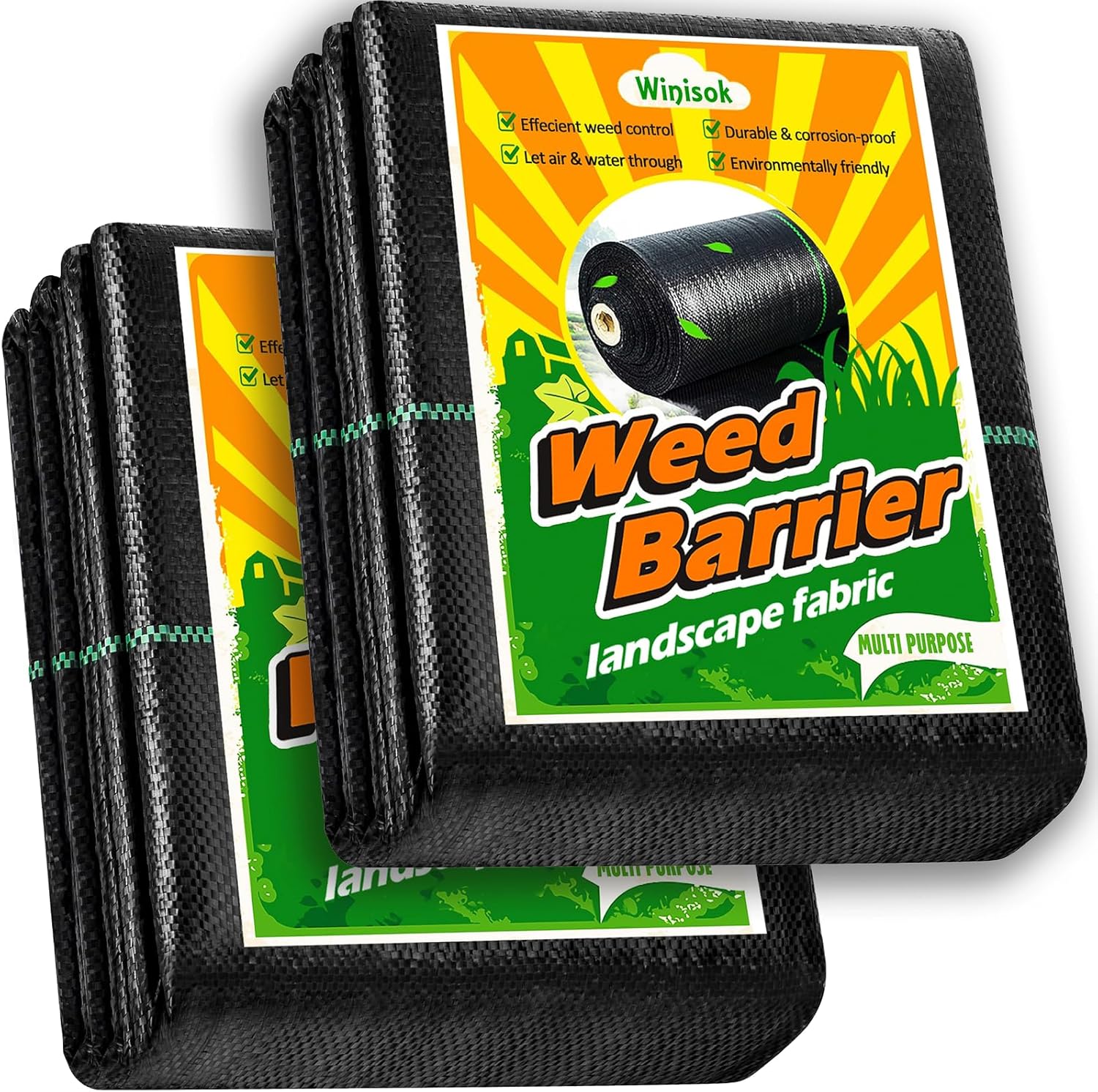
Winisok 3.2 oz Heavy-Duty Weed Barrier Fabric, 3 ft x 100 ft (2 Pack: 3 ft x 50 ft)
| Material weight | 3.2 oz |
|---|---|
| Pack configuration | 2 pieces (3 ft x 50 ft each) |
This Winisok landscape fabric is a durable woven weed barrier intended for long-term suppression of unwanted growth in garden beds, pathways, and around ornamental plantings. It is laid directly over cleared soil or existing weeds, cut to fit, and secured before adding mulch or decorative rock. The 3.2 oz material is described as heavy duty and breathable, so it blocks sunlight to weeds while still permitting water and air to pass through to roots, which helps irrigation and plant health. The printed green guide lines simplify alignment and trimming during installation and make it easier to place rows or plants accurately. Practical benefits include reduced weeding time, compatibility with mulch or gravel coverings, and a range of landscaping uses such as erosion control or underlayment. Expect typical limitations of fabric barriers: roots from aggressive perennials may eventually penetrate, fabric can show wear at high-traffic edges, and it requires careful cutting and seam overlap to prevent gaps where weeds can emerge.
Best for: Buyers who want a low-maintenance way to reduce routine weeding and improve bed appearance across beds, borders, and paths while keeping irrigation effective.
Less Ideal for: Gardeners who prefer fully organic no-fabric methods or those planting dense, closely spaced annuals that need frequent soil access should consider alternatives.
- Heavy-duty 3.2 oz woven construction for longer-lasting weed suppression
- Breathable material that allows water and air to reach plant roots
- Printed guide lines to simplify cutting, alignment, and planting
- Can be used under mulch, gravel, for erosion control, and as pond or construction underlayment
- Fabric can be breached over time by aggressive perennial roots
- Edges and seams may require regular checking and fastening in high-traffic areas
Verdict: A practical, heavy-duty fabric that cuts weeding time while still letting water and air reach plant roots, ideal for gardeners who prioritize long-term low maintenance.
Amazon Basics Weed Barrier Landscape Fabric, 3 x 50 Feet

| Material | Polypropylene |
|---|---|
| Weight | 90 GSM (3.2 oz) |
| Purpose | Weed control, erosion prevention |
This Amazon Basics landscape fabric is a straightforward heavy-duty weed barrier intended for garden beds, paths, and under gravel or pavers. Made from 90 GSM (3.2 oz) polypropylene, the material is tear-resistant and laid flat to suppress weed growth while remaining permeable so water and fertilizer reach plant roots. The 3 x 50 foot roll covers a typical raised bed or several smaller beds and is easy to cut to shape; factory guide lines simplify alignment and trimming tips help reduce edge fraying. It is commonly used under mulch, river rock, or around perennials where long-term weed suppression is desired without impeding drainage. Limitations are that heavier soils or high-traffic areas will eventually wear the fabric and that it does not stop weeds that grow from seed on top of mulch or from root intrusion without proper installation and overlap. For gardeners focused on straightforward, durable weed control this fabric delivers a low-effort solution, especially when paired with correct installation and surface mulch.
Best for: Gardeners who prioritize practical, low-maintenance weed suppression for beds and borders and want an affordable, easy-to-install fabric to pair with mulch or decorative rock.
Less Ideal for: Growers who prefer no-barrier methods like sheet mulching or those needing an impermeable membrane for heavy paving or structural erosion control.
- 90 GSM polypropylene offers tear resistance suitable for garden-bed and under-gravel use
- Breathable fabric allows water and nutrients to penetrate to the soil
- Guide lines on the fabric make alignment and cutting easier
- Large 3 x 50 ft roll covers multiple beds or a long border without frequent joins
- Will eventually degrade or wear in high-traffic or heavily amended soil areas
- Does not prevent weeds that sprout above the fabric without proper mulch and maintenance
Verdict: A durable, breathable landscape fabric that gives practical, low-effort weed suppression for garden beds and borders.
Topfurn Biodegradable Garden Paper Weed Barrier, 4 x 100 ft

| Item Form | Sheet |
|---|---|
| Coverage | non-selective broad spectrum coverage |
| Number of Packs | 1 |
| Brand | Topfurn |
This Topfurn biodegradable weed barrier is a 4 x 100 foot roll of heavy-duty natural pulp paper intended for use under vegetables, in garden beds, greenhouses, and around established plants. Lay it over prepared soil, cut holes for seedlings, and anchor with staples or mulch; the sheet blocks light to suppress weeds while remaining breathable so water and air pass through to roots. Its natural pulp construction means the fabric will gradually decompose and integrate with soil, removing the need to remove plastic landscape fabric later. Practical benefits include reduced hand-weeding, lower soil evaporation for more consistent moisture, and a simple installation that can be tailored by cutting the roll to fit beds. Limitations are that it is less durable than synthetic woven fabrics if used in high-traffic areas and it will not provide a permanent barrier since it is designed to biodegrade over time, so it may need replacement for long-term weed control.
Best for: Gardeners who prioritize reliable, low-impact weed control and want an easy-to-install barrier that improves moisture retention and later biodegrades back into the bed.
Less Ideal for: People who need a permanent, heavy-duty landscape fabric for pathways, driveways, or areas with frequent foot traffic should choose a more durable synthetic product.
- Made from 100% natural pulp paper that biodegrades and safely integrates into soil
- Large 4 x 100 ft roll covers extensive garden beds without many seams
- Breathable and moisture resistant to reduce soil evaporation while allowing water through
- Easy to cut and shape on site for planting rows, raised beds, or greenhouse use
- Will degrade over time so it is not a permanent long-term barrier
- Less tear-resistant than synthetic woven fabrics in high-traffic or heavily worked beds
Verdict: Choose this biodegradable garden paper when you want effective, eco-friendly weed suppression and moisture retention that naturally returns to the soil.
DeWitt Sunbelt Woven Weed Barrier Fabric, 3.2 oz, 4 x 300 ft

| Fabric weight | 3.2 oz |
|---|---|
| Material | Woven polypropylene |
| Roll length | 4 x 300 ft |
| UV-stabilized | Yes |
This DeWitt Sunbelt woven weed barrier is a commercial-grade ground cover for large garden and landscape projects. The dense polypropylene weave blocks most weed growth while remaining permeable so water and nutrients still reach the soil, which makes it suited for raised beds, greenhouse floors, garden rows, and long planting runs. The material is UV-stabilized and resists tears and punctures from foot traffic, tools, and repositioning, so it holds up under frequent use. Golden alignment stripes every 12 inches simplify straight-row layout and spacing when installing in nursery or orchard rows. Installation is straightforward but requires staples or pins for secure anchoring, and the roll size means handling and cutting can be bulky for one person. It is a practical, durable choice when you need dependable, long-lasting weed suppression across large areas, though smaller hobby gardeners may find the roll unwieldy to manage alone.
Best for: Gardeners and landscapers who need a robust, long-lasting ground cover for large beds, greenhouse floors, or long planting rows and value durability and ease of layout.
Less Ideal for: Small-plot or container gardeners who want a lightweight, easy-to-handle product or anyone looking for a temporary, disposable fabric option.
- Woven polypropylene construction lets water and air through while blocking weeds.
- UV-stabilized for sustained outdoor exposure without rapid degradation.
- Durable against tears and punctures from tools and foot traffic.
- 12-inch alignment stripes help lay out straight rows and consistent plant spacing.
- Large roll size can be bulky and awkward for a single person to unroll and position.
- Requires pins or staples to secure; not a standalone solution for weed control.
Verdict: Choose this fabric when you want a durable, UV-stable woven barrier that provides long-term weed suppression and easy row alignment across large garden or landscape areas.
LAVEVE Heavy Duty Weed Barrier Landscape Fabric, 4 ft x 100 ft (two 4×50 ft rolls)

| Material | Polypropylene |
|---|---|
| Permeability | Breathable, allows water and air flow |
| UV resistance | Resistant to sun exposure |
| Package | Two rolls totaling 4 ft x 100 ft |
This LAVEVE landscape fabric is a heavy-duty woven polypropylene ground cover intended to suppress weeds while letting moisture and air reach the soil. It ships as two 4 ft x 50 ft rolls (total 4 ft x 100 ft) with printed guide lines that make cutting and alignment straightforward. In practice it is laid over prepared beds, cut for plantings, and secured with U-shaped pegs; the fabric’s permeability helps reduce erosion and allows irrigation to penetrate. The material is UV-resistant and built for typical garden uses such as flower beds, vegetable plots, gravel paths, and sidewalks. Because it is a woven polypropylene, it is sturdier than thin nonwoven mats and stands up to foot traffic when covered with mulch or gravel. Limitations to expect are that surface-seeded weeds or seeds blown onto mulch can still germinate on top, and long-term burial or heavy soil compaction can reduce effectiveness; occasional maintenance and proper installation around plants are required to keep beds weed-free.
Best for: Gardeners who want a durable, breathable ground cover to reduce routine weeding and tidy beds across medium-length runs of pathway or planting area, and who value a product with solid usage feedback.
Less Ideal for: People seeking a permanent, maintenance-free solution or those who prefer chemical weed control methods; also not the best choice for beds where frequent deep digging or planting changes are required.
- Woven polypropylene construction provides durable, tear-resistant coverage
- Permeable design allows water and air to reach soil, reducing erosion
- Printed guide lines make measuring and cutting easier during installation
- Suitable for multiple applications including beds, paths, and under gravel
- Comes as two rolls totaling 4 ft x 100 ft for extended coverage
- Does not prevent weeds that germinate in mulch or on top of the fabric
- Requires proper securing and occasional maintenance to stay effective
Verdict: A sturdy, breathable woven fabric that gives reliable, easy-to-install weed suppression for medium garden beds and paths backed by strong user approval.
Choosing the Right Weed Barrier Mulch: Key Factors to Consider
Material Durability
How long a weed barrier lasts in the garden determines replacement frequency and long-term cost. Fabrics and heavier-weight barriers vary widely in UV resistance; a more durable material will keep weeds down through multiple seasons without degrading. Durability affects how the barrier handles exposure to sun, fluctuating temperatures, and contact with tools or foot traffic.
A fragile or thin barrier may tear during installation or when you move plants, creating weak points where weeds can invade. Choosing a material rated for outdoor exposure and reinforced at edges or seams reduces the chance of early failure.
Water and Air Permeability
Plants and soil life need water and oxygen, so permeability is critical. A weed barrier that is impermeable will cause runoff or create overly dry soil beneath, stressing roots and reducing microbial activity. Permeable fabrics let water and oxygen through while still blocking light that germinates weed seeds.
Consider how the product performs during heavy rains and dry spells. Materials with good permeability maintain more uniform moisture and promote healthier root systems, especially for beds with mixed perennial and annual plantings.
Installation and Handling
Ease of cutting, positioning, and anchoring affects whether you finish the job neatly and how fast you can cover beds. Some barriers come in wide rolls that speed up work on large areas, while others are narrower and better for irregular beds. A material that is easy to cut reduces frustration around plant stems and borders.
Fastening options matter too. Barriers that accept landscape staples readily stay put around edging and slopes. If installation requires complex adhesives or many fasteners, the time and effort increase, especially in larger landscapes.
Compatibility With Surface Mulches
Most gardeners layer an organic or decorative mulch over the barrier. Compatibility means the barrier holds the surface mulch in place, prevents mixing with soil, and does not cause rapid decomposition that buries the fabric. Some materials wick moisture away from the surface mulch or allow it to decompose in place, which can be either beneficial or problematic depending on your goals.
Think about the desired look and maintenance: heavy bark or gravel requires stronger anchoring and a barrier that resists displacement, while lighter decorative mulches need less robust support but benefit from materials that do not show through or break down quickly.
Maintenance and Longevity in Planting Areas
Maintenance demands include how easy it is to replace sections, how often the barrier needs topping up with mulch, and whether it interferes with future planting. A barrier that is easy to lift and reseat around perennials simplifies plant division and seasonal adjustments.
Longevity also depends on the garden context. High-traffic beds, vegetable rows, or areas with aggressive runner weeds will wear a barrier faster than sheltered borders. Choose a product whose expected service life matches how you use the space and how often you are willing to intervene.
Which Barrier Types Work Best in Different Beds
Not all weed barriers behave the same across garden situations. Lightweight woven fabrics are often adequate for ornamental beds with moderate foot traffic, while heavier nonwoven or multi-layer composites perform better under gravel or heavy bark. For vegetable beds where planting changes seasonally, choose a barrier that is easy to cut and remove.
Slope, drainage, and planting density also influence the best choice. On slopes or around trees where erosion is a concern, a heavier material anchored securely will prevent washout. In raised beds and intensive plantings, prioritize permeability and easy access for planting and harvesting.
- Ornamental borders: medium-weight woven fabric for balance of durability and permeability
- High-traffic or gravel areas: heavy-duty composite or reinforced barrier
- Vegetable or seasonal beds: removable, easy-to-cut materials
Proper Installation Techniques
Start with thorough weed removal and a leveled surface. Lay the barrier so it overlaps at seams and extends up into the planting holes to prevent weeds slipping through the edges. Use appropriate fasteners spaced to prevent wind lifting and to keep the fabric flat against soil.
When planting through a barrier, cut neat X-shaped openings or remove circles of fabric rather than ripping irregular holes. Keep the fabric tight to avoid pockets where mulch and soil can accumulate and encourage weed growth.
- Clear existing weeds and roots before laying the barrier
- Overlap seams by several inches and secure with staples or pins
- Cut clean planting holes and fold edges under to reduce fraying
Managing Mulch Over Weed Barriers
Apply a sufficient layer of organic or decorative mulch over the barrier to block light and stabilize temperature. Too thin a layer allows light through and defeats the barrier; too thick a layer may trap moisture against the fabric and speed decomposition of organic mulches. Aim for an even cover appropriate to the mulch type.
Refresh the surface mulch as needed rather than replacing the barrier frequently. Organic mulches will break down and settle; adding new material maintains appearance and suppressive function without disturbing the underlying fabric.
- Recommended mulch depth varies by material: generally 2 to 4 inches for most organic mulches
- Avoid piling mulch against woody stems; leave a small mulch-free ring to reduce rot risk
- Top up mulch annually rather than disturbing the barrier
Environmental and Soil Health Considerations
Some weed barriers are synthetic and persist in soil, while others are made from natural or biodegradable fibers. Persistent materials can be effective long-term but may complicate future soil work and can interfere with deep-rooted soil organisms. Biodegradable options reduce long-term impact but may need replacement more often.
Consider how the barrier interacts with soil moisture cycles and microbial activity. Highly impermeable barriers can cause water to run off and reduce infiltration. Balance suppression goals with maintaining a healthy soil environment for the plants you want to grow.
- Choose biodegradable fabrics for easily reworked beds
- Use permeable materials to support soil life and reduce runoff
- Plan for eventual removal of persistent materials if you intend to replant deeply
Troubleshooting Common Problems
If weeds appear through seams or holes, check for poor overlaps, torn fabric, or buried weed crowns that were missed during prep. Lifting mulch and resecuring the barrier usually addresses these issues. Persistent perennial weeds may require targeted removal at the roots rather than reliance on a barrier alone.
If water is pooling on the surface or plants show drought stress, assess the barrier for low permeability or improper grading. Adding more planting holes or switching to a more permeable option often solves drainage-related problems.
- Repair tears promptly with patches or overlapping fabric
- Address perennial weed outbreaks by removing roots before relaying barrier
- Adjust grading or choose higher-permeability material if runoff is a problem
How We Chose the Best Weed Barrier Mulch
We focused on traits that determine real-world performance in planted beds and landscape edges. Selection prioritized material durability under UV exposure and foot traffic, permeability to water and air, resistance to tearing during installation, and compatibility with common mulches and planting methods. We also factored ease of cutting and fastening, long-term maintenance needs, and environmental considerations such as whether a material breaks down or leaves residues in soil. We excluded products intended only for paved surfaces or temporary event use, and we did not consider decorative-only products that provide little to no weed suppression. Our shortlist reflects materials and constructions that work across a range of garden soils and planting densities. The evaluation criteria were applied consistently to judge how each option balances longevity, plant health, and gardener effort when installed and maintained in typical backyard and community-garden settings.
FAQ
Can I use weed barrier mulch under vegetable beds?
Often yes, but it depends. Permeable, easy-to-remove barriers are best for vegetable beds so you can plant, dig, and rotate crops. Permanent synthetic barriers can hinder soil turnover and root expansion in intensive vegetable plots.
How long does a typical weed barrier last in a front border?
It usually depends on material and exposure. Heavier, UV-resistant fabrics can last several years in a sheltered border, while lightweight or biodegradable options may need replacement every season or two.
Will a weed barrier stop deep-rooted perennial weeds?
Often not completely. Barriers block new seed germination and shallow weeds, but established perennial roots and runners can grow around or under poorly installed fabric. Combining barrier installation with root removal gives the best control.
Is it okay to use plastic sheeting as a weed barrier?
Plastic sheeting can suppress weeds temporarily but is usually too impermeable for planted beds. It can cause runoff and harm soil organisms, so choose permeable materials for planted areas and reserve plastic for paved or construction uses.
How should I handle planting through a weed barrier?
Cut clean openings such as X-shaped slits or circles and fold back the fabric edges. Keep the opening as small as practical around stems to limit weed entry, and secure the fabric so it stays tight against soil around the plant.
Final Verdict
Prioritize the factors that match how you use the space: durability and tear resistance for high-traffic or gravel areas, permeability and ease of removal for vegetable and seasonal beds, and compatibility with the mulch you prefer for ornamental borders. Expect tradeoffs between longevity and environmental impact; heavier synthetics last longer but can complicate future soil work while biodegradable options simplify bed renovation. Choose a barrier that balances suppression, water flow, and garden maintenance needs. With the right material and careful installation, a weed barrier mulch reduces weed work and helps keep beds healthier and neater over multiple seasons.
